
Correcting Gravitational and Thermal Deformation at the Tianma


- Slides: 28
Correcting Gravitational and Thermal Deformation at the Tianma Radio Telescope Jian Dong(董健) dongjian@shao. ac. cn Shanghai Astronomical Observatory 1
Outline • Introduction • Measurement technique • Modeling the deformation induced by gravity • Preliminary study of thermal effects • Conclusion 2
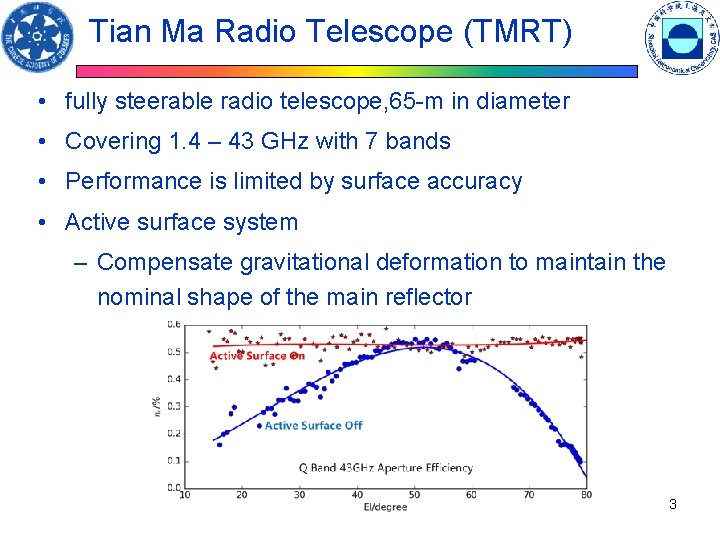
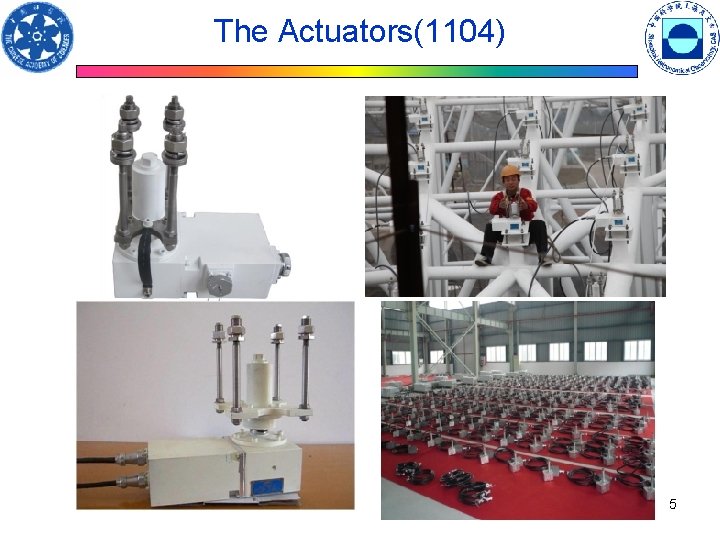
Tian Ma Radio Telescope (TMRT) • fully steerable radio telescope, 65 -m in diameter • Covering 1. 4 – 43 GHz with 7 bands • Performance is limited by surface accuracy • Active surface system – Compensate gravitational deformation to maintain the nominal shape of the main reflector 3
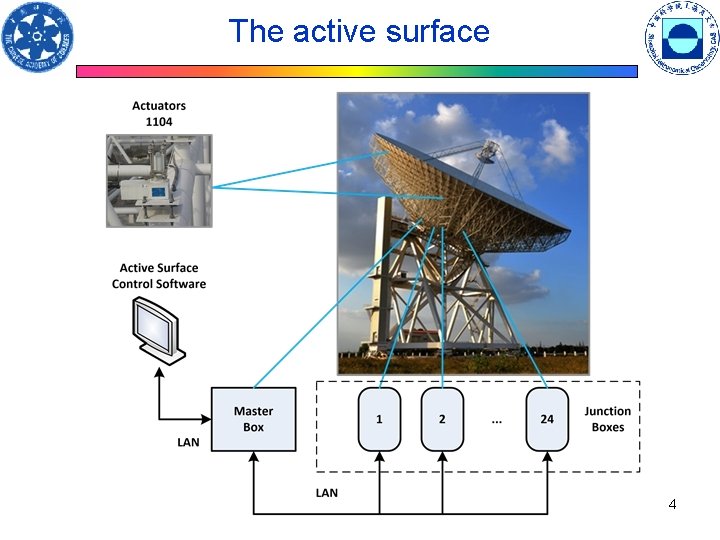
The active surface 4
The Actuators(1104) 5
Introduction How to measure the Gravitational Deformation? 6
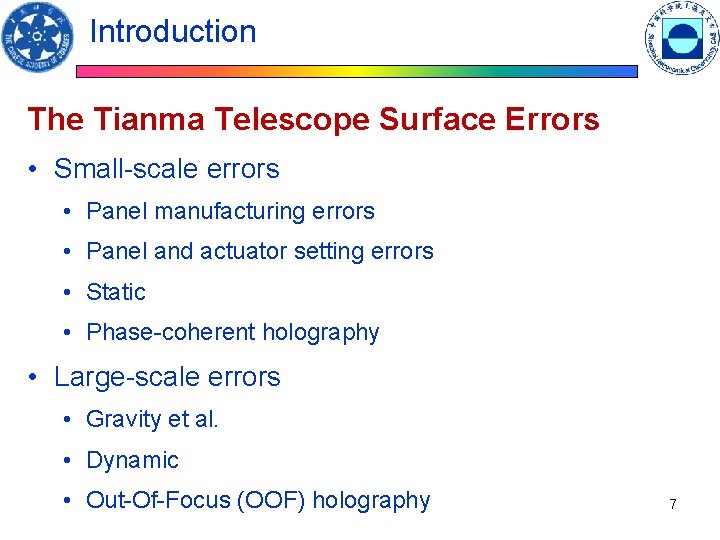
Introduction The Tianma Telescope Surface Errors • Small-scale errors • Panel manufacturing errors • Panel and actuator setting errors • Static • Phase-coherent holography • Large-scale errors • Gravity et al. • Dynamic • Out-Of-Focus (OOF) holography 7
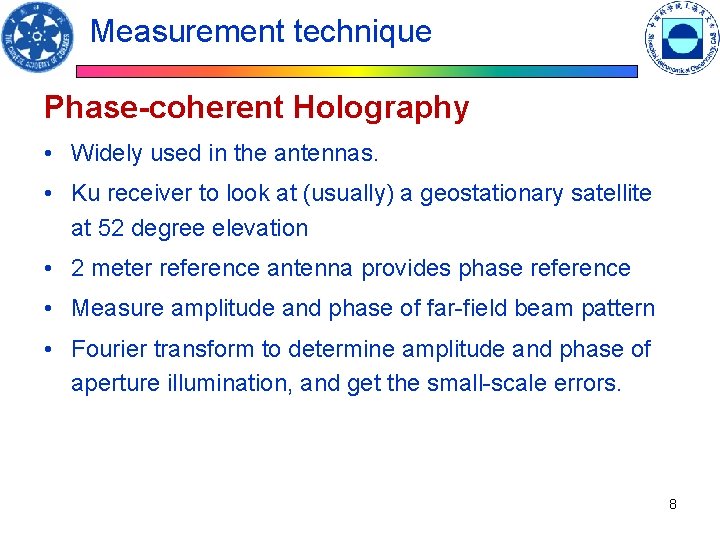
Measurement technique Phase-coherent Holography • Widely used in the antennas. • Ku receiver to look at (usually) a geostationary satellite at 52 degree elevation • 2 meter reference antenna provides phase reference • Measure amplitude and phase of far-field beam pattern • Fourier transform to determine amplitude and phase of aperture illumination, and get the small-scale errors. 8
Measurement technique Out-Of-Focus Holography (OOF) (I) • Correcting Gravitational Deformation • Measure the complete optical aberrations in a telescope – Surface errors + mis-collimation + receiver optics. . . • Rapidly – I. e. , under 1/2 hour – Currently at the TMRT, measurements take < 20 minutes • As a function of elevation – Measure the effect of gravity • Without extra equipment 9
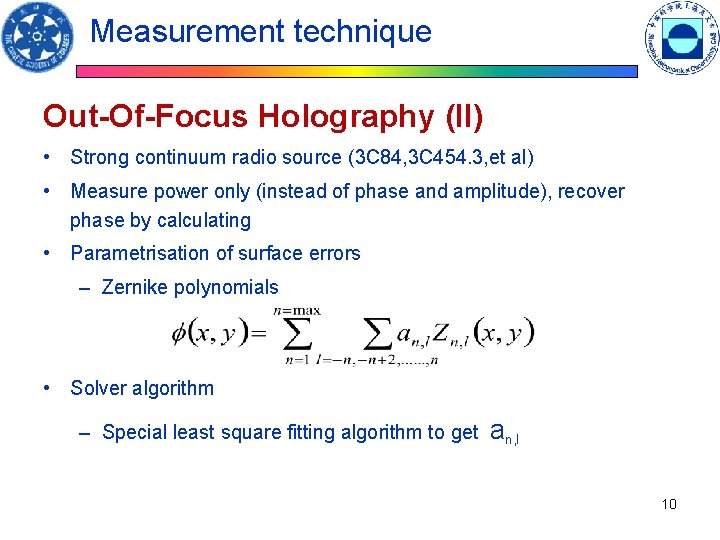
Measurement technique Out-Of-Focus Holography (II) • Strong continuum radio source (3 C 84, 3 C 454. 3, et al) • Measure power only (instead of phase and amplitude), recover phase by calculating • Parametrisation of surface errors – Zernike polynomials • Solver algorithm – Special least square fitting algorithm to get an, l 10
Measurement technique Out-Of-Focus Holography (III) • Make three Nyquist-sampled beam maps, one in focus, two defocus about ~ one wavelengths by moving the sub-reflector • Model surface errors (phase errors) as combinations of loworder Zernike polynomials. Perform forward transform to predict observed beam maps • Sample model map at locations of actual maps (no need for regridding) • Adjust coefficients to minimize difference between model and actual beam maps. 11
Measurement technique Scanning pattern 12
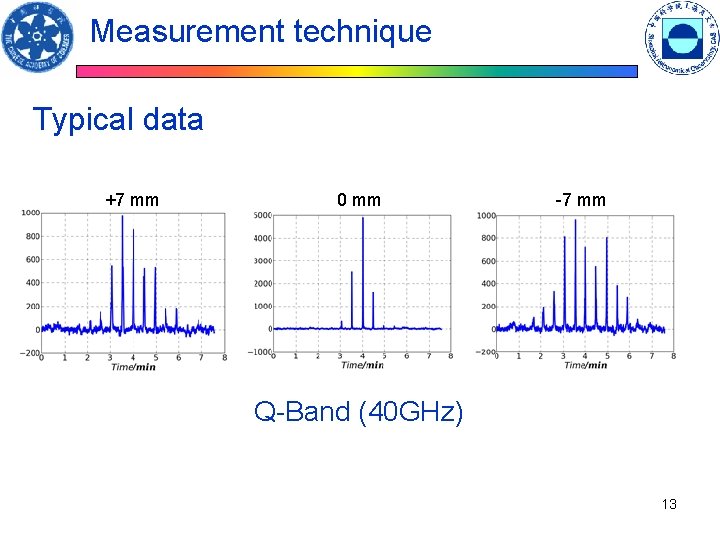
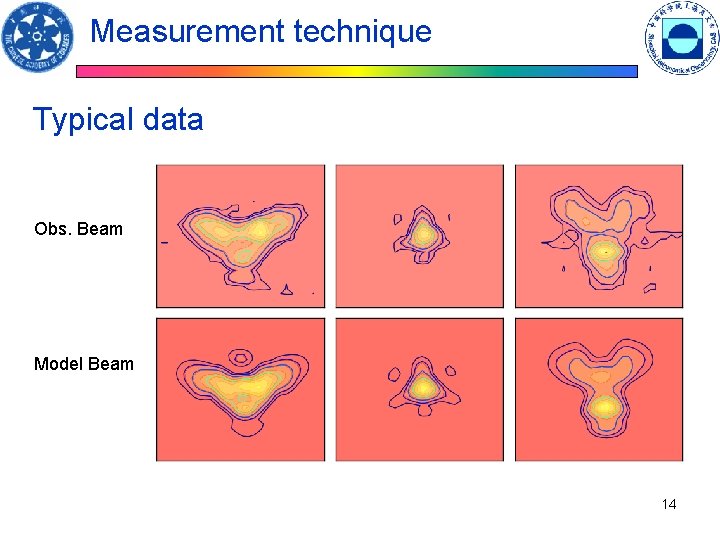
Measurement technique Typical data +7 mm 0 mm -7 mm Q-Band (40 GHz) 13
Measurement technique Typical data Obs. Beam Model Beam 14
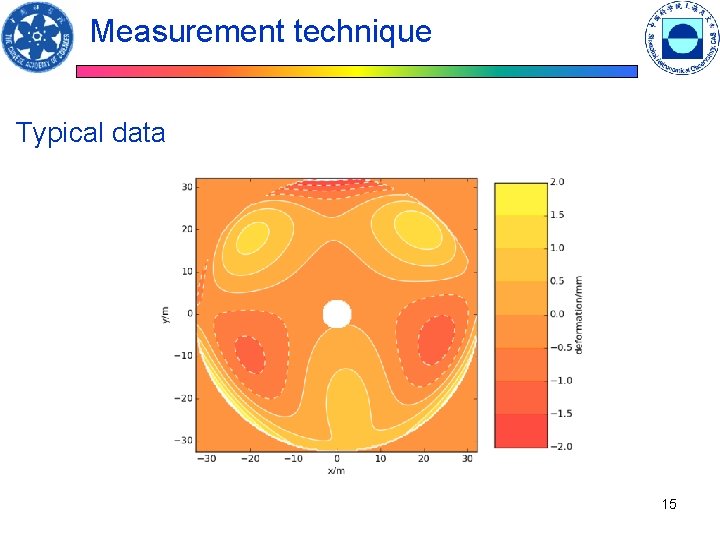
Measurement technique Typical data 15
Measurement technique • Closure WRMS = 400 um WRMS = 70 um 16
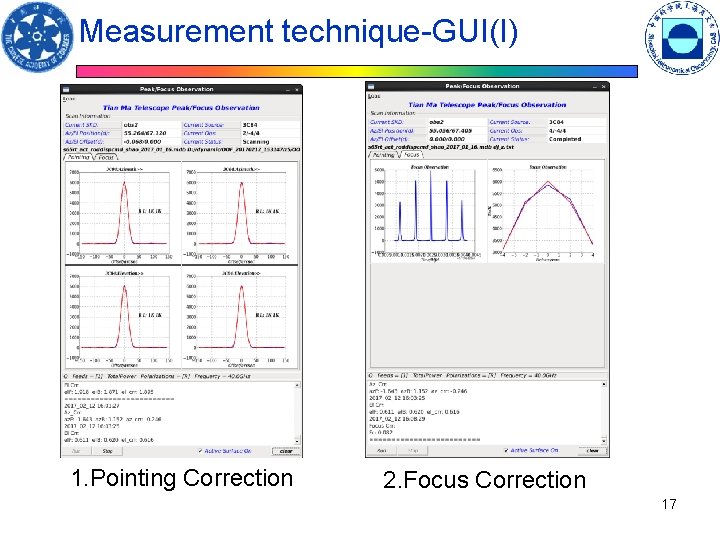
Measurement technique-GUI(I) 1. Pointing Correction 2. Focus Correction 17
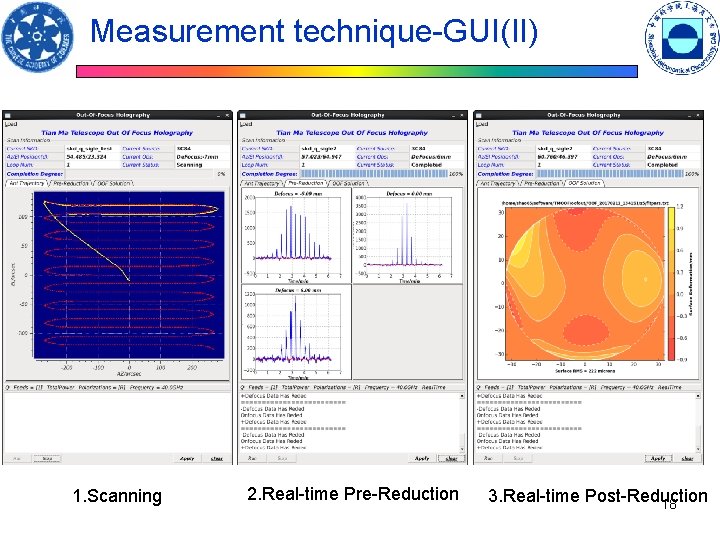
Measurement technique-GUI(II) 1. Scanning 2. Real-time Pre-Reduction 3. Real-time Post-Reduction 18
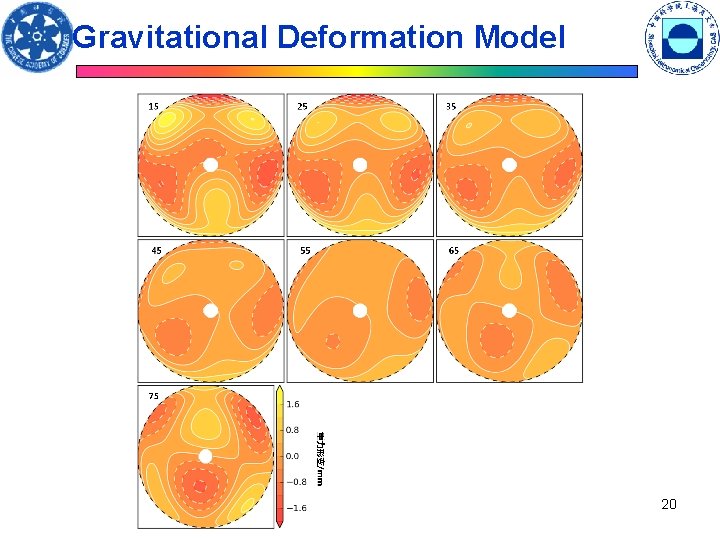
Gravitational Deformation • Make measurements under benign night-time conditions (low wind, minimize thermal gradients) over a range of elevations • 6 nights for two rounds, 70 sets of data • Assume linear elastic structure: 19
Gravitational Deformation Model 20
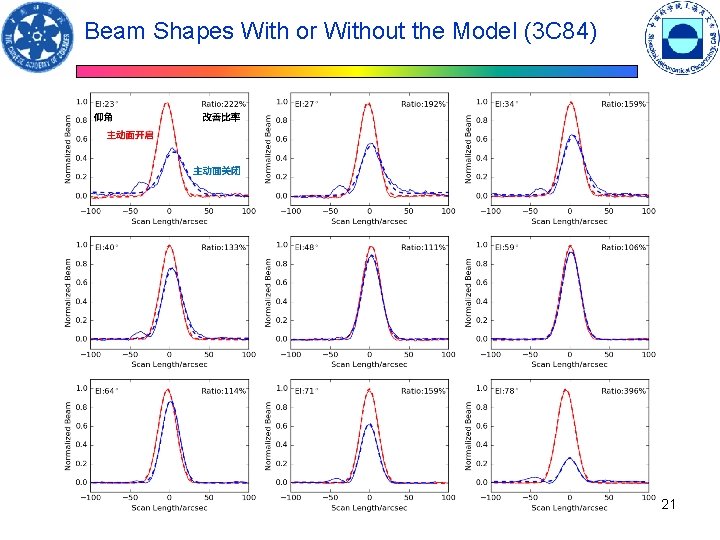
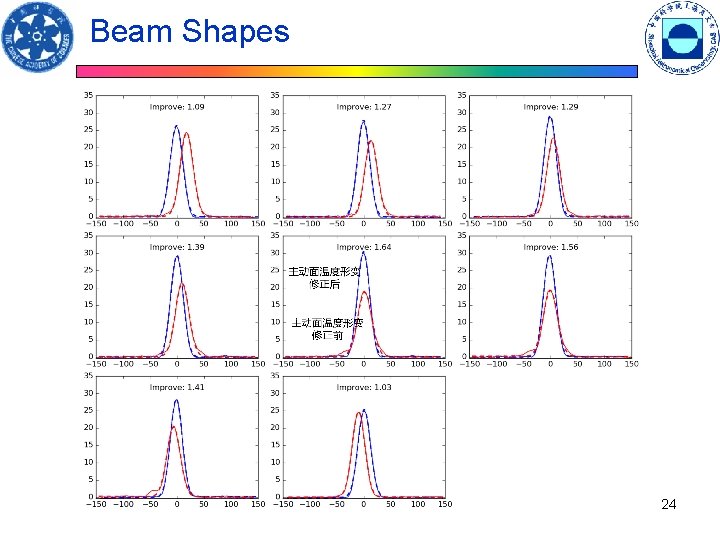
Beam Shapes With or Without the Model (3 C 84) 21
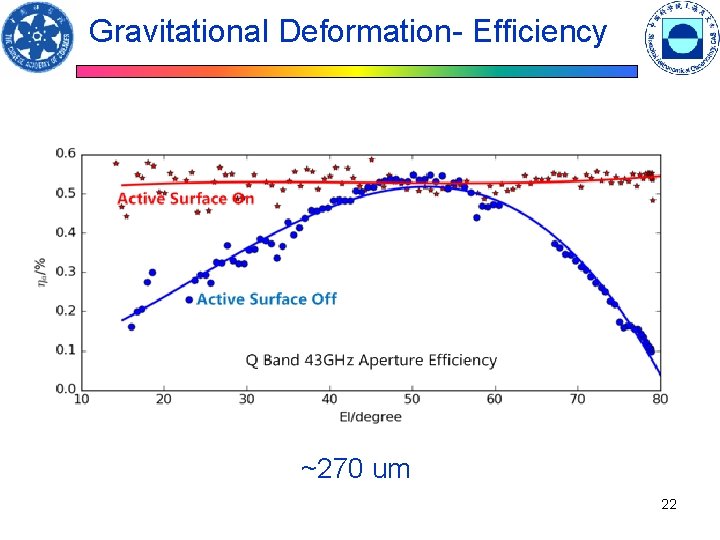
Gravitational Deformation- Efficiency ~270 um 22
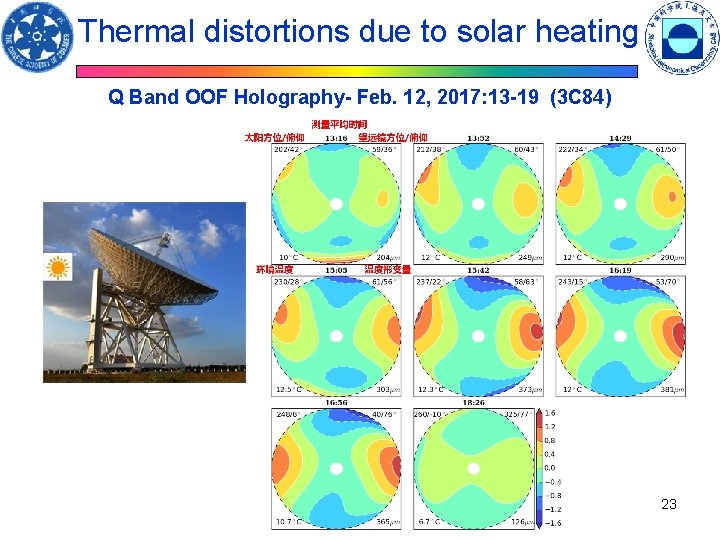
Thermal distortions due to solar heating Q Band OOF Holography- Feb. 12, 2017: 13 -19 (3 C 84) 23
Beam Shapes 24
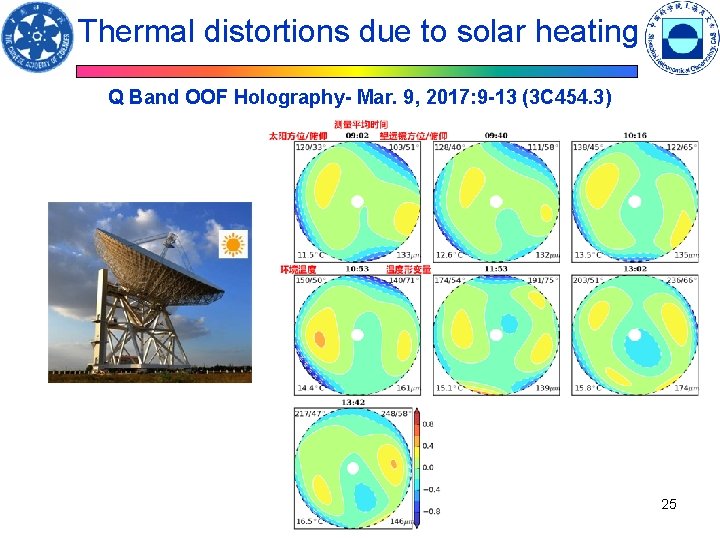
Thermal distortions due to solar heating Q Band OOF Holography- Mar. 9, 2017: 9 -13 (3 C 454. 3) 25
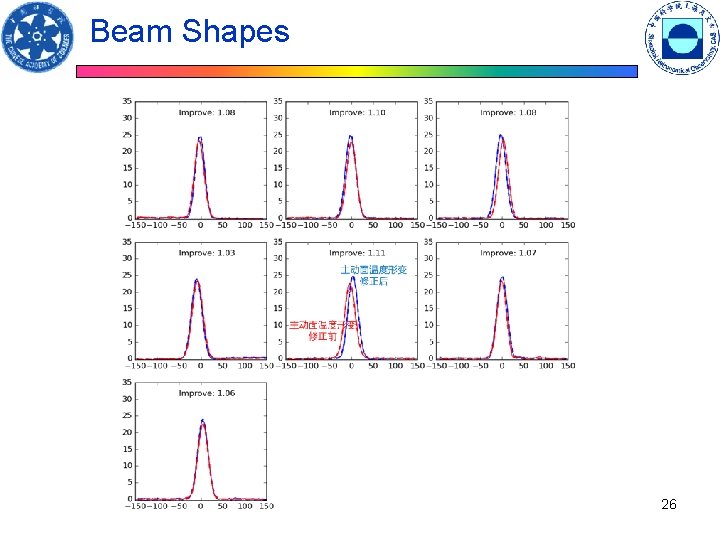
Beam Shapes 26
Conclusion • We use OOF holography to measure the gravitational deformations of the TMRT, at all elevations, about ≈ 50 µm RMS accuracy. • Using night-time observations we have calculated gravity model which significantly improves beam shape and efficiency at all elevations. • Information from the OOF measurements has allowed some progress on the daytime performance of the telescope. • The OOF holography does not need extra equipment, nearly zero hardware cost. • Every telescope can try the OOF holography! 27
Thank you for your attention! 28