
Corporate Social Responsibility CSR Impact of Business on
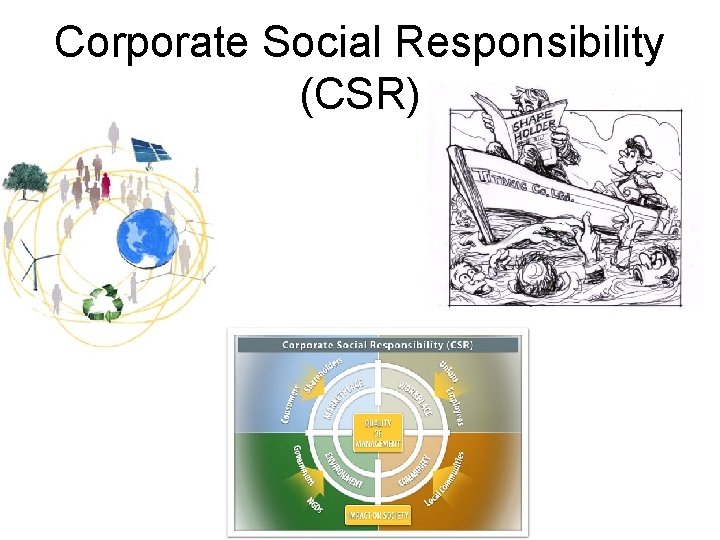
Corporate Social Responsibility (CSR)
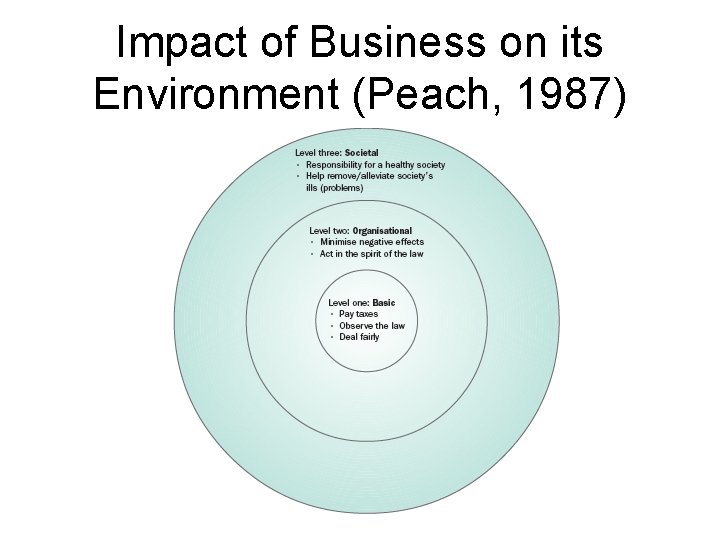
Impact of Business on its Environment (Peach, 1987)
Philanthropy • ‘Corporations perform charitable actions’. • Different from CSR • Not necessarily linked to the expectations of society. • 19 th century phenomena • Corporate philanthropy as a short-term one-way relationship
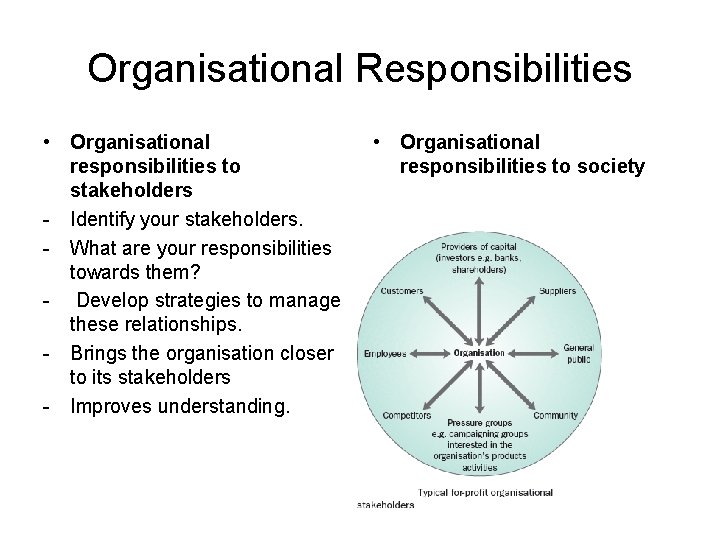
Organisational Responsibilities • Organisational responsibilities to stakeholders - Identify your stakeholders. - What are your responsibilities towards them? - Develop strategies to manage these relationships. - Brings the organisation closer to its stakeholders - Improves understanding. • Organisational responsibilities to society
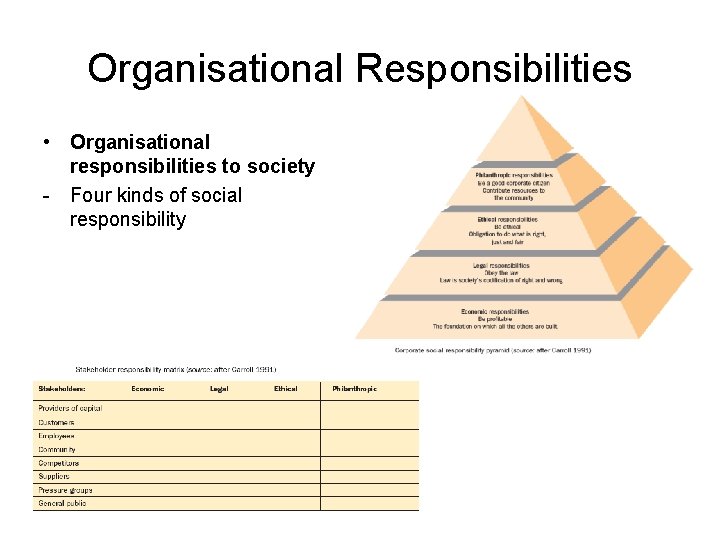
Organisational Responsibilities • Organisational responsibilities to society - Four kinds of social responsibility
Cause-related Marketing (CRM) • Charitable causes • CRM is ‘a commercial activity by which a company with a product or service to market, builds a relationship with a “cause” or a number of “causes” for mutual benefit’ • CRM programme in conjunction with local schools, ‘Tesco Computers for Schools
Cause-related Marketing (CRM) • ‘When price and quality are • The organisation gains equal, consumers will reputation and sales discriminate in favour of • Consumers are less the company that cynical about CRM. espouses a good cause. • CRM has long-term • Generates direct, strategic benefits. measurable benefits for • Being socially responsible the company. creates good ‘word of • Those needing help mouth’ receive it. • The public feels good about supporting the cause.

American Express • Early CRM example (1983) • Restoring one of the USA’s most famous symbols • Every time one of its cardholders used their card they would help towards the appeal. • Within a few months American Express had contributed $1. 5 m. • The use of its card had increased by 27%.
Sponsorship • Benevolence, charitable actions or one-way relationship? • From Latin, “spondēre”, to promise solemnly • A business agreement between the two sides, win-win situation • Money, equipment, materials, venue for activities • Should be in harmony with the corporate/brand identity. • Sports, culture and arts, environment, education. . .
Sponsorship Management 1) Do a needs analysis for sponsorship 2) Review sponsorship proposals 3) Decide on a sponsorship that suits your interests 3) Senior management to approve the proposal and the budget. 4) Sponsorship agreement to be prepared, discussed and accepted. 5) Implementation 6) Continuous monitoring of the sponsored event, analysis of media coverage, perception analysis, decisions about the future
Reasons to Get Involved in Sponsorship • • • To support products and services To build on media interest To reinforce the corporate identity – the brand. To build goodwill In place of advertising
Measuring Events and Sponsorships • Outputs: Number of times your brand is mentioned in conjunction with an event or sponsorship • Outtakes: Percent of attendees who remember your brand or your sponsorship • Outcomes: Percent of attendees who visit a dealership, showroom, store and/or website
- Slides: 13