
Corporate Social Responsibility Class 3 CSR Management System
Corporate Social Responsibility Class 3: CSR Management System Syllabus developed by Jens Trummer
Agenda CSR Management System Reading: 1. “Daimler 360, Facts on Sustainability”, 2010 For those interested in more detailed information: - “Designing a CSR Structure”, Business for Social Responsibility, 2002 - “CSR – An Implementation Guide for Business”, IISD
Class 3: CSR Management System CSR LAB
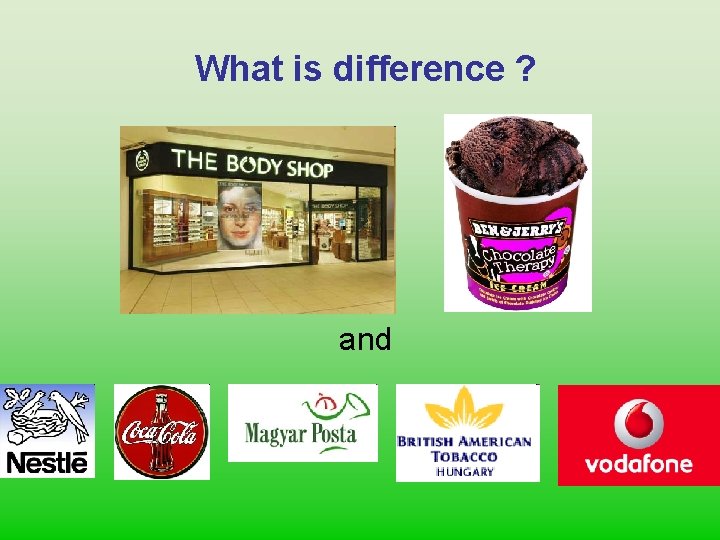
What is difference ? and
2 Types of Business Models: 1. “Sustainable” Business Model = CSR? ? ? CSR Management System 2. Business Model with CSR Programs:
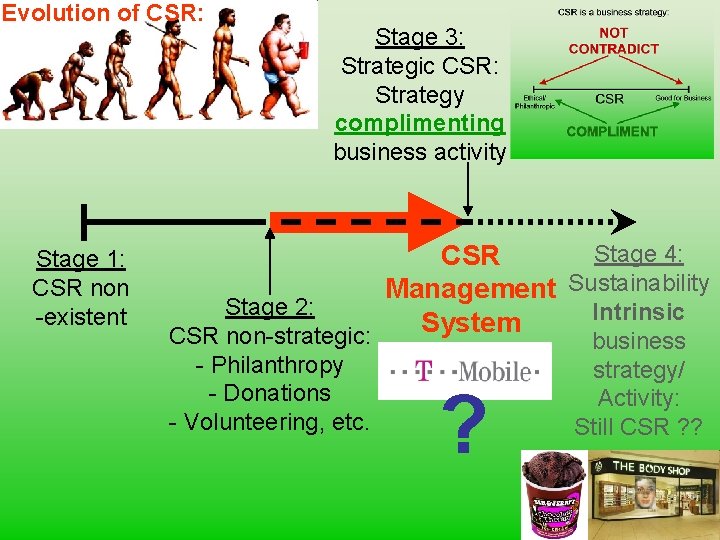
Evolution of CSR: Stage 1: CSR non -existent Stage 3: Strategic CSR: Strategy complimenting business activity Stage 4: CSR Management Sustainability Stage 2: Intrinsic System CSR non-strategic: business - Philanthropy - Donations - Volunteering, etc. ? strategy/ Activity: Still CSR ? ?
CSR Management System needs “ Framework for ‘Strategic’ ‘Integration’ ” TOOL to compliment core business activities
“Framework for Strategic Integration” - ‘Theory of Practice’ - No ‘one size fits all’ - Not necessarily chronological - Must be adaptive – Why?
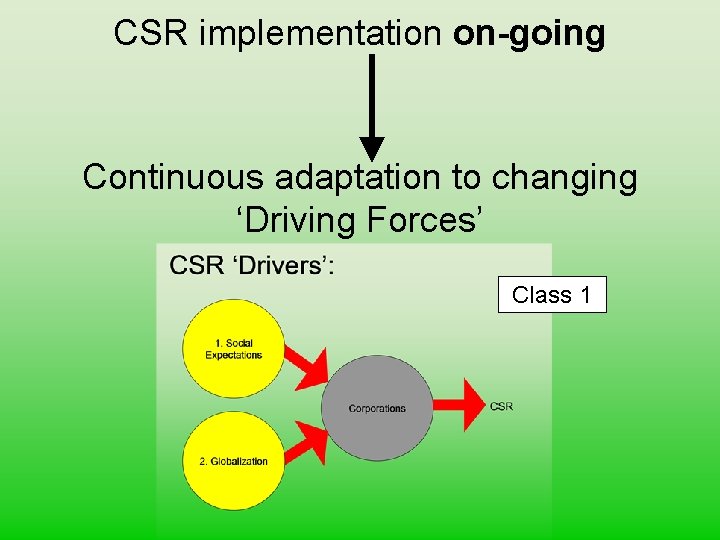
CSR implementation on-going Continuous adaptation to changing ‘Driving Forces’ Class 1
Framework for Strategic Integration: 3+1 = 3 Steps + 1 Continuous Action Step 1 ? ? ?
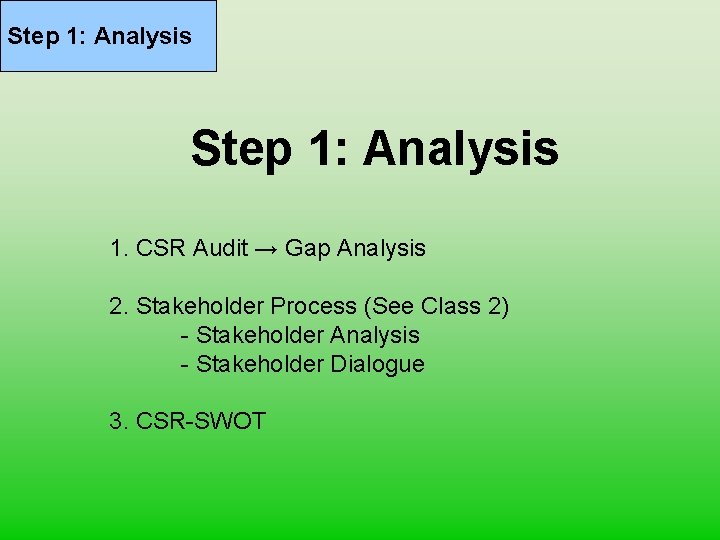
Step 1: Analysis 1. CSR Audit → Gap Analysis 2. Stakeholder Process (See Class 2) - Stakeholder Analysis - Stakeholder Dialogue 3. CSR-SWOT
Step 1: Analysis 1. CSR Audit “As-is Analysis” Goal: Assess the whole picture Basis for “Gap Analysis”
Step 1: Analysis 1. CSR Audit - CSR definition - 4 key criteria ? ? ? - Existing CSR policies, standards, values, Corporate Motivation Nalco - Understand current CSR commitments, external standards used - Structures: Current departments, functional areas, cross-functionality - CSR issues currently being addressed - Stakeholder Overview of current stakeholder ‘dialogue’
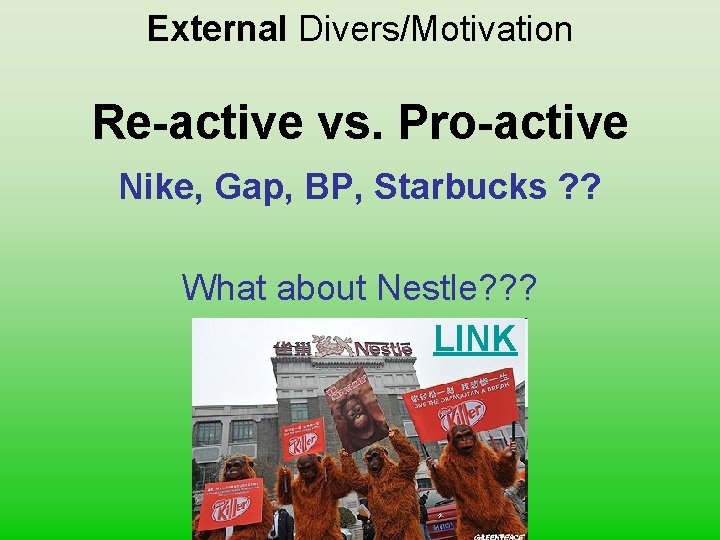
External Divers/Motivation Re-active vs. Pro-active Nike, Gap, BP, Starbucks ? ? What about Nestle? ? ? LINK
Step 1: Analysis 1. CSR Audit Internal Drivers/Motivation - Honest (‘self’-) analysis - Philanthropic and /or(? ? ) business incentives

Step 1: Analysis 1. CSR Audit - CSR definition - Existing CSR policies, standards, values, Motivation - Understand current CSR commitments, external standards used - Structures: Current departments, functional areas, cross-functionality - CSR issues currently being addressed - Stakeholder Overview of current stakeholder ‘dialogue’ - Current CSR programs and activities
Step 1: Analysis 1. CSR Audit Which CSR programs … … are not necessarily referred to as “CSR” ?
Step 1: Analysis 1. CSR Audit - ISO 14001/EMAS - Health and Safety (SA 8000) ISO for CSR ? ? ?
Step 1: Analysis 1. CSR Audit ISO for CSR ISO 26000: Launched November 1 st, 2010 ! Guidance standard on social responsibility
Step 1: Analysis 1. CSR Audit - CSR definition - Existing CSR policies, standards, values, Motivation - Understand current CSR commitments, external standards used (e. g. ISO 14001, SA 8000) - Structures: Current departments, functional areas, cross-functionality - CSR issues currently being addressed - Stakeholder Overview of current stakeholder ‘dialogue’ - Current CSR programs and activities
Step 1: Analysis 1. CSR Audit: ‘I I I’ Internal ‘Intelligence’ Investigation: Which departments responsible for CSR issues ?
Step 1: Analysis 1. CSR Audit ‘CSR Departments’ - Communications/PR - Marketing - Human Resources - (Senior) Management Which department typically most reactive … or ‘slow’ on take-up ?
Step 1: Analysis 1. CSR Audit - CSR definition - Existing CSR policies, standards, values, Motivation - Understand current CSR commitments, external standards used (e. g. ISO 14001, SA 8000, ISO for CSR ? ? ? ) - Structures: Current departments, functional areas, cross-functionality - CSR issues currently being addressed Which stakeholders almost all companies irrespective of existing CSR strategy? ? ? - Stakeholder Overview of current stakeholder ‘dialogue’ - Current CSR programs and activities
Step 1: Analysis 1. CSR Audit How would you do an Audit ? ? ?
Step 1: Analysis 1. CSR Audit How? Method: Internal: 1. Desk-top study: Document Analysis 2. Executive, Management & Staff Interviews External: 3. Reputation surveys, benchmarking, CSR Reports (GRI, Account. Ability Rating)
Step 1: Analysis 1. CSR Audit → Gap Analysis 2. Stakeholder Process - Stakeholder Analysis … Components ? ? ? - Stakeholder Dialogue 3. CSR-SWOT
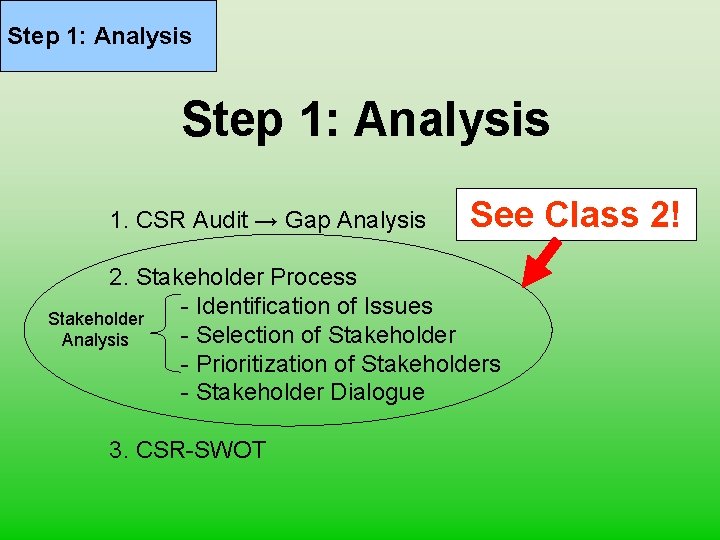
Step 1: Analysis 1. CSR Audit → Gap Analysis See Class 2! 2. Stakeholder Process - Identification of Issues Stakeholder - Selection of Stakeholder Analysis - Prioritization of Stakeholders - Stakeholder Dialogue 3. CSR-SWOT
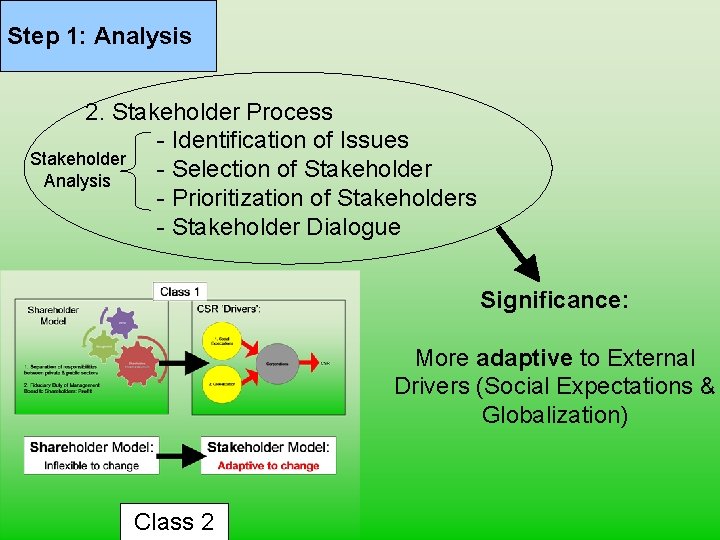
Step 1: Analysis 2. Stakeholder Process - Identification of Issues Stakeholder - Selection of Stakeholder Analysis - Prioritization of Stakeholders - Stakeholder Dialogue Significance: More adaptive to External Drivers (Social Expectations & Globalization) Class 2
Step 1: Analysis However: Class 2 ‘Outsourcing’ CSR: Risking ‘hodgepodge’ of un-coordinated CSR activities and philanthropic activities? What do you think?
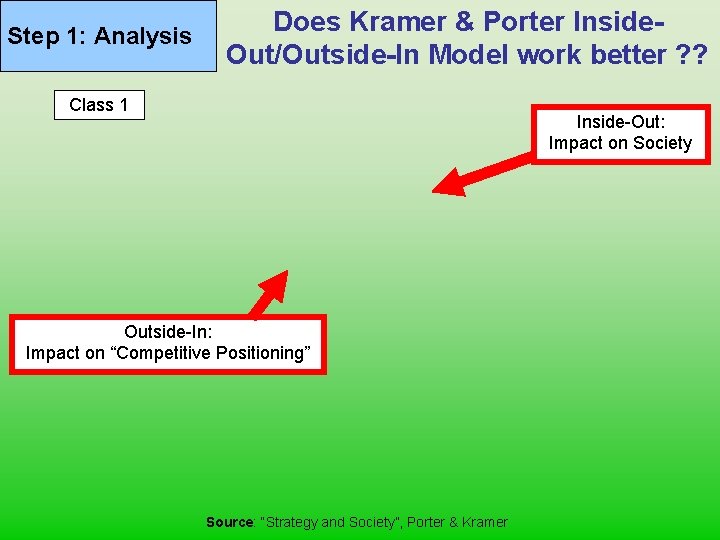
Step 1: Analysis Does Kramer & Porter Inside. Out/Outside-In Model work better ? ? Class 1 Inside-Out: Impact on Society Outside-In: Impact on “Competitive Positioning” Source: “Strategy and Society”, Porter & Kramer
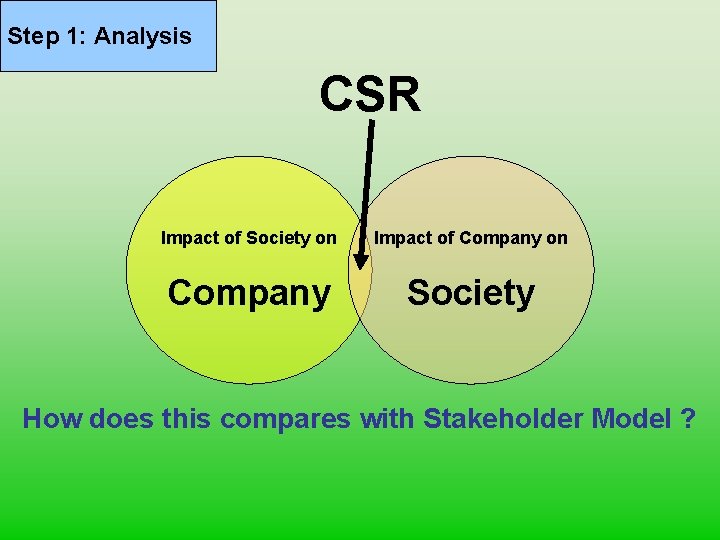
Step 1: Analysis CSR Impact of Society on Impact of Company on Company Society How does this compares with Stakeholder Model ?
Step 1: Analysis Class 2 Both ways?
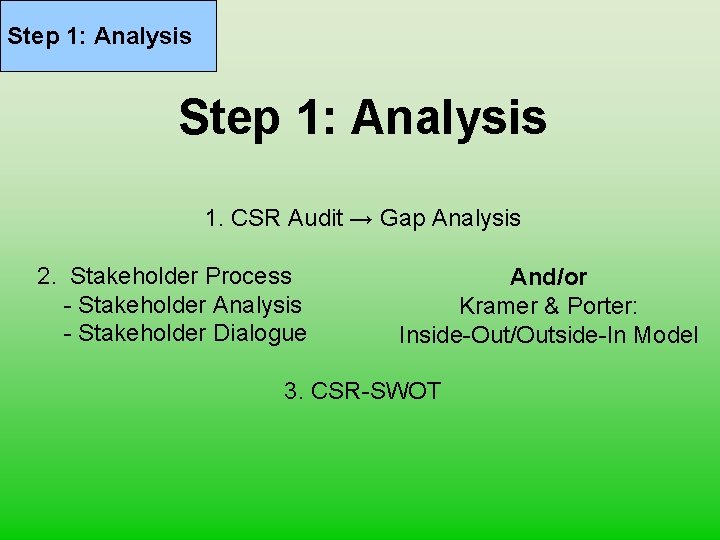
Step 1: Analysis 1. CSR Audit → Gap Analysis 2. Stakeholder Process - Stakeholder Analysis - Stakeholder Dialogue And/or Kramer & Porter: Inside-Out/Outside-In Model 3. CSR-SWOT
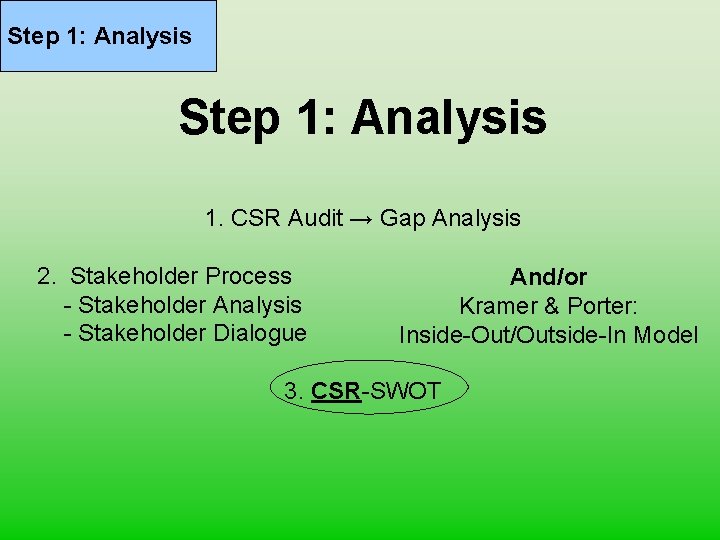
Step 1: Analysis 1. CSR Audit → Gap Analysis 2. Stakeholder Process - Stakeholder Analysis - Stakeholder Dialogue And/or Kramer & Porter: Inside-Out/Outside-In Model 3. CSR-SWOT
Step 1: Analysis 3. SWOT CSR-SWOT Analysis: - Putting it all together - Linkage to next part
Framework for Strategic Integration: Step 1: Analysis … Step 2 ? ? ?
Step 2: CSR Strategy 2. CSR Strategy to compliment business activity … CSR is Business Strategy (see EU Definition !) 1 st Step? ?
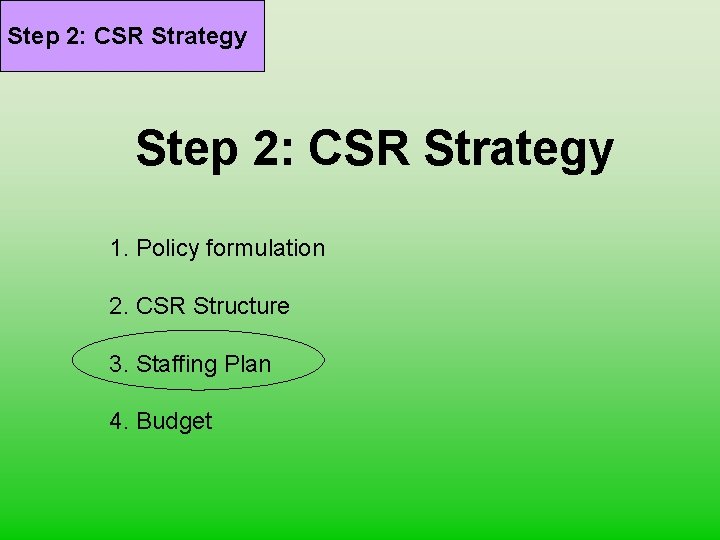
Step 2: CSR Strategy 1. Policy formulation 2. CSR Structure 3. Staffing Plan 4. Budget
Step 2: CSR Strategy 1. Policy Formulation - Priorities - Core Values - Formulation of Policy Statement
Step 2: CSR Strategy 1. Policy Formulation - Formulation of Strategy How long before public starts identifying CSR strategy with company ?
Step 2: CSR Strategy 1. Policy formulation 2. CSR Structure 3. Staffing Plan 4. Budget
Step 2: CSR Strategy 2. CSR Structure Choose structural framework - Size - Corporate structure - Sectors involved. . . geographic locations, risk areas, commitment - New or improved structure?
Step 2: CSR Strategy What is important for an effective Structure ?
Step 2: CSR Strategy ‘Cross-Functional’ Why so important in CSR ?
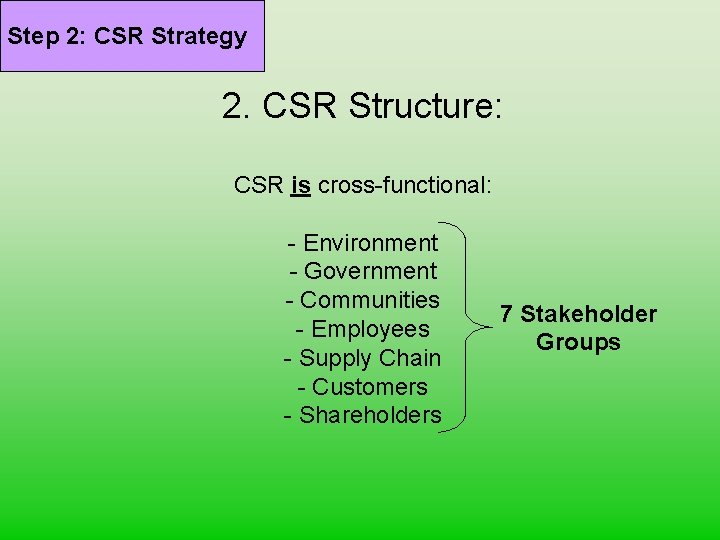
Step 2: CSR Strategy 2. CSR Structure: CSR is cross-functional: - Environment - Government - Communities - Employees - Supply Chain - Customers - Shareholders 7 Stakeholder Groups
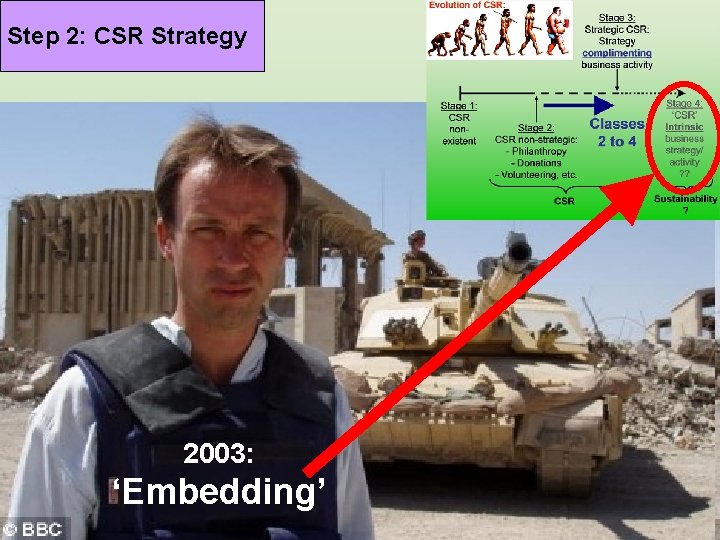
Step 2: CSR Strategy 2003: ‘Embedding’
Step 2: CSR Strategy Framework for Strategic Integration Integrating sustainability into company’s: - Values - Culture - Operations - Business decisions = ‘Embedding’ … at all levels of the organization
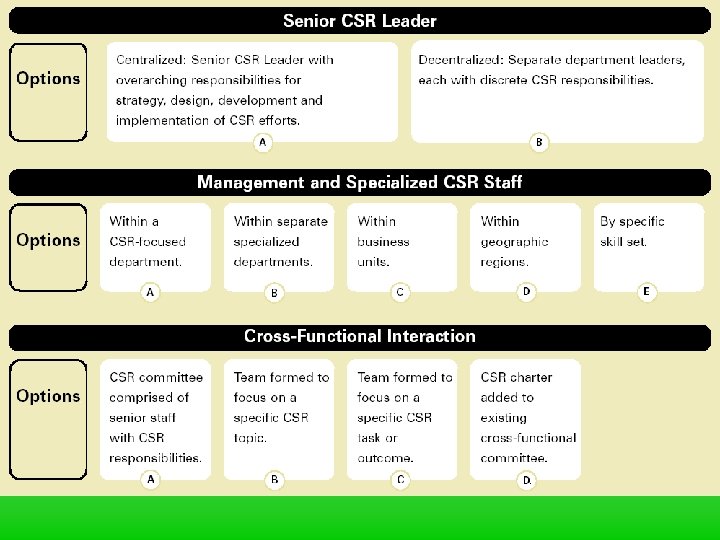
Step 2: CSR Strategy 2. CSR Structure: Mechanisms for involving functional areas, departments, etc. Roles and responsibilities of each employee and/or group (committee) involved with CSR efforts (Board committee, executive committee, specific CSR committee, etc. )
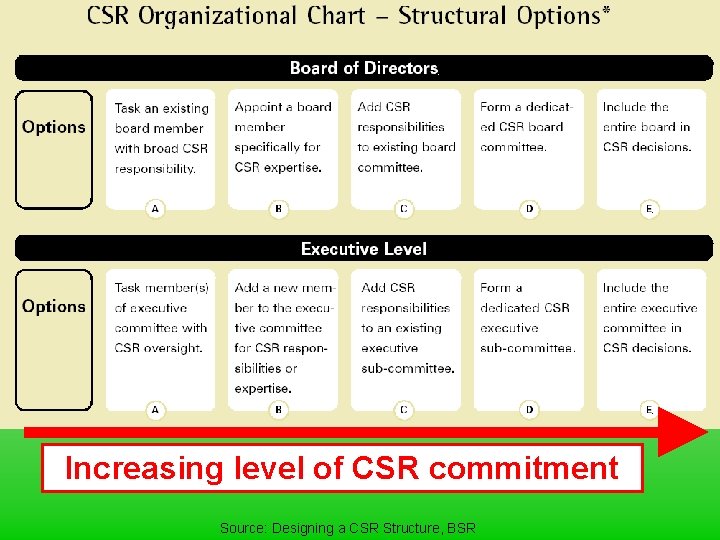
Increasing level of CSR commitment Source: Designing a CSR Structure, BSR
Step 2: CSR Strategy 1. Policy formulation 2. CSR Structure 3. Staffing Plan 4. Budget
Step 2: CSR Strategy 3. Staffing Plan Identify CSR-specific staff roles and responsibilities at the different levels.
Step 2: CSR Strategy Daimler’s Corporate Governance Structure How would you design Daimler’s CSR Structure?
Step 2: CSR Strategy Daimler’s Sustainability Governance Structure (P. 16) 1. Key Stakeholder Groups ? ? ? 2. Cross. Functionality
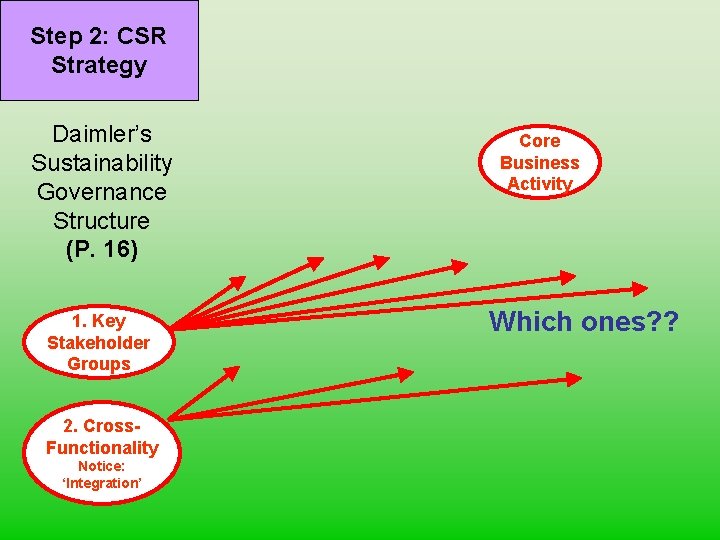
Step 2: CSR Strategy Daimler’s Sustainability Governance Structure (P. 16) 1. Key Stakeholder Groups 2. Cross. Functionality Notice: ‘Integration’ Core Business Activity Which ones? ?
Step 2: CSR Strategy Centralized, de-centralized ? Top-down, bottom-up ?
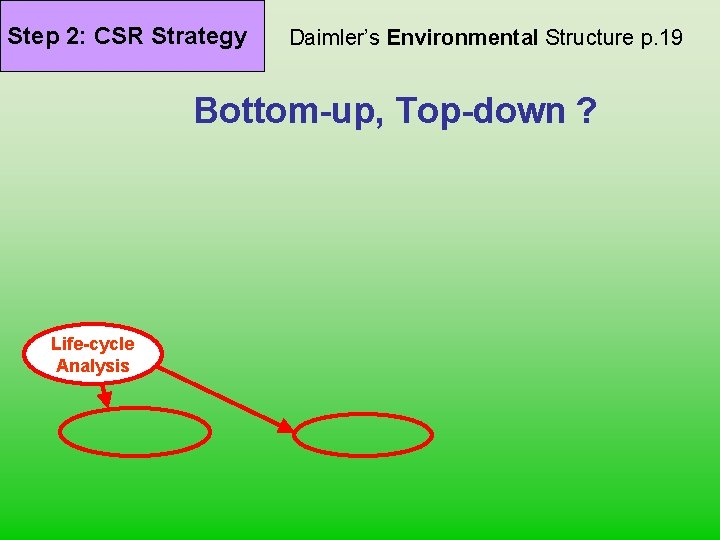
Step 2: CSR Strategy Daimler’s Environmental Structure p. 19 Bottom-up, Top-down ? Life-cycle Analysis
Step 2: CSR Strategy Daimler’s CSR Structure ‘Hybrid’
Step 2: CSR Strategy Daimler: Committed to CSR ?
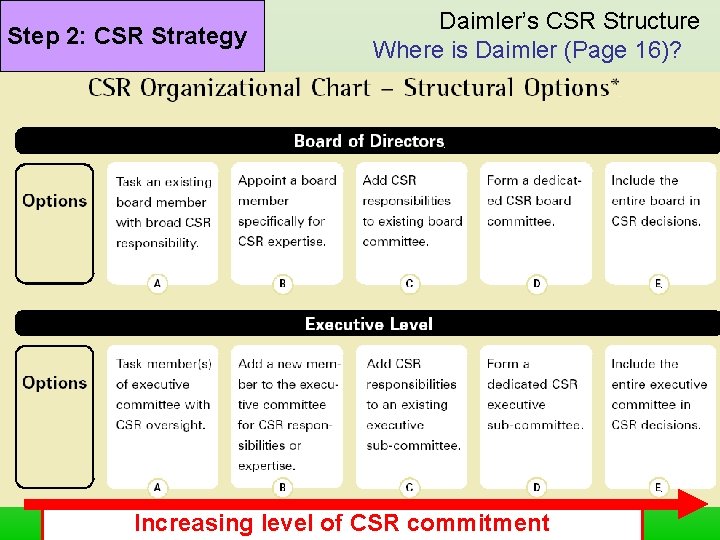
Step 2: CSR Strategy Daimler’s CSR Structure Where is Daimler (Page 16)? Increasing level of CSR commitment
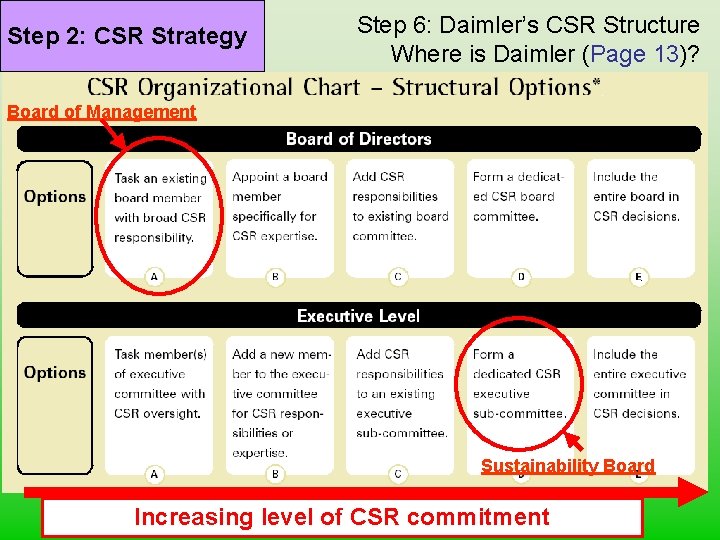
Step 2: CSR Strategy Step 6: Daimler’s CSR Structure Where is Daimler (Page 13)? Board of Management Sustainability Board Increasing level of CSR commitment
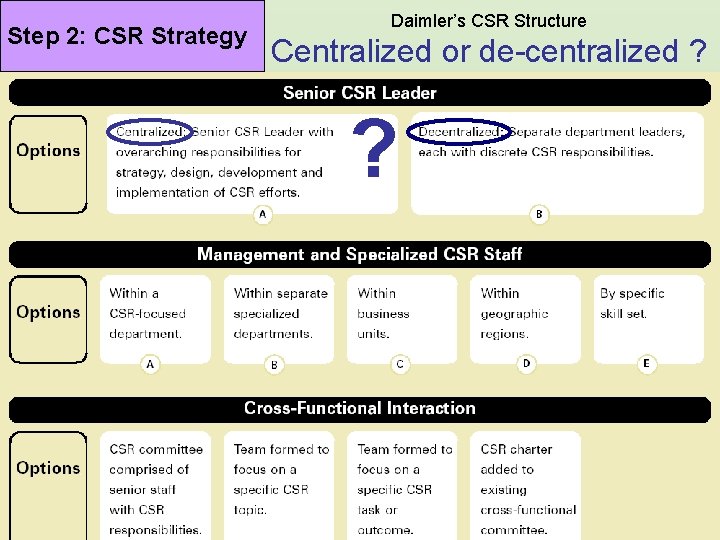
Step 2: CSR Strategy Daimler’s CSR Structure Centralized or de-centralized ? ?
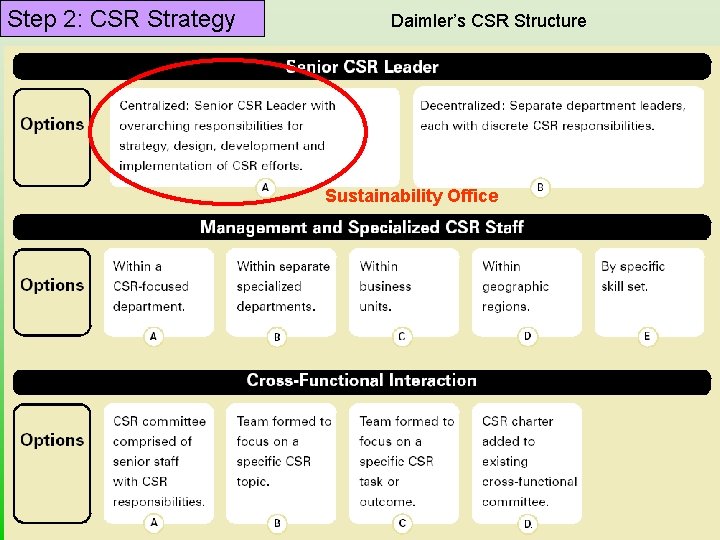
Step 2: CSR Strategy Daimler’s CSR Structure Sustainability Office
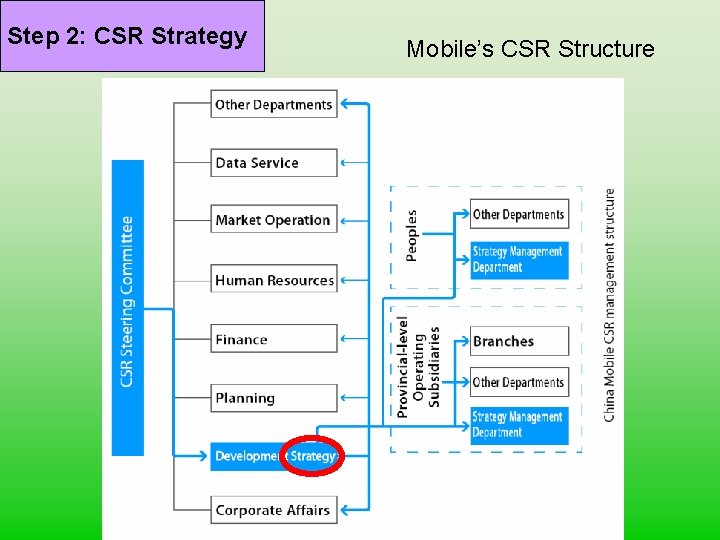
Step 2: CSR Strategy Mobile’s CSR Structure
Step 2: CSR Strategy - Subsidiary of KBC (Belgium, Flemish) - Required CSR in 2005 - Communications Intern tasked
Step 2: CSR Strategy 2006: Allocated budget: New CSR Policy: 1. Professional Business Ethics 2. Employees and their families 3. Attitude to the environment 4. Care for the community (“CSR-led sponsorship”) What evolutionary stage of CSR – strategic, non-strategic?
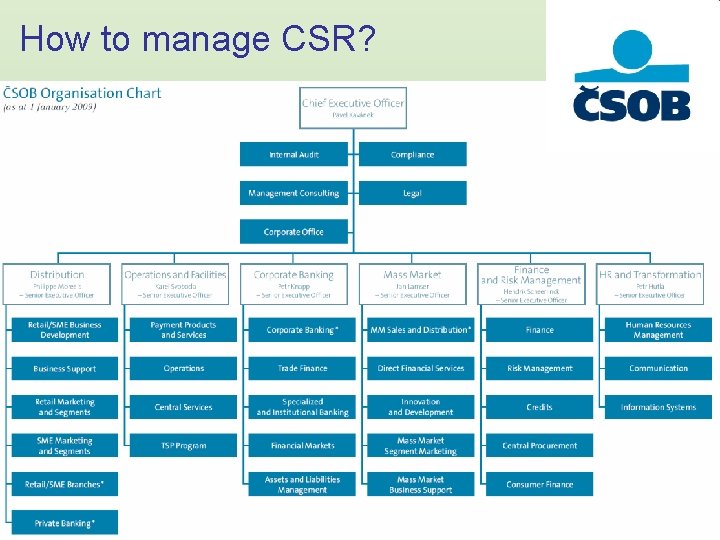
How to manage CSR?
Step 2: CSR Strategy 2007: CSR Expert Task Force (ETF): 1. Head of External Communications 2. Head of Retail Segment Marketing 3. Head of PSB Retail Segment 4. Head of Human Resources 5. Head of Legal 6. Head of Public Affairs 7. Head of Marketing Communications (with an advisory vote power) 8. CSR Officer 9. CSR Manager Main focus area of ETF ?
Step 2: CSR Strategy 2007: CSR Expert Task Force (ETF): Main focus areas: - Risk Management & Compliance - PR, Communications & Marketing
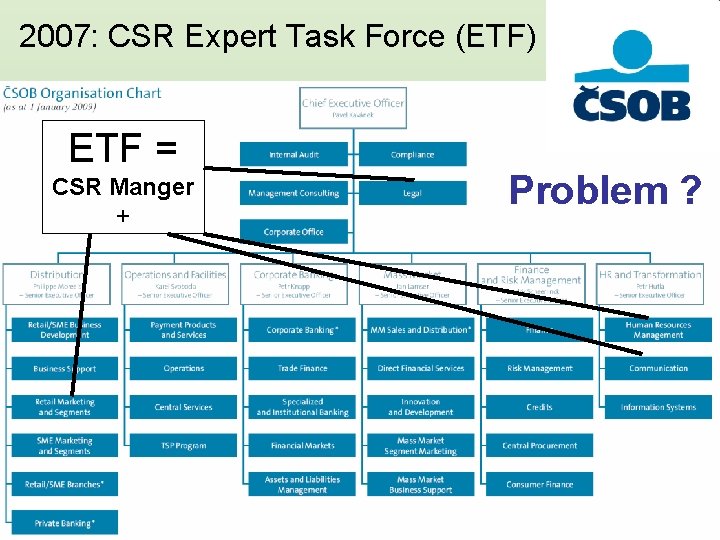
2007: CSR Expert Task Force (ETF) ETF = CSR Manger + Problem ?
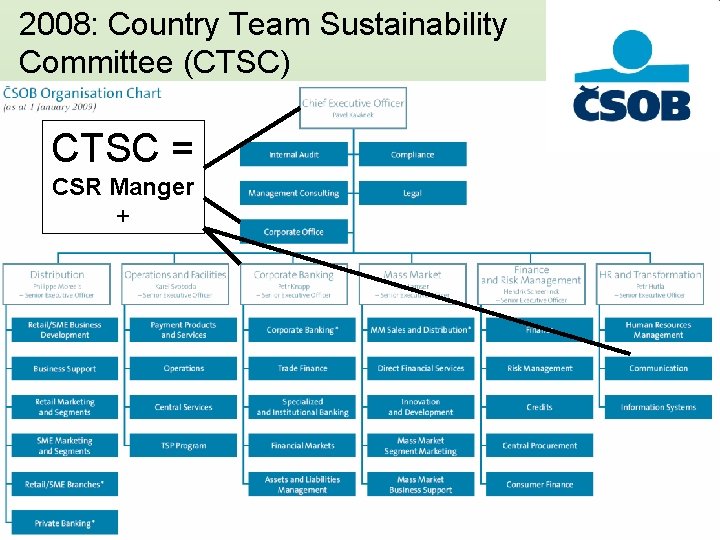
2008: Country Team Sustainability Committee (CTSC) CTSC = CSR Manger +
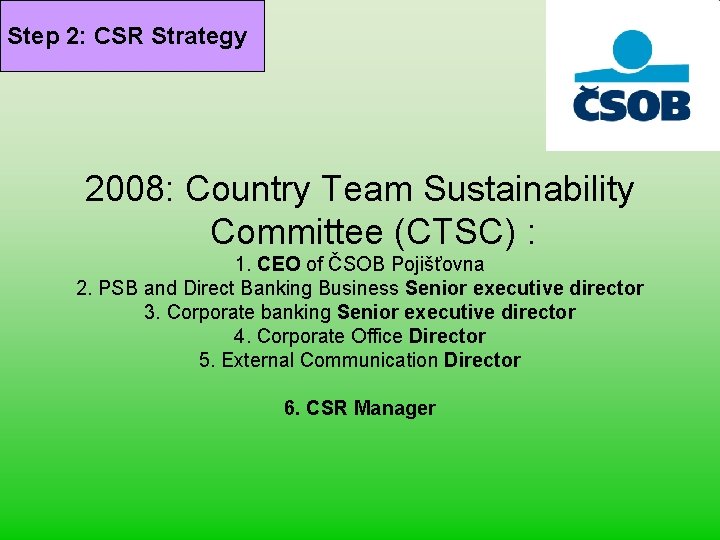
Step 2: CSR Strategy 2008: Country Team Sustainability Committee (CTSC) : 1. CEO of ČSOB Pojišťovna 2. PSB and Direct Banking Business Senior executive director 3. Corporate banking Senior executive director 4. Corporate Office Director 5. External Communication Director 6. CSR Manager
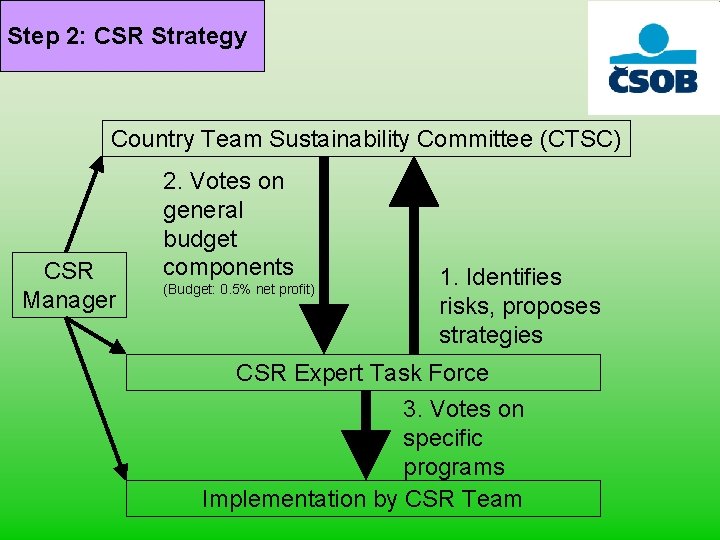
Step 2: CSR Strategy Country Team Sustainability Committee (CTSC) CSR Manager 2. Votes on general budget components (Budget: 0. 5% net profit) 1. Identifies risks, proposes strategies CSR Expert Task Force 3. Votes on specific programs Implementation by CSR Team
Step 2: CSR Strategy 1. Policy formulation 2. CSR Structure 3. Staffing Plan 4. Budget
Step 2: CSR Strategy 4. Budget Assess budget structure and size … Typically, CSR Budget in EE Companies what percentage of net profit? More effective if tied with PR Budget!
Framework for Strategic Integration: Step 1: Analysis Step 2: Strategy … Step 3 ? ? ?
Step 3: Implementation Goal: Long-Term Integration Embedding CSR management system into processes and programs
Reporting & Monitoring Communication Management Tool See Class 4
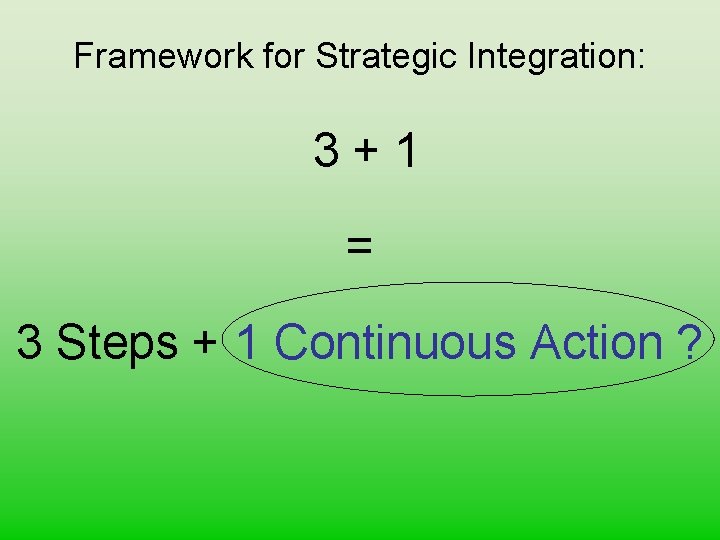
Framework for Strategic Integration: 3+1 = 3 Steps + 1 Continuous Action ?
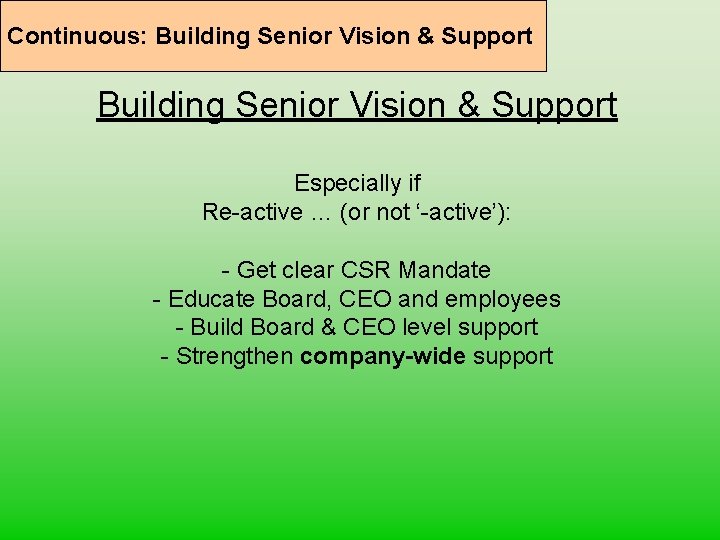
Continuous: Building Senior Vision & Support Especially if Re-active … (or not ‘-active’): - Get clear CSR Mandate - Educate Board, CEO and employees - Build Board & CEO level support - Strengthen company-wide support
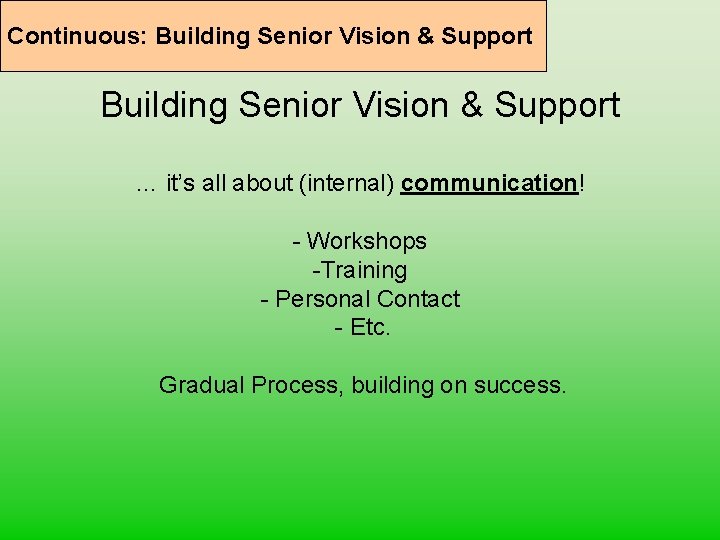
Continuous: Building Senior Vision & Support … it’s all about (internal) communication! - Workshops -Training - Personal Contact - Etc. Gradual Process, building on success.
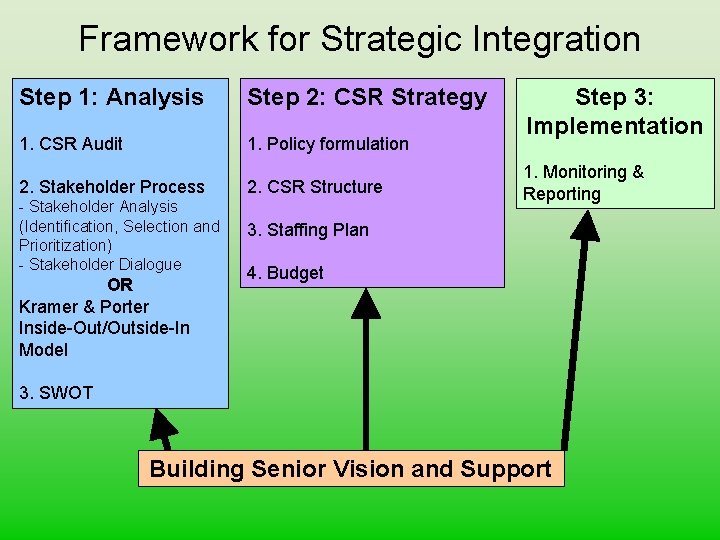
Framework for Strategic Integration Step 1: Analysis Step 2: CSR Strategy 1. CSR Audit 1. Policy formulation 2. Stakeholder Process 2. CSR Structure - Stakeholder Analysis (Identification, Selection and Prioritization) - Stakeholder Dialogue 3. Staffing Plan OR Kramer & Porter Inside-Out/Outside-In Model Step 3: Implementation 1. Monitoring & Reporting 4. Budget 3. SWOT Building Senior Vision and Support
- Slides: 82