
Coronary Stents BY COURTNEY MEDEIROS BME 281 113011
Coronary Stents BY: COURTNEY MEDEIROS BME 281 11/30/11
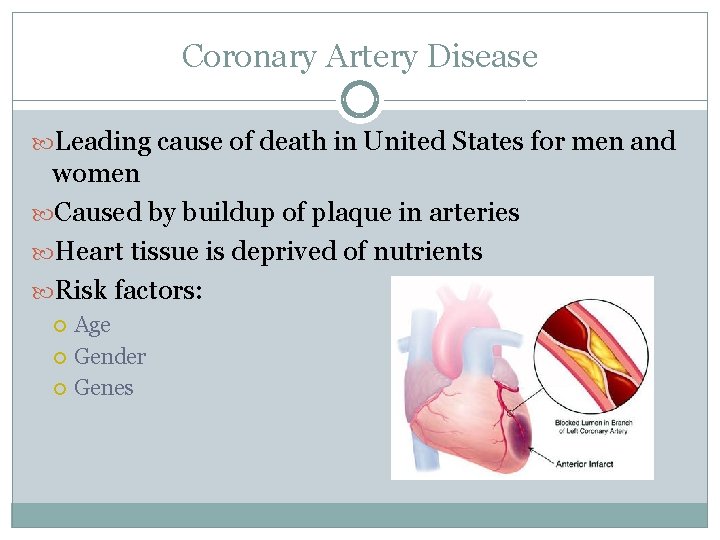
Coronary Artery Disease Leading cause of death in United States for men and women Caused by buildup of plaque in arteries Heart tissue is deprived of nutrients Risk factors: Age Gender Genes
Symptoms and Tests for Coronary Artery Disease Symptoms: Vary in strength Chest pain Fatigue Shortness of breath Weakness Tests: ECG Exercise Stress Test Nuclear Stress Test CT Scan Coronary Angiograph
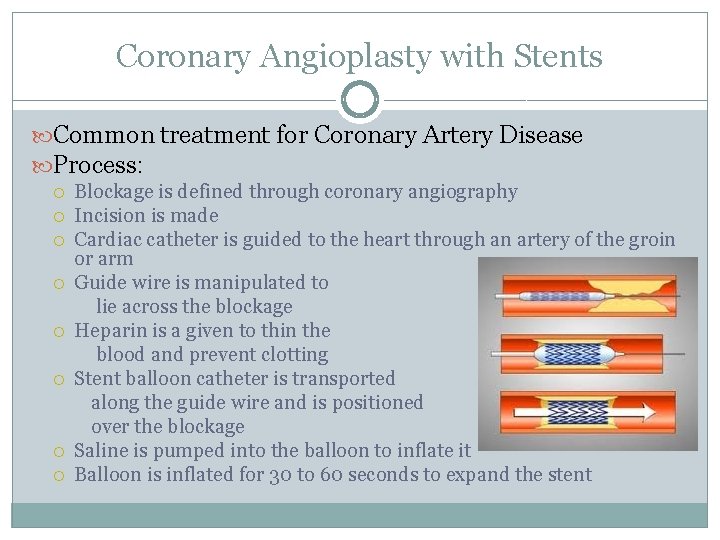
Coronary Angioplasty with Stents Common treatment for Coronary Artery Disease Process: Blockage is defined through coronary angiography Incision is made Cardiac catheter is guided to the heart through an artery of the groin or arm Guide wire is manipulated to lie across the blockage Heparin is a given to thin the blood and prevent clotting Stent balloon catheter is transported along the guide wire and is positioned over the blockage Saline is pumped into the balloon to inflate it Balloon is inflated for 30 to 60 seconds to expand the stent

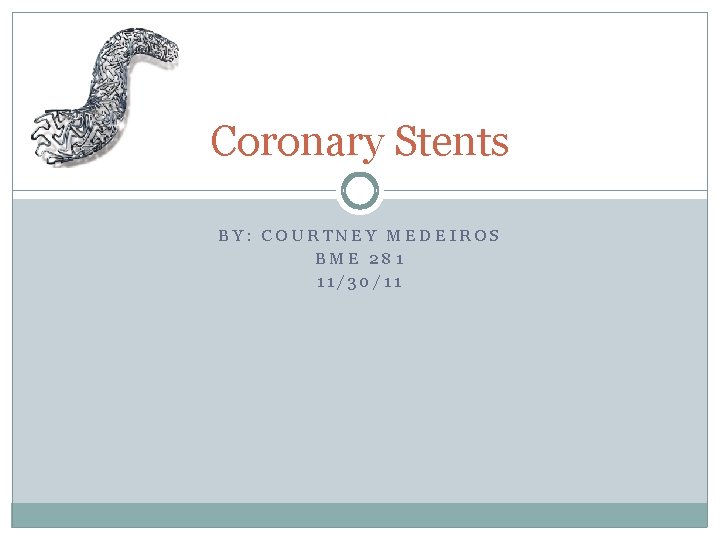
Stents Expandable Mesh-like tube Invented to overcome short comings of regular coronary angioplasty Stays in artery permanently
Kinds of Stents Uncoated Stents Bare metal Drug-coated Stents Coated with Sirolimus Controlled release of medicine into tissue Drug limits overgrowth of natural tissue Anti-rejection-type medicine (10% vs 26%)
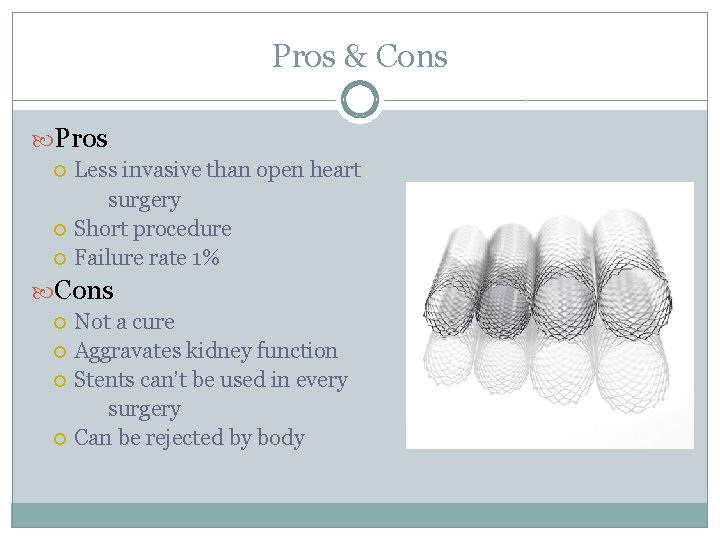
Pros & Cons Pros Less invasive than open heart surgery Short procedure Failure rate 1% Cons Not a cure Aggravates kidney function Stents can’t be used in every surgery Can be rejected by body

Questions?
Sources http: //www. heartsite. com/html/stent. html#superio r http: //en. wikipedia. org/wiki/Coronary_stent http: //www. mayoclinic. com/health/angioplasty/M Y 00352/DSECTION=what%2 Dyou%2 Dcan%2 Dexpe ct http: //www. cypherstent. com/cypherstent/pages/index. aspx http: //www. ncbi. nlm. nih. gov/pubmedhealth/PMH 0004449/
- Slides: 9