
Coronary Revascularization and TAVR A Pichard MD Director

- Slides: 28
Coronary Revascularization and TAVR A. Pichard, MD Director Cath Labs, Washington Hospital Center. Professor of Medicine (Cardiology), Georgetown University. Washington, DC.
Conflict of Interest • Proctor for Edwards Life. Sciences.
What should we do with severe coronary obstructions in patients selected for TAVR? • Do nothing, proceed with TAVR • Revascularize a few weeks before TAVR • Revascularize during or after TAVR
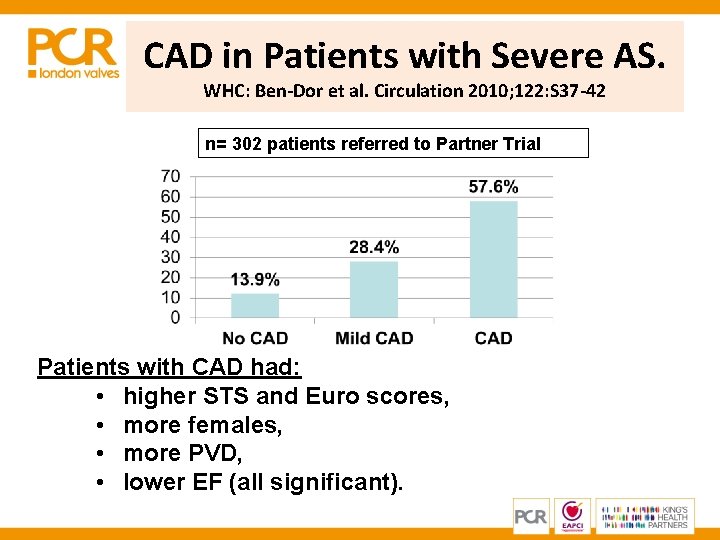
CAD in Patients with Severe AS. WHC: Ben-Dor et al. Circulation 2010; 122: S 37 -42 n= 302 patients referred to Partner Trial Patients with CAD had: • higher STS and Euro scores, • more females, • more PVD, • lower EF (all significant).
The Surgeons Experience with AVR and CAD
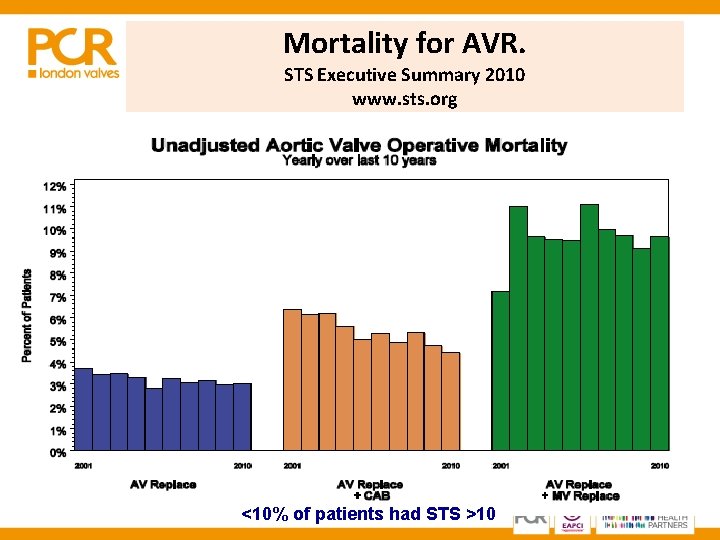
Mortality for AVR. STS Executive Summary 2010 www. sts. org <10% of patients had STS >10
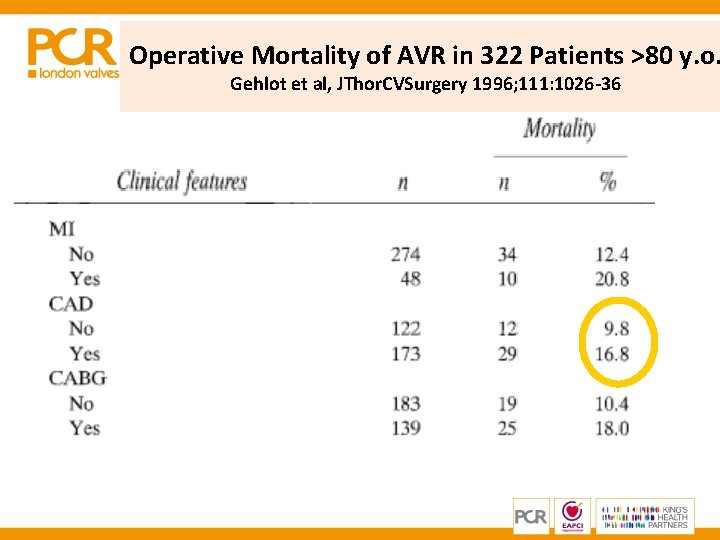
Operative Mortality of AVR in 322 Patients >80 y. o. Gehlot et al, JThor. CVSurgery 1996; 111: 1026 -36
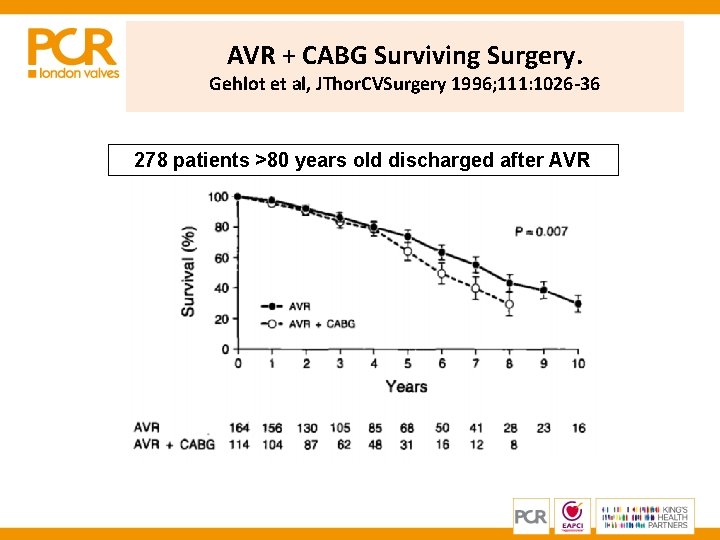
AVR + CABG Surviving Surgery. Gehlot et al, JThor. CVSurgery 1996; 111: 1026 -36 278 patients >80 years old discharged after AVR
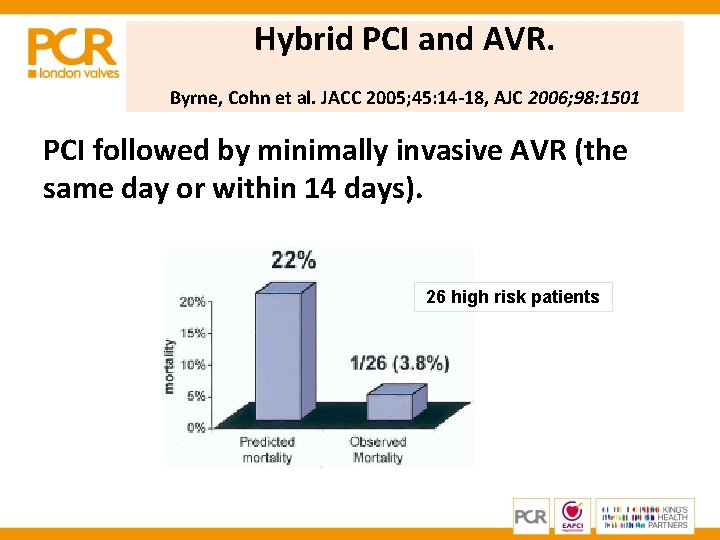
Hybrid PCI and AVR. Byrne, Cohn et al. JACC 2005; 45: 14 -18, AJC 2006; 98: 1501 PCI followed by minimally invasive AVR (the same day or within 14 days). 26 high risk patients
Conclusions from the Surgical Series • Patients with severe CAD, that jeopardize significant amount of myocardium, need revascularization before or during AVR.
ESC Guidelines of The Task Force on VHD. Vahanian et al. EHJ 2007; 28: 230 -267 • In patients with severe AS and severe CAD, AVR with concomitant CABG provides a lower mortality. • However, combined surgery carries a higher risk than isolated valve replacement in patients without CAD. • Thus, CABG should be combined whenever possible with valve surgery.
CAD and TAVR
CAD and TAVI Outcome Masson, Webb et al. CCI 2010; 76: 165 -73 • 136 patients with TAVI followed for 1 year. • 104 patients (76. 5%) had CAD. • 15 had PCI 30 -100 days prior to TAVI. None had early mortality. Complete or incomplete revascularization did not change outcome. • 30 day mortality 6. 3% (no CAD) and 11. 5% (yes CAD), p=ns. • No difference in LV improvement, MR decrease of NYHA class.
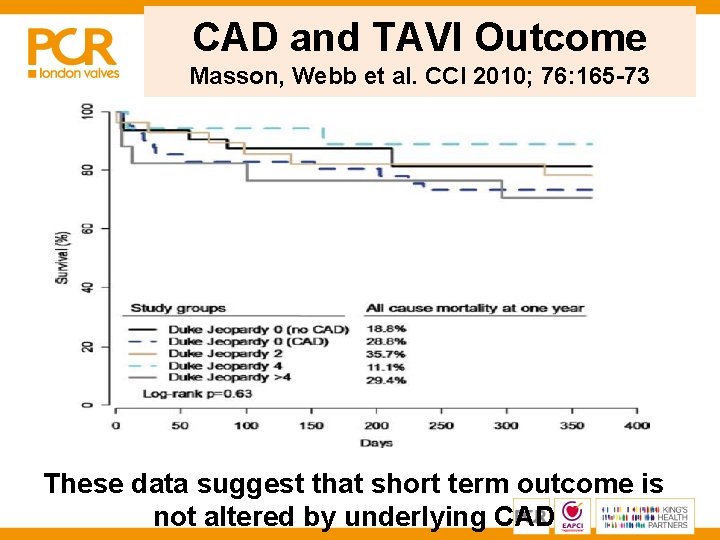
CAD and TAVI Outcome Masson, Webb et al. CCI 2010; 76: 165 -73 These data suggest that short term outcome is not altered by underlying CAD
TAVI and CAD Masson, Webb et al. CCI 2010; 76: 165 -73 • Conclusion: • The presence of CAD or nonrevascularized myocardium was not associated with an increased risk of adverse events. • Complete revascularization may not constitute a prerequisite of TAVI.
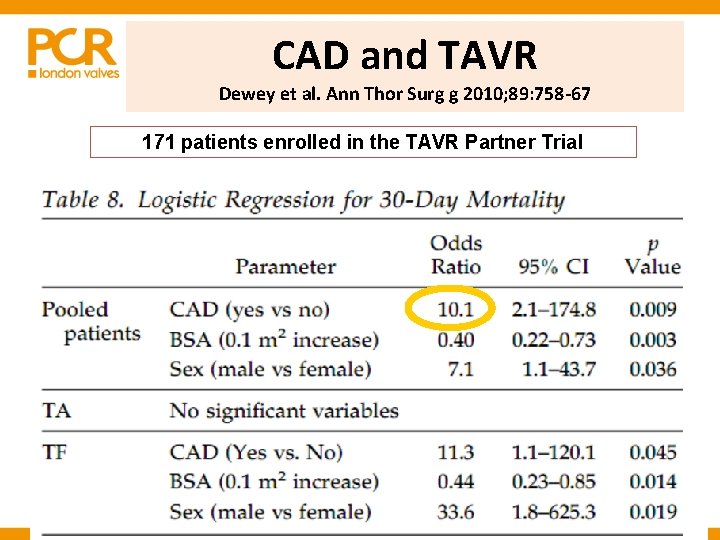
CAD and TAVR Dewey et al. Ann Thor Surg g 2010; 89: 758 -67 171 patients enrolled in the TAVR Partner Trial
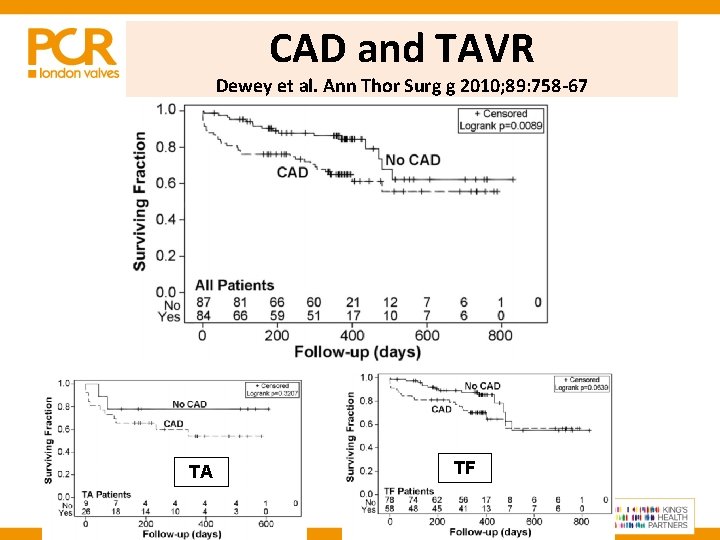
CAD and TAVR Dewey et al. Ann Thor Surg g 2010; 89: 758 -67 TA TF
CAD and TAVR Dewey et al. Ann Thor Surg g 2010; 89: 758 -67 • Patients with CAD constitute a higher-risk cohort: - higher logistic Euro. SCOREs, - lower EF, - larger LV end diastolic volumes, - more significant mitral regurgitation. - more strokes (increase atherosclerotic burden? ) • Deaths: 11/12 30 -day deaths were in patients with CAD. • TA group: no 30 d death in patients without CAD.
Coronary Revascularization preparing for TAVI
CAD and TAVI. Gautier et al. Eurointerv 2011; 7: 549 -55 230 patients with TAVI: • 63% had CAD patients had higher risk: • Euroscore 31 vs 23%. • More carotid stenosis 34 vs 9% • >2 comorbidities 70 vs 50% 67 patients with 1 or more CAD: • 11 patients had PCI (2 during TAVI). • 56 had no revascularization. • No periprocedural Q wave MI
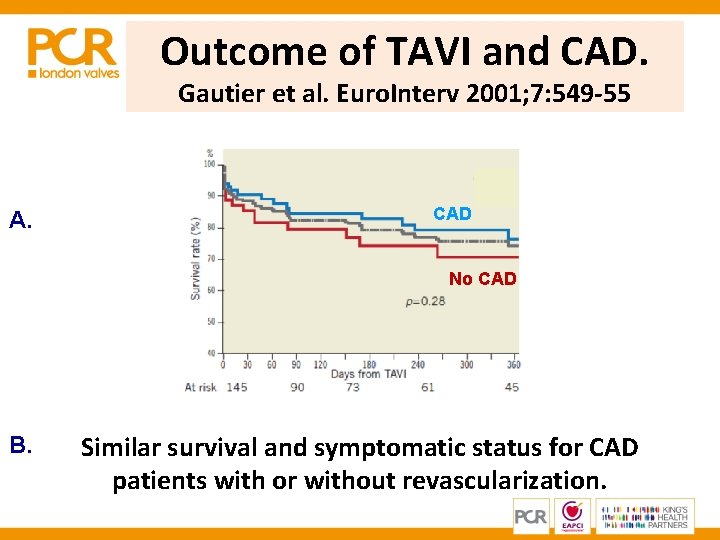
Outcome of TAVI and CAD. Gautier et al. Euro. Interv 2001; 7: 549 -55 A. CAD No CAD B. Similar survival and symptomatic status for CAD patients with or without revascularization.
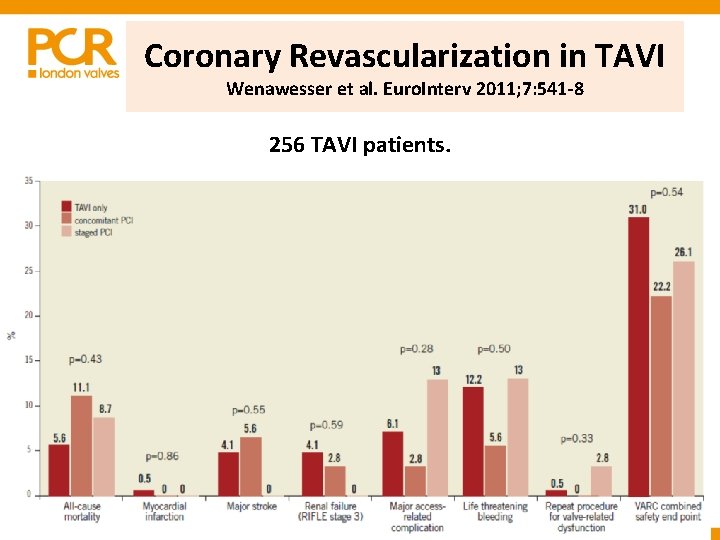
Coronary Revascularization in TAVI Wenawesser et al. Euro. Interv 2011; 7: 541 -8 256 TAVI patients. 167 with CAD: 59 had PCI (23 staged, 36 concomitant).
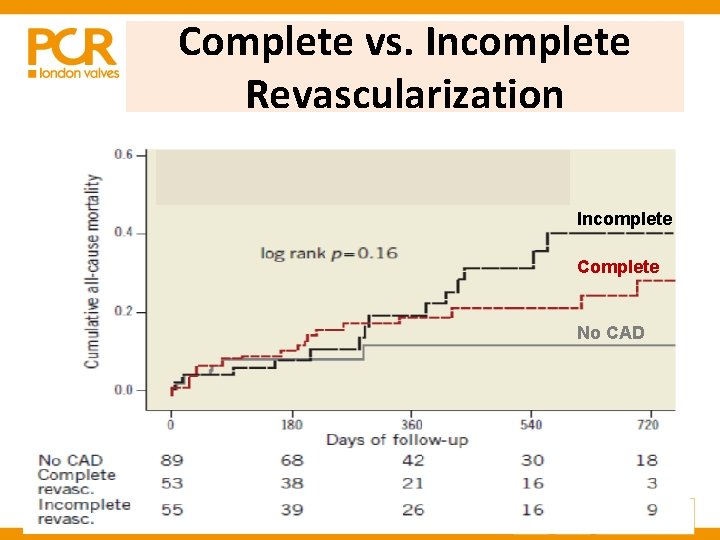
Complete vs. Incomplete Revascularization Incomplete Complete No CAD
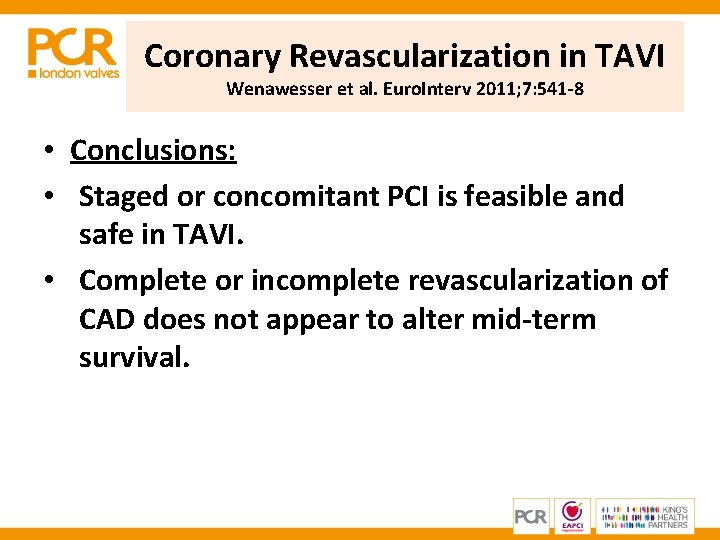
Coronary Revascularization in TAVI Wenawesser et al. Euro. Interv 2011; 7: 541 -8 • Conclusions: • Staged or concomitant PCI is feasible and safe in TAVI. • Complete or incomplete revascularization of CAD does not appear to alter mid-term survival.
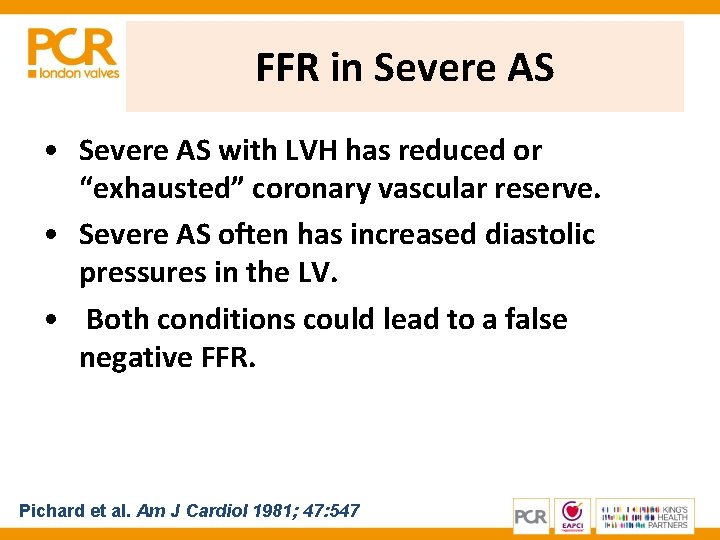
FFR in Severe AS • Severe AS with LVH has reduced or “exhausted” coronary vascular reserve. • Severe AS often has increased diastolic pressures in the LV. • Both conditions could lead to a false negative FFR. Pichard et al. Am J Cardiol 1981; 47: 547
How do I look at this data? • Stable CAD may do well once the hemodynamic burden of severe AS is removed. • Progression of CAD or plaque instability could bring on AMI, angina or SD. • Hemodynamic instability (ie. , ↓ BP) in the presence of untreated severe CAD may have higher mortality.
Conclusions • Major territories of ischemia should be revascularized. • It seems prudent and safe to do it in a staged manner. • Concomitant TAVR and PCI is possible, but needs further evaluation before widespread recommendation.
The end