
Coronary Artery Disease Angina and MI Coronary Artery
- Slides: 55
Coronary Artery Disease, Angina and MI
Coronary Artery Disease • Most CAD nothing more than Atherosclerosis in the coronary arteries • Chronic leads to angina pectoris • Acute is MI – 700, 000 new MIs in U. S. – 500, 000 recurrent MIs in U. S.
Risk Factors • Major nonmodifiable – Age/gender – Family hx • Major modifiable – – – – Dyslipidemia Hypertension Smoking DM, insulin resistance Obesity Sedentary Atherogenic diet • Nonconventional – HS CRP – Homocysteine – Lp(a)
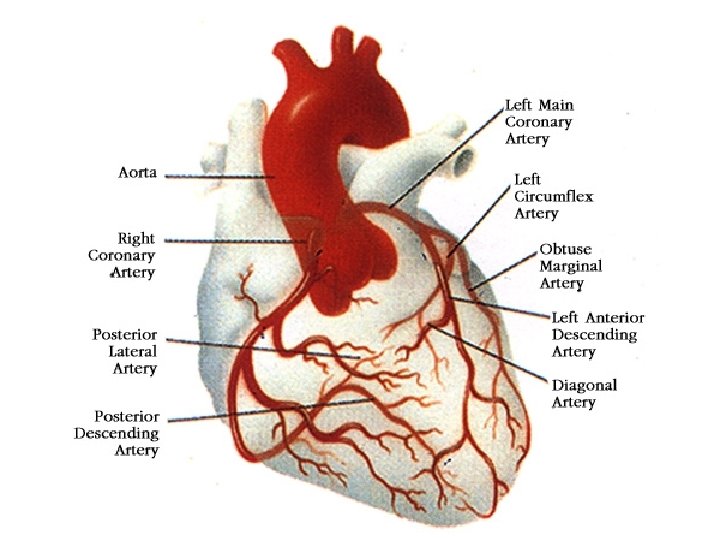
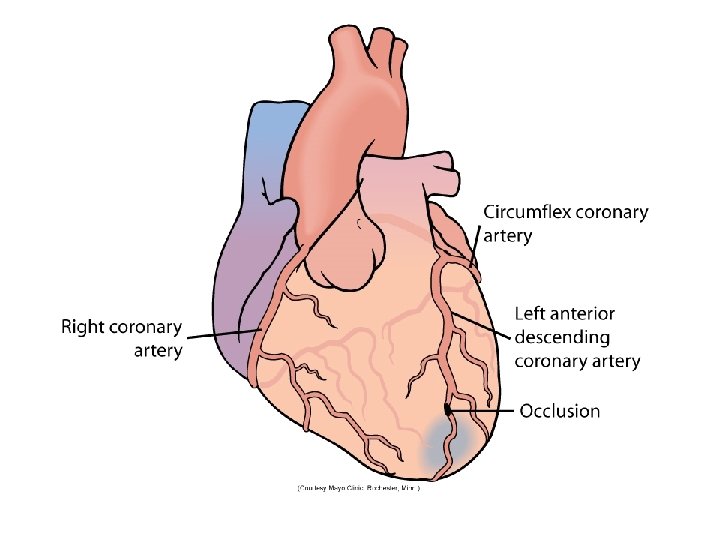
Coronary Arteries • Coronary Arteries surround and then penetrate the heart muscle – Right coronary artery (RCA) (back of heart) – Left (Main) coronary artery • Left circumflex (Side) • Left anterior descending (Front)
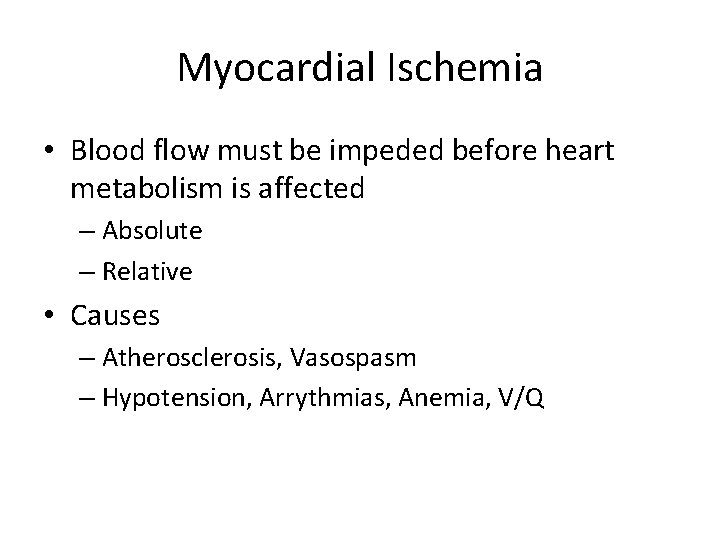
Myocardial Ischemia • Blood flow must be impeded before heart metabolism is affected – Absolute – Relative • Causes – Atherosclerosis, Vasospasm – Hypotension, Arrythmias, Anemia, V/Q
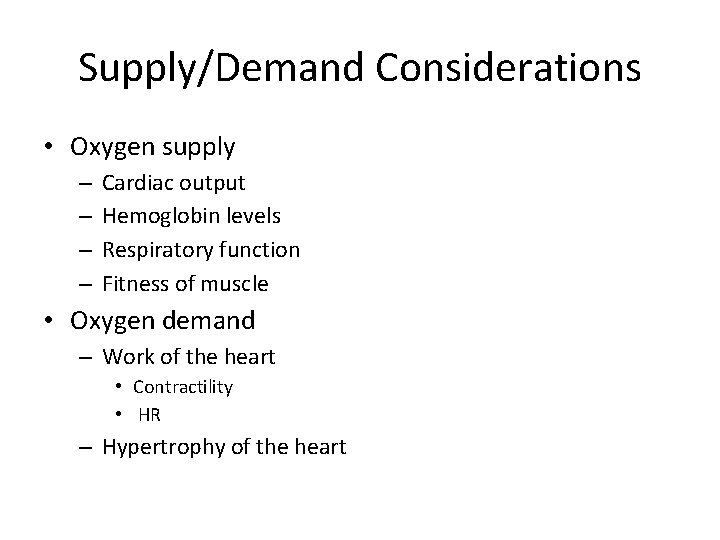
Supply/Demand Considerations • Oxygen supply – – Cardiac output Hemoglobin levels Respiratory function Fitness of muscle • Oxygen demand – Work of the heart • Contractility • HR – Hypertrophy of the heart
Myocardial Ischemia • Myocardium becomes ischemic within 10 seconds of coronary occlusion • Working cells remain viable for up to 20 minutes – Anaerobic mechanisms kick in • Lactic acid • Free radical damage, esp after reperfusion
Cardiac Ischemia Manifestation • Stable angina – Chronic obstruction – Chest pain with exertion – May radiate, may have diaphoresis, SOB, pallor – Relief with rest or nitrates • Prinzmetal angina • Silent ischemia • Unstable angina – May become a myocardial infarction
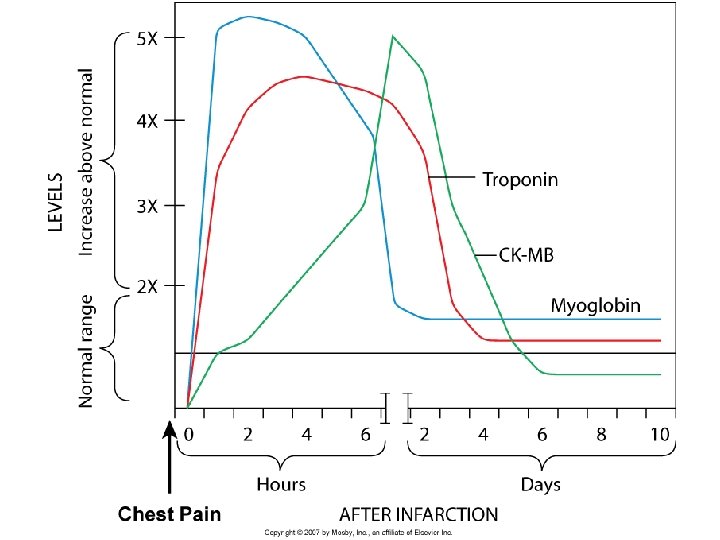
Evaluation • • • H&P Lipids, BP, risk factor assessment ECG Stress test Angiography Unstable angina – Cardiac enzymes (rule in/out for MI)
Treatment for Stable Angina • Drug – Nitrates – Beta blockers – Calcium Channel Blockers – Atherosclerotic disease tx (HTN, Lipids) • Surgery – Bypass – PCI (PTCA, Stent) – Experimental
Acute Coronary Syndrome • Unstable Angina – reversible ischemia – Rupture of an unstable plaque – Clots spontaneously resolve over time – Damage depends on size of clot and rate of dissolution vs. rate of clot formation – Myocardial infarction
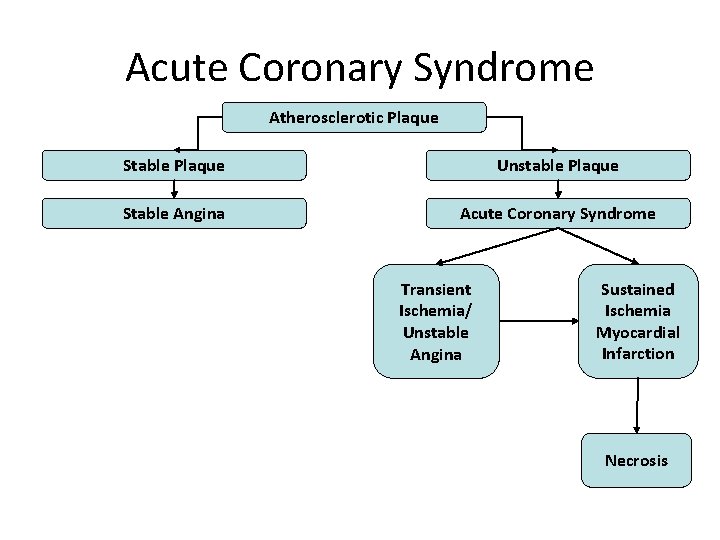
Acute Coronary Syndrome Atherosclerotic Plaque Stable Plaque Unstable Plaque Stable Angina Acute Coronary Syndrome Transient Ischemia/ Unstable Angina Sustained Ischemia Myocardial Infarction Necrosis
MI Pathophysiology • Plaque rupture --> Clotting cascade active • Thrombus occludes vessel • Myocardium becomes hypoxic – Shift to Anaerobic Respiration – Waste products release/hypoxic injury – Cardiac output impaired • Norepinephrine/Epinephrine Release • Renin release
Myocardial Changes • Myocardial stunning – Temporary loss of contractility that persists for hours to days • Myocardial hibernation – Chronically ischemic; myocytes are hibernating to preserve function until perfusion can be restored • Myocardial remodeling – Loss of contractility mediated by Ang II, catecholamines, and inflammatory cytokines
Ischemic Morphology • Increased O 2 demand: epinephrine, RAAS • Hypoactive wall/Necrosis – Transmural – Subendocardial • Conductile problems – PVCs – Dysrhythmias
ECG changes • Conductile cells of heart are most sensitive to hypoxia • Classic: T-wave inversion, ST-elevation, Q waves • Non-Q wave MI: no Q waves, possibly normal ST segment • R/O CANNOT be made with ECG alone!!!
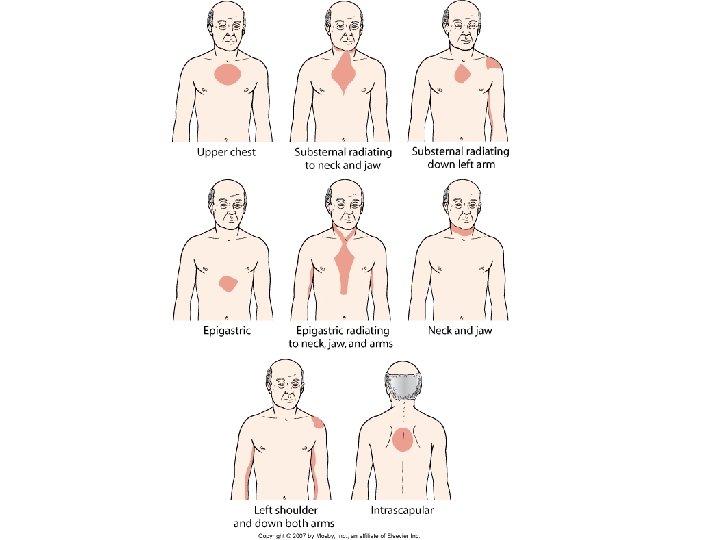
MI Manifestations • Prodromal – Symptoms usually appear 24 -72 hours before – Malaise, Tiredness, Weakness fatigue – Visual disturbance • Acute Phase – Symptoms: Chest Pain, Dyspnea, Nausea, Diaphoresis, weakness, fatigue, anxiety – Signs: Gray/ashen, gasping, clutching, loss of consciousness, confused, ECG changes, tachycardia, tachypnea
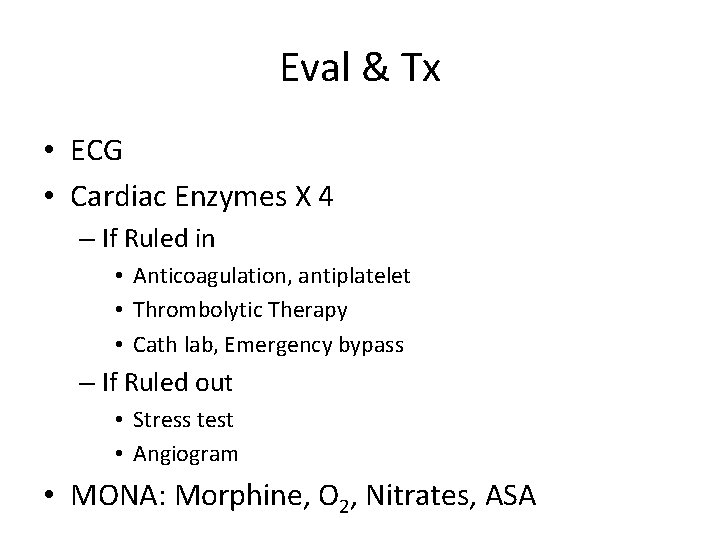
Eval & Tx • ECG • Cardiac Enzymes X 4 – If Ruled in • Anticoagulation, antiplatelet • Thrombolytic Therapy • Cath lab, Emergency bypass – If Ruled out • Stress test • Angiogram • MONA: Morphine, O 2, Nitrates, ASA
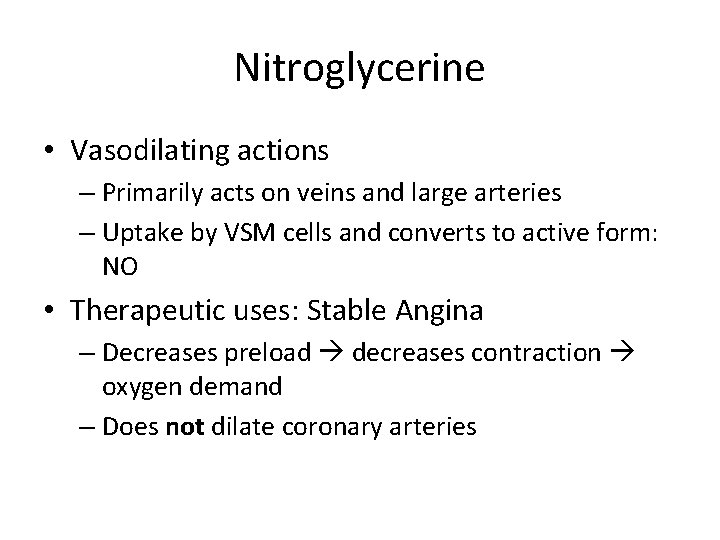
Nitroglycerine • Vasodilating actions – Primarily acts on veins and large arteries – Uptake by VSM cells and converts to active form: NO • Therapeutic uses: Stable Angina – Decreases preload decreases contraction oxygen demand – Does not dilate coronary arteries
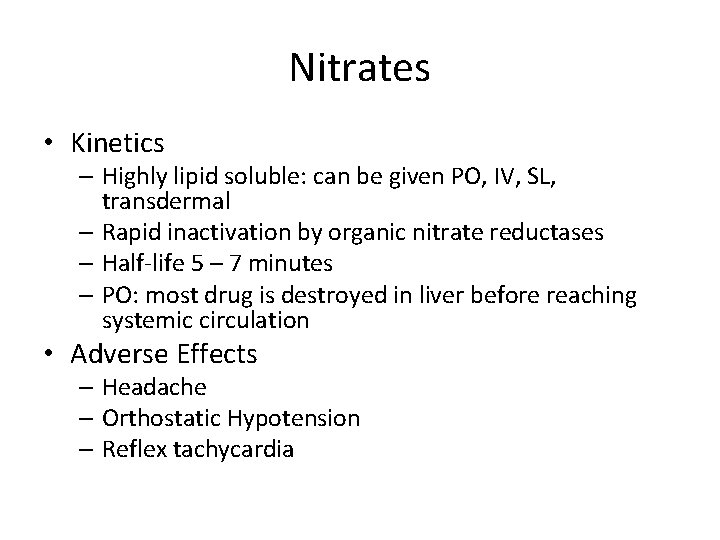
Nitrates • Kinetics – Highly lipid soluble: can be given PO, IV, SL, transdermal – Rapid inactivation by organic nitrate reductases – Half-life 5 – 7 minutes – PO: most drug is destroyed in liver before reaching systemic circulation • Adverse Effects – Headache – Orthostatic Hypotension – Reflex tachycardia
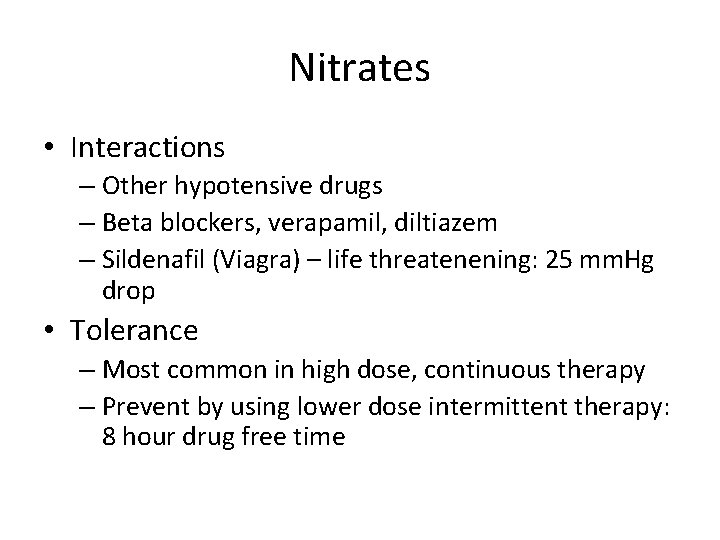
Nitrates • Interactions – Other hypotensive drugs – Beta blockers, verapamil, diltiazem – Sildenafil (Viagra) – life threatenening: 25 mm. Hg drop • Tolerance – Most common in high dose, continuous therapy – Prevent by using lower dose intermittent therapy: 8 hour drug free time
Nitrates • Preparations – Sublingual: works in 1 – 3 minutes; lasts an hour; expires within 6 months of opening – Translingual spray – Topical Ointment – Transdermal patch – PO Sustained release capsules or tablets: higher doses d/t first pass effect (isosorbide mononitrate, dinitrate) – IV infusion: glass bottle, special (vented) tubing • Nursing implications – Check BP before and after administering – Assess for headache – Discontinue slowly if patient has been on it for a while
Immediate Post MI Tx • Most common cause of death within 72 hours of MI is ________ – Must be monitored • • Reduce myocardial workload Prevent Remodeling Reduce chances of reocclusion Reduce oxidative stress (reperfusion injury)
Post MI Treatment • Lifestyle – Diet – Exercise – Cardiac Rehab – Stress management • Drugs – Antiplatelet: ASA, clopidogrel, persantine – Beta blocker – Statin medication – Treat risk factors (HTN, lipid, smoke, etc. ) – Sometimes coumadin
Post MI Evaluation • Stress test • Angiography • Symptoms
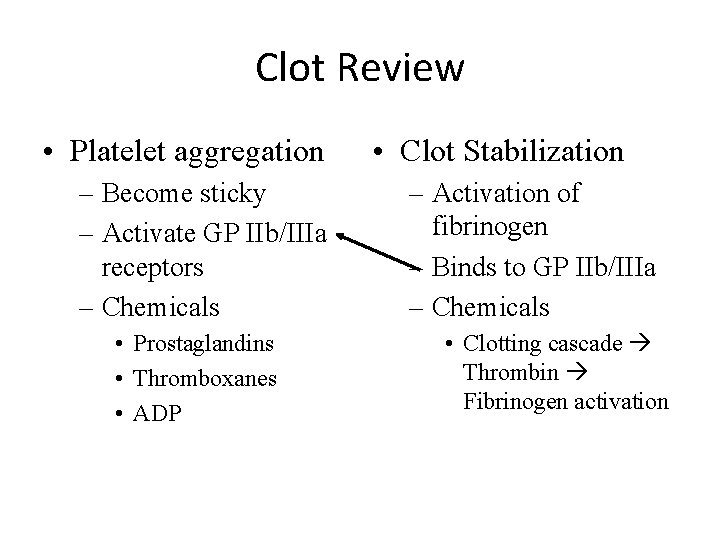
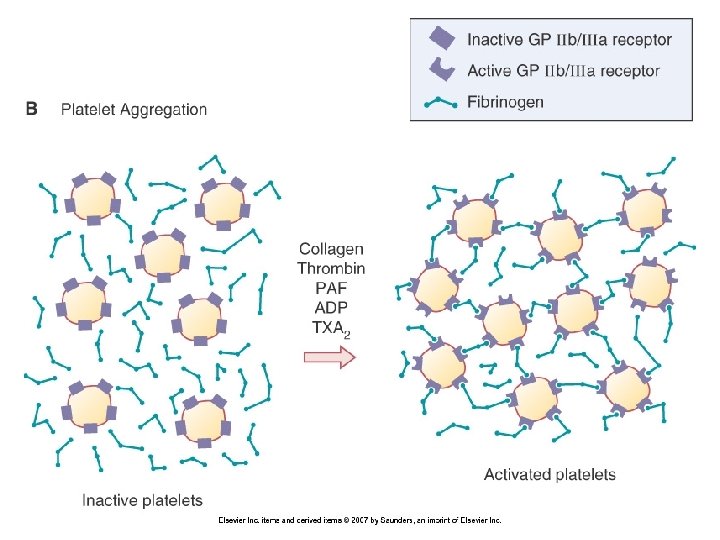
Clot Review • Platelet aggregation – Become sticky – Activate GP IIb/IIIa receptors – Chemicals • Prostaglandins • Thromboxanes • ADP • Clot Stabilization – Activation of fibrinogen – Binds to GP IIb/IIIa – Chemicals • Clotting cascade Thrombin Fibrinogen activation
Clots
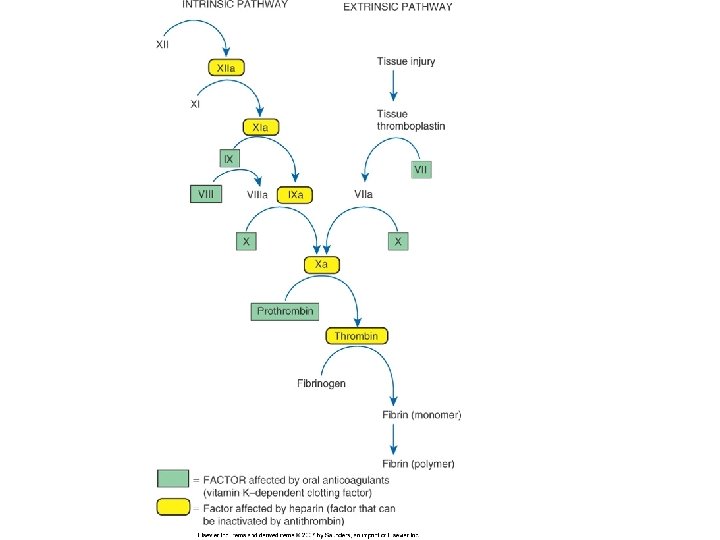
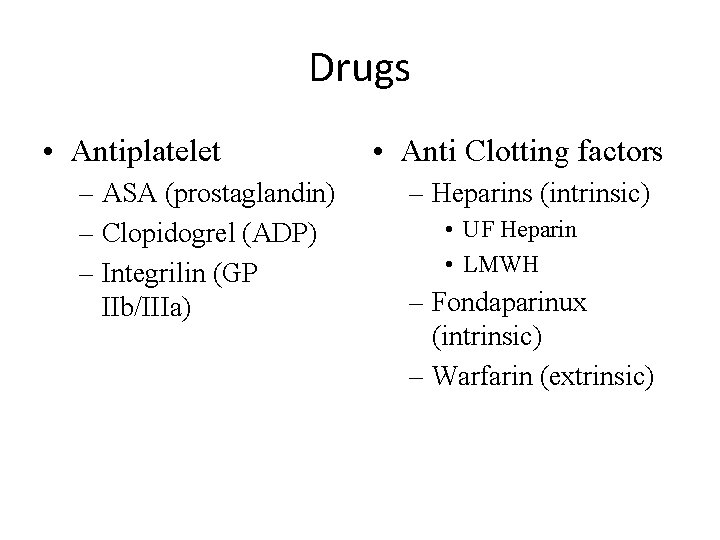
Drugs • Antiplatelet – ASA (prostaglandin) – Clopidogrel (ADP) – Integrilin (GP IIb/IIIa) • Anti Clotting factors – Heparins (intrinsic) • UF Heparin • LMWH – Fondaparinux (intrinsic) – Warfarin (extrinsic)
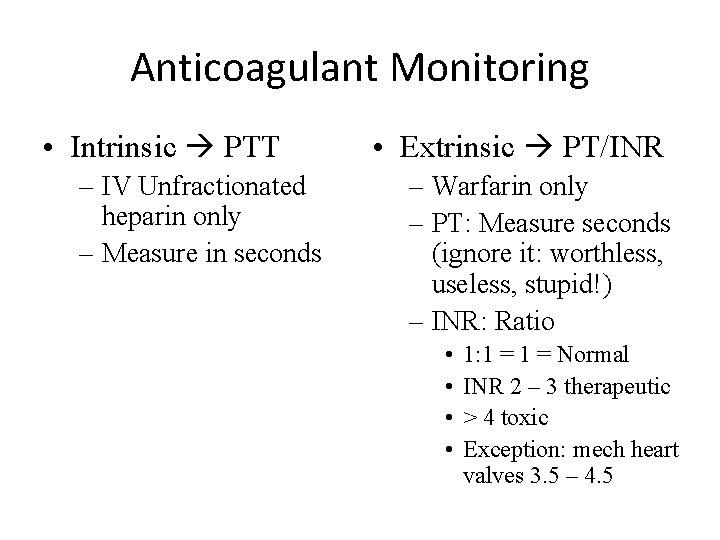
Anticoagulant Monitoring • Intrinsic PTT – IV Unfractionated heparin only – Measure in seconds • Extrinsic PT/INR – Warfarin only – PT: Measure seconds (ignore it: worthless, useless, stupid!) – INR: Ratio • • 1: 1 = Normal INR 2 – 3 therapeutic > 4 toxic Exception: mech heart valves 3. 5 – 4. 5
Dyslipidemia • Half of all heart attacks occur in persons with elevated cholesterol • Lipoprotein – Lipids, Phospholipids, Cholesterol, Tryglycerides • Needed for – plasma membrane maintenance – Sterol hormones – Bile acids – Skin (water resistance)
Cholesterols • Sources of cholesterol – Dietary absorption (exogenous) – Synthesis of new cholesterol (endogenous) – Increased dietary consumption inhibits synthesis – Fat substrates • Triglycerides – Storage form of lipids long term storage – Adipose tissue
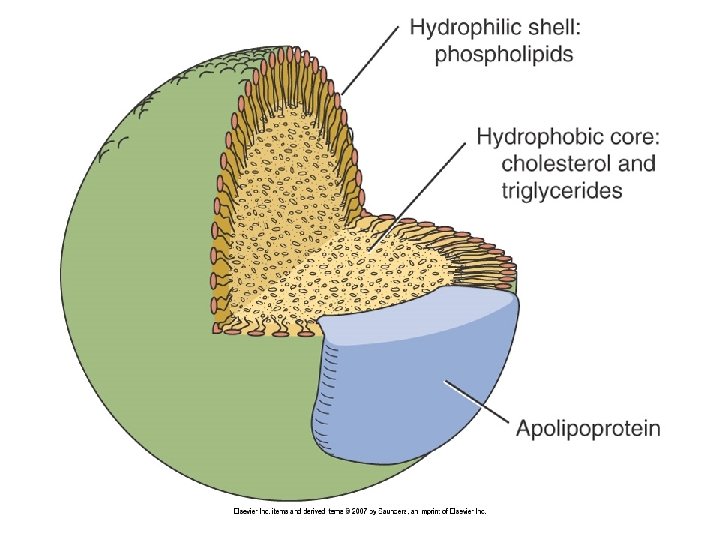
Plasma Lipoproteins • Function: carrier molecules • Structure – Hydrophobic Core – Hydrophillic shell • Phospholipids • Apolipoproteins – – Recognition sites for receptors Activate enzymes Increase structural stability A-I, A-II, B-100
Cholesterol Cycle • Chylomicrons – Lipid packages absorbed from intestine – Transported to liver • Liver manufactures – VLDL: triglycerides + protein – LDL: cholesterol + protein – HDL: phospholipids + protein – Lipoprotein(a) [Lp(a)]
VLDL • • one B-100 apolipoprotein triglyceride core deliver triglycerides to muscle and adipose Clinical significance – Accounts for nearly all triglycerides in blood – Normal triglyceride level is <150 mg/dl – >150 associated with Metabolic syndrome – >400 - 500 associated with pancreatitis
LDL • One B-100 apolipoprotein • Cholesterol core • Deliver cholesterol to nonhepatic tissues – Cells that need cholesterol endocytose the LDL molecule – If more cholesterol is needed more LDL receptors are produced • Clinical significance – Direct correlation with heart disease – 25% reduction of elevated LDL corelated with up to 50% reduction in MI risk
HDL • • Contain apolipoprotein A-I, or A-I and A-II Cholesterol core Transport cholesterol back to liver Clinical Significance – Promote cholesterol removal – Low cholesterol is associated with increased risk of atherosclerosis – Apparently only A-I HDL is cardioprotective – Subtype analysis
Role of Cholesterol in Atherosclerosis • LDL is benign until oxidized in subendothelial (intimal) space • Oxidized LDL – Attract monocytes and promote differentiation to macrophages – Inhibit macrophage mobility: chronic inflammation – Promote uptake by macrophages – Are cytotoxic: damage endothelial cells and contribute to inflammation
Dyslipidemia • Imbalance in proportion of lipoproteins • Primary • Secondary – DM – Hypothyroidism – Pancreatitis – Renal nephrosis
Dyslipidemia Tx Goals • Total cholesterol – >240 high – 200 – 240 gray zone • LDL – <160 high – <130 depending on risk factors – <100 depending on risk factors • HDL – > 40 for men; 50 for women low • Triglycerides – < 150 high
Determinants of Treatment Goals • Several schemes – Number of CAD risk factors – Ten year Framingham risk score – CHD equivalent • Diabetes • Other atherosclerotic diseases (PAD, AAA, carotid atherosclerosis
Treatment • TLC – Diet – Weight Control – Exercise – Smoking Cessation (also helps HDL) • Drug Therapy – Primary goal is lower LDL – Secondary targets • Metabolic syndrome • Lower Triglycerides • Raise HDL
Cholesterol Medications • • • See table 48 -7 Statins Bile Acid sequestrants Fibrates Niacin (Nicotinic acid) Zetia
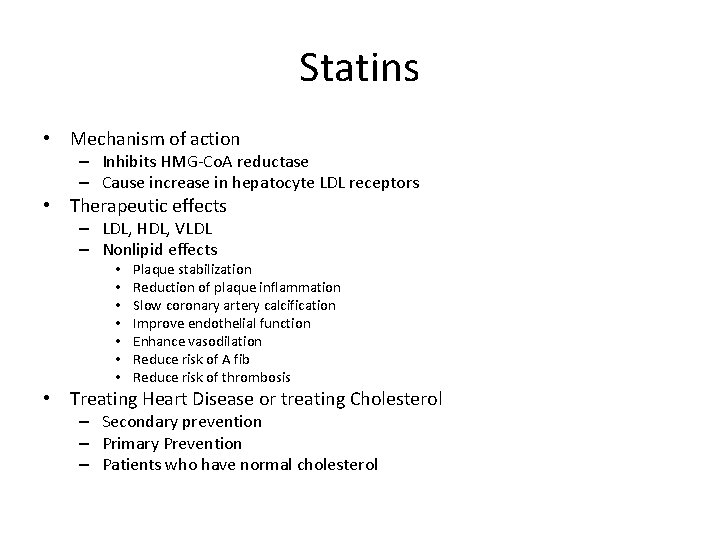
Statins • Mechanism of action – Inhibits HMG-Co. A reductase – Cause increase in hepatocyte LDL receptors • Therapeutic effects – LDL, HDL, VLDL – Nonlipid effects • • Plaque stabilization Reduction of plaque inflammation Slow coronary artery calcification Improve endothelial function Enhance vasodilation Reduce risk of A fib Reduce risk of thrombosis • Treating Heart Disease or treating Cholesterol – Secondary prevention – Primary Prevention – Patients who have normal cholesterol
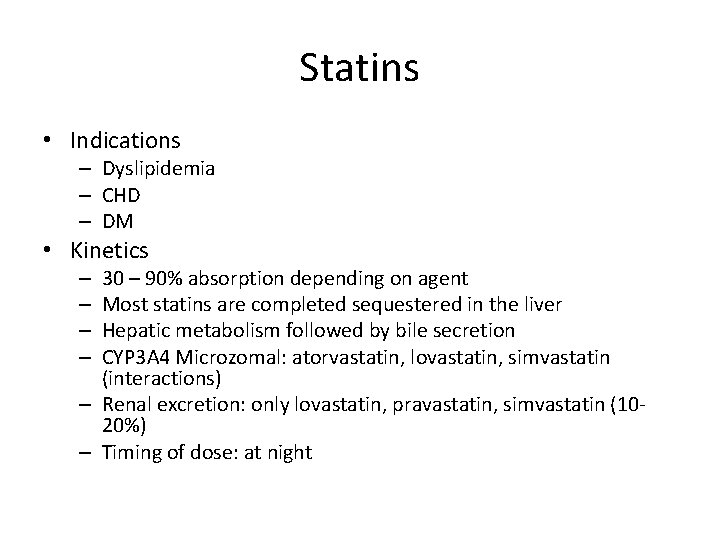
Statins • Indications – Dyslipidemia – CHD – DM • Kinetics 30 – 90% absorption depending on agent Most statins are completed sequestered in the liver Hepatic metabolism followed by bile secretion CYP 3 A 4 Microzomal: atorvastatin, lovastatin, simvastatin (interactions) – Renal excretion: only lovastatin, pravastatin, simvastatin (1020%) – Timing of dose: at night – –
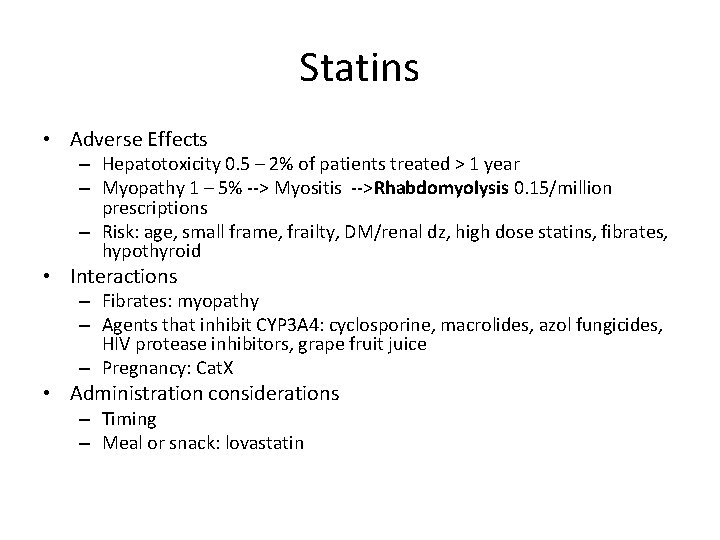
Statins • Adverse Effects – Hepatotoxicity 0. 5 – 2% of patients treated > 1 year – Myopathy 1 – 5% --> Myositis -->Rhabdomyolysis 0. 15/million prescriptions – Risk: age, small frame, frailty, DM/renal dz, high dose statins, fibrates, hypothyroid • Interactions – Fibrates: myopathy – Agents that inhibit CYP 3 A 4: cyclosporine, macrolides, azol fungicides, HIV protease inhibitors, grape fruit juice – Pregnancy: Cat. X • Administration considerations – Timing – Meal or snack: lovastatin
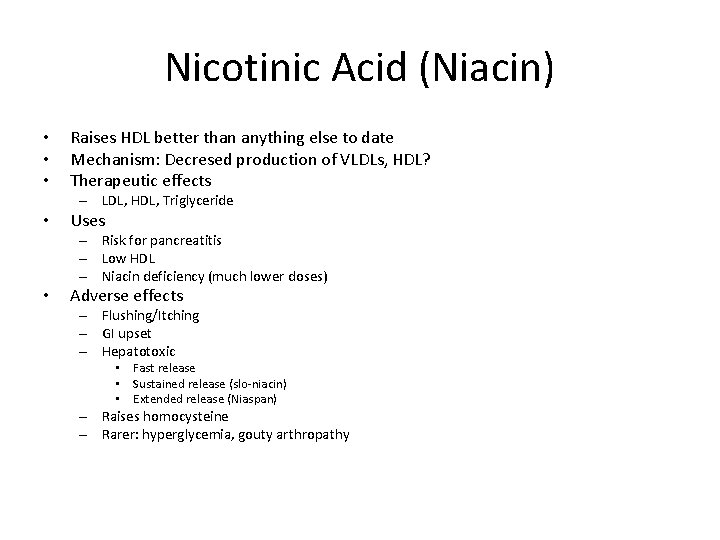
Nicotinic Acid (Niacin) • • • Raises HDL better than anything else to date Mechanism: Decresed production of VLDLs, HDL? Therapeutic effects – LDL, HDL, Triglyceride • Uses – Risk for pancreatitis – Low HDL – Niacin deficiency (much lower doses) • Adverse effects – Flushing/Itching – GI upset – Hepatotoxic • Fast release • Sustained release (slo-niacin) • Extended release (Niaspan) – Raises homocysteine – Rarer: hyperglycemia, gouty arthropathy
Bile Acid Sequestrants • • Older: Cholestyramine and Cholestipol Mechanism of Action – – • Bind to Bile acids in intestine Prevents reabsorption of cholesterol Body needs to increase synthesis Increase of LDL hepatocytes Uses – High LDL – Usually in combo with statin • Adverse effects – GI complaints: constipation, bloating, nausea • Interactions – May bind to other drugs and prevent their absorption – Vitamins A, D, E, K – Thiazides, digoxin, warfarin, some antibiotics • Newer: Cholesvelam (Welchol) – Better tolerated – Less interaction with Vitamins and drugs
Fibrates • Mechanism mostly not understood • Therapeutic effects – HDL – LDL – Triglycerides • Adverse effects – Gallstones – Myopathy --> rhabdomyolysis – Liver damage • Interactions – Increased risk of rhabdo when combined with statins
Ezetimibe (Zetia-no class) • Mechanism – Blocks cholesterol uptake at the brush border of intestine • Therapeutic effects – LDL, HDL, Triglycerides • Uses – Lower LDL – Adjunct to statins • Adverse effects – none? • Interactions – Statins – Fibrates • NO BENEFIT IN PREVENTING CAD