
Cornelis de Vos Triumph of Bacchus 17 th
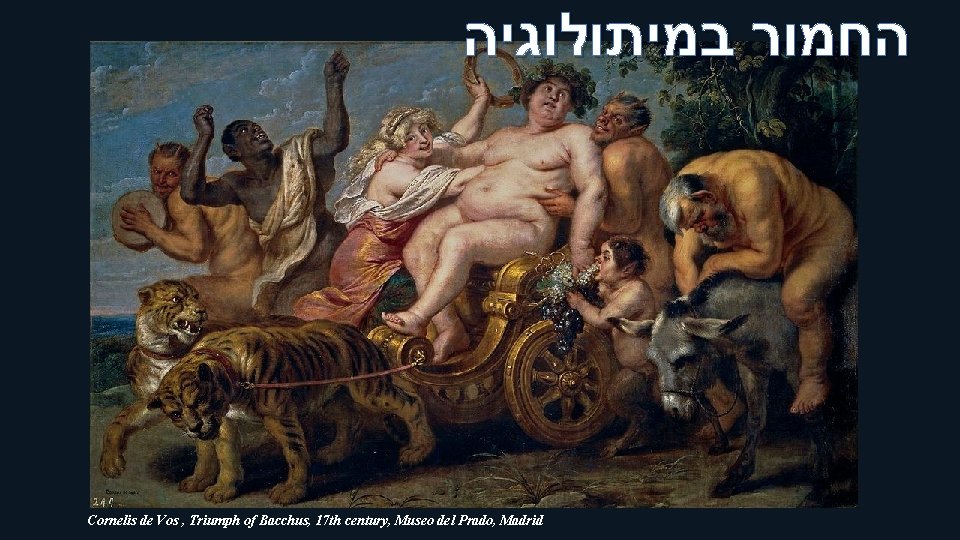
החמור במיתולוגיה . Cornelis de Vos , Triumph of Bacchus, 17 th century, Museo del Prado, Madrid
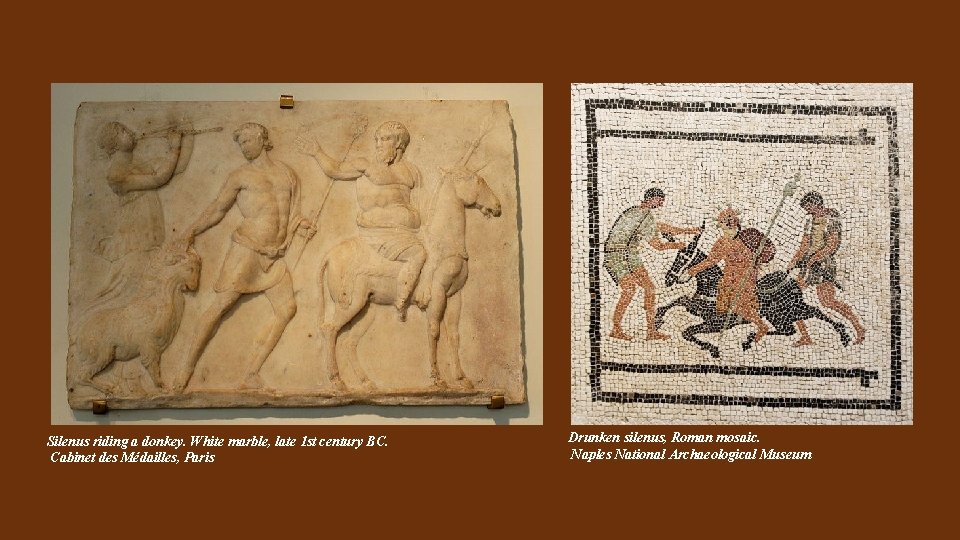
Silenus riding a donkey. White marble, late 1 st century BC. Cabinet des Médailles, Paris Drunken silenus, Roman mosaic. Naples National Archaeological Museum
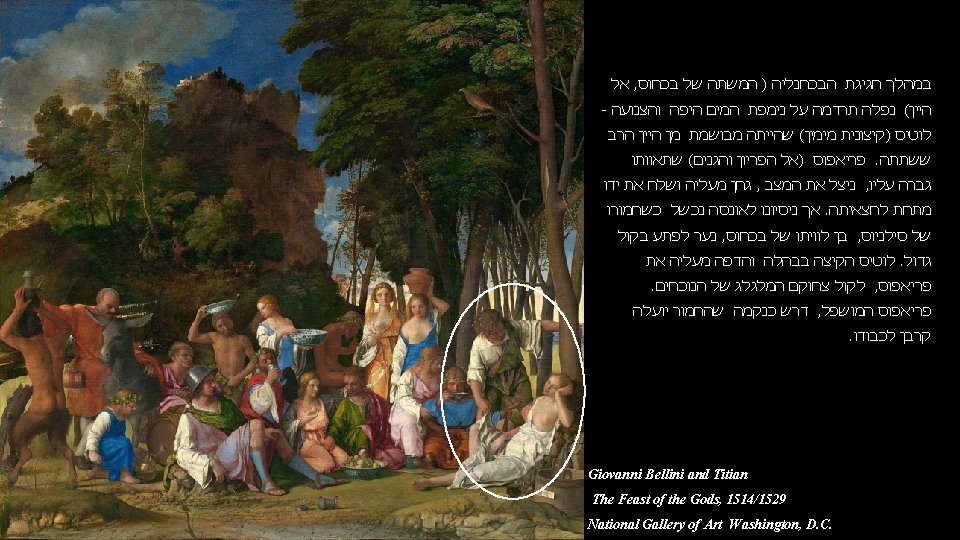
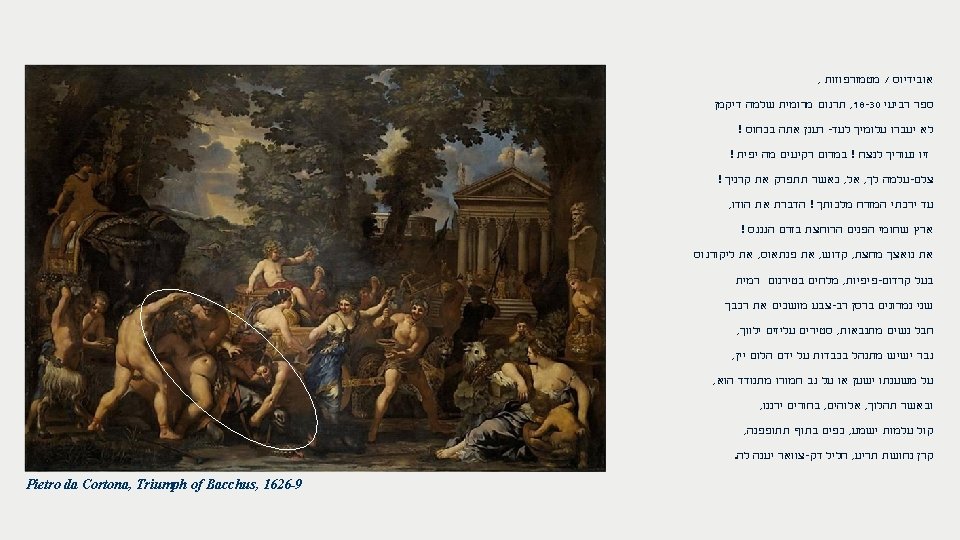
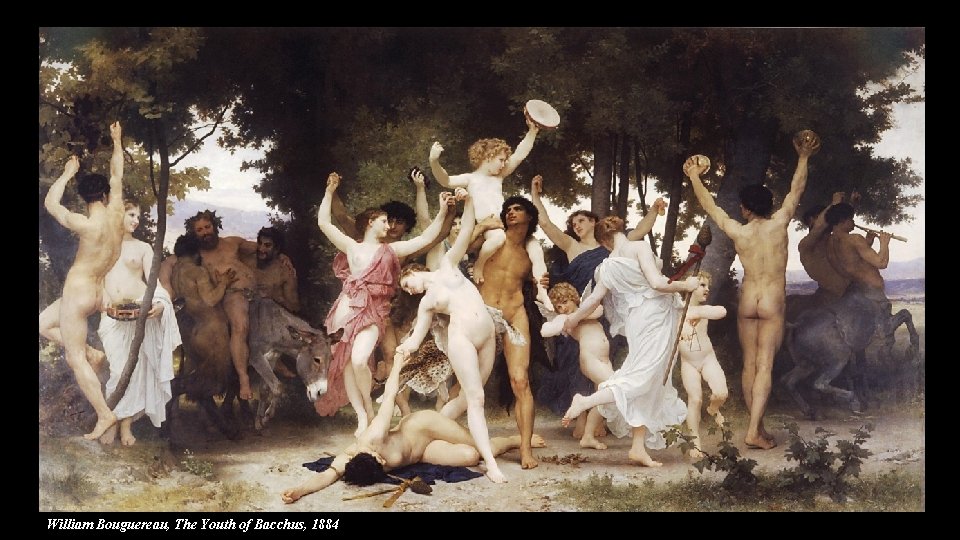
William Bouguereau, The Youth of Bacchus, 1884
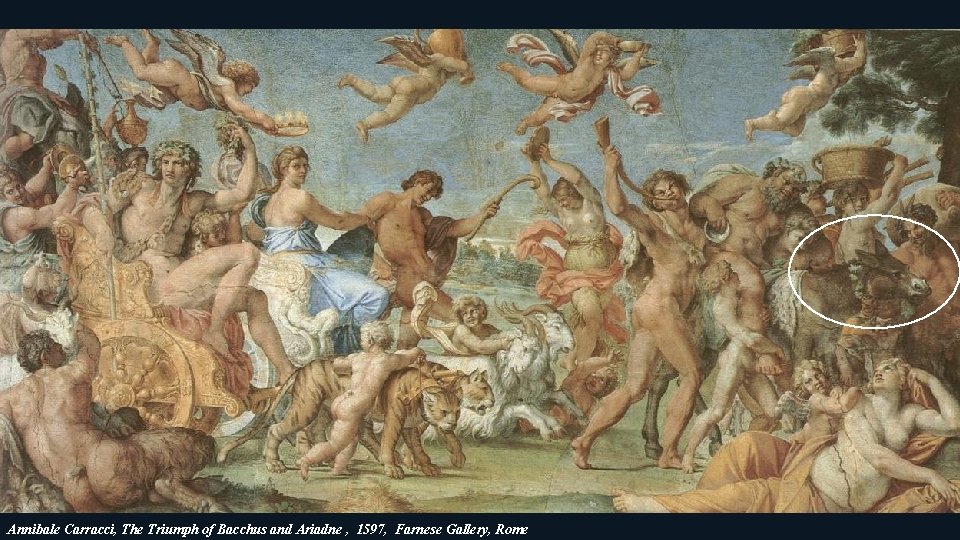
Annibale Carracci, The Triumph of Bacchus and Ariadne , 1597, Farnese Gallery, Rome
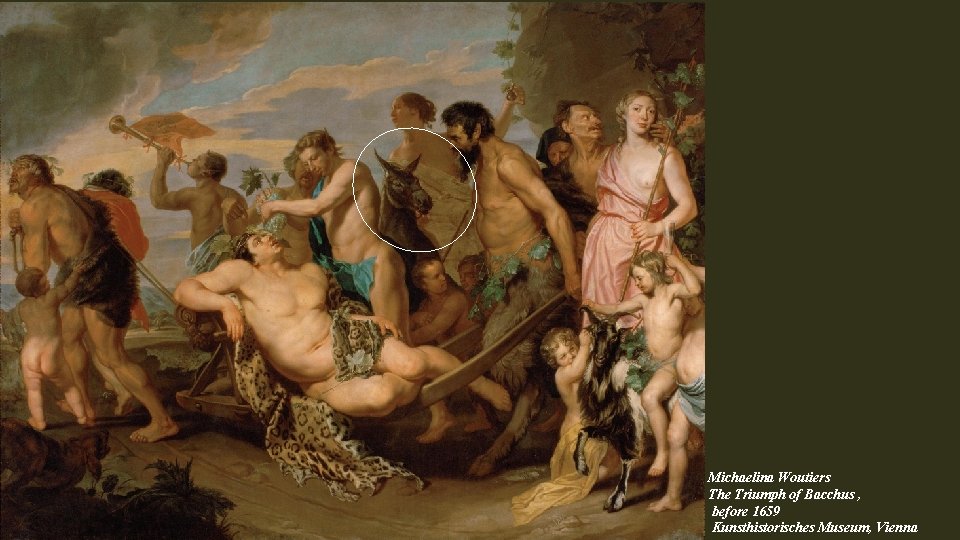
Michaelina Woutiers The Triumph of Bacchus , before 1659 Kunsthistorisches Museum, Vienna
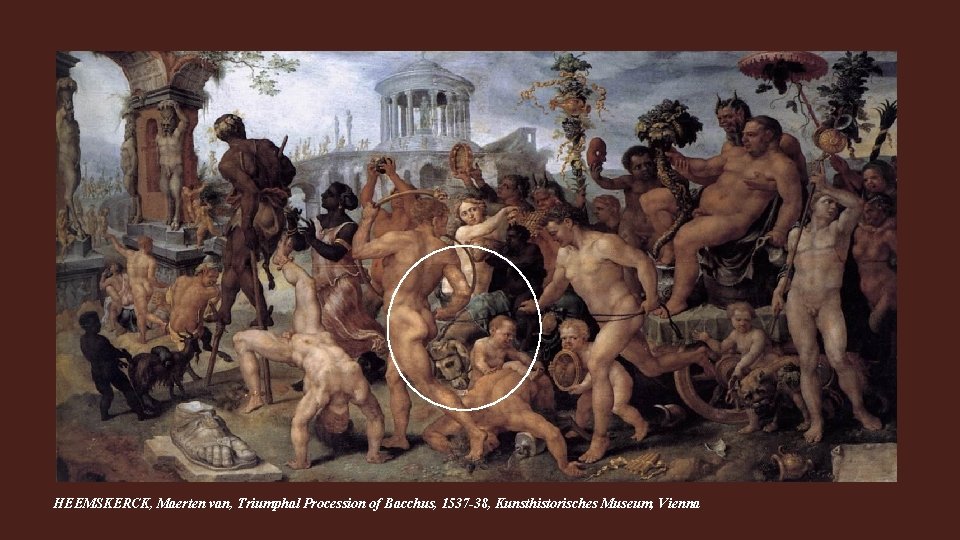
HEEMSKERCK, Maerten van, Triumphal Procession of Bacchus, 1537 -38, Kunsthistorisches Museum, Vienna
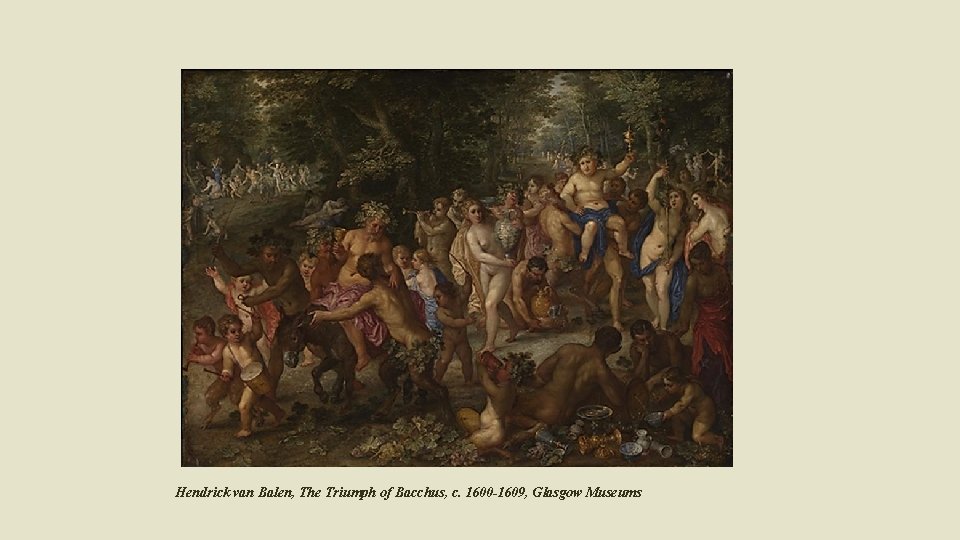
Hendrick van Balen, The Triumph of Bacchus, c. 1600 -1609, Glasgow Museums
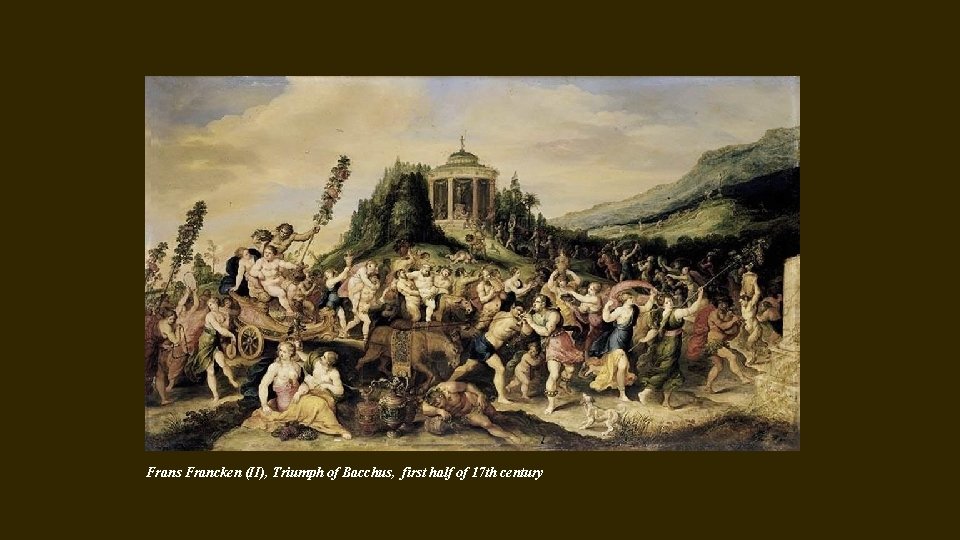
Frans Francken (II), Triumph of Bacchus, first half of 17 th century
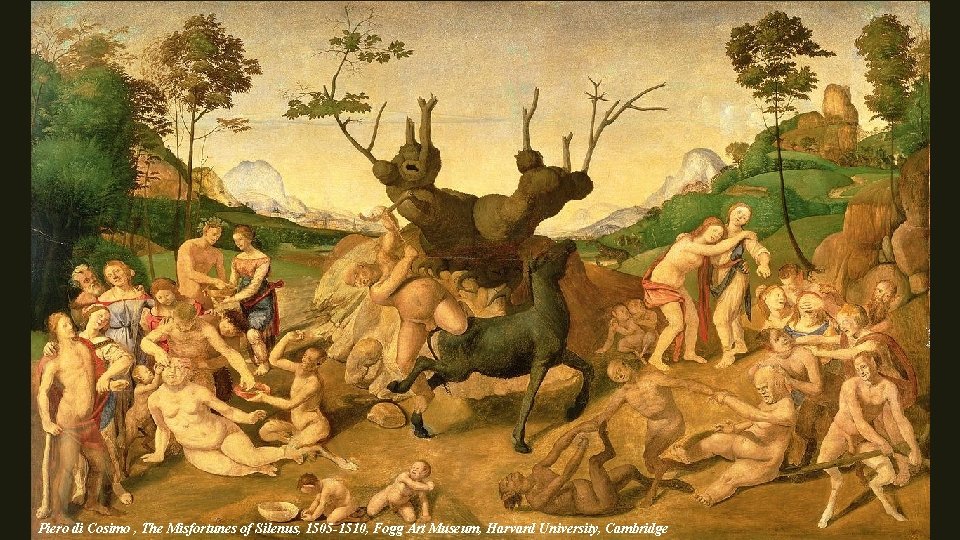
Piero di Cosimo , The Misfortunes of Silenus, 1505 -1510, Fogg Art Museum, Harvard University, Cambridge
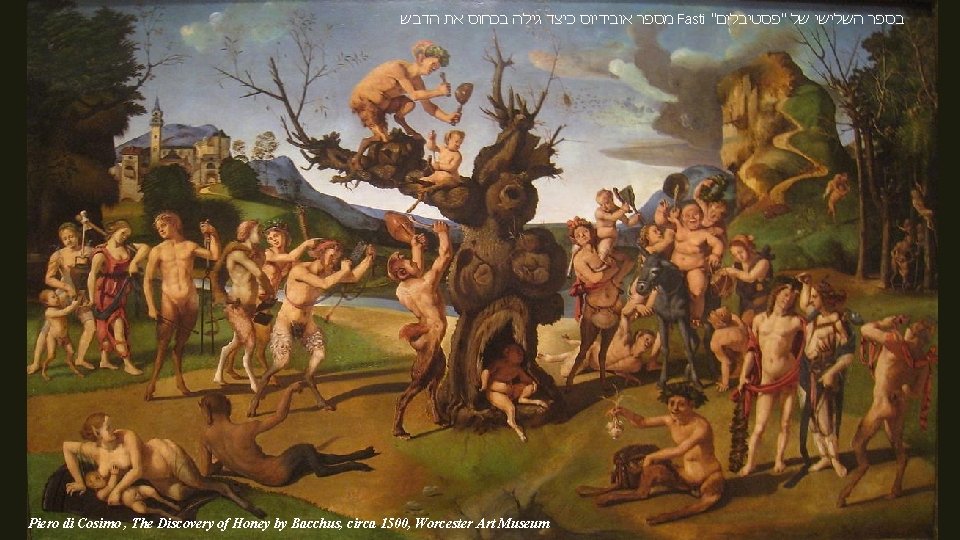
מספר אובידיוס כיצד גילה בכחוס את הדבש Fasti " בספר השלישי של "פסטיבלים Piero di Cosimo , The Discovery of Honey by Bacchus, circa 1500, Worcester Art Museum
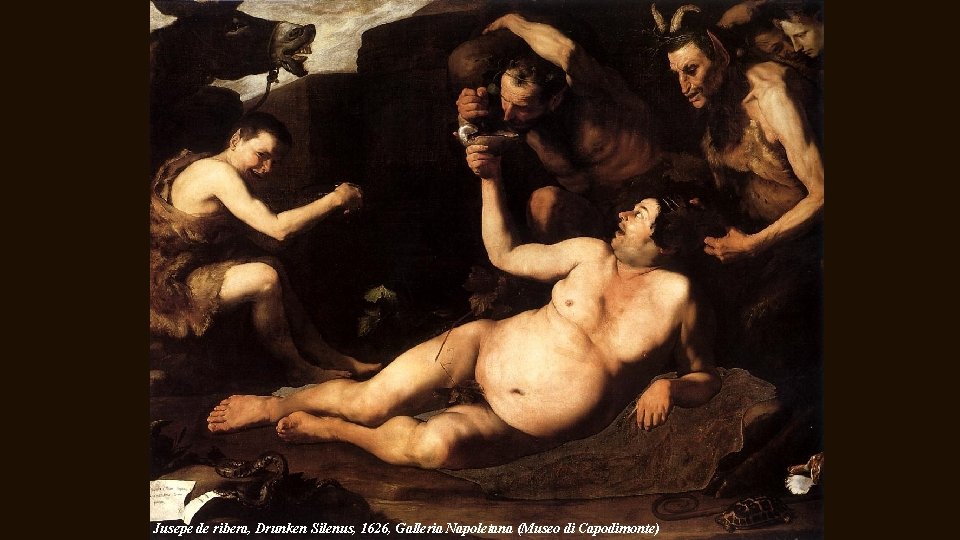
Jusepe de ribera, Drunken Silenus, 1626, Galleria Napoletana (Museo di Capodimonte)
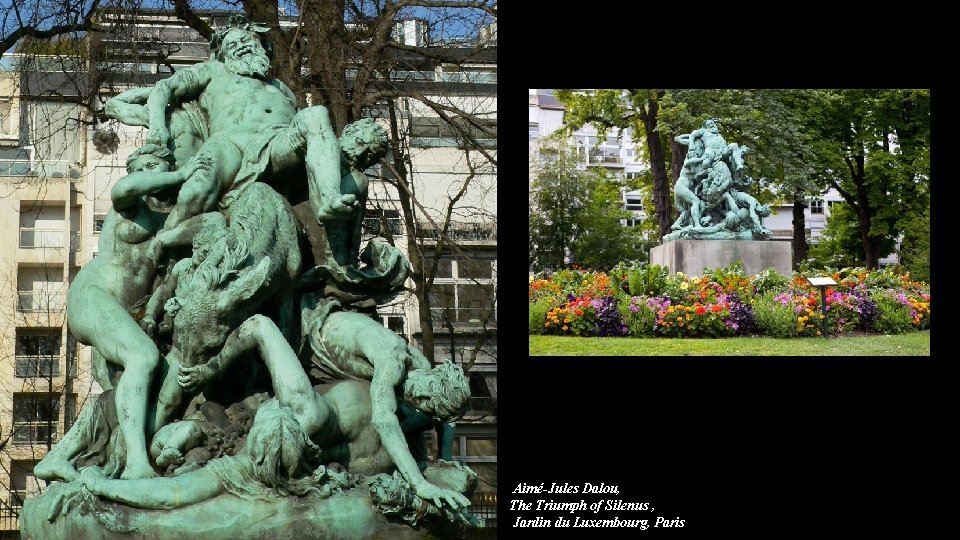
Aimé-Jules Dalou, The Triumph of Silenus , Jardin du Luxembourg, Paris
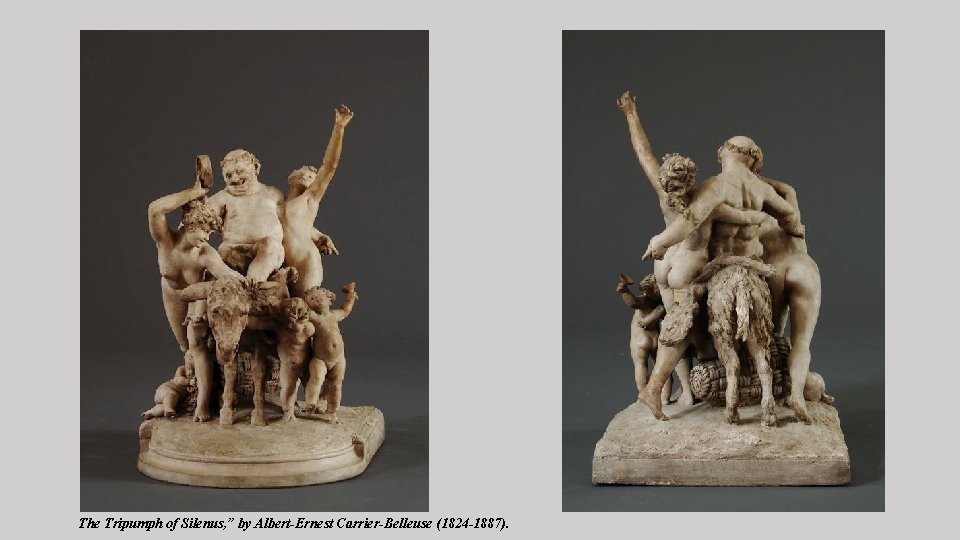
The Tripumph of Silenus, ” by Albert-Ernest Carrier-Belleuse (1824 -1887).
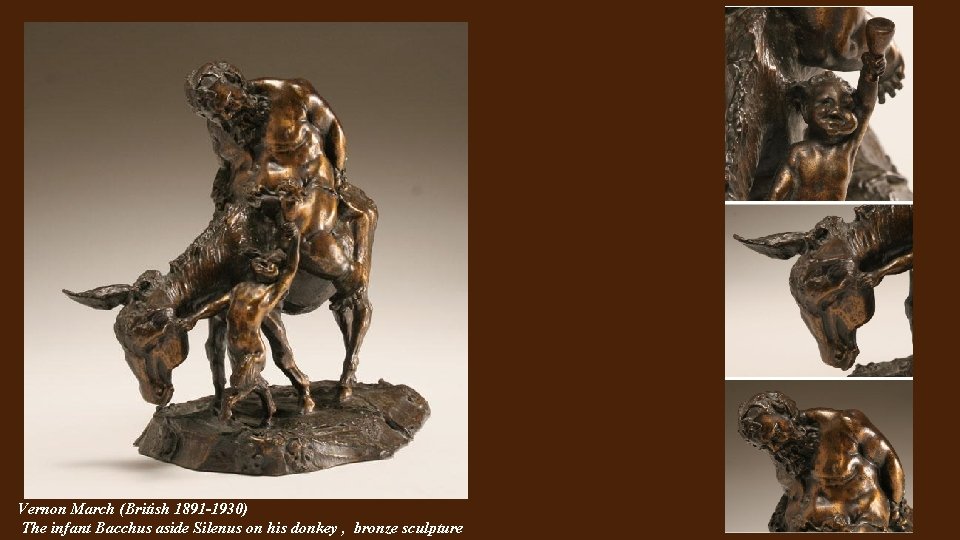
Vernon March (British 1891 -1930) The infant Bacchus aside Silenus on his donkey , bronze sculpture
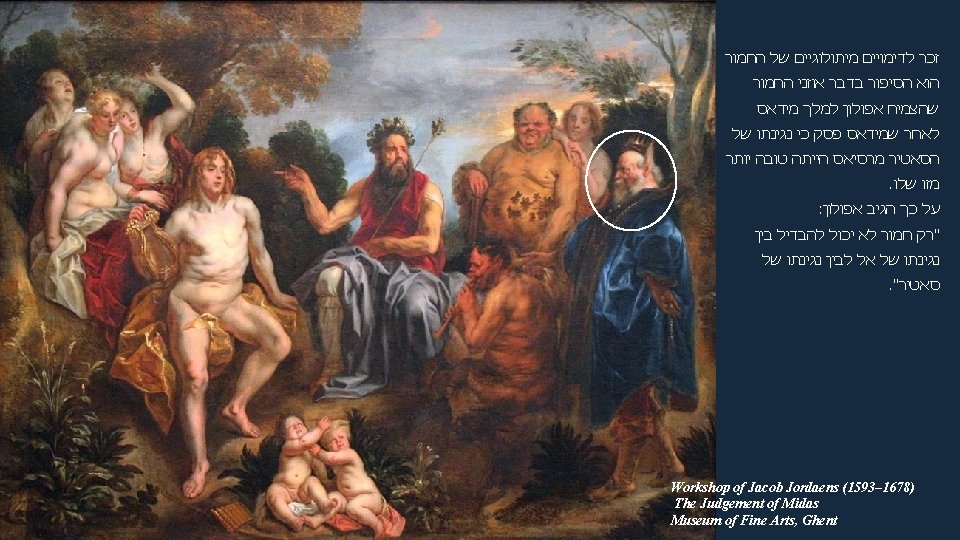
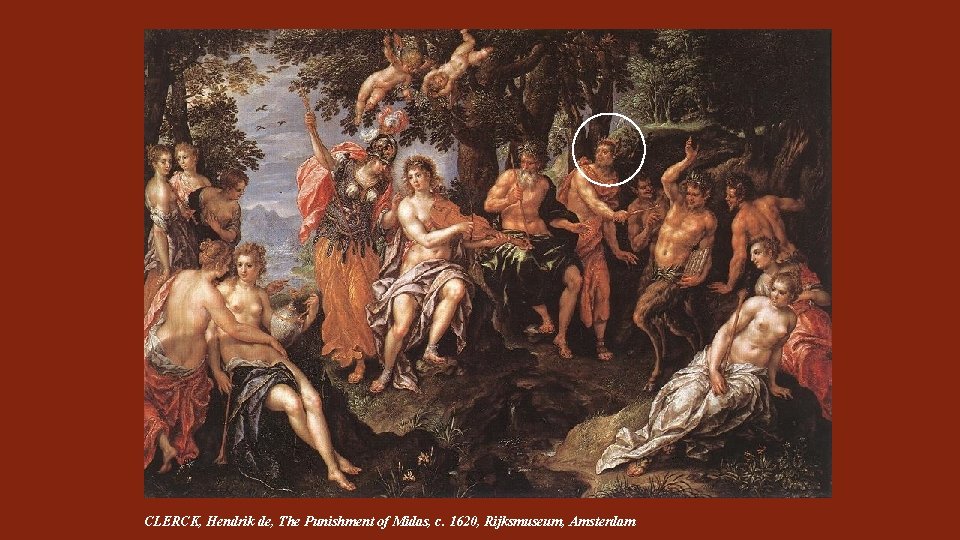
CLERCK, Hendrik de, The Punishment of Midas, c. 1620, Rijksmuseum, Amsterdam
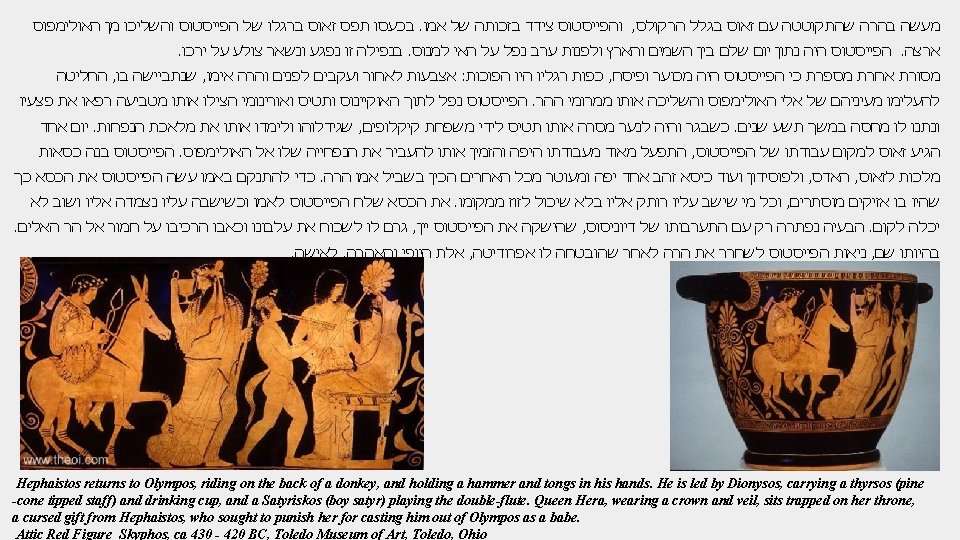
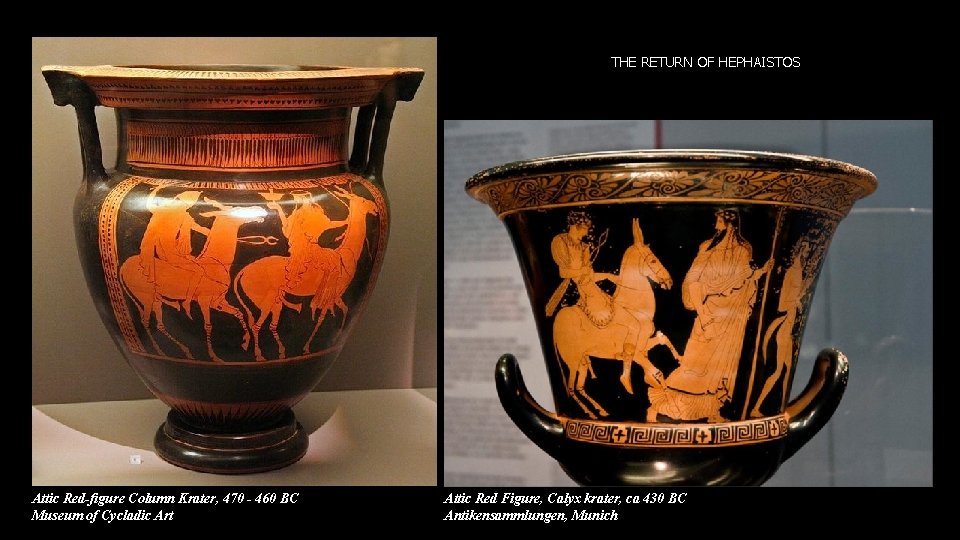
THE RETURN OF HEPHAISTOS Attic Red-figure Column Krater, 470 - 460 BC Museum of Cycladic Art Attic Red Figure, Calyx krater, ca 430 BC Antikensammlungen, Munich
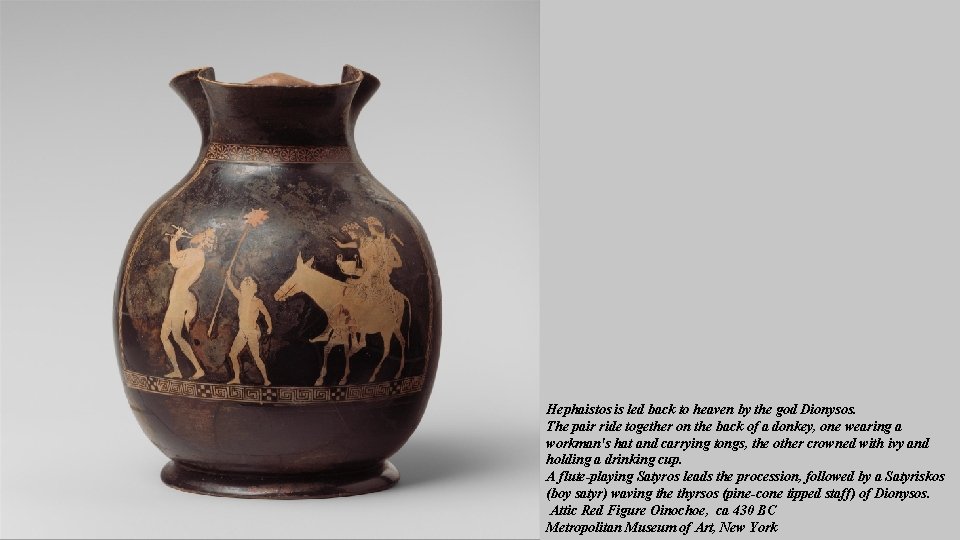
Hephaistos is led back to heaven by the god Dionysos. The pair ride together on the back of a donkey, one wearing a workman's hat and carrying tongs, the other crowned with ivy and holding a drinking cup. A flute-playing Satyros leads the procession, followed by a Satyriskos (boy satyr) waving the thyrsos (pine-cone tipped staff) of Dionysos. Attic Red Figure Oinochoe, ca 430 BC Metropolitan Museum of Art, New York
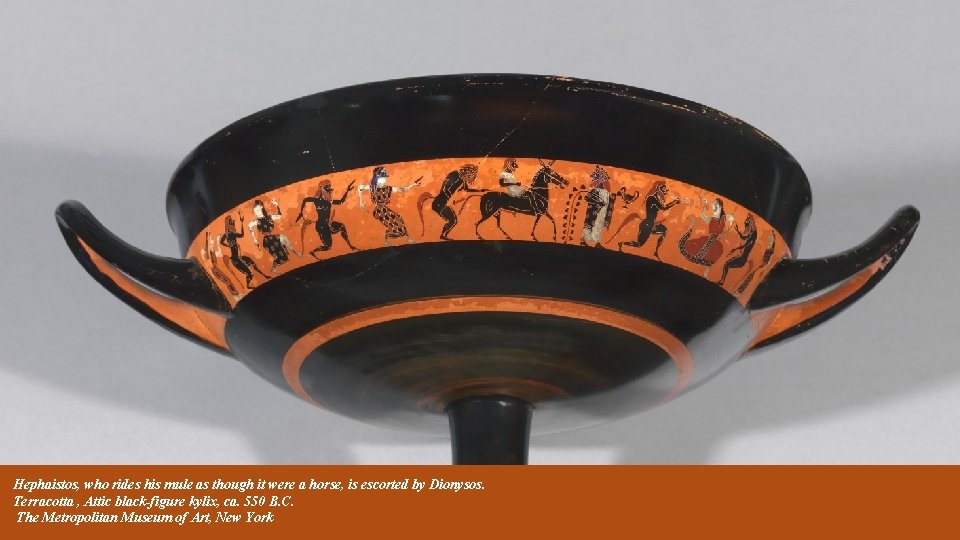
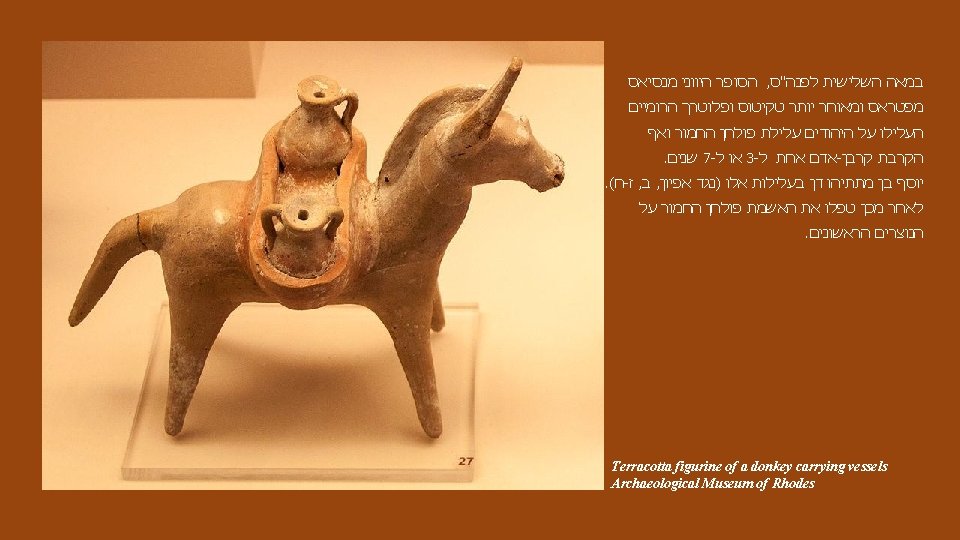
Hephaistos, who rides his mule as though it were a horse, is escorted by Dionysos. Terracotta , Attic black-figure kylix, ca. 550 B. C. The Metropolitan Museum of Art, New York
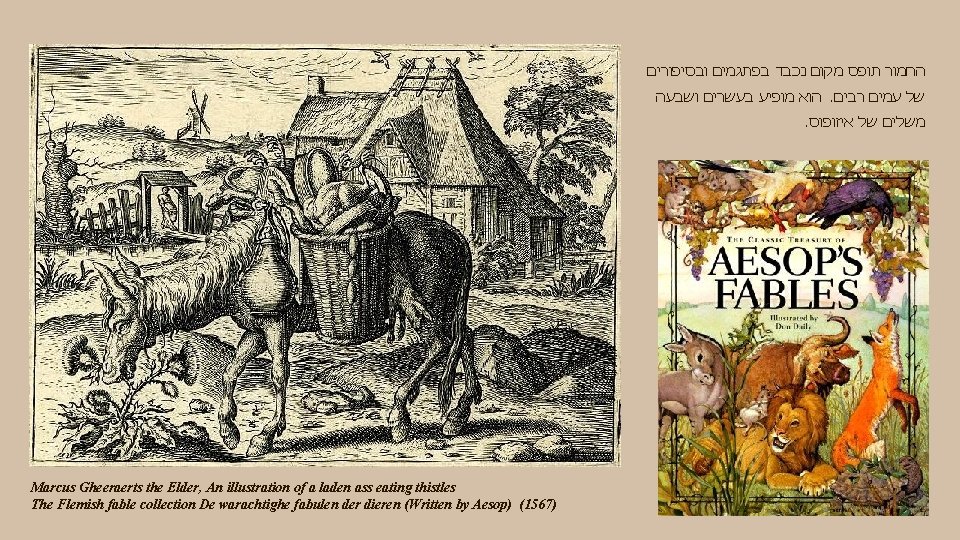
החמור תופס מקום נכבד בפתגמים ובסיפורים הוא מופיע בעשרים ושבעה. של עמים רבים . משלים של איזופוס Marcus Gheeraerts the Elder, An illustration of a laden ass eating thistles The Flemish fable collection De warachtighe fabulen der dieren (Written by Aesop) (1567)
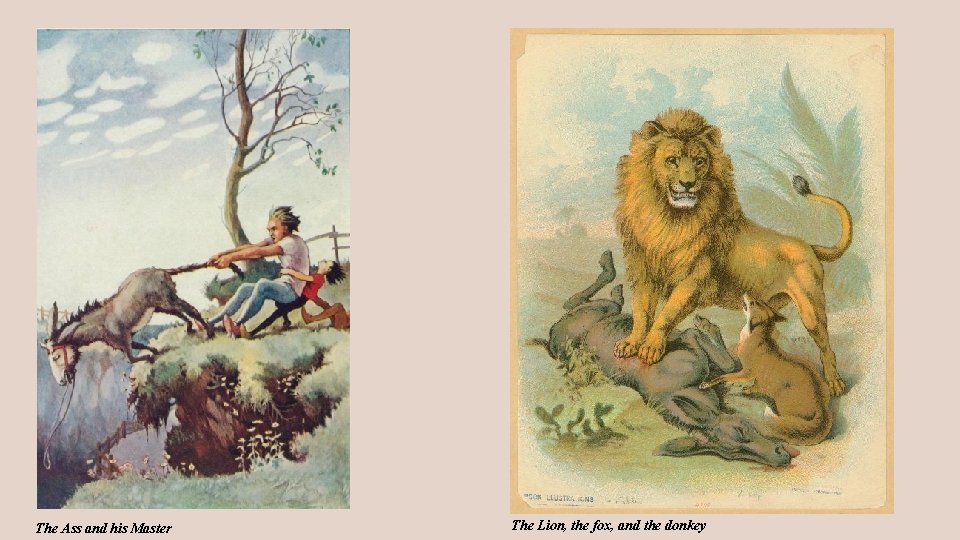
The Ass and his Master The Lion, the fox, and the donkey
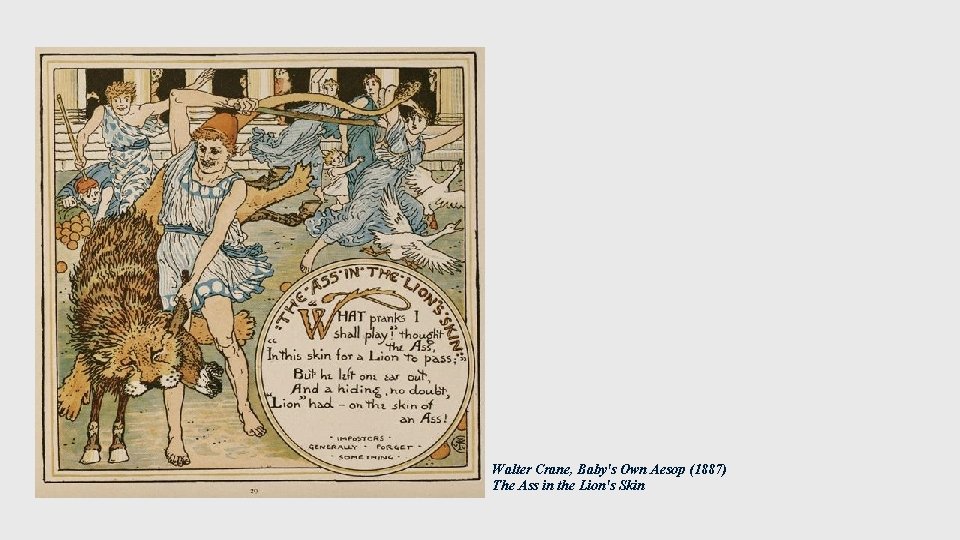
Walter Crane, Baby's Own Aesop (1887) The Ass in the Lion's Skin
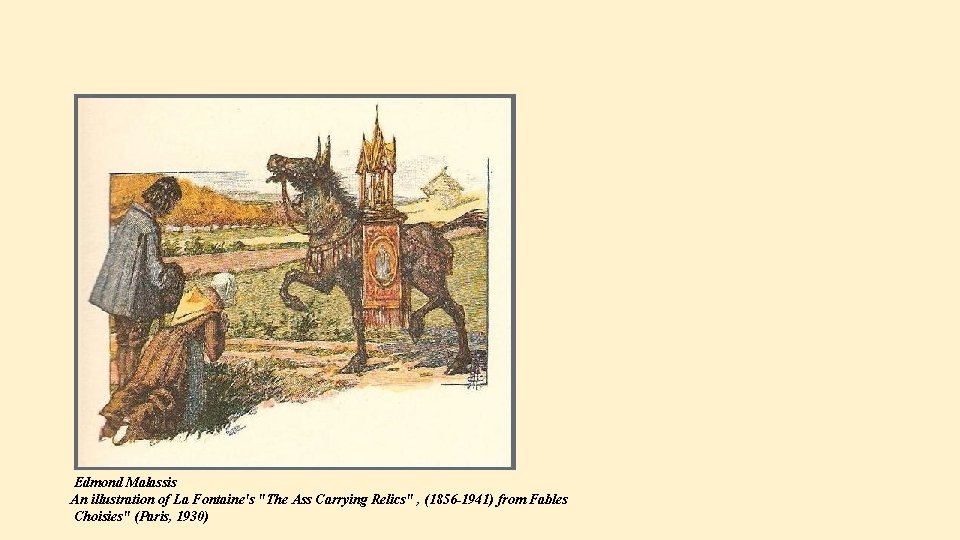
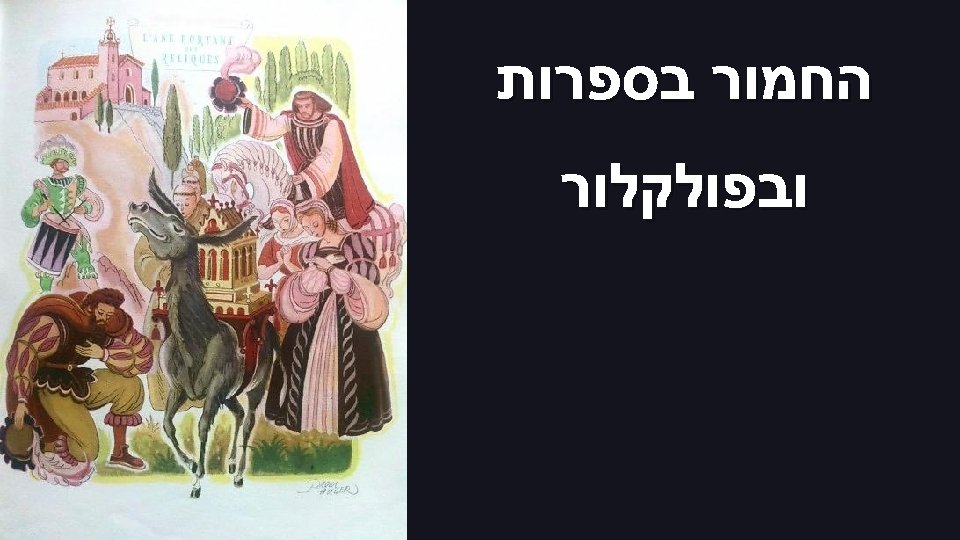
Edmond Malassis An illustration of La Fontaine's "The Ass Carrying Relics" , (1856 -1941) from Fables Choisies" (Paris, 1930)
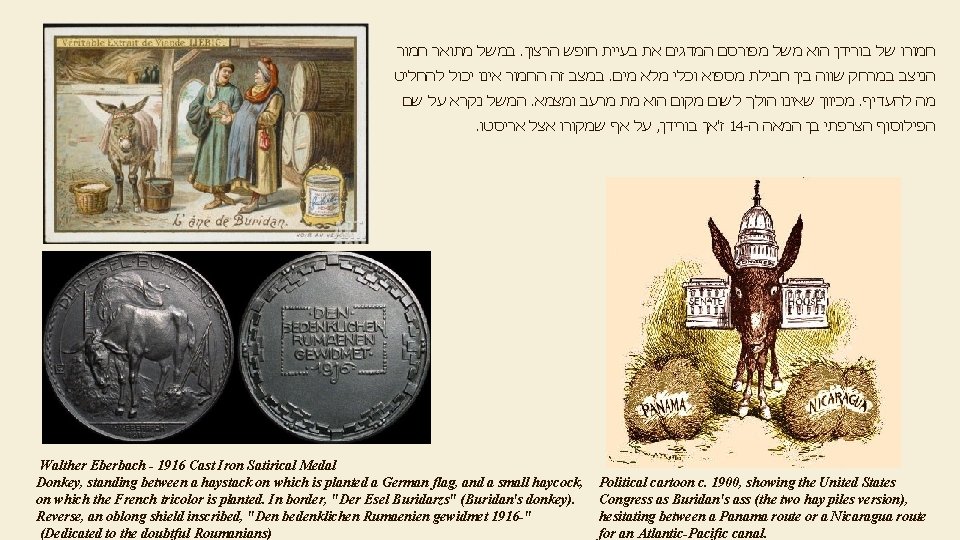
במשל מתואר חמורו של בורידן הוא משל מפורסם המדגים את בעיית חופש הרצון במצב זה החמור אינו יכול להחליט. הניצב במרחק שווה בין חבילת מספוא וכלי מלא מים המשל נקרא על שם. מכיוון שאינו הולך לשום מקום הוא מת מרעב ומצמא. מה להעדיף . על אף שמקורו אצל אריסטו , ז'אן בורידן 14 - הפילוסוף הצרפתי בן המאה ה Walther Eberbach - 1916 Cast Iron Satirical Medal Donkey, standing between a haystack on which is planted a German flag, and a small haycock, on which the French tricolor is planted. In border, "Der Esel Buridarzs" (Buridan's donkey). Reverse, an oblong shield inscribed, "Den bedenklichen Rumaenien gewidmet 1916 -" (Dedicated to the doubtful Roumanians) Political cartoon c. 1900, showing the United States Congress as Buridan's ass (the two hay piles version), hesitating between a Panama route or a Nicaragua route for an Atlantic-Pacific canal.
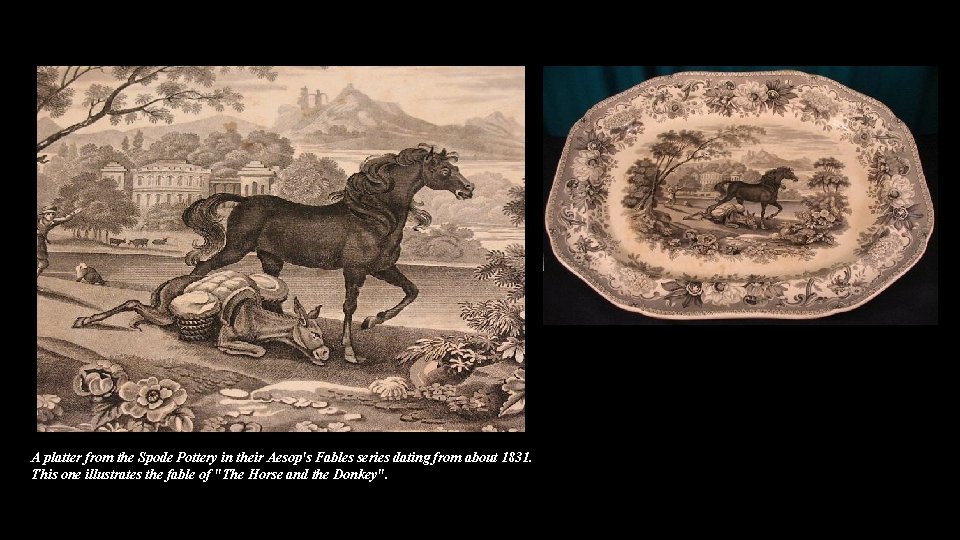
A platter from the Spode Pottery in their Aesop's Fables series dating from about 1831. This one illustrates the fable of "The Horse and the Donkey".
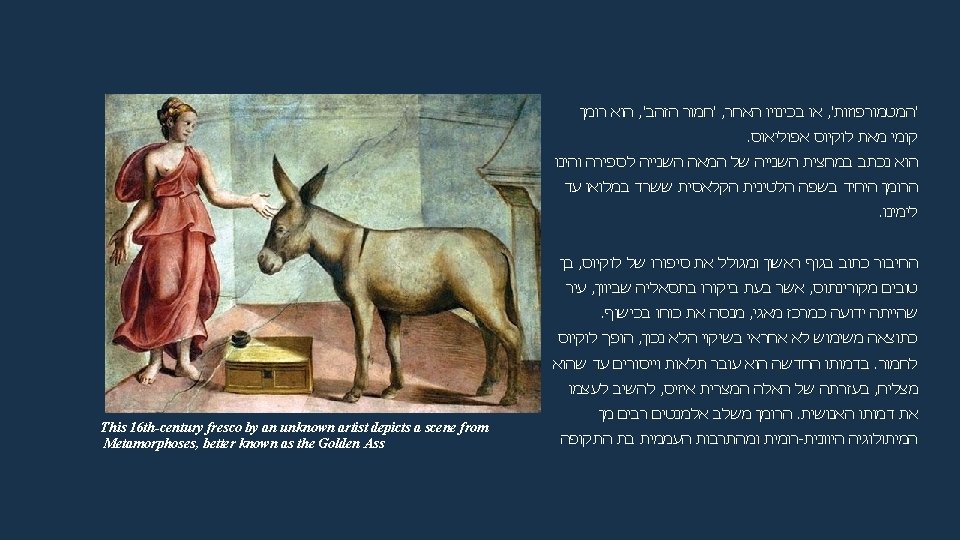
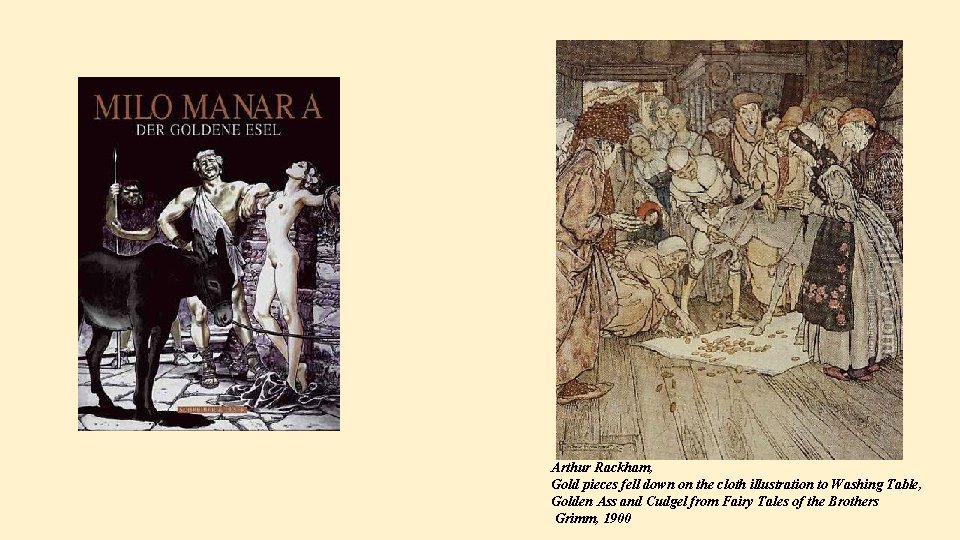
Arthur Rackham, Gold pieces fell down on the cloth illustration to Washing Table, Golden Ass and Cudgel from Fairy Tales of the Brothers Grimm, 1900
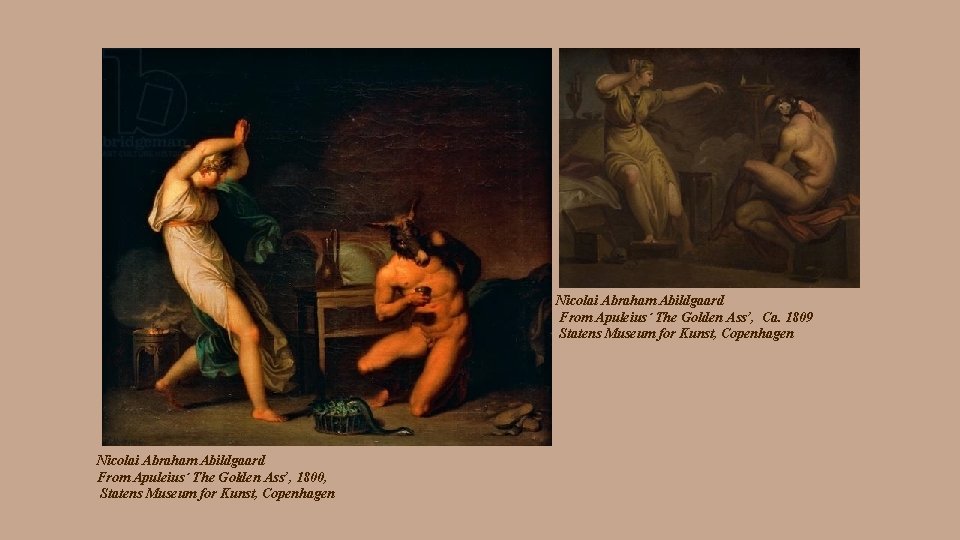
Nicolai Abraham Abildgaard From Apuleius´ The Golden Ass’, Ca. 1809 Statens Museum for Kunst, Copenhagen Nicolai Abraham Abildgaard From Apuleius´ The Golden Ass’, 1800, Statens Museum for Kunst, Copenhagen
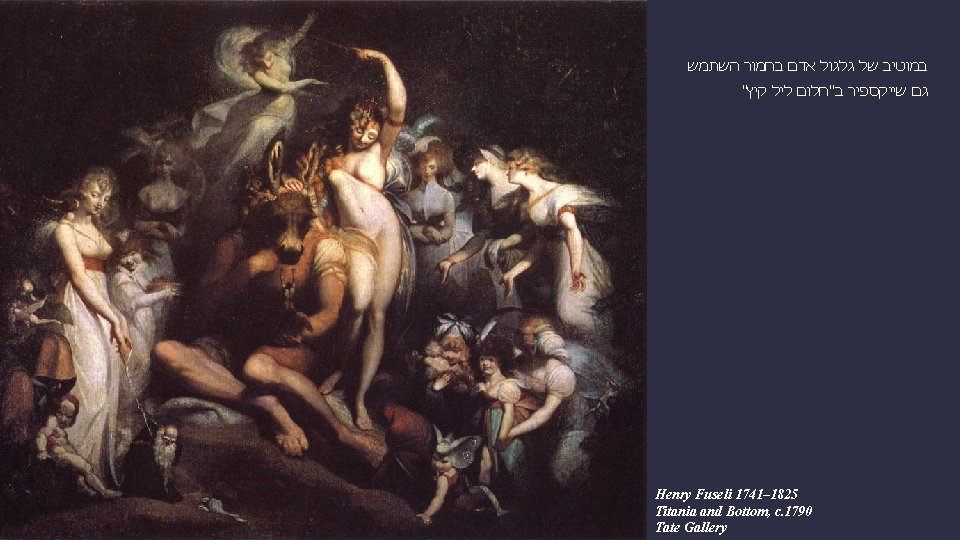
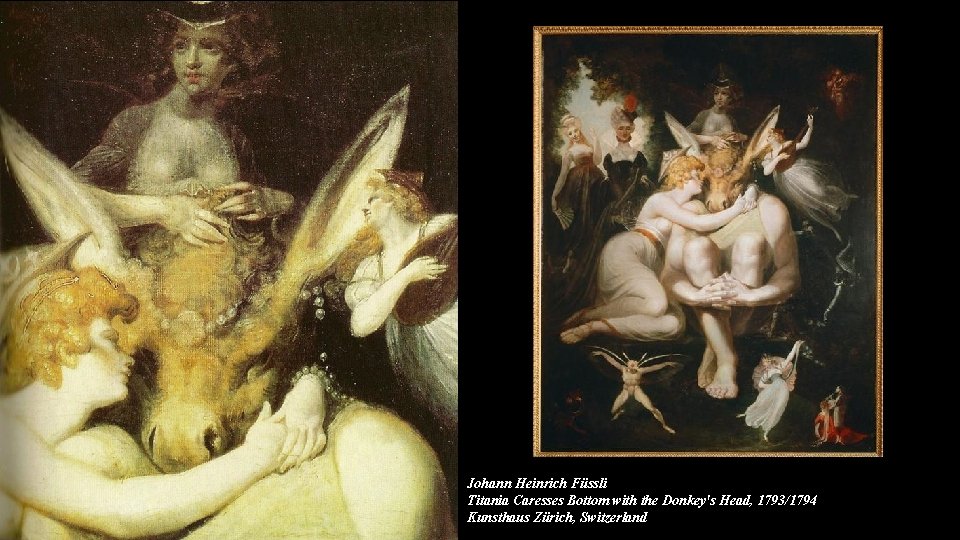
Johann Heinrich Füssli Titania Caresses Bottom with the Donkey's Head, 1793/1794 Kunsthaus Zürich, Switzerland
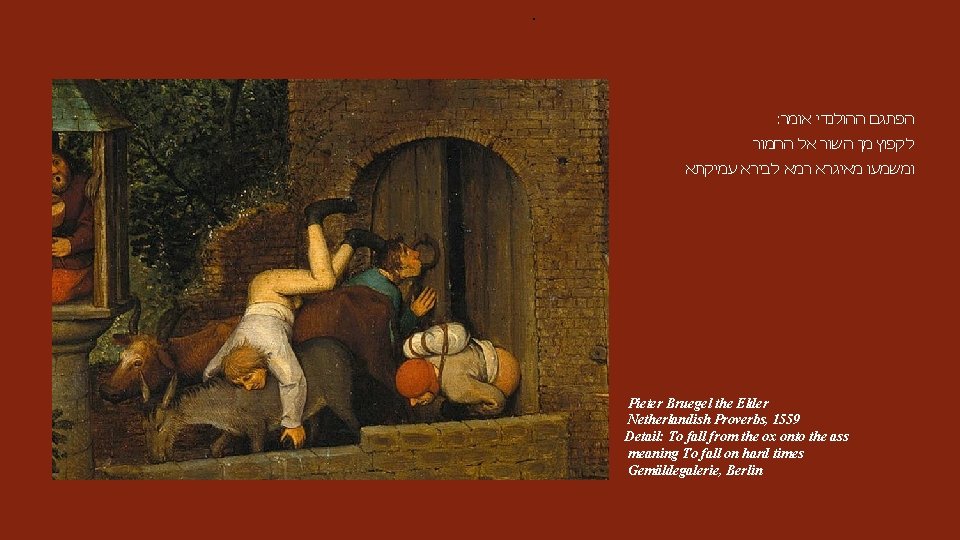
. : הפתגם ההולנדי אומר לקפוץ מן השור אל החמור ומשמעו מאיגרא רמא לבירא עמיקתא Pieter Bruegel the Elder Netherlandish Proverbs, 1559 Detail: To fall from the ox onto the ass meaning To fall on hard times Gemäldegalerie, Berlin
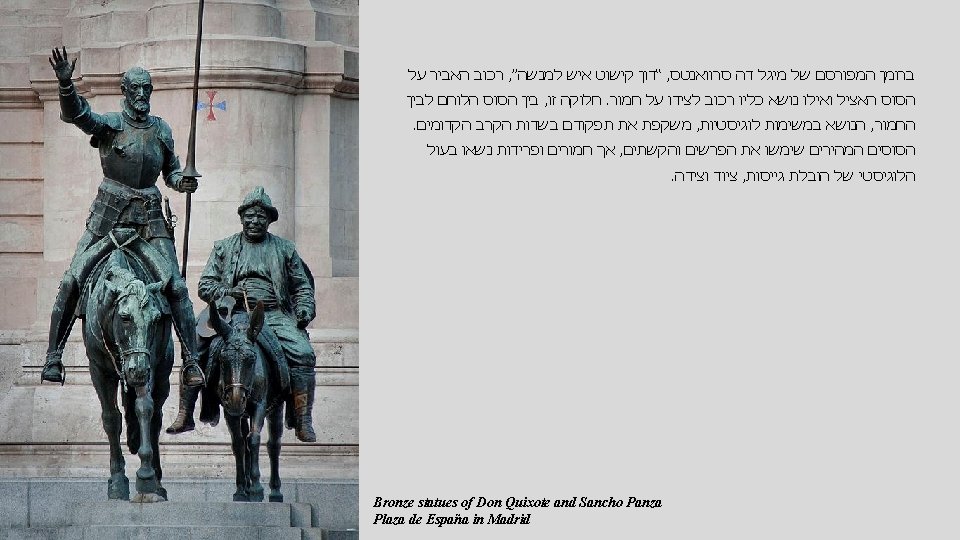
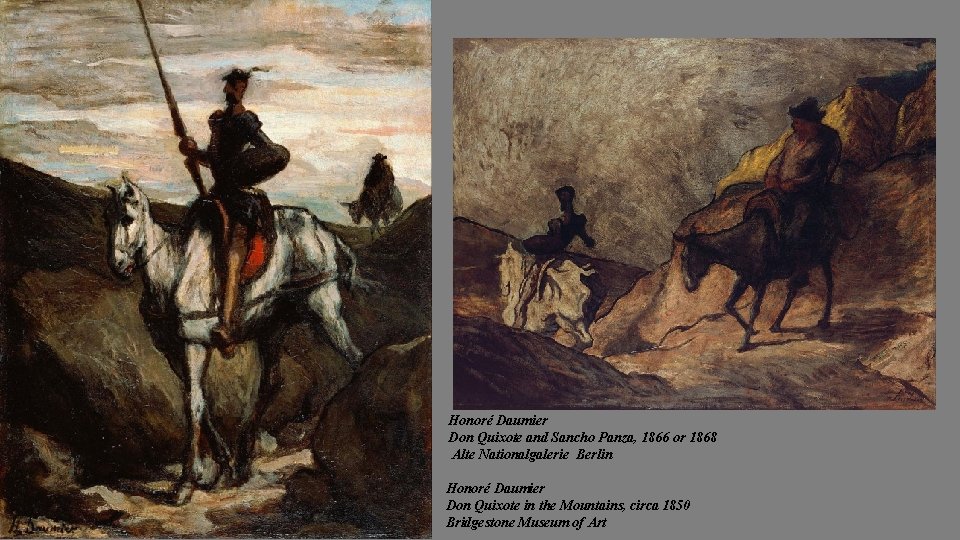
Honoré Daumier Don Quixote and Sancho Panza, 1866 or 1868 Alte Nationalgalerie Berlin Honoré Daumier Don Quixote in the Mountains, circa 1850 Bridgestone Museum of Art
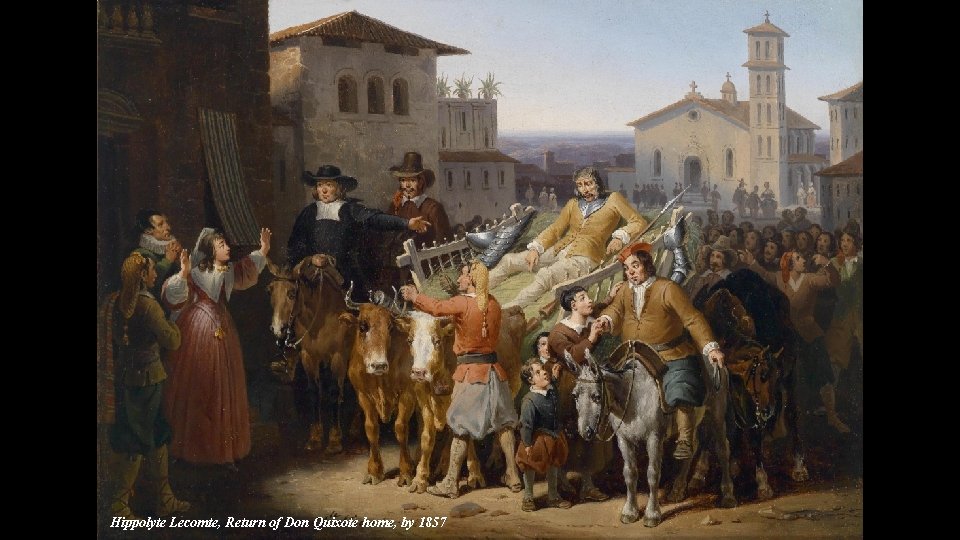
Hippolyte Lecomte, Return of Don Quixote home, by 1857
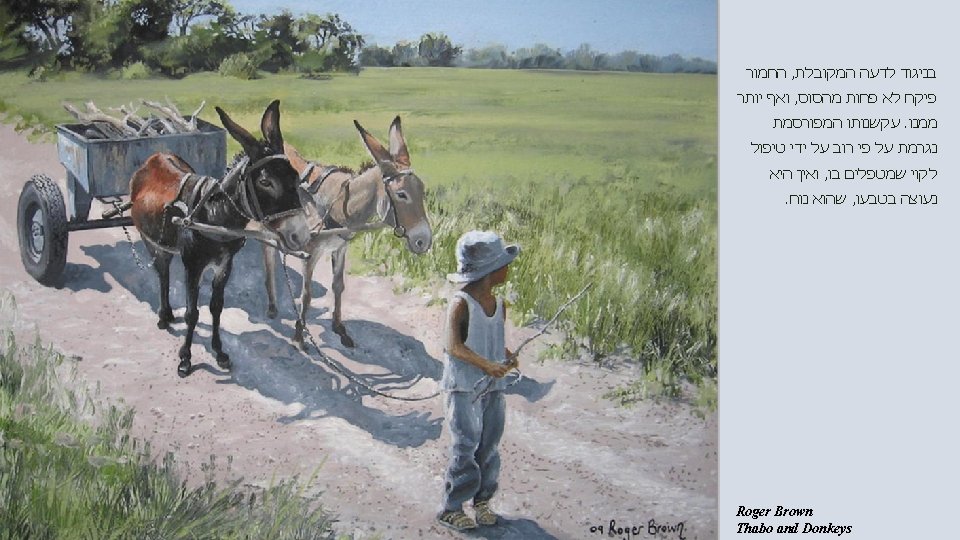
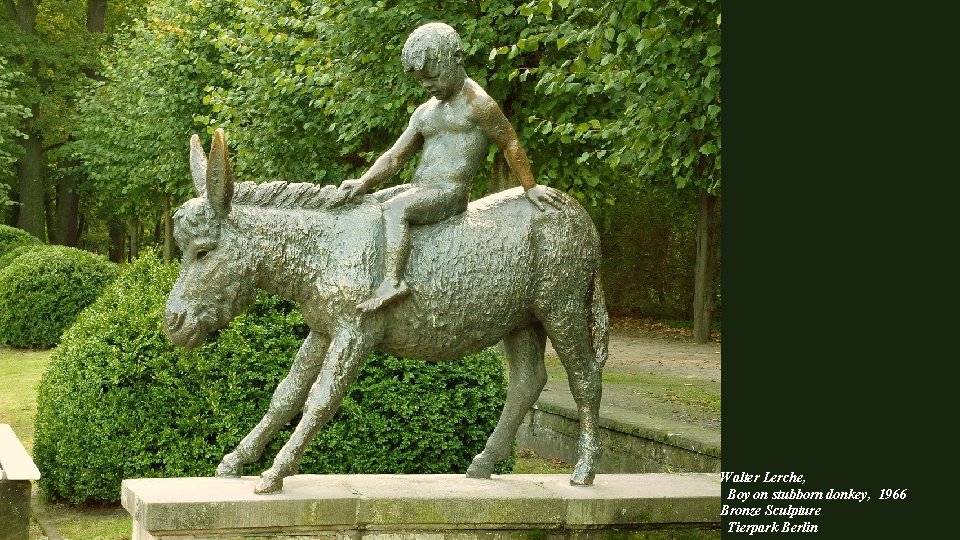
Walter Lerche, Boy on stubborn donkey, 1966 Bronze Sculpture Tierpark Berlin
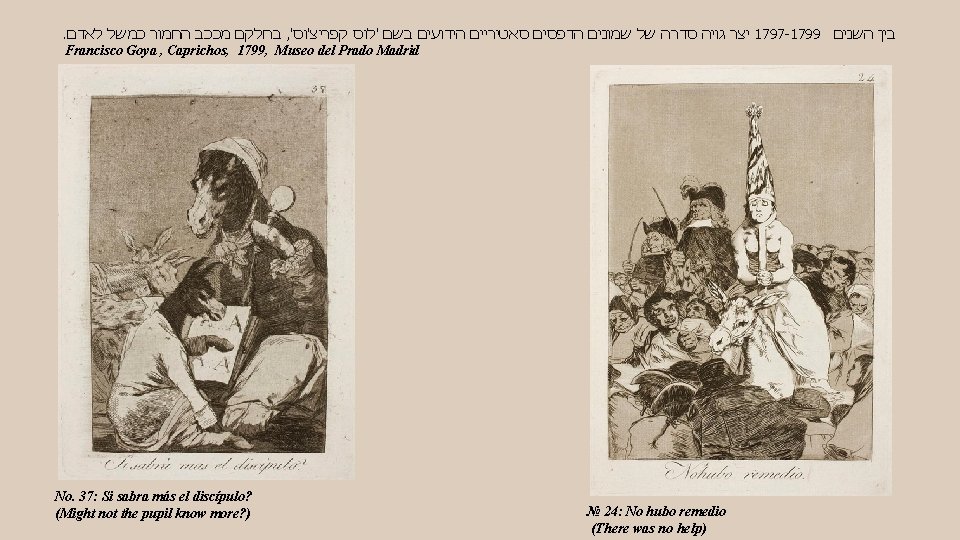
. בחלקם מככב החמור כמשל לאדם , ' יצר גויה סדרה של שמונים הדפסים סאטיריים הידועים בשם 'לוס קפריצ'וס 1797 -1799 בין השנים Francisco Goya , Caprichos, 1799, Museo del Prado Madrid No. 37: Si sabra más el discípulo? (Might not the pupil know more? ) № 24: No hubo remedio (There was no help)
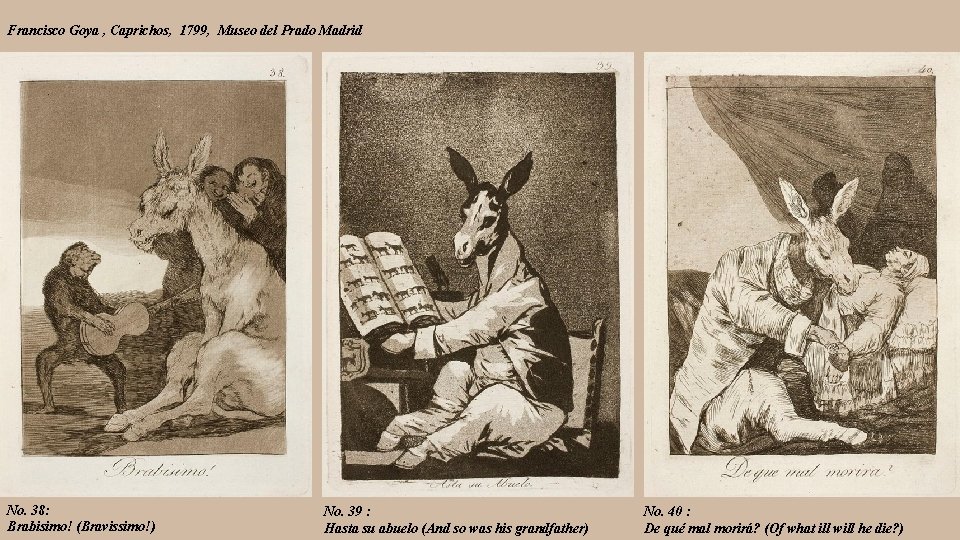
Francisco Goya , Caprichos, 1799, Museo del Prado Madrid No. 38: Brabisimo! (Bravissimo!) No. 39 : Hasta su abuelo (And so was his grandfather) No. 40 : De qué mal morirá? (Of what ill will he die? )
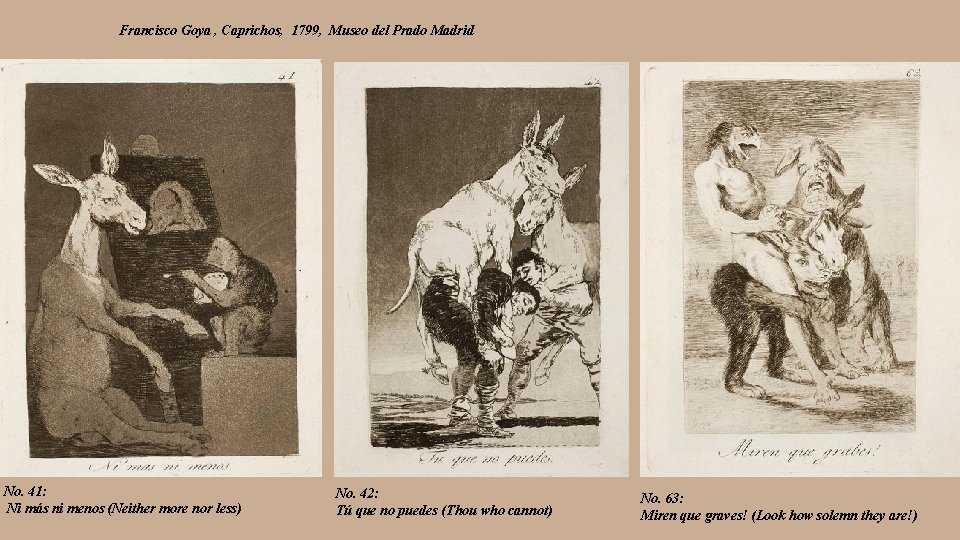
Francisco Goya , Caprichos, 1799, Museo del Prado Madrid No. 41: Ni más ni menos (Neither more nor less) No. 42: Tú que no puedes (Thou who cannot) No. 63: Miren que graves! (Look how solemn they are!)
- Slides: 50