
Corneille Le Cid by W D Howarth Introduction
Corneille ‘Le Cid’ by W. D. Howarth
Introduction • • • Theatrical season: 1636 -37 The first major example of a French classical tragedy. Published in 1637 as a ‘tragicomédie. ’ Corneille vs. Critics Created in conditions of vigorous competition. Classification change in 1648 • The more generally available version.
‘le milieu’ and ‘le moment’ • Parlement de Paris (1548) • Publication of Du Bellay’s Défense et illustration de la langue française • Result: French classical tragedy • Five acts • Alexandrin couplets
Historical Context Cont. • Richelieu • Académie Française • Compagnie des cinq auteurs
Corneille as a Playwright • 8 pieces prior to ‘Le Cid’ • • Clitandre: vintage baroque tragicomedy 5 comedies: experimentation with place and time Médée: regular tragedy L’Illusion comique: “Masterpiece of baroque theatricality. ”
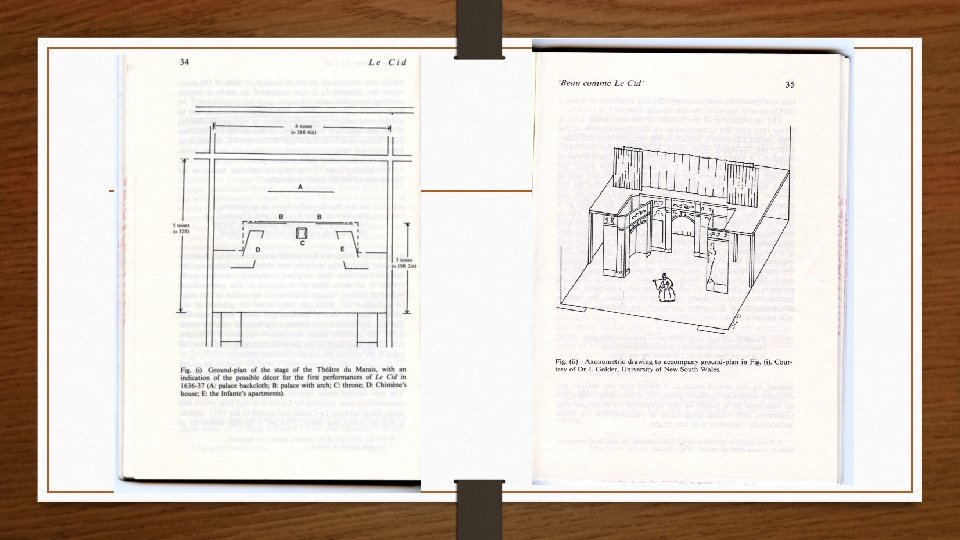
Theatrical Qualities • Hinge between multiple set (décor simultané) and single perspective set. • • • Single perspective allows for unity of place. Hôtel de Bourgogne Le théâtre du Marais Written for a compartmented stage. Lack of textual direction. Demise of multiple set.
Distinguishing Tragicomedy from Tragedy • 5 distinctions • • • Drama libre: structure that dramatizes without sense of unity, only interest. Events treated as serious, secular, non-historic, and Romanesque. Denouement is happy. Leading characters are aristocratic. Addition of comic passages, but not required.
Querelle du Cid • Argument over norm of dramatic practice. • Did not respect ‘unity of time’ • 24 hour time frame • One setting • Plot with a single conflict • Scudéry: Observations sur le cid (1637) • Horace (1640)
Works Cited Howarth, W. D. Corneille: Le Cid. London: Grant and Cutler LTD, 1988. Print.
- Slides: 10