
Corneal Hysteresis Role of Corneal Biomechanics in Refractive
Corneal Hysteresis Role of Corneal Biomechanics in Refractive Surgery Luis Rodriguez, MD Anny Villegas, MD Clínica de Córnea Centro Médico Docente La Trinidad Caracas, Venezuela
Corneal Biomechanics is the science that studies the equilibrium and deformation of tissues submitted to any force. This science includes the following extrinsecal factors: Intraocular Pressure, Cilliar Muscle, Extraocular Muscle, Atmospheric Pressure and Eyelids. Intrinsecal factors of Corneal Biomechanics include: Central Pachymetry, Viscosity, Elasticity, Hydration and Regional Pachymetry.
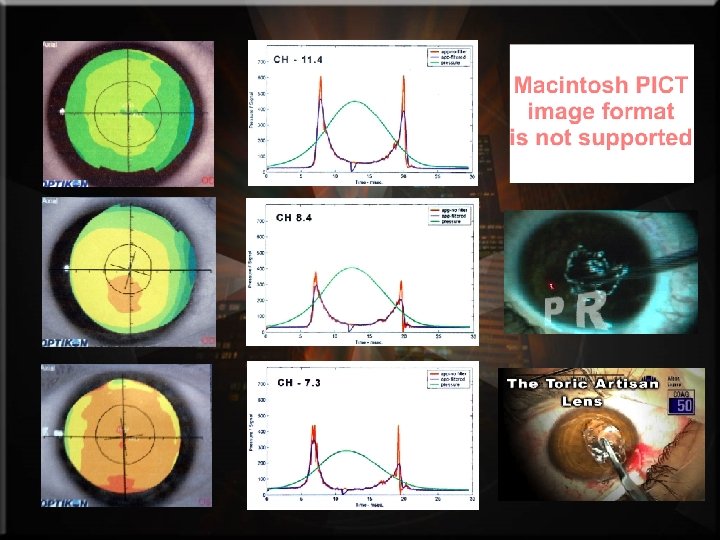
The Ocular Response Analyzer (ORA) is a new instrument that measures the corneal biomechanical response (corneal hysteresis, CH). It measures the effect of viscous and elastic qualities with a calibrated air pulse in vivo. The ORA measures Intraocular Pressure (Goldmann). Corneal hysteresis is an indication of viscous damping in the cornea, reflecting the capacity of corneal tissue to absorb and dissipate energy. It is the capacity of tissue to recover its original shape after external force is applied.
The Corneal Resistance Factor, also derived from corneal hysteresis, is an indicator of the overall resistance of the cornea. Corneal-compensated IOP is a pressure measurement that utilizes the new information provided by the corneal hysteresis measurement to provide an IOP that is less affected by corneal properties. The objective of this study is to discuss the Ocular Response Analyzer readings of corneal biomechanics in refractive surgery and corneal pathology. This study began in July 2006 and ended in January 2007.
Methods ORA was used to obtain four measurements in each patient, and the mean of these four readings was used in the analysis according to the manufacturer’s instructions. The study included 244 eyes from the Corneal Department of the Centro Medico Docente La Trinidad divided into the following nine categories: Normal cornea, Radial Keratotomy, Post. Lasik Myopia, Post. Lasik Ectasia, Keratoconus, Post Intracorneal Segments (Intacs®), Penetrating Keratoplasty, Fuchs’ Dystrophy and Graft rejection.
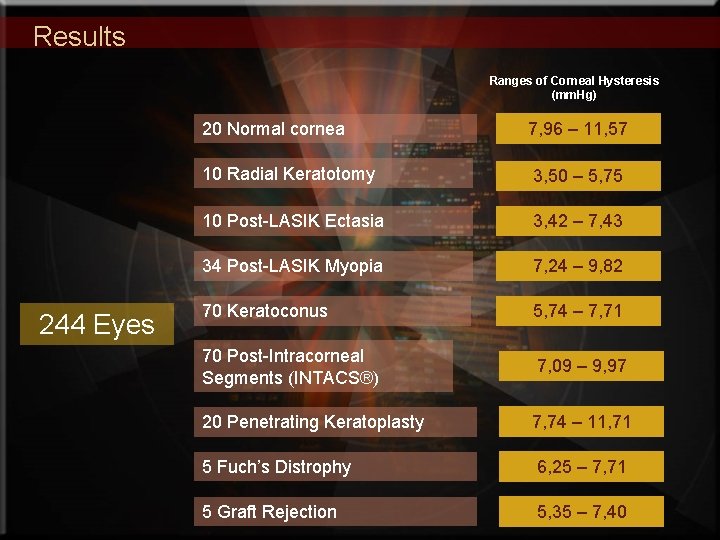
Results Ranges of Corneal Hysteresis (mm. Hg) 244 Eyes 20 Normal cornea 7, 96 – 11, 57 10 Radial Keratotomy 3, 50 – 5, 75 10 Post-LASIK Ectasia 3, 42 – 7, 43 34 Post-LASIK Myopia 7, 24 – 9, 82 70 Keratoconus 5, 74 – 7, 71 70 Post-Intracorneal Segments (INTACS®) 7, 09 – 9, 97 20 Penetrating Keratoplasty 7, 74 – 11, 71 5 Fuch’s Distrophy 6, 25 – 7, 71 5 Graft Rejection 5, 35 – 7, 40
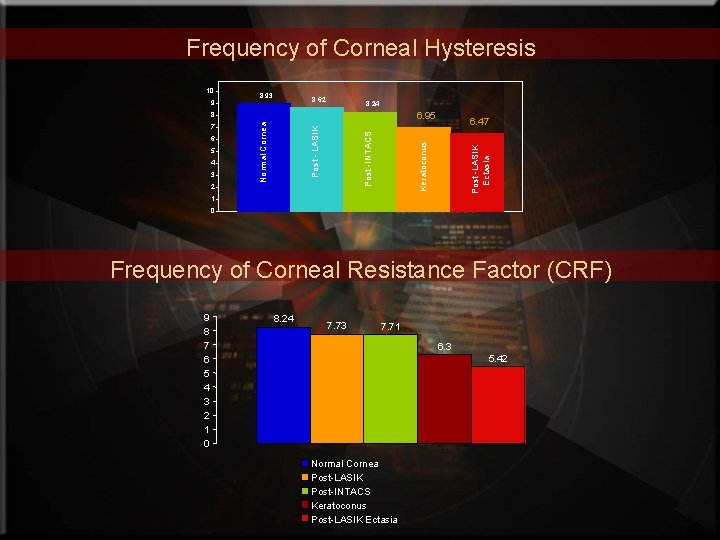
Frequency of Corneal Hysteresis 9 8. 93 8. 62 8. 24 6. 95 4 3 2 6. 47 Keratoconus 5 Post -INTACS 6 Post - LASIK 7 Normal Cornea 8 Post -LASIK Ectasia 10 1 0 Frequency of Corneal Resistance Factor (CRF) 9 8 7 6 5 4 3 2 1 0 8. 24 7. 73 7. 71 6. 3 5. 42 Normal Cornea Post-LASIK Post-INTACS Keratoconus Post-LASIK Ectasia
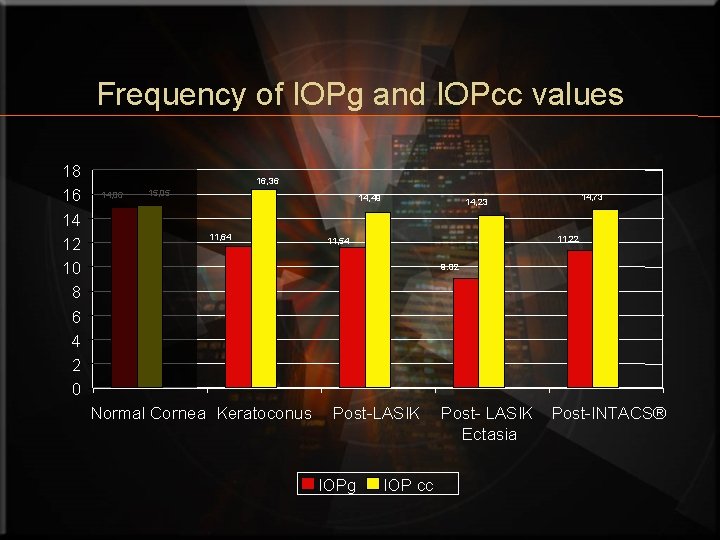
Frequency of IOPg and IOPcc values 18 16 14 12 10 8 6 4 2 0 16, 36 14, 86 15, 05 14, 49 11, 64 14, 73 14, 23 11, 22 11, 54 9. 02 Normal Cornea Keratoconus Post-LASIK IOPg IOP cc Post- LASIK Ectasia Post-INTACS®
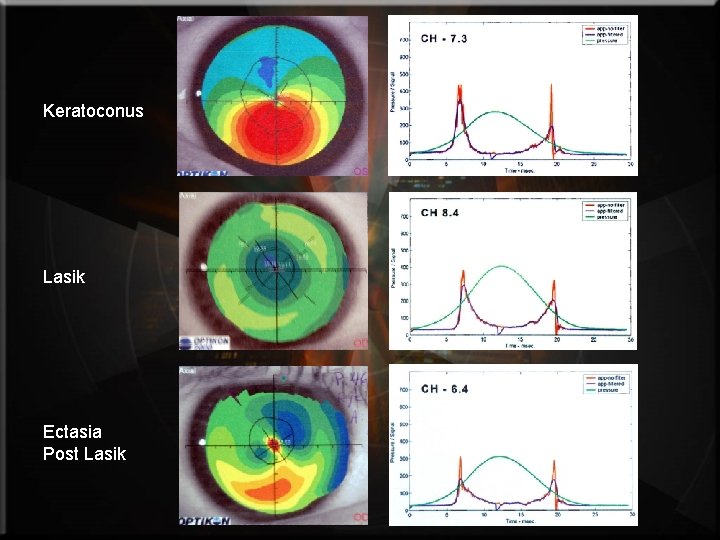
Keratoconus Lasik Ectasia Post Lasik
Discussion Patients with -6. 00 D (equal to or less), Hysteresis of more than 11 mm. Hg, and normal topography are good candidates for LASIK. Patients with -6. 00 D or less, suspicious topography and Hysteresis between 8 mm. Hg and 10 mm. Hg are good candidates for PRK. Patients with -6. 00 D or more, suspicious topography and Hysteresis between 7 mm. Hg and 10 mm. Hg are good candidates for Phakic IOL. Patients, with Keratoconus and Hysteresis of more than 7 mm. Hg are good candidates for intracorneal segments. Patients with Keratoconus and Hysteresis of equal to or less than 5 mm. Hg are candidates for corneal transplant. When Hysteresis is less than 7 mm. Hg Post. Lasik, patients have Ectasia. Hysteresis is normal in Corneal Transplants, but if the patient has a transplant rejection Hysteresis decreases significantly.
• Biomechanical studies must be analyzed individually • Ectasia is a known risk of LASIK and PRK • Hysteresis measures corneal biomechanical properties • Patients who are at risk of developing post-LASIK ectasia should be identified by analyzing Hysteresis • Corneal Hysteresis can guide the physician in the choice of treatment. • ORA helps us understand the IOP in patients with corneal pathologies and surgeries.
- Slides: 12