
Corn and Soybean Bugs or things that eat
Corn and Soybean Bugs …or things that eat your dinner before you get to
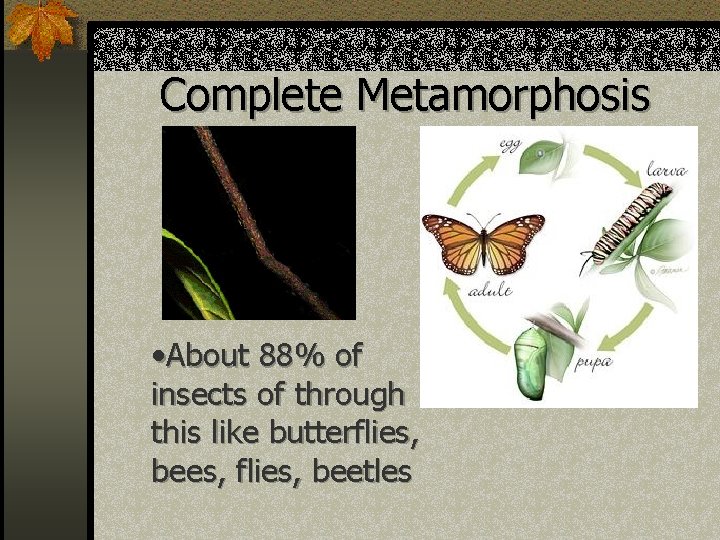
Complete Metamorphosis • About 88% of insects of through this like butterflies, bees, flies, beetles
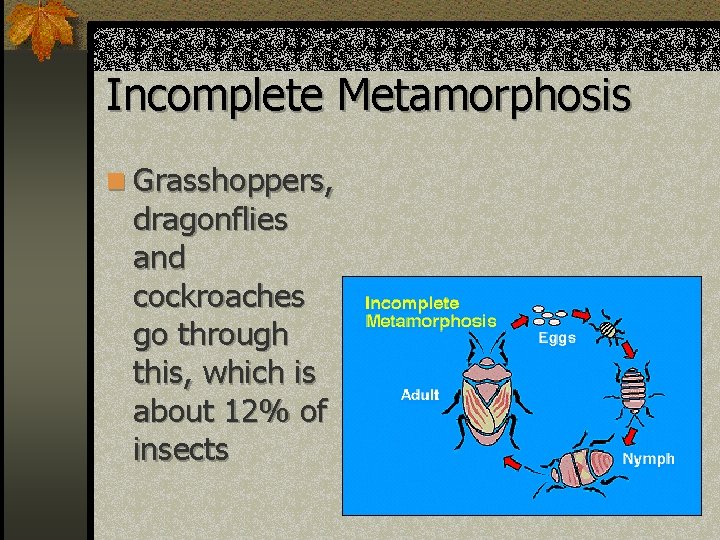
Incomplete Metamorphosis n Grasshoppers, dragonflies and cockroaches go through this, which is about 12% of insects
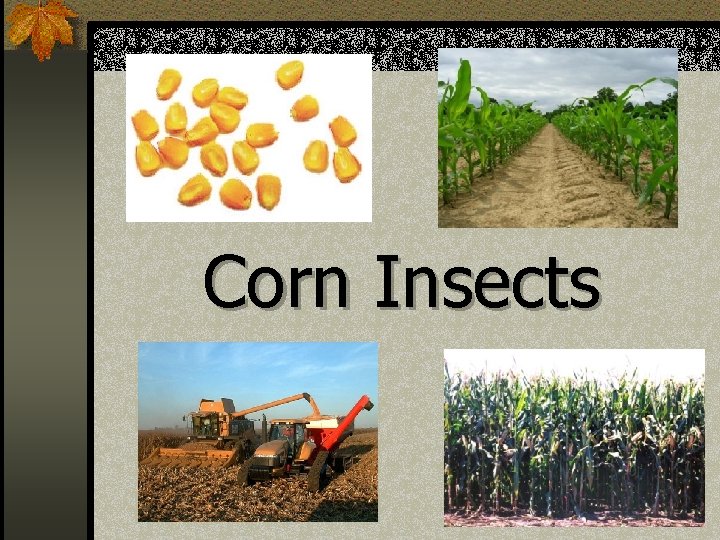
Corn Insects
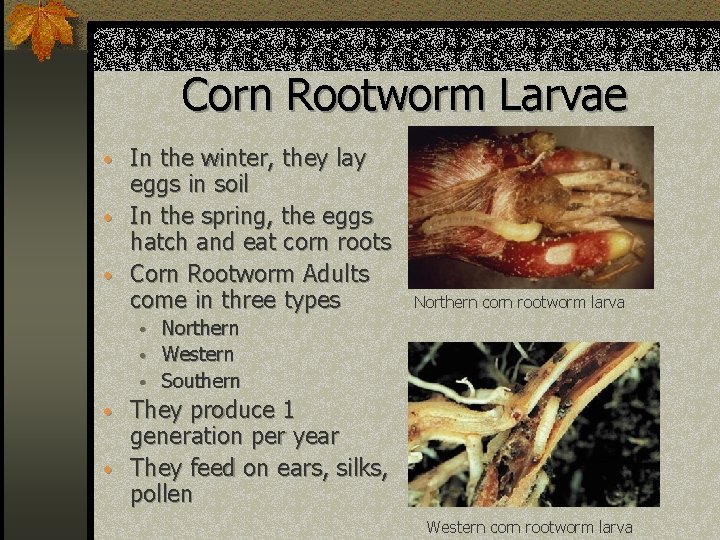
Corn Rootworm Larvae • In the winter, they lay eggs in soil • In the spring, the eggs hatch and eat corn roots • Corn Rootworm Adults come in three types Northern corn rootworm larva Northern • Western • Southern • • They produce 1 generation per year • They feed on ears, silks, pollen Western corn rootworm larva
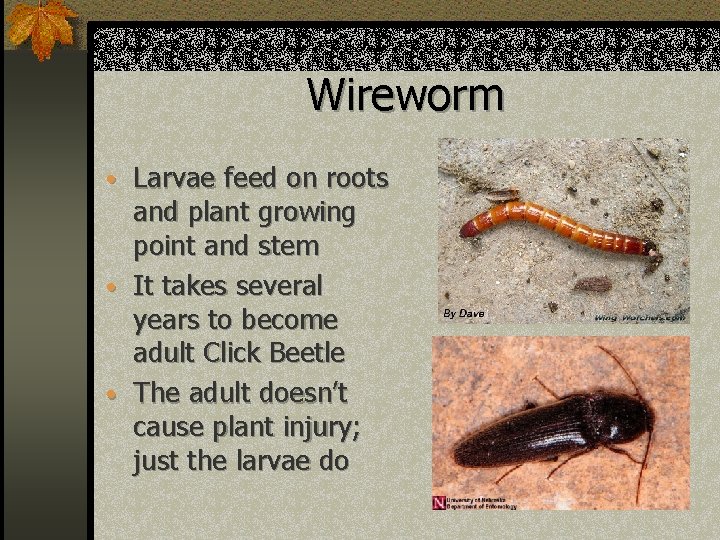
Wireworm • Larvae feed on roots and plant growing point and stem • It takes several years to become adult Click Beetle • The adult doesn’t cause plant injury; just the larvae do
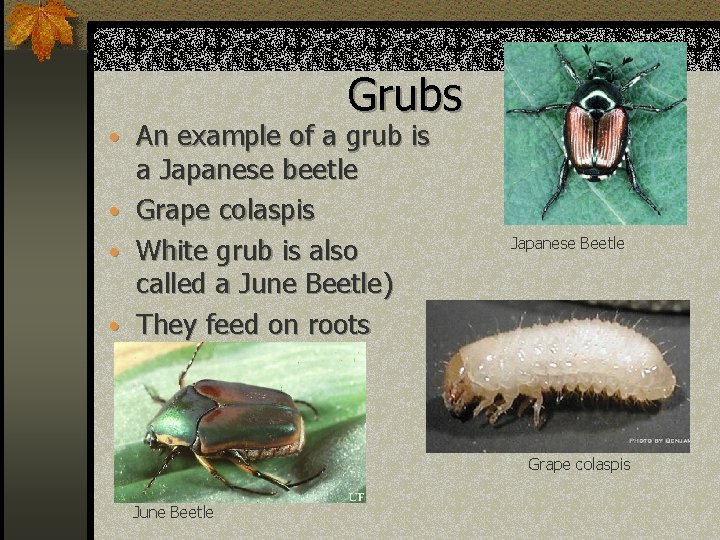
• • example of a grub is An a Japanese beetle Grape colaspis White grub is also called a June Beetle) They feed on roots Beetle June Grubs Japanese Beetle Grape colaspis
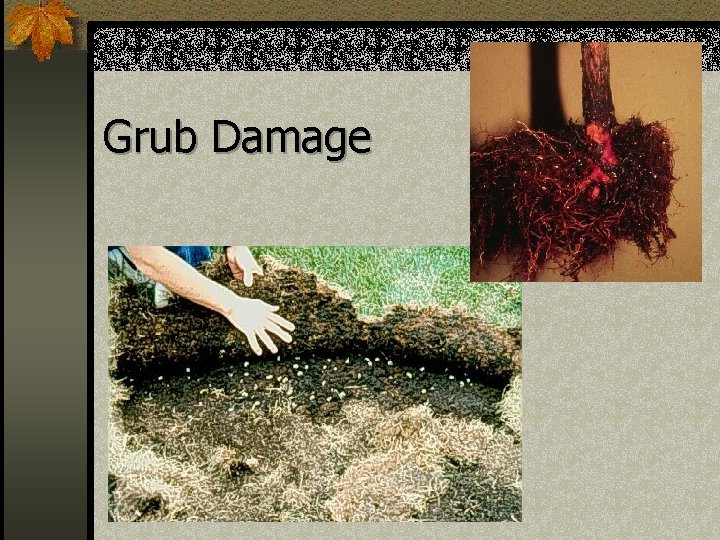
Grub Damage
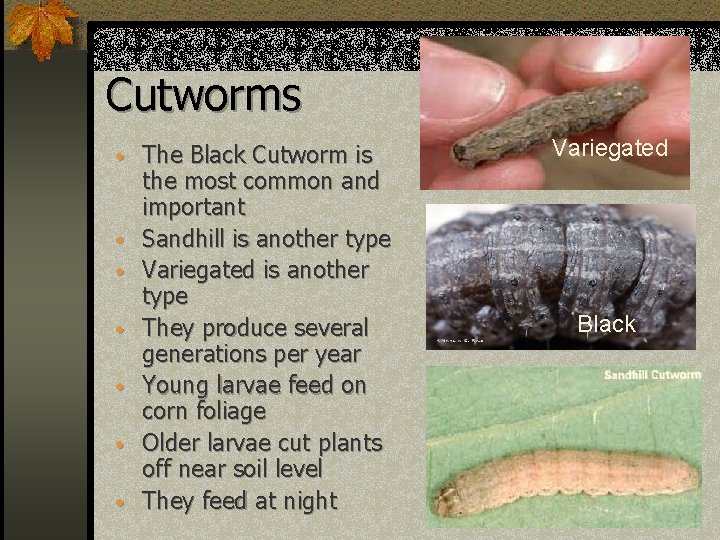
Cutworms • The Black Cutworm is • • • the most common and important Sandhill is another type Variegated is another type They produce several generations per year Young larvae feed on corn foliage Older larvae cut plants off near soil level They feed at night Variegated Black
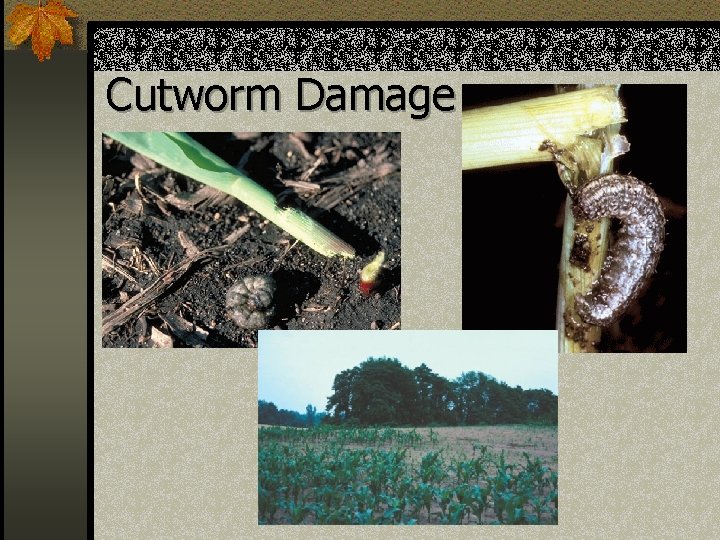
Cutworm Damage
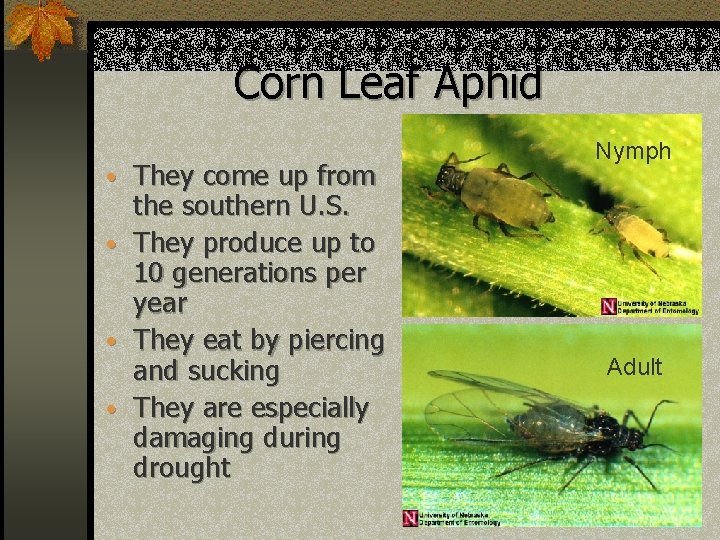
Corn Leaf Aphid • They come up from • • • the southern U. S. They produce up to 10 generations per year They eat by piercing and sucking They are especially damaging during drought Nymph Adult
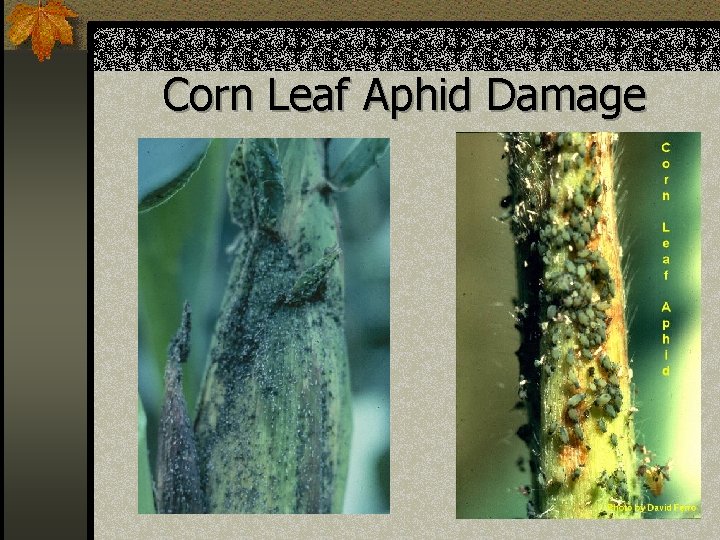
Corn Leaf Aphid Damage
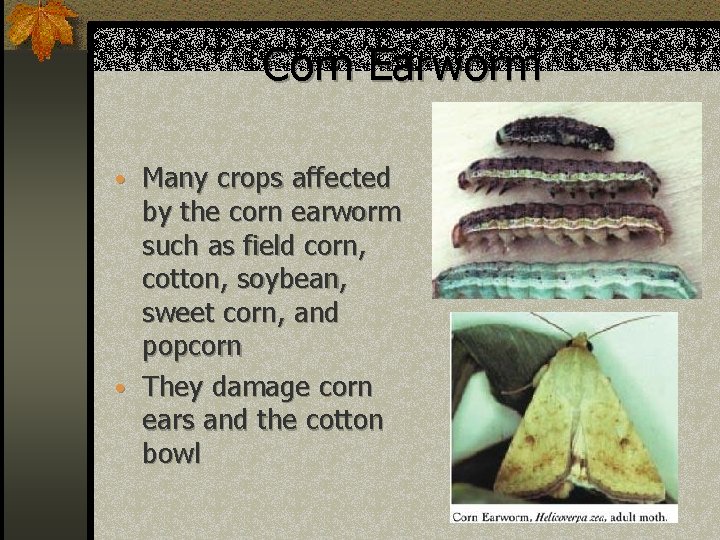
Corn Earworm • Many crops affected by the corn earworm such as field corn, cotton, soybean, sweet corn, and popcorn • They damage corn ears and the cotton bowl
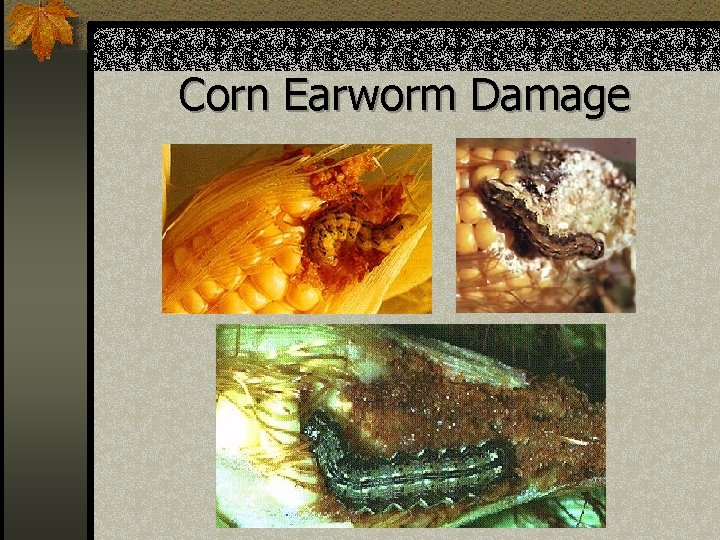
Corn Earworm Damage
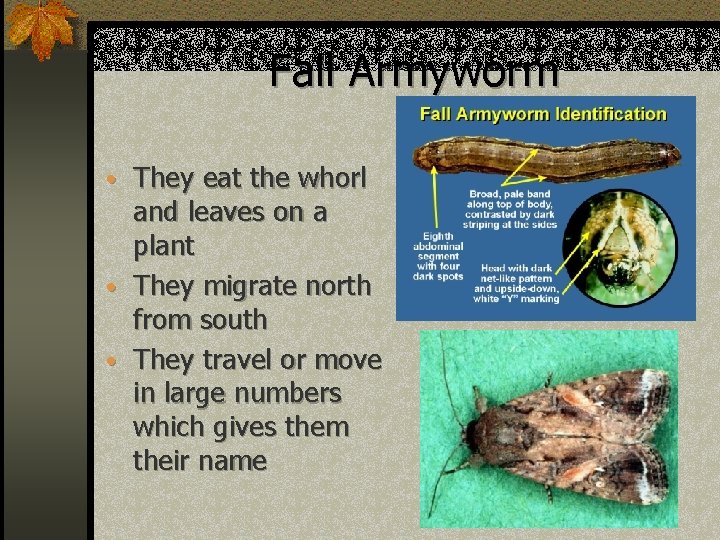
Fall Armyworm • They eat the whorl and leaves on a plant • They migrate north from south • They travel or move in large numbers which gives them their name
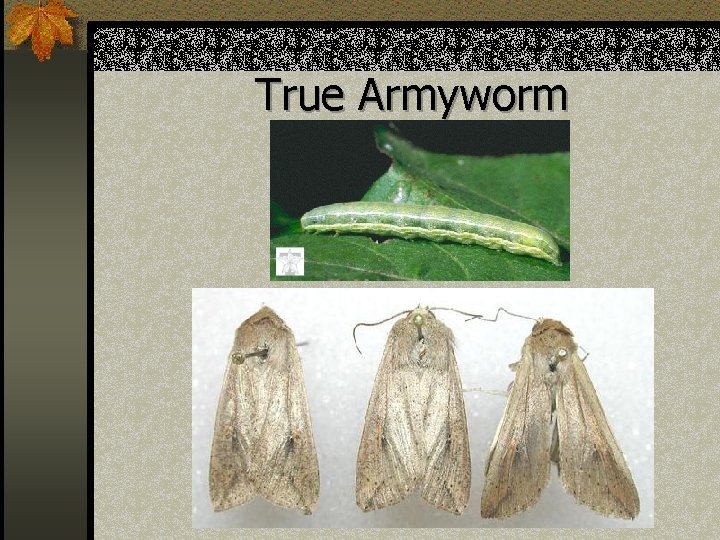
True Armyworm
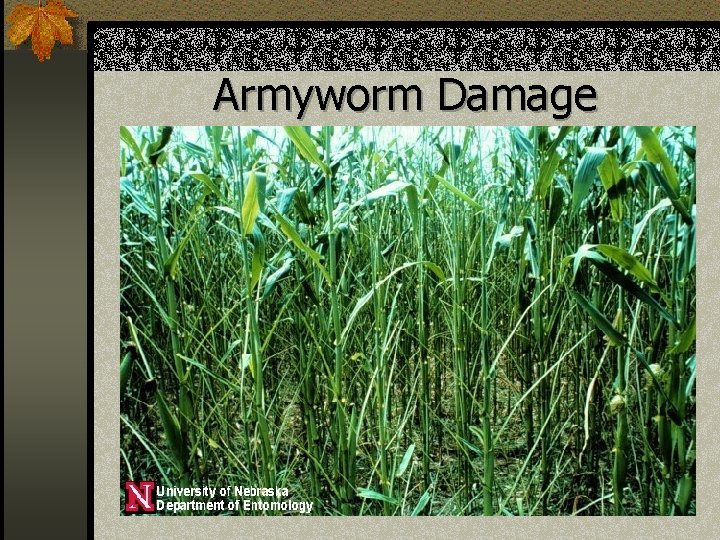
Armyworm Damage
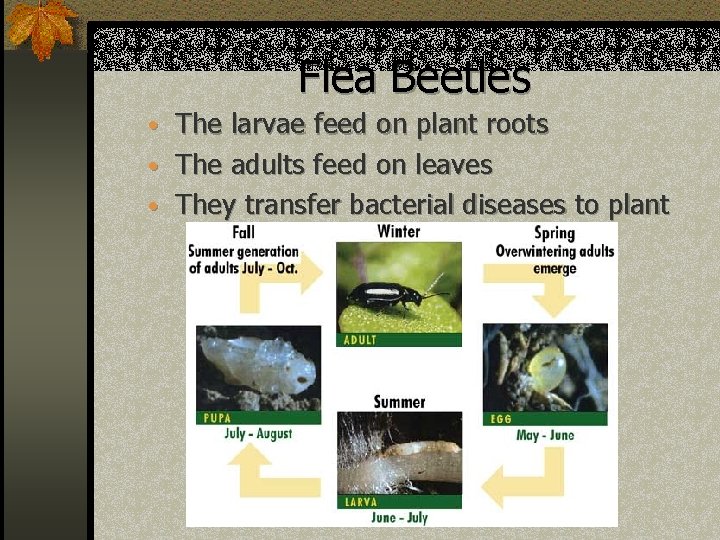
Flea Beetles • The larvae feed on plant roots • The adults feed on leaves • They transfer bacterial diseases to plant
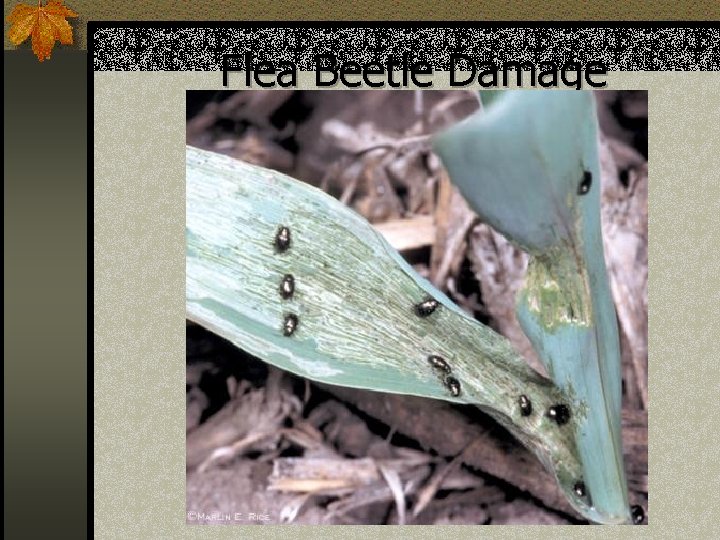
Flea Beetle Damage
European Corn Borer • They attack corn, peppers, potatoes • They produce 2 -3 generations per year • In the winter the larvae live in field debris • In the spring, they become adults • In June, the adults lay eggs on plant, the larvae feed on leaves and bore into plant stem, then become adults • In July – October, the adults lay eggs, larvae damage inside stalk making the plants fall down or a poor ear develops
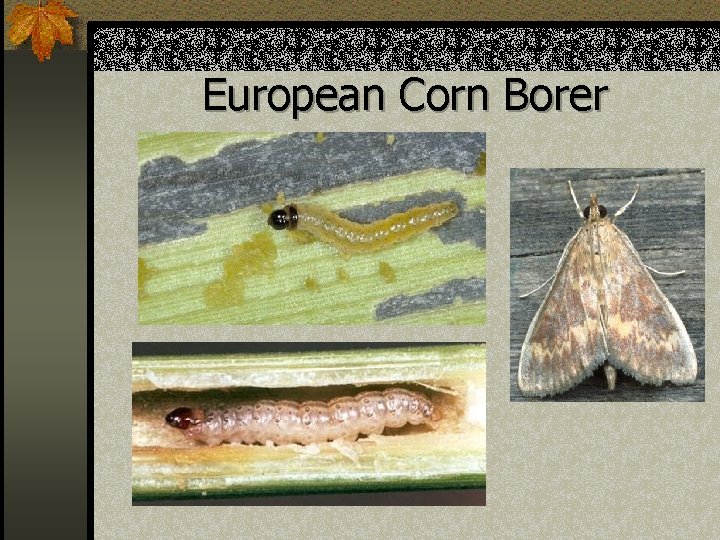
European Corn Borer
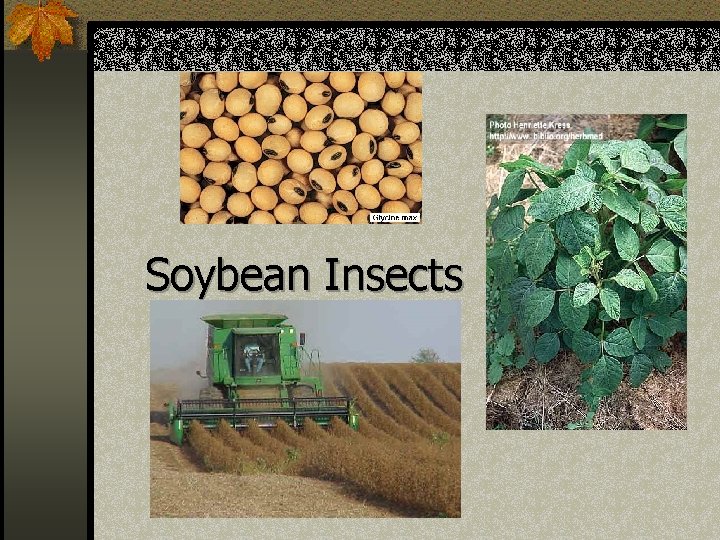
Soybean Insects
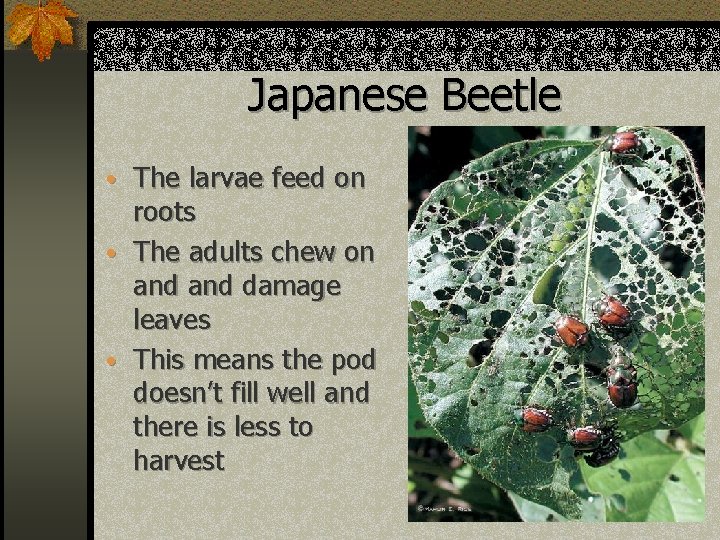
Japanese Beetle • The larvae feed on roots • The adults chew on and damage leaves • This means the pod doesn’t fill well and there is less to harvest
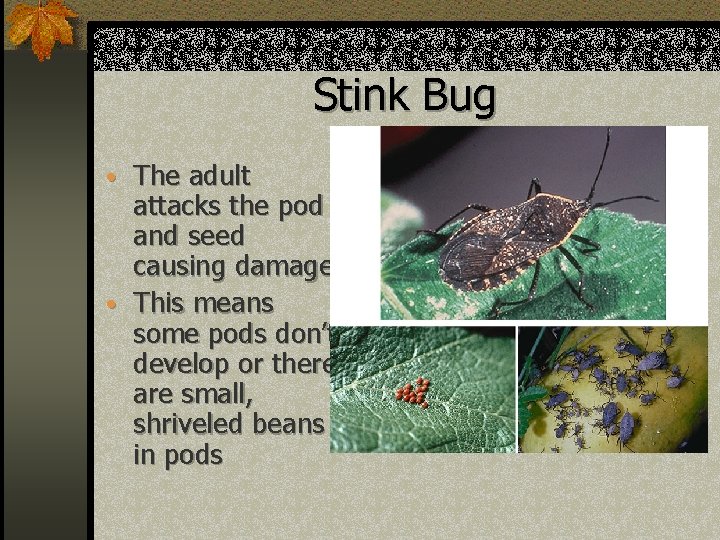
Stink Bug • The adult attacks the pod and seed causing damage • This means some pods don’t develop or there are small, shriveled beans in pods
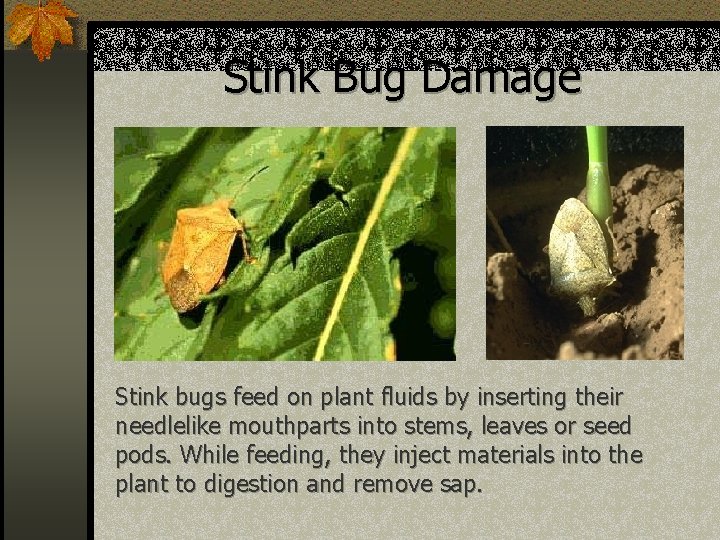
Stink Bug Damage Stink bugs feed on plant fluids by inserting their needlelike mouthparts into stems, leaves or seed pods. While feeding, they inject materials into the plant to digestion and remove sap.
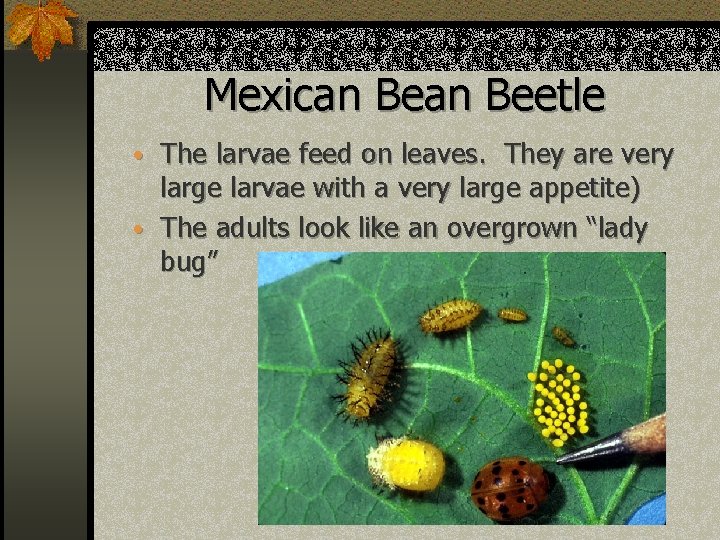
Mexican Beetle • The larvae feed on leaves. They are very large larvae with a very large appetite) • The adults look like an overgrown “lady bug”
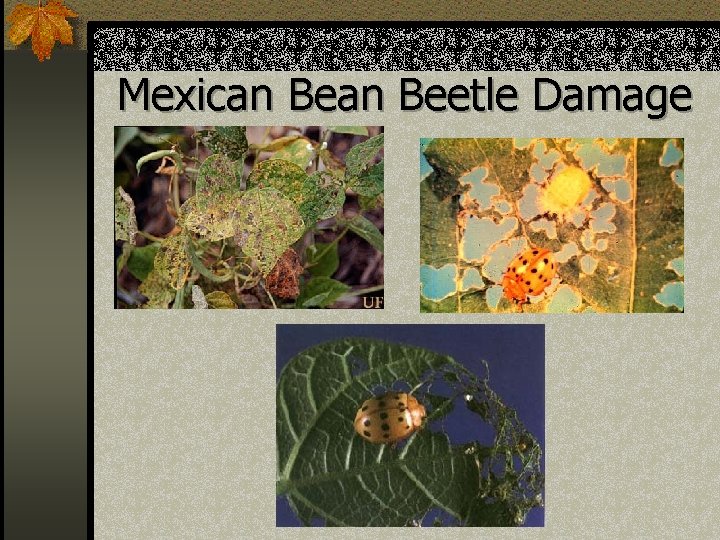
Mexican Beetle Damage
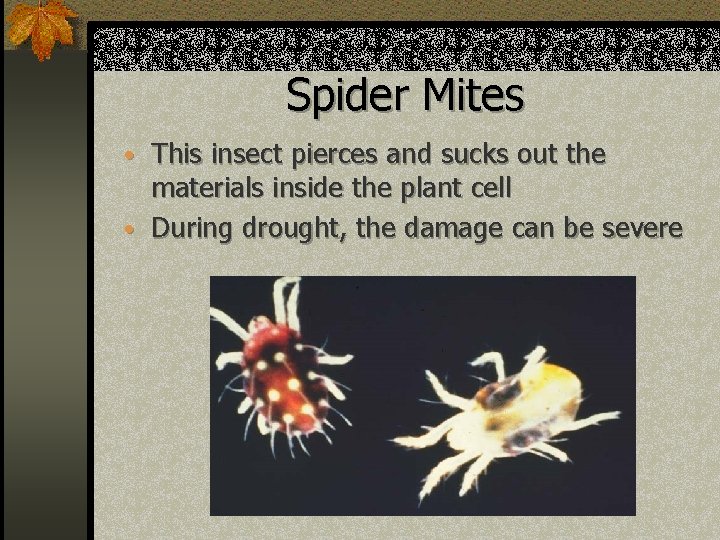
Spider Mites • This insect pierces and sucks out the materials inside the plant cell • During drought, the damage can be severe
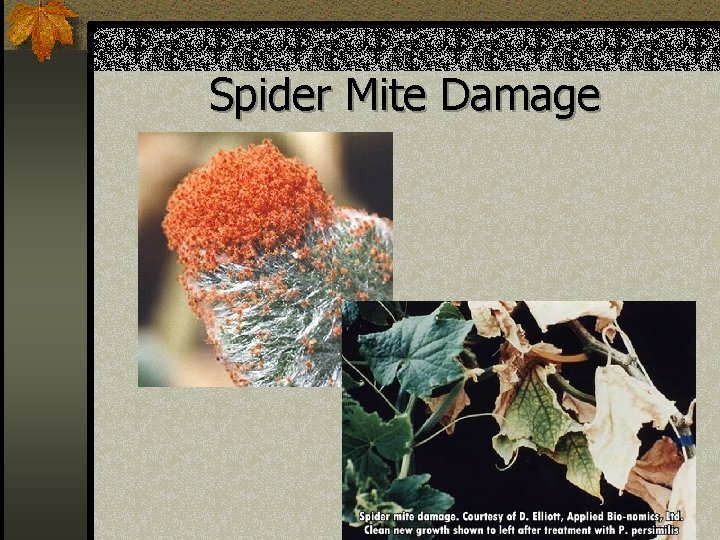
Spider Mite Damage
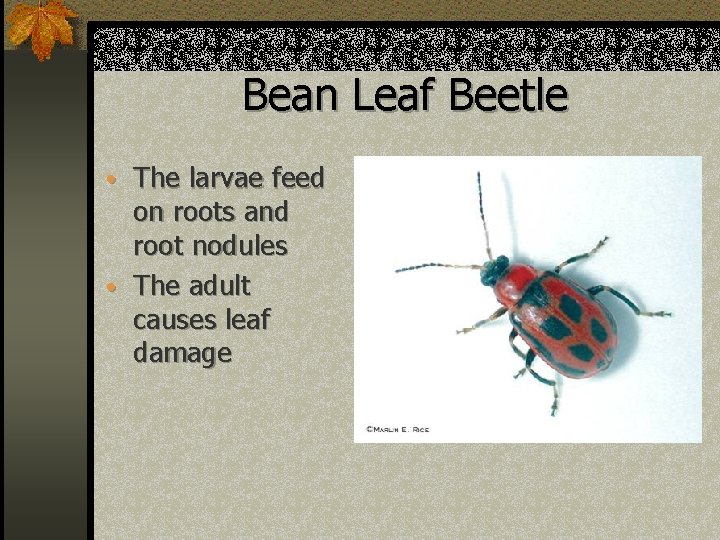
Bean Leaf Beetle • The larvae feed on roots and root nodules • The adult causes leaf damage
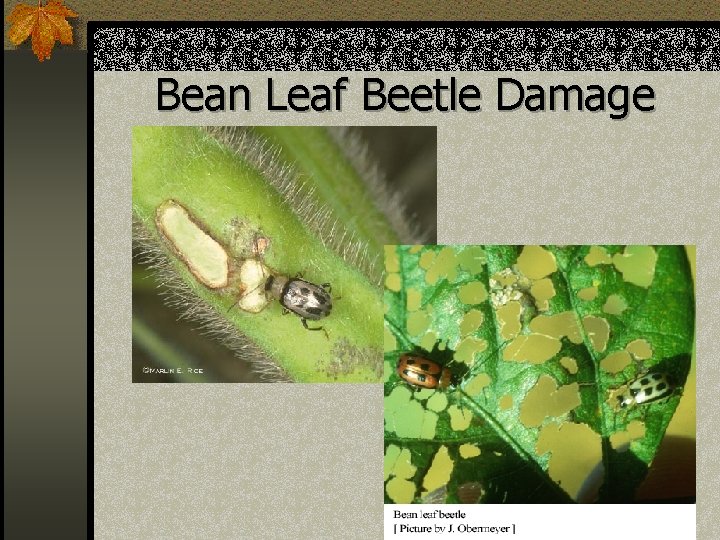
Bean Leaf Beetle Damage
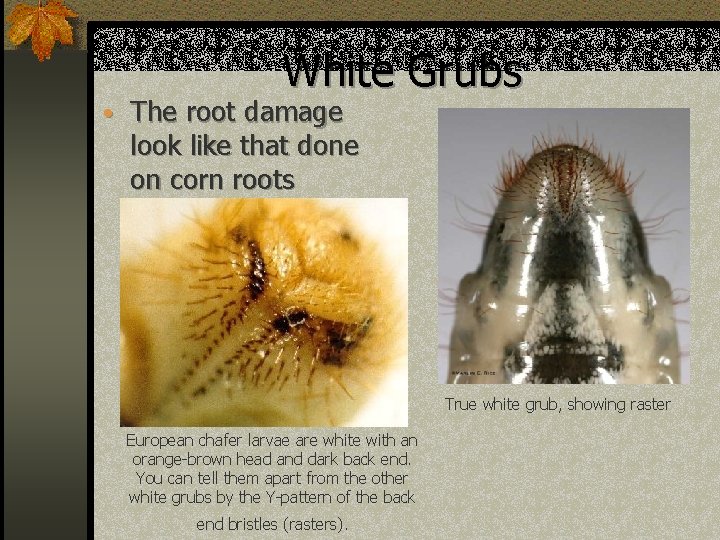
White Grubs • The root damage look like that done on corn roots True white grub, showing raster European chafer larvae are white with an orange-brown head and dark back end. You can tell them apart from the other white grubs by the Y-pattern of the back end bristles (rasters).
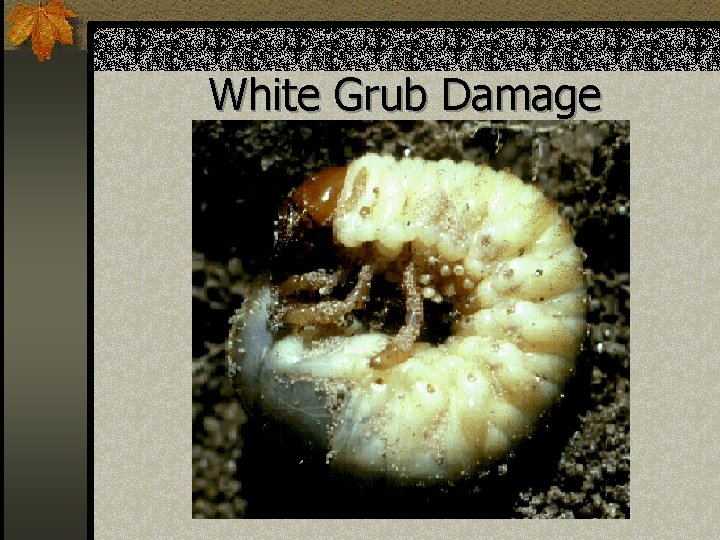
White Grub Damage
How To Control
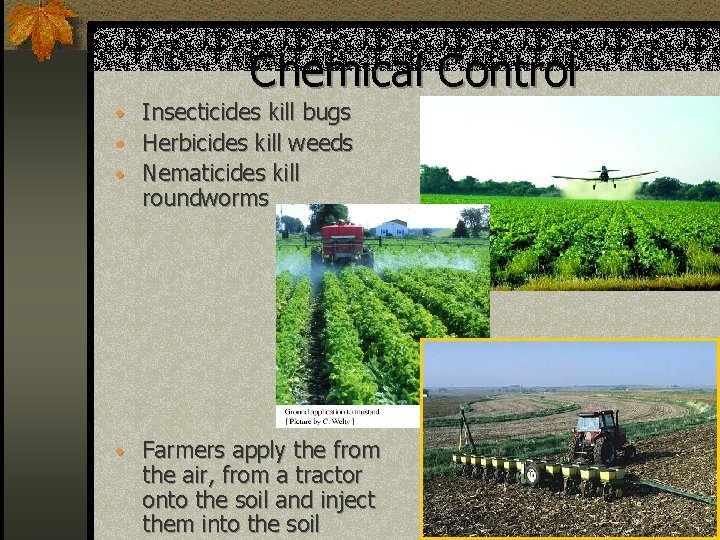
Chemical Control • Insecticides kill bugs • Herbicides kill weeds • Nematicides kill roundworms • Farmers apply the from the air, from a tractor onto the soil and inject them into the soil
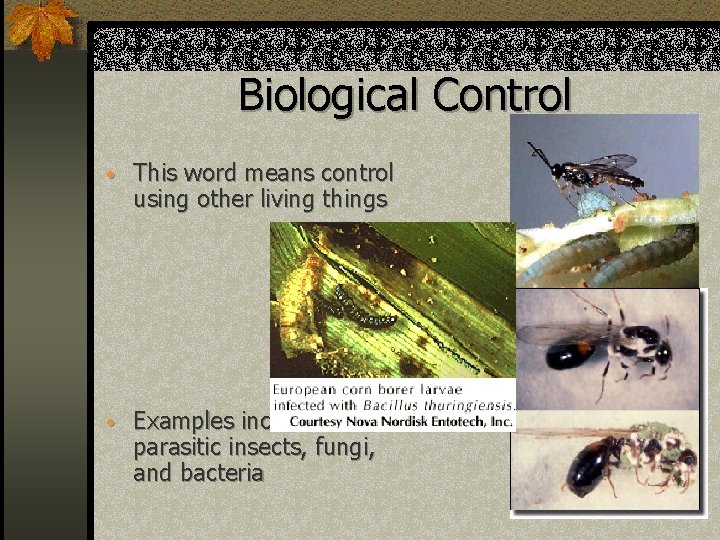
Biological Control • This word means control using other living things • Examples include parasitic insects, fungi, and bacteria
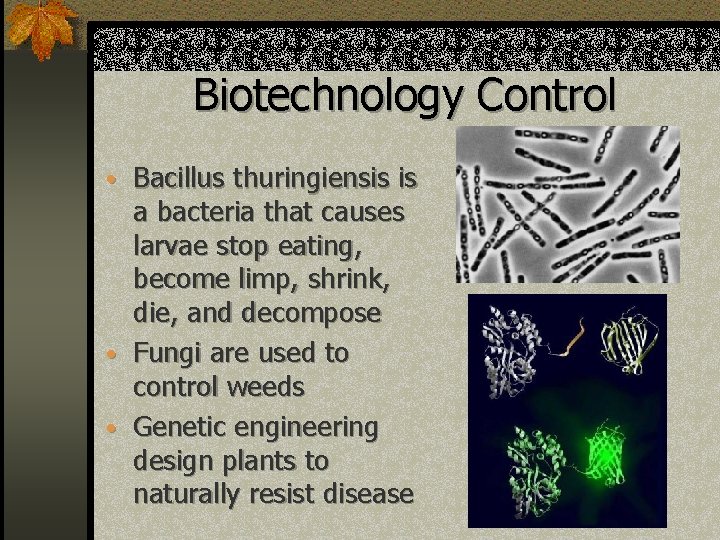
Biotechnology Control • Bacillus thuringiensis is a bacteria that causes larvae stop eating, become limp, shrink, die, and decompose • Fungi are used to control weeds • Genetic engineering design plants to naturally resist disease
- Slides: 37