
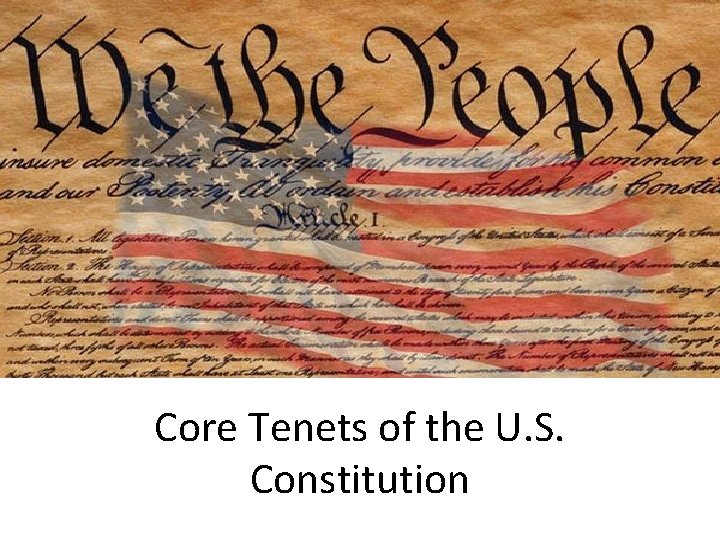
Core Tenets of the U S Constitution U

- Slides: 14
Core Tenets of the U. S. Constitution
U. S. Constitution • Declaration of Independence was signed in 1776 • Predecessor to the current Constitution = the Articles of Confederation • Understanding the Constitution is possible if one understands the basic principles
Core Tenets • • • Popular Sovereignty Limited Government Separation of Powers Checks and Balances Judicial Review Federalism
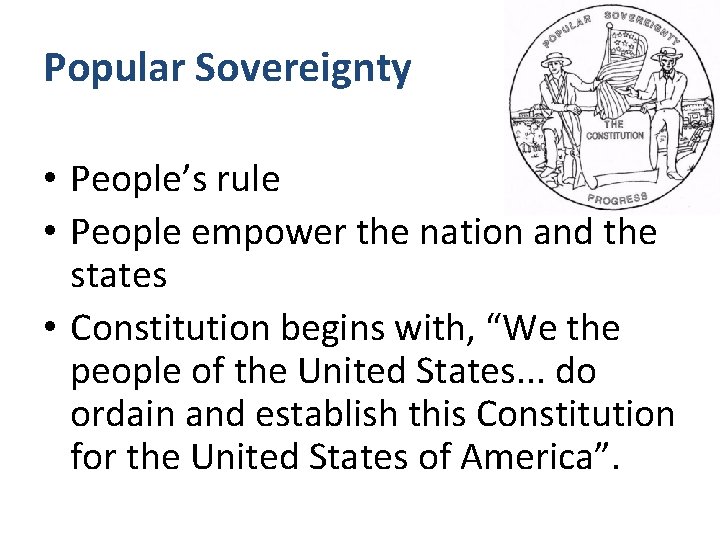
Popular Sovereignty • People’s rule • People empower the nation and the states • Constitution begins with, “We the people of the United States. . . do ordain and establish this Constitution for the United States of America”.
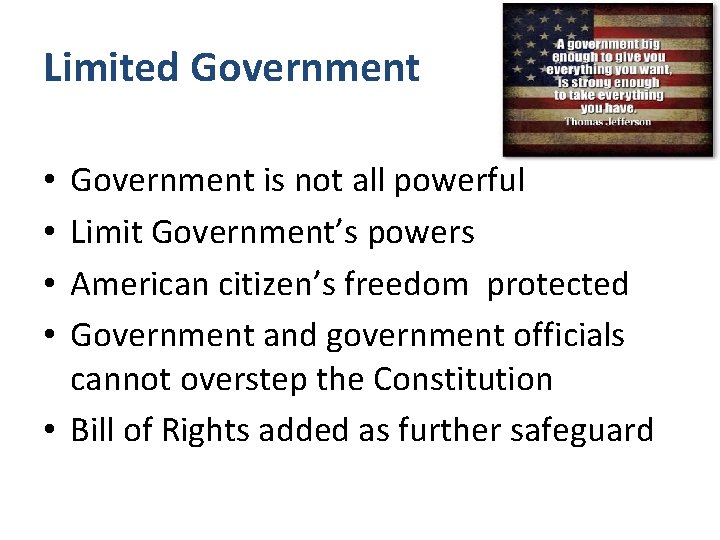
Limited Government is not all powerful Limit Government’s powers American citizen’s freedom protected Government and government officials cannot overstep the Constitution • Bill of Rights added as further safeguard • •
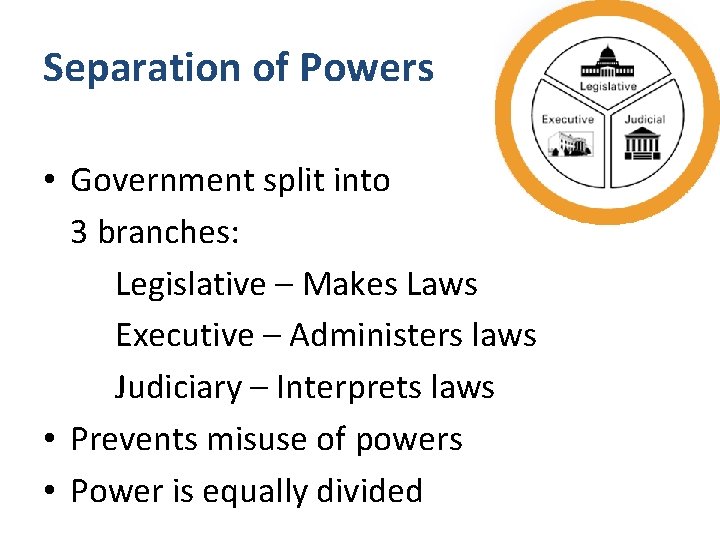
Separation of Powers • Government split into 3 branches: Legislative – Makes Laws Executive – Administers laws Judiciary – Interprets laws • Prevents misuse of powers • Power is equally divided
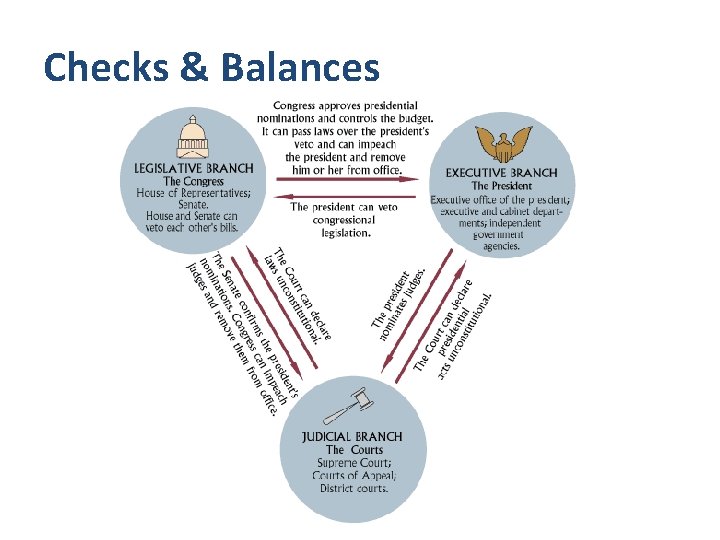
Checks & Balances
Checks & Balances • Each branch has the power to restrain other 2 branches • No single branch can become allpowerful • Safeguard from Tyranny
Judicial Review • Reviews the actions of the Legislative & Executive branches • Does not allow any corrupt or unconstitutional law from passing • Writ of Habeas Corpus states that all people who are convicted deserve a fair trial
Federalism • One central government system that divides power with the regional and local governments • Individual states can deal with local issues • Federal government shares powers with the state
Conclusion • Six basic principles • First, all states are equal. • Second, three branches of government exist: one to make laws (the legislative branch), another to execute laws (the executive branch), and a third to settle disputes (the judicial branch). • Third, all persons, whether rich or poor, are equal before the law.
Conclusion • Fourth, no one is above the law. • Fifth, the authority of the government can be changed by altering the Constitution. • Finally, the highest law in the land is the Constitution—no state law that conflicts with the Constitution can be passed.
References What are the Principles of the US Constitution? (2017, June 25). Retrieved November 5, 2019, from https: //worldhistory. us/americanhistory/what-are-the-principles-of-the-usconstitution. php. thefp. Admin. (2017, August 18). The Six Basic Constitution Principles. Retrieved November 5, 2019, from https: //thefoundingproject. com/sixbasic-constitution-principles.
THANK YOU