
Core MTSSRTI Team Functions Diana Browning Wright MS
Core MTSS/RTI Team Functions Diana Browning Wright, MS, LEP
Purpose Serves as a overarching dissemination and implementation team within a building responsible for ensuring knowledge transfer (that is, dissemination) and supporting effective use of practices (that is, implementation) associated with MTSS/RTI Core Team is responsible for: identifying school level needs via data, prioritizing those needs that need to be addressed through dissemination and implementation efforts, establishing a culture of reviewing data to guide efforts to incrementally improve and change
Core Team Activities Core team activities: reviews belief data and plans methods of securing supportive beliefs analyze results of universal screening, engages in team confirmation process to rule in and rule out students who need Tier 2 interventions, and prepares a summary report to share out with staff creates a school-wide data system that monitors implementation and relevant student outcomes school-wide (Tier 1) Tracking disciplinary incidents (office referral, suspension, detention) and examines for disproportionality and overrepresentation by some staff School climate measures (parent, student, and teacher) Fidelity of Tier 1 components (PBIS, SEL, + relationships, proactive classroom management, etc. ) Attendance (absences, tardiness, truancy)
Core Team Activities Creation of sub- or expanded-teams to accomplish meaningful work related to MTSS (if needed) that reports outcomes back to the Core Team Examples of sub- or expanded-teams: School-wide implementation team(s) Example teams that support specific implementation efforts – Core academic curriculum and instruction PBIS implementation team Data collection team on climate Individual student problem-solving teams (e. g. , SAP) Tier 2 and 3 supports and progress monitoring for identified at-risk students Problem-solving non-responsive students These teams can be organized according to grade-levels, alphabet based on students’ last names, departments, etc.
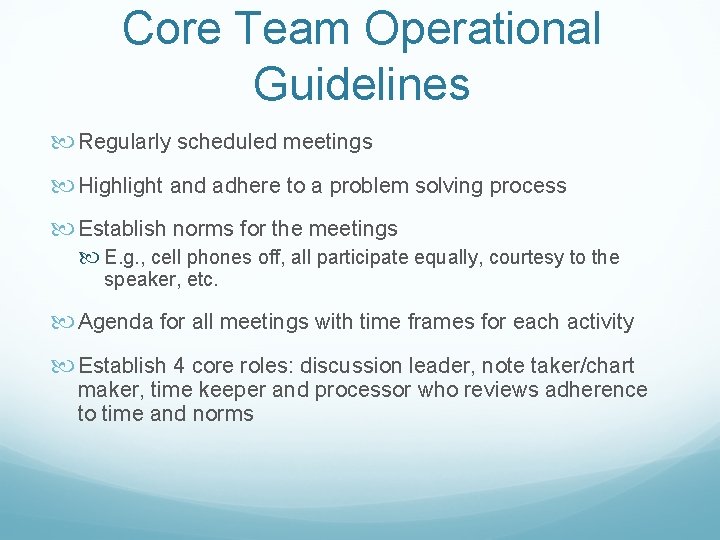
Core Team Operational Guidelines Regularly scheduled meetings Highlight and adhere to a problem solving process Establish norms for the meetings E. g. , cell phones off, all participate equally, courtesy to the speaker, etc. Agenda for all meetings with time frames for each activity Establish 4 core roles: discussion leader, note taker/chart maker, time keeper and processor who reviews adherence to time and norms
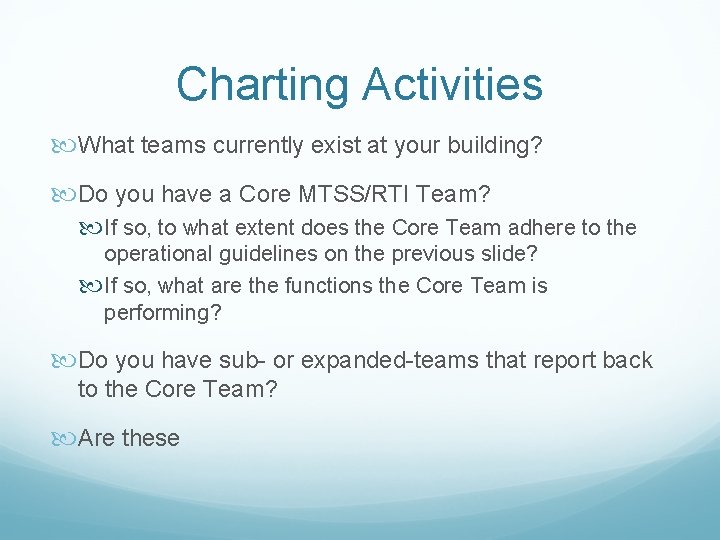
Charting Activities What teams currently exist at your building? Do you have a Core MTSS/RTI Team? If so, to what extent does the Core Team adhere to the operational guidelines on the previous slide? If so, what are the functions the Core Team is performing? Do you have sub- or expanded-teams that report back to the Core Team? Are these
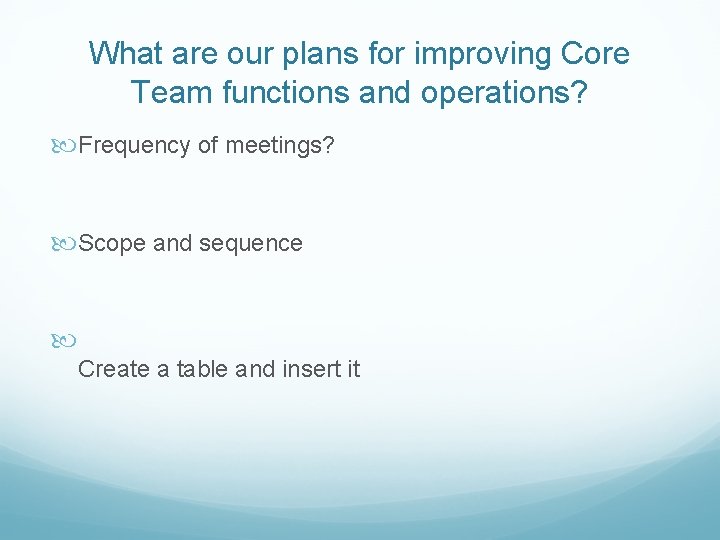
What are our plans for improving Core Team functions and operations? Frequency of meetings? Scope and sequence Create a table and insert it

Improving Core Team Functions Core Team Function or Operation Structure of meetings (agenda, norms, roles, and problem-solving process) Frequency and efficiency of meetings Scope and sequence (prioritizing implementation efforts) Continuous addressing of belief barriers Improvement of school-wide data collection and use (climate, disciplinary, implementation fidelity, etc. ) Use of and coordination with sub- and expanded-teams Other? ? ? Specific improvements needed
- Slides: 8