
Core Flight Software Projects on Orion MultiPurpose Crew
- Slides: 29
Core Flight Software Projects on Orion Multi-Purpose Crew Vehicle Flight Software Workshop December 3, 2018 Lorraine E. Prokop, Ph. D NASA – Johnson Space Center / ER 6 lorraine. e. prokop@nasa. gov
Outline § Orion Program Overview § CFS Projects on Orion – Orion Ascent Abort 2 Flight Test – Optical Navigation Software – Backup Flight Software 2
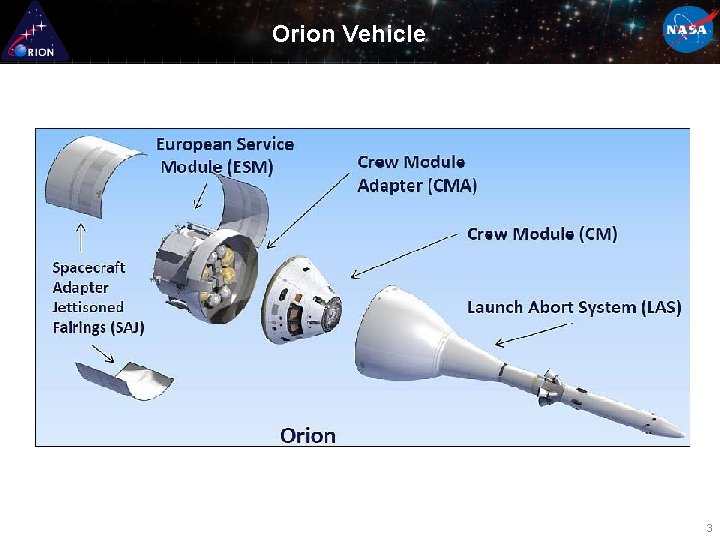
Orion Vehicle 3
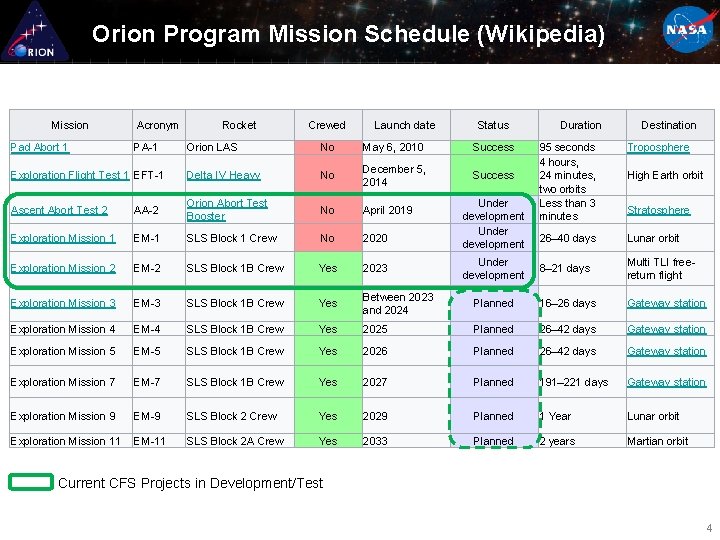
Orion Program Mission Schedule (Wikipedia) Mission Pad Abort 1 Acronym PA-1 Rocket Crewed Launch date Status Orion LAS No May 6, 2010 Success Exploration Flight Test 1 EFT-1 Delta IV Heavy No December 5, 2014 Success Ascent Abort Test 2 AA-2 Orion Abort Test Booster No April 2019 Exploration Mission 1 EM-1 SLS Block 1 Crew No 2020 Exploration Mission 2 EM-2 SLS Block 1 B Crew Yes 2023 Exploration Mission 3 EM-3 SLS Block 1 B Crew Yes Exploration Mission 4 EM-4 SLS Block 1 B Crew Exploration Mission 5 EM-5 Exploration Mission 7 Duration Destination 95 seconds 4 hours, 24 minutes, two orbits Less than 3 minutes Troposphere 26– 40 days Lunar orbit Under development 8– 21 days Multi TLI freereturn flight Between 2023 and 2024 Planned 16– 26 days Gateway station Yes 2025 Planned 26– 42 days Gateway station SLS Block 1 B Crew Yes 2026 Planned 26– 42 days Gateway station EM-7 SLS Block 1 B Crew Yes 2027 Planned 191– 221 days Gateway station Exploration Mission 9 EM-9 SLS Block 2 Crew Yes 2029 Planned 1 Year Lunar orbit Exploration Mission 11 EM-11 SLS Block 2 A Crew Yes 2033 Planned 2 years Martian orbit Under development High Earth orbit Stratosphere Current CFS Projects in Development/Test 4
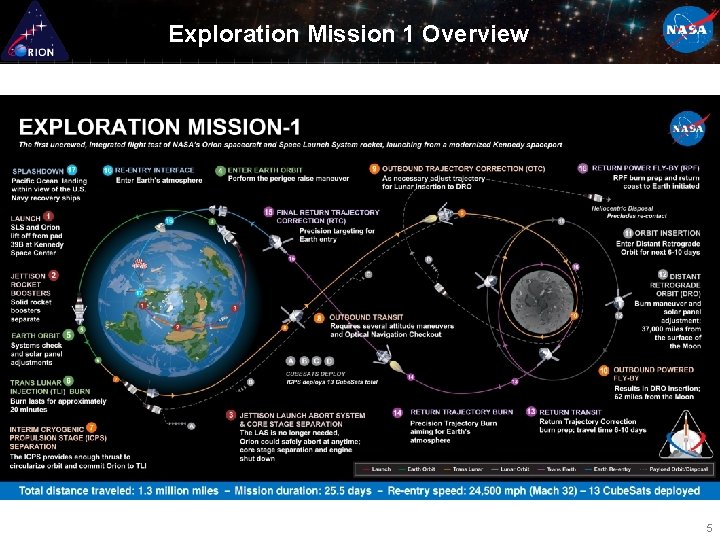
Exploration Mission 1 Overview 5
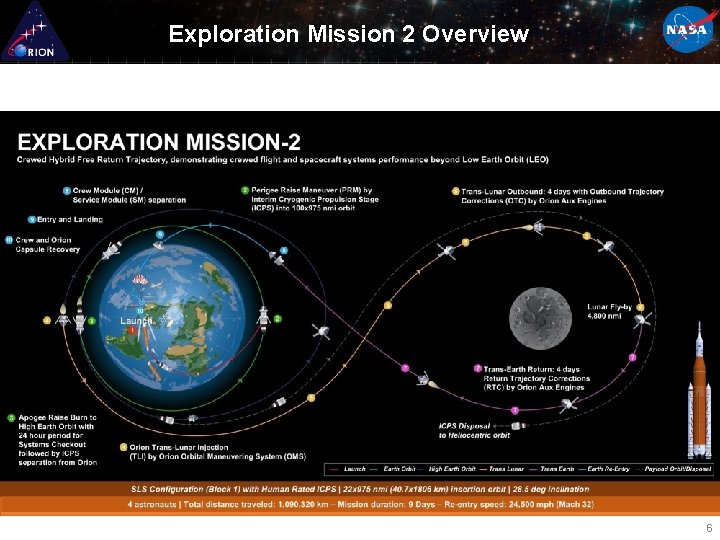
Exploration Mission 2 Overview 6
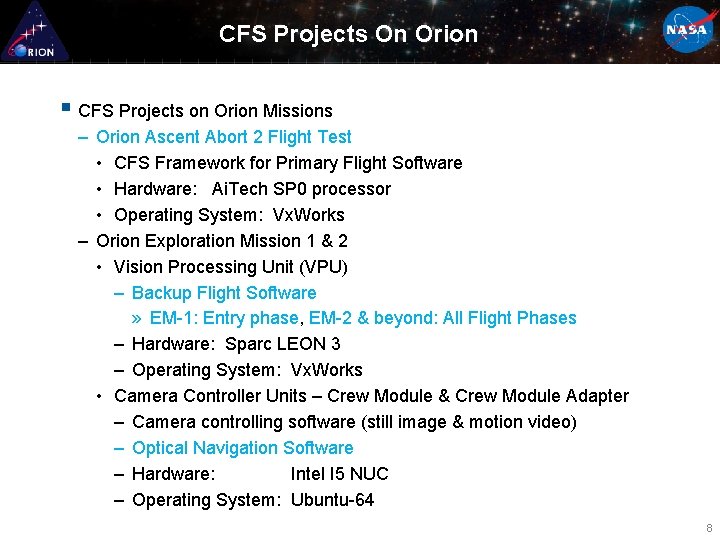
CFS Projects On Orion § CFS Projects on Orion Missions – Orion Ascent Abort 2 Flight Test • CFS Framework for Primary Flight Software • Hardware: Ai. Tech SP 0 processor • Operating System: Vx. Works – Orion Exploration Mission 1 & 2 • Vision Processing Unit (VPU) – Backup Flight Software » EM-1: Entry phase, EM-2 & beyond: All Flight Phases – Hardware: Sparc LEON 3 – Operating System: Vx. Works • Camera Controller Units – Crew Module & Crew Module Adapter – Camera controlling software (still image & motion video) – Optical Navigation Software – Hardware: Intel I 5 NUC – Operating System: Ubuntu-64 8
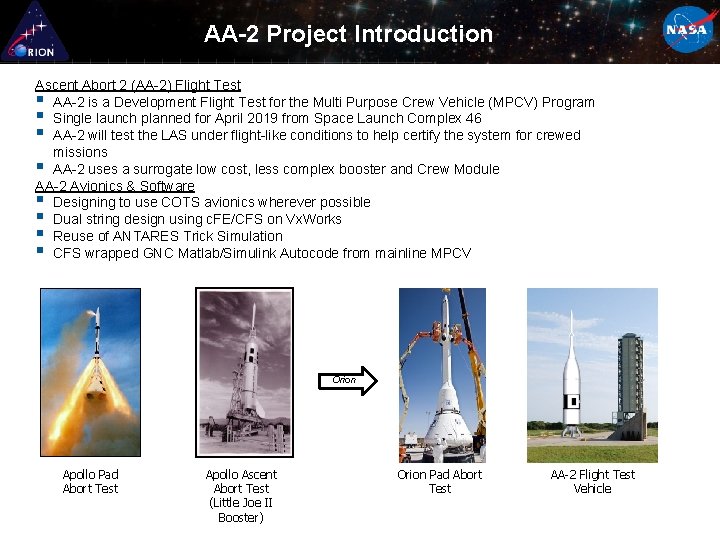
AA-2 Project Introduction Ascent Abort 2 (AA-2) Flight Test § AA-2 is a Development Flight Test for the Multi Purpose Crew Vehicle (MPCV) Program § Single launch planned for April 2019 from Space Launch Complex 46 § AA-2 will test the LAS under flight-like conditions to help certify the system for crewed missions § AA-2 uses a surrogate low cost, less complex booster and Crew Module AA-2 Avionics & Software § Designing to use COTS avionics wherever possible § Dual string design using c. FE/CFS on Vx. Works § Reuse of ANTARES Trick Simulation § CFS wrapped GNC Matlab/Simulink Autocode from mainline MPCV Orion Apollo Pad Abort Test Apollo Ascent Abort Test (Little Joe II Booster) Orion Pad Abort Test AA-2 Flight Test Vehicle
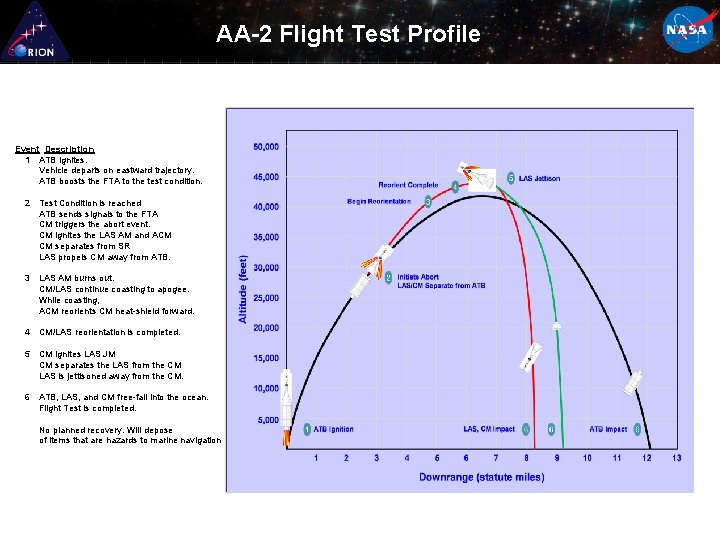
AA-2 Flight Test Profile Event Description 1 ATB ignites. Vehicle departs on eastward trajectory. ATB boosts the FTA to the test condition. 2 Test Condition is reached ATB sends signals to the FTA CM triggers the abort event. CM ignites the LAS AM and ACM CM separates from SR LAS propels CM away from ATB. AA-2 Flight Test Profile 3 LAS AM burns out. CM/LAS continue coasting to apogee. While coasting, ACM reorients CM heat-shield forward. 4 CM/LAS reorientation is completed. 5 CM ignites LAS JM CM separates the LAS from the CM LAS is jettisoned away from the CM. 6 ATB, LAS, and CM free-fall into the ocean. Flight Test is completed. No planned recovery. Will depose of items that are hazards to marine navigation Note: Trajectory and event times are based on preliminary data.
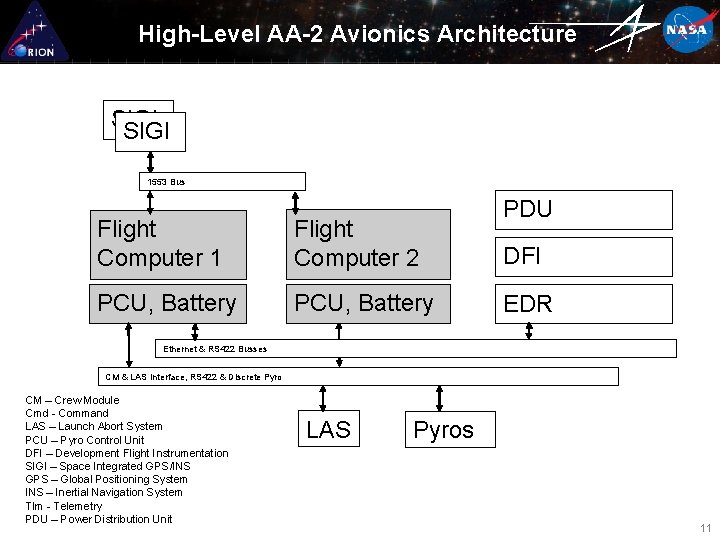
High-Level AA-2 Avionics Architecture SIGI 1553 Bus PDU Flight Computer 1 Flight Computer 2 DFI PCU, Battery EDR Ethernet & RS 422 Busses CM & LAS Interface, RS 422 & Discrete Pyro CM – Crew Module Cmd - Command LAS – Launch Abort System PCU – Pyro Control Unit DFI – Development Flight Instrumentation SIGI – Space Integrated GPS/INS GPS – Global Positioning System INS – Inertial Navigation System Tlm - Telemetry PDU – Power Distribution Unit LAS Pyros 11
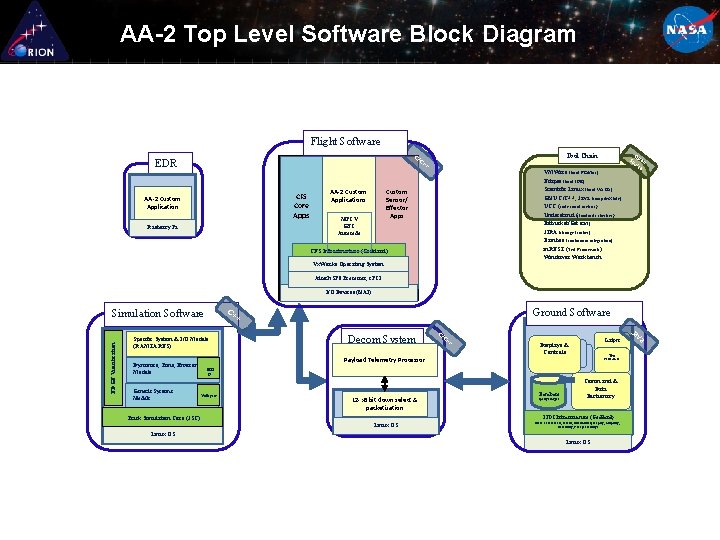
AA-2 Top Level Software Block Diagram Flight Software C/ Tool Chain C+ + EDR CFS Core Apps AA-2 Custom Application Rasberry Pi AA-2 Custom Applications VMWare (local PC/Mac) Eclipse (local IDE) Scientific Linux (local WS OS) GNU C/C++, Java (compile/Xlate) UCC (code count metrics) Understand (standards checker) Bitbucket/Git (CM) JIRA (change tracker) Bamboo (continuous integration) m. REST (Test Framework) Windriver Workbench Custom Sensor/ Effector Apps MPCV GNC Autocode CFS Infrastructure (Goddard) O So pen ur ce Vx. Works Operating System Aitech SP 0 Processor, c. PCI I/O Devices (NAI) EDGE Visualization Simulation Software Specific System & I/O Models (RAMTARES) Dynamics, Time, Environment JEO Models D Generic Systems Models Valkyrie C+ Ground Software + Decom System Payload Telemetry Processor 12 ->8 bit down select & packetization C/ C+ + Scripts Displays & Controls Test Framework Database (postgre. SQL) Command & Data Dictionary ITOS Infrastructure (Goddard) Trick Simulation Core (JSC) Linux OS (Data Com/Decom, Recon, Distribution, Display, Scripting, Recording, Post processing) Linux OS 12 Ja va
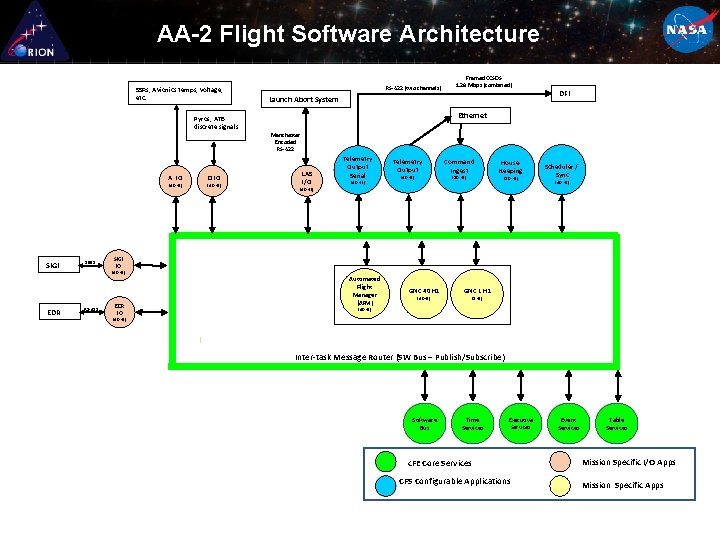
AA-2 Flight Software Architecture SSRs, Avionics temps, voltage, etc. RS-422 (two channels) Framed CCSDS 1. 28 Mbps (combined) Launch Abort System DFI Ethernet Pyros, ATB discrete signals Manchester Encoded RS-422 A IO (40 Hz) SIGI EDR 1553 (40 Hz) Telemetry Output Serial (40 Hz) Telemetry Output (40 Hz) Command Ingest (10 Hz) House. Keeping (10 Hz) Scheduler / Sync (40 Hz) SIGI IO (40 Hz) RS-422 D IO LAS I/O EDR IO Automated Flight Manager (AFM) GNC 40 Hz (40 Hz) GNC 1 Hz (1 Hz) (40 Hz) Inter-task Message Router (SW Bus – Publish/Subscribe) Software Bus Time Services Executive Services c. FE Core Services CFS Configurable Applications Event Services Table Services Mission Specific I/O Apps Mission Specific Apps
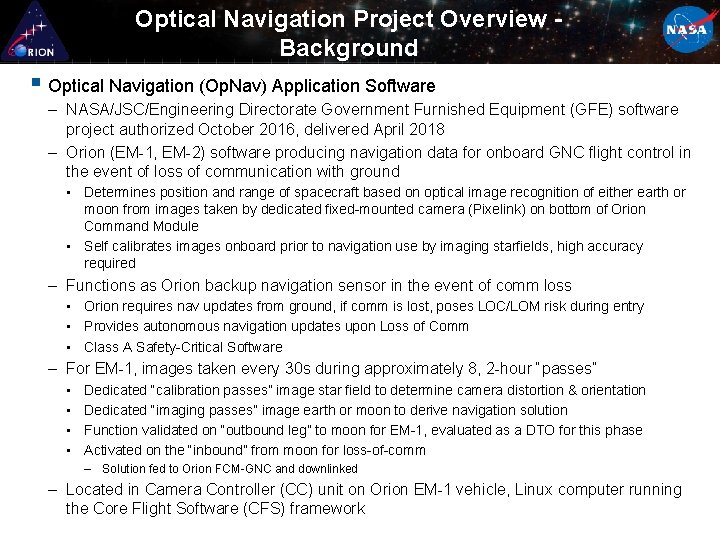
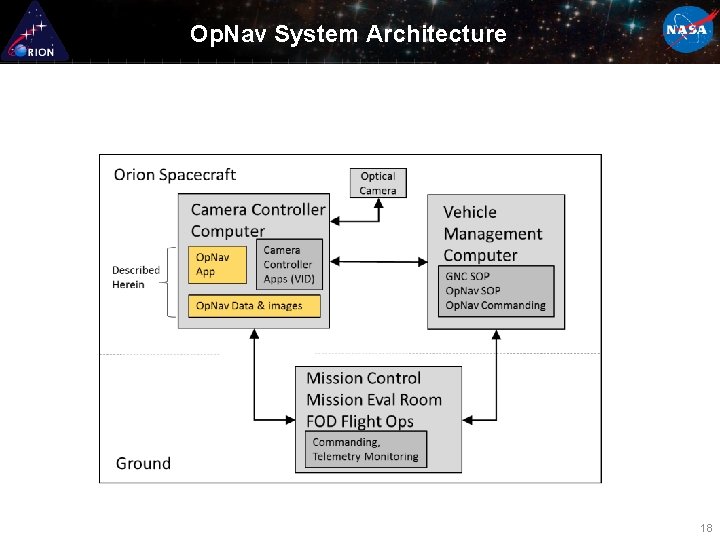
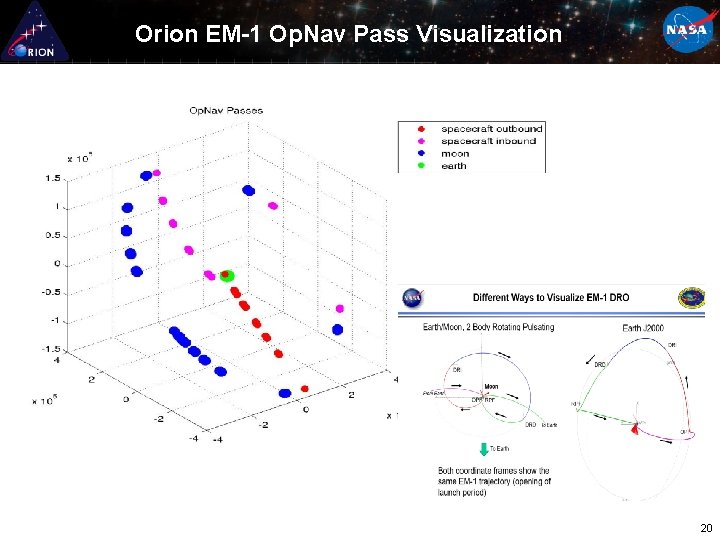
Optical Navigation Project Overview Background § Optical Navigation (Op. Nav) Application Software – NASA/JSC/Engineering Directorate Government Furnished Equipment (GFE) software project authorized October 2016, delivered April 2018 – Orion (EM-1, EM-2) software producing navigation data for onboard GNC flight control in the event of loss of communication with ground • Determines position and range of spacecraft based on optical image recognition of either earth or moon from images taken by dedicated fixed-mounted camera (Pixelink) on bottom of Orion Command Module • Self calibrates images onboard prior to navigation use by imaging starfields, high accuracy required – Functions as Orion backup navigation sensor in the event of comm loss • Orion requires nav updates from ground, if comm is lost, poses LOC/LOM risk during entry • Provides autonomous navigation updates upon Loss of Comm • Class A Safety-Critical Software – For EM-1, images taken every 30 s during approximately 8, 2 -hour “passes” • • Dedicated “calibration passes” image star field to determine camera distortion & orientation Dedicated “imaging passes” image earth or moon to derive navigation solution Function validated on “outbound leg” to moon for EM-1, evaluated as a DTO for this phase Activated on the “inbound” from moon for loss-of-comm – Solution fed to Orion FCM-GNC and downlinked – Located in Camera Controller (CC) unit on Orion EM-1 vehicle, Linux computer running the Core Flight Software (CFS) framework
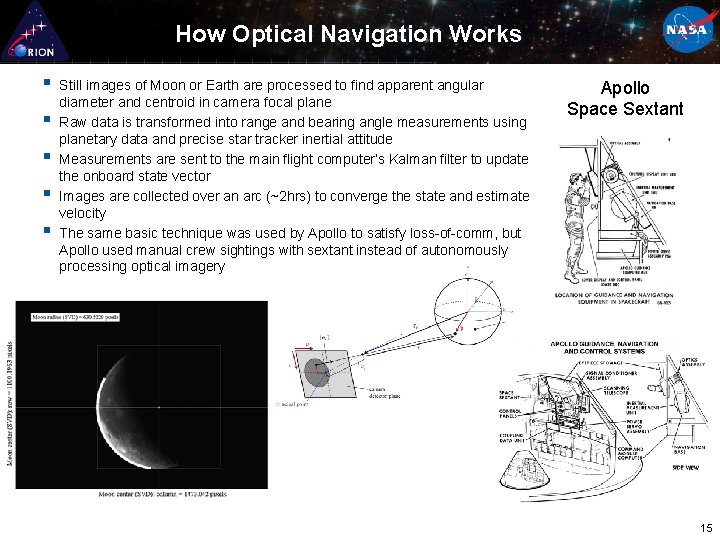
How Optical Navigation Works § § § Still images of Moon or Earth are processed to find apparent angular diameter and centroid in camera focal plane Raw data is transformed into range and bearing angle measurements using planetary data and precise star tracker inertial attitude Measurements are sent to the main flight computer’s Kalman filter to update the onboard state vector Images are collected over an arc (~2 hrs) to converge the state and estimate velocity The same basic technique was used by Apollo to satisfy loss-of-comm, but Apollo used manual crew sightings with sextant instead of autonomously processing optical imagery Apollo Space Sextant 15
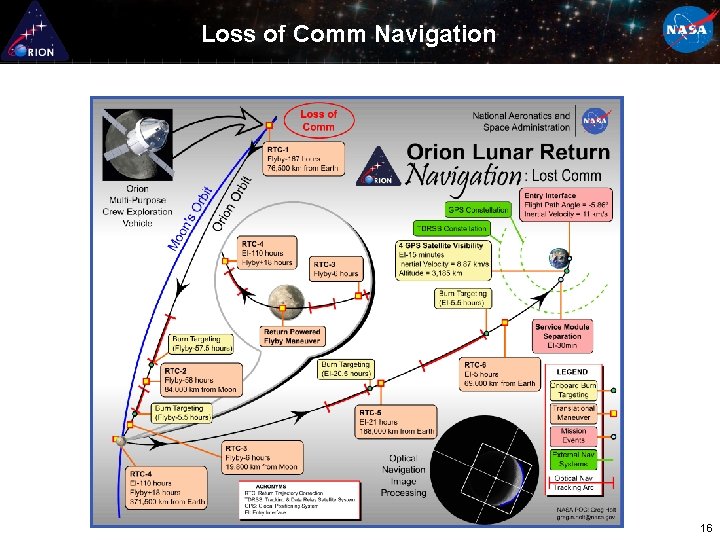
Loss of Comm Navigation 16
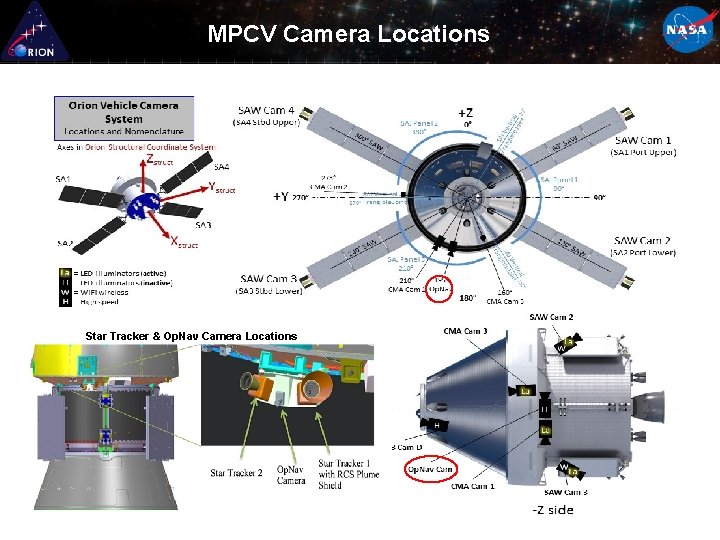
MPCV Camera Locations Star Tracker & Op. Nav Camera Locations
Op. Nav System Architecture 18
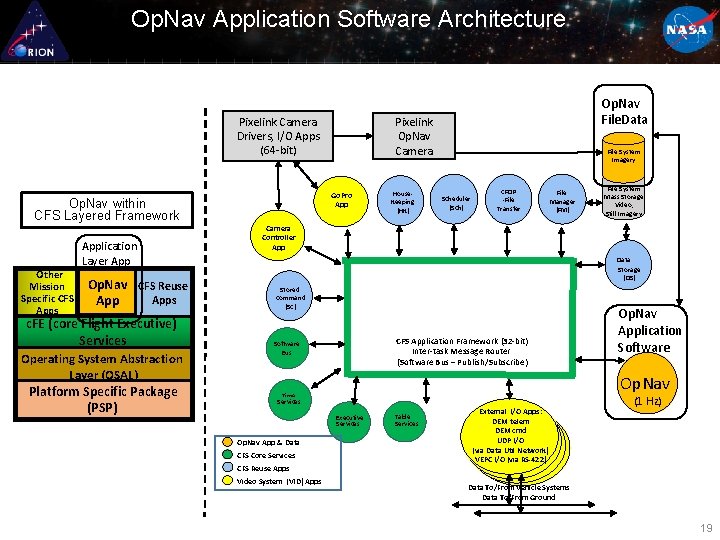
Op. Nav Application Software Architecture Pixelink Camera Drivers, I/O Apps (64 -bit) Op. Nav within CFS Layered Framework Other Mission Specific CFS Apps Application Layer App Op. Nav CFS Reuse Apps App c. FE (core Flight Executive) Services Operating System Abstraction Layer (OSAL) Platform Specific Package (PSP) Op. Nav File. Data Pixelink Op. Nav Camera Go. Pro App House. Keeping (HK) File System Imagery Scheduler (Sch) CFDP -File Transfer File Manager (FM) File System Mass Storage Video, Still Imagery Camera Controller App Data Storage (DS) Stored Command (SC) CFS Application Framework (32 -bit) Inter-task Message Router (Software Bus – Publish/Subscribe) Software Bus Op. Nav Time Services Executive Services Op. Nav App & Data CFS Core Services CFS Reuse Apps Video System (VID) Apps Op. Nav Application Software Table Services External I/O Apps: DEM telem DEM cmd UDP I/O (via Data Util Network) VEPC I/O (via RS-422) (1 Hz) Data To/From Vehicle Systems Data To/From Ground 19
Orion EM-1 Op. Nav Pass Visualization 20
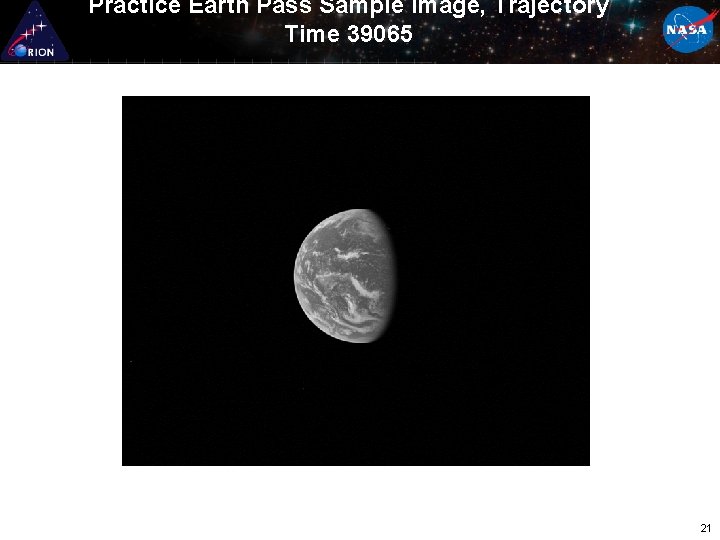
Practice Earth Pass Sample Image, Trajectory Time 39065 21
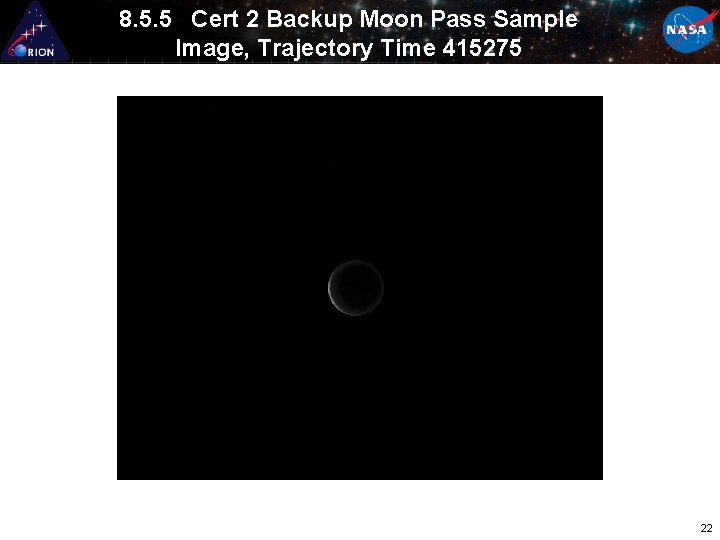
8. 5. 5 Cert 2 Backup Moon Pass Sample Image, Trajectory Time 415275 22
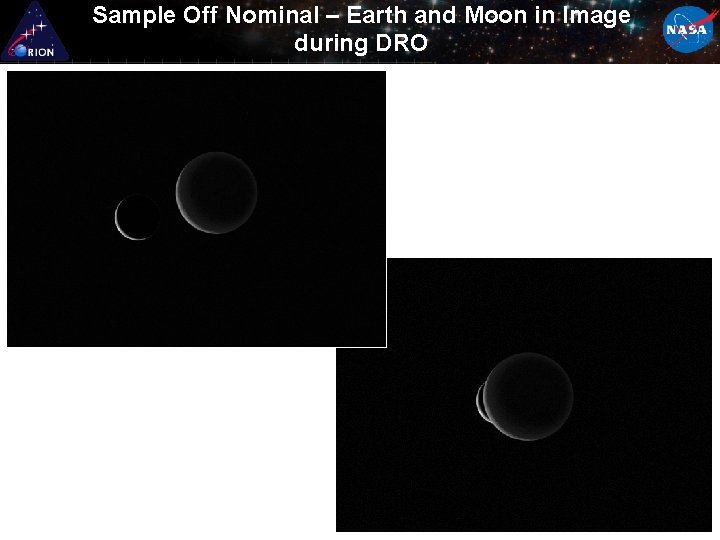
Sample Off Nominal – Earth and Moon in Image during DRO 23
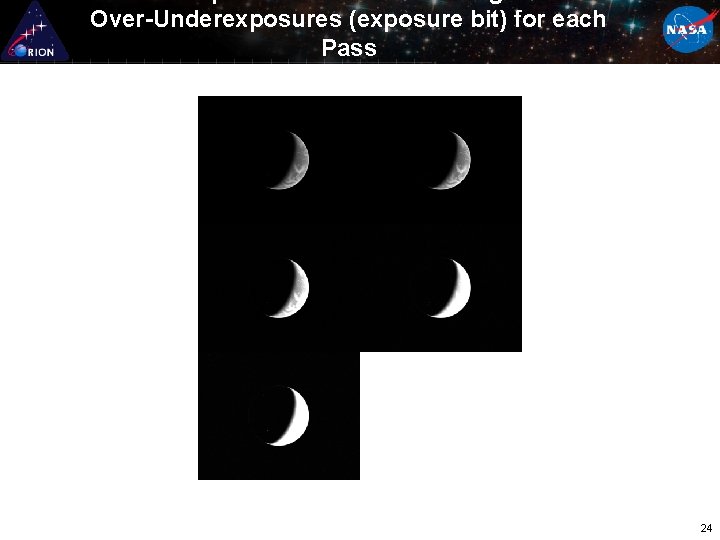
Over-Underexposures (exposure bit) for each Pass 24
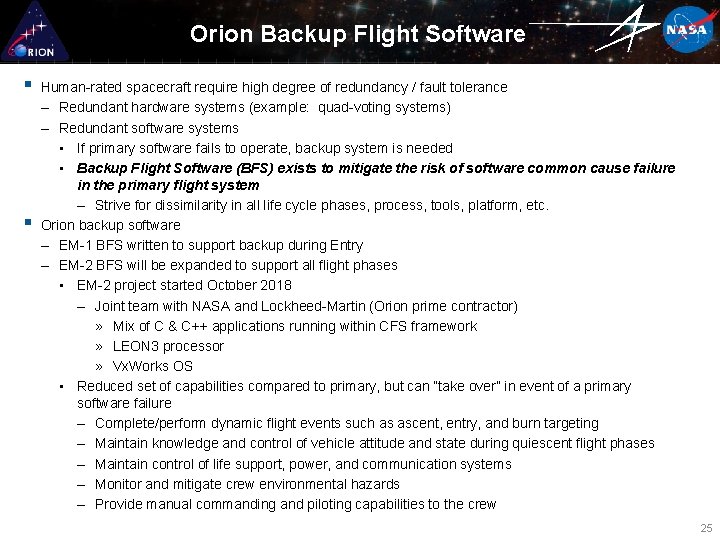
Orion Backup Flight Software § § Human-rated spacecraft require high degree of redundancy / fault tolerance – Redundant hardware systems (example: quad-voting systems) – Redundant software systems • If primary software fails to operate, backup system is needed • Backup Flight Software (BFS) exists to mitigate the risk of software common cause failure in the primary flight system – Strive for dissimilarity in all life cycle phases, process, tools, platform, etc. Orion backup software – EM-1 BFS written to support backup during Entry – EM-2 BFS will be expanded to support all flight phases • EM-2 project started October 2018 – Joint team with NASA and Lockheed-Martin (Orion prime contractor) » Mix of C & C++ applications running within CFS framework » LEON 3 processor » Vx. Works OS • Reduced set of capabilities compared to primary, but can “take over” in event of a primary software failure – Complete/perform dynamic flight events such as ascent, entry, and burn targeting – Maintain knowledge and control of vehicle attitude and state during quiescent flight phases – Maintain control of life support, power, and communication systems – Monitor and mitigate crew environmental hazards – Provide manual commanding and piloting capabilities to the crew 25
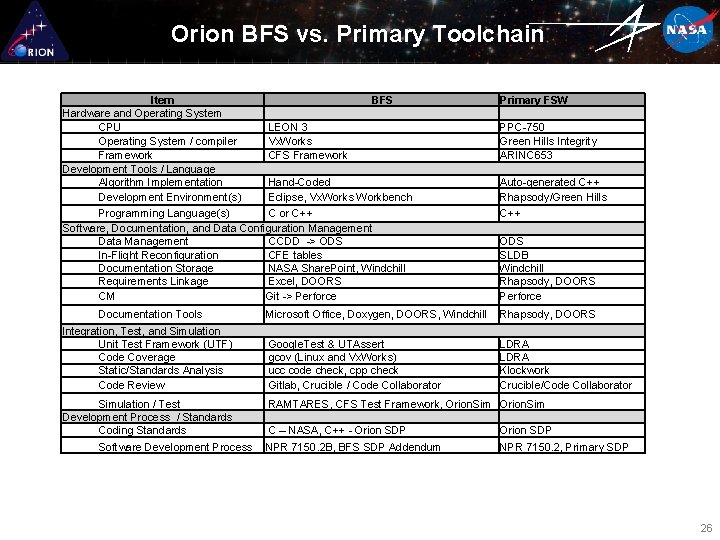
Orion BFS vs. Primary Toolchain Item Hardware and Operating System CPU Operating System / compiler Framework Development Tools / Language Algorithm Implementation Development Environment(s) BFS LEON 3 Vx. Works CFS Framework Primary FSW PPC-750 Green Hills Integrity ARINC 653 Hand-Coded Eclipse, Vx. Works Workbench Auto-generated C++ Rhapsody/Green Hills Programming Language(s) C or C++ Software, Documentation, and Data Configuration Management Data Management CCDD -> ODS In-Flight Reconfiguration CFE tables Documentation Storage NASA Share. Point, Windchill Requirements Linkage Excel, DOORS CM Git -> Perforce C++ Documentation Tools Integration, Test, and Simulation Unit Test Framework (UTF) Code Coverage Static/Standards Analysis Code Review Microsoft Office, Doxygen, DOORS, Windchill Rhapsody, DOORS Google. Test & UTAssert gcov (Linux and Vx. Works) ucc code check, cpp check Gitlab, Crucible / Code Collaborator LDRA Klockwork Crucible/Code Collaborator Simulation / Test Development Process / Standards Coding Standards RAMTARES, CFS Test Framework, Orion. Sim C – NASA, C++ - Orion SDP Software Development Process NPR 7150. 2 B, BFS SDP Addendum ODS SLDB Windchill Rhapsody, DOORS Perforce NPR 7150. 2, Primary SDP 26
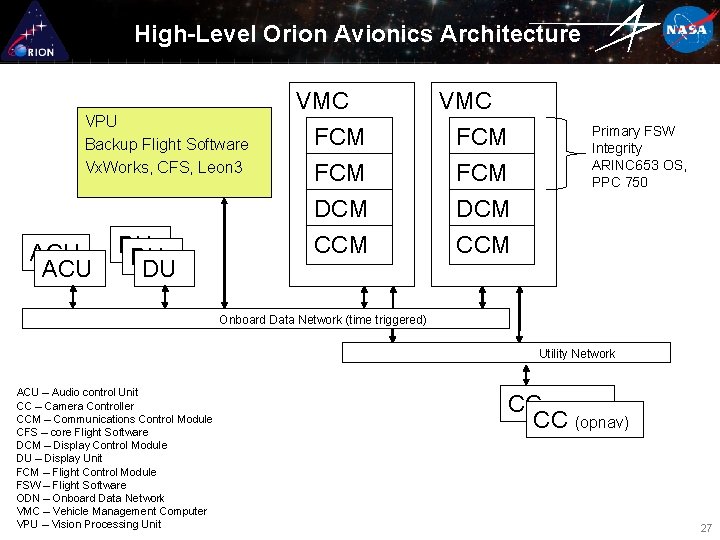
High-Level Orion Avionics Architecture VPU Backup Flight Software Vx. Works, CFS, Leon 3 ACU DU DU DU VMC FCM FCM DCM CCM Primary FSW Integrity ARINC 653 OS, PPC 750 Onboard Data Network (time triggered) Utility Network ACU – Audio control Unit CC – Camera Controller CCM – Communications Control Module CFS – core Flight Software DCM – Display Control Module DU – Display Unit FCM – Flight Control Module FSW – Flight Software ODN – Onboard Data Network VMC – Vehicle Management Computer VPU – Vision Processing Unit CC CC (opnav) 27
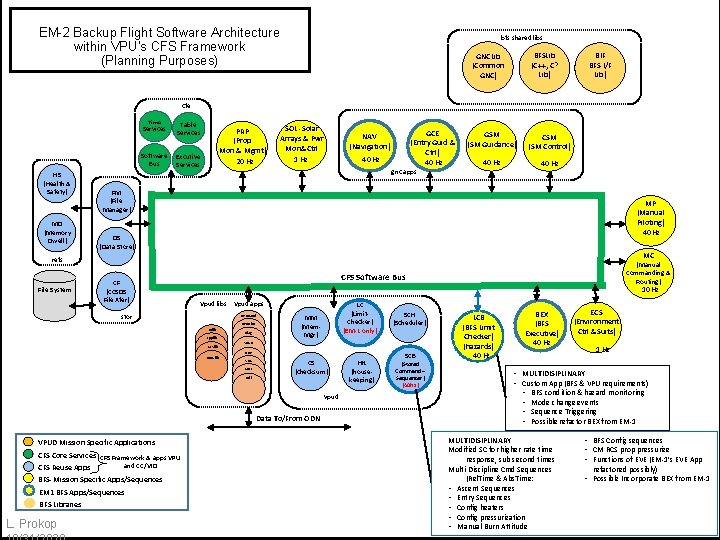
EM-2 Backup Flight Software Architecture within VPU’s CFS Framework (Planning Purposes) bfs shared libs BFSLib (C++, C? Lib) GNCLib (Common GNC) BIF BFS I/F Lib) cfe HS (Health & Safety) MD (Memory Dwell) Time Services Table Services Software Bus Excutive Services PRP (Prop Mon & Mgmt) 20 Hz SOL -Solar Arrays & Pwr Mon&Ctrl 1 Hz GCE (Entry Guid & Ctrl) 40 Hz NAV (Navigation) 40 Hz gnc apps GSM (SM Guidance) CSM (SM Control) 40 Hz FM (File Manager) MP (Manual Piloting) 40 Hz DS (Data Store) MC refs File System CF (CCSDS File Xfer) CFS Software Bus 10 Hz Vpud libs Vpud apps stor Dem. Cmd Dem. Tlm IOlib Diag cpplib CFSlib ODNlib LC (Limit. Checker) (EM-1 only) MM (Mem. Mgr) UDP VHC Odl CS (checksum) vpud Data To/From ODN CFS Core Services CFS Framework & apps VPU and CC/VID CFS Reuse Apps BFS-Mission Specific Apps/Sequences EM 1 BFS Apps/Sequences BFS Libraries L. Prokop SCH (Scheduler) SBNx Cmt VPUD Mission Specific Applications (Manual Commanding & Routing) HK (housekeeping) SCB (Stored Command – Sequencer) (40 Hz) LCB (BFS Limit Checker) (hazards) 40 Hz BEX (BFS Executive) 40 Hz ECS (Environment Ctrl &Suits) 1 Hz • MULTIDISIPLINARY • Custom App (BFS & VPU requirements) • BFS condition & hazard monitoring • Mode change events • Sequence Triggering • Possible refactor BEX from EM-1 MULTIDISIPLINARY Modified SC for higher rate time response, sub second times Multi-Discipline Cmd Sequences (Rel. Time & Abs. Time: • Ascent Sequences • Entry Sequences • Config heaters • Config pressurization • Manual Burn Attitude • BFS Config sequences • CM RCS prop pressurize • Functions of EVE (EM-1’s EVE App refactored possibly) • Possible Incorporate BEX from EM-1
Backup § Questions? 29