
Core competencies Information for students prior to working


- Slides: 16
Core competencies Information for students prior to working on self-assessments
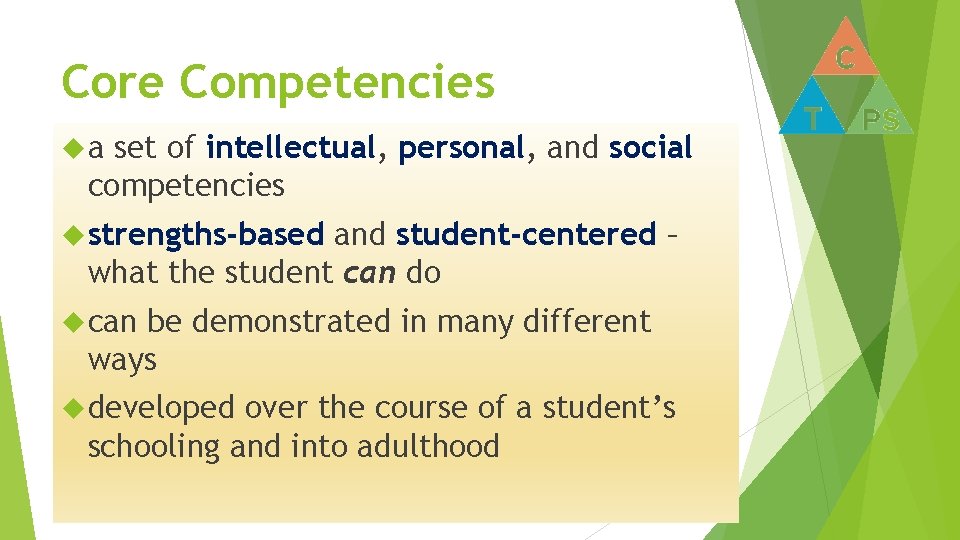
Core Competencies a set of intellectual, personal, and social competencies strengths-based and student-centered – what the student can do can be demonstrated in many different ways developed over the course of a student’s schooling and into adulthood
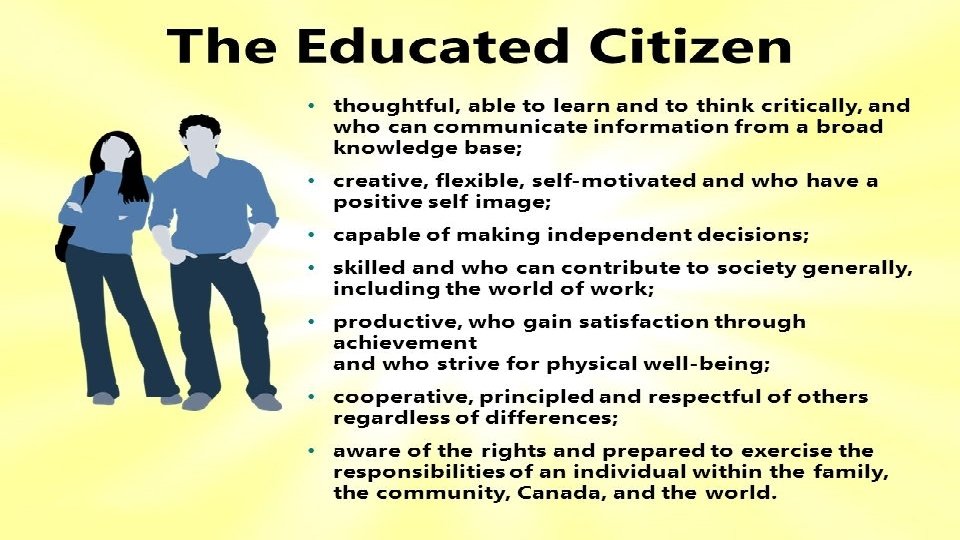
Why has this been added to the BC curriculum? Research shows that it is important for students to be able to self-reflect and selfassess. How am I doing? What are my strengths? How can I improve? Building the core competencies will help students become “educated citizens” (see next slide).
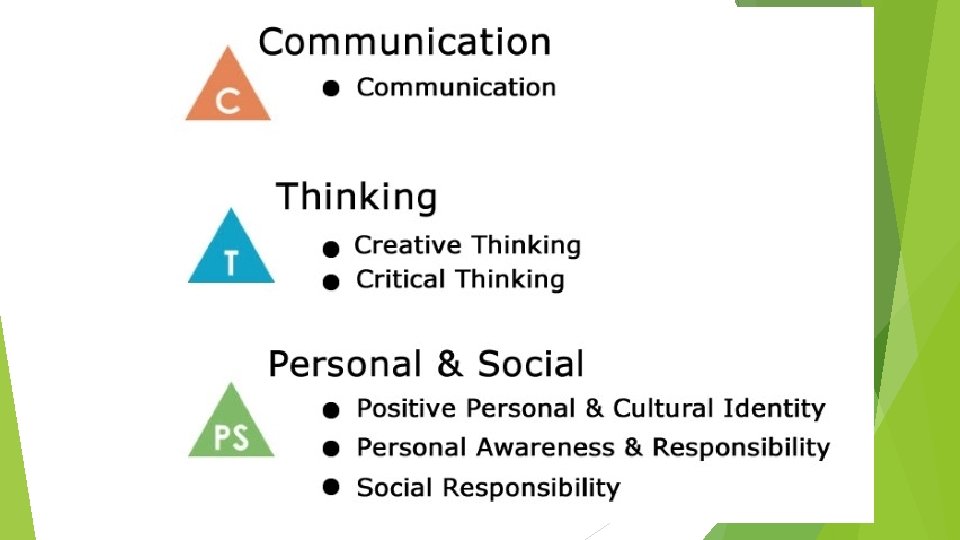
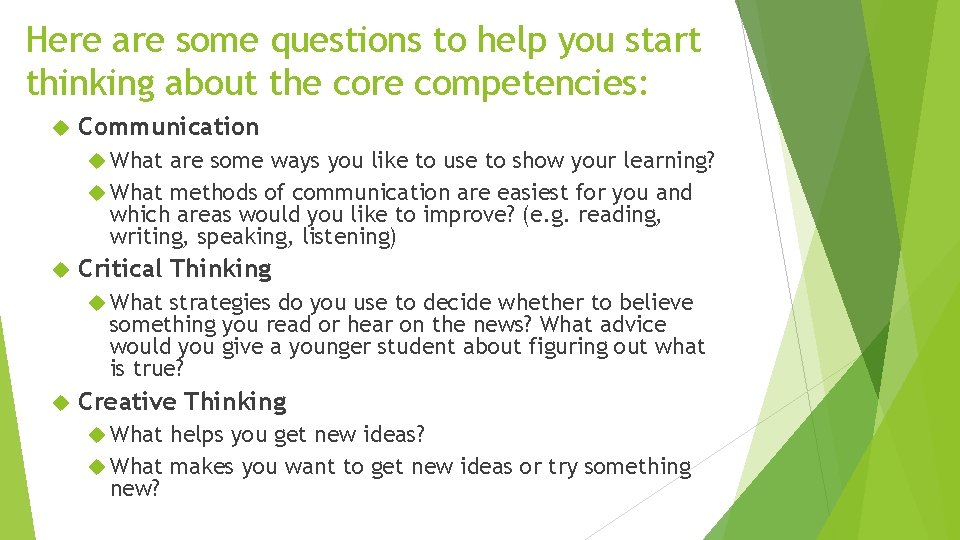
Here are some questions to help you start thinking about the core competencies: Communication What are some ways you like to use to show your learning? What methods of communication are easiest for you and which areas would you like to improve? (e. g. reading, writing, speaking, listening) Critical Thinking What strategies do you use to decide whether to believe something you read or hear on the news? What advice would you give a younger student about figuring out what is true? Creative Thinking What helps you get new ideas? What makes you want to get new ideas or try something new?
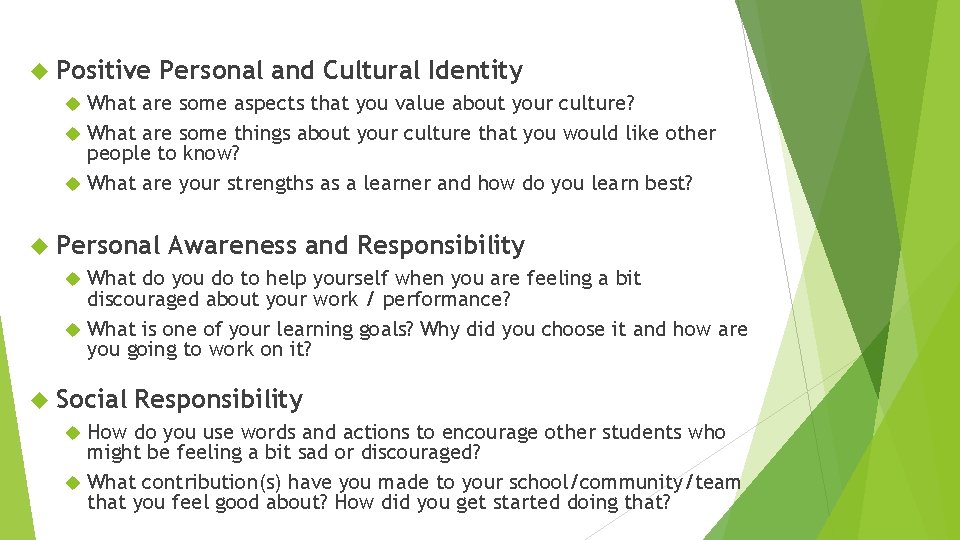
Positive Personal and Cultural Identity What are some aspects that you value about your culture? What are some things about your culture that you would like other people to know? What are your strengths as a learner and how do you learn best? Personal Awareness and Responsibility What do you do to help yourself when you are feeling a bit discouraged about your work / performance? What is one of your learning goals? Why did you choose it and how are you going to work on it? Social Responsibility How do you use words and actions to encourage other students who might be feeling a bit sad or discouraged? What contribution(s) have you made to your school/community/team that you feel good about? How did you get started doing that?
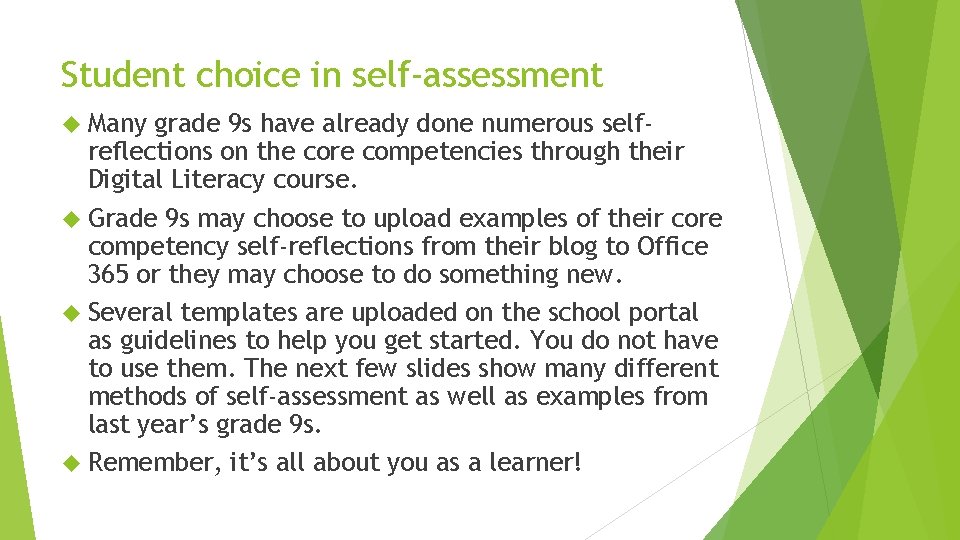
Student choice in self-assessment Many grade 9 s have already done numerous selfreflections on the core competencies through their Digital Literacy course. Grade 9 s may choose to upload examples of their core competency self-reflections from their blog to Office 365 or they may choose to do something new. Several templates are uploaded on the school portal as guidelines to help you get started. You do not have to use them. The next few slides show many different methods of self-assessment as well as examples from last year’s grade 9 s. Remember, it’s all about you as a learner!
Examples of ways to self-assess Collages Equations Illustrations Interviews (written or oral) Lists Mind maps or other graphic organizers Photo essays Photographs
More examples of self-assessment methods Poems or acrostics Questions Reference Spoken letters reflections Stories Symbols Videos Word clouds
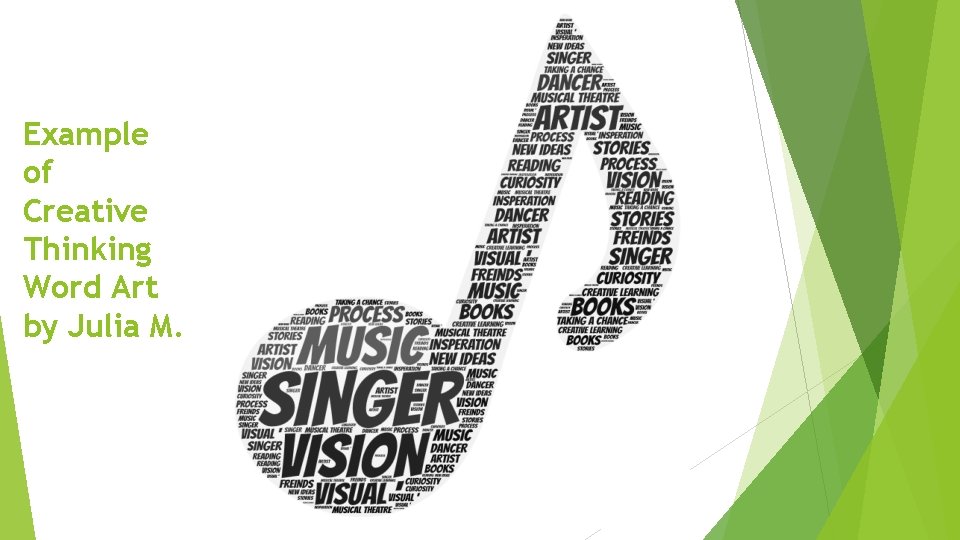
Example of Creative Thinking Word Art by Julia M.
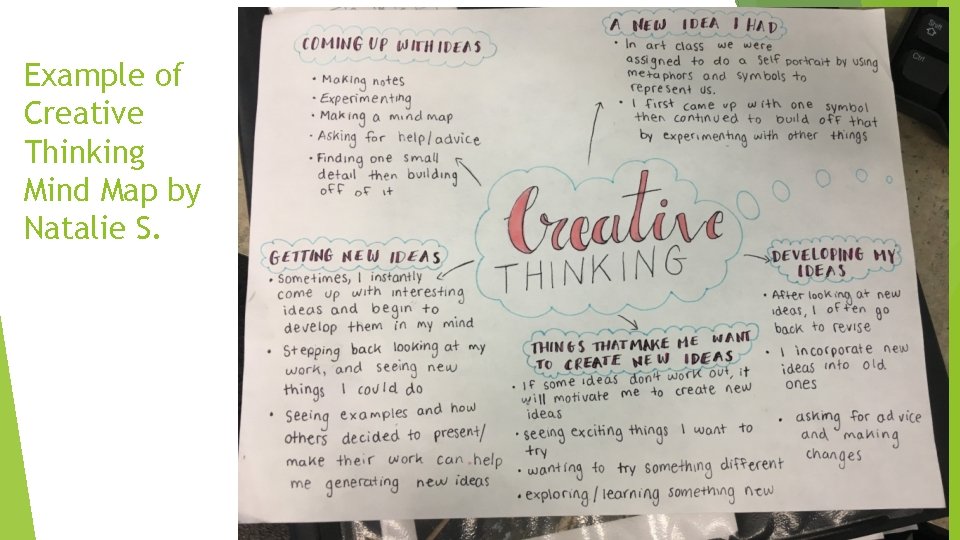
Example of Creative Thinking Mind Map by Natalie S.
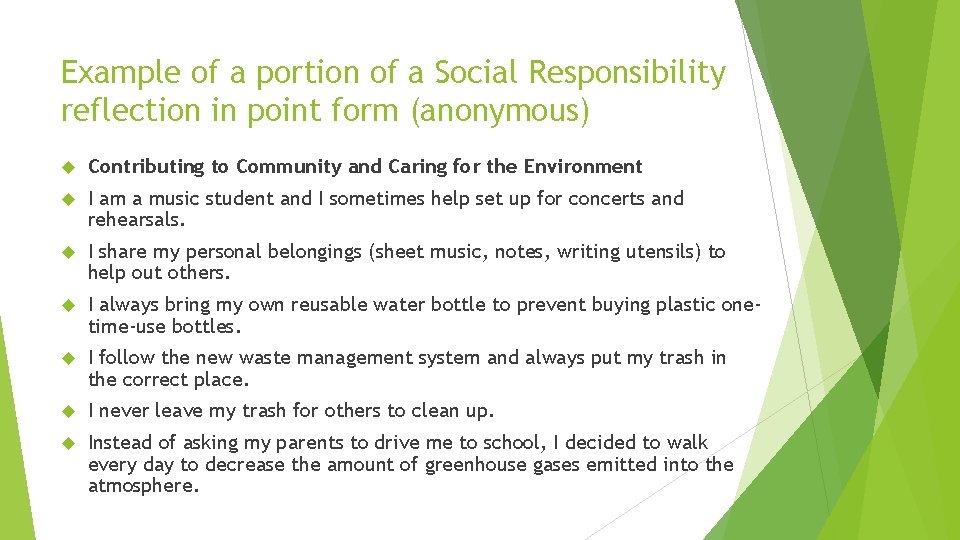
Example of a portion of a Social Responsibility reflection in point form (anonymous) Contributing to Community and Caring for the Environment I am a music student and I sometimes help set up for concerts and rehearsals. I share my personal belongings (sheet music, notes, writing utensils) to help out others. I always bring my own reusable water bottle to prevent buying plastic onetime-use bottles. I follow the new waste management system and always put my trash in the correct place. I never leave my trash for others to clean up. Instead of asking my parents to drive me to school, I decided to walk every day to decrease the amount of greenhouse gases emitted into the atmosphere.
Frequently Asked Questions Do I need to talk about how I am doing in my academic classes at school? No. You can relate your self-assessment to any curricular or extra-curricular area. Do I need to talk specifically about my learning at school? No. You may choose something that you do in the community (e. g. sports, work, volunteering, other) Do I need to give myself a mark? Is my teacher going to give me a mark? No. Self-assessments are not supposed to be graded. Ideally, you would have a conversation with a trusted adult (family member, educator) about how you are developing your core competencies.
Core Competency Self-Assessment All grade 9 s and 10 s must self-assess between 1 – 3 core competencies before June 1, 2018. Flex is a great time to work on this! Upload your self-assessment to Office 365. Create a new (or add to your existing) “Core Competency” folder. Share on Office 365 with mferrer@sd 43. bc. ca or e-mail mferrer@sd 43. bc. ca directly if you have difficulties uploading to Office 365.