
Core Competencies 101 2018 Sample Deck for Manager

- Slides: 45
Core Competencies 101 © 2018
Sample Deck for Manager Rollout (in person meeting) © 2018 2 2
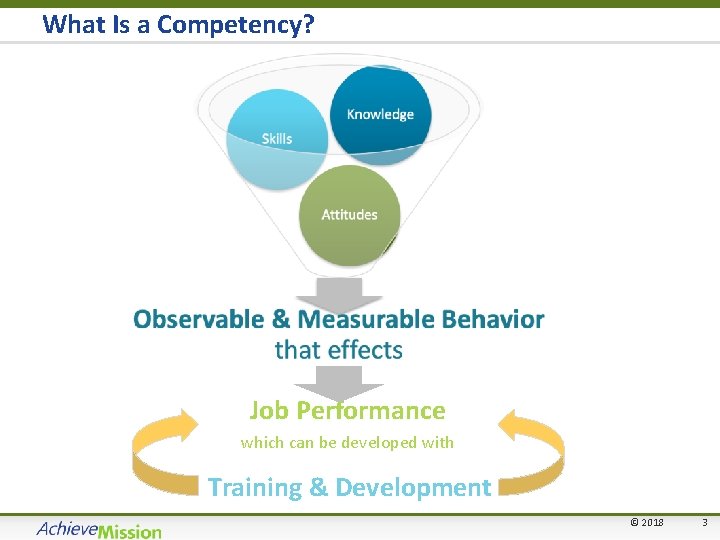
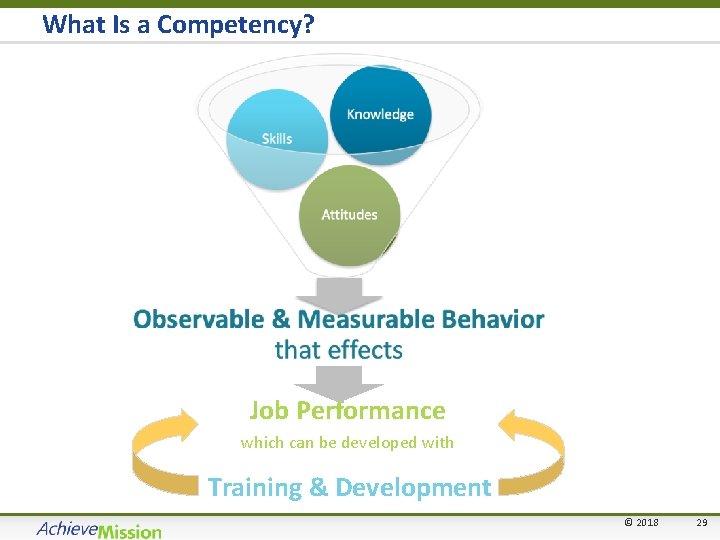
What Is a Competency? Job Performance which can be developed with Training & Development © 2018 3 3
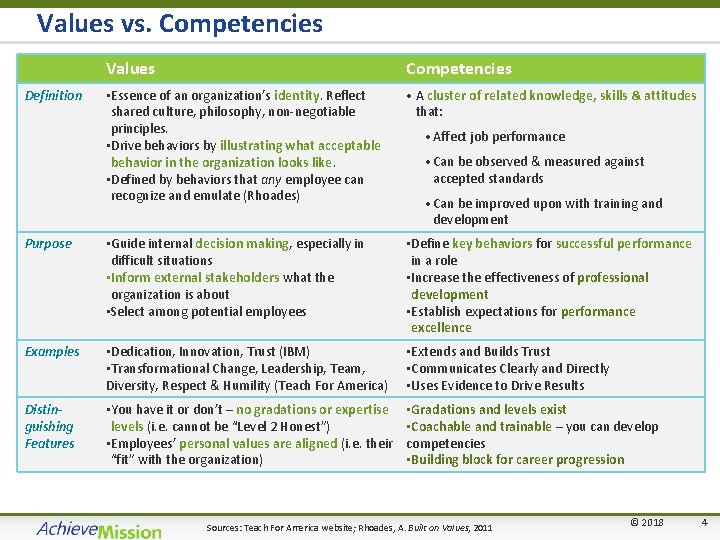
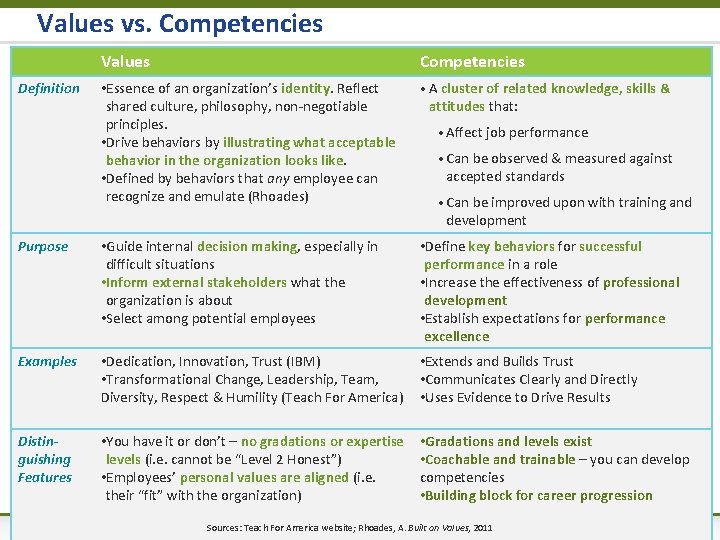
Values vs. Competencies Definition Values Competencies • Essence of an organization’s identity. Reflect shared culture, philosophy, non-negotiable principles. • Drive behaviors by illustrating what acceptable behavior in the organization looks like. • Defined by behaviors that any employee can recognize and emulate (Rhoades) • A cluster of related knowledge, skills & attitudes that: • Affect job performance • Can be observed & measured against accepted standards • Can be improved upon with training and development Purpose • Guide internal decision making, especially in difficult situations • Inform external stakeholders what the organization is about • Select among potential employees • Define key behaviors for successful performance in a role • Increase the effectiveness of professional development • Establish expectations for performance excellence Examples • Dedication, Innovation, Trust (IBM) • Transformational Change, Leadership, Team, Diversity, Respect & Humility (Teach For America) • Extends and Builds Trust • Communicates Clearly and Directly • Uses Evidence to Drive Results Distinguishing Features • You have it or don’t – no gradations or expertise levels (i. e. cannot be “Level 2 Honest”) • Employees’ personal values are aligned (i. e. their “fit” with the organization) • Gradations and levels exist • Coachable and trainable – you can develop competencies • Building block for career progression Sources: Teach For America website; Rhoades, A. Built on Values, 2011 © 2018 4 4
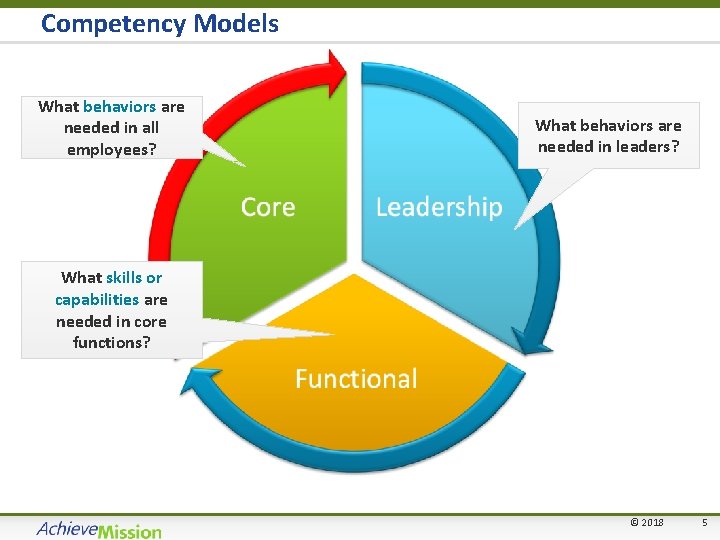
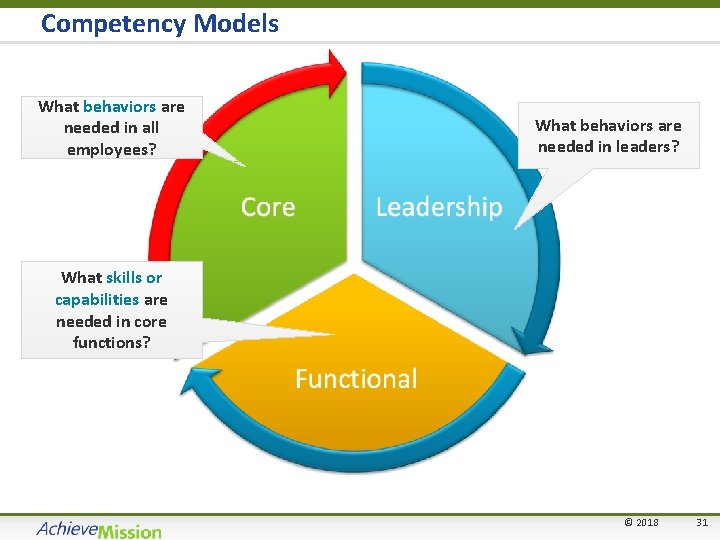
Competency Models What behaviors are needed in all employees? What behaviors are needed in leaders? What skills or capabilities are needed in core functions? © 2018 5 5
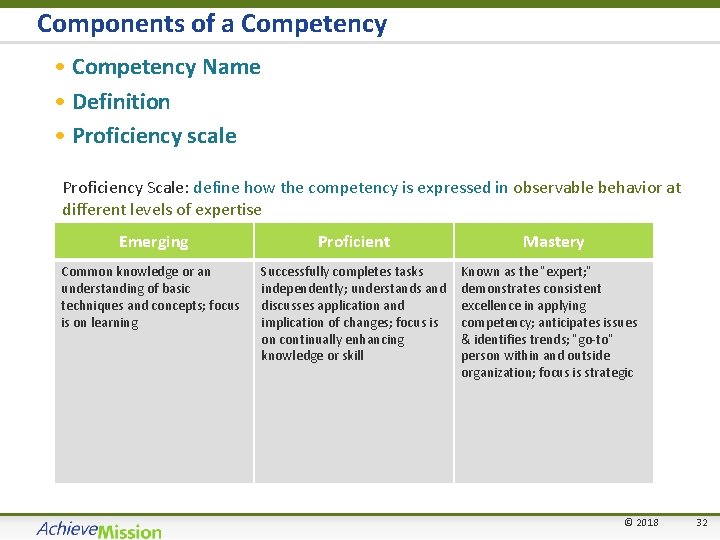
Components of a Competency • Competency Name • Definition • Proficiency scale Proficiency Scale: define how the competency is expressed in observable behavior at different levels of expertise Emerging Proficient Common knowledge or an understanding of basic techniques and concepts; focus is on learning Successfully completes tasks independently; understands and discusses application and implication of changes; focus is on continually enhancing knowledge or skill Mastery Known as the “expert; ” demonstrates consistent excellence in applying competency; anticipates issues & identifies trends; “go-to” person within and outside organization; focus is strategic © 2018 6 6
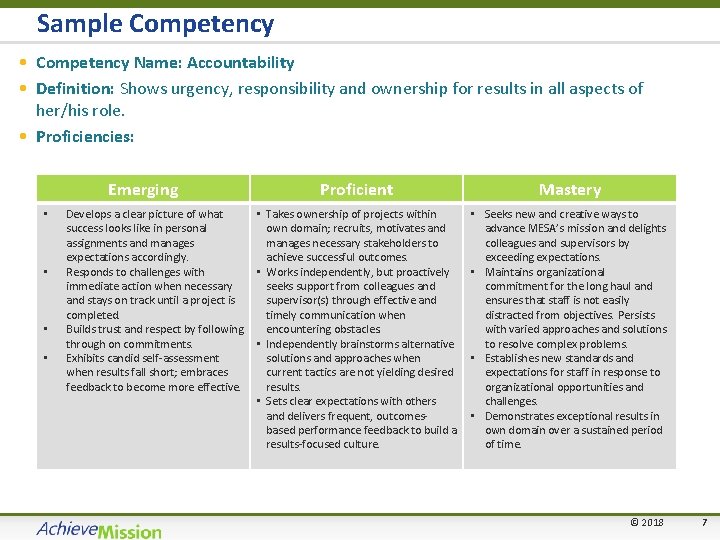
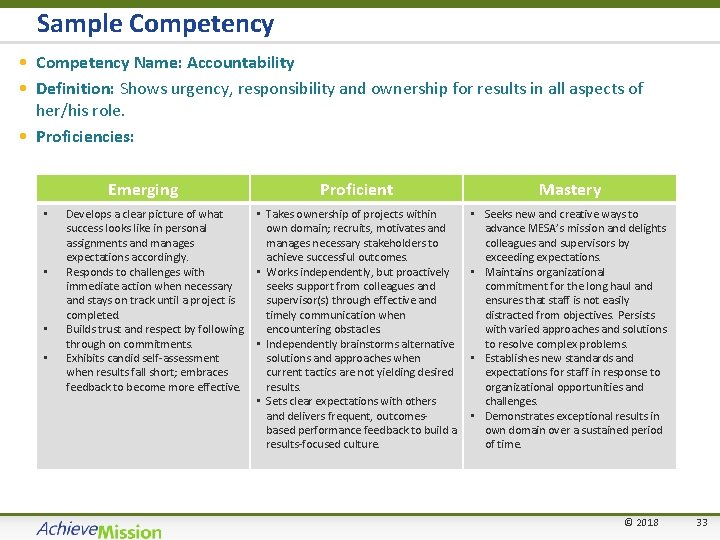
Sample Competency • Competency Name: Accountability • Definition: Shows urgency, responsibility and ownership for results in all aspects of her/his role. • Proficiencies: Emerging • • Develops a clear picture of what success looks like in personal assignments and manages expectations accordingly. Responds to challenges with immediate action when necessary and stays on track until a project is completed. Builds trust and respect by following through on commitments. Exhibits candid self-assessment when results fall short; embraces feedback to become more effective. Proficient Mastery • Takes ownership of projects within own domain; recruits, motivates and manages necessary stakeholders to achieve successful outcomes. • Works independently, but proactively seeks support from colleagues and supervisor(s) through effective and timely communication when encountering obstacles. • Independently brainstorms alternative solutions and approaches when current tactics are not yielding desired results. • Sets clear expectations with others and delivers frequent, outcomesbased performance feedback to build a results-focused culture. • Seeks new and creative ways to advance MESA’s mission and delights colleagues and supervisors by exceeding expectations. • Maintains organizational commitment for the long haul and ensures that staff is not easily distracted from objectives. Persists with varied approaches and solutions to resolve complex problems. • Establishes new standards and expectations for staff in response to organizational opportunities and challenges. • Demonstrates exceptional results in own domain over a sustained period of time. © 2018 7 7
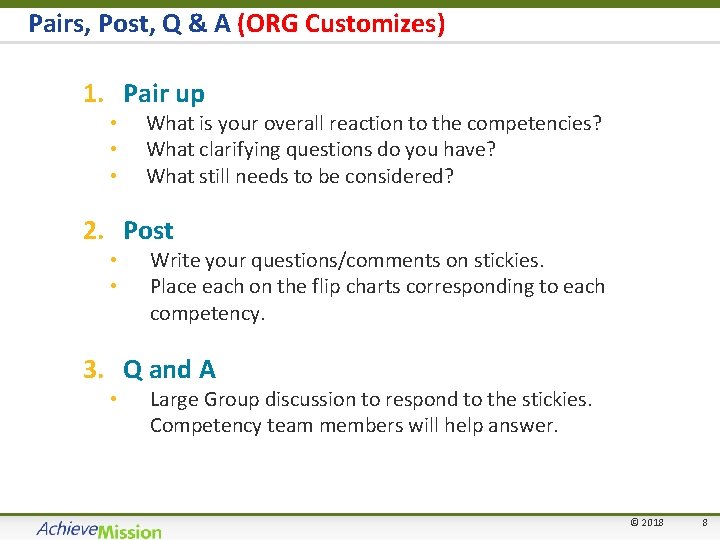
Pairs, Post, Q & A (ORG Customizes) 1. Pair up • • • What is your overall reaction to the competencies? What clarifying questions do you have? What still needs to be considered? 2. Post • • Write your questions/comments on stickies. Place each on the flip charts corresponding to each competency. 3. Q and A • Large Group discussion to respond to the stickies. Competency team members will help answer. © 2018 8 8
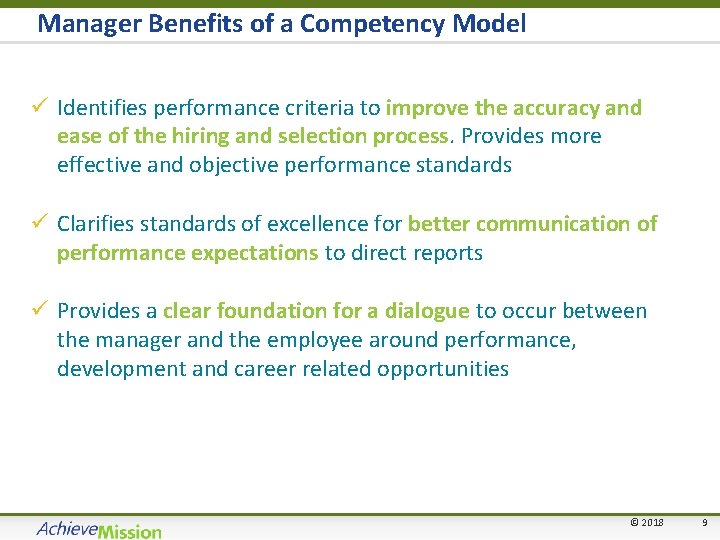
Manager Benefits of a Competency Model ü Identifies performance criteria to improve the accuracy and ease of the hiring and selection process. Provides more effective and objective performance standards ü Clarifies standards of excellence for better communication of performance expectations to direct reports ü Provides a clear foundation for a dialogue to occur between the manager and the employee around performance, development and career related opportunities © 2018 9 9
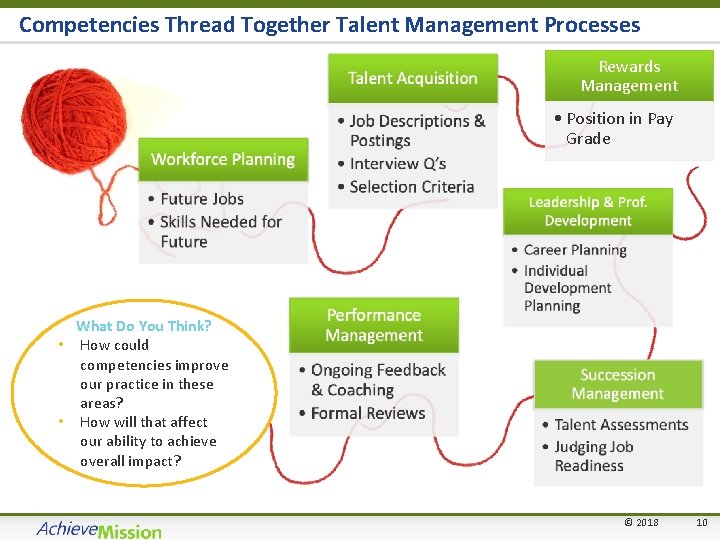
Competencies Thread Together Talent Management Processes Rewards Management • Position in Pay Grade What Do You Think? • How could competencies improve our practice in these areas? • How will that affect our ability to achieve overall impact? © 2018 10 10
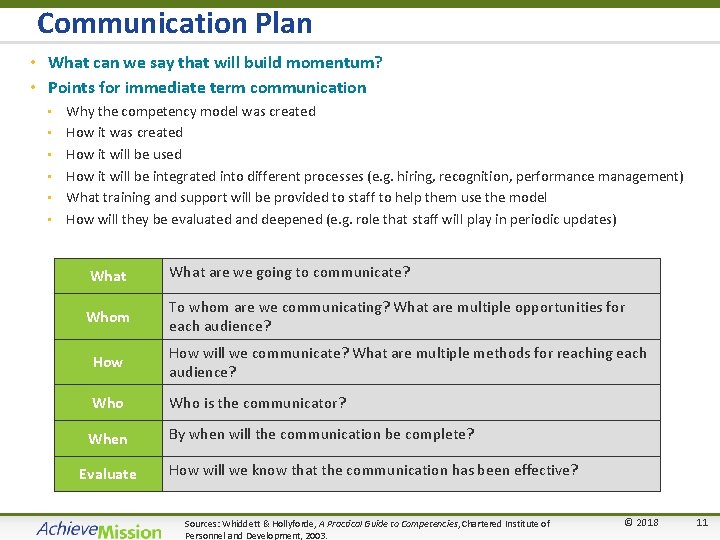
Communication Plan • What can we say that will build momentum? • Points for immediate term communication • • • Why the competency model was created How it will be used How it will be integrated into different processes (e. g. hiring, recognition, performance management) What training and support will be provided to staff to help them use the model How will they be evaluated and deepened (e. g. role that staff will play in periodic updates) What are we going to communicate? Whom To whom are we communicating? What are multiple opportunities for EMPOWER BROAD-BASED ACTION each audience? How will we communicate? What are multiple methods for reaching each CREATE SHORT-TERM WINS audience? Who When Evaluate Who is the communicator? CONSOLIDATE GAINS & PRODUCE MORE CHANGE By when will the communication be complete? ANCHOR NEW APPROACHES IN CULTURE How will we know that the communication has been effective? Sources: Whiddett & Hollyforde, A Practical Guide to Competencies, Chartered Institute of Personnel and Development, 2003. © 2018 11 11
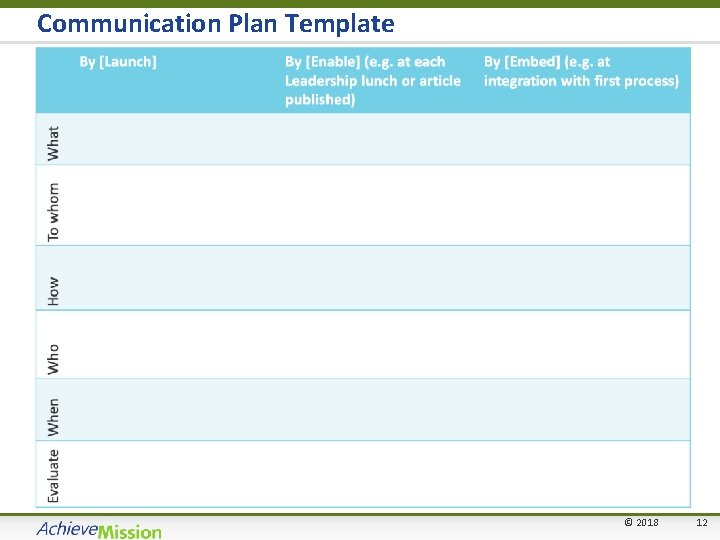
Communication Plan Template © 2018 12 12
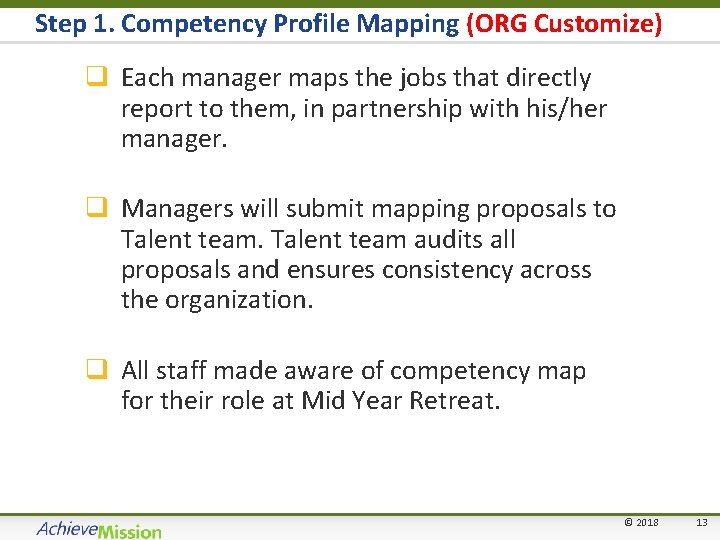
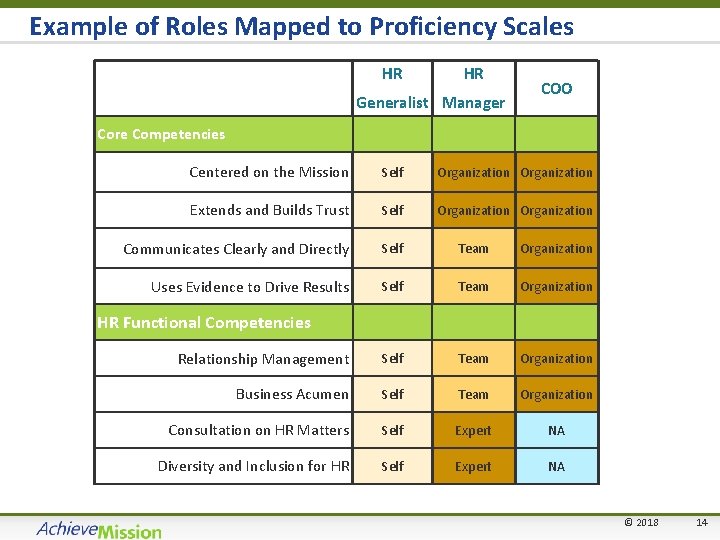
Step 1. Competency Profile Mapping (ORG Customize) q Each manager maps the jobs that directly report to them, in partnership with his/her manager. q Managers will submit mapping proposals to Talent team audits all proposals and ensures consistency across the organization. q All staff made aware of competency map for their role at Mid Year Retreat. © 2018 13 13
Example of Roles Mapped to Proficiency Scales HR HR Generalist Manager COO Core Competencies Centered on the Mission Self Organization Extends and Builds Trust Self Organization Communicates Clearly and Directly Self Team Organization Uses Evidence to Drive Results Self Team Organization Relationship Management Self Team Organization Business Acumen Self Team Organization Consultation on HR Matters Self Expert NA Diversity and Inclusion for HR Self Expert NA HR Functional Competencies © 2018 14 14
Step 2. Job Descriptions, Connect to Interviewing and Onboarding (ORG Customize) q Update job descriptions for each direct report using new format. q Help build competency based interview questions when you have an open role. © 2018 15 15
Step 3. Annual Reviews (ORG Customize) q Managers discuss competencies & proficiency scales with each direct report; no formal assessment at this time. q Identify competency areas in which growth is important to role & individual. q Name competency growth areas on annual review. © 2018 16 16
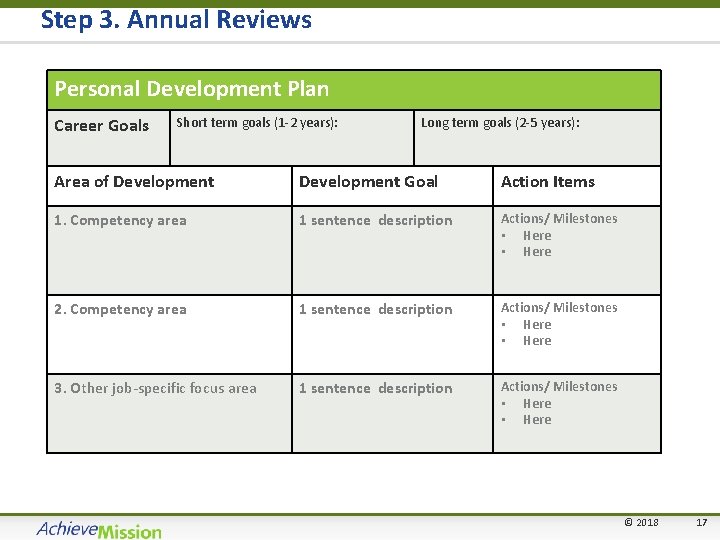
Step 3. Annual Reviews Personal Development Plan Career Goals Short term goals (1 -2 years): Long term goals (2 -5 years): Area of Development Goal Action Items 1. Competency area 1 sentence description Actions/ Milestones • Here 2. Competency area 1 sentence description Actions/ Milestones • Here 3. Other job-specific focus area 1 sentence description Actions/ Milestones • Here © 2018 17 17
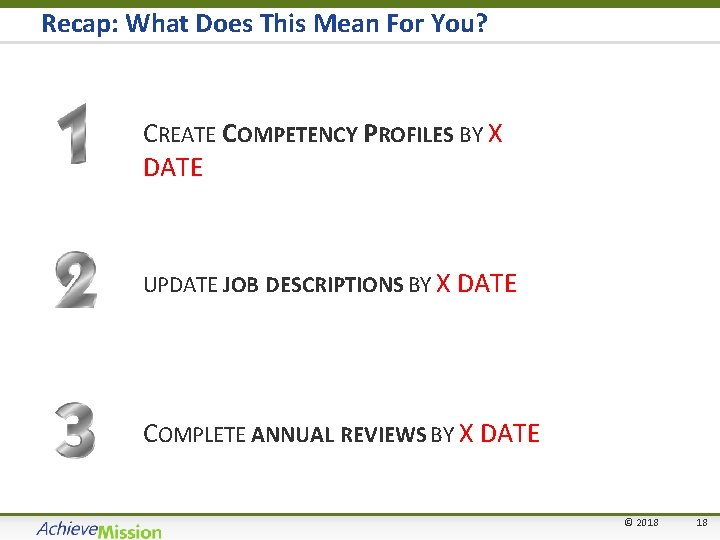
Recap: What Does This Mean For You? CREATE COMPETENCY PROFILES BY X DATE UPDATE JOB DESCRIPTIONS BY X DATE COMPLETE ANNUAL REVIEWS BY X DATE © 2018 18 18
How Can We Lead our Staff in this Transition? © 2018 19 19
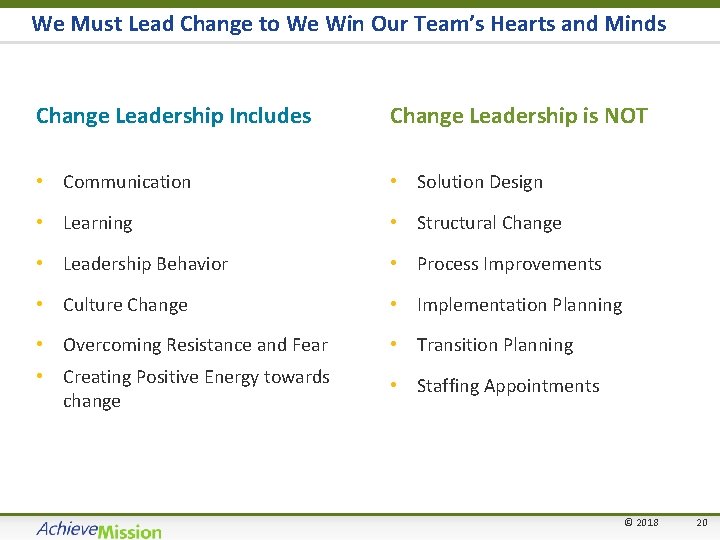
We Must Lead Change to We Win Our Team’s Hearts and Minds Change Leadership Includes Change Leadership is NOT • Communication • Solution Design • Learning • Structural Change • Leadership Behavior • Process Improvements • Culture Change • Implementation Planning • Overcoming Resistance and Fear • Transition Planning • Creating Positive Energy towards change • Staffing Appointments © 2018 20 20
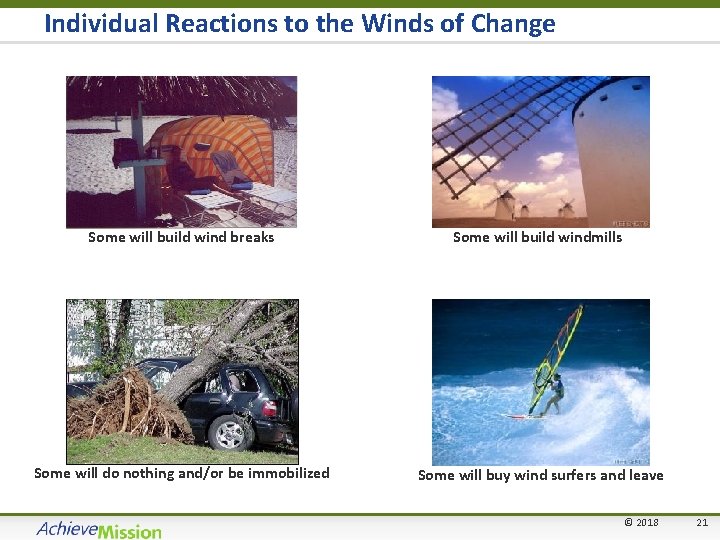
Individual Reactions to the Winds of Change Some will build wind breaks Some will build windmills Some will do nothing and/or be immobilized Some will buy wind surfers and leave © 2018 21 21
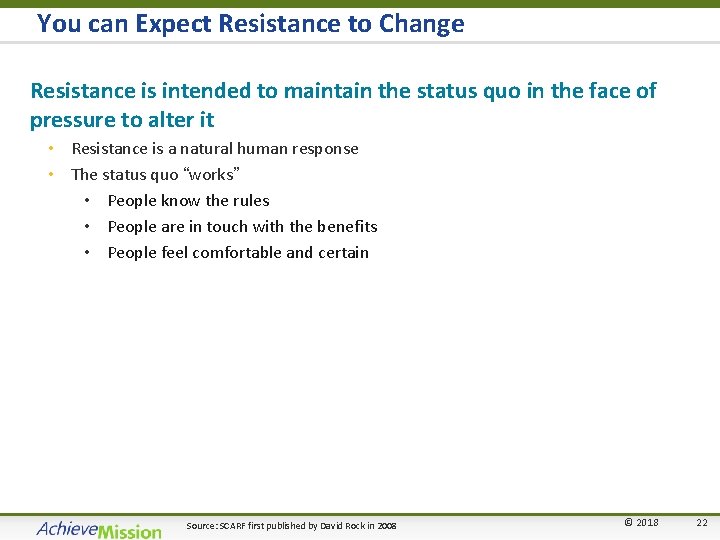
You can Expect Resistance to Change Resistance is intended to maintain the status quo in the face of pressure to alter it • Resistance is a natural human response • The status quo “works” • People know the rules • People are in touch with the benefits • People feel comfortable and certain Source: SCARF first published by David Rock in 2008 © 2018 22 22
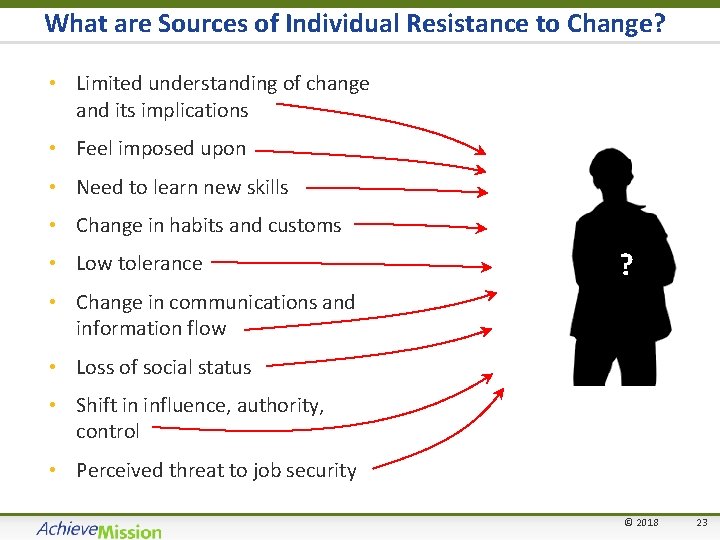
What are Sources of Individual Resistance to Change? • Limited understanding of change and its implications • Feel imposed upon • Need to learn new skills • Change in habits and customs • Low tolerance ? • Change in communications and information flow • Loss of social status • Shift in influence, authority, control • Perceived threat to job security © 2018 23 23
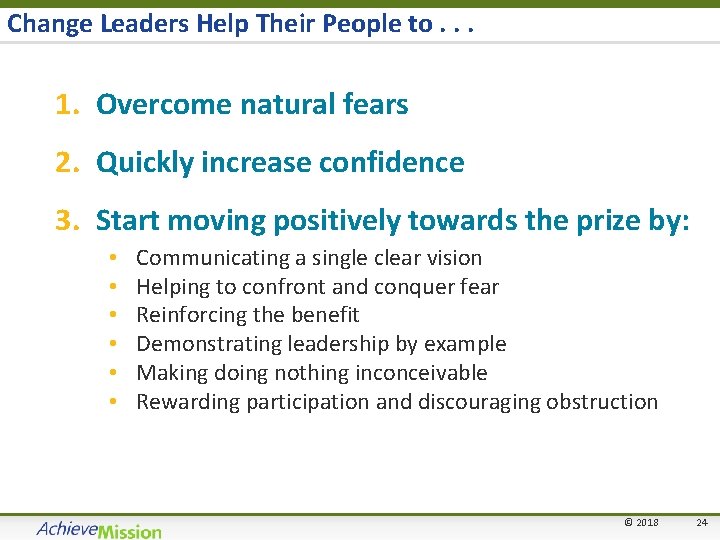
Change Leaders Help Their People to. . . 1. Overcome natural fears 2. Quickly increase confidence 3. Start moving positively towards the prize by: • • • Communicating a single clear vision Helping to confront and conquer fear Reinforcing the benefit Demonstrating leadership by example Making doing nothing inconceivable Rewarding participation and discouraging obstruction © 2018 24 24
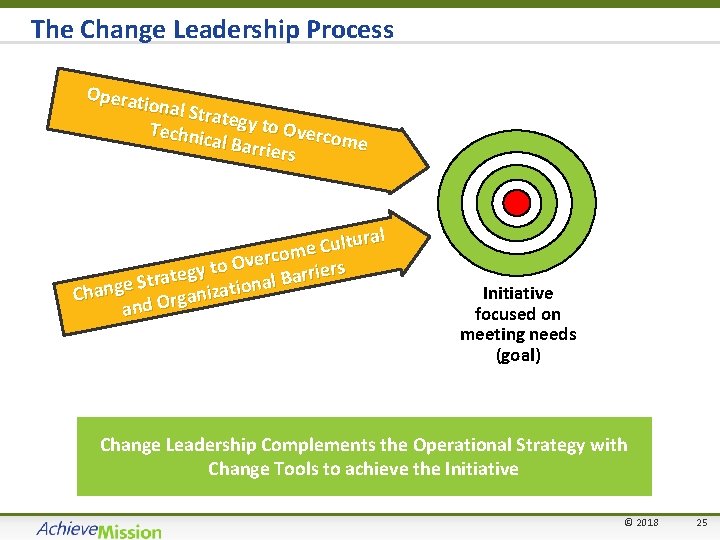
The Change Leadership Process Operat ional St rate Technic gy to Overco me al Barri ers ltural u C e com r e v O y to iers g r e r t a a B r l t S na Change Organizatio and Initiative focused on meeting needs (goal) Change Leadership Complements the Operational Strategy with Change Tools to achieve the Initiative © 2018 25 25
Making Change Last Why Bother? • Experience shows that successful, sustained change is difficult to achieve without attention from the entire team • Every change initiative will compete for time, resources and attention • We often spend most available time on the launch of an initiative rather than its institutionalization What Are We After? • Consistent, visible, tangible reinforcement of the COMPETENCIES • An integration of the new initiative with ongoing work patterns • Changes to organizational systems and structures that help make the change a natural part of individual and team behavior Sustained Change Occurs When Change Leaders And Agents Build And Implement Strategies For Making Change Last © 2018 26 26
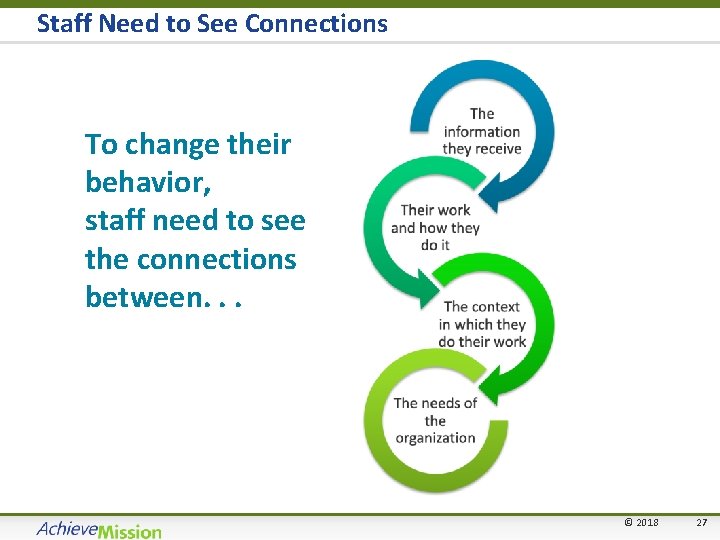
Staff Need to See Connections To change their behavior, staff need to see the connections between. . . © 2018 27 27
Staff Rollout Power. Point (in person meeting) NOTE: The staff roll out does not focus on feedback on the implementation plan. The goal here is to help staff absorb the Competencies, how they’ll be used and to help staff connect them to their own work and behavior. You may elect to present a “near to final” version and ask for final tweaks. We have seen small but meaningful suggestions that have been easy to integrate made at this time in other organizations. Typically it's on the order of changing a couple of words. After such an event, it's good to be able to say, "We heard you and took some of your suggestions. Here now is the final version!" © 2018 28 28
What Is a Competency? Job Performance which can be developed with Training & Development © 2018 29 29
Values vs. Competencies Definition Values Competencies • Essence of an organization’s identity. Reflect shared culture, philosophy, non-negotiable principles. • Drive behaviors by illustrating what acceptable behavior in the organization looks like. • Defined by behaviors that any employee can recognize and emulate (Rhoades) • A cluster of related knowledge, skills & attitudes that: • Affect job performance • Can be observed & measured against accepted standards • Can be improved upon with training and development Purpose • Guide internal decision making, especially in difficult situations • Inform external stakeholders what the organization is about • Select among potential employees • Define key behaviors for successful performance in a role • Increase the effectiveness of professional development • Establish expectations for performance excellence Examples • Dedication, Innovation, Trust (IBM) • Transformational Change, Leadership, Team, Diversity, Respect & Humility (Teach For America) • Extends and Builds Trust • Communicates Clearly and Directly • Uses Evidence to Drive Results Distinguishing Features • You have it or don’t – no gradations or expertise levels (i. e. cannot be “Level 2 Honest”) • Employees’ personal values are aligned (i. e. their “fit” with the organization) • Gradations and levels exist • Coachable and trainable – you can develop competencies • Building block for career progression Sources: Teach For America website; Rhoades, A. Built on Values, 2011 © 2018 30 30
Competency Models What behaviors are needed in all employees? What behaviors are needed in leaders? What skills or capabilities are needed in core functions? © 2018 31 31
Components of a Competency • Competency Name • Definition • Proficiency scale Proficiency Scale: define how the competency is expressed in observable behavior at different levels of expertise Emerging Proficient Common knowledge or an understanding of basic techniques and concepts; focus is on learning Successfully completes tasks independently; understands and discusses application and implication of changes; focus is on continually enhancing knowledge or skill Mastery Known as the “expert; ” demonstrates consistent excellence in applying competency; anticipates issues & identifies trends; “go-to” person within and outside organization; focus is strategic © 2018 32 32
Sample Competency • Competency Name: Accountability • Definition: Shows urgency, responsibility and ownership for results in all aspects of her/his role. • Proficiencies: Emerging • • Develops a clear picture of what success looks like in personal assignments and manages expectations accordingly. Responds to challenges with immediate action when necessary and stays on track until a project is completed. Builds trust and respect by following through on commitments. Exhibits candid self-assessment when results fall short; embraces feedback to become more effective. Proficient Mastery • Takes ownership of projects within own domain; recruits, motivates and manages necessary stakeholders to achieve successful outcomes. • Works independently, but proactively seeks support from colleagues and supervisor(s) through effective and timely communication when encountering obstacles. • Independently brainstorms alternative solutions and approaches when current tactics are not yielding desired results. • Sets clear expectations with others and delivers frequent, outcomesbased performance feedback to build a results-focused culture. • Seeks new and creative ways to advance MESA’s mission and delights colleagues and supervisors by exceeding expectations. • Maintains organizational commitment for the long haul and ensures that staff is not easily distracted from objectives. Persists with varied approaches and solutions to resolve complex problems. • Establishes new standards and expectations for staff in response to organizational opportunities and challenges. • Demonstrates exceptional results in own domain over a sustained period of time. © 2018 33 33
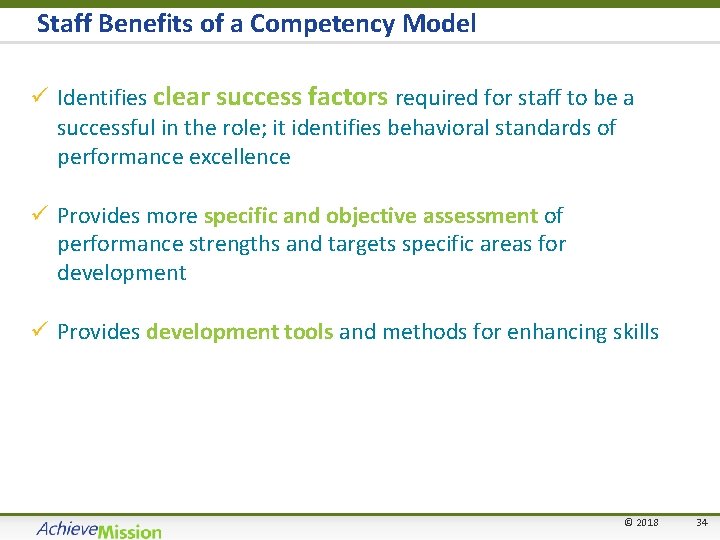
Staff Benefits of a Competency Model ü Identifies clear success factors required for staff to be a successful in the role; it identifies behavioral standards of performance excellence ü Provides more specific and objective assessment of performance strengths and targets specific areas for development ü Provides development tools and methods for enhancing skills © 2018 34 34
What Do Competencies Look Like Walking Around? Proficiency Scales tell us! © 2018 35 35
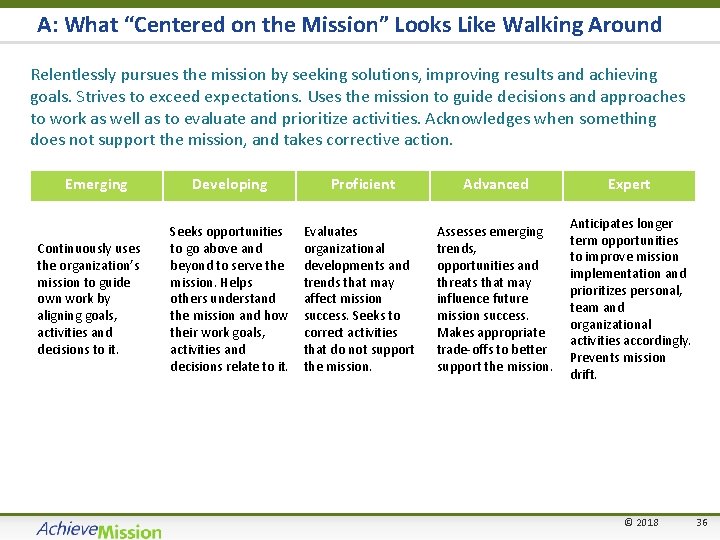
A: What “Centered on the Mission” Looks Like Walking Around Relentlessly pursues the mission by seeking solutions, improving results and achieving goals. Strives to exceed expectations. Uses the mission to guide decisions and approaches to work as well as to evaluate and prioritize activities. Acknowledges when something does not support the mission, and takes corrective action. Emerging Continuously uses the organization’s mission to guide own work by aligning goals, activities and decisions to it. Developing Proficient Advanced Expert Seeks opportunities to go above and beyond to serve the mission. Helps others understand the mission and how their work goals, activities and decisions relate to it. Evaluates organizational developments and trends that may affect mission success. Seeks to correct activities that do not support the mission. Assesses emerging trends, opportunities and threats that may influence future mission success. Makes appropriate trade-offs to better support the mission. Anticipates longer term opportunities to improve mission implementation and prioritizes personal, team and organizational activities accordingly. Prevents mission drift. © 2018 36 36
Small Groups Lead by Competencies Team Members © 2018 37 37
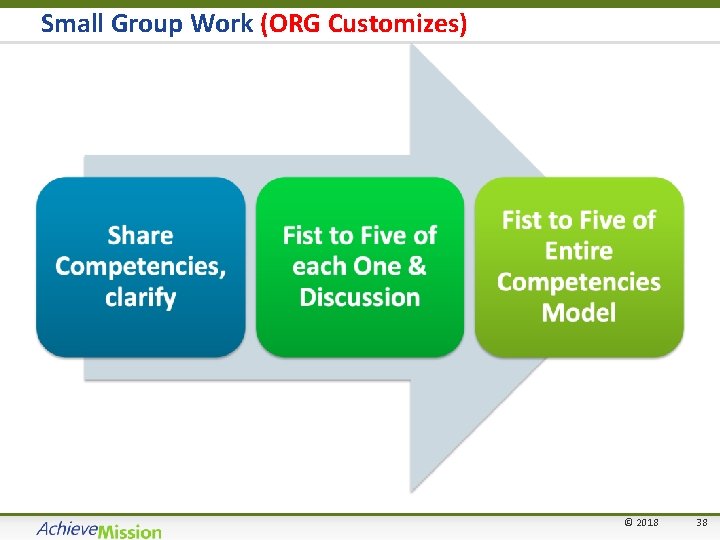
Small Group Work (ORG Customizes) © 2018 38 38
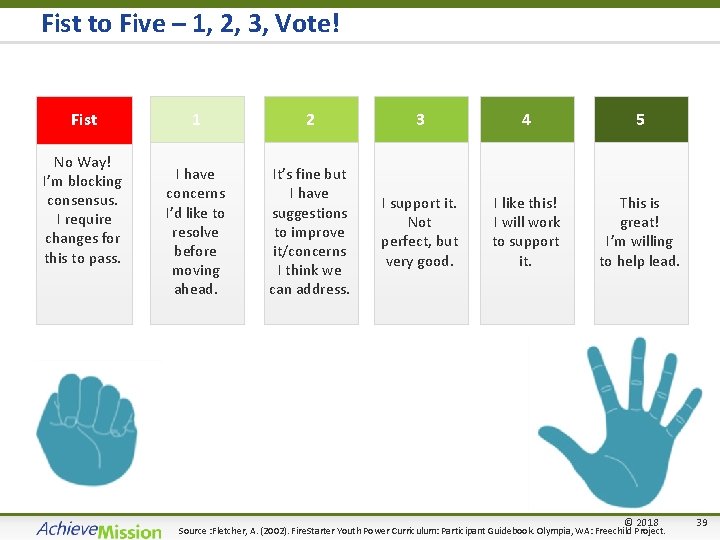
Fist to Five – 1, 2, 3, Vote! Fist No Way! I’m blocking consensus. I require changes for this to pass. 1 2 3 4 5 I have concerns I’d like to resolve before moving ahead. It’s fine but I have suggestions to improve it/concerns I think we can address. I support it. Not perfect, but very good. I like this! I will work to support it. This is great! I’m willing to help lead. © 2018 Source : Fletcher, A. (2002). Fire. Starter Youth Power Curriculum: Participant Guidebook. Olympia, WA: Freechild Project. 39 39
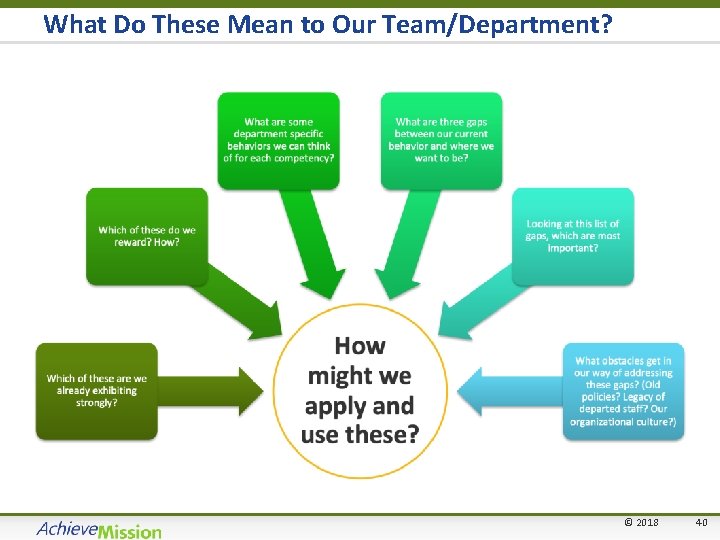
What Do These Mean to Our Team/Department? © 2018 40 40
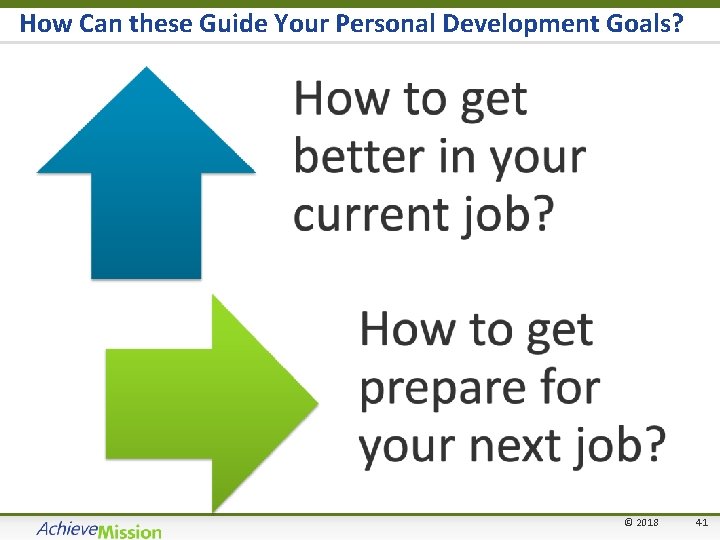
How Can these Guide Your Personal Development Goals? © 2018 41 41
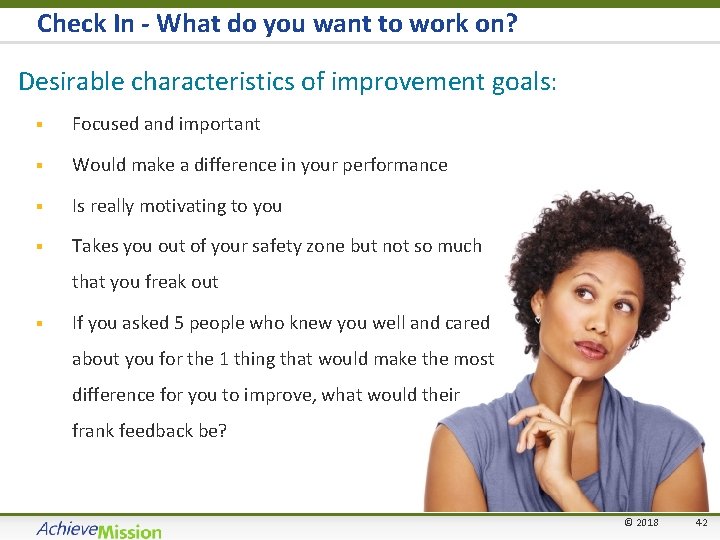
Check In - What do you want to work on? Desirable characteristics of improvement goals: § Focused and important § Would make a difference in your performance § Is really motivating to you § Takes you out of your safety zone but not so much that you freak out § If you asked 5 people who knew you well and cared about you for the 1 thing that would make the most difference for you to improve, what would their frank feedback be? © 2018 42 42
Large Group Wrap Up © 2018 43 43
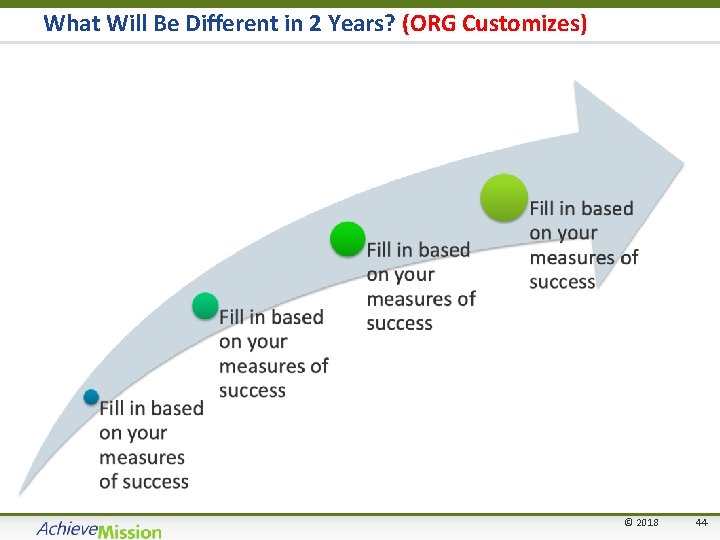
What Will Be Different in 2 Years? (ORG Customizes) © 2018 44 44
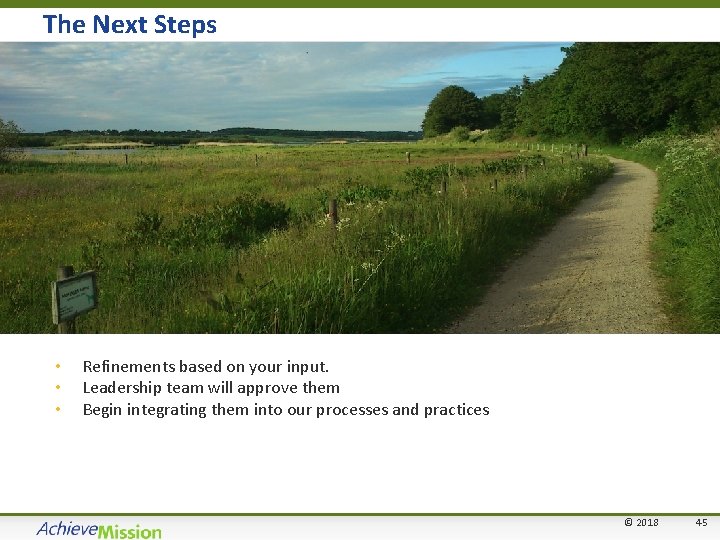
The Next Steps • • • Refinements based on your input. Leadership team will approve them Begin integrating them into our processes and practices © 2018 45 45