
CORC Best Practice Framework SelfAssessment Accreditation Tool Alison
CORC Best Practice Framework: Self-Assessment & Accreditation Tool Alison Ford – Regional Support Officer, CORC Nicky Martin – Counselling & Psychotherapy Service Manager, YPAS Claire Ely – Director, Bromley Y
Overview • • What is the CORC Best Practice Framework? Accreditation process Benefits Member’s experience – YPAS – Bromley Y • Questions
Why? • Routine use of outcome and feedback measures embedded within national guidance • Increasingly important for providers and commissioners to demonstrate good practice in the use of outcome and feedback measures • Limited (if any) guidance previously available about ‘best practice’
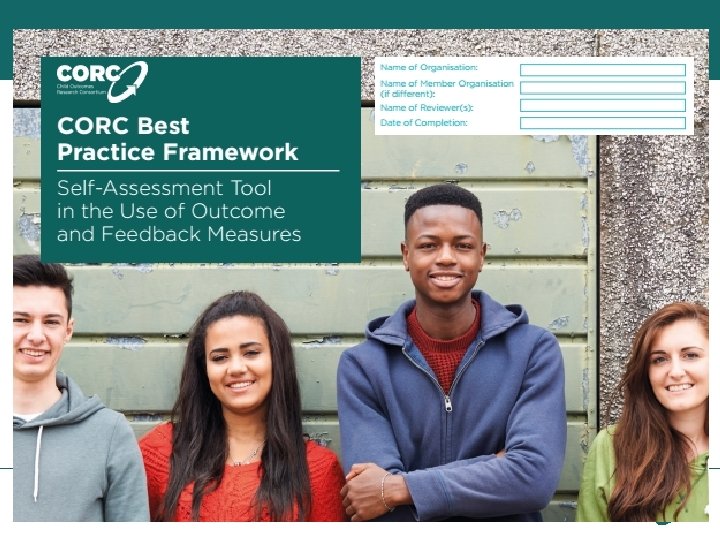
CORC Best Practice Framework • Developed in 2015; Piloted in 2015/16 • Structured process for working towards best practice • Based on evidence to date of what makes for effective use of outcomes and feedback data to inform quality service provision
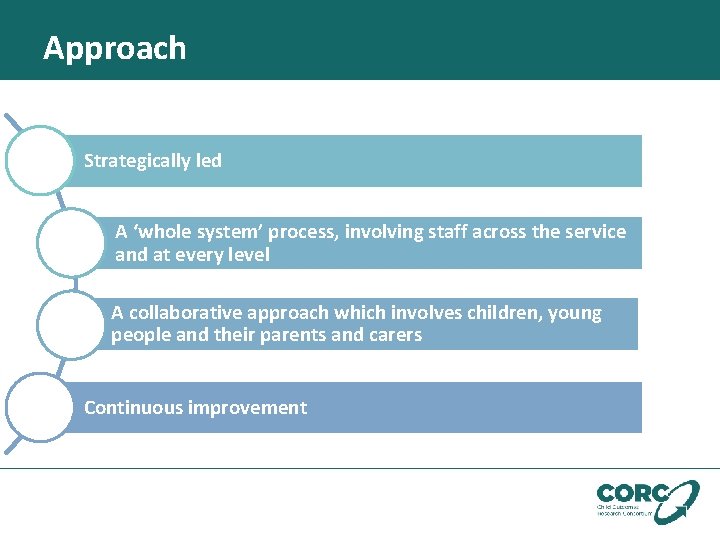
Approach Strategically led A ‘whole system’ process, involving staff across the service and at every level A collaborative approach which involves children, young people and their parents and carers Continuous improvement
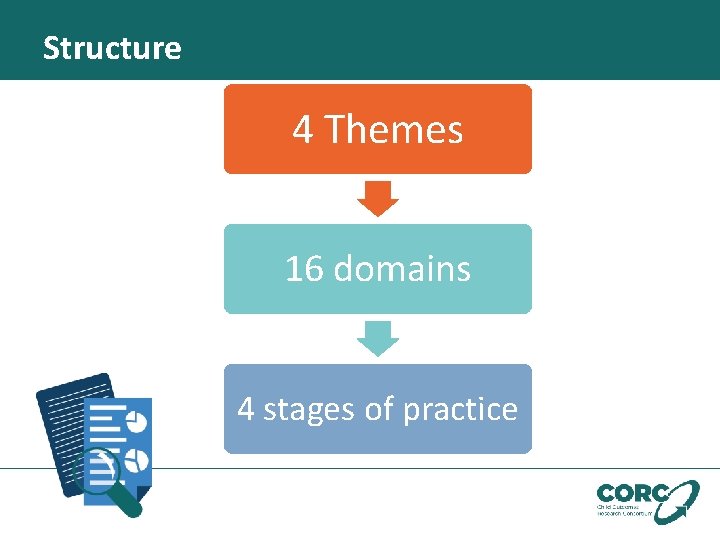
Structure 4 Themes 16 domains 4 stages of practice
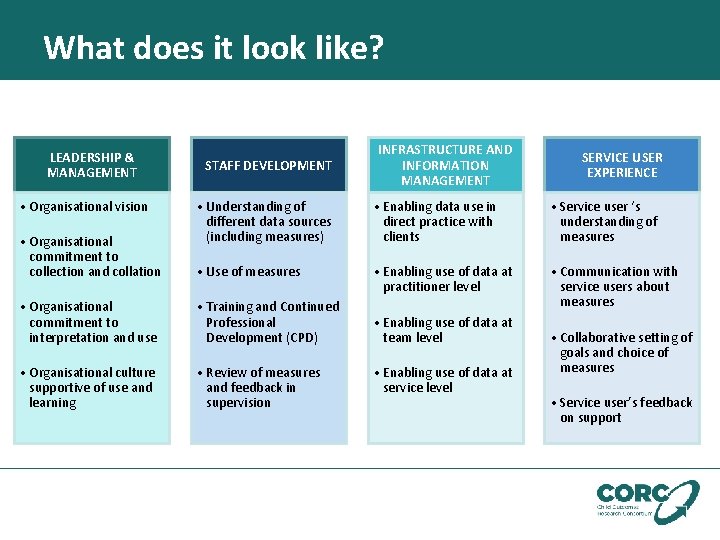
What does it look like? LEADERSHIP & MANAGEMENT • Organisational vision • Organisational commitment to collection and collation STAFF DEVELOPMENT INFRASTRUCTURE AND INFORMATION MANAGEMENT SERVICE USER EXPERIENCE • Understanding of different data sources (including measures) • Enabling data use in direct practice with clients • Service user ‘s understanding of measures • Use of measures • Enabling use of data at practitioner level • Communication with service users about measures • Organisational commitment to interpretation and use • Training and Continued Professional Development (CPD) • Organisational culture supportive of use and learning • Review of measures and feedback in supervision • Enabling use of data at team level • Enabling use of data at service level • Collaborative setting of goals and choice of measures • Service user’s feedback on support
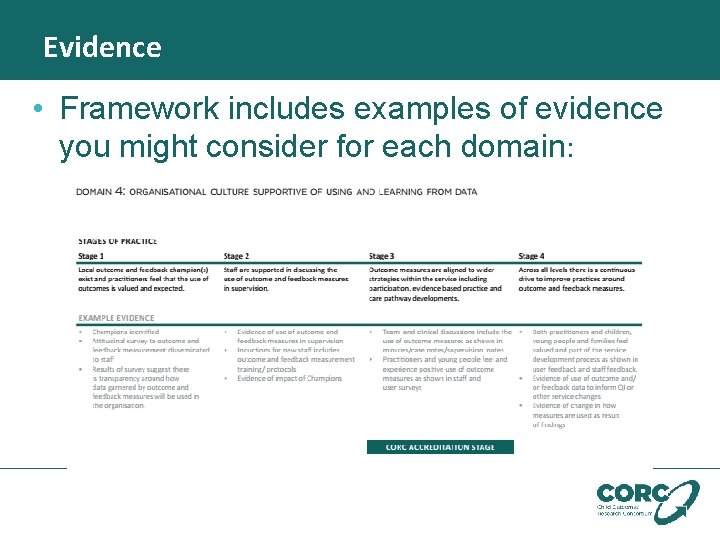
Evidence • Framework includes examples of evidence you might consider for each domain:
Self-Assessment Whole system assessment of ‘where are we now? ’ CORC staff survey Evidence recorded Assign & record ‘Stage of practice’ achieved Determine Action Plan for areas requiring development • Timely implementation • Review • • •
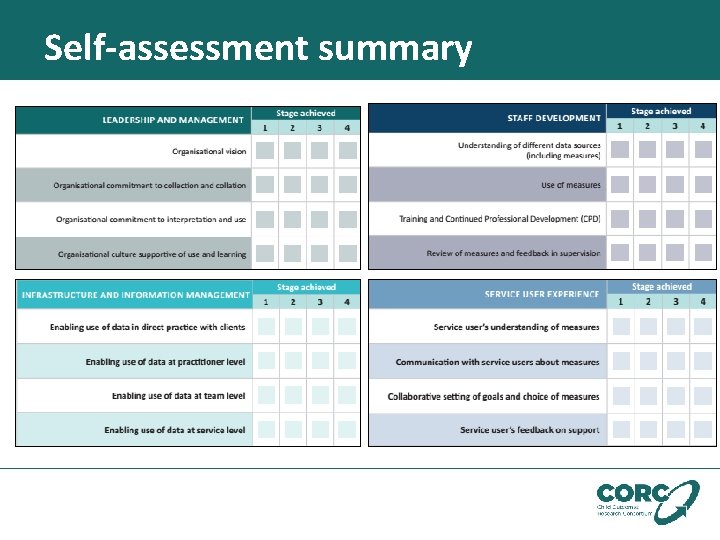
Self-assessment summary
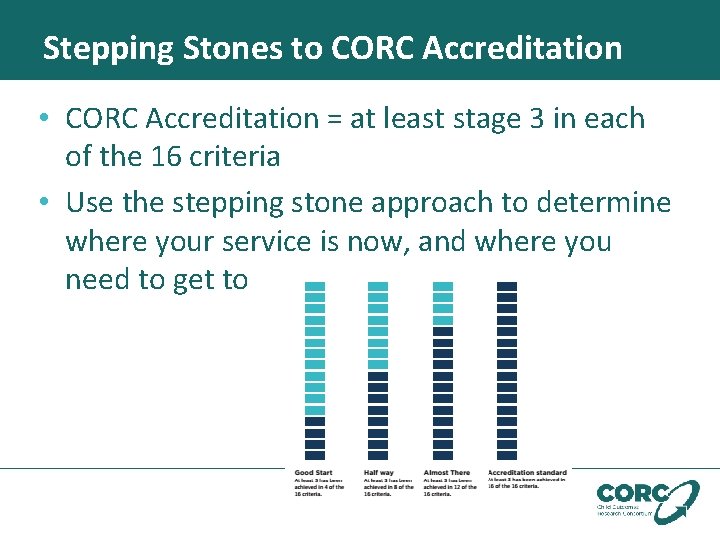
Stepping Stones to CORC Accreditation • CORC Accreditation = at least stage 3 in each of the 16 criteria • Use the stepping stone approach to determine where your service is now, and where you need to get to
Accreditation • Accreditation Assessment: – Requested by you when you’re ready – Whole day visit from CORC Accreditation Officers where you present the evidence for your selfassessment; this may include: • Review & discussion of evidence • Focus groups/interviews with staff, service users and other key stakeholders • Observation of practice
Accreditation • Accreditation Report: – Verbal feedback provided following the visit – CORC Officer recommends Accreditation (or not!) to CORC Board representatives – Written summary report sent to service, outlining Strengths and Areas for Development – Accreditation certificate & ‘CORC accredited’ logo for successful services – Ongoing monitoring and review expected
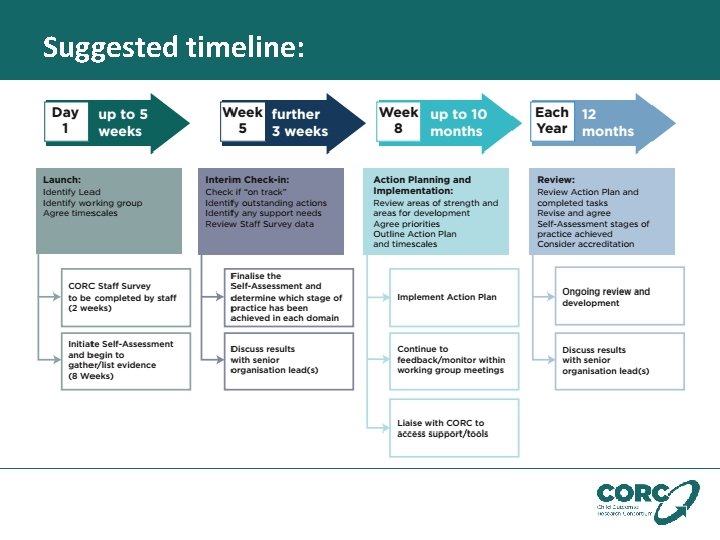
Suggested timeline:
Benefits of Self-Assessment/ Accreditation ü Opportunity to involve staff at all levels in selfreview and service improvement ü Demonstrate good practice to a minimum required standard ü Recognition of the quality of your service through a national accreditation system ü Demonstrate the quality of your service to young people, parents, referrers and commissioners
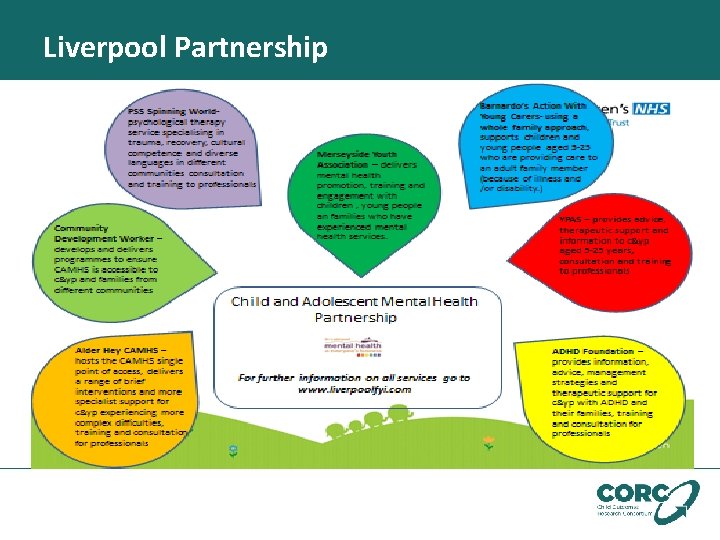
Liverpool Partnership
Liverpool Partnership • Liverpool Partnership is a nationally recognised model of best practice • Partnership between statutory and voluntary sector agencies • Developed and embedded over the past 12 years • Liverpool CYP IAPT Partnership (phase 3) is a sub set of the Liverpool CAMHS Partnership
Liverpool Partnership ROMS Workstream
Partnership Approach ROMs workstream Competing priorities Auditing tool Recognising differences - internal systems Sharing ideas – in service sub groups Support and challenge approach - links to leadership • Meeting the criteria – at different stages • Priorities for Action • • •
YPAS “Improving mental health and emotional wellbeing outcomes for children, young people, families and carers in Liverpool since 1966”
YPAS • YPAS – YIACS • YPAS team – culture of measurement • Best practice framework – opportunity to reflect - room for improvement • Progression • Trust in the relationship with CORC • Where is our evidence? • Solidifying processes
Benefits
Considerations • Accreditation visit • Anxiety provoking • Practitioners… “great to have the opportunity to share how we work…I surprised myself… It was empowering” • Make some noise!! • Just the beginning…
BROMLEY Y TRANSFORMING MENTAL HEALTH SERVICES FOR CHILDREN AND YOUNG PEOPLE IN BROMLEY
BROMLEY Y • BROMLEY Y IS A THIRD SECTOR CAMH SERVICE DELIVERING A ‘NEEDS BASED’ WELLBEING SERVICE • INVOLVED IN THE CYP IAPT PROGRAMME SINCE WAVE 2 • 90% OF STAFF TRAINED IN A CYP IAPT MODALITY • OUTCOME MEASURES USED ROUTINELY AND AT POINT OF TRIAGE
OPPORTUNITIES • • TO UNDERSTAND WHAT WORKS IN WHAT WE DO TO DEMONSTRATE CYP IAPT PRINCIPLES IN ACTION TO HAVE STAFF RECOGNISED FOR THEIR SUCCESSES TO SHARE OUR GOOD PRACTICE • ABOVE ALL, TO LEARN TO IMPROVE ON WHAT WE ARE DOING WELL (AND WHAT WE COULD DO MORE OF/ DIFFERENTLY) WITH CHILDREN & YOUNG PEOPLE
PROCESS • HOW DO WE EVIDENCE GOOD PRACTICE? • HOW TO VIEW IT AS AN ORGANISATIONAL LEARNING EXPERIENCE? • HOW TO PUT LEARNING IN TO PRACTICE? • HOW TO SHARE OUR LEARNING AND SUCCESS WITH CYP AND THE WIDER SYSTEM?
LEARNING • GOOD PRACTICE NEEDS TO BE EVIDENCED - AND UPDATED! • INVITING CRITIQUE AS AN OPPORTUNITY FOR GROWTH ENABLES STAFF BUY IN • STANDING STILL AS A SERVICE IS NOT POSSIBLE WHEN YOU WORK WITH YOUNG PEOPLE • MAKE TIME TO CELEBRATE SUCCESS AND RECOGNISE THAT WE CAN ALWAYS DO BETTER
Questions? • You may wish to consider: – It’s about the journey! – Timescales – Lead personnel – Who will coordinate for the organisation – How to ensure commitment from all teams/ staff
- Slides: 30