
Coral Reefs Ms Springstroh Source of information http
- Slides: 32
Coral Reefs Ms. Springstroh Source of information: http: //oceanservice. noaa. gov/education/kits/coral 01_intro. html
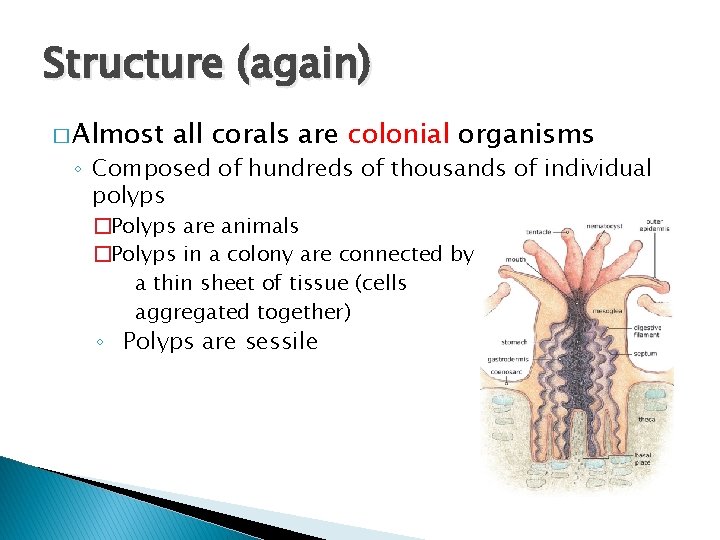
Structure (again) � Almost all corals are colonial organisms ◦ Composed of hundreds of thousands of individual polyps �Polyps are animals �Polyps in a colony are connected by a thin sheet of tissue (cells aggregated together) ◦ Polyps are sessile
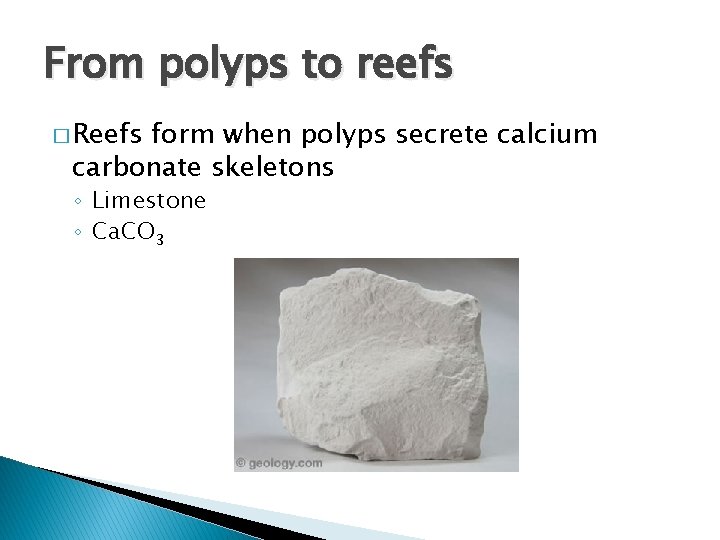
From polyps to reefs � Reefs form when polyps secrete calcium carbonate skeletons ◦ Limestone ◦ Ca. CO 3
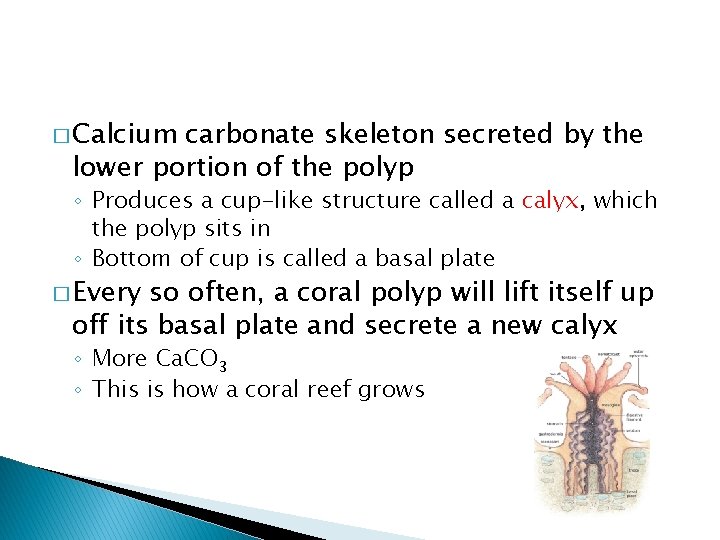
� Calcium carbonate skeleton secreted by the lower portion of the polyp ◦ Produces a cup-like structure called a calyx, which the polyp sits in ◦ Bottom of cup is called a basal plate � Every so often, a coral polyp will lift itself up off its basal plate and secrete a new calyx ◦ More Ca. CO 3 ◦ This is how a coral reef grows
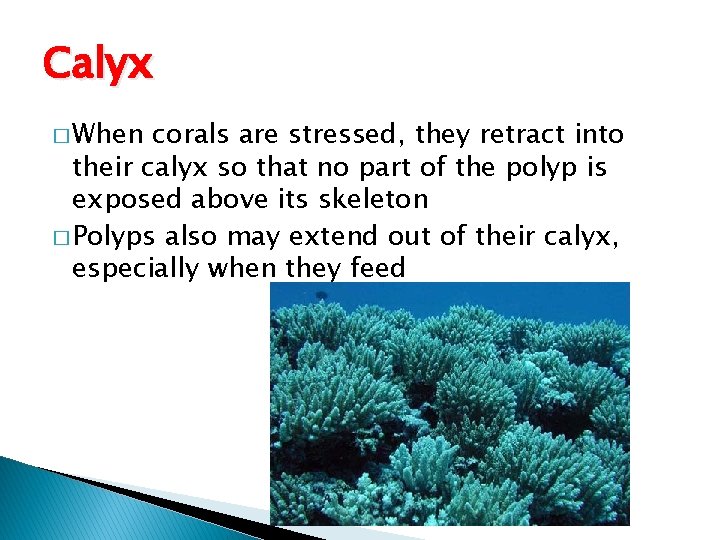
Calyx � When corals are stressed, they retract into their calyx so that no part of the polyp is exposed above its skeleton � Polyps also may extend out of their calyx, especially when they feed
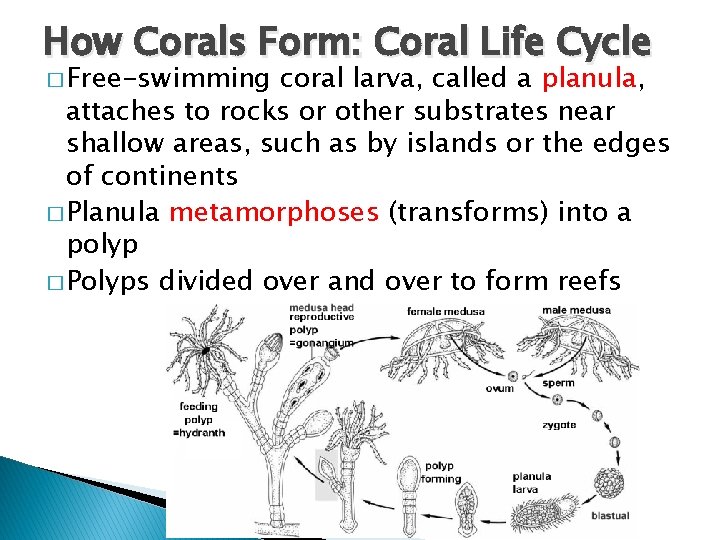
How Corals Form: Coral Life Cycle � Free-swimming coral larva, called a planula, attaches to rocks or other substrates near shallow areas, such as by islands or the edges of continents � Planula metamorphoses (transforms) into a polyp � Polyps divided over and over to form reefs
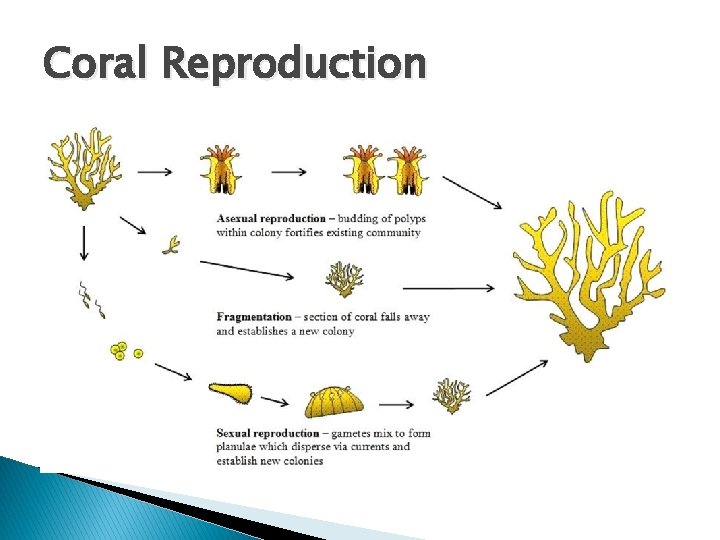
Coral Reproduction � Corals may utilize asexual or sexual reproduction ◦ Asexual reproduction: reproduction that does not require gametes (sex cells) �A new polyp– a clone of its parent– “buds” off from the parent and begins a new colony itself ◦ Sexual reproduction: some corals release gametes (sperm and egg cells) into the water �Egg and sperm combine to form planulae
Coral Reproduction
� In some reefs, the all the coral species release their sperm and egg at the same time ◦ Called broadcast spawning �Influenced by temperature, length of day, lunar cues, time of sunset � Planulae swim toward the light ◦ Become part of the waters at the surface of the ocean �Current transports planulae � Planulae ocean eventually swim back toward bottom of ◦ Will settle there if conditions are favorable metamorphose build a colony
The “Z” word that nobody can pronounce � Zooxanthellae are photosynthetic algae which live in corals’ tissues � Have a mutualistic symbiotic relationship with corals ◦ Symbiosis: close relationship between two organisms of different species ◦ Mutualism: a symbiotic relationship in which both species benefit (symbolized by + / + )
� Corals provide zooxanthellae with a protected environment in which to live, and with the materials needed for photosynthesis � Zooxanthellae help the coral eliminate waste, provide the coral with oxygen and glucose, & help the coral secrete its skeleton ◦ If the coral has enough glucose/ “energy”, it can secrete a calcium carbonate skeleton and grow! ◦ This energy comes from the ‘waste’ molecules produced by the zooxanthellae during photosynthesis. � Both � This of these contribute to the “recycling of nutrients” mutualistic symbiotic relationship is VERY VALUABLE because tropical waters are nutrient-poor!
Lab: Building a Coral Skelton � Lime (calcium and oxygen) is dissolved in sea water � Corals have carbon and oxygen in their cells ◦ Combines with calcium and oxygen from the water ◦ Produces Ca. CO 3
� Chalk = contains calcium � Clear liquid from chalk + vinegar (C 2 H 4 O 2) mixture = dissolved lime = “sea water” � Baking soda = sodium bicarbonate, Na. HCO 3 = coral’s cells ◦ Adding baking soda + water to dissolved calcium (chalk + vinegar mixture) Ca. CO 3
Lab Directions: Day 1 � Pour 250 m. L of vinegar into a beaker. � Break chalk into small pieces. Put into beaker. � Label beaker. � Let stand overnight.
Day 2 � Pour off some clear liquid from chalk mixture into cup labeled “dissolved limestone”. Rinse your beaker. � Obtain 240 m. L of tap water in beaker. Add 3 -4 tablespoons baking soda; stir, then let stand for 15 minutes. � Pour off some clear liquid from baking soda beaker into another cup labeled “dissolved baking soda”. Rinse your beaker. � Pour “dissolved baking soda” into “dissolved limestone” beaker. Observe what happens.
Lab notes � � � Mixing of the “dissolved limestone” and the “dissolved baking soda” represents a coral polyp extracting calcium from sea water, combining it with carbon dioxide, and producing Ca. CO 3. Chalk = contains calcium Clear liquid from chalk + vinegar (C 2 H 4 O 2) mixture = dissolved lime = “sea water” � Baking soda = sodium bicarbonate, Na. HCO 3 = coral’s cells � Source: http: //www. usm. edu/marineeducation/old/coralreef/15. pdf ◦ Adding baking soda + water to dissolved calcium (chalk + vinegar mixture) Ca. CO 3
Lab � Write a paragraph (using at least four complete sentences) about how a coral builds its skeleton. Try to use as many examples from this lab as possible. ◦ ◦ ◦ Things to think about and include: What does the white precipitate represent? What does the “dissolved limestone” represent? What does the “dissolved baking soda” represent? What does mixing the “dissolved limestone” and “dissolved baking soda” represent?
Lab Results � White precipitate= calcium carbonate ◦ How does it form? �Coral polyp extracts calcium from sea water (vinegar + chalk mixture, aka dissolved limestone) & combines it with carbon dioxide
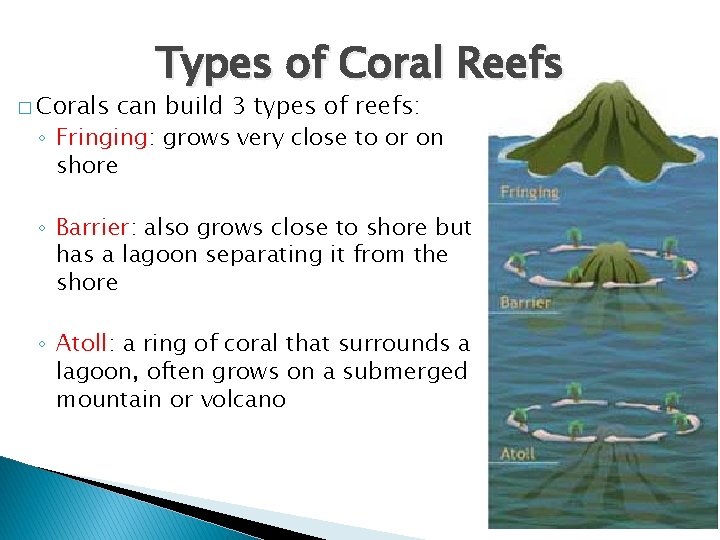
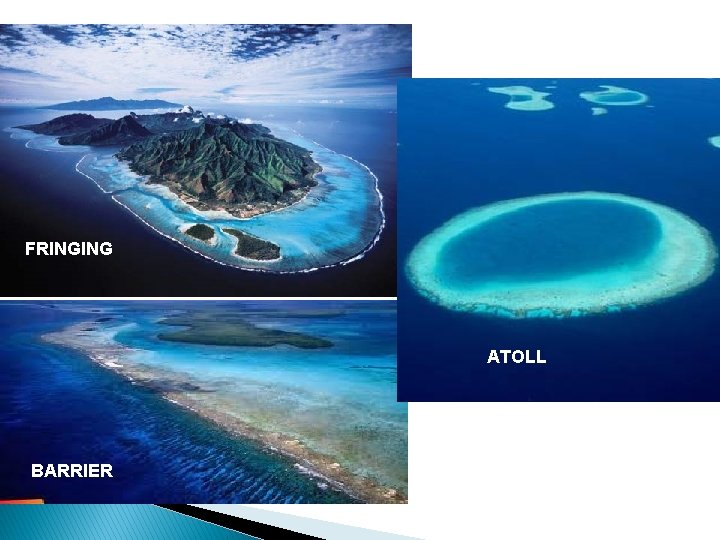
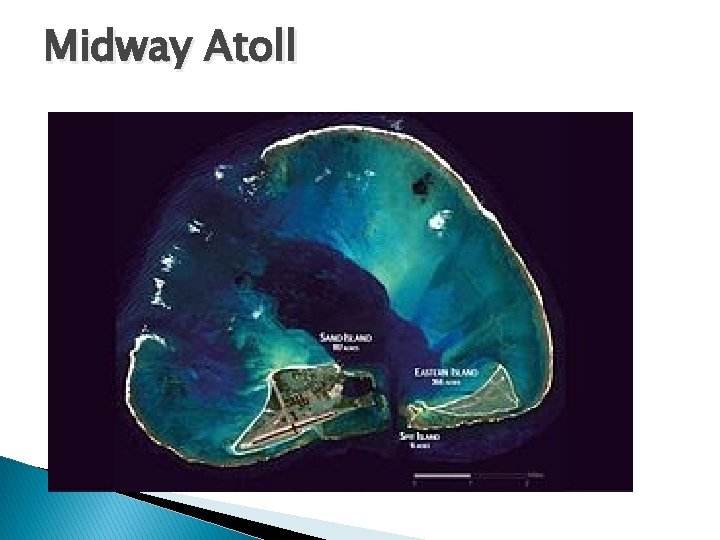
� Corals Types of Coral Reefs can build 3 types of reefs: ◦ Fringing: grows very close to or on shore ◦ Barrier: also grows close to shore but has a lagoon separating it from the shore ◦ Atoll: a ring of coral that surrounds a lagoon, often grows on a submerged mountain or volcano
FRINGING ATOLL BARRIER
Midway Atoll
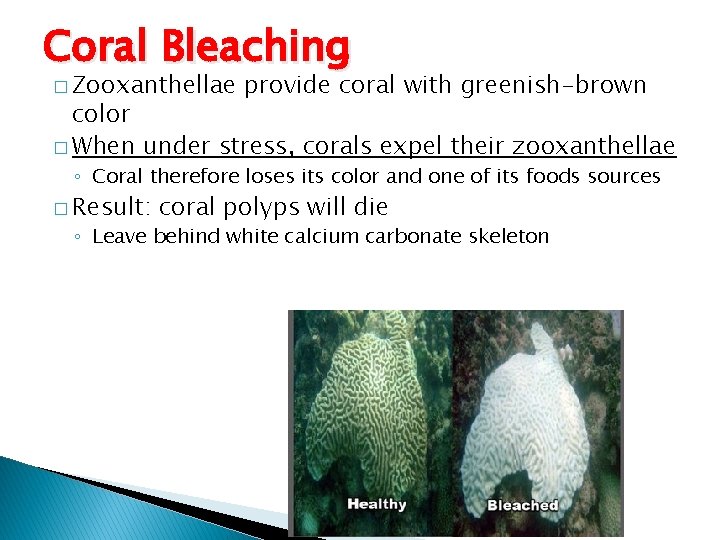
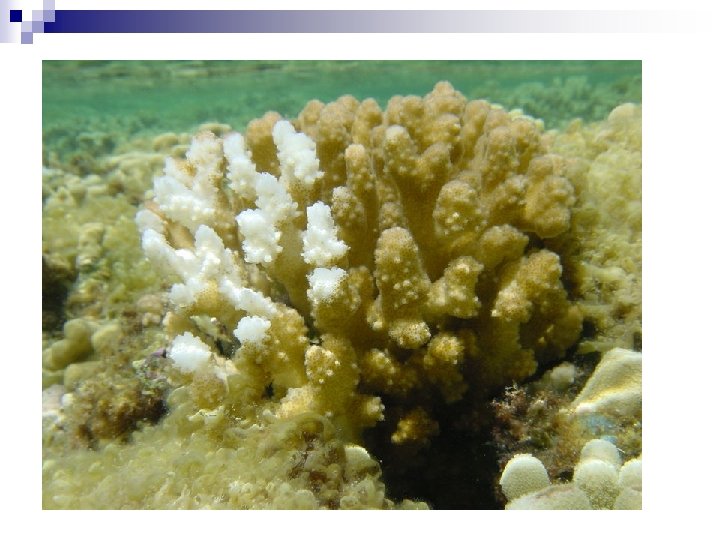
Coral Bleaching � Zooxanthellae provide coral with greenish-brown color � When under stress, corals expel their zooxanthellae ◦ Coral therefore loses its color and one of its foods sources � Result: coral polyps will die ◦ Leave behind white calcium carbonate skeleton
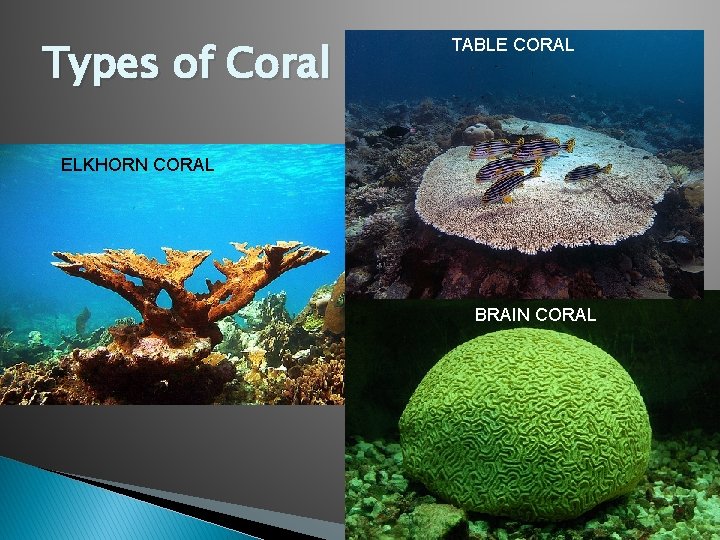
Types of Coral TABLE CORAL ELKHORN CORAL BRAIN CORAL
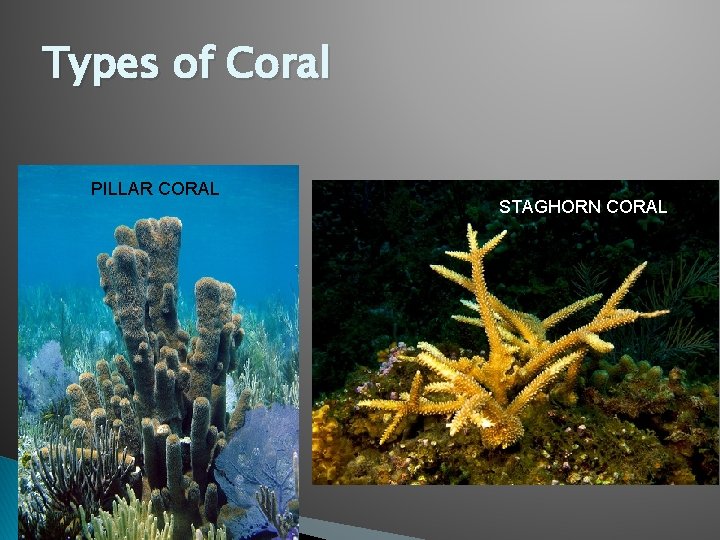
Types of Coral PILLAR CORAL STAGHORN CORAL
Coral Reef Food Chains � Food chains show living things get their nutrients, and how these nutrients are passed from one organism to another � Producers produce their own nutrients, via photosynthesis � Consumers nutrients eat other organisms to obtain ◦ 3 kinds of consumers: �Herbivores: eat only plants �Carnivores: eat only animals �Omnivores: eat both plants and animals
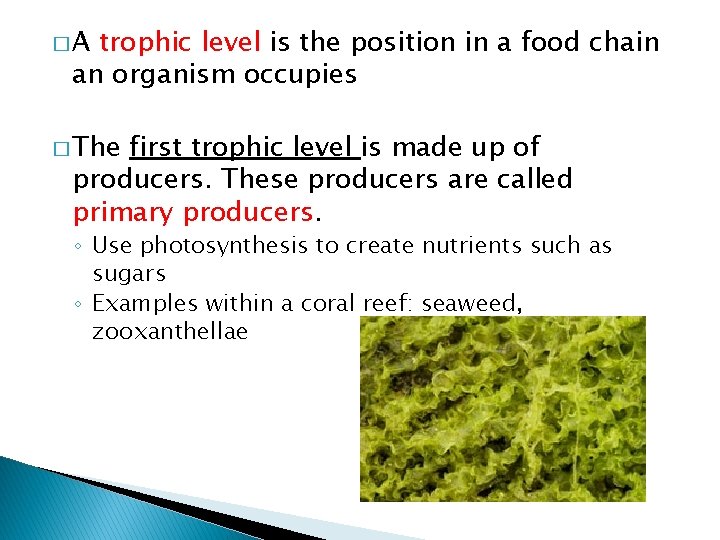
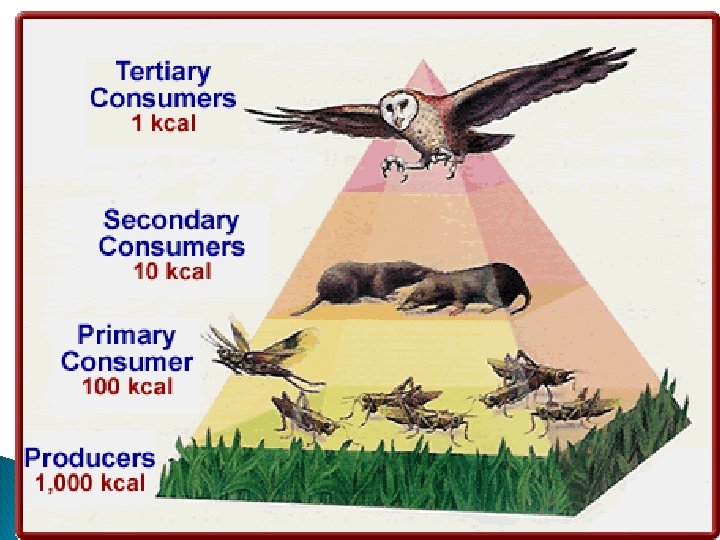
�A trophic level is the position in a food chain an organism occupies � The first trophic level is made up of producers. These producers are called primary producers. ◦ Use photosynthesis to create nutrients such as sugars ◦ Examples within a coral reef: seaweed, zooxanthellae
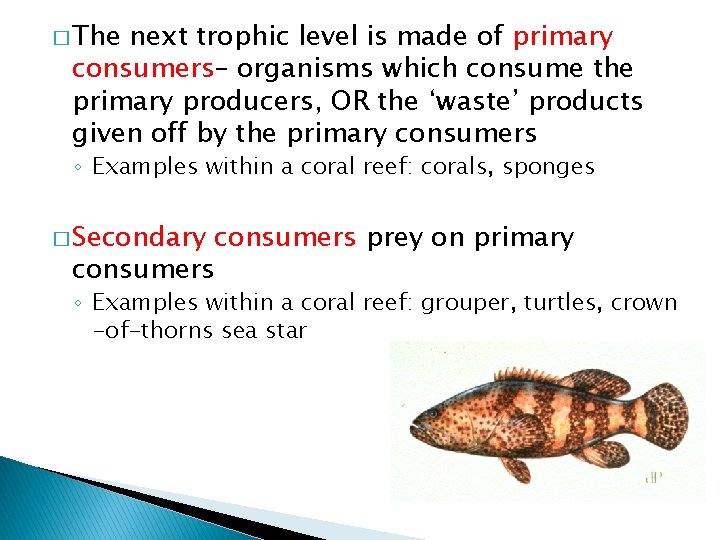
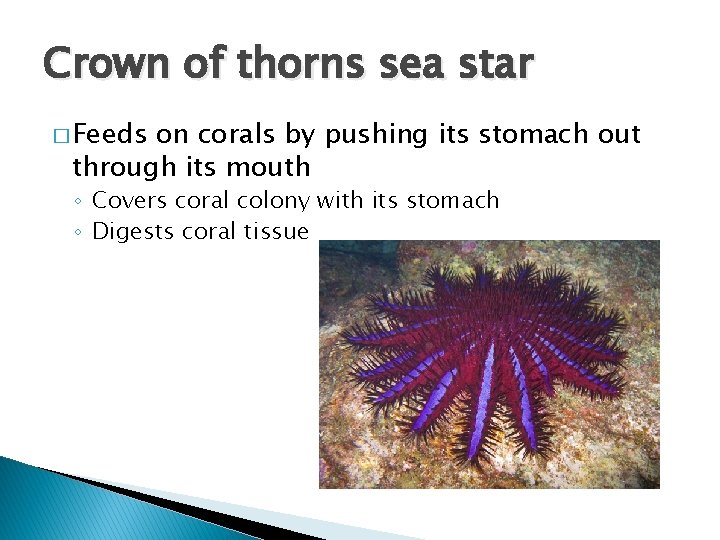
� The next trophic level is made of primary consumers– organisms which consume the primary producers, OR the ‘waste’ products given off by the primary consumers ◦ Examples within a coral reef: corals, sponges � Secondary consumers prey on primary consumers ◦ Examples within a coral reef: grouper, turtles, crown -of-thorns sea star
Crown of thorns sea star � Feeds on corals by pushing its stomach out through its mouth ◦ Covers coral colony with its stomach ◦ Digests coral tissue
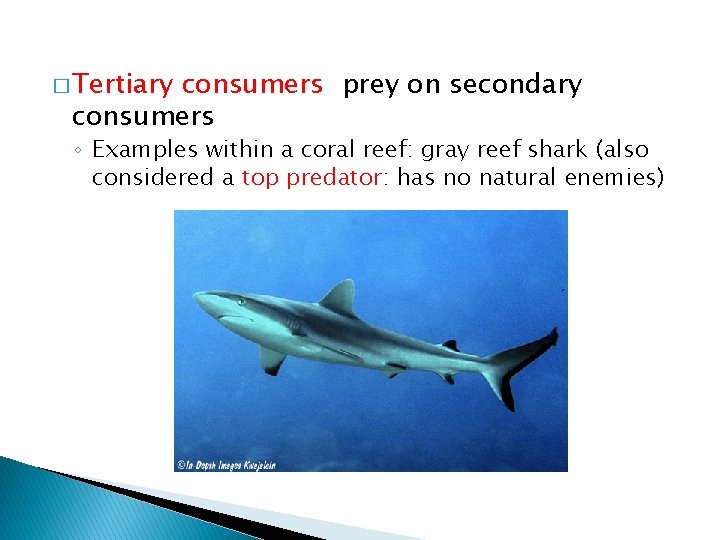
� Tertiary consumers prey on secondary consumers ◦ Examples within a coral reef: gray reef shark (also considered a top predator: has no natural enemies)
Food chains are inefficient! � Only about 10% of the energy at one trophic level on a food chain is passed onto the next level. ◦ The remaining 90% of energy will be used by the organism at the lower trophic level to do its normal activities, such as movement & respiration, OR will be lost during the energy transfer.