
Coral Reefs Facts about Coral Reefs Largest living
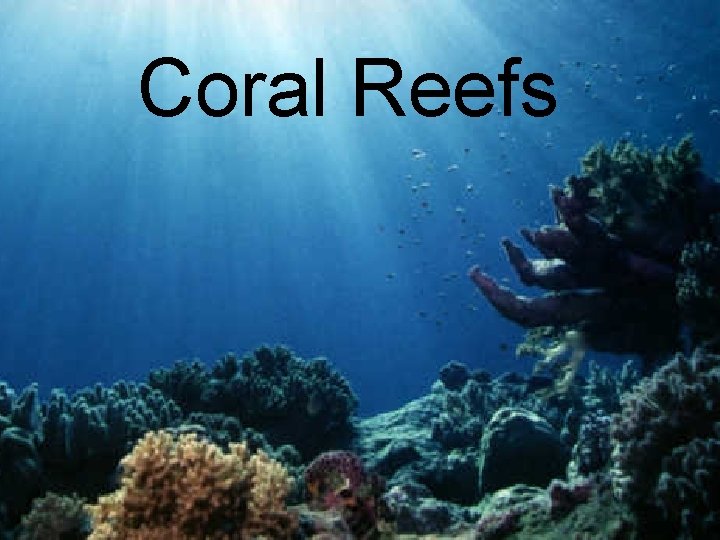
Coral Reefs
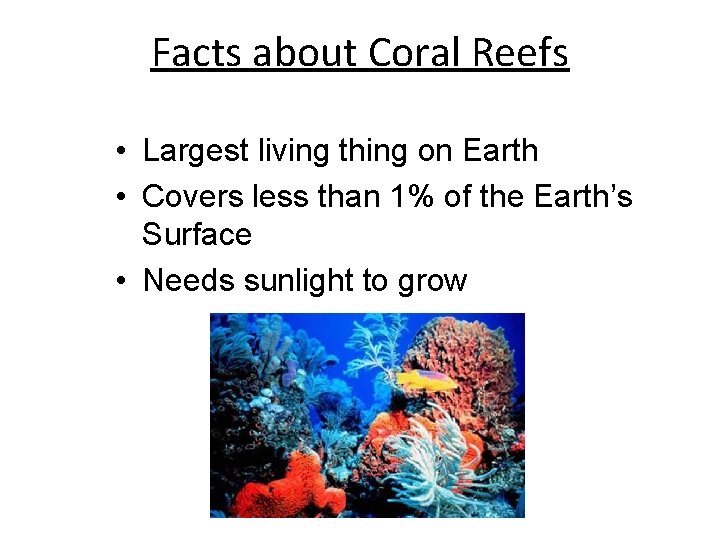
Facts about Coral Reefs • Largest living thing on Earth • Covers less than 1% of the Earth’s Surface • Needs sunlight to grow
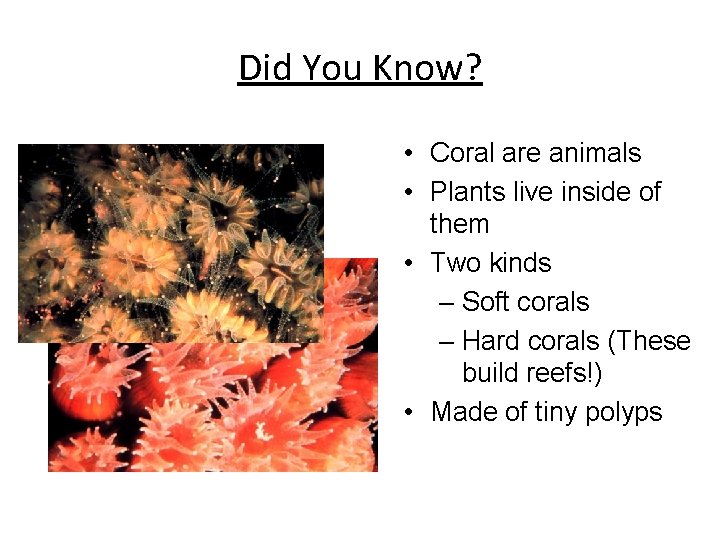
Did You Know? • Coral are animals • Plants live inside of them • Two kinds – Soft corals – Hard corals (These build reefs!) • Made of tiny polyps
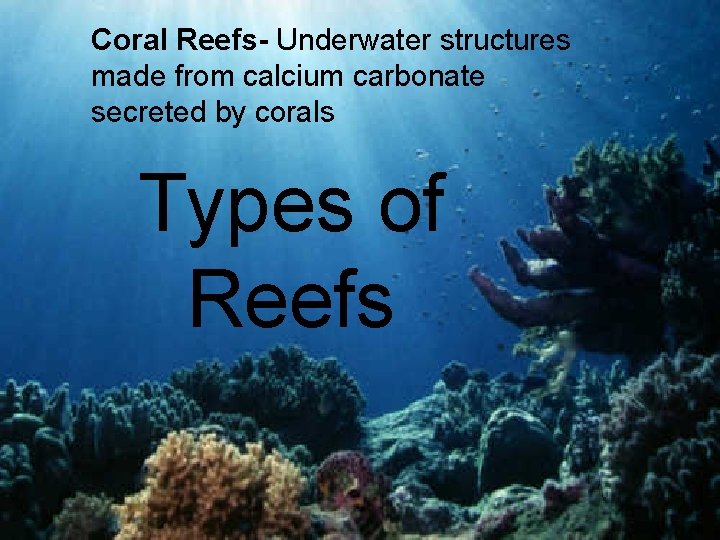
Coral Reefs- Underwater structures made from calcium carbonate secreted by corals Types of Reefs
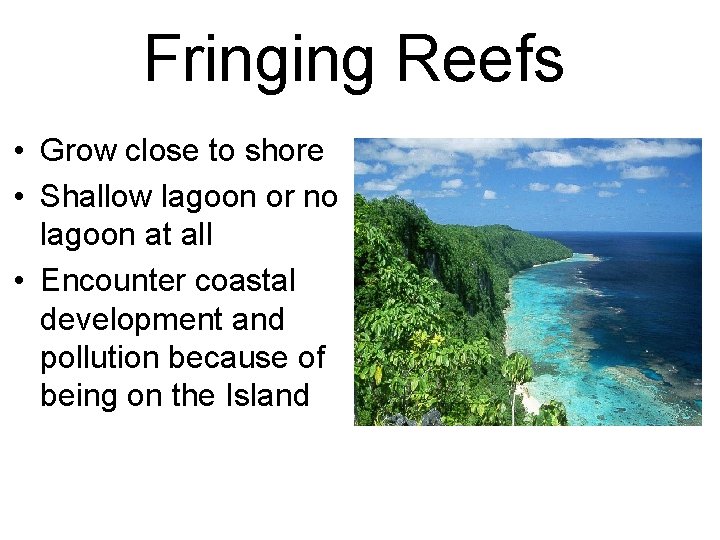
Fringing Reefs • Grow close to shore • Shallow lagoon or no lagoon at all • Encounter coastal development and pollution because of being on the Island
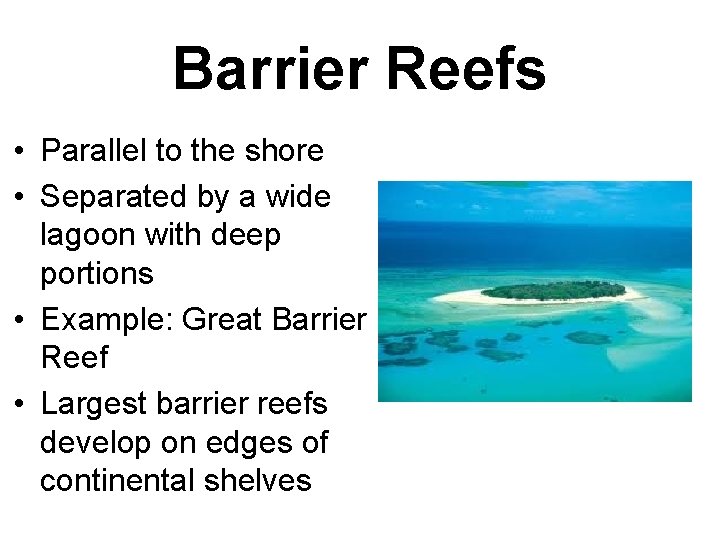
Barrier Reefs • Parallel to the shore • Separated by a wide lagoon with deep portions • Example: Great Barrier Reef • Largest barrier reefs develop on edges of continental shelves
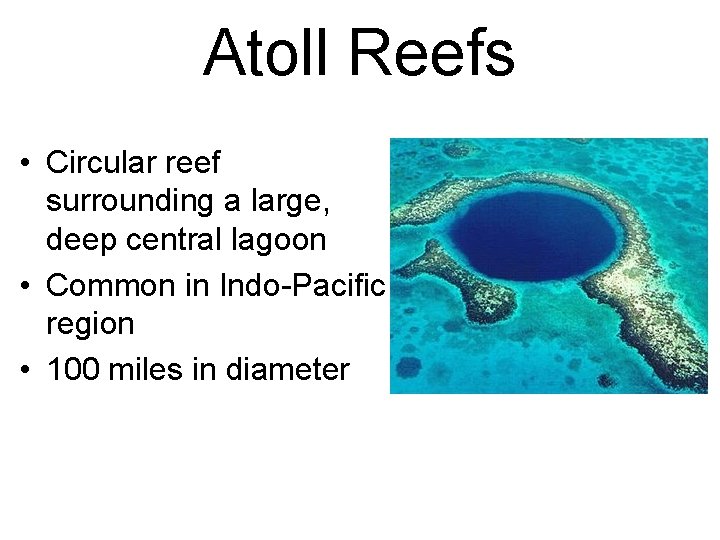
Atoll Reefs • Circular reef surrounding a large, deep central lagoon • Common in Indo-Pacific region • 100 miles in diameter
Benefits to the Environment • Used for food and medicine • Economic benefits (tourism, fisheries and protection) - $375 billion a year • Breeding grounds for marine animals (fish) • Protects shores from waves and storms • Home & shelter to 25% of the fish in the ocean
Major Threats to Coral Reefs • Ocean Water Pollution- oil, petroleum products, pesticides, insecticides and sewage contaminate the oceans • Road construction – increases runoff which carries sediments full of pollutants as above • Fishing techniques – involving dynamite and cyanide solution • Global Warming- Increase in carbon dioxide leads to rise in ocean water temperature • Bleaching- Algae that lives with the coral are sensitive to temperature. – – – Leave coral behind when too warm Color disappears Coral becomes a white “dead looking coral”
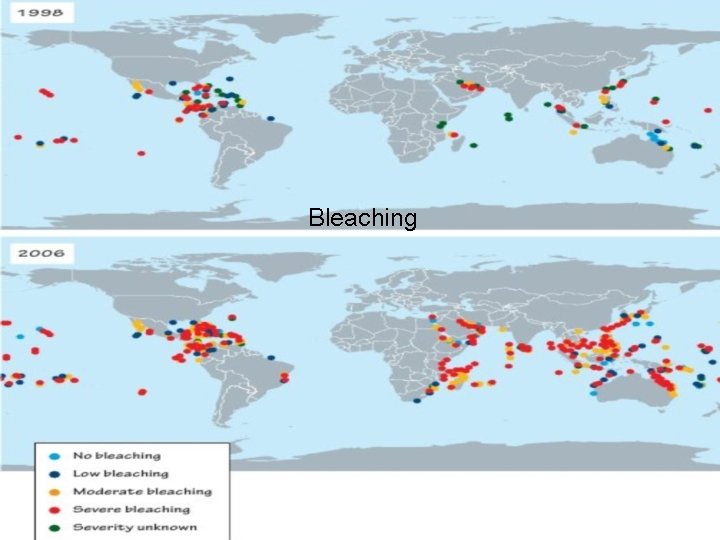
Bleaching
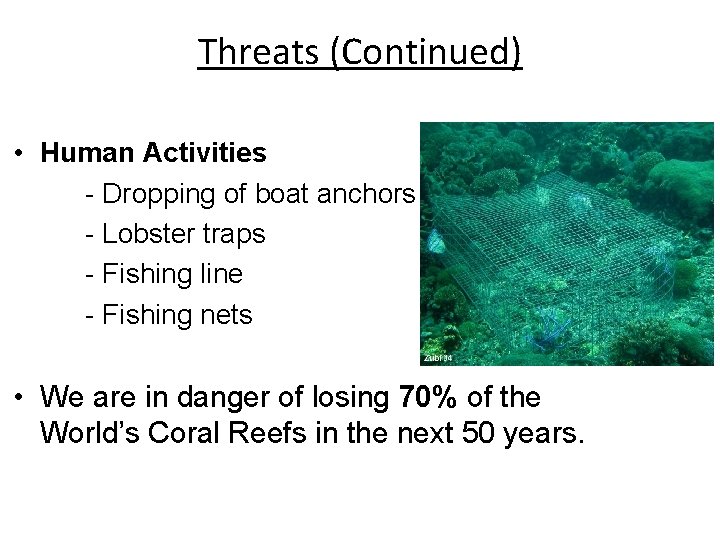
Threats (Continued) • Human Activities - Dropping of boat anchors - Lobster traps - Fishing line - Fishing nets • We are in danger of losing 70% of the World’s Coral Reefs in the next 50 years.
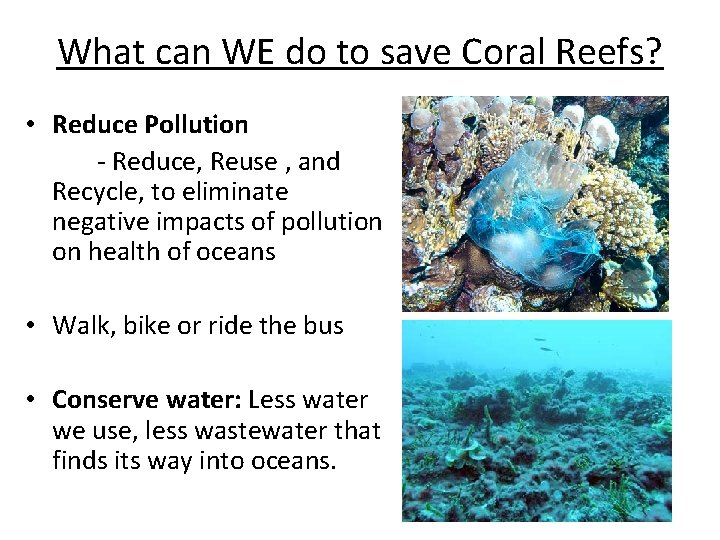
What can WE do to save Coral Reefs? • Reduce Pollution - Reduce, Reuse , and Recycle, to eliminate negative impacts of pollution on health of oceans • Walk, bike or ride the bus • Conserve water: Less water we use, less wastewater that finds its way into oceans.
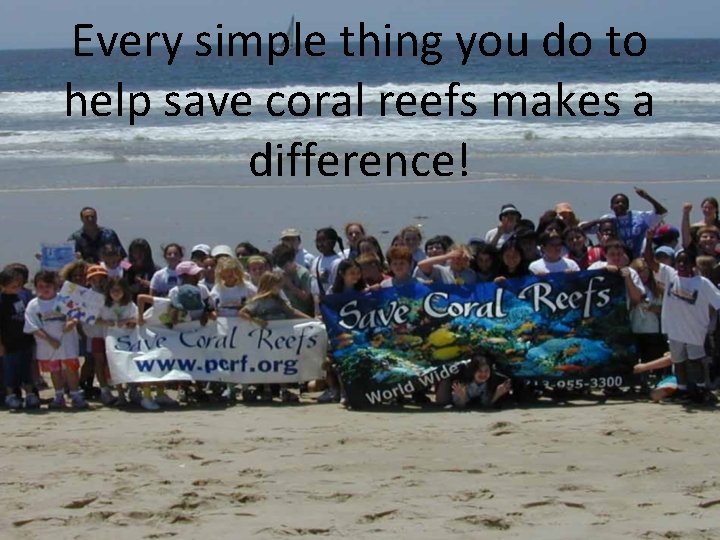
Every simple thing you do to help save coral reefs makes a difference!
- Slides: 13