
Coral Reefs and Lagoons Part I Section 5



- Slides: 18
Coral Reefs and Lagoons Part I Section 5
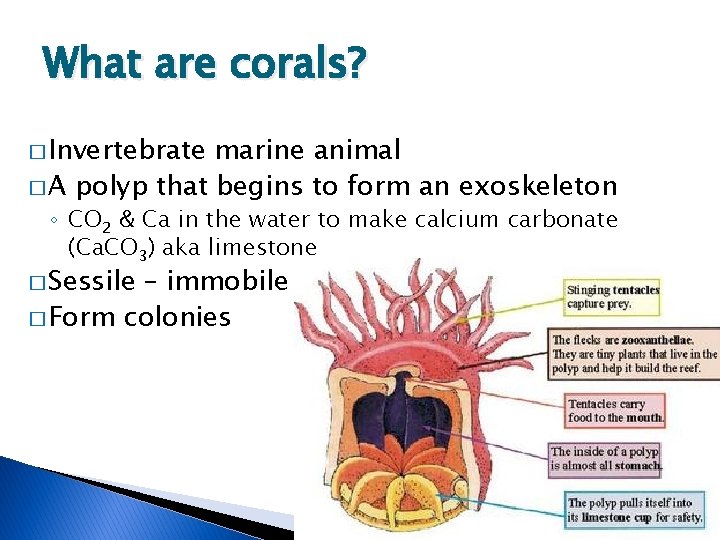
What are corals? � Invertebrate marine animal � A polyp that begins to form an exoskeleton ◦ CO 2 & Ca in the water to make calcium carbonate (Ca. CO 3) aka limestone � Sessile – immobile � Form colonies
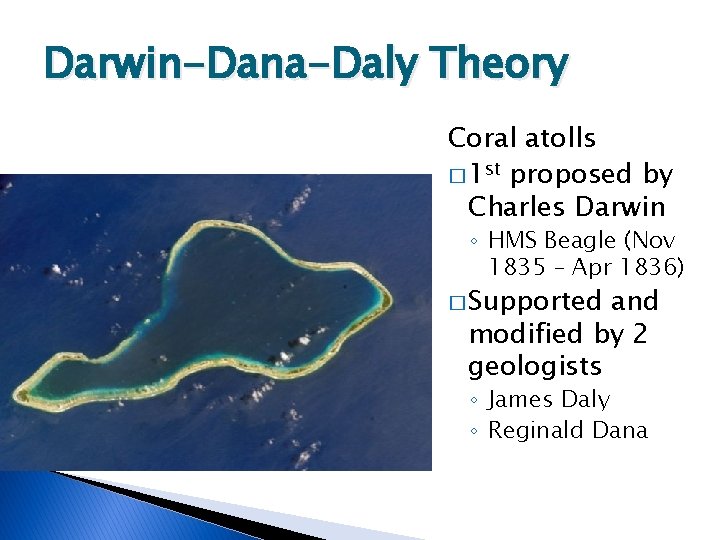
Darwin-Dana-Daly Theory Coral atolls � 1 st proposed by Charles Darwin ◦ HMS Beagle (Nov 1835 – Apr 1836) � Supported and modified by 2 geologists ◦ James Daly ◦ Reginald Dana
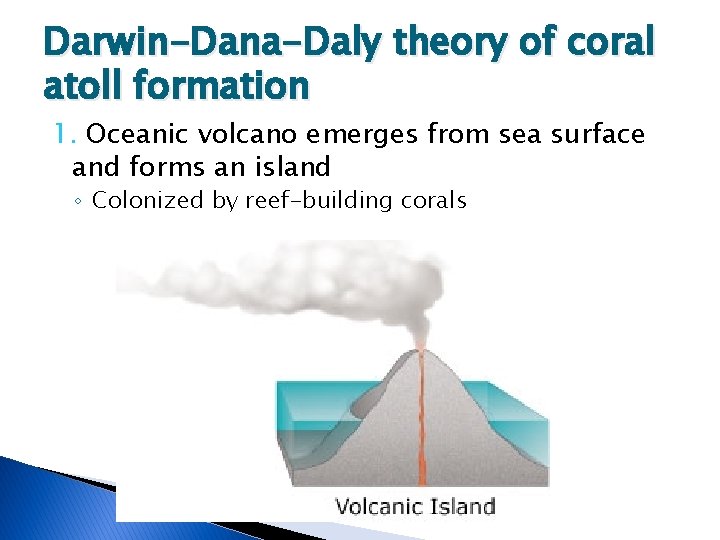
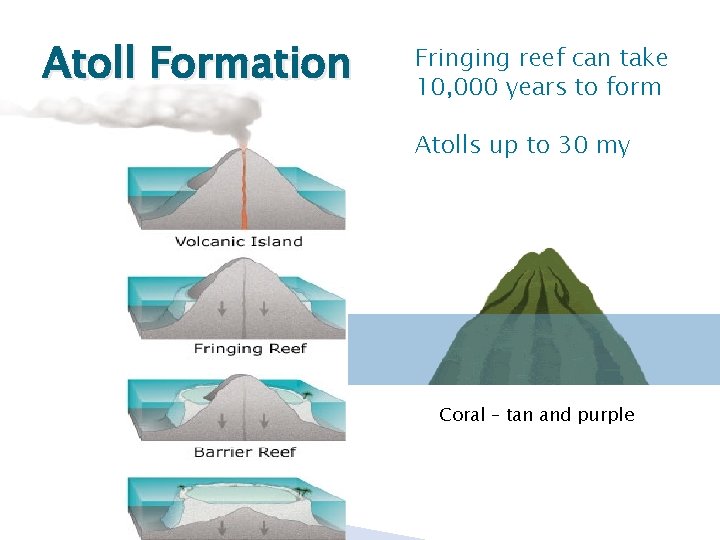
Darwin-Dana-Daly theory of coral atoll formation 1. Oceanic volcano emerges from sea surface and forms an island ◦ Colonized by reef-building corals
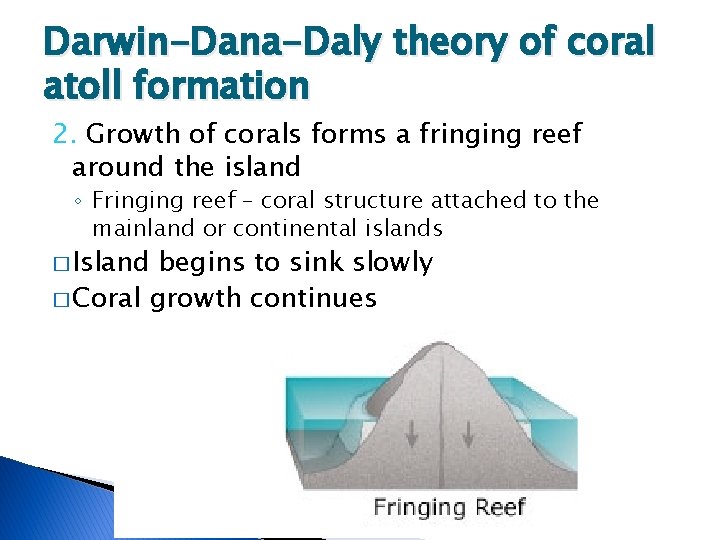
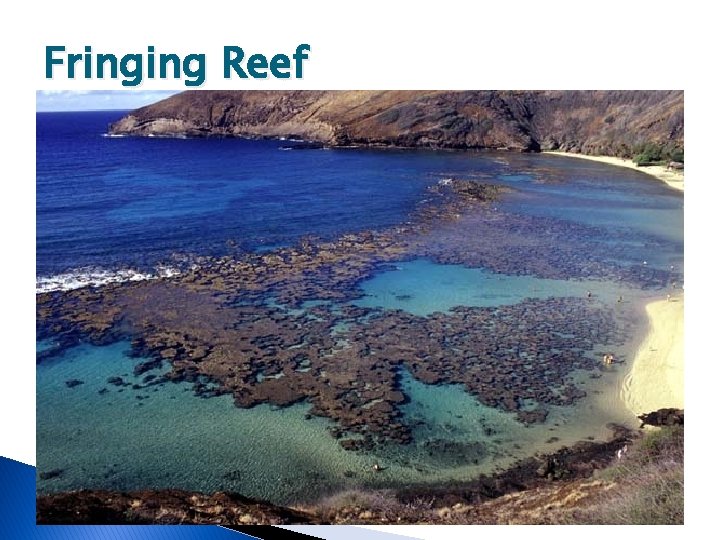
Darwin-Dana-Daly theory of coral atoll formation 2. Growth of corals forms a fringing reef around the island ◦ Fringing reef – coral structure attached to the mainland or continental islands � Island begins to sink slowly � Coral growth continues
Fringing Reef
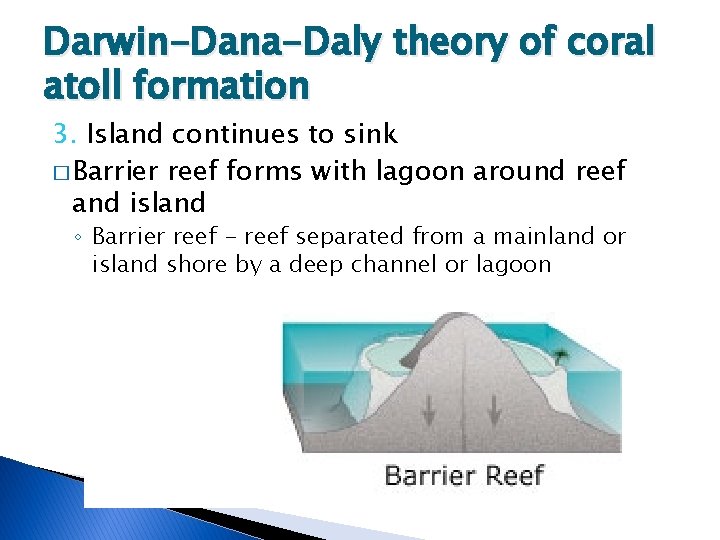
Darwin-Dana-Daly theory of coral atoll formation 3. Island continues to sink � Barrier reef forms with lagoon around reef and island ◦ Barrier reef - reef separated from a mainland or island shore by a deep channel or lagoon
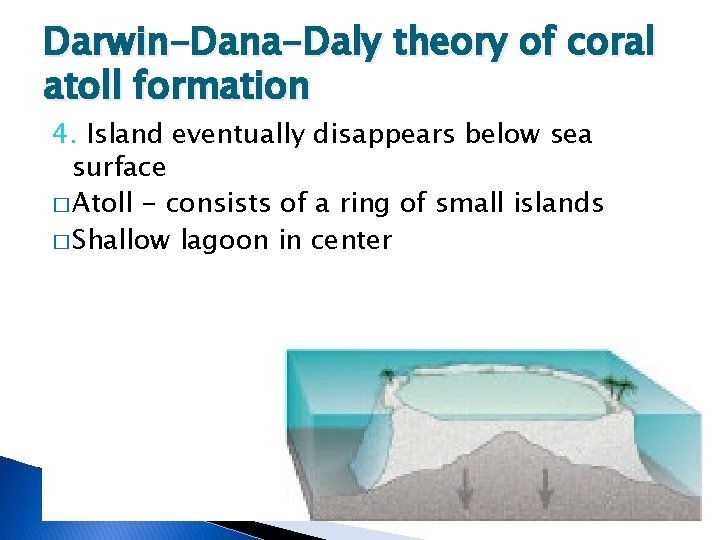
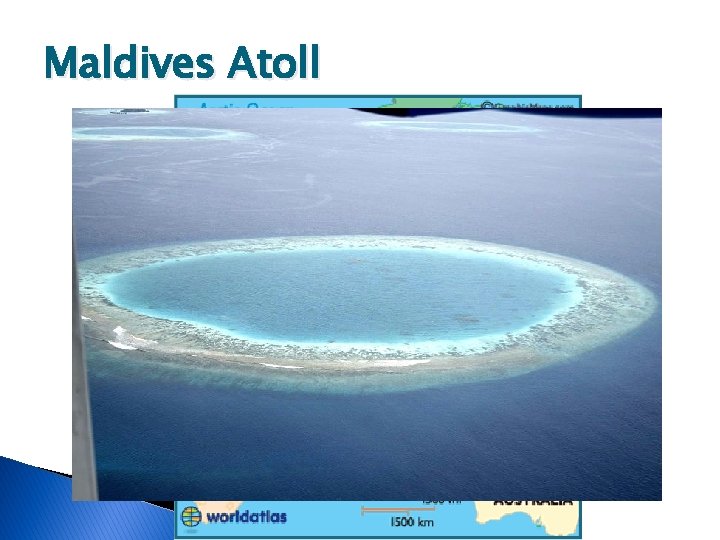
Darwin-Dana-Daly theory of coral atoll formation 4. Island eventually disappears below sea surface � Atoll - consists of a ring of small islands � Shallow lagoon in center
Maldives Atoll
Atoll Formation Fringing reef can take 10, 000 years to form Atolls up to 30 my Coral – tan and purple
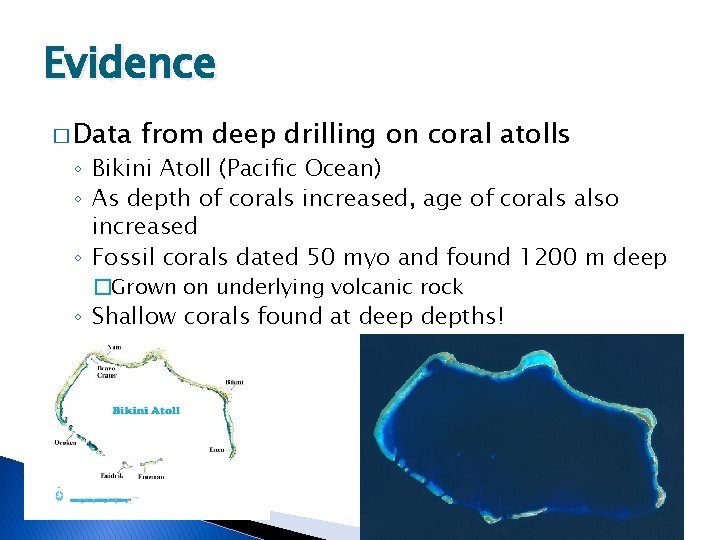
Evidence � Data from deep drilling on coral atolls ◦ Bikini Atoll (Pacific Ocean) ◦ As depth of corals increased, age of corals also increased ◦ Fossil corals dated 50 myo and found 1200 m deep �Grown on underlying volcanic rock ◦ Shallow corals found at deep depths!
Physiology of Coral � Darwin (1842) produced 1 st map of distribution of corals � 3 main types: ◦ Fringing barrier reefs, atolls
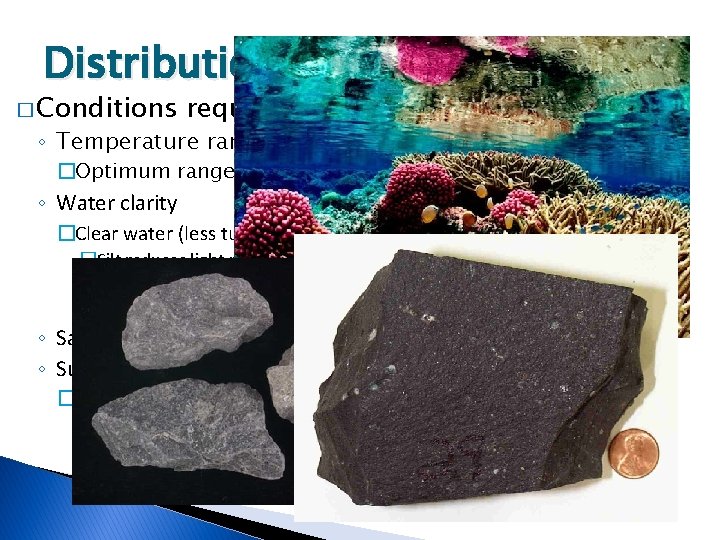
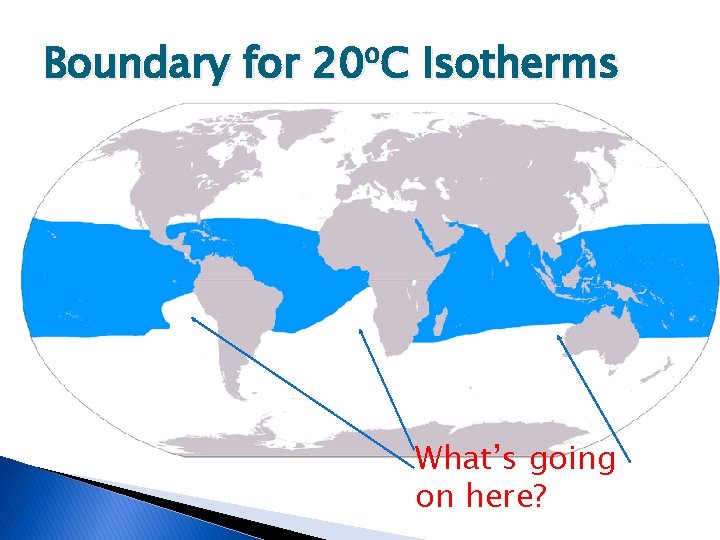
Distribution of Corals � Conditions required: ◦ Temperature range =16⁰C – 35 ⁰C �Optimum range = 23 ⁰C - 25 ⁰C ◦ Water clarity �Clear water (less turbid) without silt �Silt reduces light penetration which inhibits photosynthesis of symbiotic zooxanthellae in coral tissues (90% nutrients provided) �Depth – rapid growth occurs within 20 m from surface ◦ Salinity ◦ Substrate – surface on which plant/animals live �Basaltic rocks of seamounts
Coral, Zooxanthellae and Fish � http: //m. youtube. com/#/watch? feature=yout u. be&v=35 iln. GM 9 En. U&desktop_uri=%2 Fwatc h%3 Fv%3 D 35 iln. GM 9 En. U%26 feature%3 Dyoutu. be
Boundary for 20⁰C Isotherms What’s going on here?
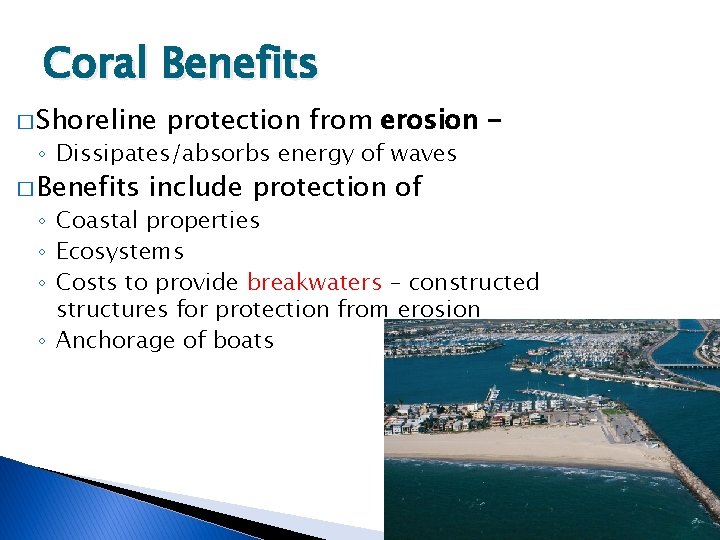
Coral Benefits � Shoreline protection from erosion - ◦ Dissipates/absorbs energy of waves � Benefits include protection of ◦ Coastal properties ◦ Ecosystems ◦ Costs to provide breakwaters – constructed structures for protection from erosion ◦ Anchorage of boats
Coral Beauty � Coral Gardens Fiji (Pacific Ocean) � Egypt (Red Sea) � Baja
Homework! � Due Friday! � Read Marine Biology book pages 10 -1 ◦ Answer question 1 AND write bolded words with definitions! ◦ Dropbox it in complete sentence(s) � Your NEW Oceanography textbooks are in!!!!!