
Coral Reef By Marivick Michua Alejandra Salgado Primary
Coral Reef By : Marivick Michua, Alejandra Salgado
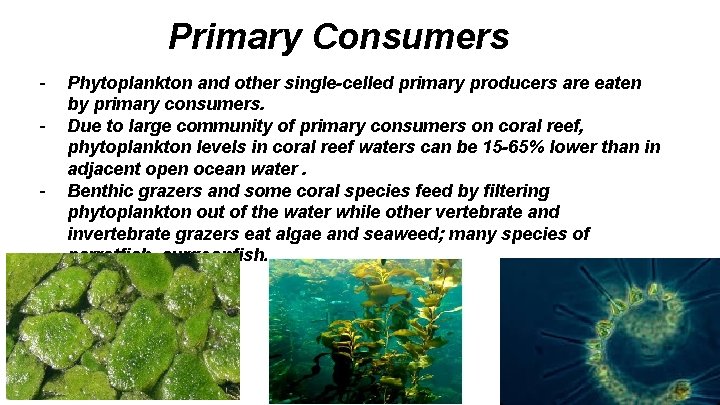
Primary Consumers - Phytoplankton and other single-celled primary producers are eaten by primary consumers. Due to large community of primary consumers on coral reef, phytoplankton levels in coral reef waters can be 15 -65% lower than in adjacent open ocean water. Benthic grazers and some coral species feed by filtering phytoplankton out of the water while other vertebrate and invertebrate grazers eat algae and seaweed; many species of parrotfish, surgeonfish.
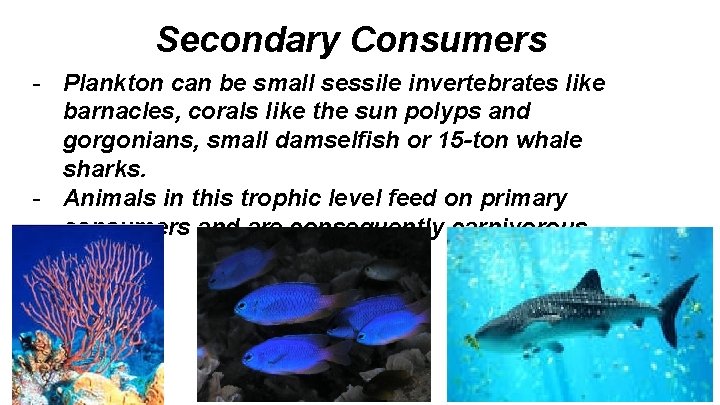
Secondary Consumers - Plankton can be small sessile invertebrates like barnacles, corals like the sun polyps and gorgonians, small damselfish or 15 -ton whale sharks. - Animals in this trophic level feed on primary consumers and are consequently carnivorous.
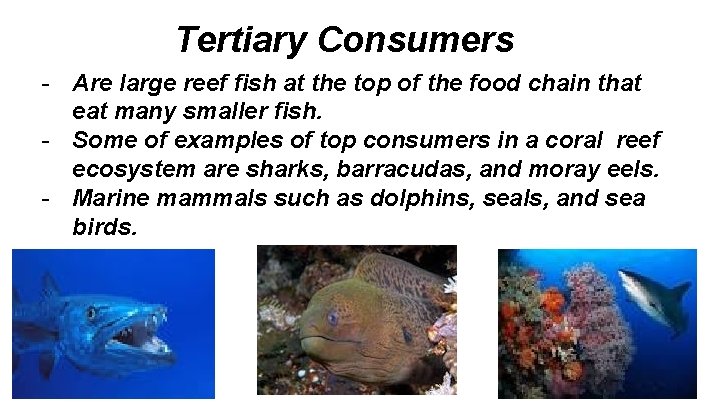
Tertiary Consumers - Are large reef fish at the top of the food chain that eat many smaller fish. - Some of examples of top consumers in a coral reef ecosystem are sharks, barracudas, and moray eels. - Marine mammals such as dolphins, seals, and sea birds.
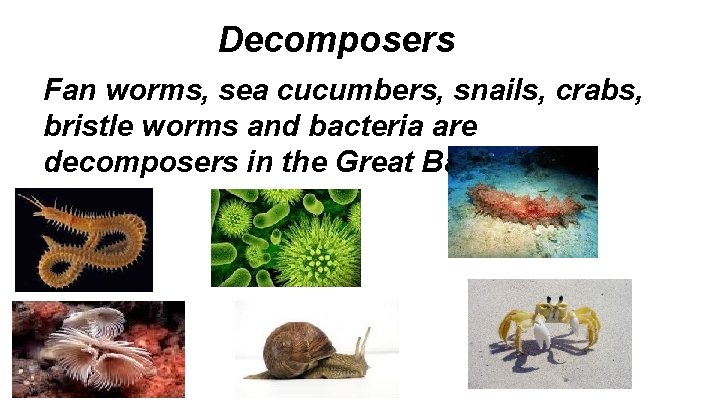
Decomposers Fan worms, sea cucumbers, snails, crabs, bristle worms and bacteria are decomposers in the Great Barrier Reef.
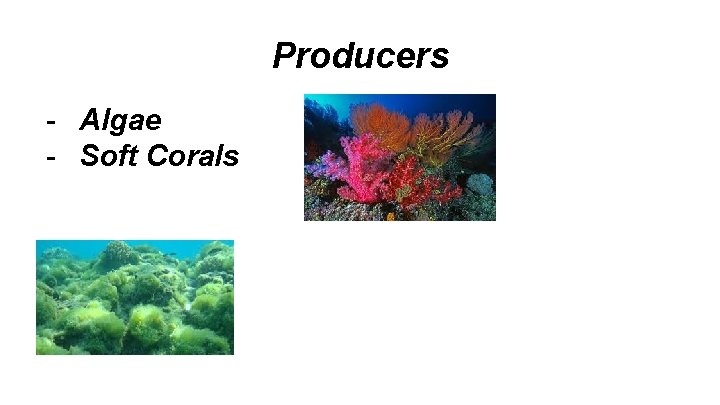
Producers - Algae - Soft Corals

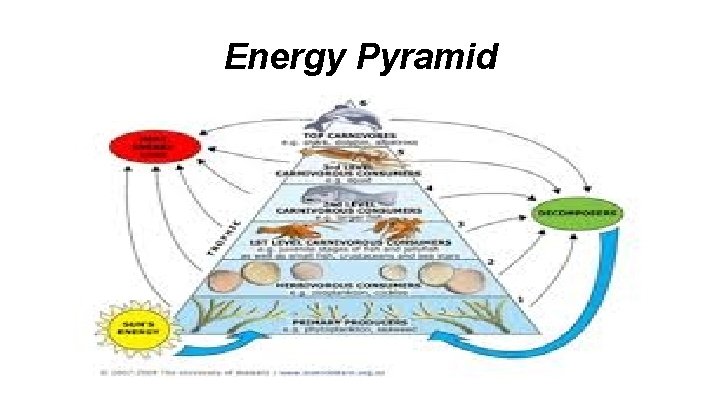
Energy Pyramid
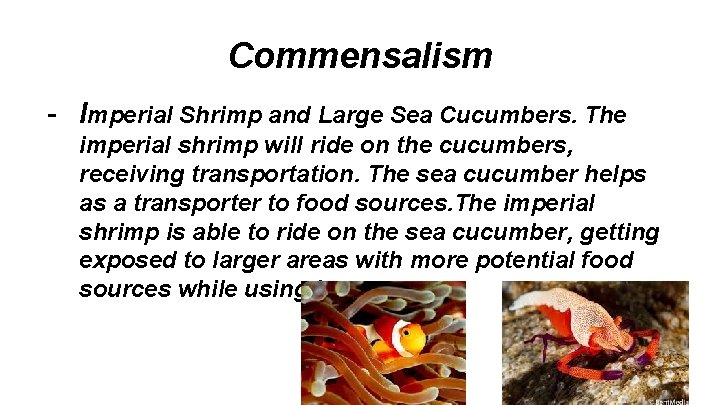
Commensalism - Imperial Shrimp and Large Sea Cucumbers. The imperial shrimp will ride on the cucumbers, receiving transportation. The sea cucumber helps as a transporter to food sources. The imperial shrimp is able to ride on the sea cucumber, getting exposed to larger areas with more potential food sources while using less energy.
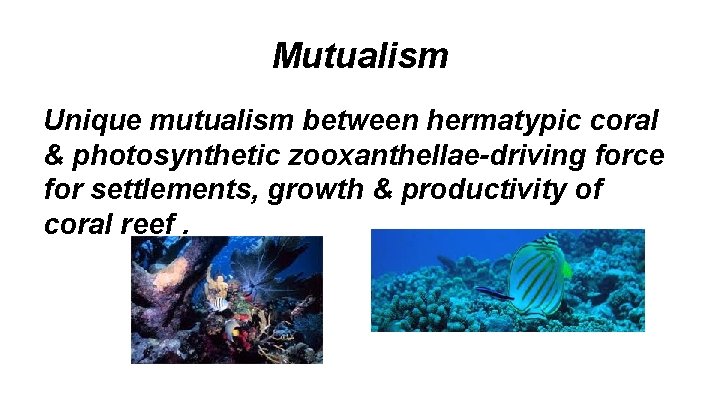
Mutualism Unique mutualism between hermatypic coral & photosynthetic zooxanthellae-driving force for settlements, growth & productivity of coral reef.
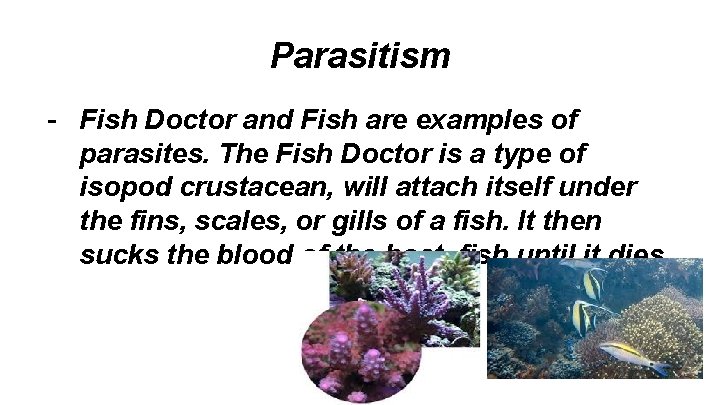
Parasitism - Fish Doctor and Fish are examples of parasites. The Fish Doctor is a type of isopod crustacean, will attach itself under the fins, scales, or gills of a fish. It then sucks the blood of the host fish until it dies
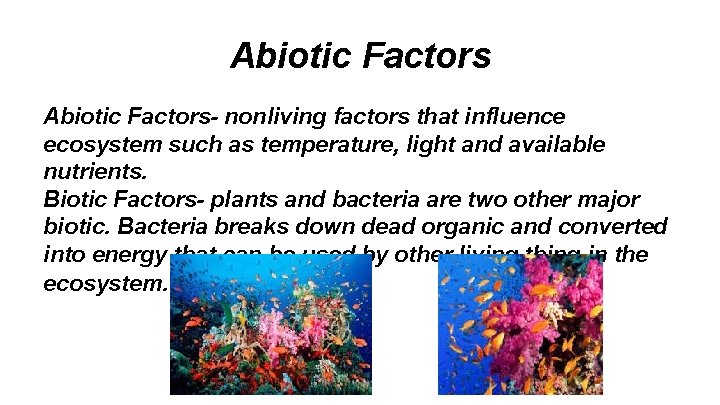
Abiotic Factors- nonliving factors that influence ecosystem such as temperature, light and available nutrients. Biotic Factors- plants and bacteria are two other major biotic. Bacteria breaks down dead organic and converted into energy that can be used by other living thing in the ecosystem.
How Do Humans Impact The Coral Reef There are two different ways in which humans have contributed to the degradation of the Earth's coral reefs, indirectly and directly. Indirectly, we have destroyed their environment. As you read earlier, coral reefs can live only in very clear water. The large population centers near coasts has led to silting of reefs, pollution by nutrients that lead to algal growth that smothers the coral, and overfishing that has led to increase in number of predators that eat corals.
- Slides: 13