
Coral Reef Biome a large naturally occurring community
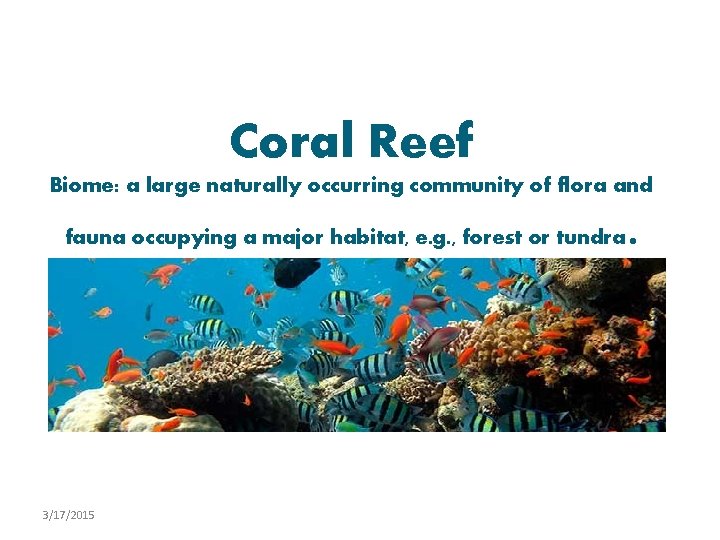
Coral Reef Biome: a large naturally occurring community of flora and fauna occupying a major habitat, e. g. , forest or tundra 3/17/2015 .
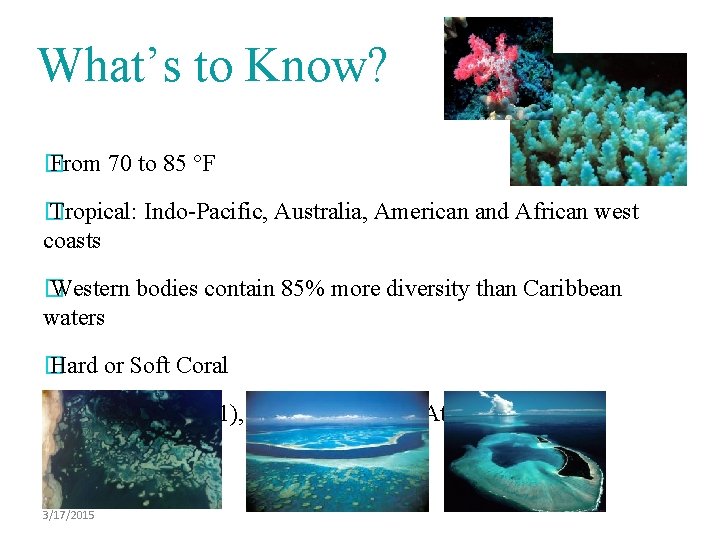
What’s to Know? � From 70 to 85 °F � Tropical: Indo-Pacific, Australia, American and African west coasts � Western bodies contain 85% more diversity than Caribbean waters � Hard or Soft Coral � Types: Fringing (1), Barrier (2), Coral Atoll (3) 3/17/2015
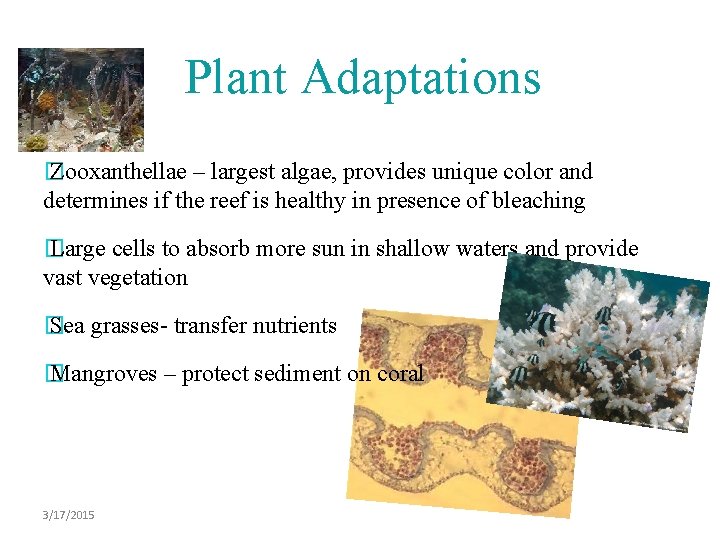
Plant Adaptations � Zooxanthellae – largest algae, provides unique color and determines if the reef is healthy in presence of bleaching � Large cells to absorb more sun in shallow waters and provide vast vegetation � Sea grasses- transfer nutrients � Mangroves – protect sediment on coral 3/17/2015
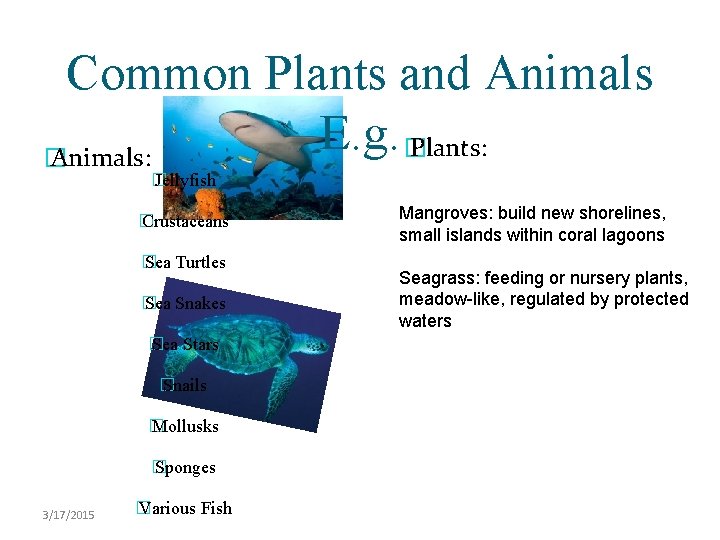
Common Plants and Animals E. g. � Plants: � Animals: � Jellyfish � Crustaceans � Sea Turtles � Sea Snakes � Sea Stars � Snails � Mollusks � Sponges 3/17/2015 � Various Fish Mangroves: build new shorelines, small islands within coral lagoons Seagrass: feeding or nursery plants, meadow-like, regulated by protected waters
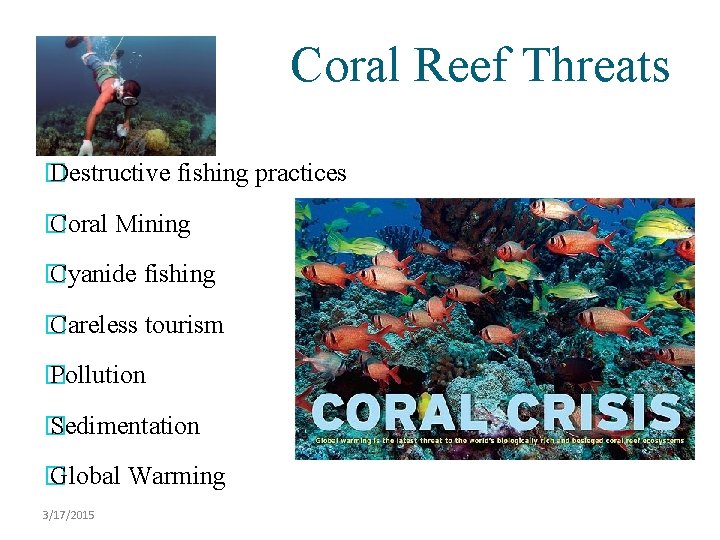
Coral Reef Threats � Destructive fishing practices � Coral Mining � Cyanide fishing � Careless tourism � Pollution � Sedimentation � Global Warming 3/17/2015
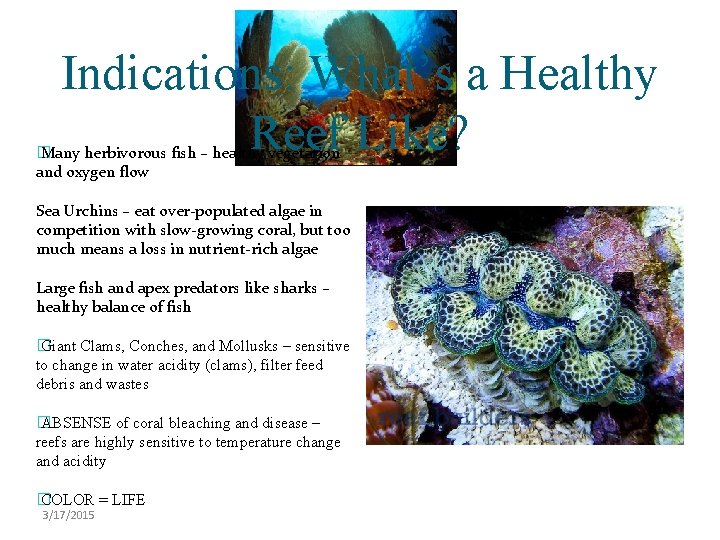
Indications: What’s a Healthy Reef Like? � Many herbivorous fish – healthy vegetation and oxygen flow Sea Urchins – eat over-populated algae in competition with slow-growing coral, but too much means a loss in nutrient-rich algae Large fish and apex predators like sharks – healthy balance of fish � Giant Clams, Conches, and Mollusks – sensitive to change in water acidity (clams), filter feed debris and wastes � ABSENSE of coral bleaching and disease – reefs are highly sensitive to temperature change and acidity � COLOR = LIFE 3/17/2015
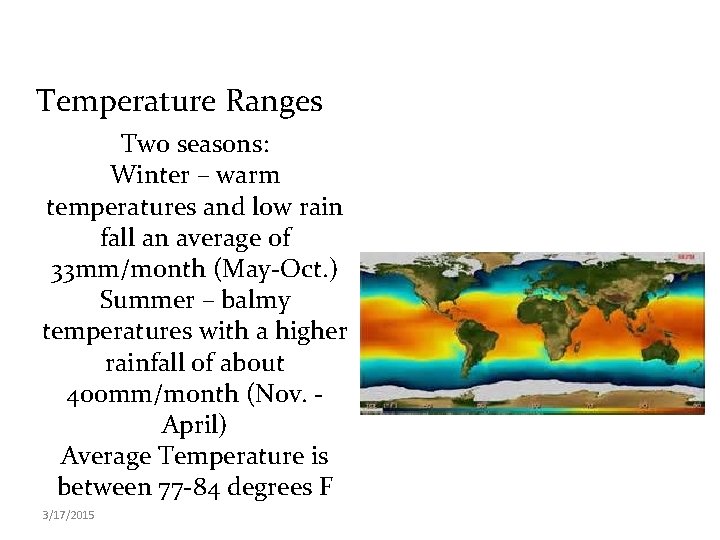
Temperature Ranges Two seasons: Winter – warm temperatures and low rain fall an average of 33 mm/month (May-Oct. ) Summer – balmy temperatures with a higher rainfall of about 400 mm/month (Nov. April) Average Temperature is between 77 -84 degrees F 3/17/2015
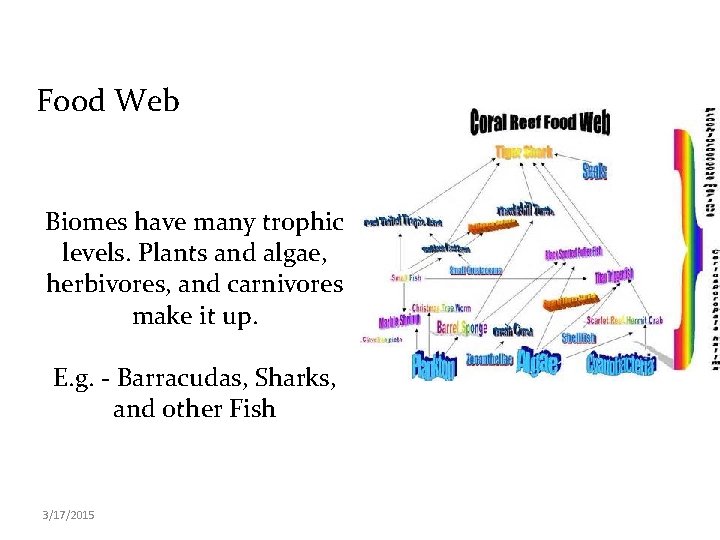
Food Web Biomes have many trophic levels. Plants and algae, herbivores, and carnivores make it up. E. g. - Barracudas, Sharks, and other Fish 3/17/2015

Animal Adaptions Flatter fish to maneuver coral ●Colors camouflage ●Sessile animals (coral) form immunities to toxins ● 3/17/2015
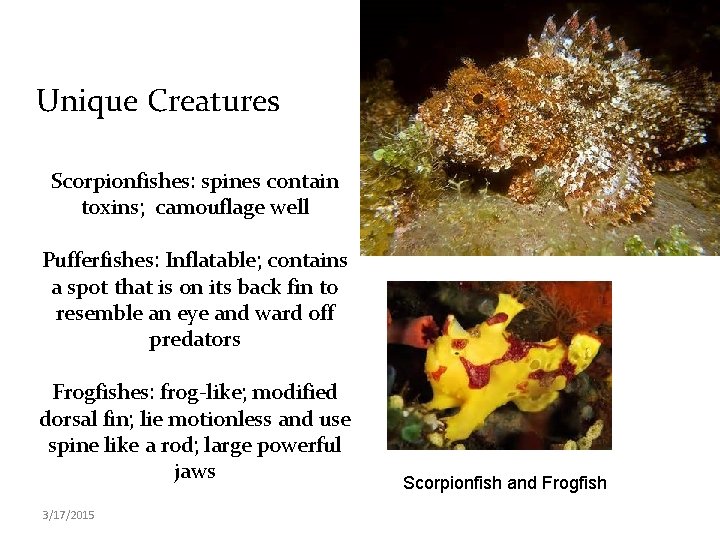
Unique Creatures Scorpionfishes: spines contain toxins; camouflage well Pufferfishes: Inflatable; contains a spot that is on its back fin to resemble an eye and ward off predators Frogfishes: frog-like; modified dorsal fin; lie motionless and use spine like a rod; large powerful jaws 3/17/2015 Scorpionfish and Frogfish
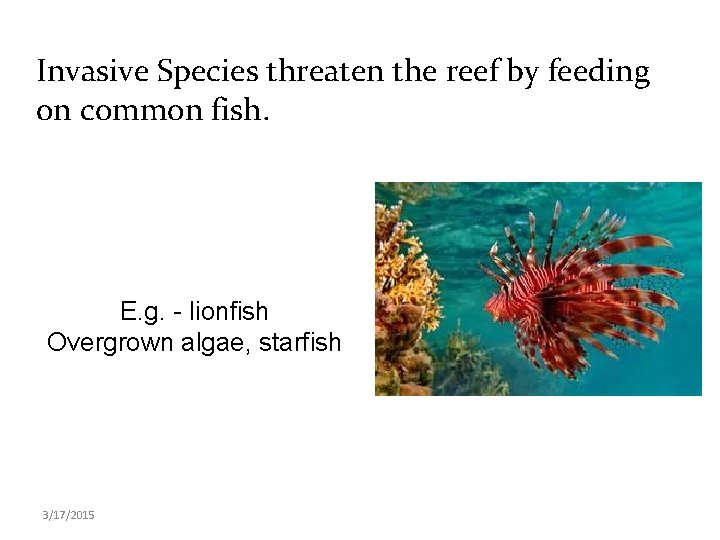
Invasive Species threaten the reef by feeding on common fish. E. g. - lionfish Overgrown algae, starfish 3/17/2015
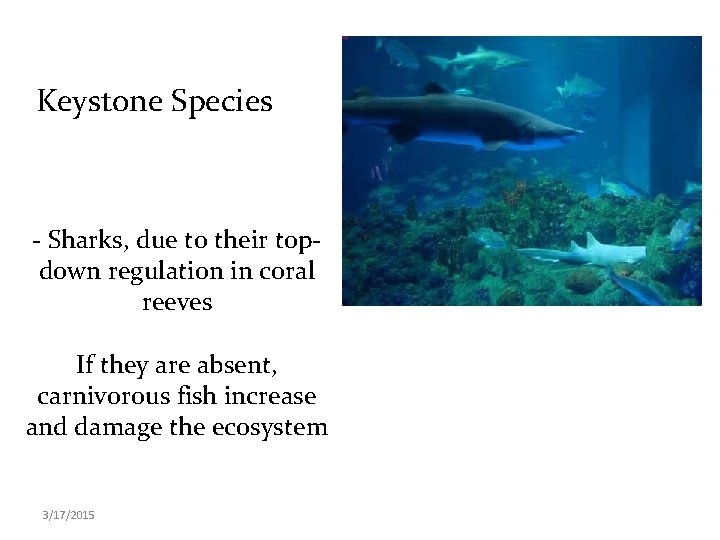
Keystone Species - Sharks, due to their topdown regulation in coral reeves If they are absent, carnivorous fish increase and damage the ecosystem 3/17/2015
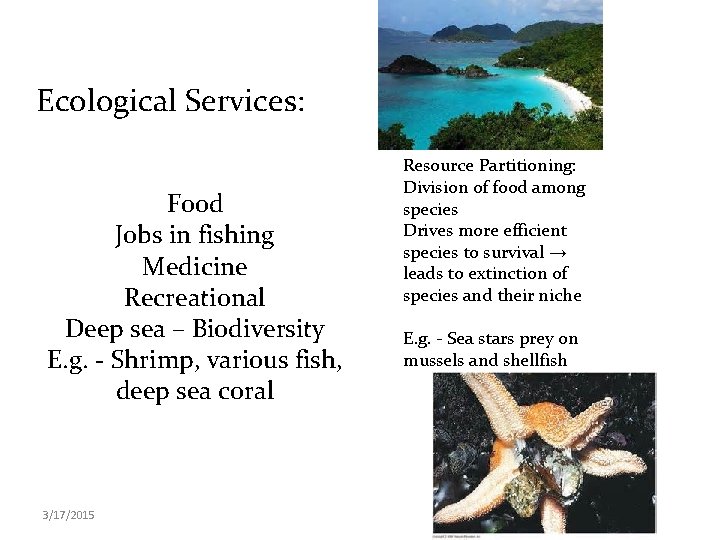
Ecological Services: Food Jobs in fishing Medicine Recreational Deep sea – Biodiversity E. g. - Shrimp, various fish, deep sea coral 3/17/2015 Resource Partitioning: Division of food among species Drives more efficient species to survival → leads to extinction of species and their niche E. g. - Sea stars prey on mussels and shellfish
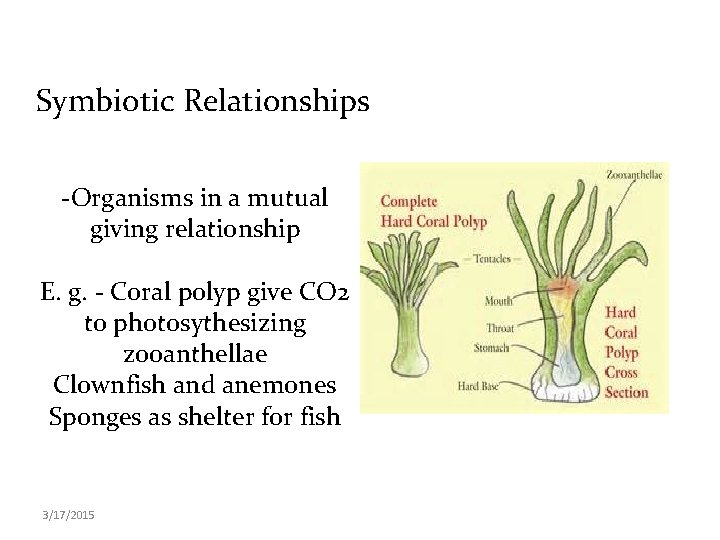
Symbiotic Relationships -Organisms in a mutual giving relationship E. g. - Coral polyp give CO 2 to photosythesizing zooanthellae Clownfish and anemones Sponges as shelter for fish 3/17/2015
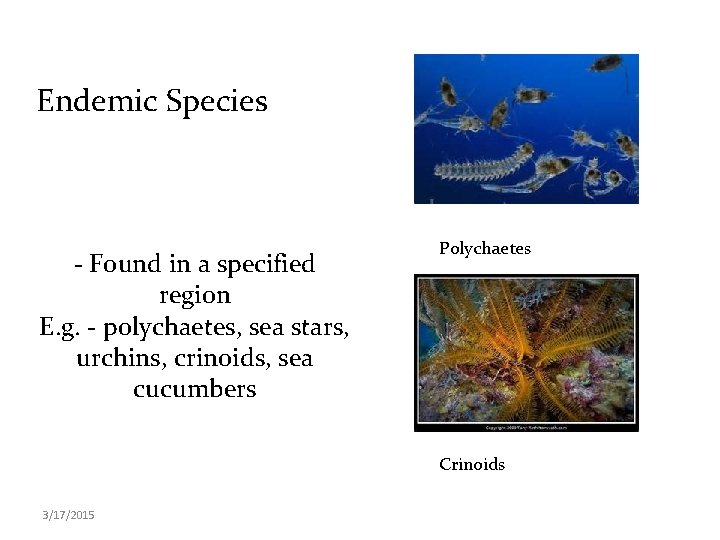
Endemic Species - Found in a specified region E. g. - polychaetes, sea stars, urchins, crinoids, sea cucumbers Polychaetes Crinoids 3/17/2015
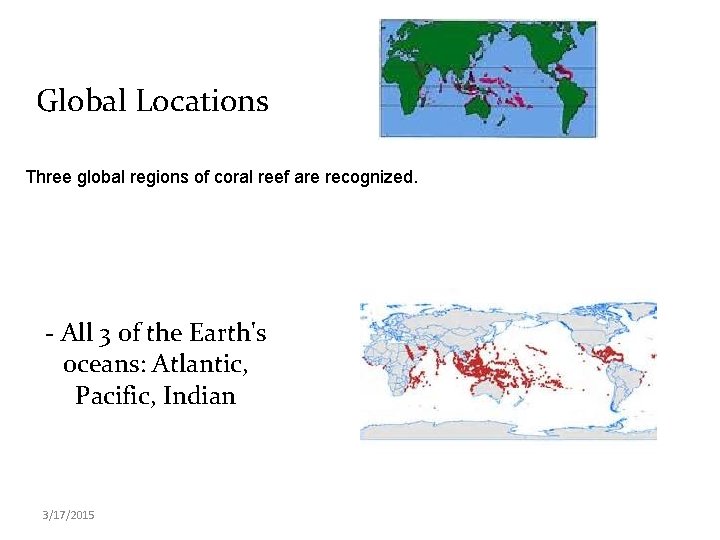
Global Locations Three global regions of coral reef are recognized. - All 3 of the Earth's oceans: Atlantic, Pacific, Indian 3/17/2015
- Slides: 16