
Copyright Notice This Power Point slide set is

- Slides: 25
Copyright Notice! This Power. Point slide set is copyrighted by Ross Koning and is thereby preserved for all to use from plantphys. info for as long as that website is available. Images lacking photo credits are mine and, as long as you are engaged in non-profit educational missions, you have my permission to use my images and slides in your teaching. However, please notice that some of the images in these slides have an associated URL photo credit to provide you with the location of their original source within internet cyberspace. Those images may have separate copyright protection. If you are seeking permission for use of those images, you need to consult the original sources for such permission; they are NOT mine to give you permission.
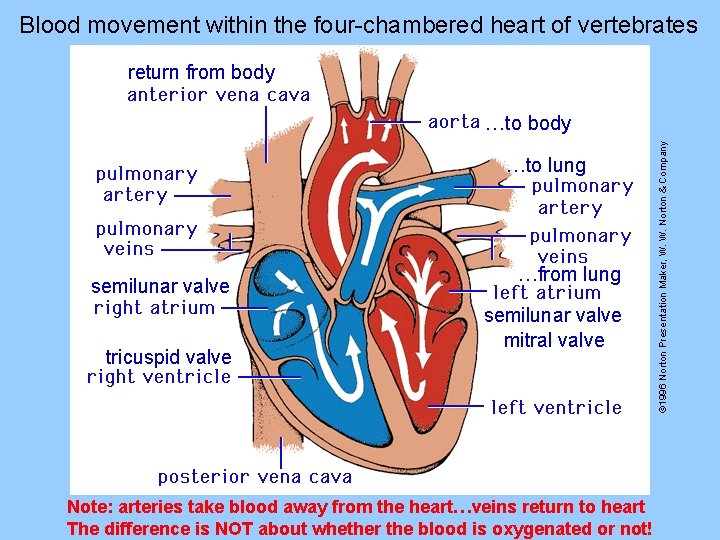
Blood movement within the four-chambered heart of vertebrates return from body …to lung semilunar valve tricuspid valve …from lung semilunar valve mitral valve Note: arteries take blood away from the heart…veins return to heart The difference is NOT about whether the blood is oxygenated or not! © 1996 Norton Presentation Maker, W. W. Norton & Company …to body
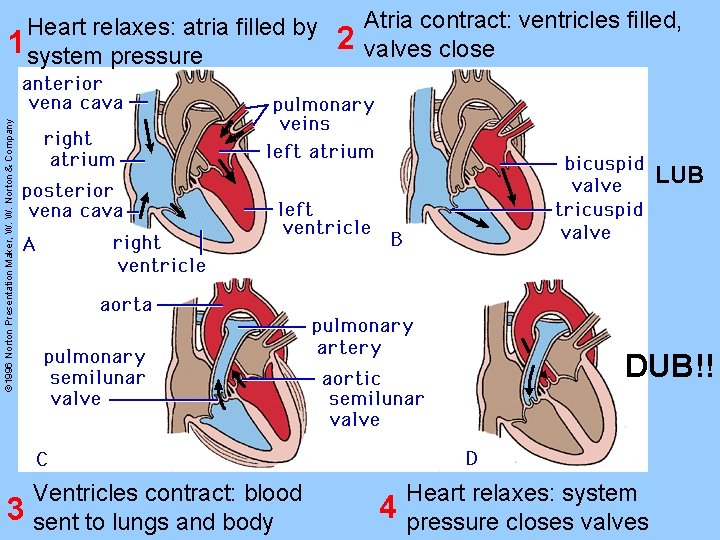
2 Atria contract: ventricles filled, valves close © 1996 Norton Presentation Maker, W. W. Norton & Company Heart relaxes: atria filled by 1 system pressure 3 LUB DUB!! Ventricles contract: blood sent to lungs and body 4 Heart relaxes: system pressure closes valves
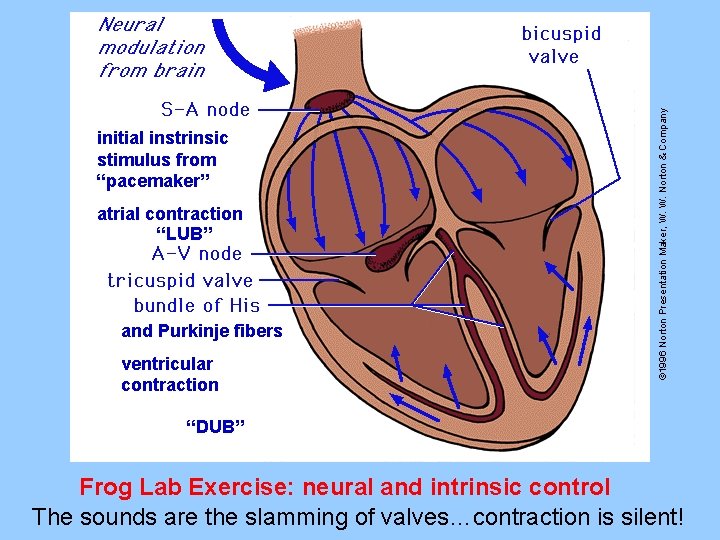
atrial contraction “LUB” and Purkinje fibers ventricular contraction © 1996 Norton Presentation Maker, W. W. Norton & Company initial instrinsic stimulus from “pacemaker” “DUB” Frog Lab Exercise: neural and intrinsic control The sounds are the slamming of valves…contraction is silent!
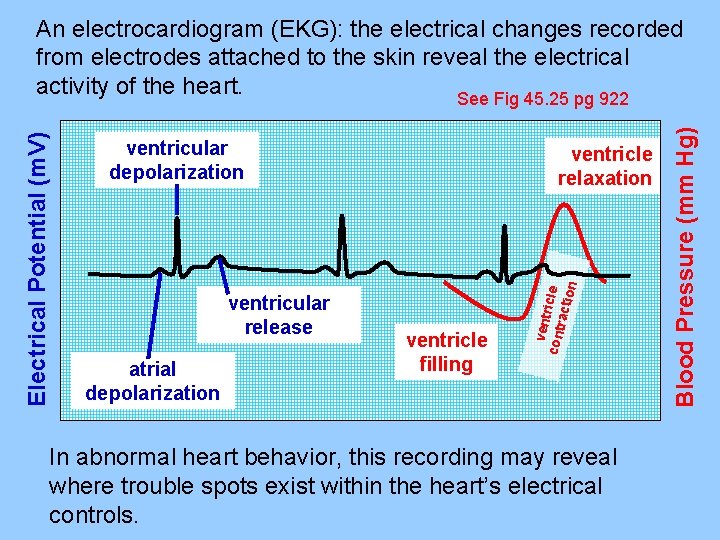
ventricular release atrial depolarization ventricle relaxation ventricle filling In abnormal heart behavior, this recording may reveal where trouble spots exist within the heart’s electrical controls. Blood Pressure (mm Hg) ventricular depolarization vent cont ricle racti on Electrical Potential (m. V) An electrocardiogram (EKG): the electrical changes recorded from electrodes attached to the skin reveal the electrical activity of the heart. See Fig 45. 25 pg 922
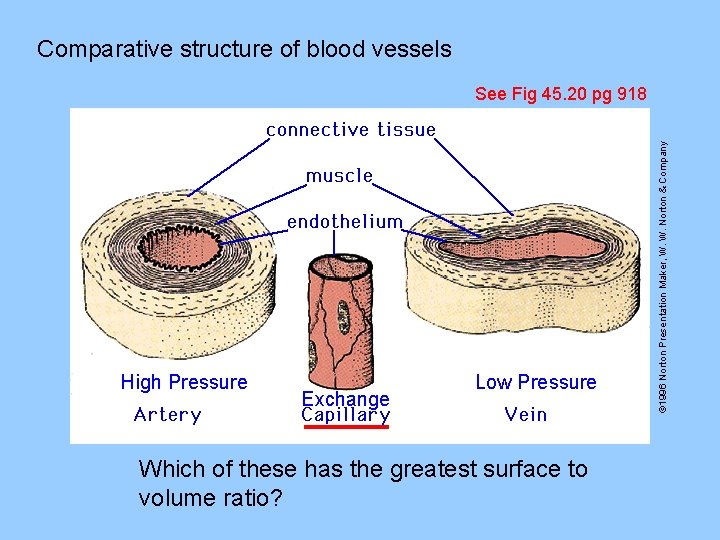
Comparative structure of blood vessels High Pressure Exchange Low Pressure Which of these has the greatest surface to volume ratio? © 1996 Norton Presentation Maker, W. W. Norton & Company See Fig 45. 20 pg 918
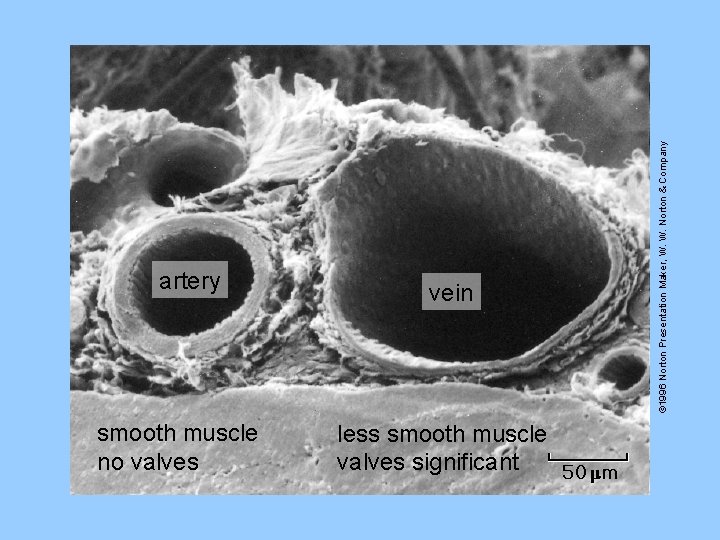
smooth muscle no valves vein less smooth muscle valves significant © 1996 Norton Presentation Maker, W. W. Norton & Company artery
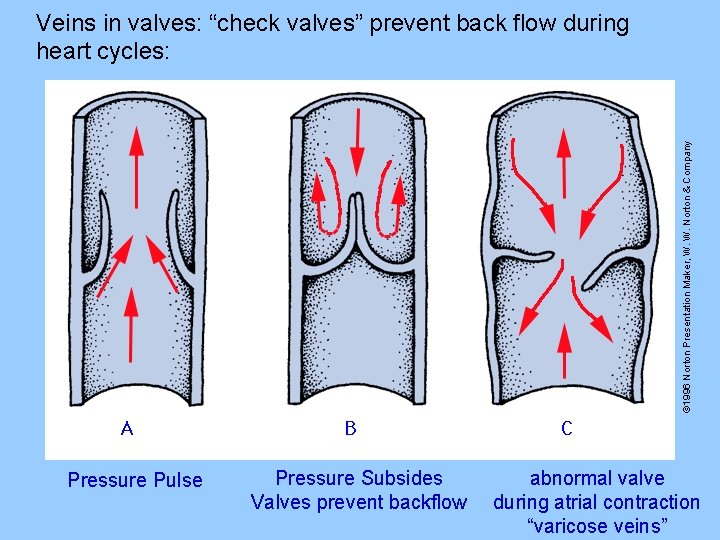
© 1996 Norton Presentation Maker, W. W. Norton & Company Veins in valves: “check valves” prevent back flow during heart cycles: Pressure Pulse Pressure Subsides Valves prevent backflow abnormal valve during atrial contraction “varicose veins”
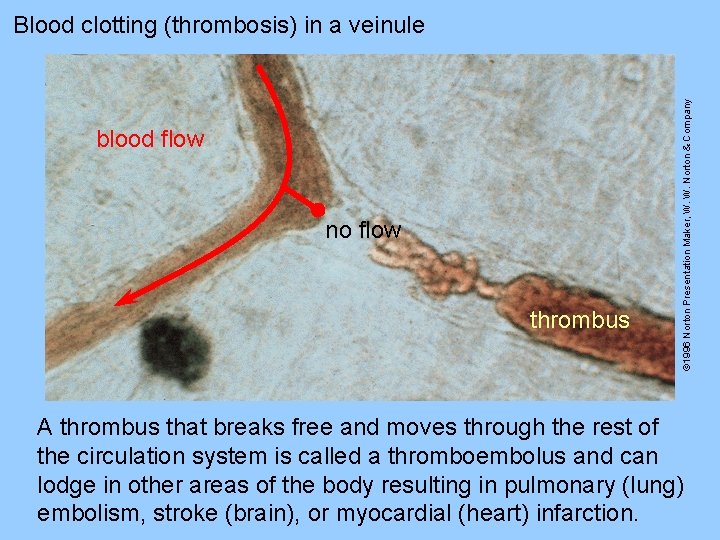
blood flow no flow thrombus © 1996 Norton Presentation Maker, W. W. Norton & Company Blood clotting (thrombosis) in a veinule A thrombus that breaks free and moves through the rest of the circulation system is called a thromboembolus and can lodge in other areas of the body resulting in pulmonary (lung) embolism, stroke (brain), or myocardial (heart) infarction.
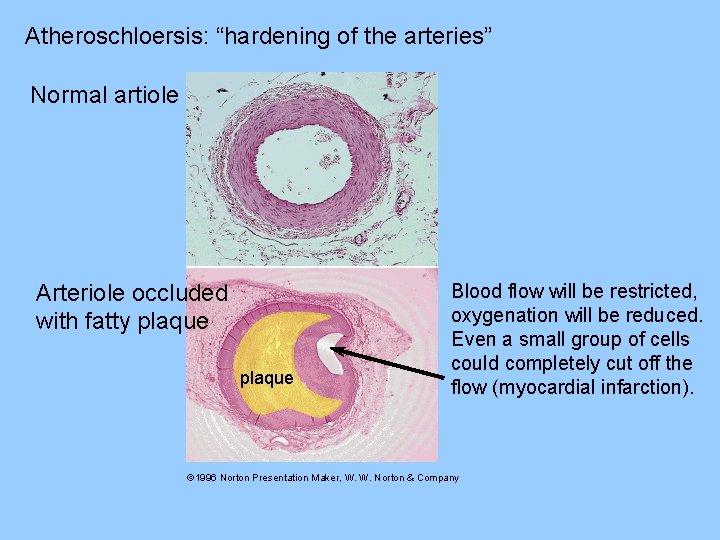
Atheroschloersis: “hardening of the arteries” Normal artiole Arteriole occluded with fatty plaque Blood flow will be restricted, oxygenation will be reduced. Even a small group of cells could completely cut off the flow (myocardial infarction). © 1996 Norton Presentation Maker, W. W. Norton & Company
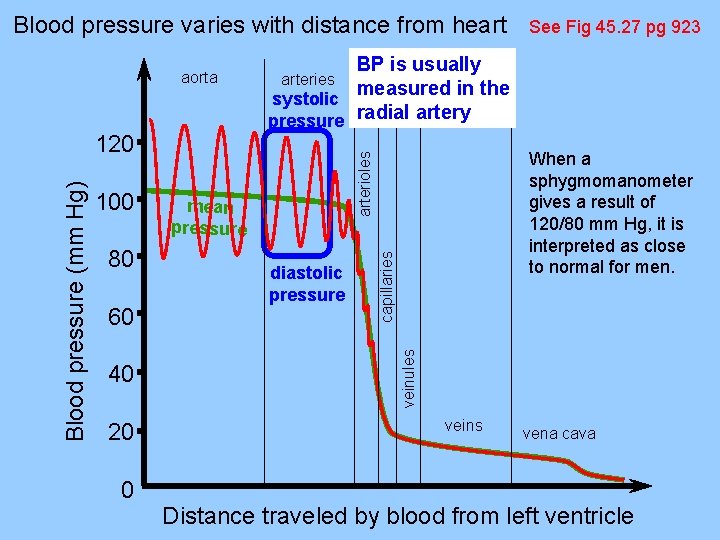
Blood pressure varies with distance from heart 80 60 40 20 0 mean pressure diastolic pressure veinules 100 When a sphygmomanometer gives a result of 120/80 mm Hg, it is interpreted as close to normal for men. capillaries Blood pressure (mm Hg) 120 BP is usually arteries measured in the systolic pressure radial artery arterioles aorta See Fig 45. 27 pg 923 veins vena cava Distance traveled by blood from left ventricle
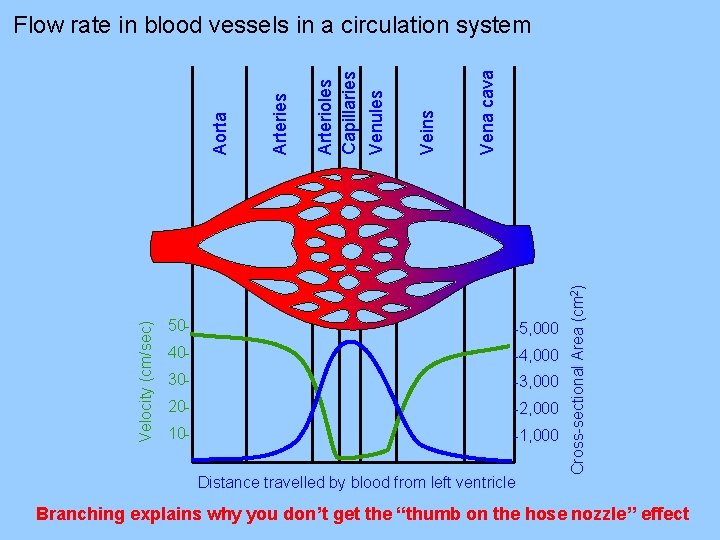
Vena cava Veins Arterioles Capillaries Venules Arteries 50 - -5, 000 40 - -4, 000 30 - -3, 000 20 - -2, 000 10 - -1, 000 Distance travelled by blood from left ventricle Cross-sectional Area (cm 2) Velocity (cm/sec) Aorta Flow rate in blood vessels in a circulation system Branching explains why you don’t get the “thumb on the hose nozzle” effect
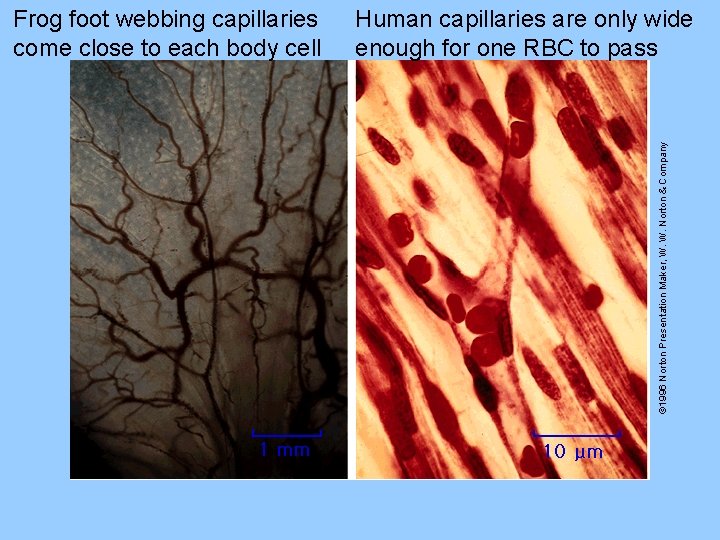
Human capillaries are only wide enough for one RBC to pass © 1996 Norton Presentation Maker, W. W. Norton & Company Frog foot webbing capillaries come close to each body cell
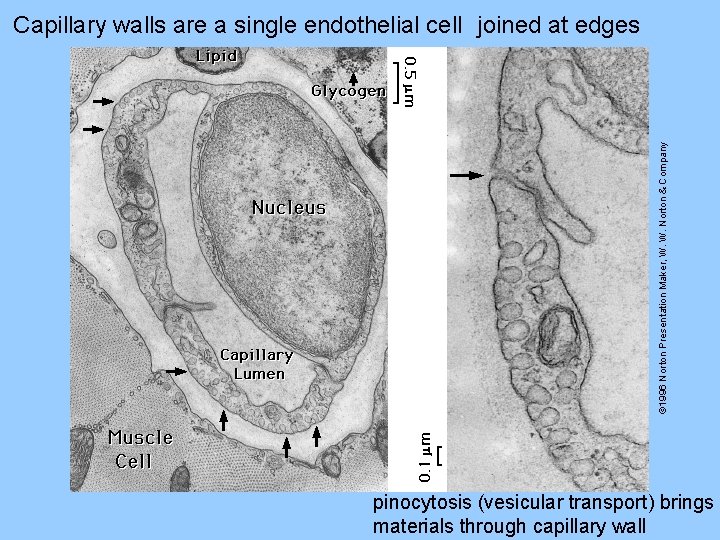
© 1996 Norton Presentation Maker, W. W. Norton & Company Capillary walls are a single endothelial cell joined at edges pinocytosis (vesicular transport) brings materials through capillary wall
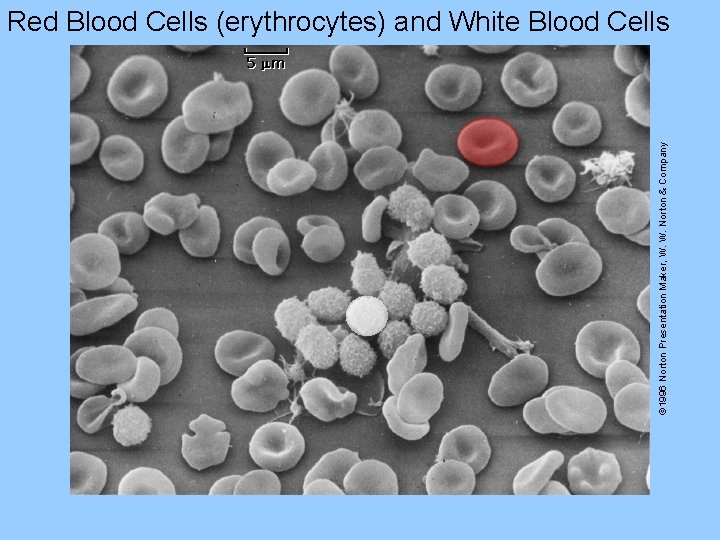
© 1996 Norton Presentation Maker, W. W. Norton & Company Red Blood Cells (erythrocytes) and White Blood Cells
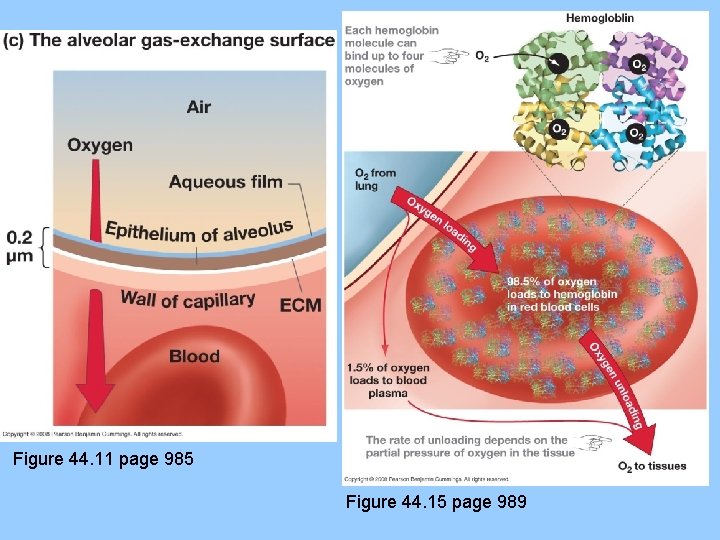
Figure 44. 11 page 985 Figure 44. 15 page 989
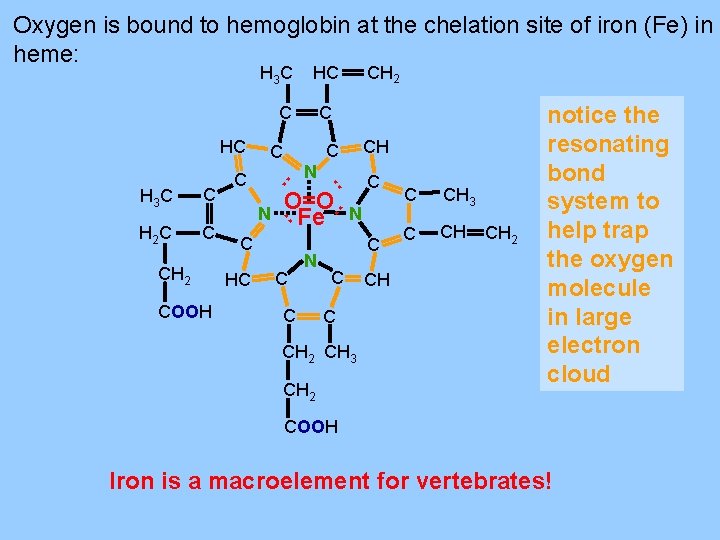
Oxygen is bound to hemoglobin at the chelation site of iron (Fe) in heme: H 3 C C H 2 C C N N O=O Fe . . C CH 2 COOH C HC CH C . . H 3 C C . . HC CH 2 HC C N C C C CH 2 CH 3 CH 2 CH C CH 3 C CH CH 2 notice the resonating bond system to help trap the oxygen molecule in large electron cloud COOH Iron is a macroelement for vertebrates!
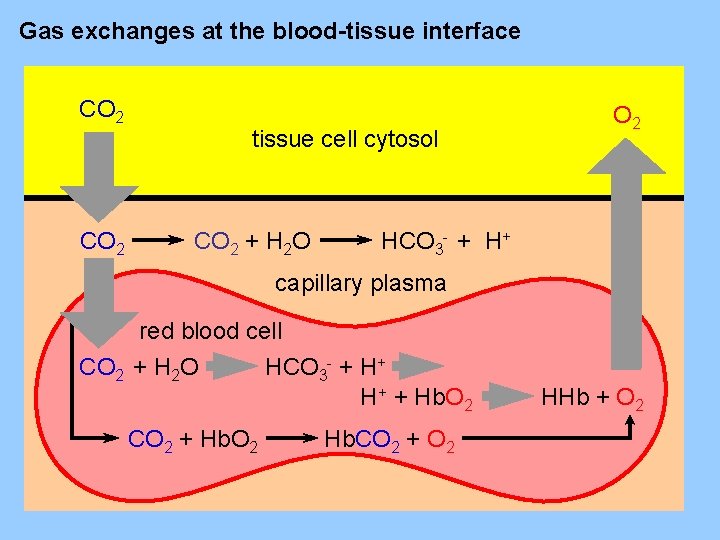
Gas exchanges at the blood-tissue interface CO 2 tissue cell cytosol CO 2 + H 2 O O 2 HCO 3 - + H+ capillary plasma red blood cell CO 2 + H 2 O HCO 3 - + H+ H+ + Hb. O 2 CO 2 + Hb. O 2 Hb. CO 2 + O 2 HHb + O 2
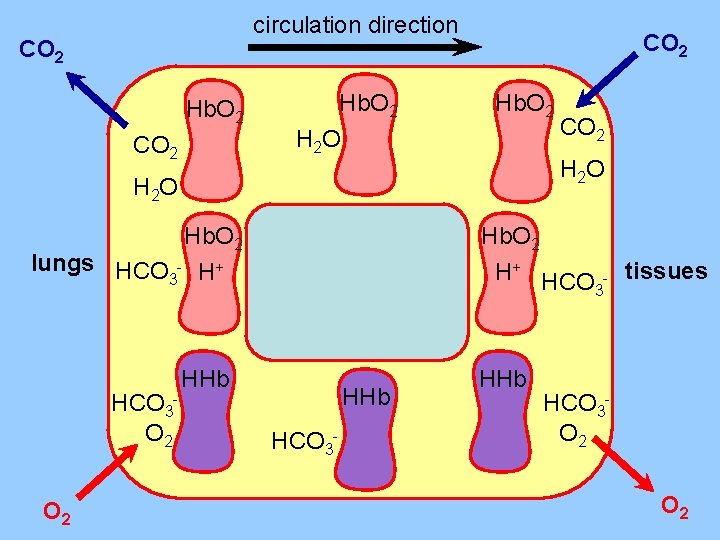
circulation direction CO 2 Hb. O 2 H 2 O Hb. O 2 lungs HCO - H+ 3 HCO 3 O 2 CO 2 HHb HCO 3 - H+ HCO - tissues 3 HHb HCO 3 O 2
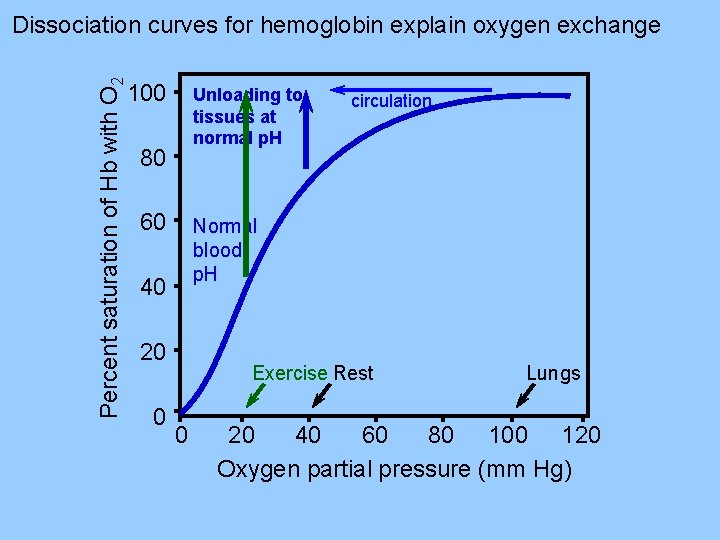
Percent saturation of Hb with O 2 Dissociation curves for hemoglobin explain oxygen exchange 100 Unloading to tissues at normal p. H 80 60 Normal blood p. H 40 20 0 circulation Exercise Rest 0 Lungs 20 40 60 80 100 120 Oxygen partial pressure (mm Hg)
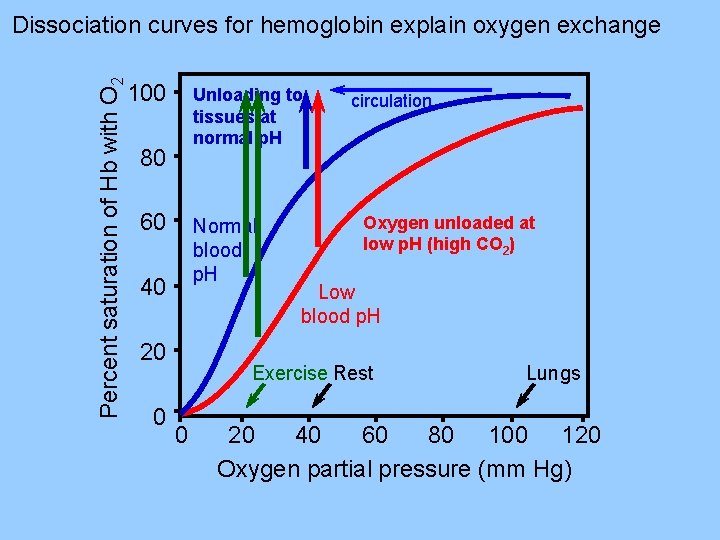
Percent saturation of Hb with O 2 Dissociation curves for hemoglobin explain oxygen exchange 100 Unloading to tissues at normal p. H 80 60 Normal blood p. H 40 20 0 circulation Oxygen unloaded at low p. H (high CO 2) Low blood p. H Exercise Rest 0 Lungs 20 40 60 80 100 120 Oxygen partial pressure (mm Hg)
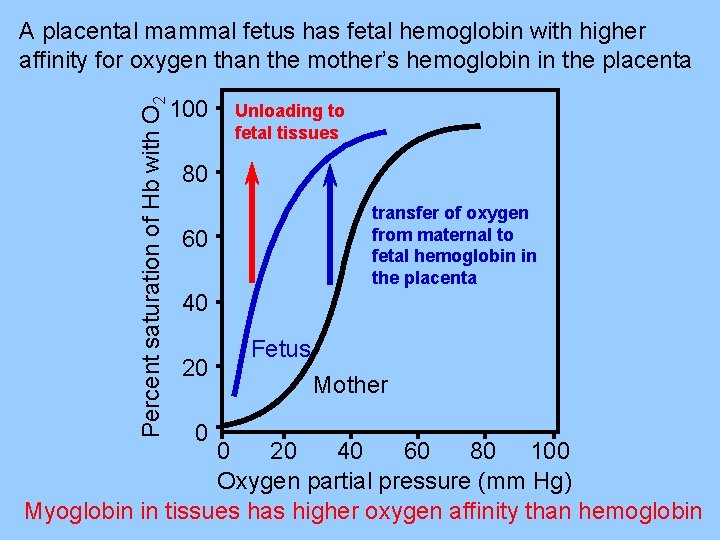
Percent saturation of Hb with O 2 A placental mammal fetus has fetal hemoglobin with higher affinity for oxygen than the mother’s hemoglobin in the placenta 100 Unloading to fetal tissues 80 transfer of oxygen from maternal to fetal hemoglobin in the placenta 60 40 20 0 Fetus Mother 0 20 40 60 80 100 Oxygen partial pressure (mm Hg) Myoglobin in tissues has higher oxygen affinity than hemoglobin
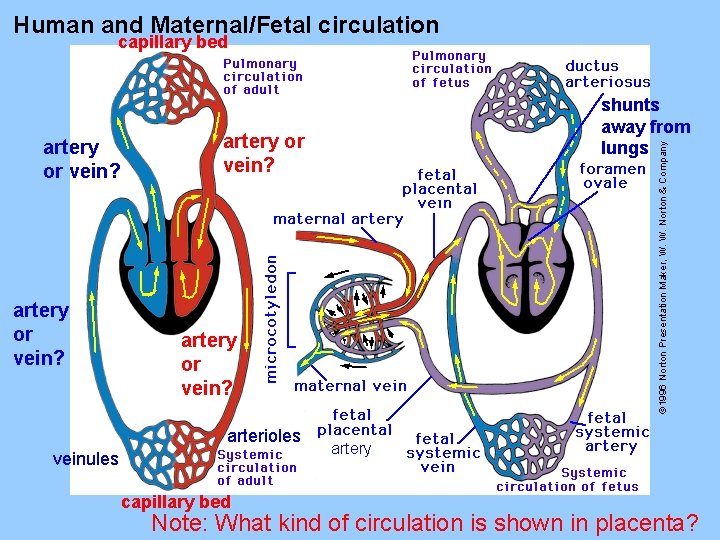
Human and Maternal/Fetal circulation capillary bed artery or vein? © 1996 Norton Presentation Maker, W. W. Norton & Company artery or vein? shunts away from lungs artery or vein? arterioles veinules capillary bed artery Note: What kind of circulation is shown in placenta?
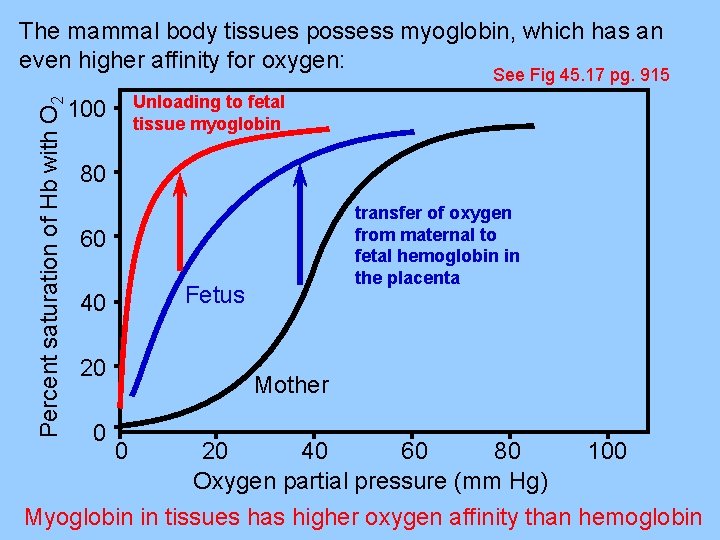
The mammal body tissues possess myoglobin, which has an even higher affinity for oxygen: Percent saturation of Hb with O 2 See Fig 45. 17 pg. 915 Unloading to fetal tissue myoglobin 100 80 transfer of oxygen from maternal to fetal hemoglobin in the placenta 60 Fetus 40 20 0 Mother 0 20 40 60 80 100 Oxygen partial pressure (mm Hg) Myoglobin in tissues has higher oxygen affinity than hemoglobin
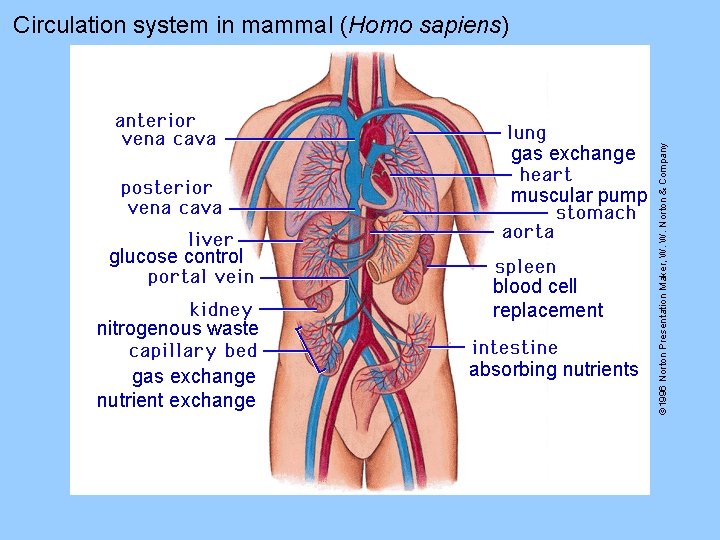
gas exchange muscular pump glucose control nitrogenous waste gas exchange nutrient exchange blood cell replacement absorbing nutrients © 1996 Norton Presentation Maker, W. W. Norton & Company Circulation system in mammal (Homo sapiens)