
Copyright notice Thinking Tool called Agile Keynote LeanAgileScrum
- Slides: 68
Copyright notice Thinking Tool called Agile Keynote, Lean-Agile-Scrum conference Zurich, Sep 7, 2010 Henrik Kniberg Agile/Lean coach www. crisp. se Board of directors henrik. kniberg@crisp. se +46 70 4925284 These slides are licensed under Creative Commons. Feel free to use these slides & pictures as you wish, as long as you leave my name and the Crisp logo somewhere. For licensing details see: http: //creativecommons. org/licenses/by/3. 0/ All slides available at: http: //www. crisp. se/henrik. kniberg/
Purpose of this presentation To illustrate how Lean and Agile can fit together Henrik Kniberg 2
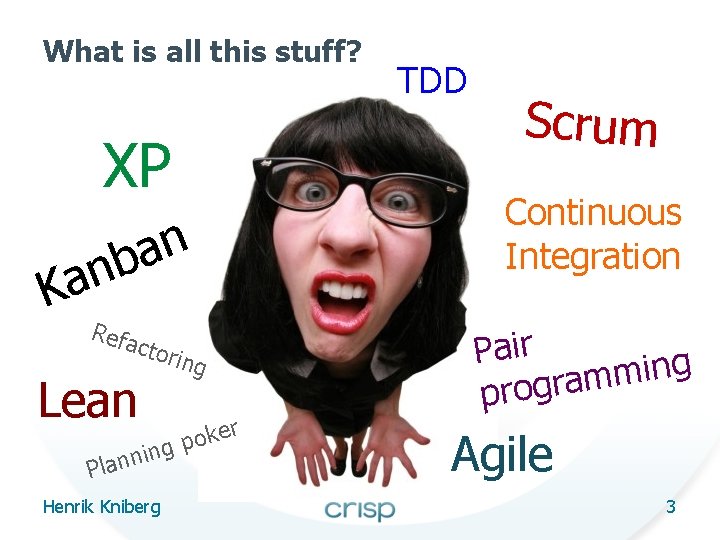
What is all this stuff? XP n a nb Ka Refa ctor Lean ing ker o p ing n Plan Henrik Kniberg TDD Scrum Continuous Integration Pair g n i m m progra Agile 3
Tools Henrik Kniberg 4
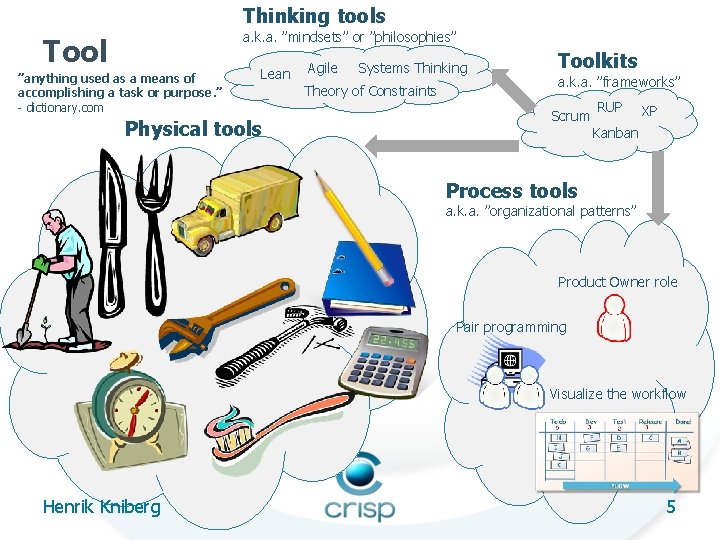
Thinking tools a. k. a. ”mindsets” or ”philosophies” Tool ”anything used as a means of accomplishing a task or purpose. ” - dictionary. com Lean Physical tools Agile Systems Thinking Theory of Constraints Toolkits a. k. a. ”frameworks” Scrum RUP XP Kanban Process tools a. k. a. ”organizational patterns” Product Owner role Pair programming Visualize the workflow Henrik Kniberg 5
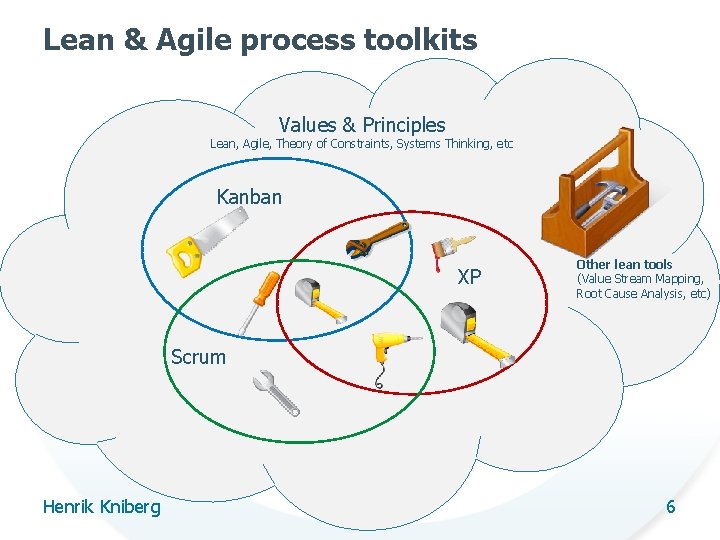
Lean & Agile process toolkits Values & Principles Lean, Agile, Theory of Constraints, Systems Thinking, etc Kanban XP Other lean tools (Value Stream Mapping, Root Cause Analysis, etc) Scrum Henrik Kniberg 6
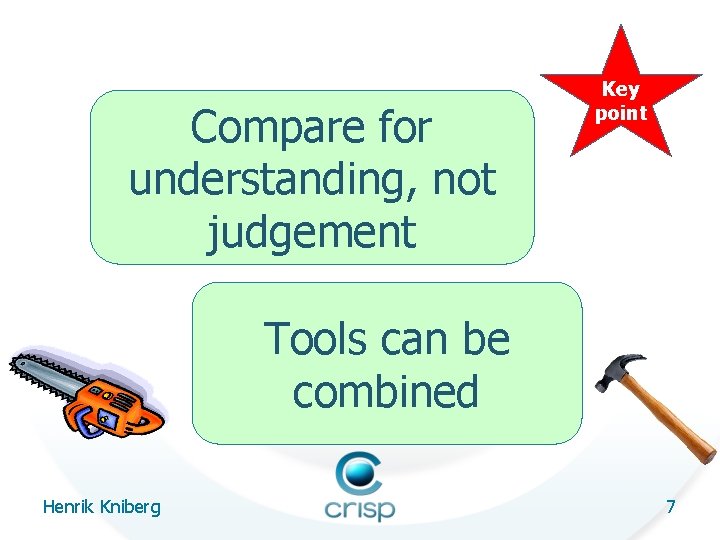
Compare for understanding, not judgement Key point Tools can be combined Henrik Kniberg 7
What is ”un-agile”? Henrik Kniberg 8
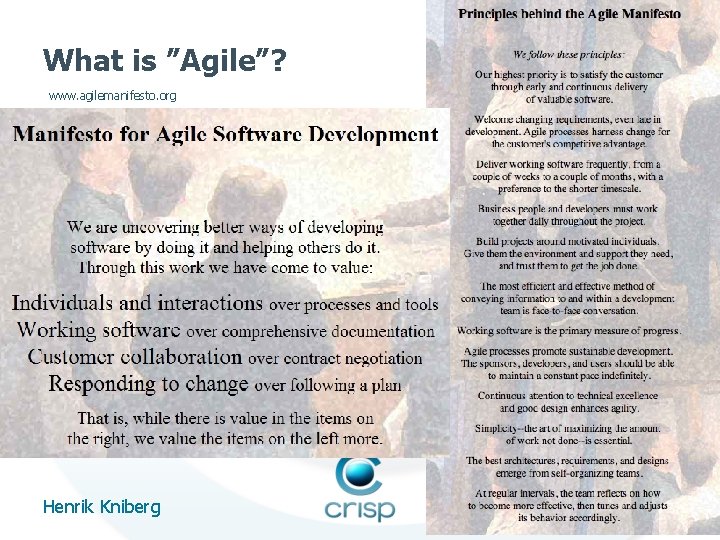
What is ”Agile”? www. agilemanifesto. org Henrik Kniberg 9
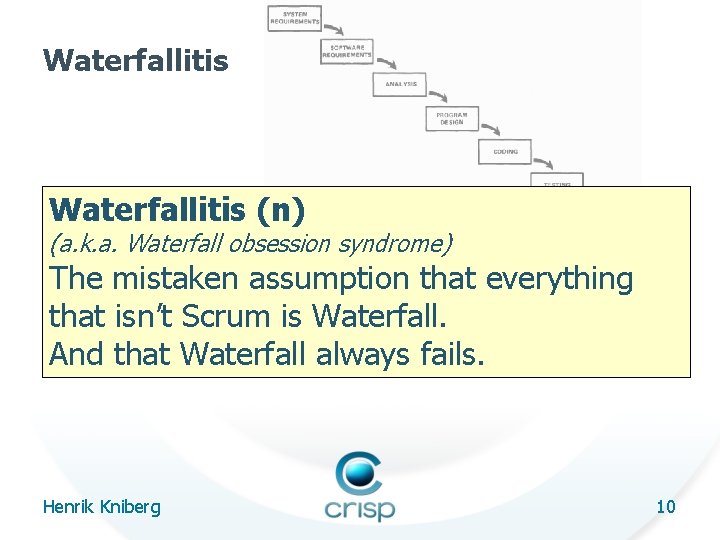
Waterfallitis (n) (a. k. a. Waterfall obsession syndrome) The mistaken assumption that everything that isn’t Scrum is Waterfall. And that Waterfall always fails. Henrik Kniberg 10
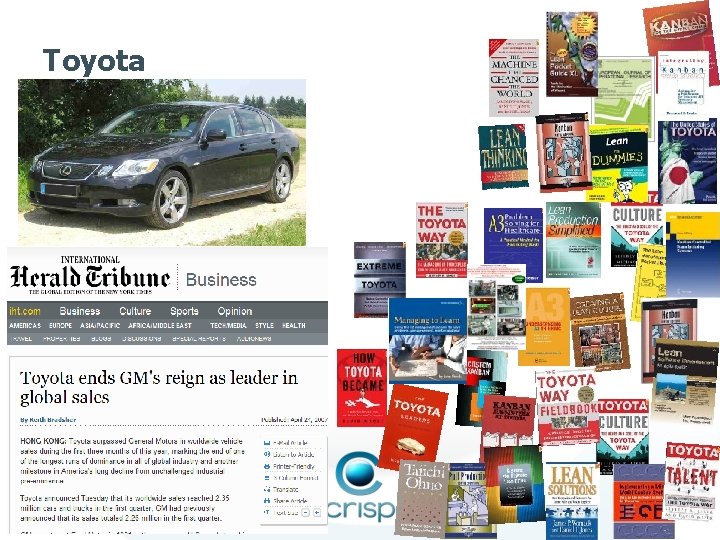
Toyota Henrik Kniberg 11
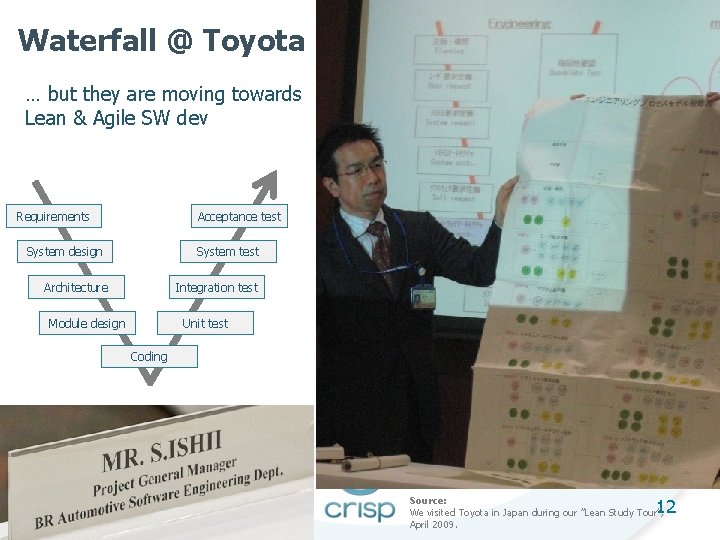
Waterfall @ Toyota … but they are moving towards Lean & Agile SW dev Requirements Acceptance test System design System test Architecture Integration test Module design Unit test Coding Henrik Kniberg Source: We visited Toyota in Japan during our ”Lean Study Tour”, April 2009. 12
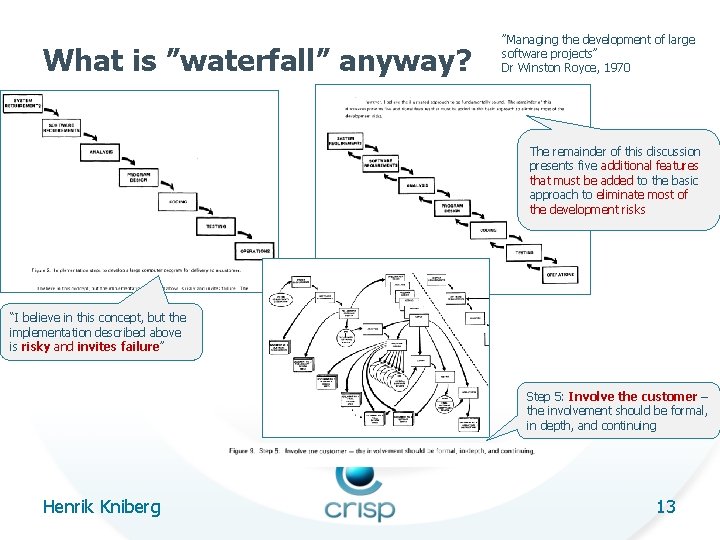
What is ”waterfall” anyway? ”Managing the development of large software projects” Dr Winston Royce, 1970 The remainder of this discussion presents five additional features that must be added to the basic approach to eliminate most of the development risks “I believe in this concept, but the implementation described above is risky and invites failure” Step 5: Involve the customer – the involvement should be formal, in depth, and continuing Henrik Kniberg 13
The borders between Lean, Agile, and Waterfall are fuzzy Henrik Kniberg Key point 14
The illusion of ”good” and ”bad” tools Henrik Kniberg 15
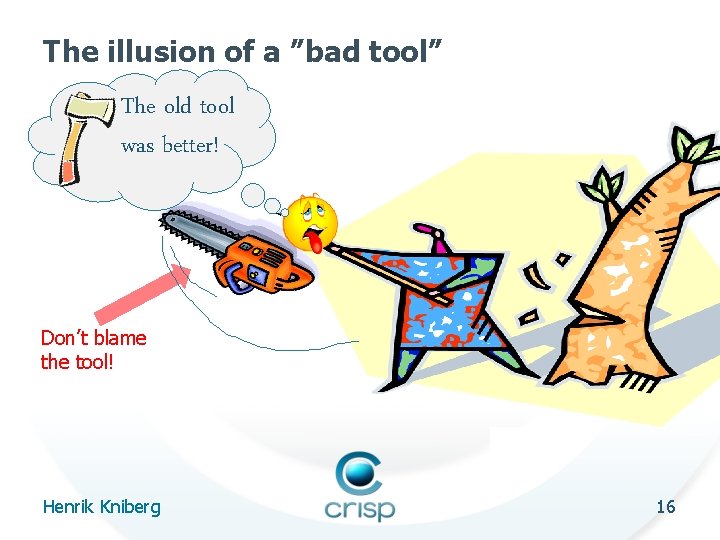
The illusion of a ”bad tool” The old tool was better! Don’t blame the tool! 16 Henrik Kniberg 16
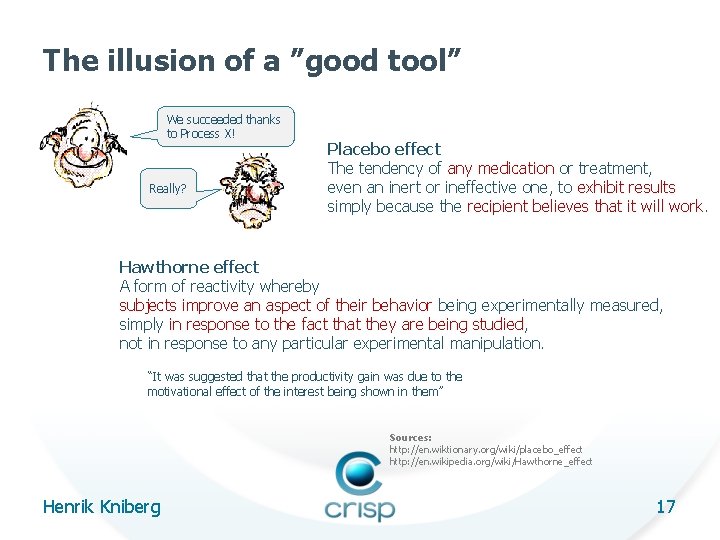
The illusion of a ”good tool” We succeeded thanks to Process X! Really? Placebo effect The tendency of any medication or treatment, even an inert or ineffective one, to exhibit results simply because the recipient believes that it will work. Hawthorne effect A form of reactivity whereby subjects improve an aspect of their behavior being experimentally measured, simply in response to the fact that they are being studied, not in response to any particular experimental manipulation. “It was suggested that the productivity gain was due to the motivational effect of the interest being shown in them” Sources: http: //en. wiktionary. org/wiki/placebo_effect http: //en. wikipedia. org/wiki/Hawthorne_effect Henrik Kniberg 17
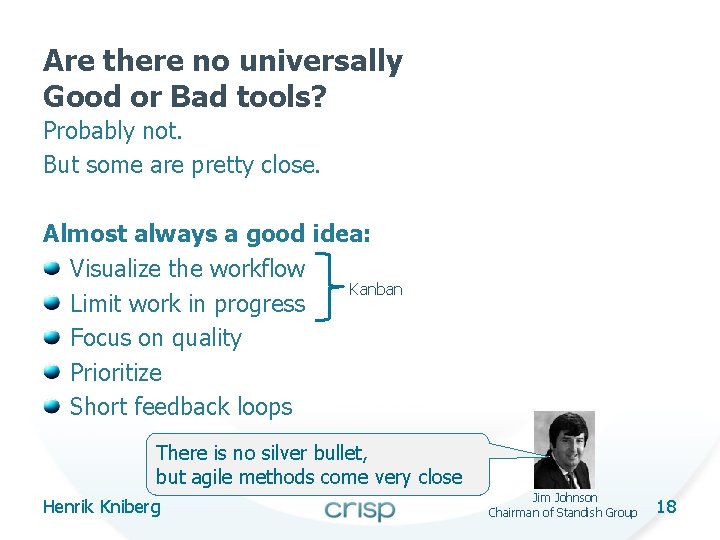
Are there no universally Good or Bad tools? Probably not. But some are pretty close. Almost always a good idea: Visualize the workflow Kanban Limit work in progress Focus on quality Prioritize Short feedback loops There is no silver bullet, but agile methods come very close Henrik Kniberg Jim Johnson Chairman of Standish Group 18
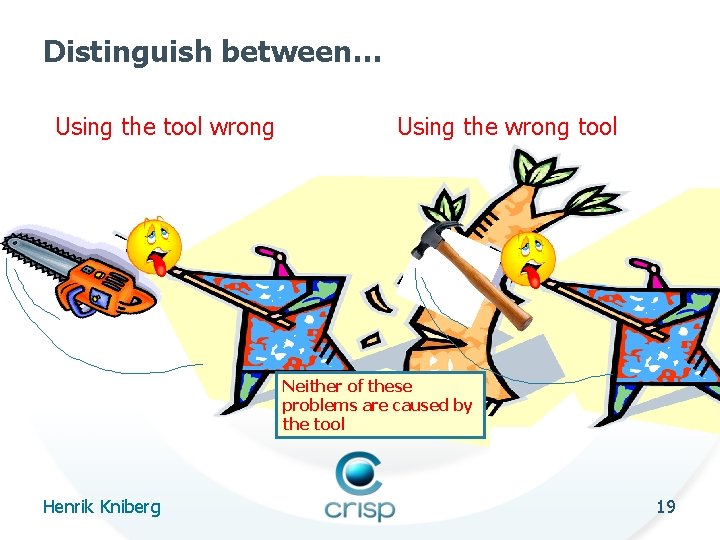
Distinguish between… Using the tool wrong Using the wrong tool Neither of these problems are caused by the tool Henrik Kniberg 19 19
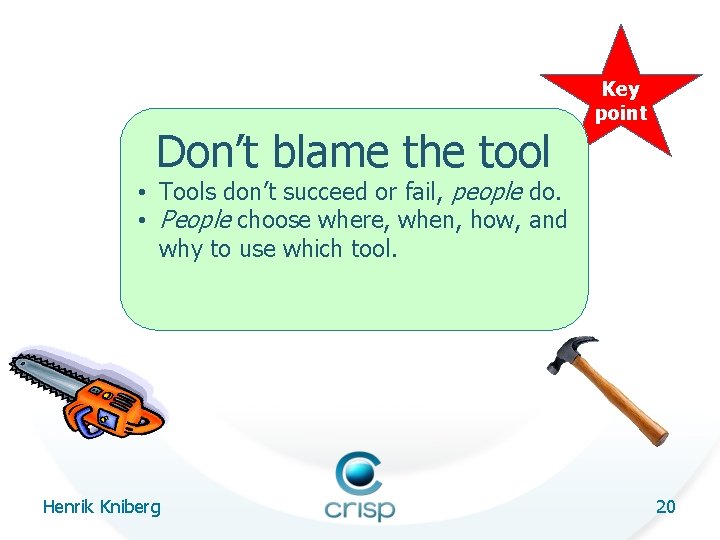
Don’t blame the tool Key point • Tools don’t succeed or fail, people do. • People choose where, when, how, and why to use which tool. Henrik Kniberg 20
Know your goal Henrik Kniberg 21
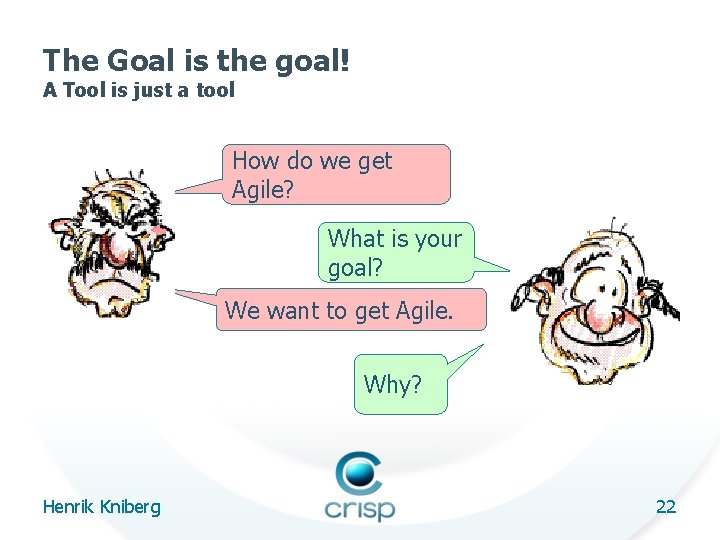
The Goal is the goal! A Tool is just a tool How do we get Agile? What is your goal? We want to get Agile. Why? Henrik Kniberg 22
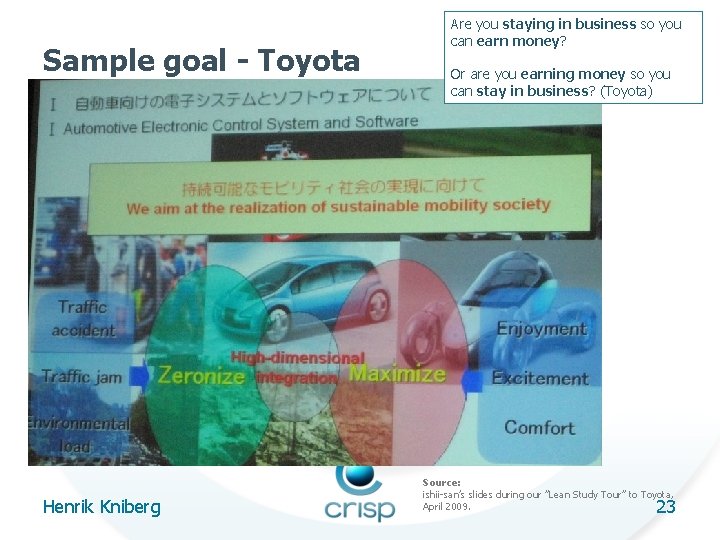
Sample goal - Toyota Henrik Kniberg Are you staying in business so you can earn money? Or are you earning money so you can stay in business? (Toyota) Source: ishii-san’s slides during our ”Lean Study Tour” to Toyota, April 2009. 23
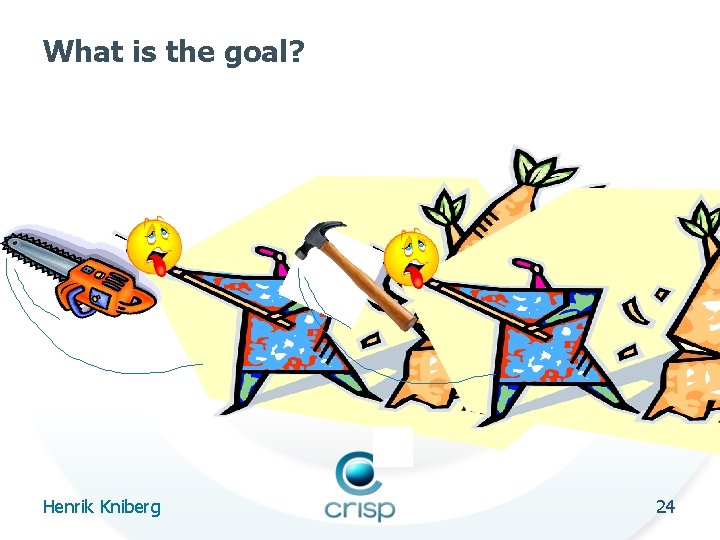
What is the goal? 24 Henrik Kniberg 24
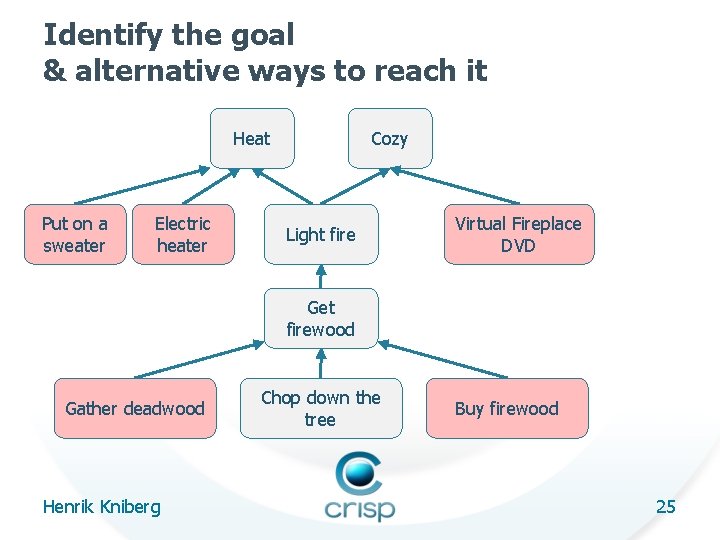
Identify the goal & alternative ways to reach it Heat Put on a sweater Electric heater Cozy Light fire Virtual Fireplace DVD Get firewood Gather deadwood Henrik Kniberg Chop down the tree Buy firewood 25
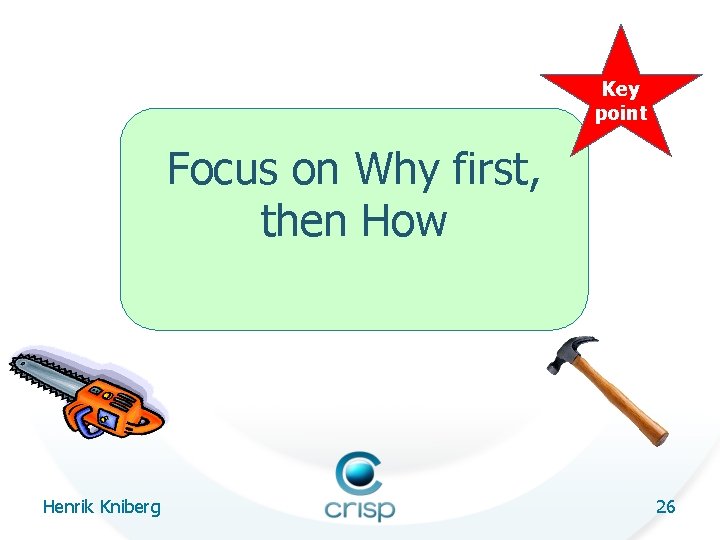
Key point Focus on Why first, then How Henrik Kniberg 26
Solve the right problem Henrik Kniberg 27
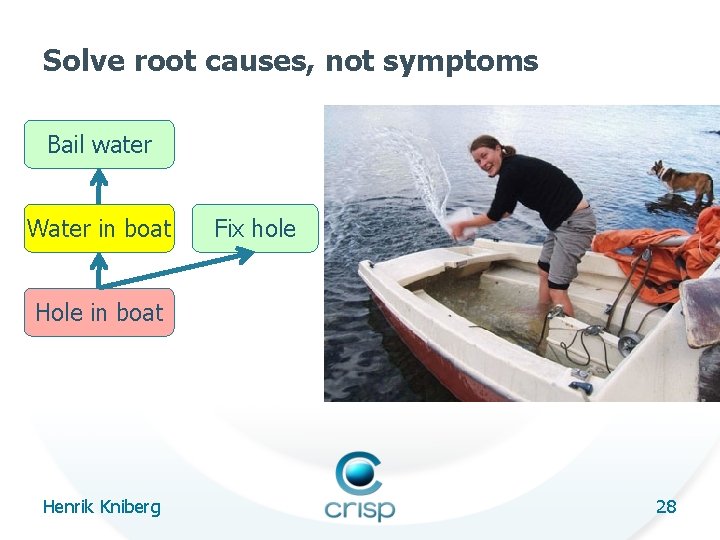
Solve root causes, not symptoms Bail water Water in boat Fix hole Hole in boat Henrik Kniberg 28
Key point Solve problems, not symptoms Henrik Kniberg 29
Example: Evolving Scrum Henrik Kniberg 30
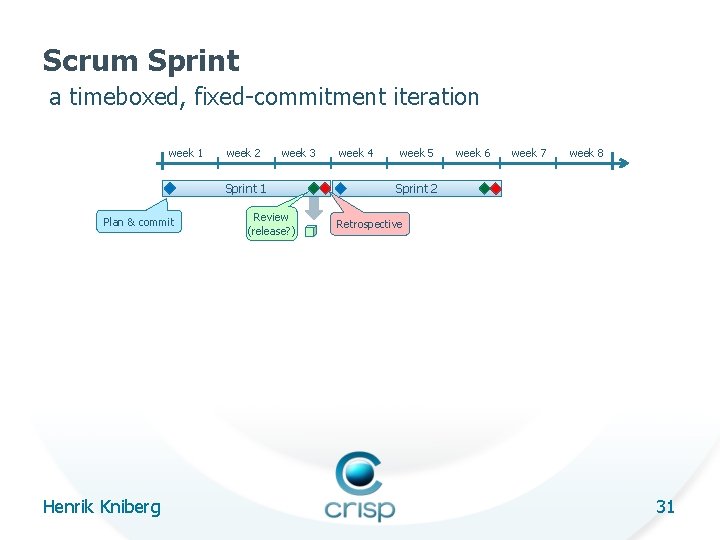
Scrum Sprint a timeboxed, fixed-commitment iteration week 1 week 2 week 3 Sprint 1 Plan & commit Henrik Kniberg Review (release? ) week 4 week 5 week 6 week 7 week 8 Sprint 2 Retrospective 31
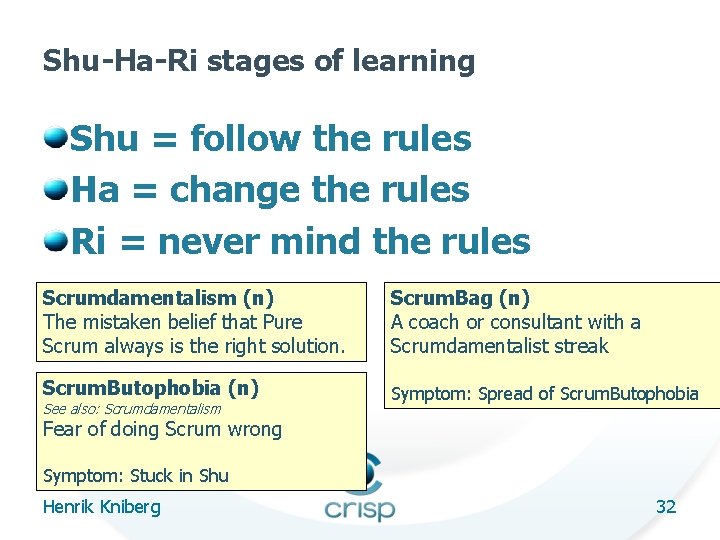
Shu-Ha-Ri stages of learning Shu = follow the rules Ha = change the rules Ri = never mind the rules Scrumdamentalism (n) The mistaken belief that Pure Scrum always is the right solution. Scrum. Bag (n) A coach or consultant with a Scrumdamentalist streak Scrum. Butophobia (n) Symptom: Spread of Scrum. Butophobia See also: Scrumdamentalism Fear of doing Scrum wrong Symptom: Stuck in Shu Henrik Kniberg 32
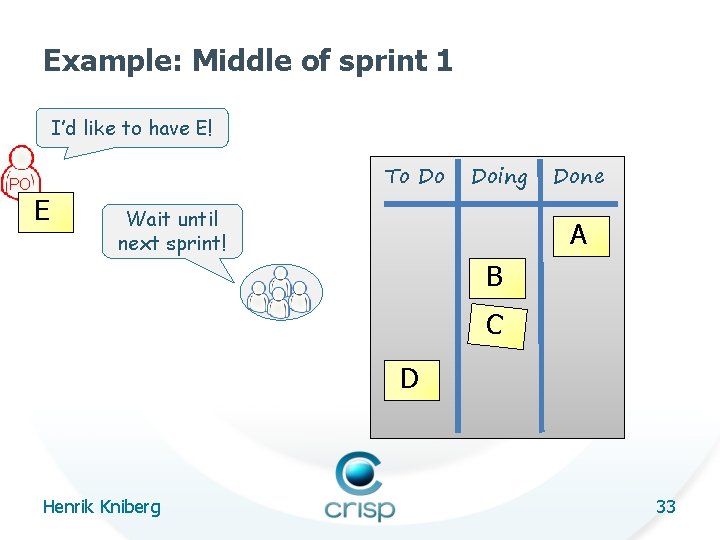
Example: Middle of sprint 1 I’d like to have E! PO E To Do Doing Wait until next sprint! Done A B C D Henrik Kniberg 33
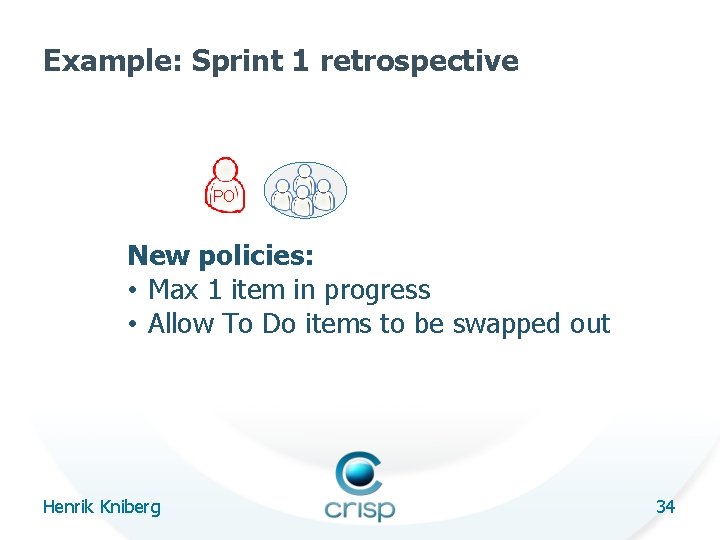
Example: Sprint 1 retrospective PO New policies: • Max 1 item in progress • Allow To Do items to be swapped out Henrik Kniberg 34
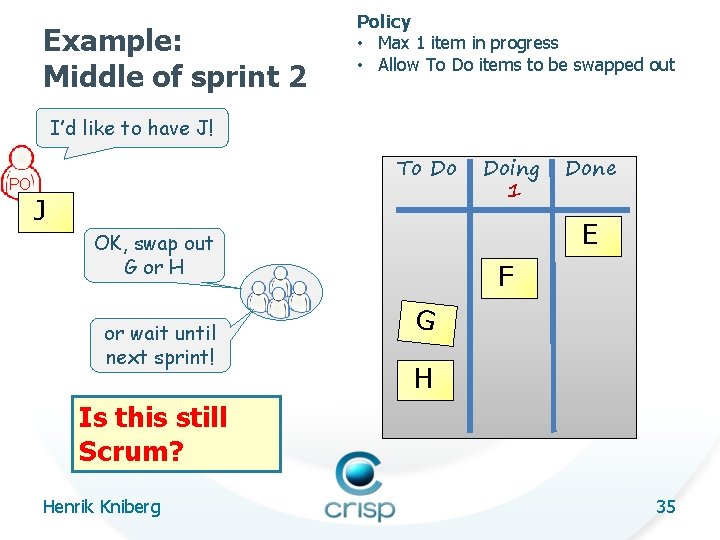
Example: Middle of sprint 2 Policy • Max 1 item in progress • Allow To Do items to be swapped out I’d like to have J! PO To Do J Done E OK, swap out G or H or wait until next sprint! Doing 1 F G H Is this still Scrum? Henrik Kniberg 35
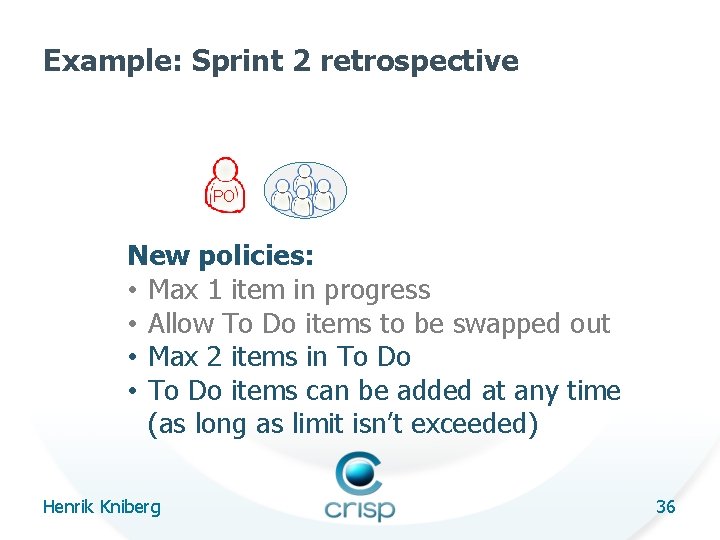
Example: Sprint 2 retrospective PO New policies: • Max 1 item in progress • Allow To Do items to be swapped out • Max 2 items in To Do • To Do items can be added at any time (as long as limit isn’t exceeded) Henrik Kniberg 36
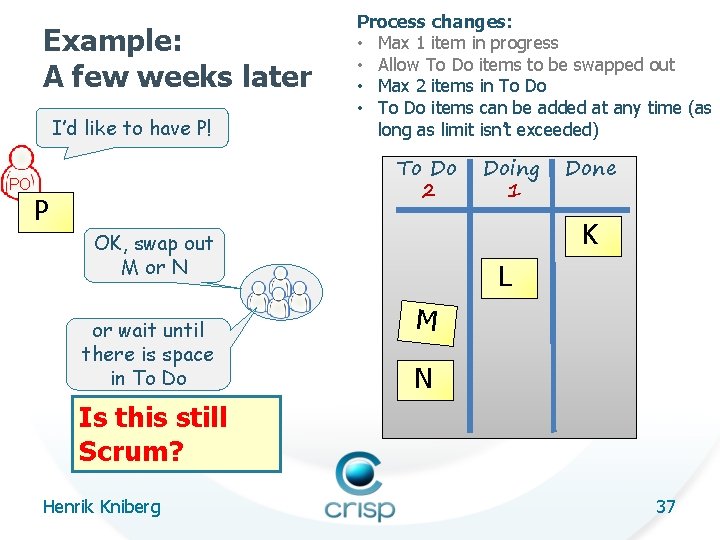
Example: A few weeks later I’d like to have P! PO Process changes: • Max 1 item in progress • Allow To Do items to be swapped out • Max 2 items in To Do • To Do items can be added at any time (as long as limit isn’t exceeded) To Do 2 P Done K OK, swap out M or N or wait until there is space in To Do Doing 1 L M N Is this still Scrum? Henrik Kniberg 37
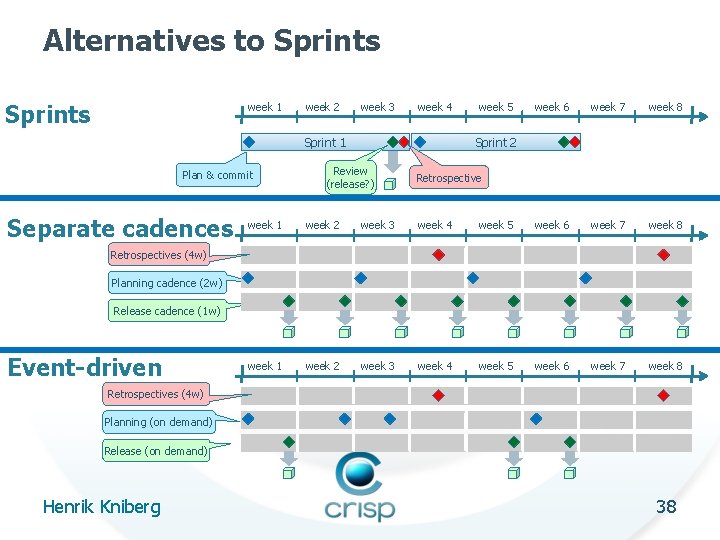
Alternatives to Sprints week 1 week 2 week 3 week 4 Sprint 1 Plan & commit Separate cadences week 5 week 6 week 7 week 8 Sprint 2 Review (release? ) Retrospective week 1 week 2 week 3 week 4 week 5 week 6 week 7 week 8 Retrospectives (4 w) Planning cadence (2 w) Release cadence (1 w) Event-driven Retrospectives (4 w) Planning (on demand) Release (on demand) Henrik Kniberg 38
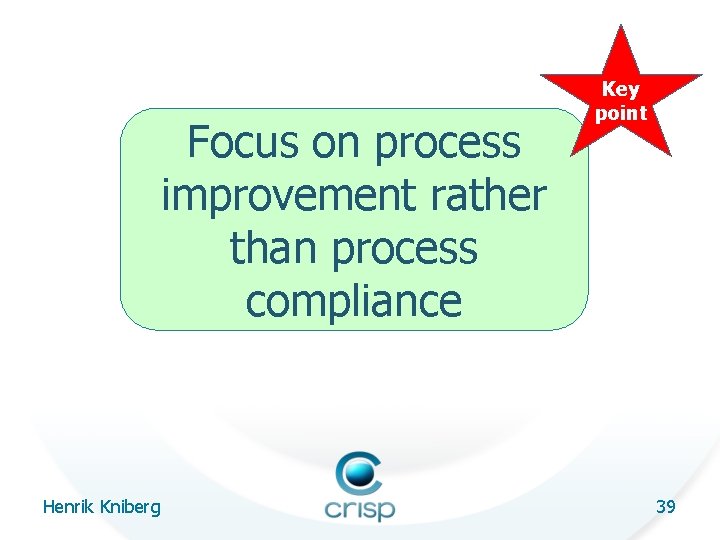
Focus on process improvement rather than process compliance Henrik Kniberg Key point 39
Example: Kanban Henrik Kniberg 40
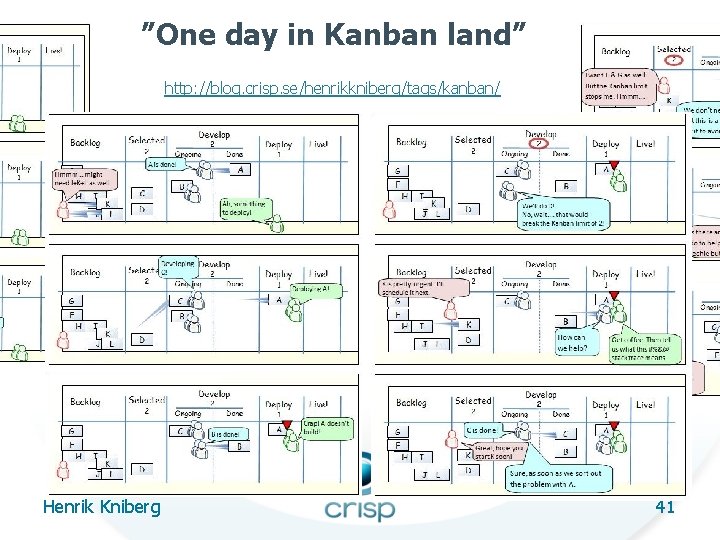
”One day in Kanban land” http: //blog. crisp. se/henrikkniberg/tags/kanban/ Henrik Kniberg 41
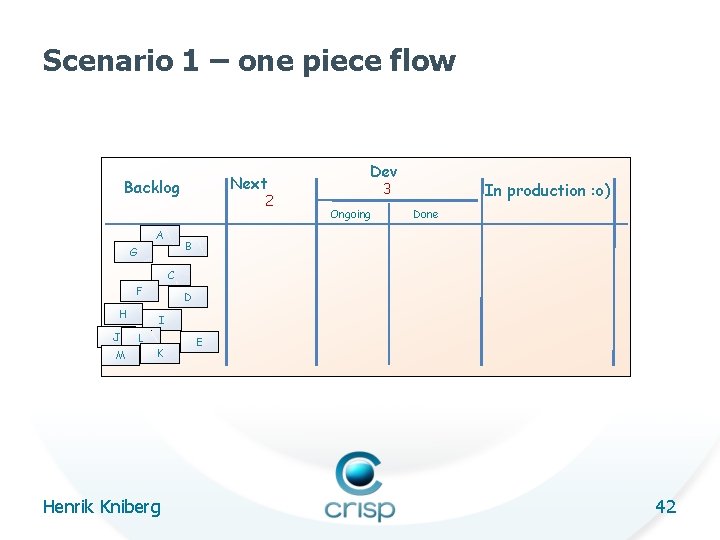
Scenario 1 – one piece flow Next Backlog A 2 Dev In production : o) 3 Ongoing Done B G C F H J M D I L K Henrik Kniberg E 42
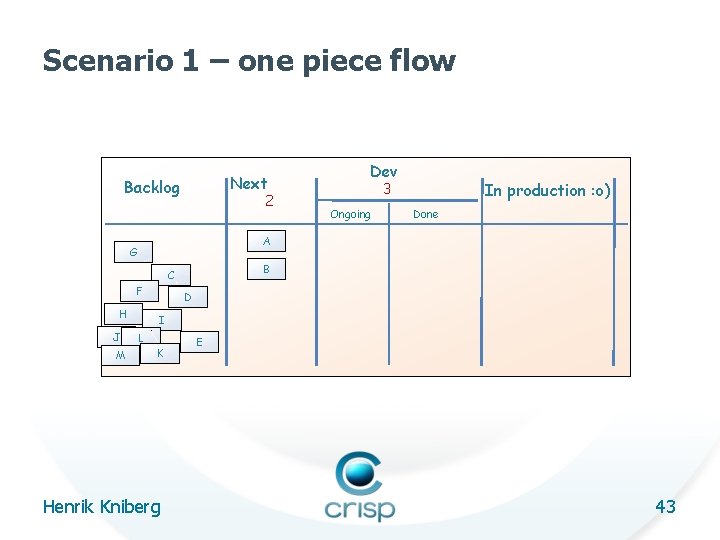
Scenario 1 – one piece flow Next Backlog 2 Ongoing Done B C F H M In production : o) 3 A G J Dev D I L K Henrik Kniberg E 43
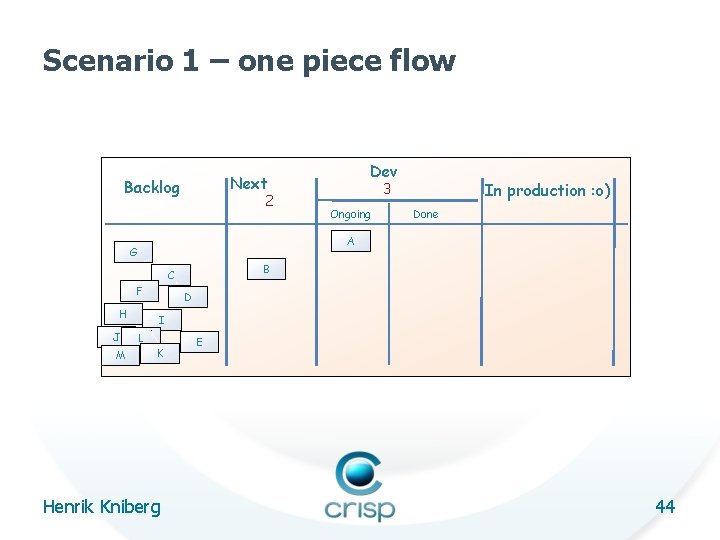
Scenario 1 – one piece flow Backlog 2 Ongoing Done B C F H M In production : o) 3 A G J Dev Next D I L K Henrik Kniberg E 44
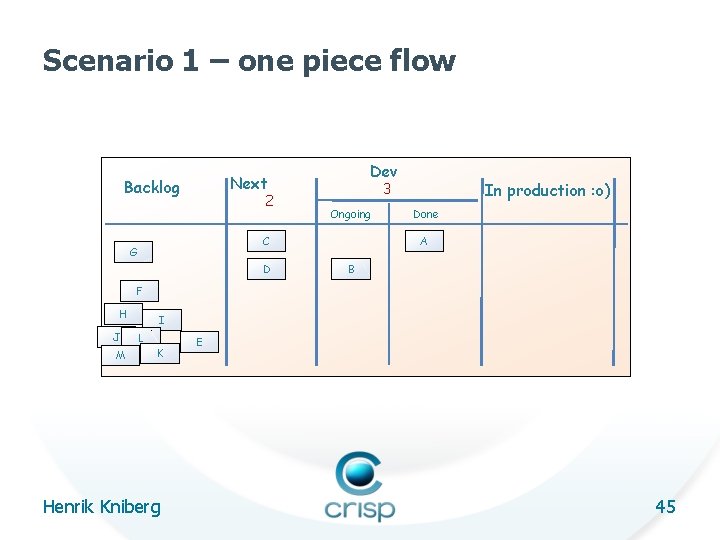
Scenario 1 – one piece flow Dev Next Backlog 2 Ongoing C G D In production : o) 3 Done A B F H J M I L K Henrik Kniberg E 45
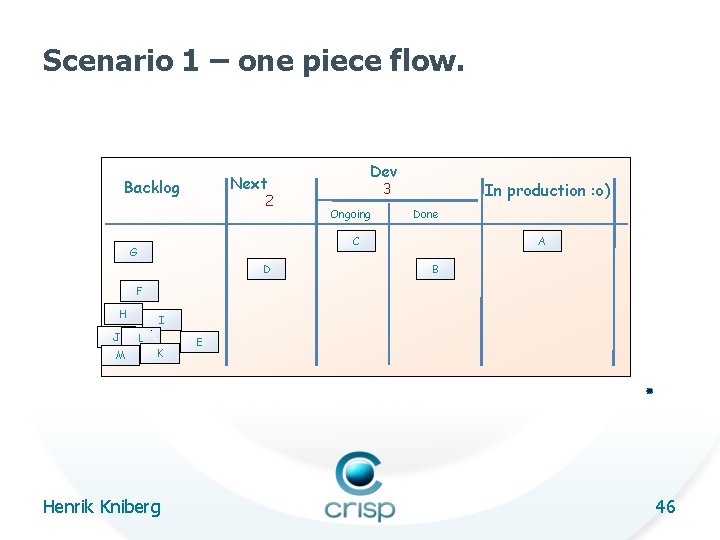
Scenario 1 – one piece flow. Dev Next Backlog 2 In production : o) 3 Ongoing Done C G D A B F H J M I L K Henrik Kniberg E 46
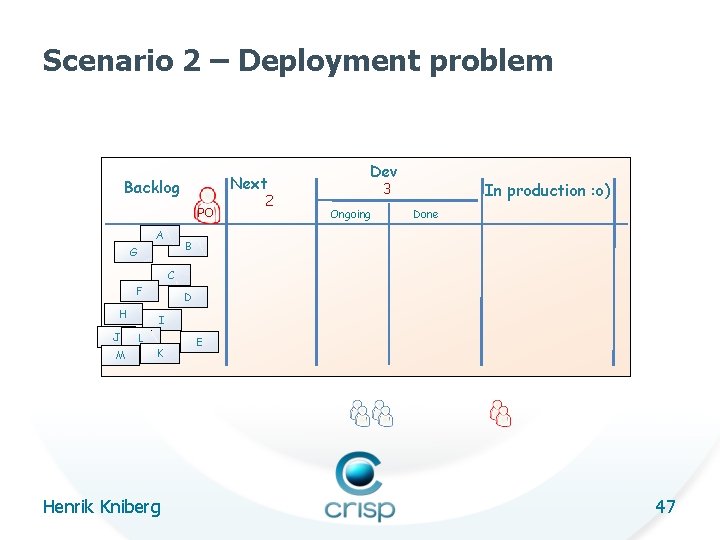
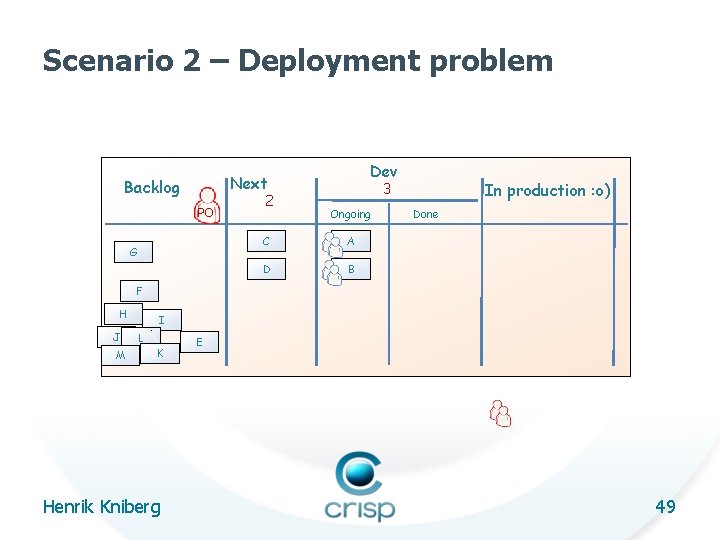
Scenario 2 – Deployment problem Next Backlog PO A 2 Dev In production : o) 3 Ongoing Done B G C F H J M D I L K Henrik Kniberg E 47
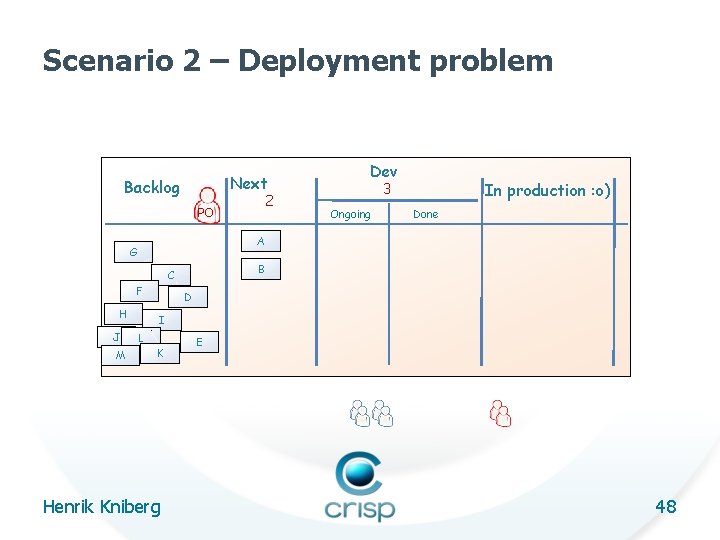
Scenario 2 – Deployment problem Next Backlog 2 PO Ongoing Done B C F H M In production : o) 3 A G J Dev D I L K Henrik Kniberg E 48
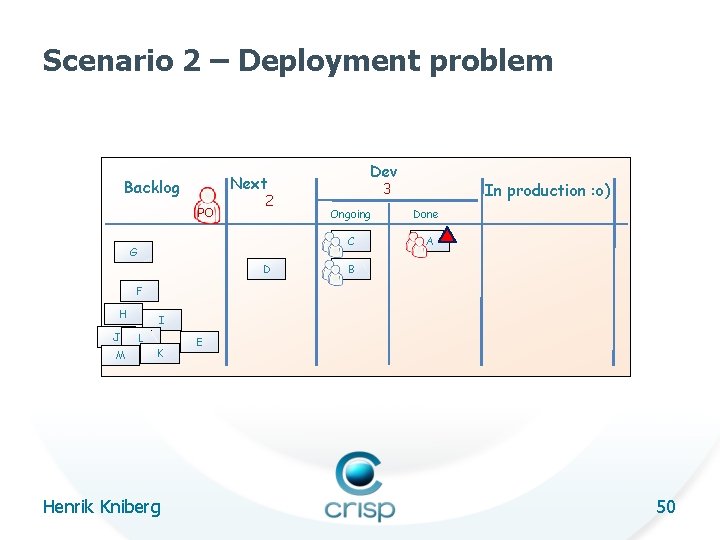
Scenario 2 – Deployment problem Dev Next Backlog PO G 2 In production : o) 3 Ongoing C A D B Done F H J M I L K Henrik Kniberg E 49
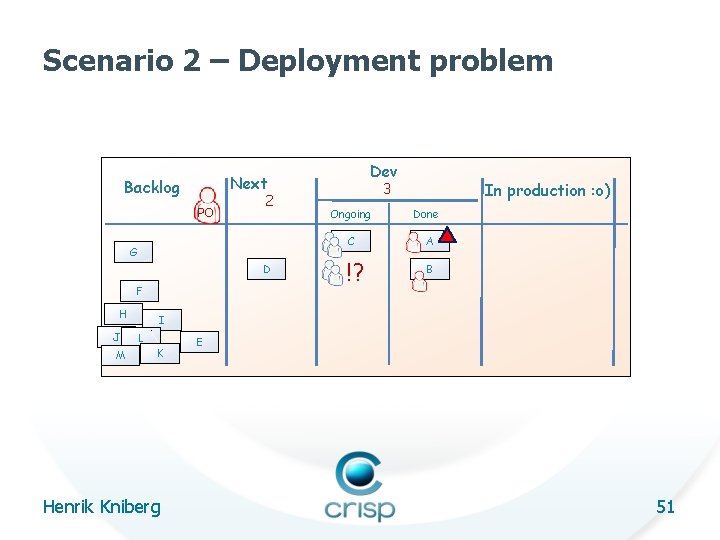
Scenario 2 – Deployment problem Dev Next Backlog PO 2 Ongoing C G D In production : o) 3 Done A B F H J M I L K Henrik Kniberg E 50
Scenario 2 – Deployment problem Backlog PO 2 G D F H J M Dev Next In production : o) 3 Ongoing Done C A !? B I L K Henrik Kniberg E 51
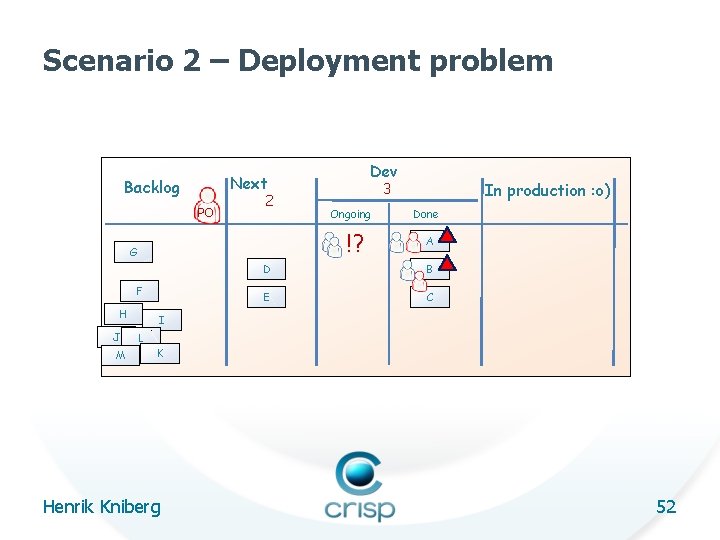
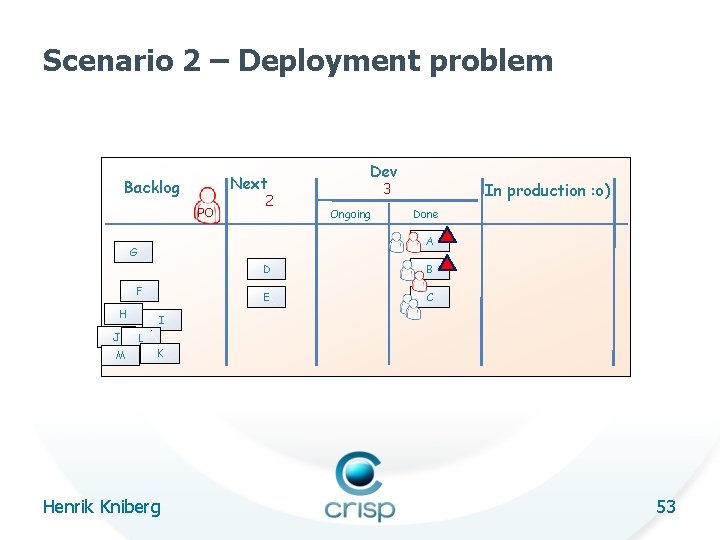
Scenario 2 – Deployment problem Backlog PO 2 F H M In production : o) 3 Ongoing !? G J Dev Next Done A D B E C I L K Henrik Kniberg 52
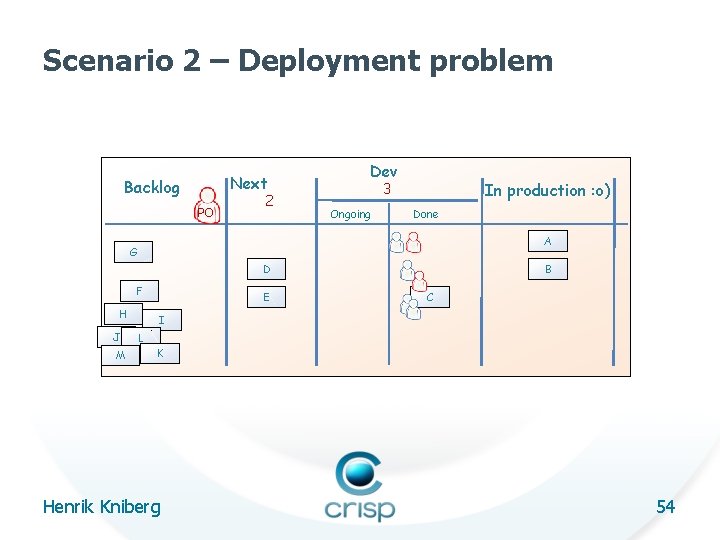
Scenario 2 – Deployment problem Next Backlog PO 2 F H M In production : o) 3 Ongoing Done A G J Dev D B E C I L K Henrik Kniberg 53
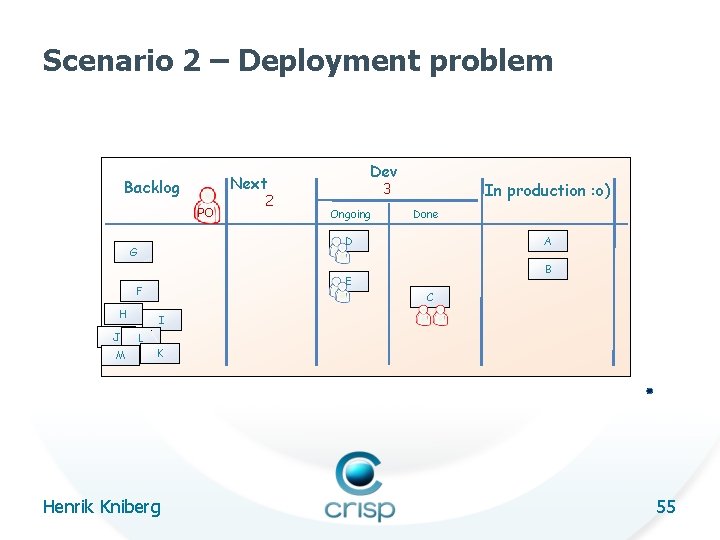
Scenario 2 – Deployment problem Next Backlog PO 2 Dev In production : o) 3 Ongoing Done A G D F H J M E B C I L K Henrik Kniberg 54
Scenario 2 – Deployment problem Backlog PO In production : o) 3 Ongoing Done H A B E F M 2 D G J Dev Next C I L K Henrik Kniberg 55
Example: Portfolio mgmt Henrik Kniberg 56
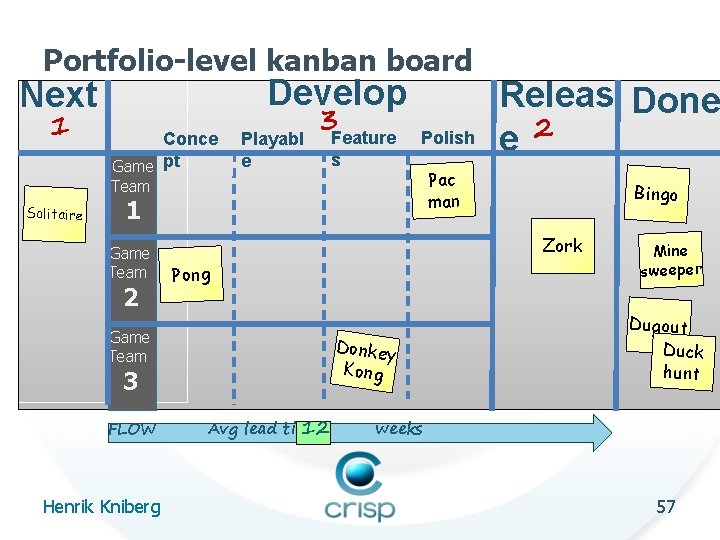
Portfolio-level kanban board Develop Next 1 Conce Game pt Playabl e 3 Feature s Polish Team Solitaire 1 Game Team 2 Pong Donkey Kong 3 Henrik Kniberg Pac man Bingo Zork Game Team FLOW Releas Done e 2 12 Avg lead time: Mine sweeper Dugout Duck hunt weeks 57
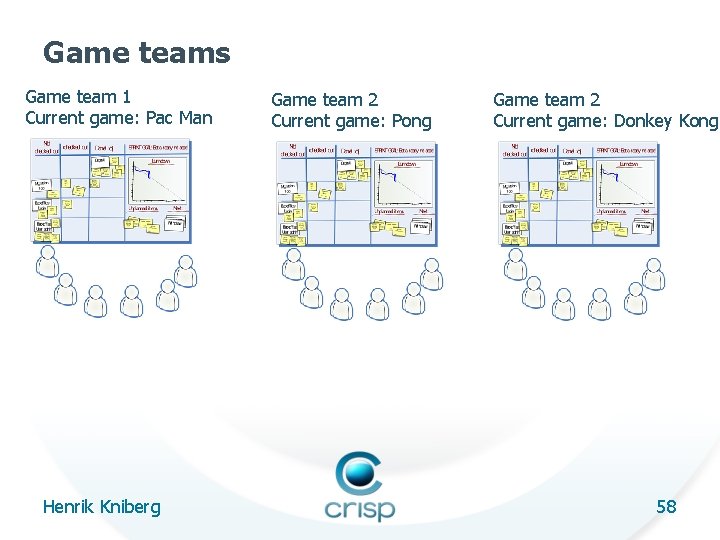
Game teams Game team 1 Current game: Pac Man Henrik Kniberg Game team 2 Current game: Pong Game team 2 Current game: Donkey Kong 58
Example: Connecting Scrum & Kanban Henrik Kniberg 59
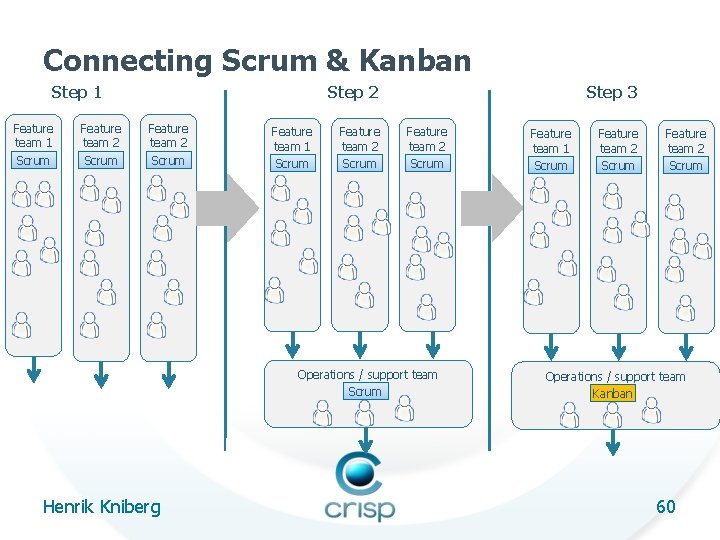
Connecting Scrum & Kanban Step 1 Feature team 1 Scrum Feature team 2 Scrum Step 2 Feature team 2 Scrum Feature team 1 Scrum Feature team 2 Scrum Step 3 Feature team 2 Scrum Operations / support team Scrum Henrik Kniberg Feature team 1 Scrum Feature team 2 Scrum Operations / support team Kanban 60
Wrapup Henrik Kniberg 61
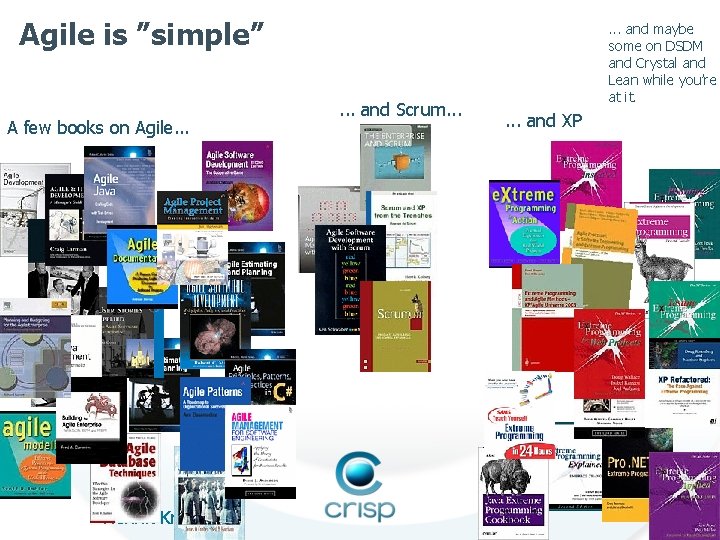
Agile is ”simple” A few books on Agile. . . Henrik Kniberg . . . and Scrum. . . and maybe some on DSDM and Crystal and Lean while you’re at it. . and XP 62
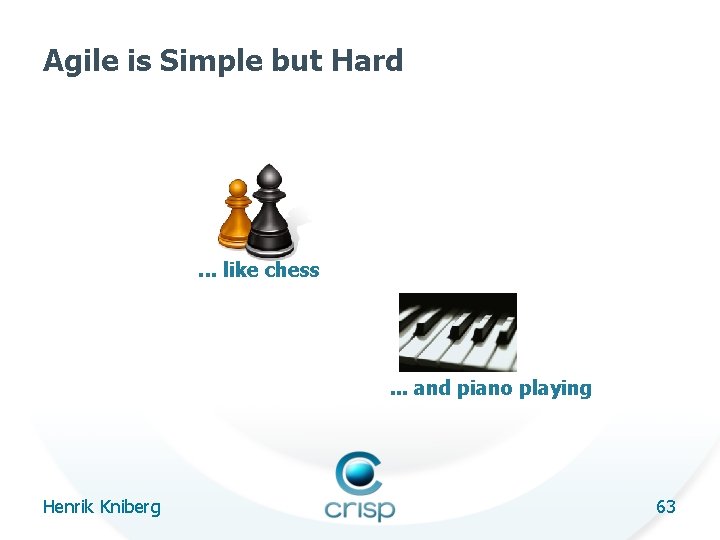
Agile is Simple but Hard . . . like chess . . . and piano playing Henrik Kniberg 63
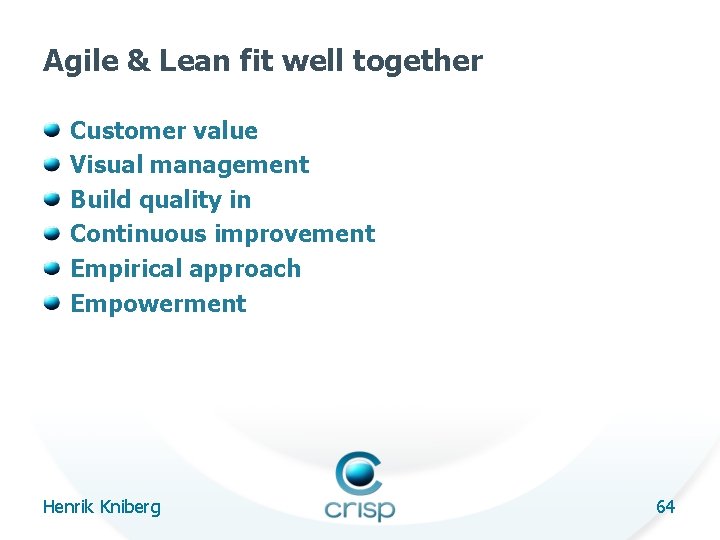
Agile & Lean fit well together Customer value Visual management Build quality in Continuous improvement Empirical approach Empowerment Henrik Kniberg 64
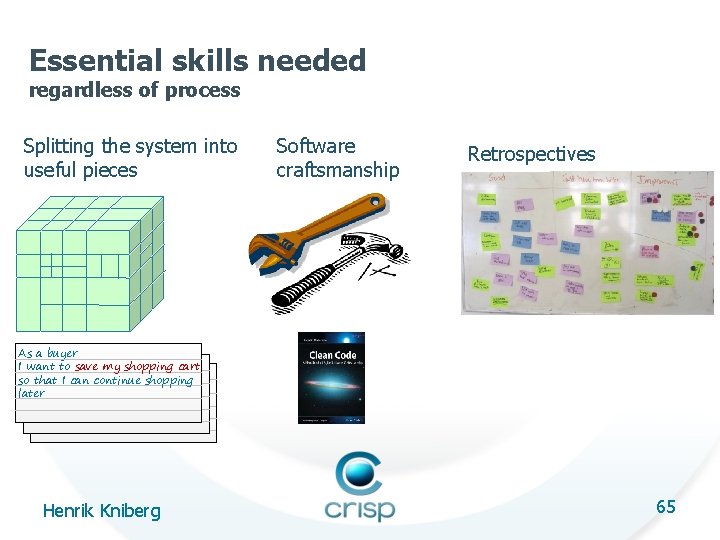
Essential skills needed regardless of process Splitting the system into useful pieces Software craftsmanship Retrospectives As a buyer I want to save my shopping cart so that I can continue shopping later Henrik Kniberg 65
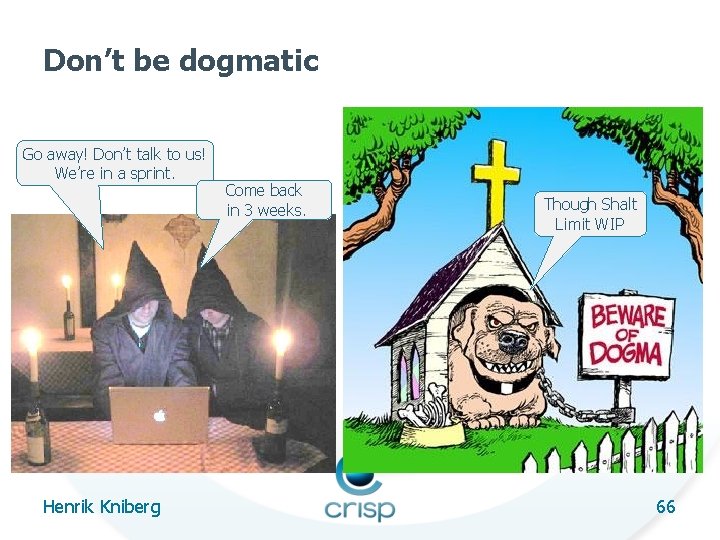
Don’t be dogmatic Go away! Don’t talk to us! We’re in a sprint. Henrik Kniberg Come back in 3 weeks. Though Shalt Limit WIP 66
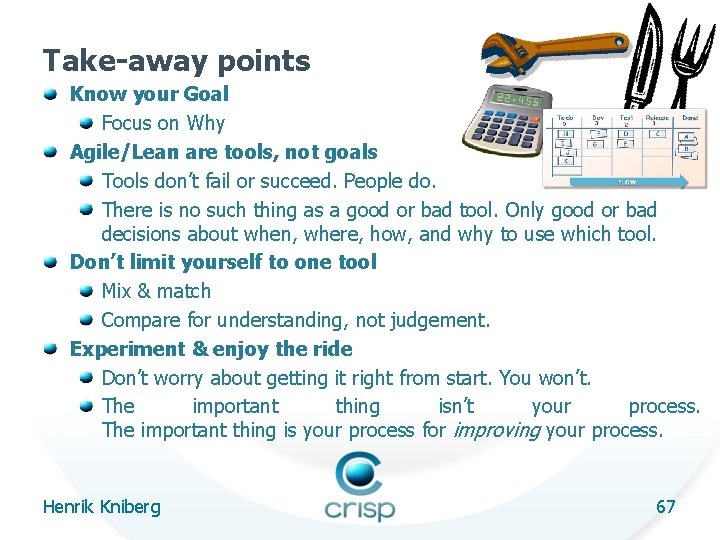
Take-away points Know your Goal Focus on Why Agile/Lean are tools, not goals Tools don’t fail or succeed. People do. There is no such thing as a good or bad tool. Only good or bad decisions about when, where, how, and why to use which tool. Don’t limit yourself to one tool Mix & match Compare for understanding, not judgement. Experiment & enjoy the ride Don’t worry about getting it right from start. You won’t. The important thing isn’t your process. The important thing is your process for improving your process. Henrik Kniberg 67
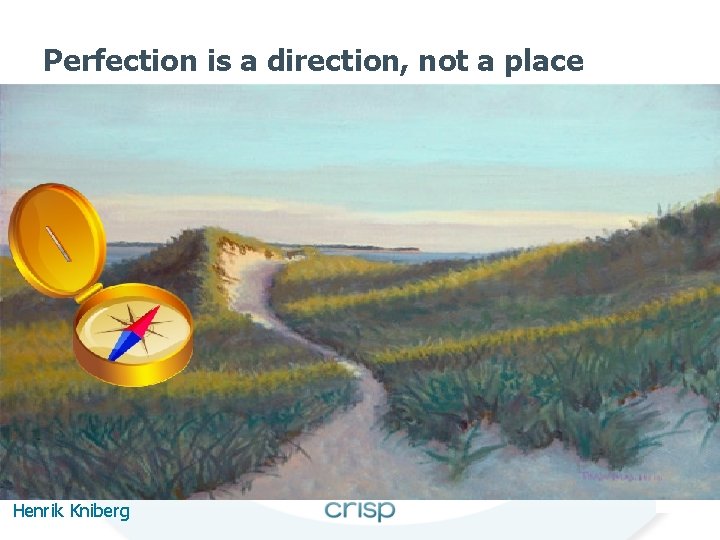
Perfection is a direction, not a place Henrik Kniberg 68