
Copyright Guidelines Explaining Copyright Guidelines for Classroom Instruction
- Slides: 12
Copyright Guidelines Explaining Copyright Guidelines for Classroom Instruction
Copyright? • The U. S. copyright law protects composers, authors, performers, publishers and filmmakers from unauthorized copying or unlicensed use of their artistic creations.
Fair Use • Fair use any copying of copyrighted material done for a transformative purpose • Everyone is covered under fair use as defense against a claim of copyright infringement • Teachers can copy the print for commenting and critiquing for educational purposes • Teachers can even copy the material for imaging it in comic way that ridicules the material for educational purposes
Plagiarism • Using someone else’s words, phrases, sentences or ideas without giving credit
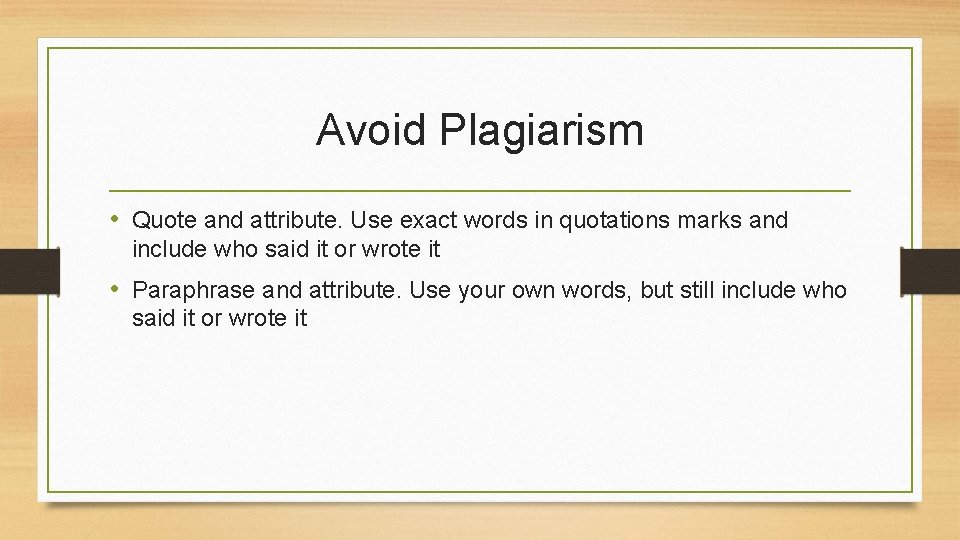
Avoid Plagiarism • Quote and attribute. Use exact words in quotations marks and include who said it or wrote it • Paraphrase and attribute. Use your own words, but still include who said it or wrote it
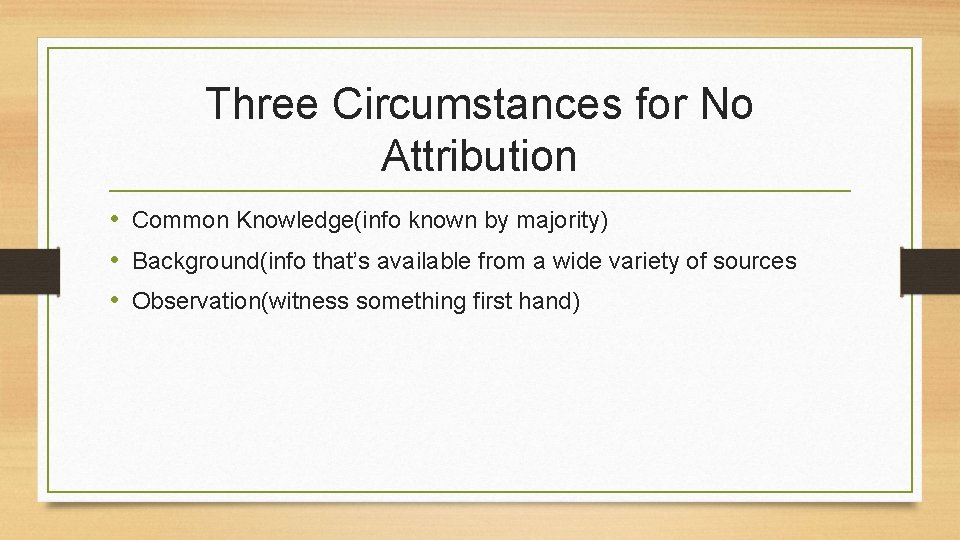
Three Circumstances for No Attribution • Common Knowledge(info known by majority) • Background(info that’s available from a wide variety of sources • Observation(witness something first hand)
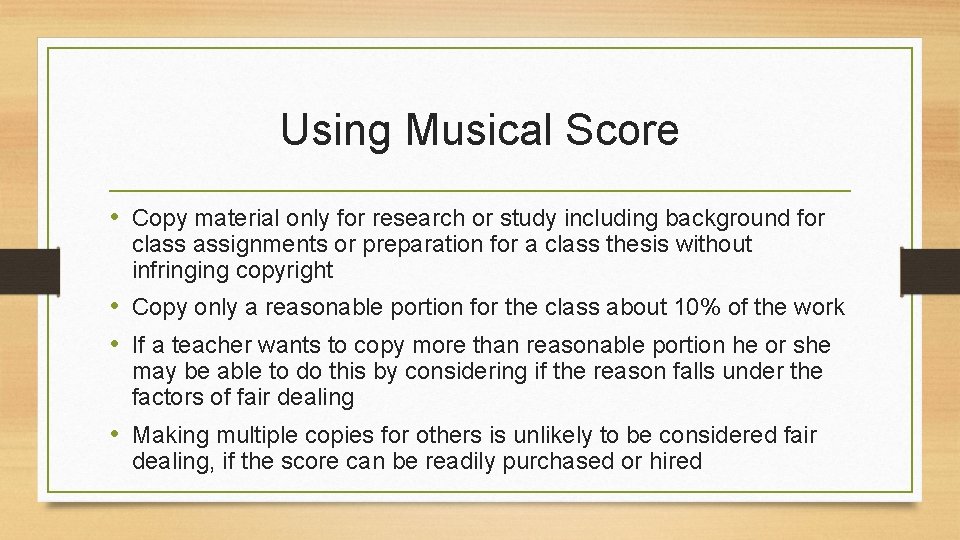
Using Musical Score • Copy material only for research or study including background for class assignments or preparation for a class thesis without infringing copyright • Copy only a reasonable portion for the class about 10% of the work • If a teacher wants to copy more than reasonable portion he or she may be able to do this by considering if the reason falls under the factors of fair dealing • Making multiple copies for others is unlikely to be considered fair dealing, if the score can be readily purchased or hired
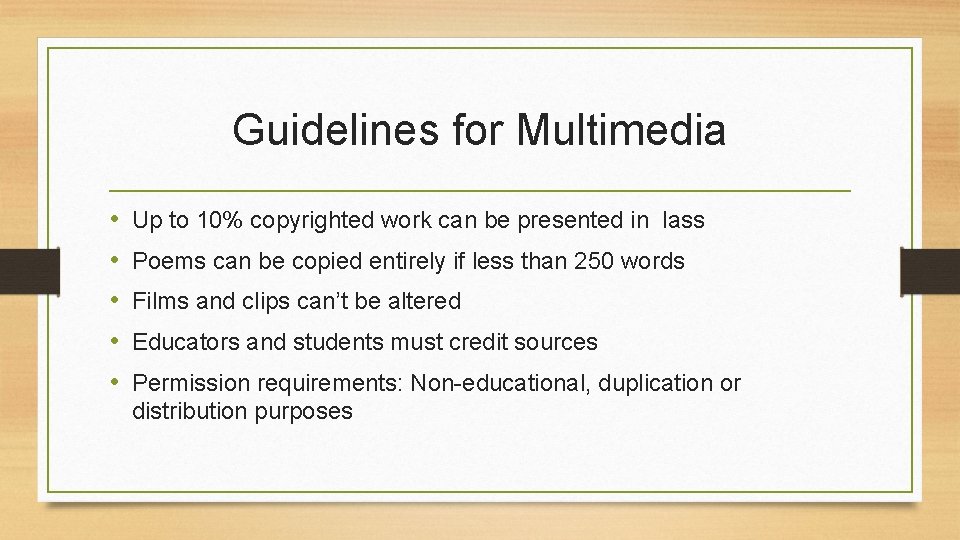
Guidelines for Multimedia • • • Up to 10% copyrighted work can be presented in lass Poems can be copied entirely if less than 250 words Films and clips can’t be altered Educators and students must credit sources Permission requirements: Non-educational, duplication or distribution purposes
Taping T. V. Shows for Class • Teachers can only use programs that have been broadcast to general public • For particular programs it's best for the teacher to ask the school to tape it • The tape may be shown only during the first ten consecutive school days after it is made • A limited number of copies may be made from each off air recording • The tapes must be appropriate and not altered in anyway • The tape can only be used for evaluation after ten days
Asking for Permission to Use Items in Class Teachers can check the Copyright Clearance Center. This center offers a electronic and photo copy database for transactional permission services. The school library or copy center may already be working with the Copyright Clearance Center, which can help the teacher with the process more effectively. * Cases vary depending on the situation
Copyright Infringement • Is the act of exercising, without permission or legal authority(Copyright Act Title 17 of the United States Code). Penalties: • Civil and Criminal • Pay either actual damages or statutory damages affixed no less than $750 and no more than $30, 000 per work infringed • Willful copyright may include imprisonment up to five years and fines up to $250, 000 per offense
The Creator Should Consider Things to consider when posting, three fundamental criteria: *Fixation to tangible medium *Originality *Minimal Creativity • Legal registration for copyright is not required but is beneficial for the creator • Cannot sue for copyright infringement without registration • Names, titles, slogans, and short phrases are not protected under copyright law but may be protected under trademark