
Copyright Collective Management Role and Functioning of RROs
- Slides: 23
Copyright Collective Management Role and Functioning of RROs Olav Stokkmo, CEO of IFRRO Repronig – IFRRO – NCC – ARIPO – WIPO Conference 17 September 2013 Lagos
IFRRO International Federation of Reproduction Rights Organisations Provider of reliable information on copyright-led solutions in the text and image based sector
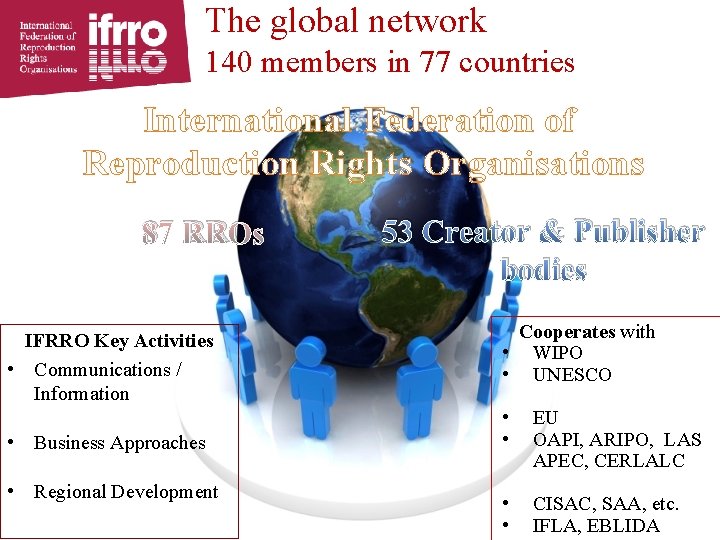
The global network 140 members in 77 countries International Federation of Reproduction Rights Organisations 87 RROs IFRRO Key Activities • Communications / Information • Business Approaches • Regional Development 53 Creator & Publisher bodies Cooperates with • WIPO • UNESCO • • EU OAPI, ARIPO, LAS APEC, CERLALC • • CISAC, SAA, etc. IFLA, EBLIDA
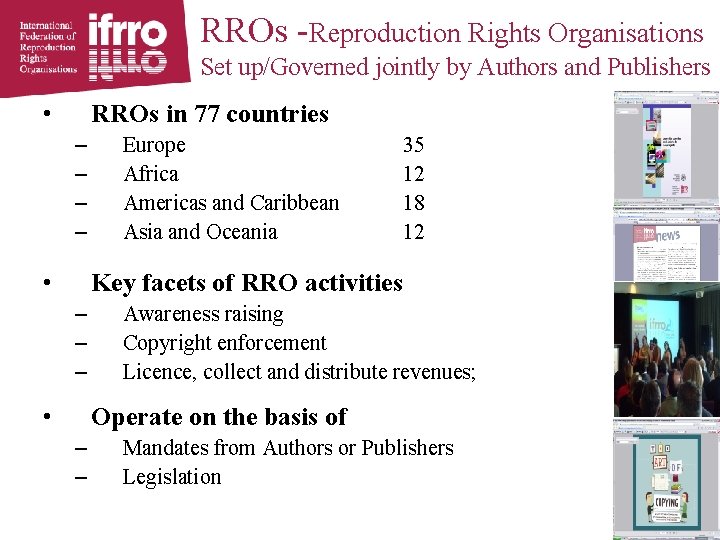
RROs -Reproduction Rights Organisations Set up/Governed jointly by Authors and Publishers • RROs in 77 countries – – • Europe Africa Americas and Caribbean Asia and Oceania 35 12 18 12 Key facets of RRO activities – – – • Awareness raising Copyright enforcement Licence, collect and distribute revenues; Operate on the basis of – – Mandates from Authors or Publishers Legislation
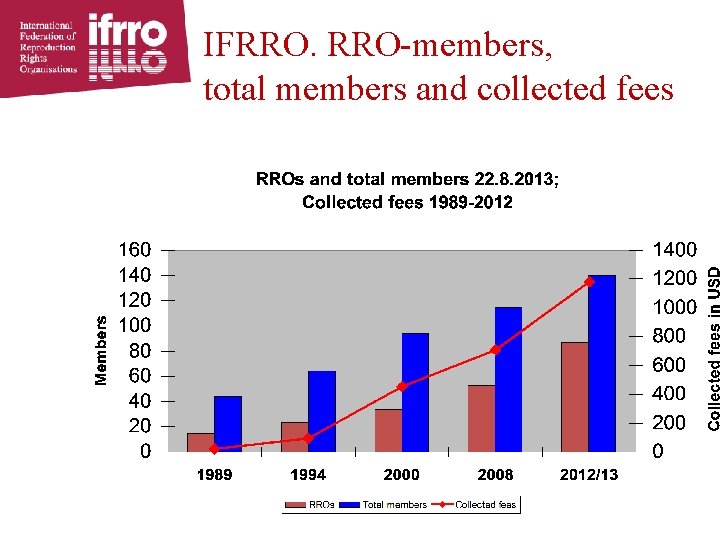
IFRRO. RRO-members, total members and collected fees
Supporting collective management is supporting economy, knowledge, culture Income from secondary uses is indispensible to creation and investment in new works
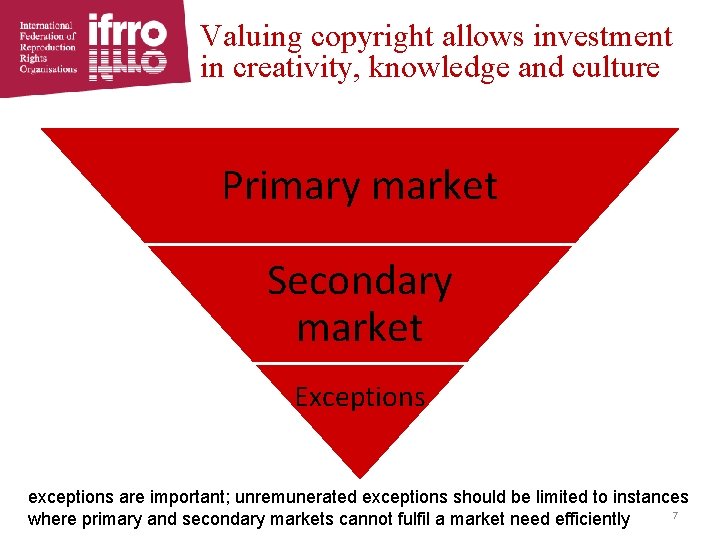
Valuing copyright allows investment in creativity, knowledge and culture The educational publishing ecosystem Primary market Secondary market Exceptions exceptions are important; unremunerated exceptions should be limited to instances 7 where primary and secondary markets cannot fulfil a market need efficiently
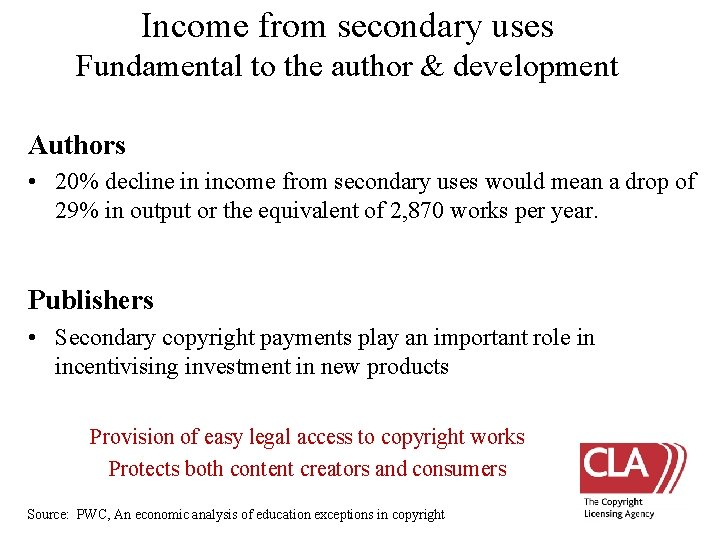
Income from secondary uses Fundamental to the author & development Authors • 20% decline in income from secondary uses would mean a drop of 29% in output or the equivalent of 2, 870 works per year. Publishers • Secondary copyright payments play an important role in incentivising investment in new products Provision of easy legal access to copyright works Protects both content creators and consumers Source: PWC, An economic analysis of education exceptions in copyright
Provision of easy, legal access to © works protects users and R/Hs Seamless Access to © works – Addressing primary and secondary markets
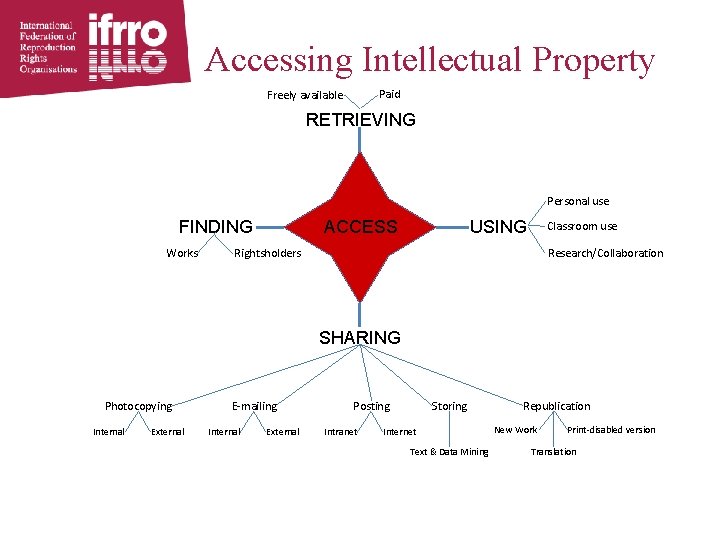
Accessing Intellectual Property Paid Freely available RETRIEVING Personal use ACCESS FINDING Works USING Classroom use Research/Collaboration Rightsholders SHARING Photocopying Internal External E-mailing Internal External Posting Intranet Storing Internet Text & Data Mining Republication New Work Print-disabled version Translation
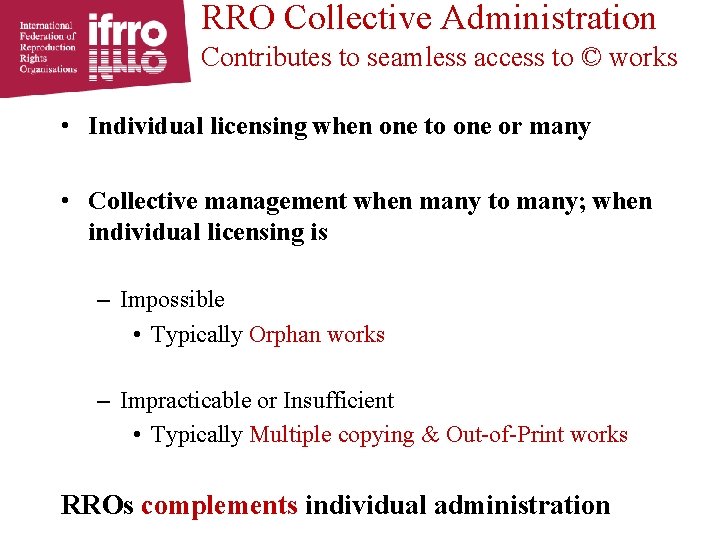
RRO Collective Administration Contributes to seamless access to © works • Individual licensing when one to one or many • Collective management when many to many; when individual licensing is – Impossible • Typically Orphan works – Impracticable or Insufficient • Typically Multiple copying & Out-of-Print works RROs complements individual administration
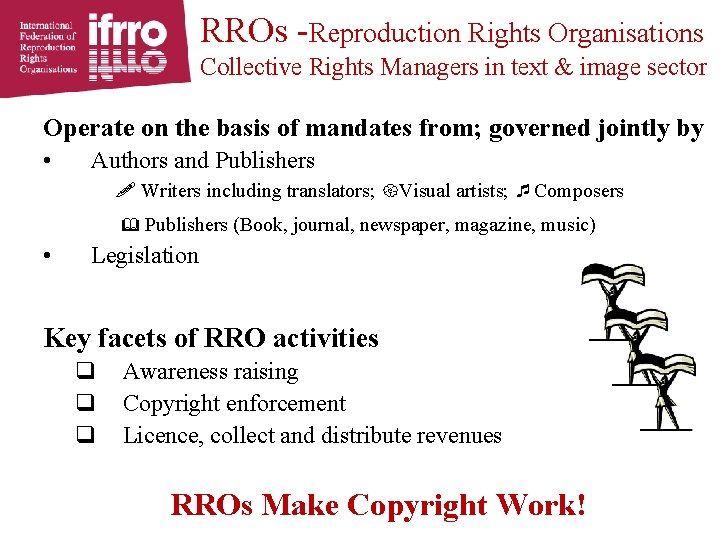
RROs -Reproduction Rights Organisations Collective Rights Managers in text & image sector Operate on the basis of mandates from; governed jointly by • Authors and Publishers ! Writers including translators; Visual artists; Composers Publishers • (Book, journal, newspaper, magazine, music) Legislation Key facets of RRO activities q q q Awareness raising Copyright enforcement Licence, collect and distribute revenues RROs Make Copyright Work!
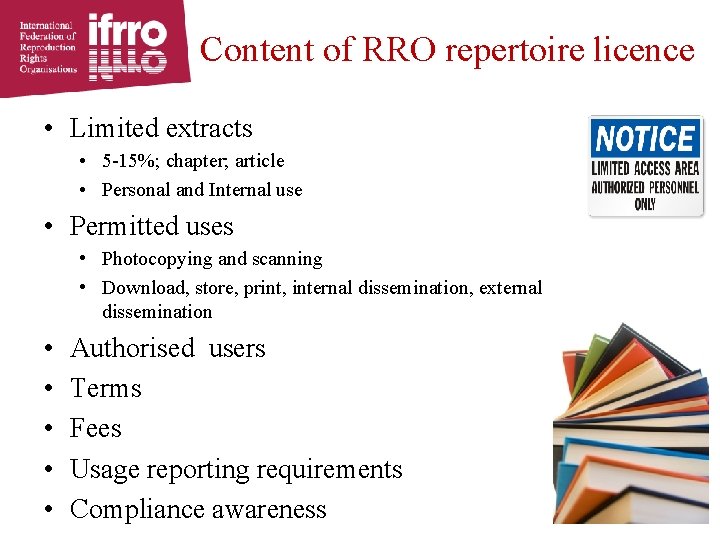
Content of RRO repertoire licence • Limited extracts • 5 -15%; chapter; article • Personal and Internal use • Permitted uses • Photocopying and scanning • Download, store, print, internal dissemination, external dissemination • • • Authorised users Terms Fees Usage reporting requirements Compliance awareness
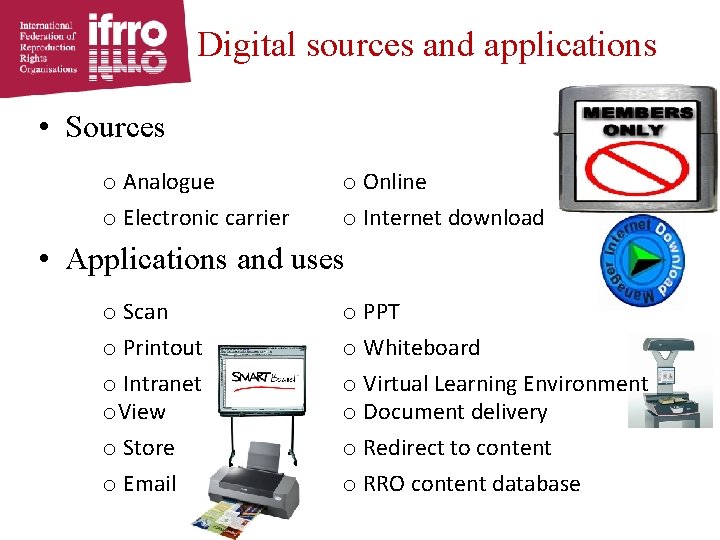
Digital sources and applications • Sources o Analogue o Electronic carrier o Online o Internet download • Applications and uses o Scan o Printout o Intranet o. View o Store o Email o PPT o Whiteboard o Virtual Learning Environment o Document delivery o Redirect to content o RRO content database
RROs Areas of Collective Administration • Education at all levels – Schools; Universities; Further education; Distance Education • Trade and Industry • Public Administration – Government; Regional; Local • Religious bodies • Public and Research libraries • Cultural institutions • Copy shops • Press Cutting Agencies
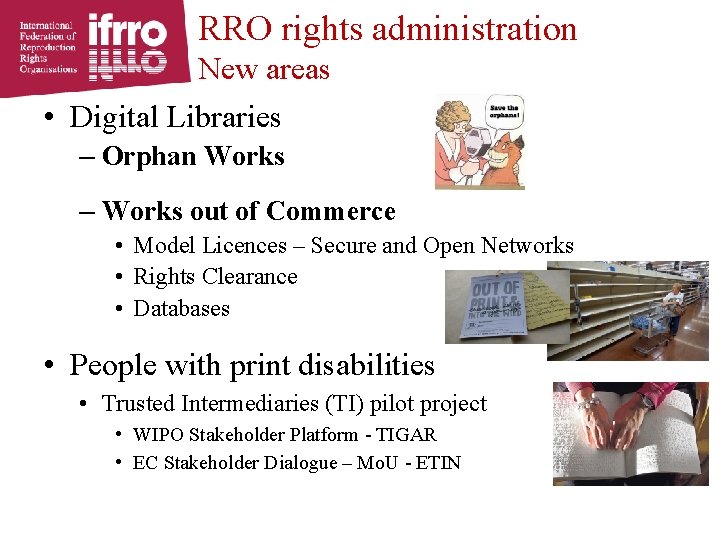
RRO rights administration New areas • Digital Libraries – Orphan Works – Works out of Commerce • Model Licences – Secure and Open Networks • Rights Clearance • Databases • People with print disabilities • Trusted Intermediaries (TI) pilot project • WIPO Stakeholder Platform - TIGAR • EC Stakeholder Dialogue – Mo. U - ETIN
Governments Vital in enforcing the © ecosystem A society that values knowledge and culture values its creators
Role of Government Legislation Ø Ø Adopt appropriate legal framework Enforce legislation Awareness raising Licensing Ø Ø Ø Take up licence for own copying Take up licence for copying in owned institutions Recommend and encourage copyright licensing
Strengthening copyright & collective management Helps create wealth, employment and economic growth
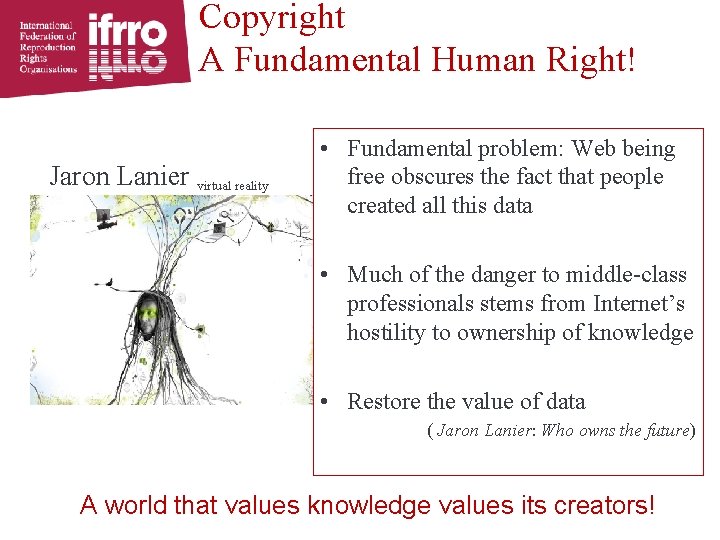
Copyright A Fundamental Human Right! Jaron Lanier virtual reality • Fundamental problem: Web being free obscures the fact that people created all this data • Much of the danger to middle-class professionals stems from Internet’s hostility to ownership of knowledge • Restore the value of data ( Jaron Lanier: Who owns the future) A world that values knowledge values its creators!
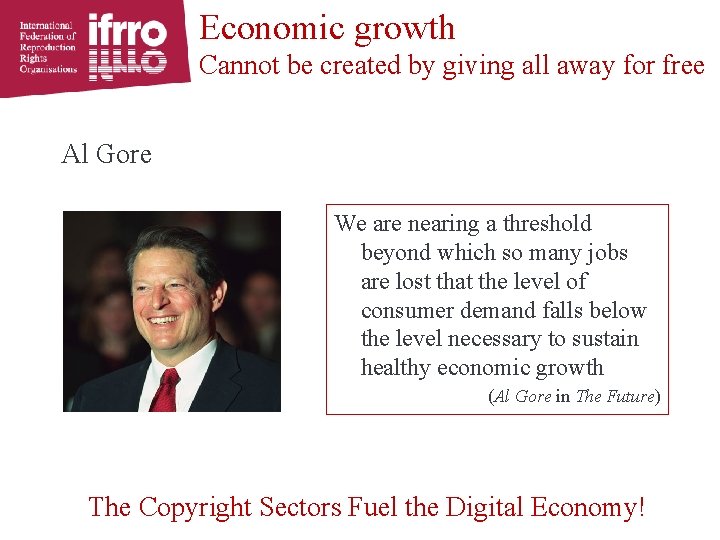
Economic growth Cannot be created by giving all away for free Al Gore We are nearing a threshold beyond which so many jobs are lost that the level of consumer demand falls below the level necessary to sustain healthy economic growth (Al Gore in The Future) The Copyright Sectors Fuel the Digital Economy!
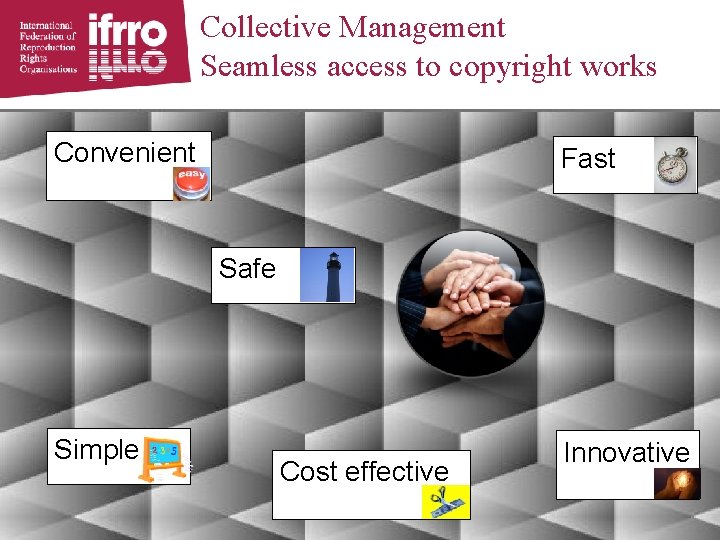
Collective Management Seamless access to copyright works Convenient Fast Safe Simple Cost effective Innovative
Thank you! Olav. Stokkmo@ifrro. org www. ifrro. org 23 23