
Copyright and Fair Use for Educators Graphic Images

- Slides: 11
Copyright and Fair Use for Educators: Graphic Images Takeebie Jefferson ITEC 7445 Summer 2015
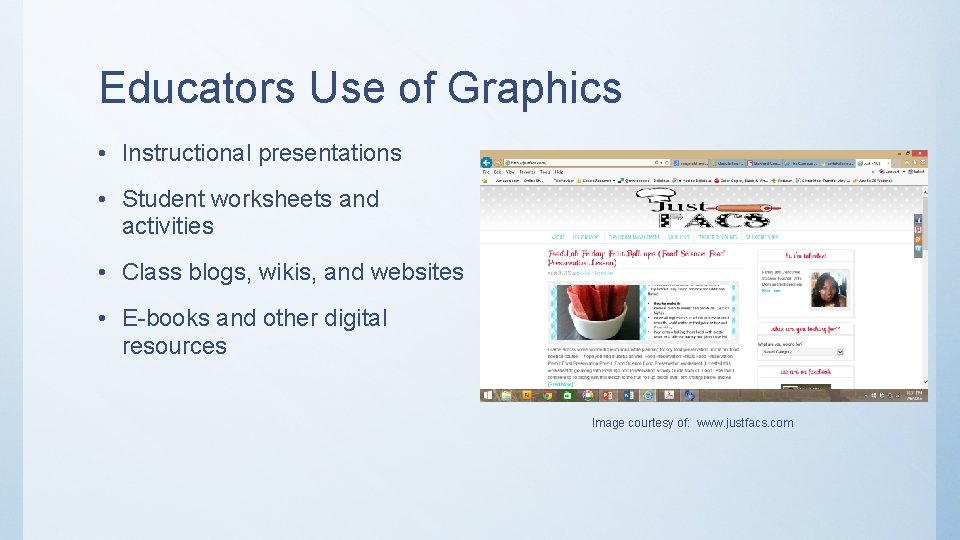
Educators Use of Graphics • Instructional presentations • Student worksheets and activities • Class blogs, wikis, and websites • E-books and other digital resources Image courtesy of: www. justfacs. com
Copyright vs Fair Use • The exclusive legal right to reproduce, publish, sell or distribute the matter and form of something (as literary, musical, or artistic work). • A legal doctrine that portions of copyrighted materials may be used without permission of the copyright owner provided the use is fair and reasonable, does not substantially impair the value of the materials, and does not curtail the profits reasonably expected by the owner. http: //www. merriam-webster. com/dictionary/copyright
Using Copyrighted Graphics Obtain prior permission first or don’t use!!!
Fair Use of Copyrighted Works: First Four 1. Purpose: Is the use educational? 2. Nature: If published and public, give credit! 3. Amount: How much of the work is used? Use small portions! 4. Market: Am I taking away from their profit?
Fair Use of Graphics • Illustrations/Photographs – Single works may be used but no more than five images from a single artist – From a collection, no more than 15 images or 10% (whichever is less) • Internet Images – May be used for student projects and teacher lessons – May not be reposted onto the internet without permission – Link must be to a legitimate source
Fair Use: Altering Images • Images may become transformative when majority of the original work has been removed. – i. e. colors, shading, expressions, backgrounds, etc. Image courtesy of: http: //fairuse. stanford. edu/2014/12/22/much-photo-need-alter-avoid-copyright-infringement-hint-cheshire-cat/
Scenario 1: Purchased Images • Mrs. Jones purchased clipart from a site on Teachers Pay Teachers and has decided to use that clipart to create a presentation to be shared with other educators. Since she has purchased the image, she doesn’t feel as if she needs to give credit. What do you think? • Hint: In most cases, consumers have the choice between purchasing two types of products (with and without permissions).
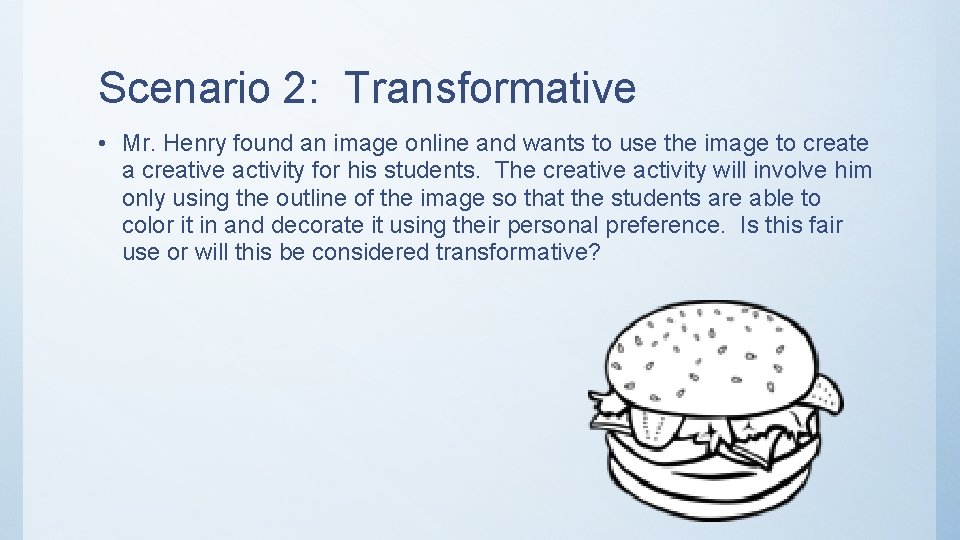
Scenario 2: Transformative • Mr. Henry found an image online and wants to use the image to create a creative activity for his students. The creative activity will involve him only using the outline of the image so that the students are able to color it in and decorate it using their personal preference. Is this fair use or will this be considered transformative?
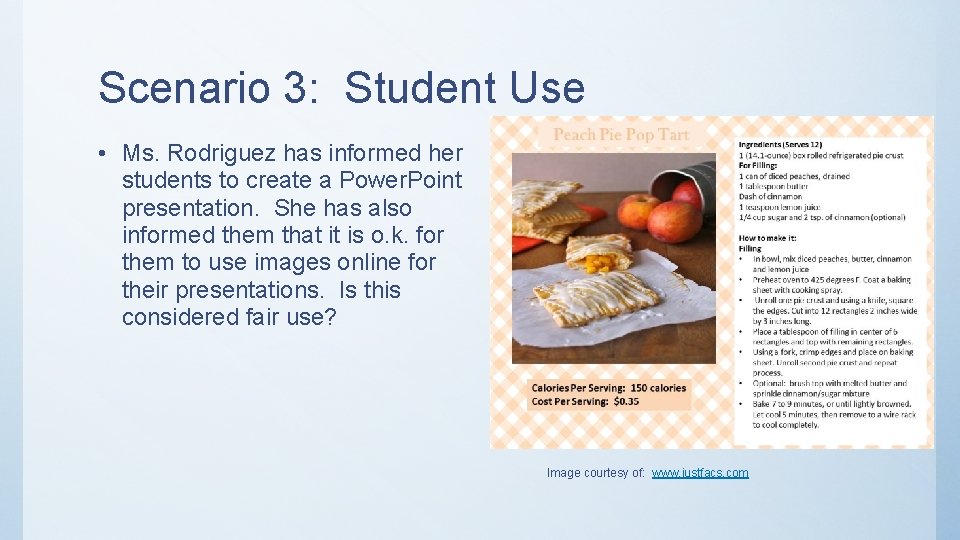
Scenario 3: Student Use • Ms. Rodriguez has informed her students to create a Power. Point presentation. She has also informed them that it is o. k. for them to use images online for their presentations. Is this considered fair use? Image courtesy of: www. justfacs. com
Web Resources • Stanford Fair Use Site – http: //fairuse. stanford. edu/ • Copyright Clearance Center – http: //www. copyright. com/Services/copyrightoncampus/content/digital. html • Just FACS (Images) – http: //www. justfacs. com • Merriam-Webster Dictionary – http: //www. merriam-webster. com/dictionary/copyright