
Copyright 2017 by the National Restaurant Association Educational
© Copyright 2017 by the National Restaurant Association Educational Foundation (NRAEF). All rights reserved.
CHAPTER OBJECTIVES 3. 1 Define professionalism, and explain what it means to hospitality professionals. 3. 2 Understand the importance of personal appearance and grooming standards to your employment. 3. 3 Recognize the connections between your professional life and your personal life. 3. 4 List the basic expectations that employers have for an employee in a foodservice setting. 3. 5 Explain the concept of teamwork. 3. 6 Describe ethics, and explain their importance to the restaurant and foodservice industry. 3. 7 Identify the benefits of diversity to a workplace. 3. 8 Explain how stereotypes and prejudices can negatively affect working together. 2
Let’s see what you already know! KAHOOT TIME! ● https: //play. kahoot. it/#/k/3439 ba 83 -82 db-409 a-8380 -7 b 57330 c 55 c 5 3
FOOD FOR THOUGHT 1) What does it mean to “be a professional”? 1) What unique professional qualities, if any, might be needed to be successful in the restaurant and foodservice industry? 1) How is the high school environment similar to and different from the workplace environment?
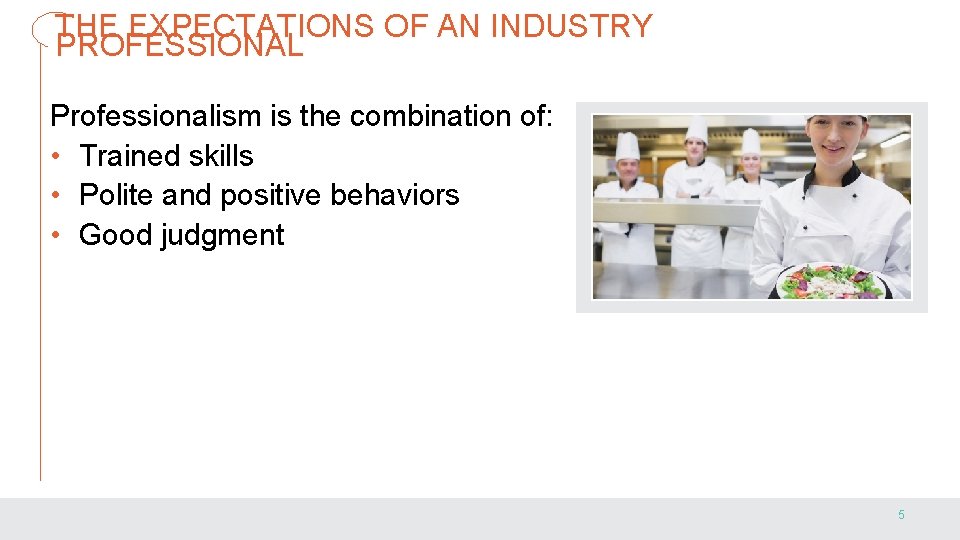
THE EXPECTATIONS OF AN INDUSTRY PROFESSIONAL Professionalism is the combination of: • Trained skills • Polite and positive behaviors • Good judgment 5
YOUR PRESENCE AT WORK Professional image: • Show up according to the schedule • Clean and neat appearance • Well-maintained and ironed uniform Discuss: Why is it important to have a professional image at work?
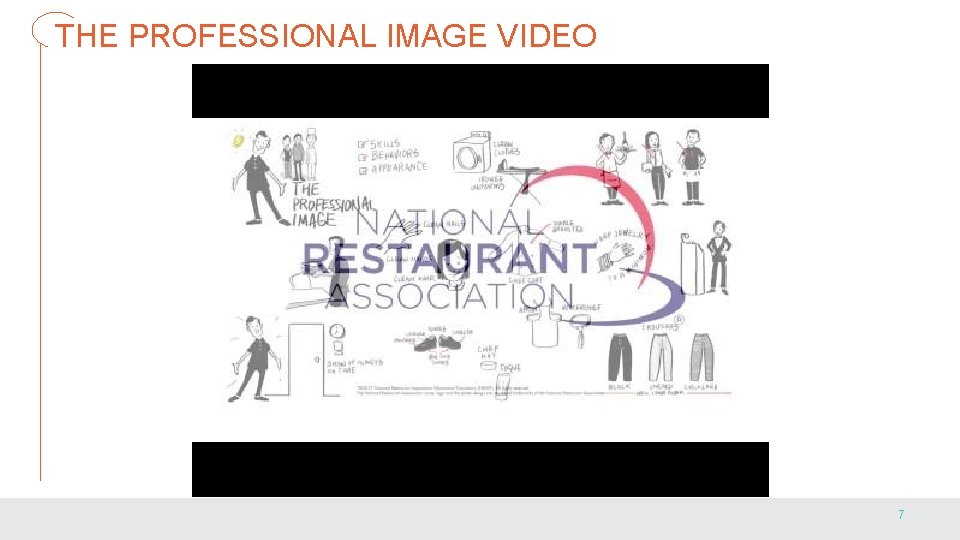
THE PROFESSIONAL IMAGE VIDEO 7
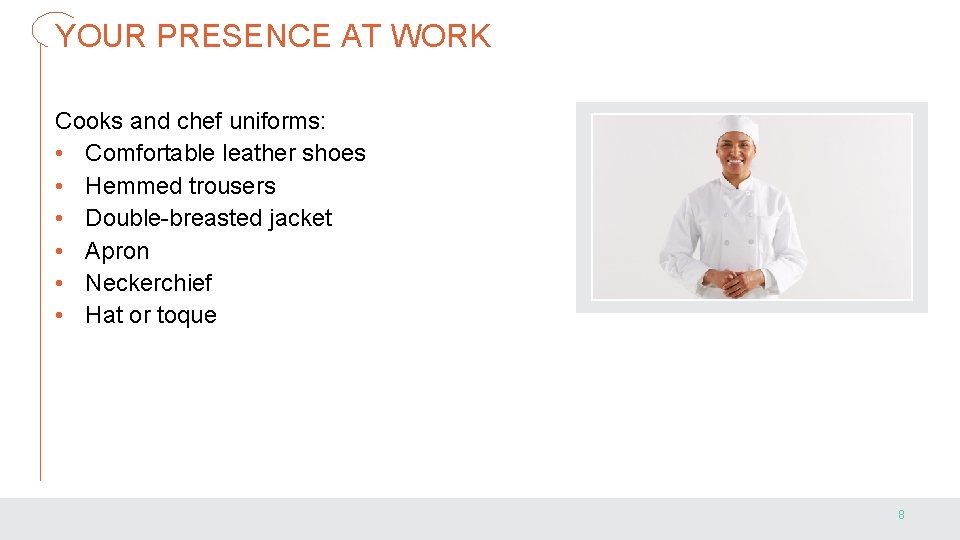
YOUR PRESENCE AT WORK Cooks and chef uniforms: • Comfortable leather shoes • Hemmed trousers • Double-breasted jacket • Apron • Neckerchief • Hat or toque 8
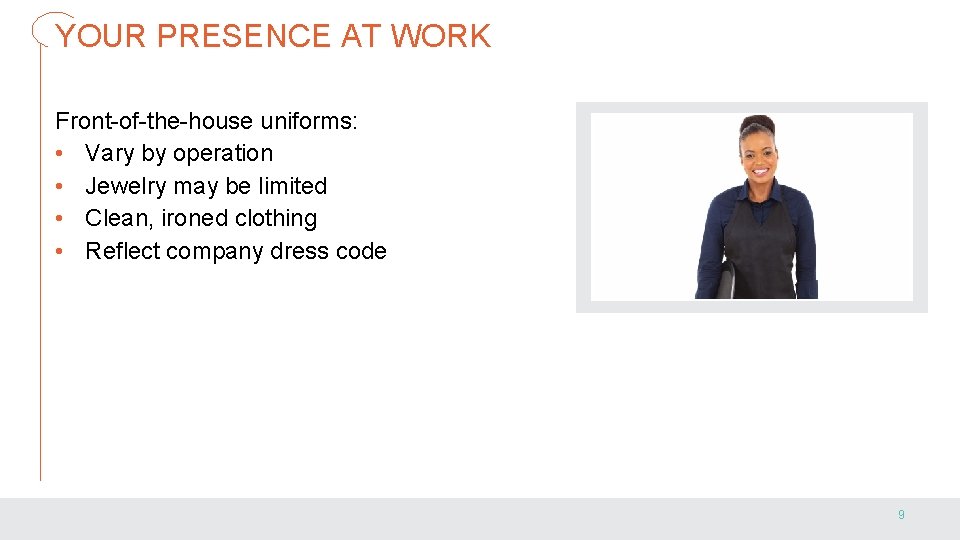
YOUR PRESENCE AT WORK Front-of-the-house uniforms: • Vary by operation • Jewelry may be limited • Clean, ironed clothing • Reflect company dress code 9
YOUR ATTITUDE AT WORK • • Positive attitude Remain upbeat and calm Flexible approach Reflects respect of yourself, your work, and other people
YOUR ACTIONS AT WORK • • • Work well with others Take responsibility for results Respect for others Communication skills Strong commitment 11
FOOD FOR THOUGHT How can working in teams help provide better guest service? In what ways can teams be more, or less, efficient than individuals? 12
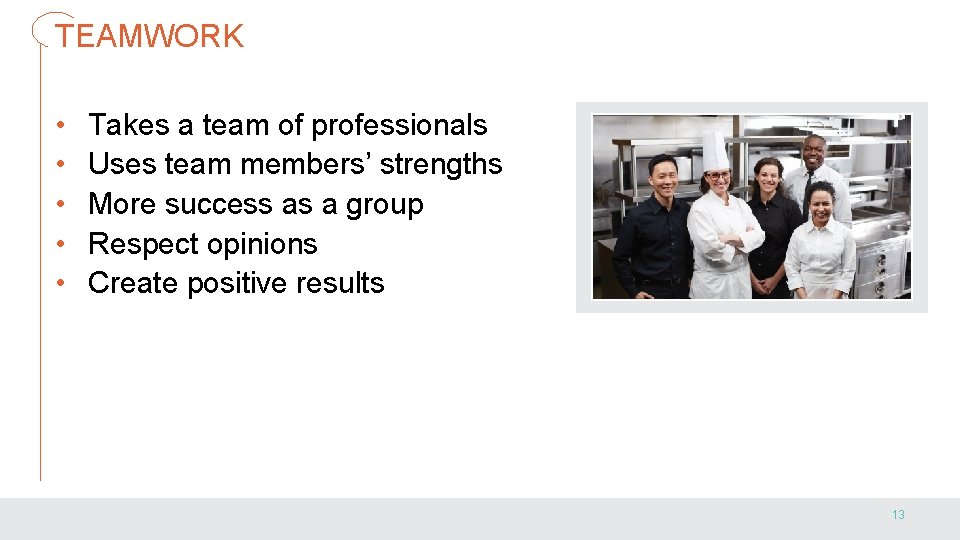
TEAMWORK • • • Takes a team of professionals Uses team members’ strengths More success as a group Respect opinions Create positive results 13
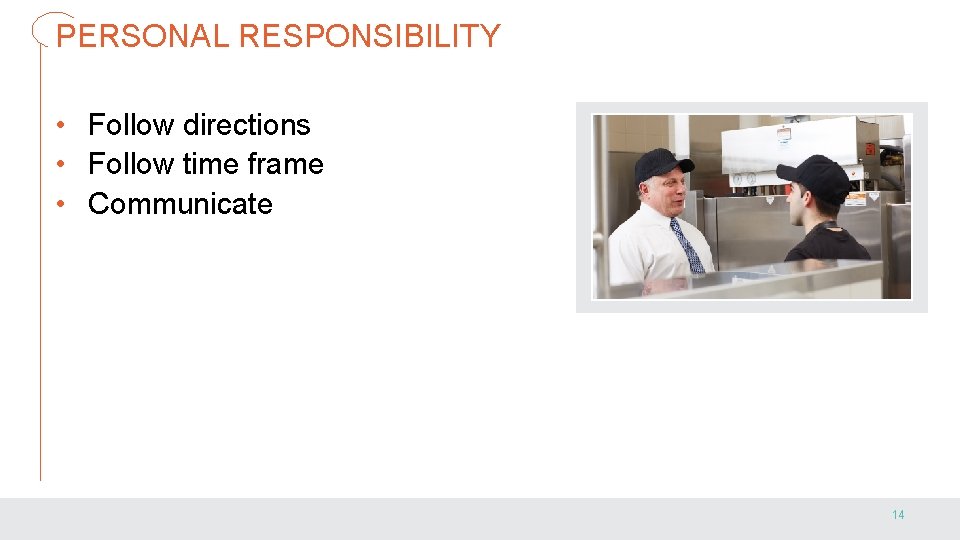
PERSONAL RESPONSIBILITY • Follow directions • Follow time frame • Communicate 14
ETHICS • Code of conduct • Ethics—set of moral values o Based on honesty, integrity, and respect o Influenced by backgrounds, religious beliefs, personal code of conduct, experiences • Workplace ethics—professional tone and behaviors o Acceptable vs. unacceptable
FOOD FOR THOUGHT 1. Why would a business establish a code of ethics? When should it be established, and who should participate in writing it? 2. What problems can arise when employees bring their personal values to their jobs? How can this undermine diversity, respect for colleagues, and guest service? 16
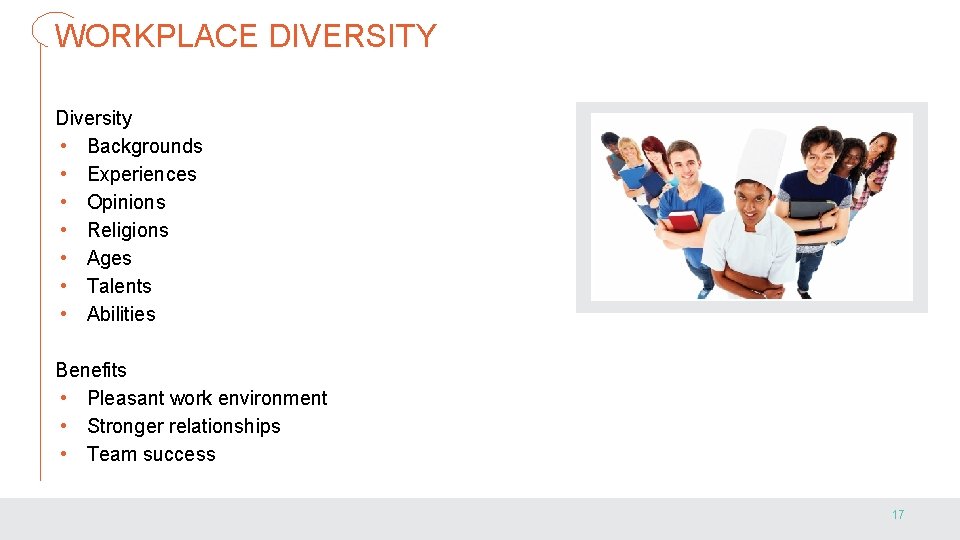
WORKPLACE DIVERSITY Diversity • Backgrounds • Experiences • Opinions • Religions • Ages • Talents • Abilities Benefits • Pleasant work environment • Stronger relationships • Team success 17
STEREOTYPES AND PREJUDICES • • Stereotypes—generalizations about a particular group Prejudice—judgments unrelated to abilities Bias—based on a prejudice Cultural tendencies—based on beliefs and habits Discuss: 1. What are some legal problems that can result from prejudiced or biased behavior in the workplace? 2. How do bias and prejudice function as barriers to communication? How can they be overcome?
SHOWING EMPATHY • • • Empathy—identifying with feelings, thoughts, or attitudes Nonjudgmental acceptance Genuine concern Connect with coworkers Build trust and respect
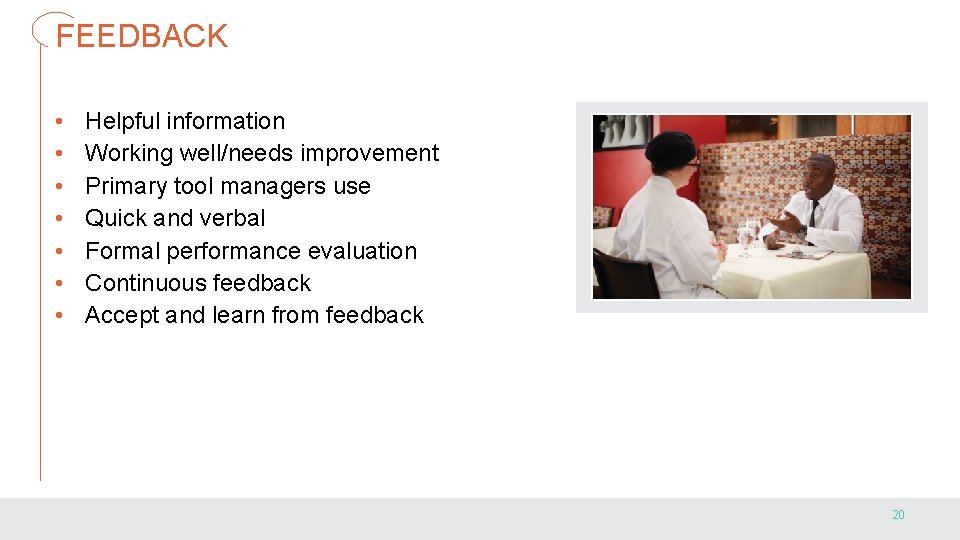
FEEDBACK • • Helpful information Working well/needs improvement Primary tool managers use Quick and verbal Formal performance evaluation Continuous feedback Accept and learn from feedback 20

FEEDBACK VIDEO 21
YOUR ROLE IN THE SUCCESS OF AN ORGANIZATION • Each employee has a direct impact on a company’s success • Mission statements o A mission statement basically states what a company is trying to achieve. o For example, The Cheesecake Factory’s mission is “to create an environment where absolute guest satisfaction is our highest priority. ”
FOOD FOR THOUGHT 1. Should you text your manager your resignation? Would a phone call be sufficient? 2. What is the value of leaving an organization on a positive note, even when the experience of the job wasn’t a positive one for you? 23
RESIGNING FROM A JOB • Reasons o Better opportunity o Change in school schedule • Two weeks’ notice • Inform in person • Letter of resignation o Avoid negative comments o Thank employer • Leave on a positive note
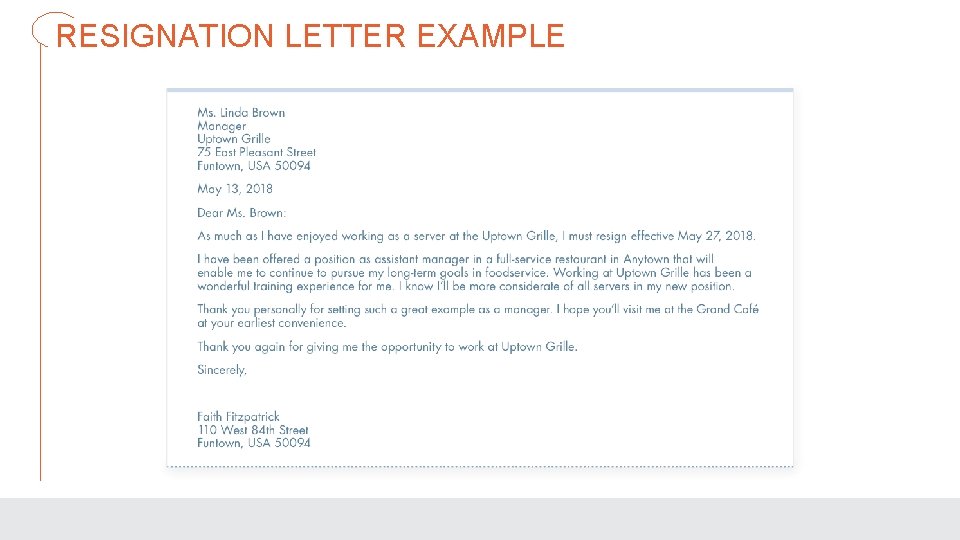
RESIGNATION LETTER EXAMPLE
GRAB AND GO • Turn to Page 2 in your textbook and read the case study. • Answer the two case study questions at the bottom of page 53 and discuss your solutions with a partner. 26
- Slides: 26