
Copyright 2004 Pearson Education Inc Chapter 4 Enhanced
- Slides: 21
Copyright © 2004 Pearson Education, Inc.
Chapter 4 Enhanced Entity. Relationship and UML Modeling Copyright © 2004 Pearson Education, Inc.
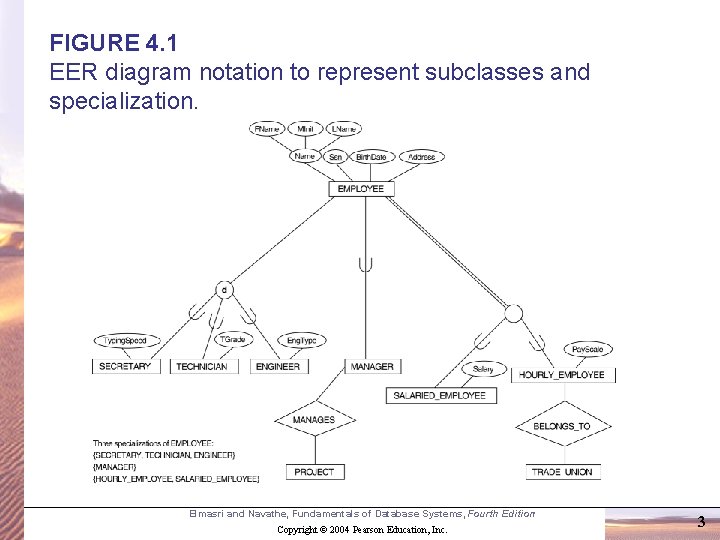
FIGURE 4. 1 EER diagram notation to represent subclasses and specialization. Elmasri and Navathe, Fundamentals of Database Systems, Fourth Edition Copyright © 2004 Pearson Education, Inc. 3
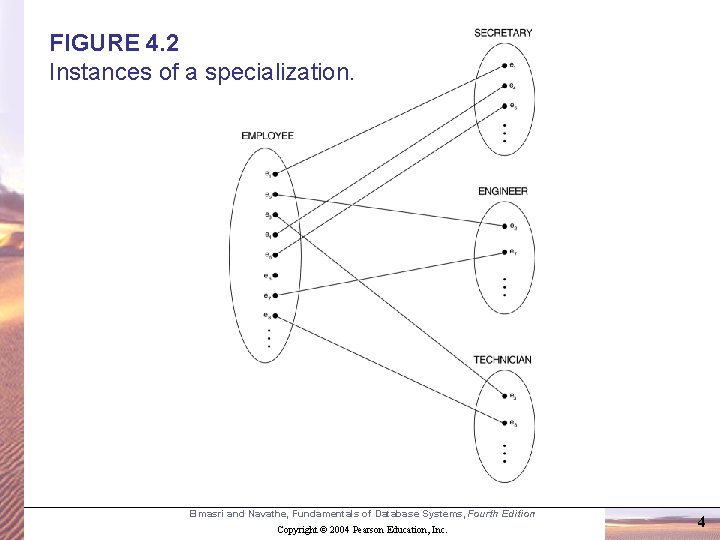
FIGURE 4. 2 Instances of a specialization. Elmasri and Navathe, Fundamentals of Database Systems, Fourth Edition Copyright © 2004 Pearson Education, Inc. 4
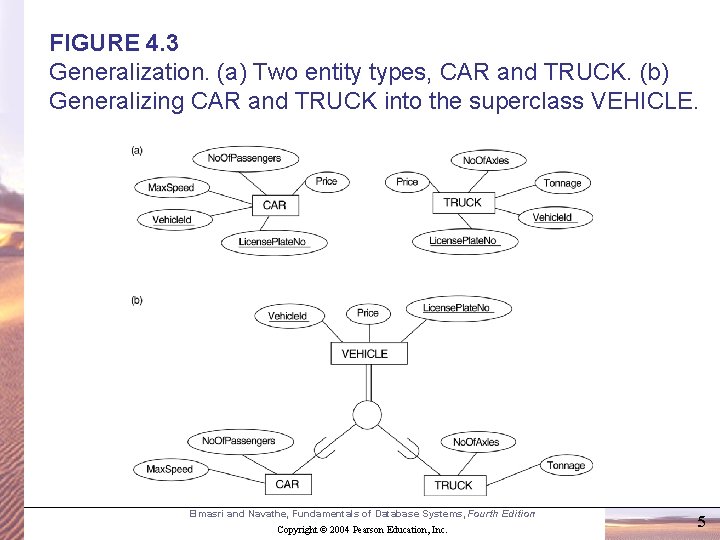
FIGURE 4. 3 Generalization. (a) Two entity types, CAR and TRUCK. (b) Generalizing CAR and TRUCK into the superclass VEHICLE. Elmasri and Navathe, Fundamentals of Database Systems, Fourth Edition Copyright © 2004 Pearson Education, Inc. 5
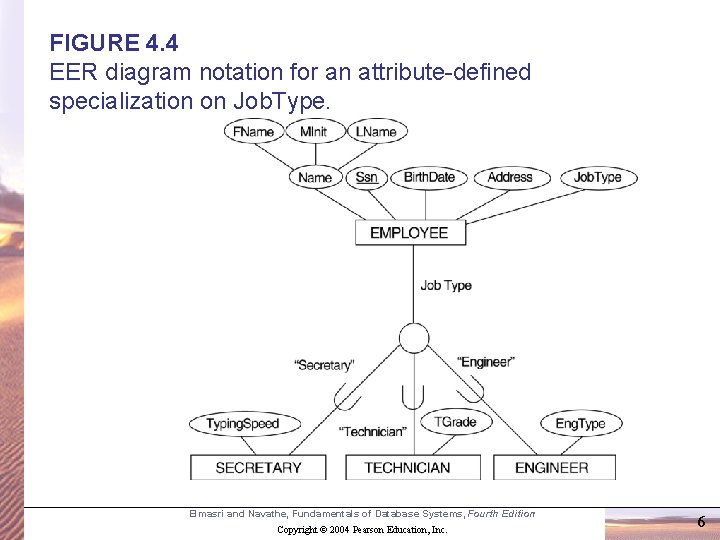
FIGURE 4. 4 EER diagram notation for an attribute-defined specialization on Job. Type. Elmasri and Navathe, Fundamentals of Database Systems, Fourth Edition Copyright © 2004 Pearson Education, Inc. 6
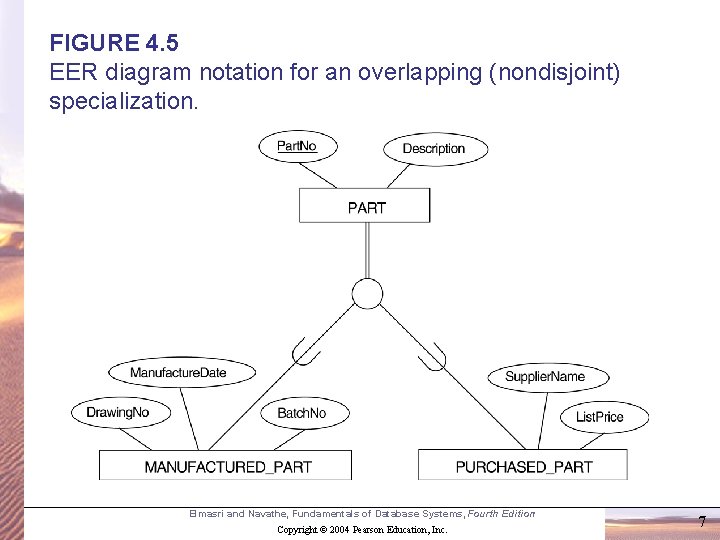
FIGURE 4. 5 EER diagram notation for an overlapping (nondisjoint) specialization. Elmasri and Navathe, Fundamentals of Database Systems, Fourth Edition Copyright © 2004 Pearson Education, Inc. 7
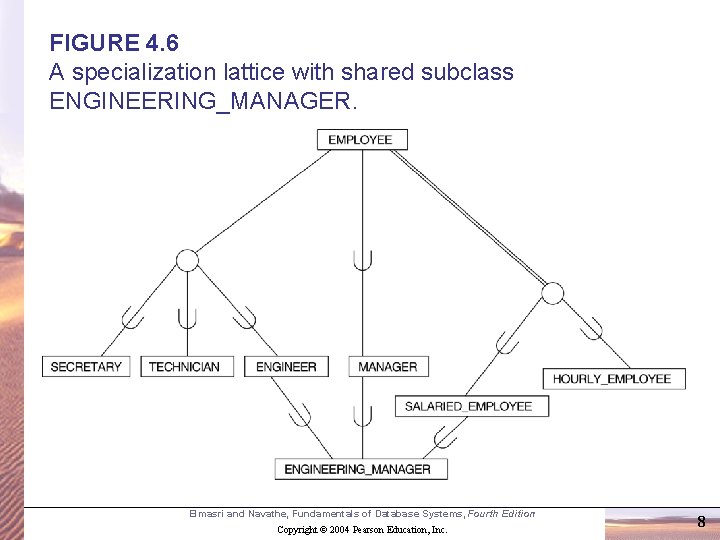
FIGURE 4. 6 A specialization lattice with shared subclass ENGINEERING_MANAGER. Elmasri and Navathe, Fundamentals of Database Systems, Fourth Edition Copyright © 2004 Pearson Education, Inc. 8
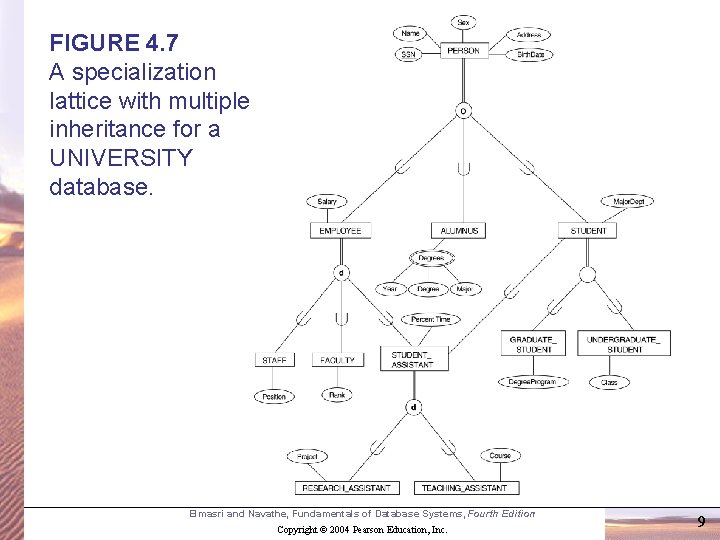
FIGURE 4. 7 A specialization lattice with multiple inheritance for a UNIVERSITY database. Elmasri and Navathe, Fundamentals of Database Systems, Fourth Edition Copyright © 2004 Pearson Education, Inc. 9
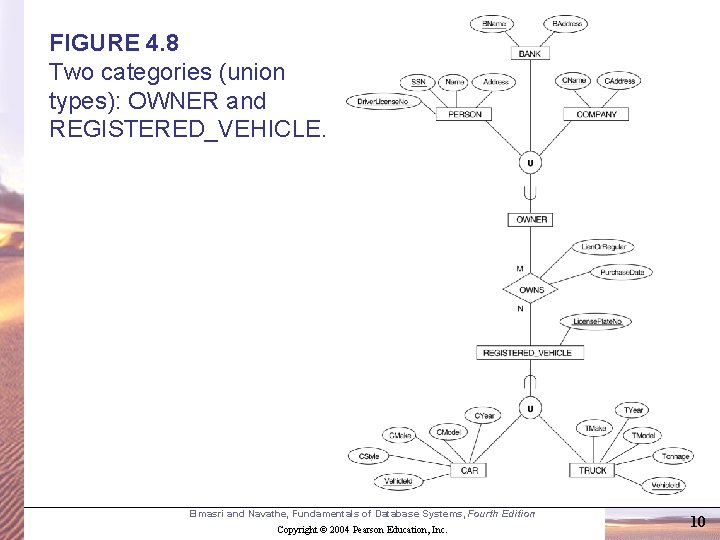
FIGURE 4. 8 Two categories (union types): OWNER and REGISTERED_VEHICLE. Elmasri and Navathe, Fundamentals of Database Systems, Fourth Edition Copyright © 2004 Pearson Education, Inc. 10
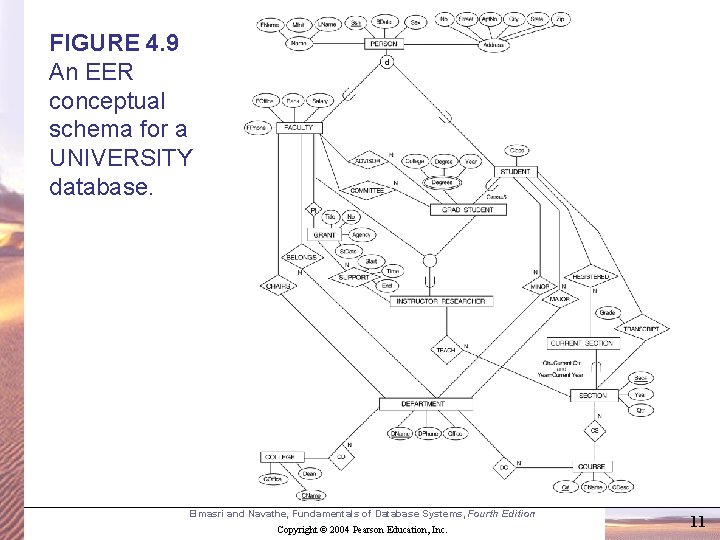
FIGURE 4. 9 An EER conceptual schema for a UNIVERSITY database. Elmasri and Navathe, Fundamentals of Database Systems, Fourth Edition Copyright © 2004 Pearson Education, Inc. 11
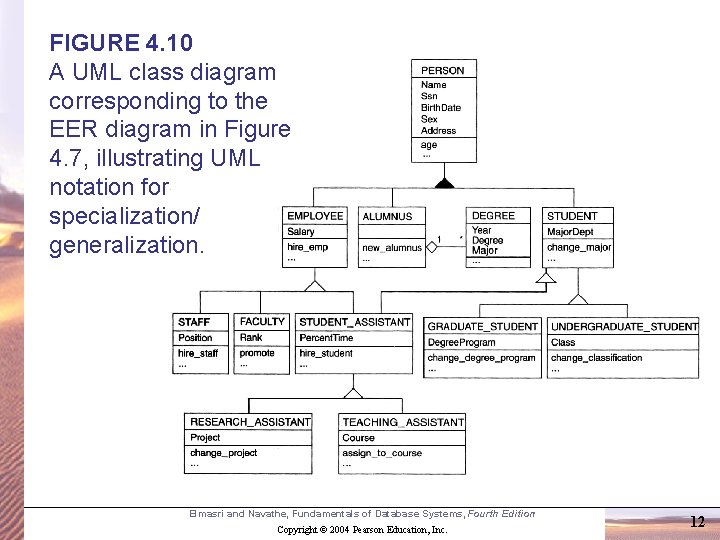
FIGURE 4. 10 A UML class diagram corresponding to the EER diagram in Figure 4. 7, illustrating UML notation for specialization/ generalization. Elmasri and Navathe, Fundamentals of Database Systems, Fourth Edition Copyright © 2004 Pearson Education, Inc. 12
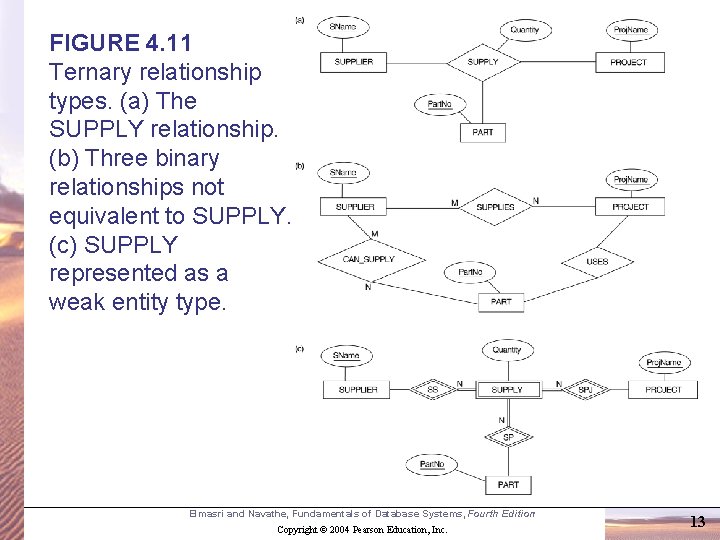
FIGURE 4. 11 Ternary relationship types. (a) The SUPPLY relationship. (b) Three binary relationships not equivalent to SUPPLY. (c) SUPPLY represented as a weak entity type. Elmasri and Navathe, Fundamentals of Database Systems, Fourth Edition Copyright © 2004 Pearson Education, Inc. 13
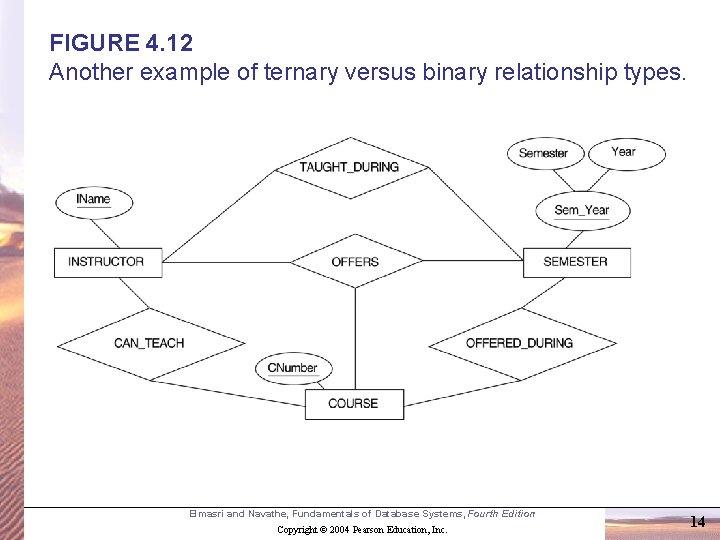
FIGURE 4. 12 Another example of ternary versus binary relationship types. Elmasri and Navathe, Fundamentals of Database Systems, Fourth Edition Copyright © 2004 Pearson Education, Inc. 14
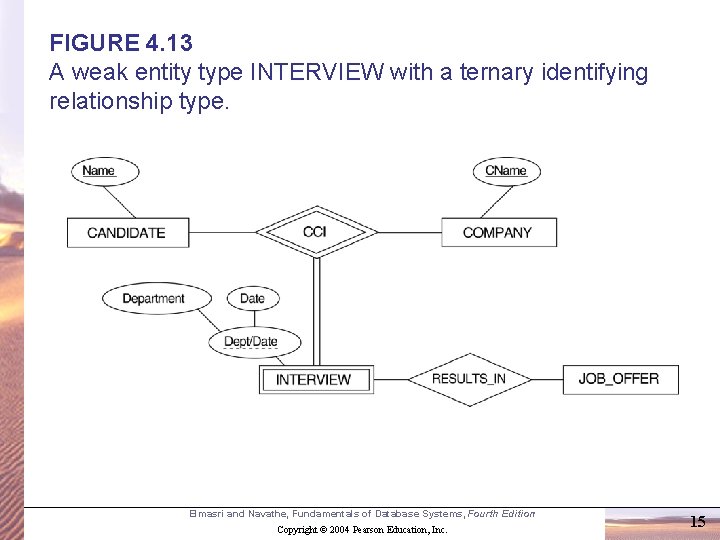
FIGURE 4. 13 A weak entity type INTERVIEW with a ternary identifying relationship type. Elmasri and Navathe, Fundamentals of Database Systems, Fourth Edition Copyright © 2004 Pearson Education, Inc. 15
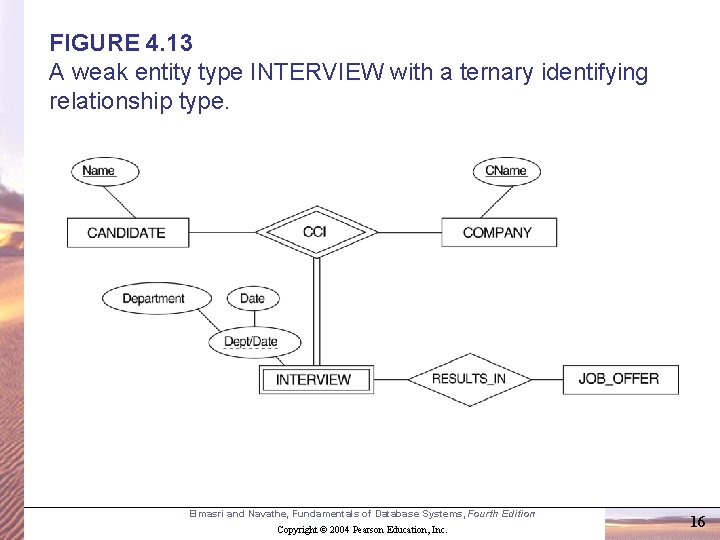
FIGURE 4. 13 A weak entity type INTERVIEW with a ternary identifying relationship type. Elmasri and Navathe, Fundamentals of Database Systems, Fourth Edition Copyright © 2004 Pearson Education, Inc. 16
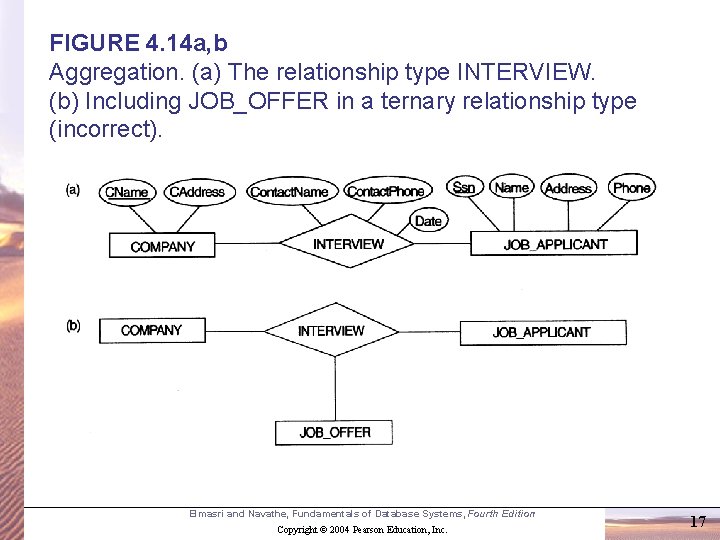
FIGURE 4. 14 a, b Aggregation. (a) The relationship type INTERVIEW. (b) Including JOB_OFFER in a ternary relationship type (incorrect). Elmasri and Navathe, Fundamentals of Database Systems, Fourth Edition Copyright © 2004 Pearson Education, Inc. 17
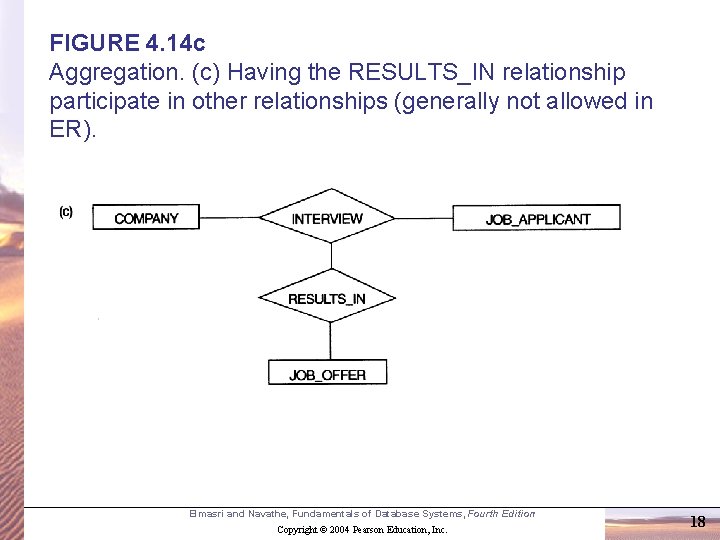
FIGURE 4. 14 c Aggregation. (c) Having the RESULTS_IN relationship participate in other relationships (generally not allowed in ER). Elmasri and Navathe, Fundamentals of Database Systems, Fourth Edition Copyright © 2004 Pearson Education, Inc. 18
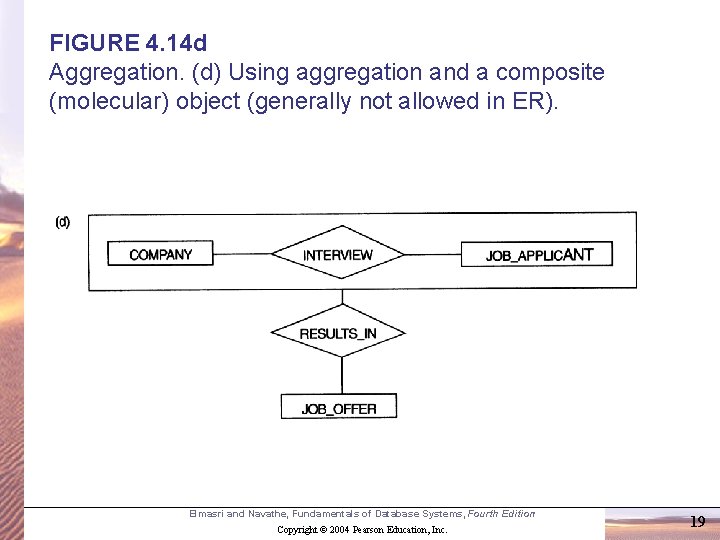
FIGURE 4. 14 d Aggregation. (d) Using aggregation and a composite (molecular) object (generally not allowed in ER). Elmasri and Navathe, Fundamentals of Database Systems, Fourth Edition Copyright © 2004 Pearson Education, Inc. 19
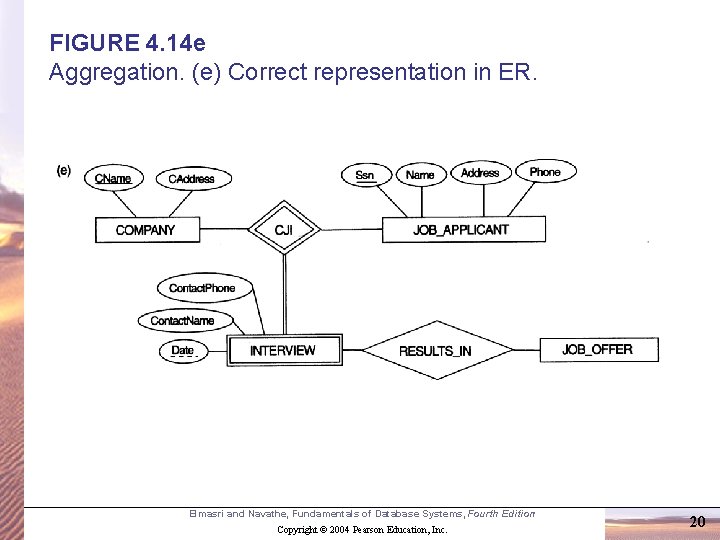
FIGURE 4. 14 e Aggregation. (e) Correct representation in ER. Elmasri and Navathe, Fundamentals of Database Systems, Fourth Edition Copyright © 2004 Pearson Education, Inc. 20
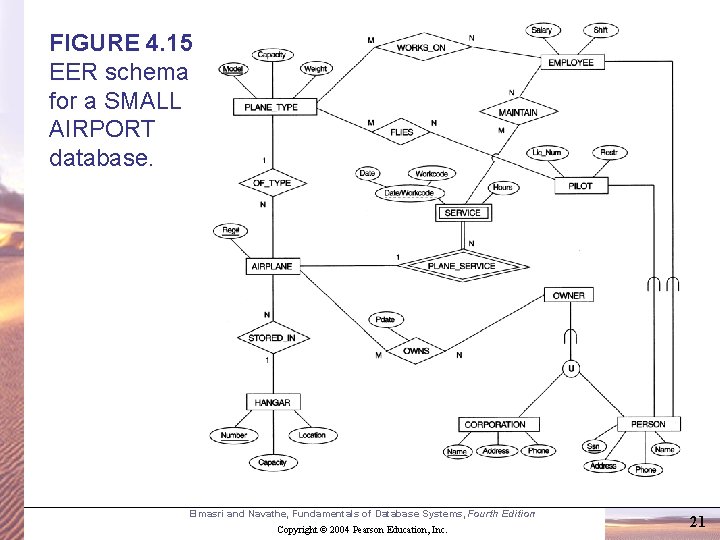
FIGURE 4. 15 EER schema for a SMALL AIRPORT database. Elmasri and Navathe, Fundamentals of Database Systems, Fourth Edition Copyright © 2004 Pearson Education, Inc. 21