
copy Vocabulary to know for Unit 9 Acidity
copy Vocabulary to know for Unit 9 -Acidity -Alkalinity -Arrhenius Acid -Arrhenius Base -Electrolyte -Hydrogen ion -Hydronium ion -indicator -neutralization -p. H scale -salt -titration -dissociation -ionization
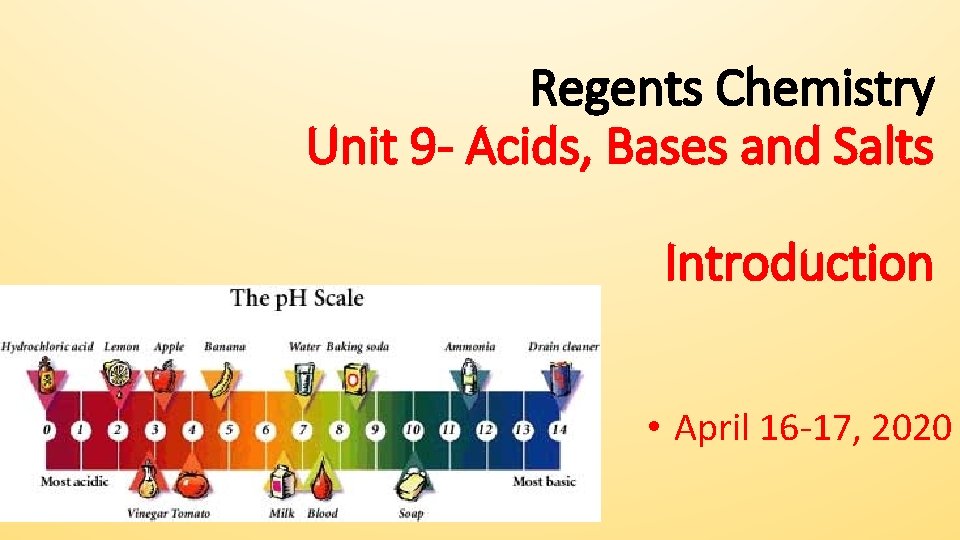
Regents Chemistry Unit 9 - Acids, Bases and Salts Introduction • April 16 -17, 2020

• BE SURE TO DO THE 8 PAGE PACKET FOR th th April 16 to 20 LINKED ON MY WEBSITE!
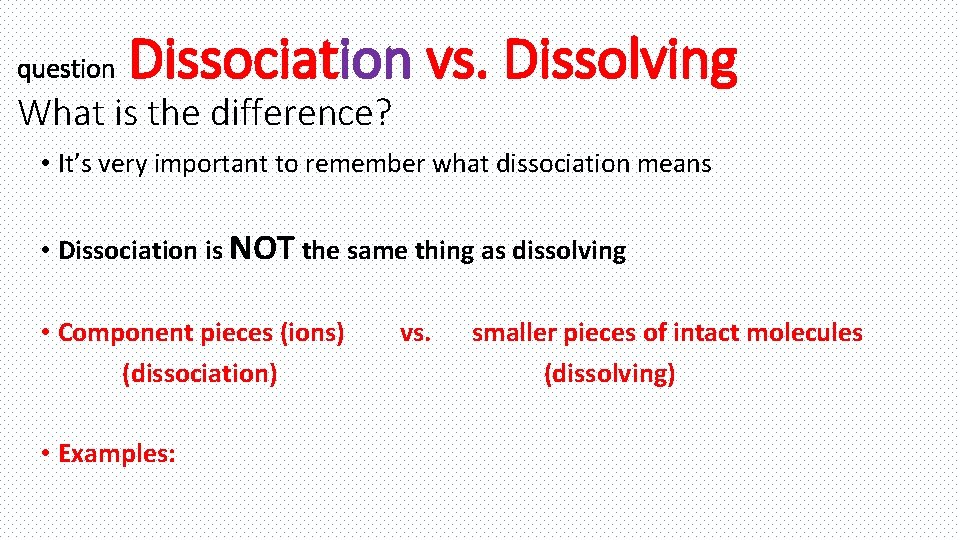
question Dissociation vs. Dissolving What is the difference? • It’s very important to remember what dissociation means • Dissociation is NOT the same thing as dissolving • Component pieces (ions) (dissociation) • Examples: vs. smaller pieces of intact molecules (dissolving)

Electrolytes vs nonelectrolytes • Electrolytes are substances that dissociate (and conduct electricity) • What categories of substances are electrolytes? • ACIDS BASES SALTS • Sugars dissolve, therefore no ions. NOT AN ELECTROLYTE
Reference Tables for this unit • K- List of Common Acids • L- List of Common Bases • M- Indicators • R- Organic Functional Groups
Characteristics of acids • Sour taste • electrolyte • neutralization • Production of hydrogen gas • indicators
Characteristics of bases • Bitter taste • Slippery or soapy feeling • Electrolyte • Neutralization • indicator
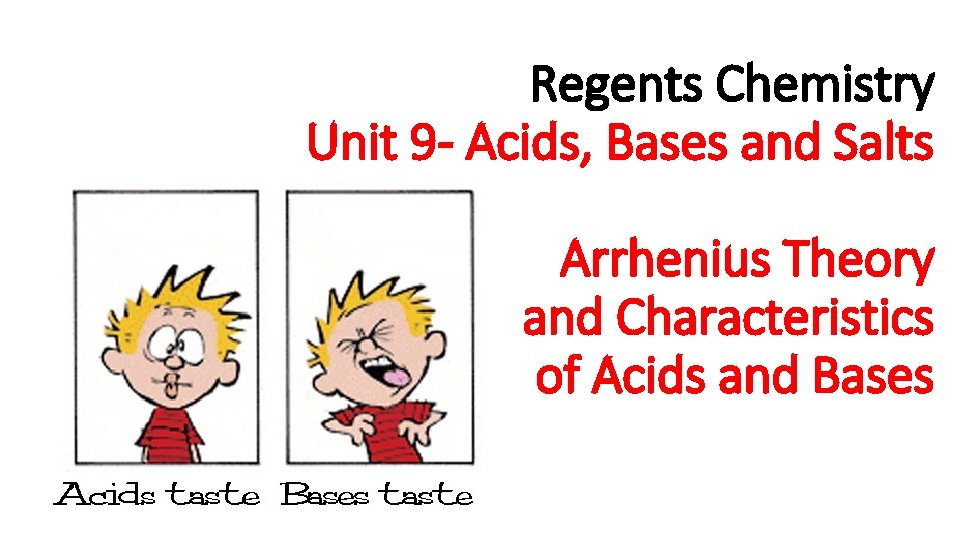
Regents Chemistry Unit 9 - Acids, Bases and Salts Arrhenius Theory and Characteristics of Acids and Bases
Whiteboard question Dissociation and Solvation • Draw the solvation of ONE formula unit of calcium chloride by six molecules of water. Be sure to orient the molecule-ion attraction properly! (TWO water molecules to each ion)
Whiteboard question Dissociation and Solvation • Draw the solvation of ONE formula unit of calcium chloride by six molecules of water. Be sure to orient the molecule-ion attraction properly! (TWO water molecules to each ion)
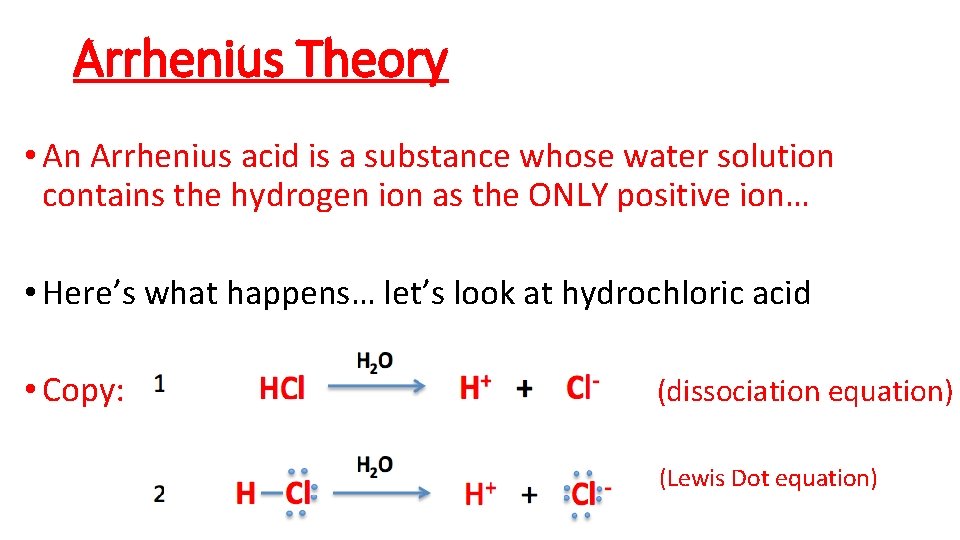
Arrhenius Theory • An Arrhenius acid is a substance whose water solution contains the hydrogen ion as the ONLY positive ion… • Here’s what happens… let’s look at hydrochloric acid • Copy: (dissociation equation) • (Lewis Dot equation)
Whiteboard Questions! • Write the dissociation equation for Nitric Acid • Write the dissociation equation for Sulfuric Acid • Copy the equations into your notebook
Whiteboard Questions! • Write the dissociation equation for Nitric Acid • Write the dissociation equation for Sulfuric Acid • Copy the equations into your notebook
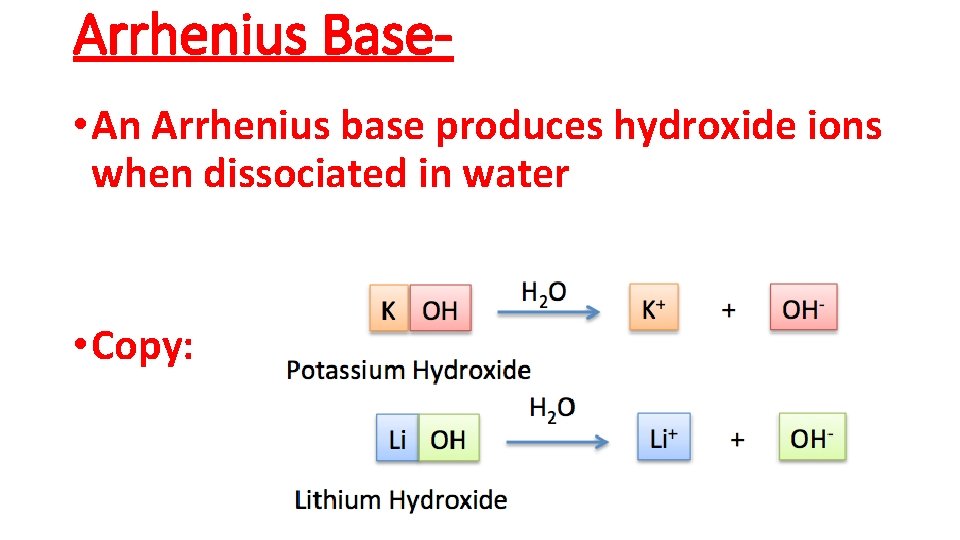
Arrhenius Base • An Arrhenius base produces hydroxide ions when dissociated in water • Copy:
Whiteboard Questions! • Write the dissociation equation for sodium hydroxide • Write the dissociation equation for calcium hydroxide • Copy the equations into your notebook
Whiteboard Questions! • Write the dissociation equation for sodium hydroxide • Write the dissociation equation for calcium hydroxide • Copy the equations into your notebook
Ticket out • Will acid solutions conduct electricity? • Will basic solutions conduct electricity? • Why or why not?
Ticket out • Will acid solutions conduct electricity? • Will basic solutions conduct electricity? • Why or why not?
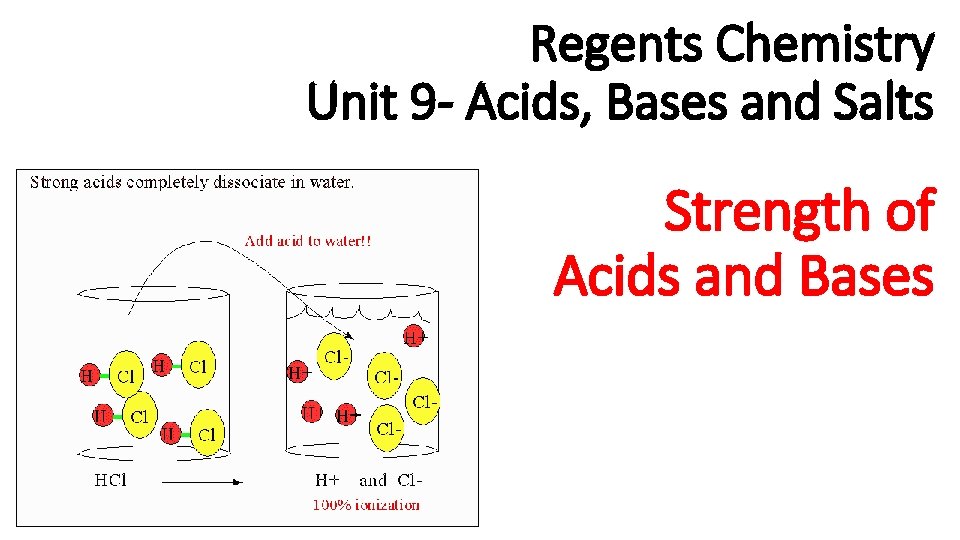
Regents Chemistry Unit 9 - Acids, Bases and Salts Strength of Acids and Bases

Strength of acids and bases • Acids or bases that ionize only slightly are considered “weak”. They produce only a small number of ions • Acids or bases that ionize completely or almost completely are considered “strong”.
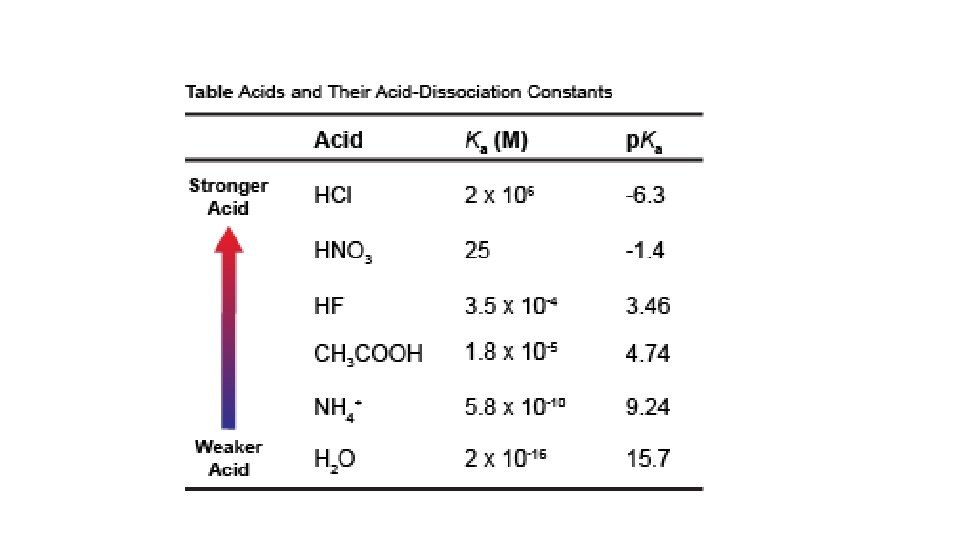
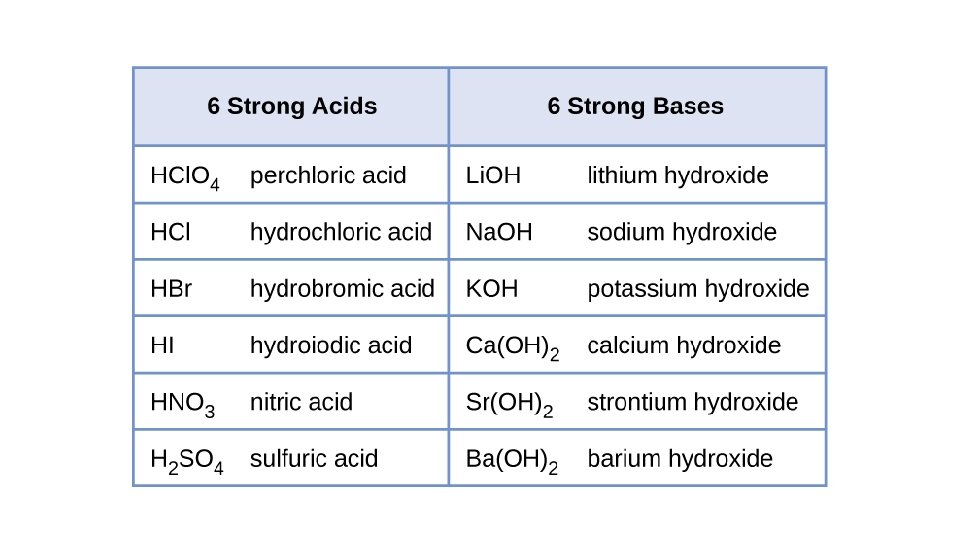
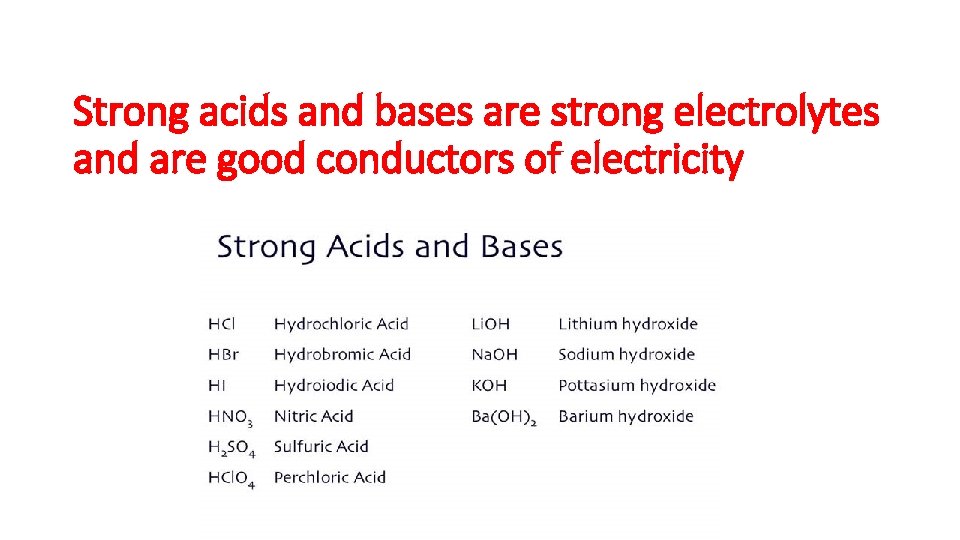
Strong acids and bases are strong electrolytes and are good conductors of electricity
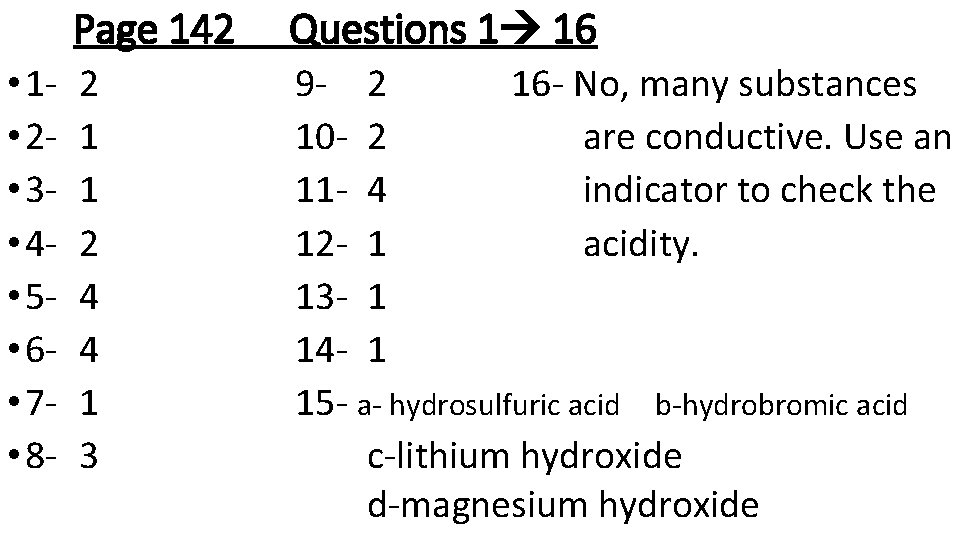
• 1 • 2 • 3 • 4 • 5 • 6 • 7 • 8 - Page 142 Questions 1 16 2 1 1 2 4 4 1 3 9 - 2 16 - No, many substances 10 - 2 are conductive. Use an 11 - 4 indicator to check the 12 - 1 acidity. 13 - 1 14 - 1 15 - a- hydrosulfuric acid b-hydrobromic acid c-lithium hydroxide d-magnesium hydroxide
- Slides: 25