
Coping with Perinatal Mood and Anxiety Disorders PMADS


- Slides: 23
Coping with Perinatal Mood and Anxiety Disorders (PMADS) Cassandra D. Harris-Gray, CEO Creative Spirits Behavioral Health MSMFT, LCADC, Marriage and Family Associate
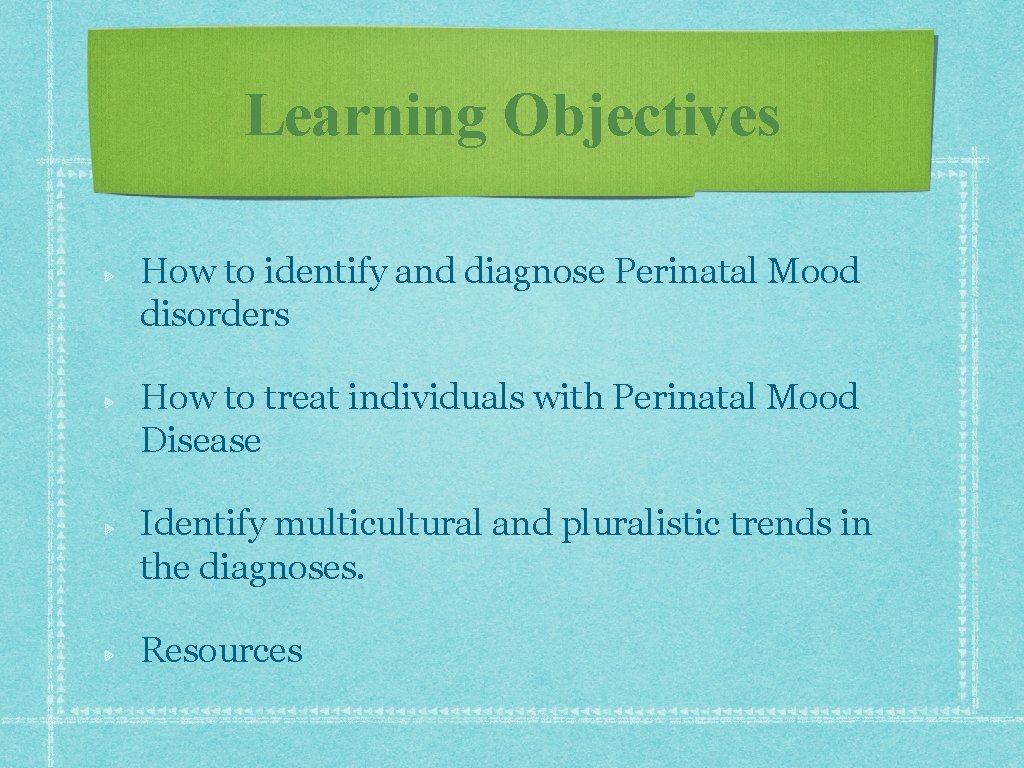
Learning Objectives How to identify and diagnose Perinatal Mood disorders How to treat individuals with Perinatal Mood Disease Identify multicultural and pluralistic trends in the diagnoses. Resources
Disclosure The following presentation has been developed for the purpose of research and evidence based practice for the treatment of Perinatal Mood Disorder. I am however the author of my book entitled “ 90 Days of Power" and will be referenced during the treatment portion of this presentation there is no requirement for purchase for any participant or conference sponsor. Therefore, with respect to this presentation, there has been no relevant (direct or indirect) financial relationship between any parties and any for-profit company which could be considered a conflict of interest.
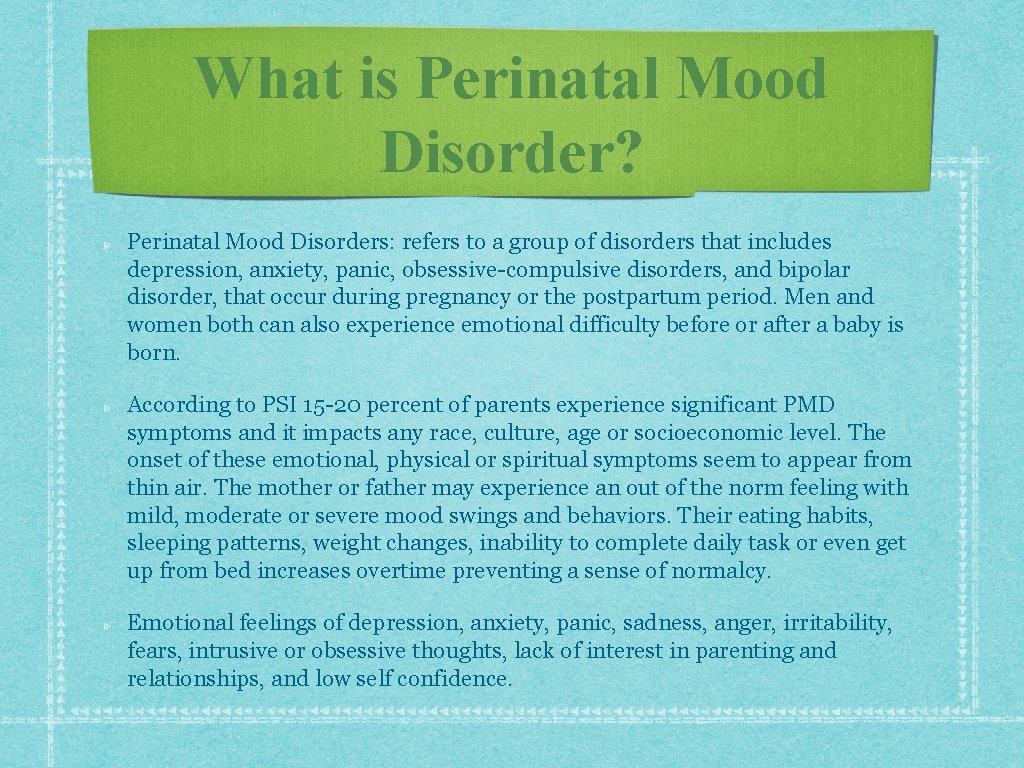
What is Perinatal Mood Disorder? Perinatal Mood Disorders: refers to a group of disorders that includes depression, anxiety, panic, obsessive-compulsive disorders, and bipolar disorder, that occur during pregnancy or the postpartum period. Men and women both can also experience emotional difficulty before or after a baby is born. According to PSI 15 -20 percent of parents experience significant PMD symptoms and it impacts any race, culture, age or socioeconomic level. The onset of these emotional, physical or spiritual symptoms seem to appear from thin air. The mother or father may experience an out of the norm feeling with mild, moderate or severe mood swings and behaviors. Their eating habits, sleeping patterns, weight changes, inability to complete daily task or even get up from bed increases overtime preventing a sense of normalcy. Emotional feelings of depression, anxiety, panic, sadness, anger, irritability, fears, intrusive or obsessive thoughts, lack of interest in parenting and relationships, and low self confidence.
Types of Perinatal Disorders Perinatal or Antepartum. Postpartum anxiety/panic Postpartum obsessive compulsive Postpartum traumatic stress disorder Postpartum Psychosis Postpartum addiction
Signs, Symptoms and Risk Prenatal or Antepartum Depression/Postpartum Depression Symptoms: Feelings of anger or irritability, Lack of interest in the baby, Appetite and sleep disturbance, Crying and sadness, Feelings of guilt, shame or hopelessness, Loss of interest, joy or pleasure in things you used to enjoy, Possible thoughts of harming the baby or yourself. Risk Factors: A personal or family history of depression, anxiety, or postpartum depression, Premenstrual dysphoric disorder (PMDD or PMS), Inadequate support in caring for the baby, Financial stress, Marital stress, Complications in pregnancy, birth or breastfeeding, major recent life event: loss, house move, job loss, Mothers of multiples, Mothers whose infants are in Neonatal Intensive Care (NICU), Mothers who’ve gone through infertility treatments, Women with a thyroid imbalance, Women with any form of diabetes (type 1, type 2 or gestational)
Signs, Symptoms and Risk Postpartum Anxiety Symptoms: Constant worry, Feeling that something bad is going to happen, Racing thoughts, Disturbances of sleep and appetite, Inability to sit still, Physical symptoms like dizziness, hot flashes, and nausea. Risk: Personal or family history of anxiety, previous perinatal depression or anxiety, or thyroid imbalance. Postpartum Panic Disorder: sufferer feels very nervous and has recurring panic attacks. During a panic attack, she may experience shortness of breath, chest pain, claustrophobia, dizziness, heart palpitations, and numbness and tingling in the extremities. Panic attacks seem to go in waves, but it is important to know that they will pass and will not hurt you
Signs, Symptoms, and Risk Perinatal Obsessive Compulsive Symptoms: • Obsessions, also called intrusive thoughts, which are persistent, repetitive thoughts or mental images related to the baby. • Compulsions, where the parents may do certain things over and over again to reduce fears and obsessions. • A sense of horror about the obsessions • Fear of being left alone with the infant • Hyper-vigilance in protecting the infant. Risk: Risk factors for postpartum OCD include a personal or family history of anxiety or OCD.
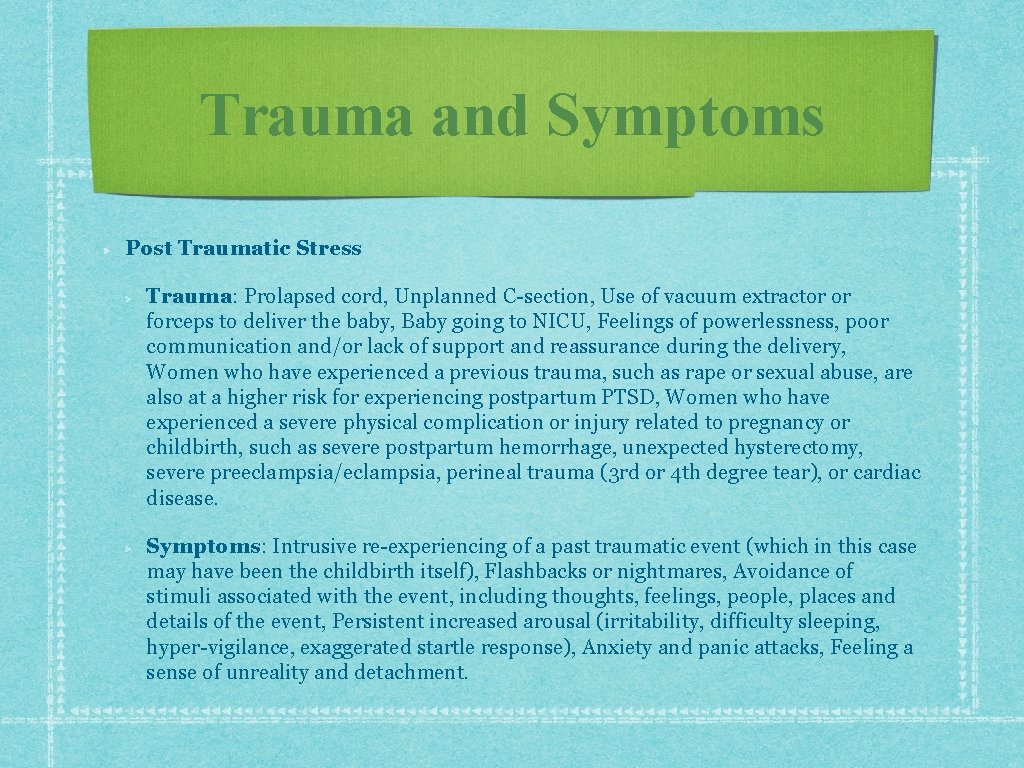
Trauma and Symptoms Post Traumatic Stress Trauma: Prolapsed cord, Unplanned C-section, Use of vacuum extractor or forceps to deliver the baby, Baby going to NICU, Feelings of powerlessness, poor communication and/or lack of support and reassurance during the delivery, Women who have experienced a previous trauma, such as rape or sexual abuse, are also at a higher risk for experiencing postpartum PTSD, Women who have experienced a severe physical complication or injury related to pregnancy or childbirth, such as severe postpartum hemorrhage, unexpected hysterectomy, severe preeclampsia/eclampsia, perineal trauma (3 rd or 4 th degree tear), or cardiac disease. Symptoms: Intrusive re-experiencing of a past traumatic event (which in this case may have been the childbirth itself), Flashbacks or nightmares, Avoidance of stimuli associated with the event, including thoughts, feelings, people, places and details of the event, Persistent increased arousal (irritability, difficulty sleeping, hyper-vigilance, exaggerated startle response), Anxiety and panic attacks, Feeling a sense of unreality and detachment.
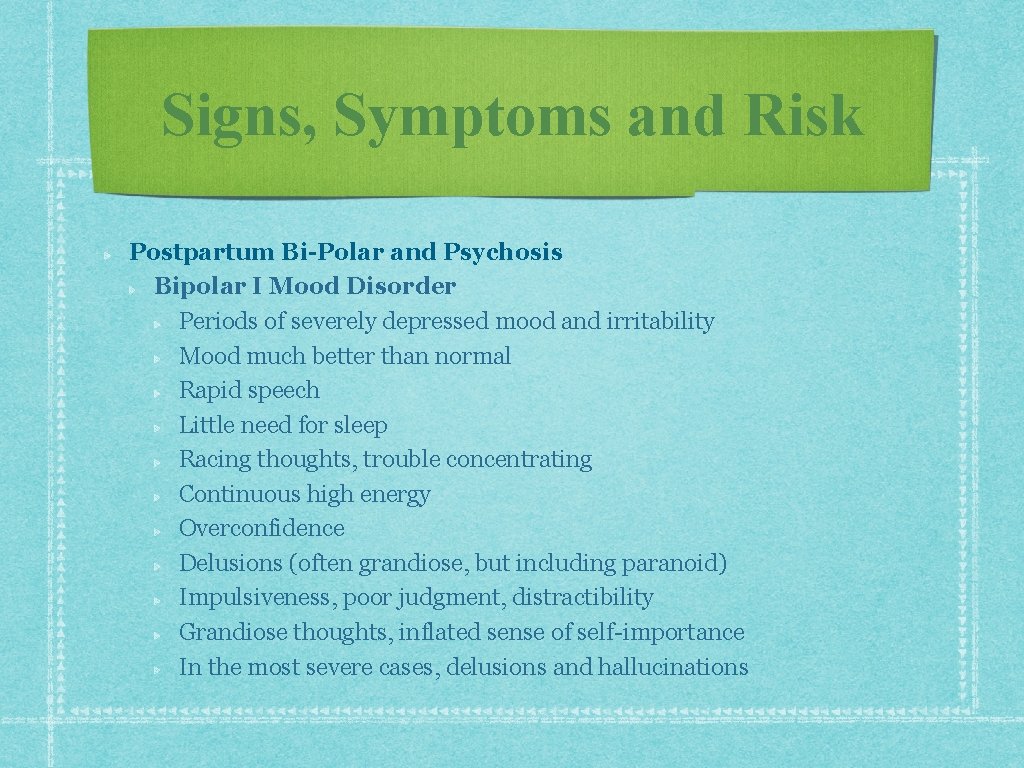
Signs, Symptoms and Risk Postpartum Bi-Polar and Psychosis Bipolar I Mood Disorder Periods of severely depressed mood and irritability Mood much better than normal Rapid speech Little need for sleep Racing thoughts, trouble concentrating Continuous high energy Overconfidence Delusions (often grandiose, but including paranoid) Impulsiveness, poor judgment, distractibility Grandiose thoughts, inflated sense of self-importance In the most severe cases, delusions and hallucinations
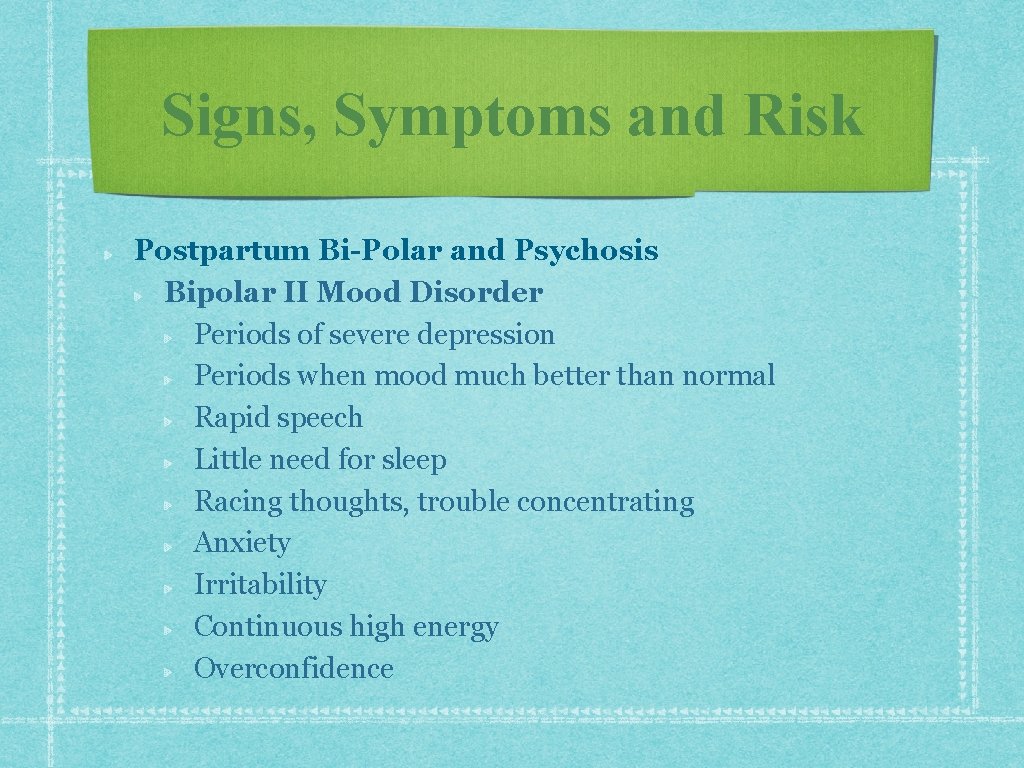
Signs, Symptoms and Risk Postpartum Bi-Polar and Psychosis Bipolar II Mood Disorder Periods of severe depression Periods when mood much better than normal Rapid speech Little need for sleep Racing thoughts, trouble concentrating Anxiety Irritability Continuous high energy Overconfidence
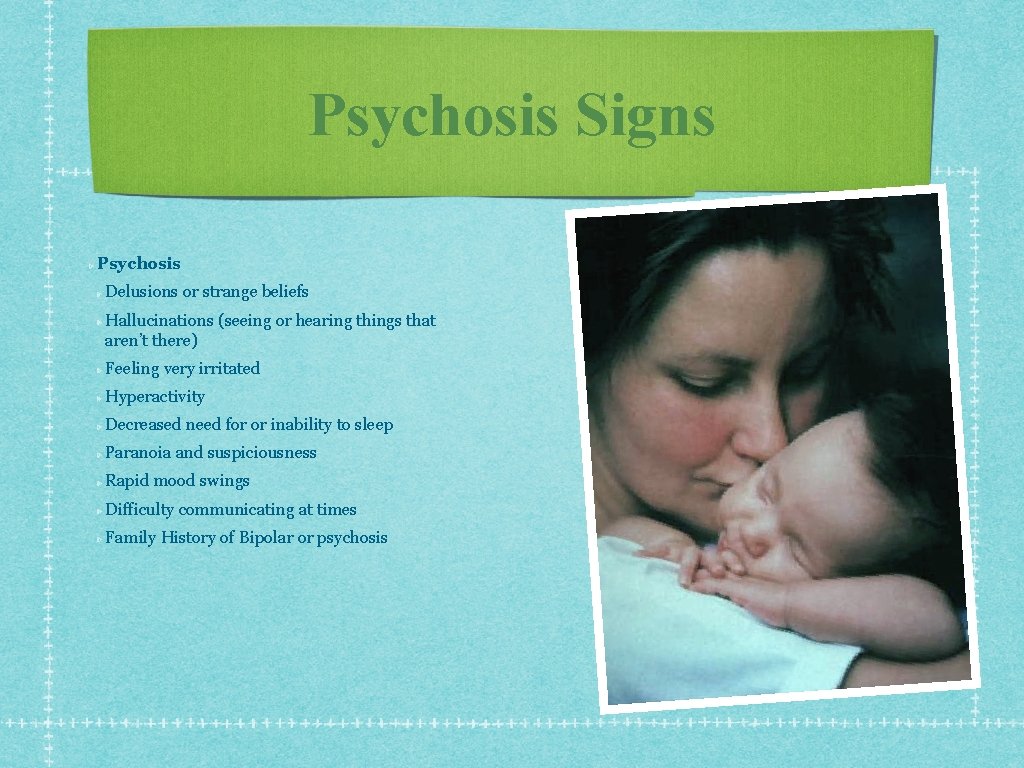
Psychosis Signs Psychosis Delusions or strange beliefs Hallucinations (seeing or hearing things that aren’t there) Feeling very irritated Hyperactivity Decreased need for or inability to sleep Paranoia and suspiciousness Rapid mood swings Difficulty communicating at times Family History of Bipolar or psychosis
Multicultural Impact According a study by Urban Institute 1 in 8 women will experience depression 2 x the rate of men. 10 -15% will experience Perinatal Mood Disorder and of the women experiencing depression Middle-aged Hispanic women have the highest rate of symptoms African American women experience greater severity and persistence of symptoms Asian American women face the greatest degree of stigma as a cultural barrier in seeking help
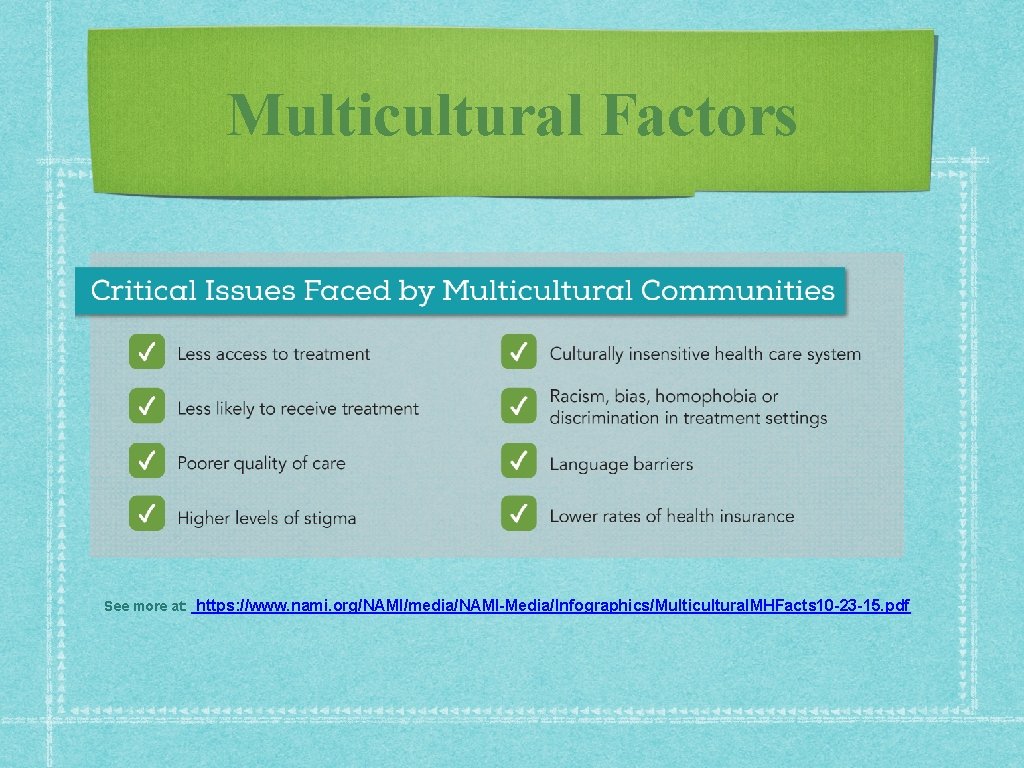
Multicultural Factors See more at: https: //www. nami. org/NAMI/media/NAMI-Media/Infographics/Multicultural. MHFacts 10 -23 -15. pdf
Treatment Techniques Screening utilizing evidenced bases tools to quickly and readily assess for possible Perinatal Mood Disorders. Edinburgh Postnatal Depression Screen(EPDS) and Patient Health Questionnaire (PHQ 9) Making mental health history a part of medical exam in prenatal and postnatal care up to 1 year after delivery. Consultations and integrated care is a must between all providers. This includes primary care, Obstetrics and Gynecology, Pediatrics, psychiatrist, mental health, natural, wholistic and midwifery professionals. This should also include referrals to support services, public health, early childhood programs, social services and faith supports. Refer, Refer! Assisting the client to understand the Perinatal Mood Disorder as a normal part of the development, birthing and first years of the parenting and sharing supports as part of the healing process. Importance of all medication management.
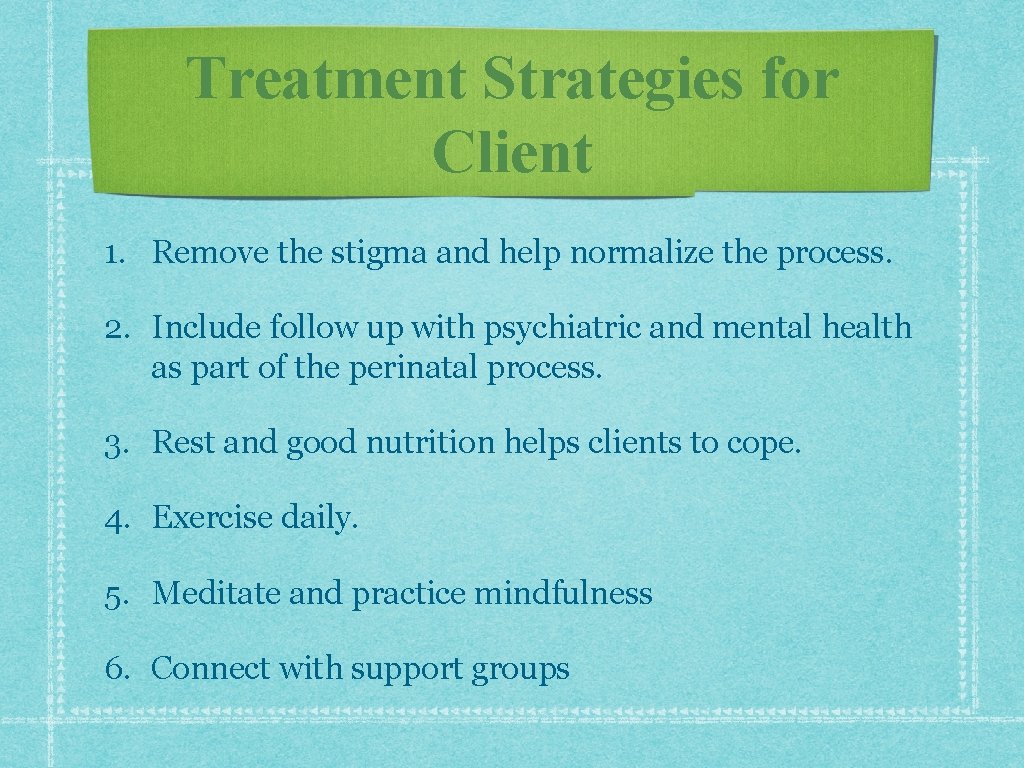
Treatment Strategies for Client 1. Remove the stigma and help normalize the process. 2. Include follow up with psychiatric and mental health as part of the perinatal process. 3. Rest and good nutrition helps clients to cope. 4. Exercise daily. 5. Meditate and practice mindfulness 6. Connect with support groups
Multicultural Provider ❖ Become a cultural sensitive mental health system and a cultural sensitive provider. ❖ A provider and system that understands your culture. ❖ A provider and system that understands your beliefs. ❖ A provider and system that integrates your culture in your treatment and recovery.
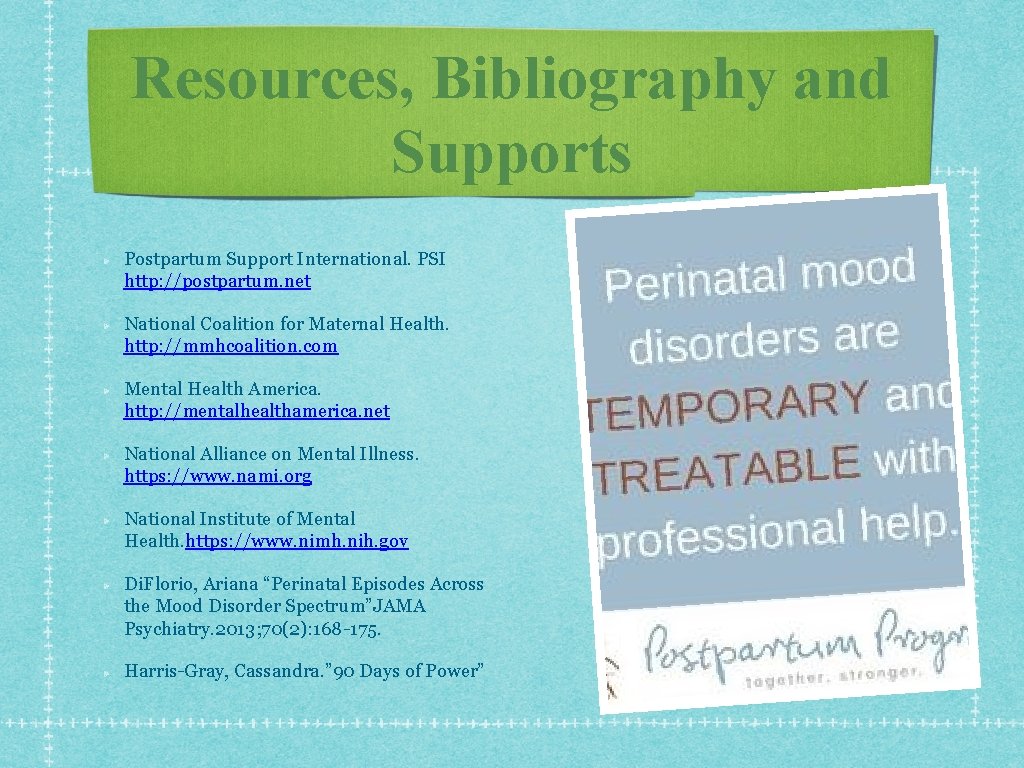
Resources, Bibliography and Supports Postpartum Support International. PSI http: //postpartum. net National Coalition for Maternal Health. http: //mmhcoalition. com Mental Health America. http: //mentalhealthamerica. net National Alliance on Mental Illness. https: //www. nami. org National Institute of Mental Health. https: //www. nimh. nih. gov Di. Florio, Ariana “Perinatal Episodes Across the Mood Disorder Spectrum”JAMA Psychiatry. 2013; 70(2): 168 -175. Harris-Gray, Cassandra. ” 90 Days of Power”
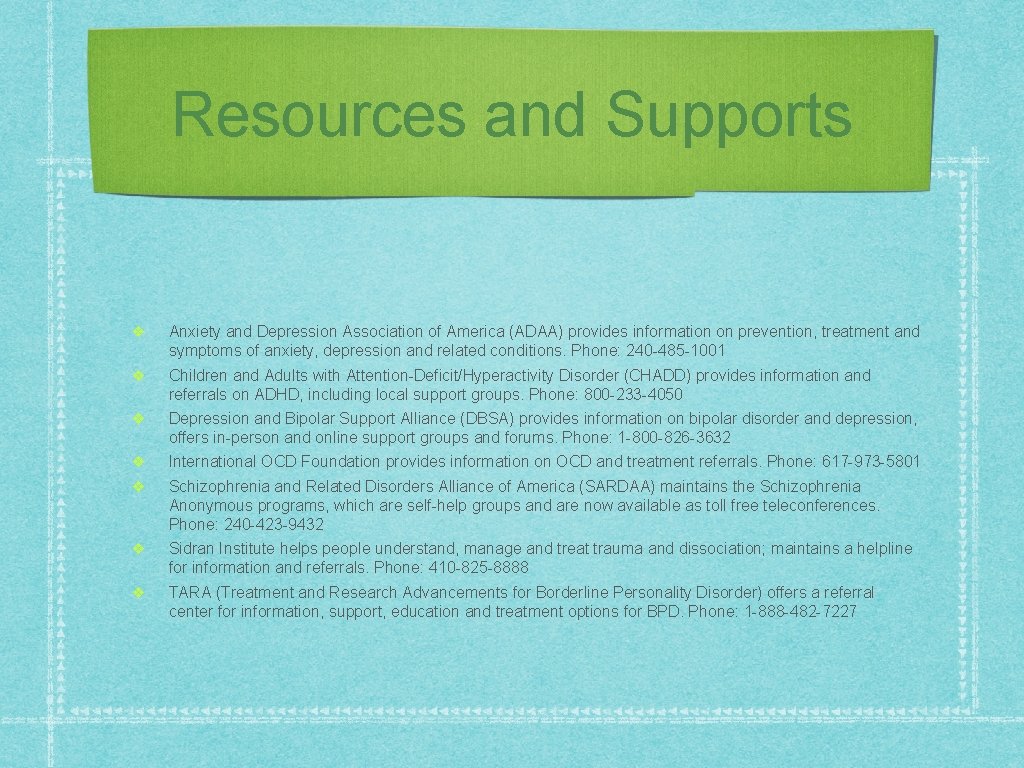
Resources and Supports ❖ Anxiety and Depression Association of America (ADAA) provides information on prevention, treatment and symptoms of anxiety, depression and related conditions. Phone: 240 -485 -1001 ❖ Children and Adults with Attention-Deficit/Hyperactivity Disorder (CHADD) provides information and referrals on ADHD, including local support groups. Phone: 800 -233 -4050 ❖ Depression and Bipolar Support Alliance (DBSA) provides information on bipolar disorder and depression, offers in-person and online support groups and forums. Phone: 1 -800 -826 -3632 ❖ International OCD Foundation provides information on OCD and treatment referrals. Phone: 617 -973 -5801 ❖ Schizophrenia and Related Disorders Alliance of America (SARDAA) maintains the Schizophrenia Anonymous programs, which are self-help groups and are now available as toll free teleconferences. Phone: 240 -423 -9432 ❖ Sidran Institute helps people understand, manage and treat trauma and dissociation; maintains a helpline for information and referrals. Phone: 410 -825 -8888 ❖ TARA (Treatment and Research Advancements for Borderline Personality Disorder) offers a referral center for information, support, education and treatment options for BPD. Phone: 1 -888 -482 -7227
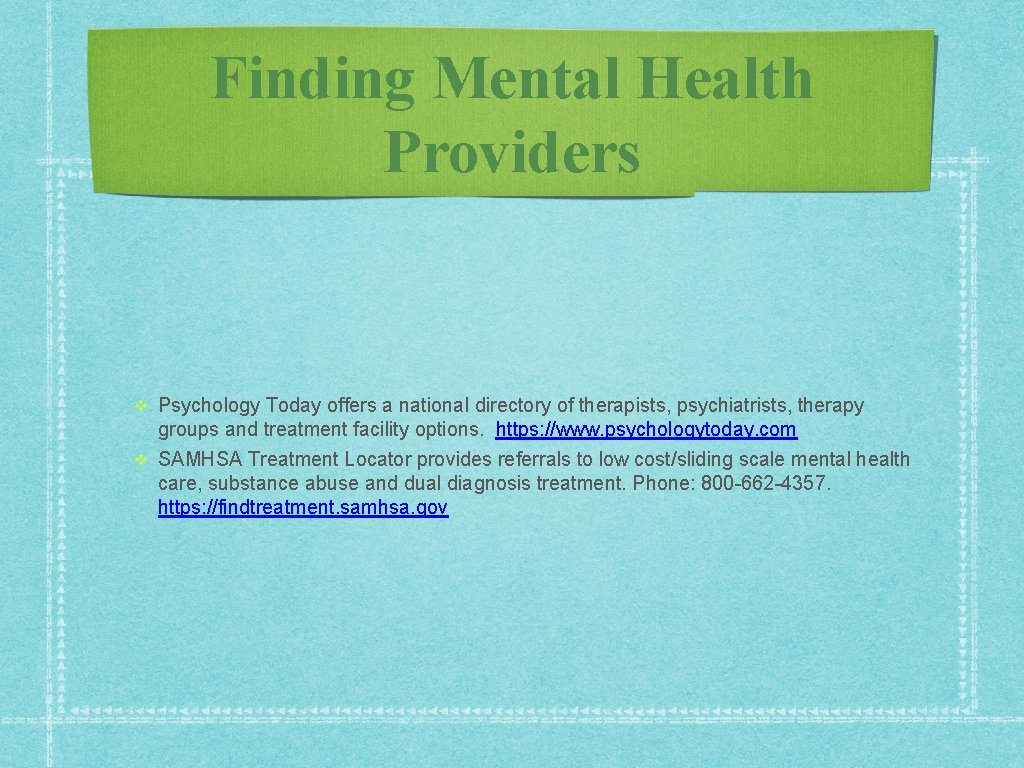
Finding Mental Health Providers ❖ Psychology Today offers a national directory of therapists, psychiatrists, therapy groups and treatment facility options. https: //www. psychologytoday. com ❖ SAMHSA Treatment Locator provides referrals to low cost/sliding scale mental health care, substance abuse and dual diagnosis treatment. Phone: 800 -662 -4357. https: //findtreatment. samhsa. gov
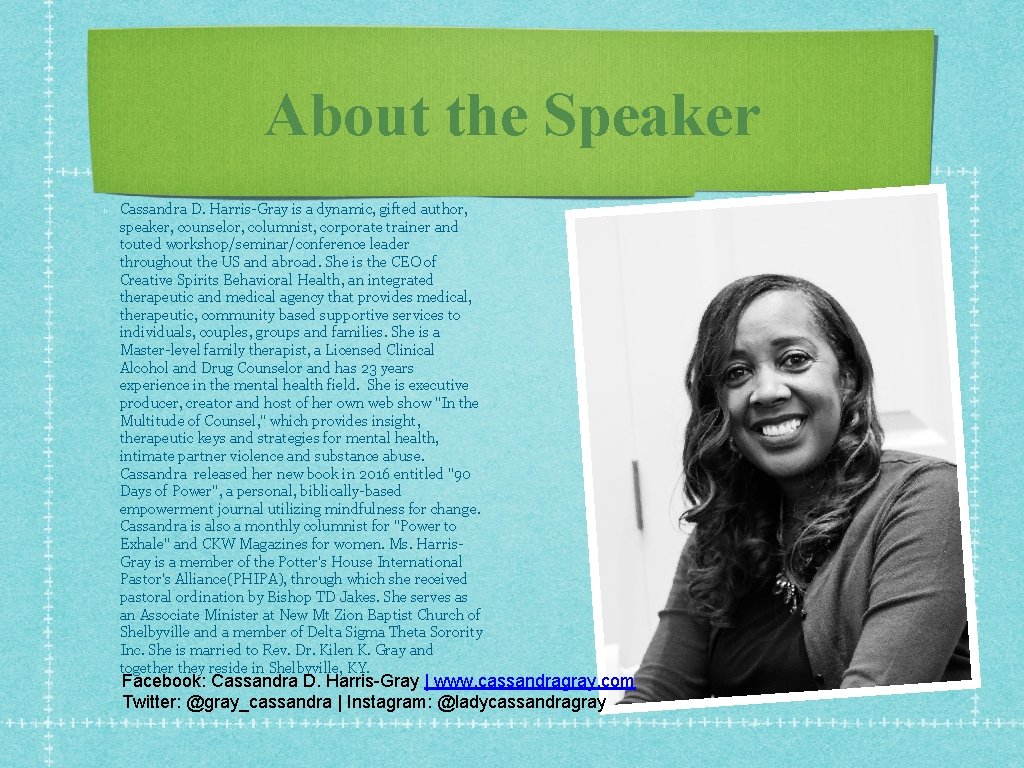
About the Speaker Cassandra D. Harris-Gray is a dynamic, gifted author, speaker, counselor, columnist, corporate trainer and touted workshop/seminar/conference leader throughout the US and abroad. She is the CEO of Creative Spirits Behavioral Health, an integrated therapeutic and medical agency that provides medical, therapeutic, community based supportive services to individuals, couples, groups and families. She is a Master-level family therapist, a Licensed Clinical Alcohol and Drug Counselor and has 23 years experience in the mental health field. She is executive producer, creator and host of her own web show "In the Multitude of Counsel, " which provides insight, therapeutic keys and strategies for mental health, intimate partner violence and substance abuse. Cassandra released her new book in 2016 entitled "90 Days of Power", a personal, biblically-based empowerment journal utilizing mindfulness for change. Cassandra is also a monthly columnist for "Power to Exhale" and CKW Magazines for women. Ms. Harris. Gray is a member of the Potter's House International Pastor's Alliance(PHIPA), through which she received pastoral ordination by Bishop TD Jakes. She serves as an Associate Minister at New Mt Zion Baptist Church of Shelbyville and a member of Delta Sigma Theta Sorority Inc. She is married to Rev. Dr. Kilen K. Gray and together they reside in Shelbyville, KY. Facebook: Cassandra D. Harris-Gray | www. cassandragray. com Twitter: @gray_cassandra | Instagram: @ladycassandragray