
Coping Stress strain coping support model Coping responses





- Slides: 16
Coping
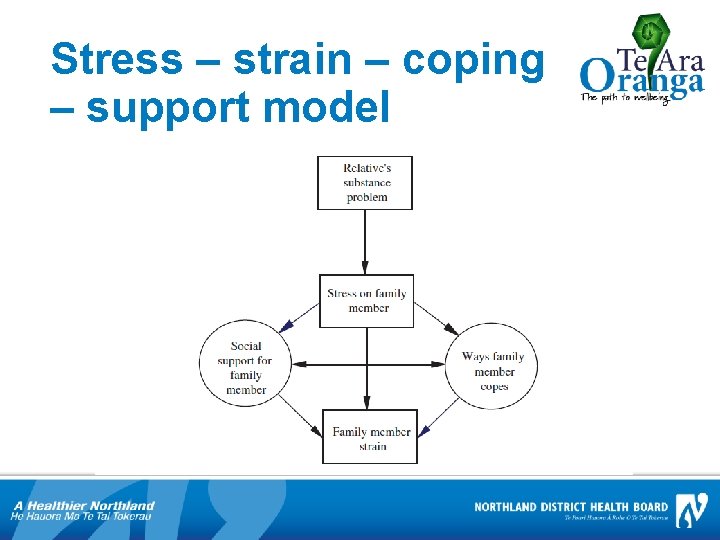
Stress – strain – coping – support model
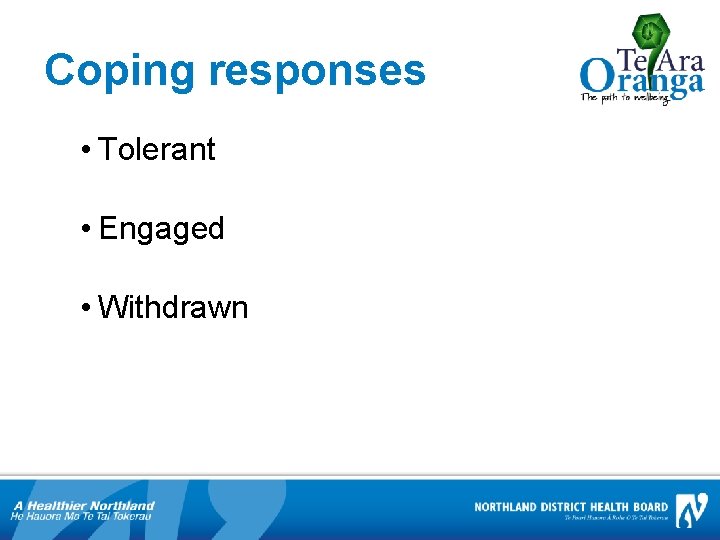
Coping responses • Tolerant • Engaged • Withdrawn
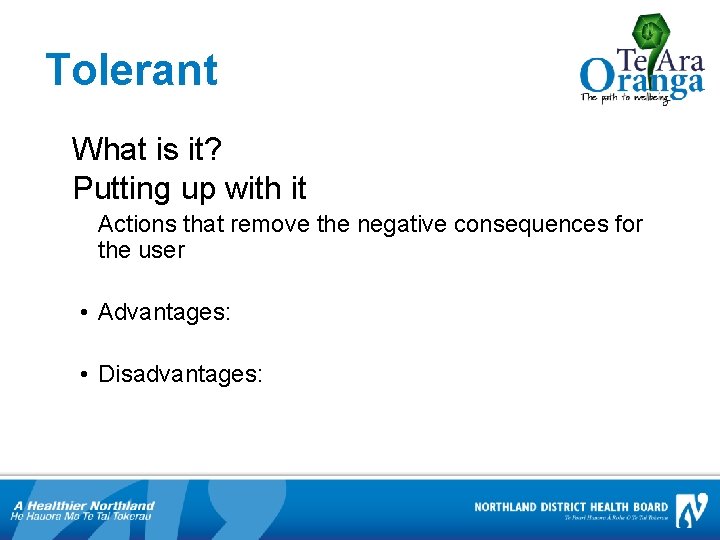
Tolerant What is it? Putting up with it Actions that remove the negative consequences for the user • Advantages: • Disadvantages:
Engaged What is it? Standing up to it Actively engaging to help them make changes • Advantages: • Disadvantages:
Withdrawn What is it? Withdrawing and gaining independence Putting distance between self and user, either due to uncertainty or wanting to care for self • Advantages: • Disadvantages:
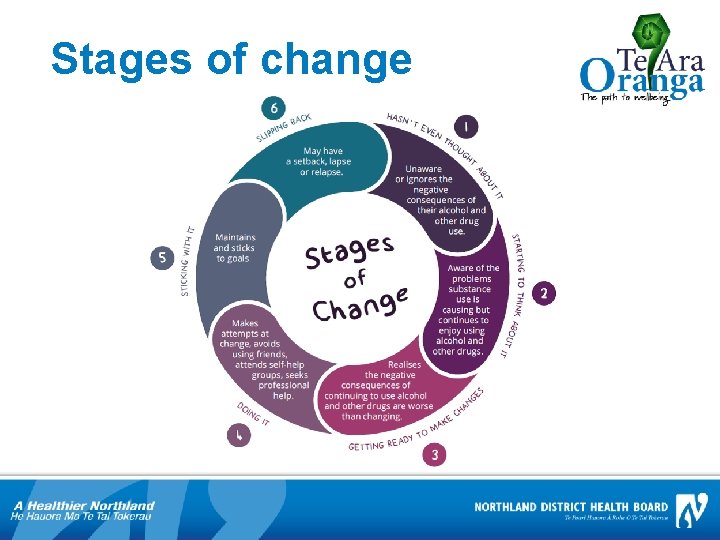
Stages of change
Stages of Change • Hasn’t even thought about it (pre-contemplation) • Starting to think about it (contemplation) • Getting ready to make changes (decision) • Doing it (action) • Sticking with it (maintenance) • Slipping back (lapse/relapse)
Cognitive Process Beginning Stages of Addiction
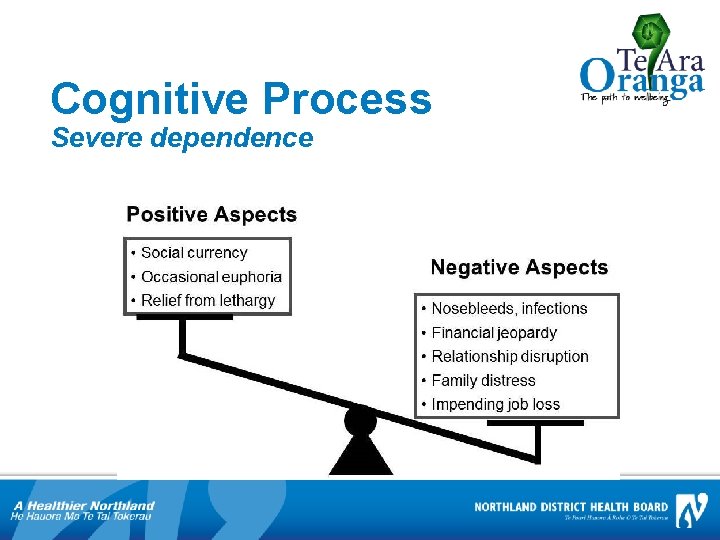
Cognitive Process Severe dependence
Slipping back (Lapse/relapse) Lapse is one off, short term • An opportunity to learn • Frustration for family Relapse – returning to old behaviours • Happens when proper supports/strategies aren't put in place after a lapse
Live your life. Regardless of what stage they are at, your first responsibility is to look after yourself.
How do you Cope? • Advantages? • Disadvantages?
How do you live with an Addiction 1. People in recovery need to learn their limits and relapse signals 2. A person in recovery needs to respond immediately to relapse signals 3. A person in recovery has to maintain a balanced lifestyle, more so than if there had been no addiction
How do you live with an Addiction 4. Recovery is a process, and all aspects of it, including re-establishing trust, may occur slowly. 5. It is often difficult for family members to live without a guarantee that a relapse will not occur.
Who can you contact? Police – 111 A&D Helpline – 0800 787 797 Mental Health Line – 0800 22 33 71 A&D Service – 09 470 2706 Supporting Families – 0800 732 825