
COPERT 4 Training 6 GHG Emissions Methodology Algorithm

- Slides: 17
COPERT 4 Training 6. GHG Emissions
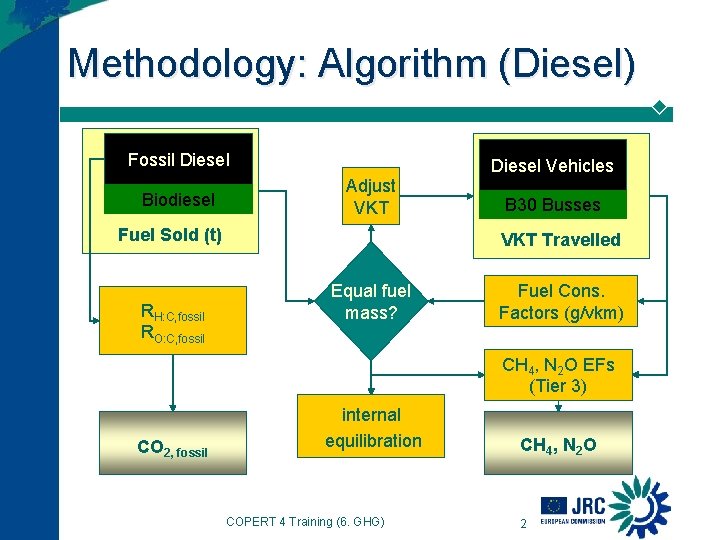
Methodology: Algorithm (Diesel) Fossil Diesel Biodiesel Diesel Vehicles Adjust VKT Fuel Sold (t) RH: C, fossil RO: C, fossil B 30 Busses VKT Travelled Equal fuel mass? Fuel Cons. Factors (g/vkm) CH 4, N 2 O EFs (Tier 3) CO 2, fossil internal equilibration COPERT 4 Training (6. GHG) CH 4, N 2 O 2
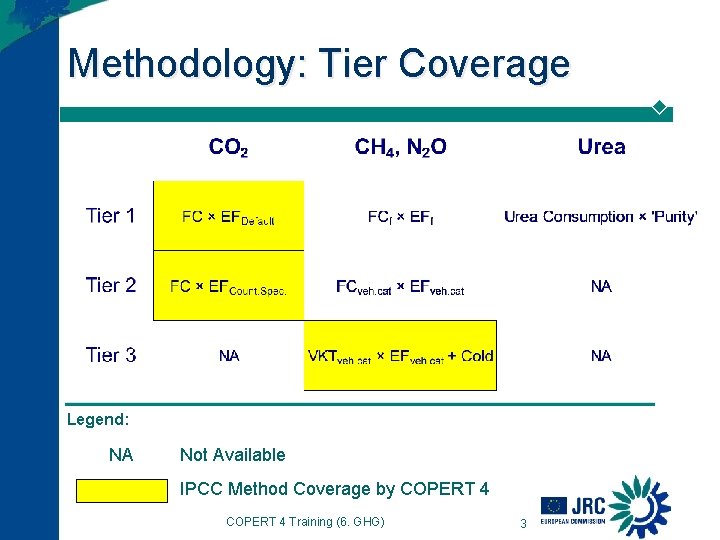
Methodology: Tier Coverage Legend: NA Not Available IPCC Method Coverage by COPERT 4 Training (6. GHG) 3
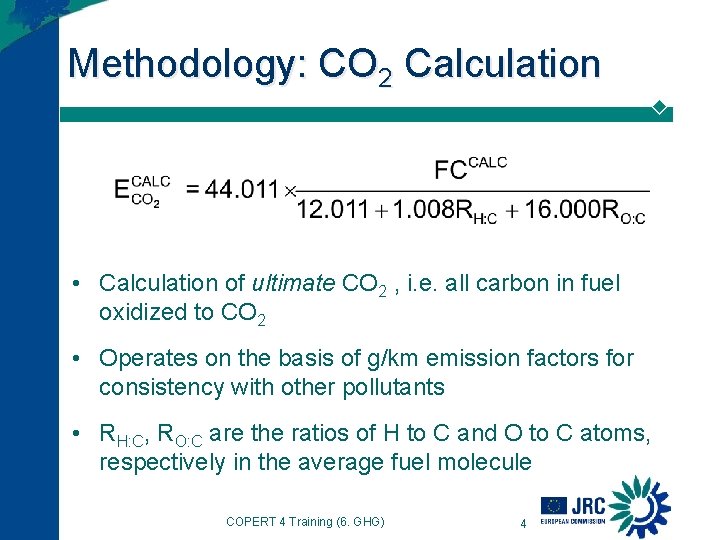
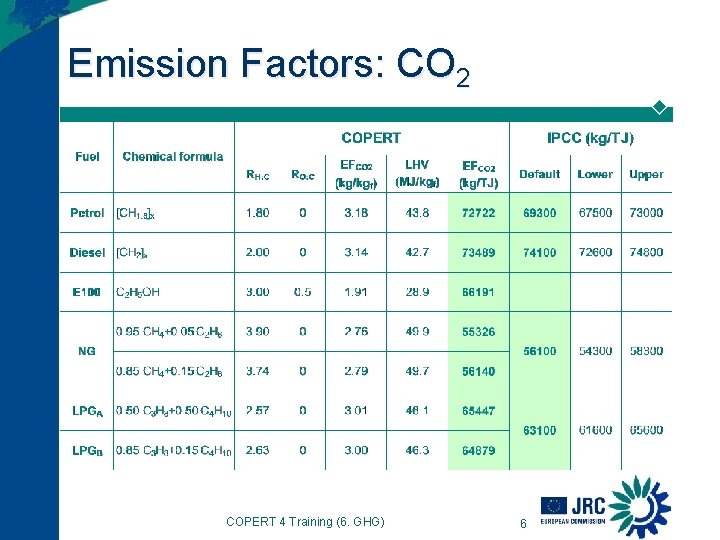
Methodology: CO 2 Calculation • Calculation of ultimate CO 2 , i. e. all carbon in fuel oxidized to CO 2 • Operates on the basis of g/km emission factors for consistency with other pollutants • RH: C, RO: C are the ratios of H to C and O to C atoms, respectively in the average fuel molecule COPERT 4 Training (6. GHG) 4
Emission Factors: CO 2 COPERT 4 Training (6. GHG) 6
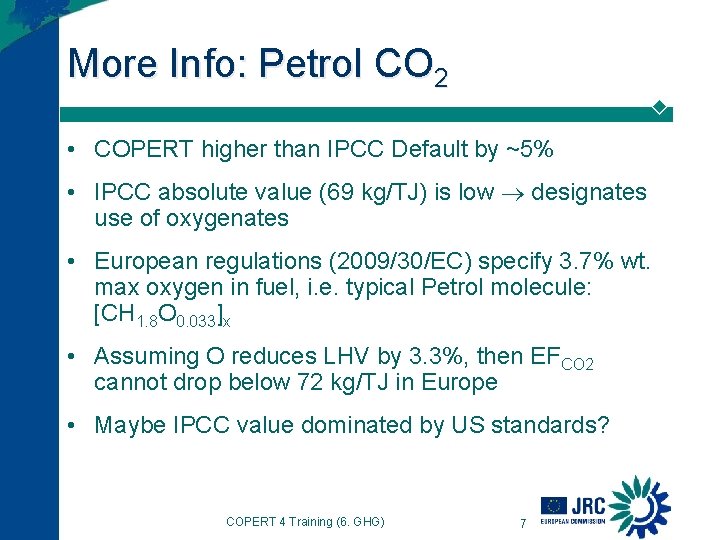
More Info: Petrol CO 2 • COPERT higher than IPCC Default by ~5% • IPCC absolute value (69 kg/TJ) is low designates use of oxygenates • European regulations (2009/30/EC) specify 3. 7% wt. max oxygen in fuel, i. e. typical Petrol molecule: [CH 1. 8 O 0. 033]x • Assuming O reduces LHV by 3. 3%, then EFCO 2 cannot drop below 72 kg/TJ in Europe • Maybe IPCC value dominated by US standards? COPERT 4 Training (6. GHG) 7
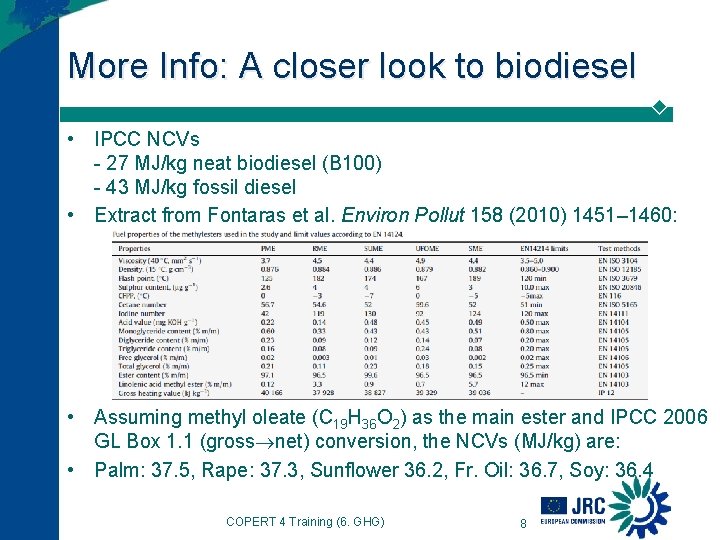
More Info: A closer look to biodiesel • IPCC NCVs - 27 MJ/kg neat biodiesel (B 100) - 43 MJ/kg fossil diesel • Extract from Fontaras et al. Environ Pollut 158 (2010) 1451– 1460: • Assuming methyl oleate (C 19 H 36 O 2) as the main ester and IPCC 2006 GL Box 1. 1 (gross net) conversion, the NCVs (MJ/kg) are: • Palm: 37. 5, Rape: 37. 3, Sunflower 36. 2, Fr. Oil: 36. 7, Soy: 36. 4 COPERT 4 Training (6. GHG) 8
Emission Factors: CH 4 • Four values (mg/km) are provided: Cold Urban, Hot Urban, Rural, Highway • Data mostly based on ARTEMIS project (2000 -2006), values differentiated per vehicle category, Euro standard • Cold/Hot urban part estimated on the basis of coldstart distance • Emission factors for new technologies based on extrapolation. Low CO 2 equivalent too weak to justify new measurements. COPERT 4 Training (6. GHG) 9
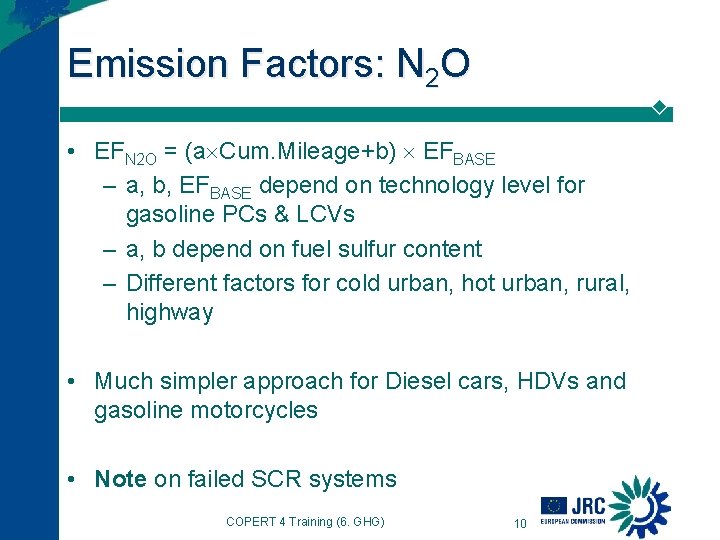
Emission Factors: N 2 O • EFN 2 O = (a Cum. Mileage+b) EFBASE – a, b, EFBASE depend on technology level for gasoline PCs & LCVs – a, b depend on fuel sulfur content – Different factors for cold urban, hot urban, rural, highway • Much simpler approach for Diesel cars, HDVs and gasoline motorcycles • Note on failed SCR systems COPERT 4 Training (6. GHG) 10
Recent additions in AEIG/COPERT
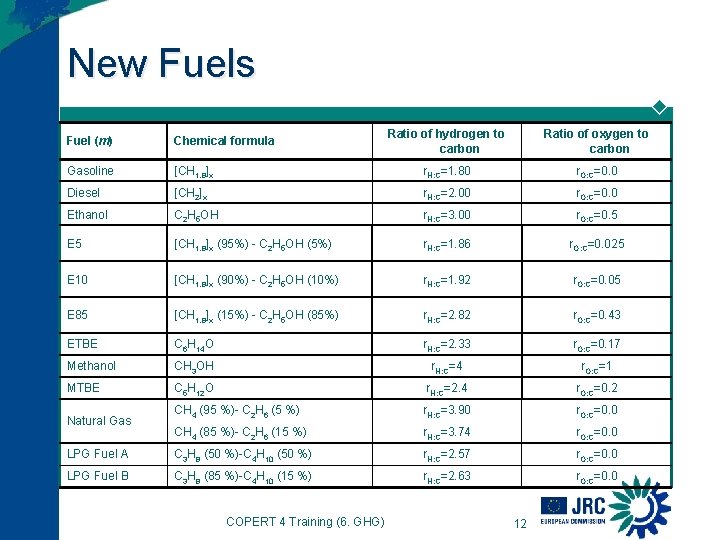
New Fuels Ratio of hydrogen to carbon Ratio of oxygen to carbon [CH 1. 8]x r. H: C=1. 80 r. O: C=0. 0 Diesel [CH 2]x r. H: C=2. 00 r. O: C=0. 0 Ethanol C 2 H 5 OH r. H: C=3. 00 r. O: C=0. 5 E 5 [CH 1. 8]x (95%) - C 2 H 5 OH (5%) r. H: C=1. 86 r. O: C=0. 025 E 10 [CH 1. 8]x (90%) - C 2 H 5 OH (10%) r. H: C=1. 92 r. O: C=0. 05 E 85 [CH 1. 8]x (15%) - C 2 H 5 OH (85%) r. H: C=2. 82 r. O: C=0. 43 ETBE C 6 H 14 O r. H: C=2. 33 r. O: C=0. 17 Methanol CH 3 OH r. H: C=4 r. O: C=1 MTBE C 5 H 12 O r. H: C=2. 4 r. O: C=0. 2 CH 4 (95 %)- C 2 H 6 (5 %) r. H: C=3. 90 r. O: C=0. 0 CH 4 (85 %)- C 2 H 6 (15 %) r. H: C=3. 74 r. O: C=0. 0 LPG Fuel A C 3 H 8 (50 %)-C 4 H 10 (50 %) r. H: C=2. 57 r. O: C=0. 0 LPG Fuel B C 3 H 8 (85 %)-C 4 H 10 (15 %) r. H: C=2. 63 r. O: C=0. 0 Fuel (m) Chemical formula Gasoline Natural Gas COPERT 4 Training (6. GHG) 12
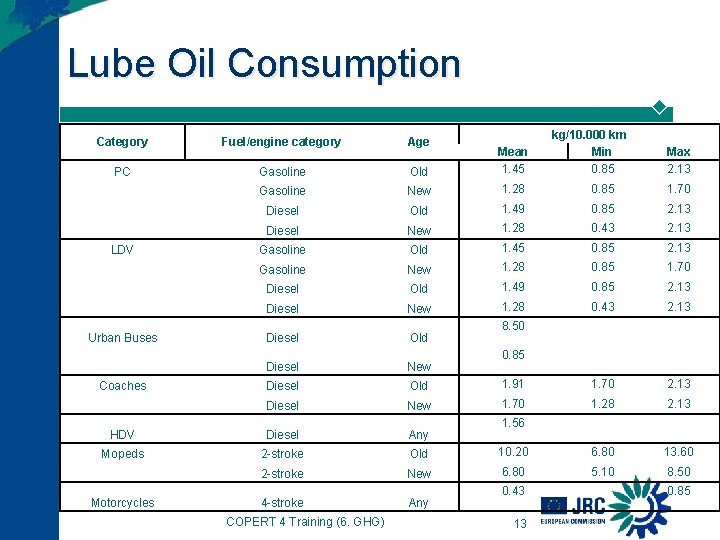
Lube Oil Consumption kg/10. 000 km Min 0. 85 Category Fuel/engine category Age PC Gasoline Old Mean 1. 45 Gasoline New 1. 28 0. 85 1. 70 Diesel Old 1. 49 0. 85 2. 13 Diesel New 1. 28 0. 43 2. 13 LDV Gasoline Old 1. 45 0. 85 2. 13 Gasoline New 1. 28 0. 85 1. 70 Diesel Old 1. 49 0. 85 2. 13 Diesel New 1. 28 0. 43 2. 13 Urban Buses Diesel Old Diesel New Coaches Diesel Old 1. 91 1. 70 2. 13 Diesel New 1. 70 1. 28 2. 13 HDV Diesel Any Mopeds 2 -stroke Old 10. 20 6. 80 13. 60 2 -stroke New 6. 80 5. 10 8. 50 Motorcycles 4 -stroke Any COPERT 4 Training (6. GHG) Max 2. 13 8. 50 0. 85 1. 56 0. 43 13 0. 85
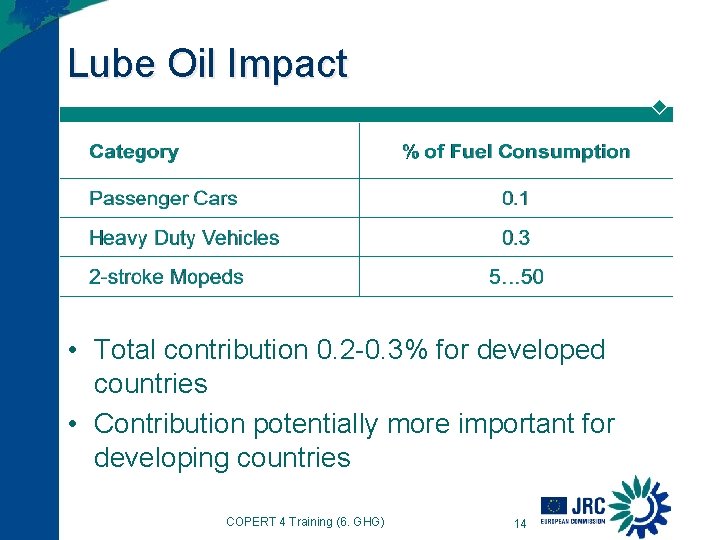
Lube Oil Impact • Total contribution 0. 2 -0. 3% for developed countries • Contribution potentially more important for developing countries COPERT 4 Training (6. GHG) 14
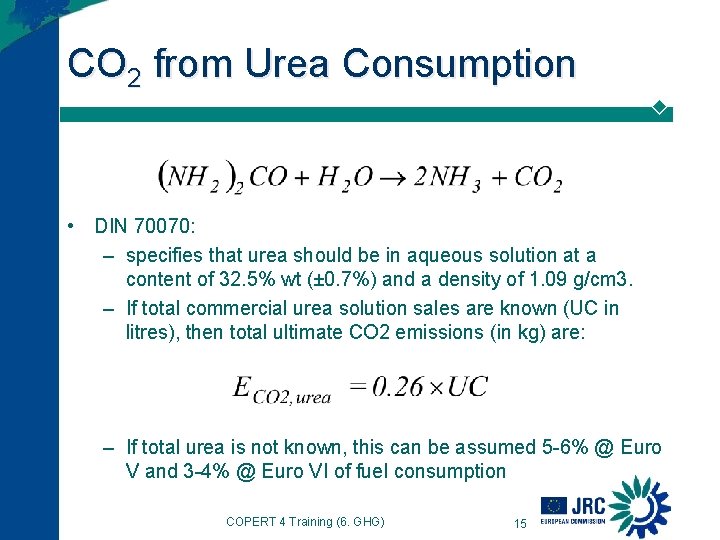
CO 2 from Urea Consumption • DIN 70070: – specifies that urea should be in aqueous solution at a content of 32. 5% wt (± 0. 7%) and a density of 1. 09 g/cm 3. – If total commercial urea solution sales are known (UC in litres), then total ultimate CO 2 emissions (in kg) are: – If total urea is not known, this can be assumed 5 -6% @ Euro V and 3 -4% @ Euro VI of fuel consumption COPERT 4 Training (6. GHG) 15
SCR Urea impact on CO 2 Notes: • • All diesel vehicles assumed Euro 6/VI in 2020, require SCR agent ~ 6% of FC CO 2 and consumption taken from PRIMES 2009 baseline COPERT 4 Training (6. GHG) 16
Export to CRF
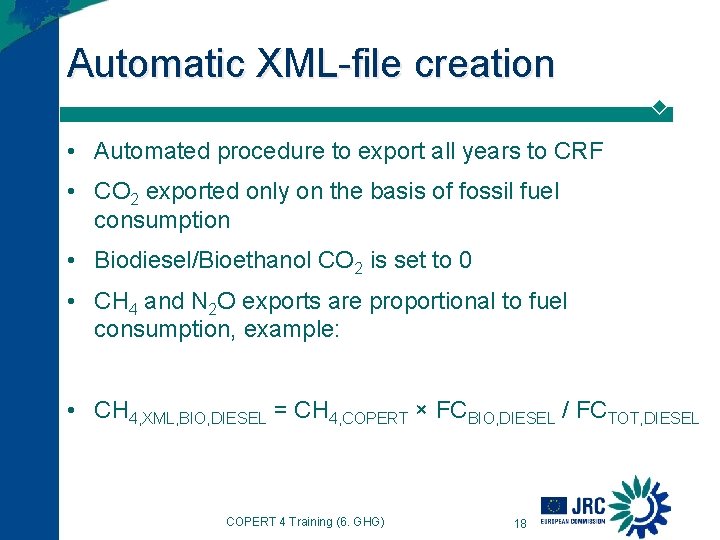
Automatic XML-file creation • Automated procedure to export all years to CRF • CO 2 exported only on the basis of fossil fuel consumption • Biodiesel/Bioethanol CO 2 is set to 0 • CH 4 and N 2 O exports are proportional to fuel consumption, example: • CH 4, XML, BIO, DIESEL = CH 4, COPERT × FCBIO, DIESEL / FCTOT, DIESEL COPERT 4 Training (6. GHG) 18