
COPE GUIDELINES on PLAGIARISM Dr Romaisa Shamim Khan
- Slides: 20
COPE GUIDELINES on PLAGIARISM Dr. Romaisa Shamim Khan Assistant professor Plastic Surgery
• AIM • To be able to implement the COPE guidelines correctly on various scenarios of plagiarism • To meet this aim • Define plagiarism • Know the existing COPE guidelines that relating to plagiarism • Have an understanding of COPE’s recommendations on different scenarios
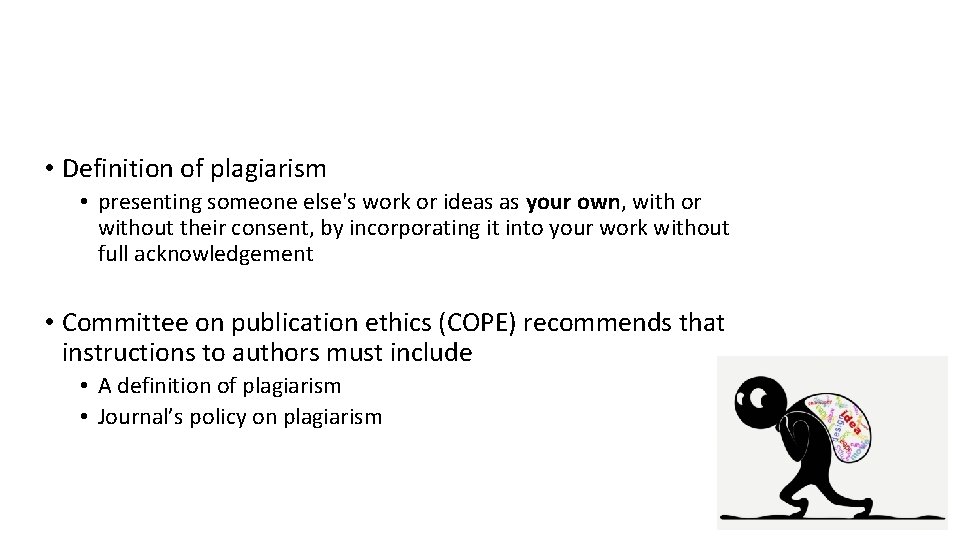
• Definition of plagiarism • presenting someone else's work or ideas as your own, with or without their consent, by incorporating it into your work without full acknowledgement • Committee on publication ethics (COPE) recommends that instructions to authors must include • A definition of plagiarism • Journal’s policy on plagiarism
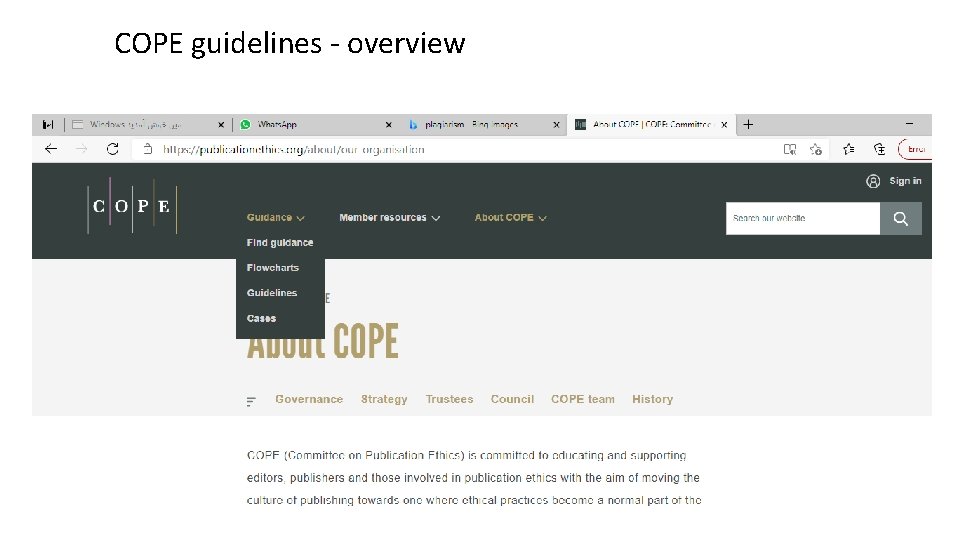
COPE guidelines - overview
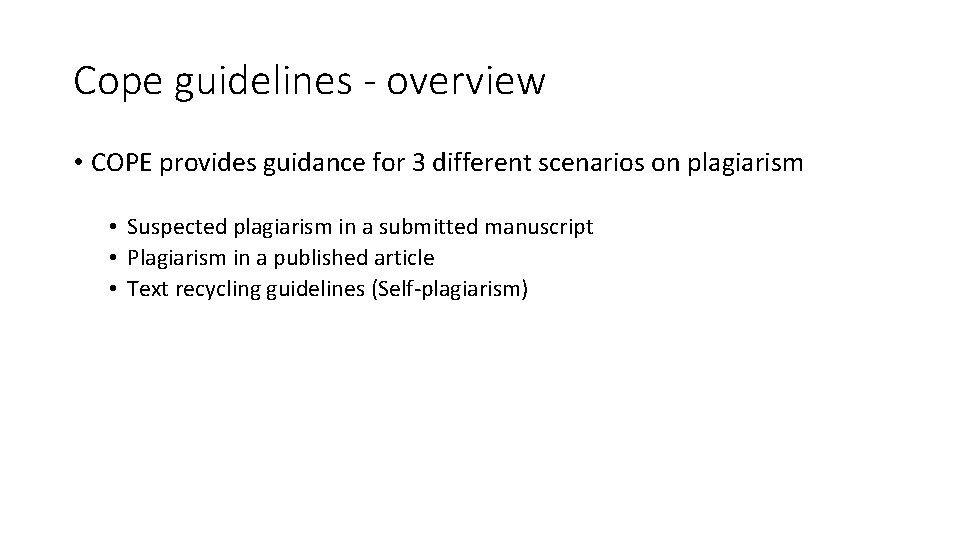
Cope guidelines - overview • COPE provides guidance for 3 different scenarios on plagiarism • Suspected plagiarism in a submitted manuscript • Plagiarism in a published article • Text recycling guidelines (Self-plagiarism)
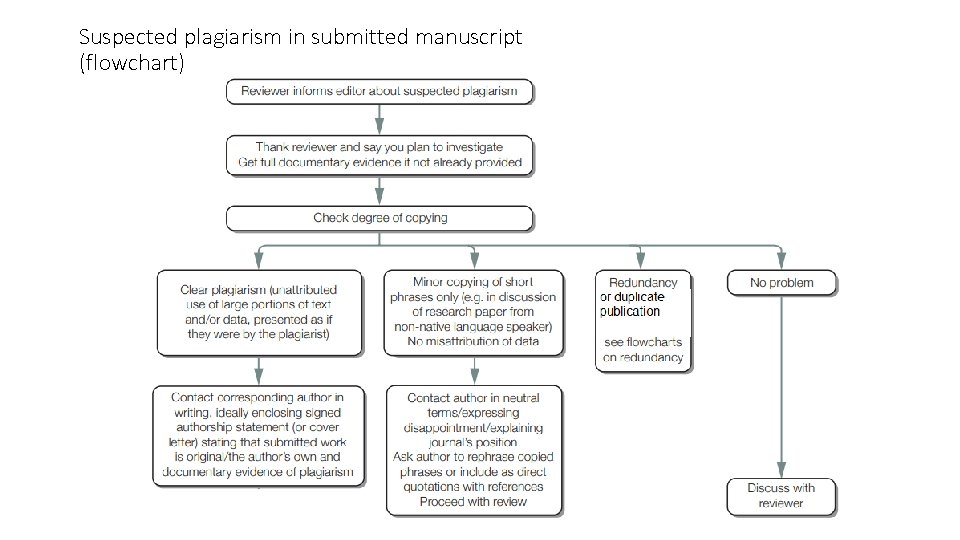
Suspected plagiarism in submitted manuscript (flowchart)
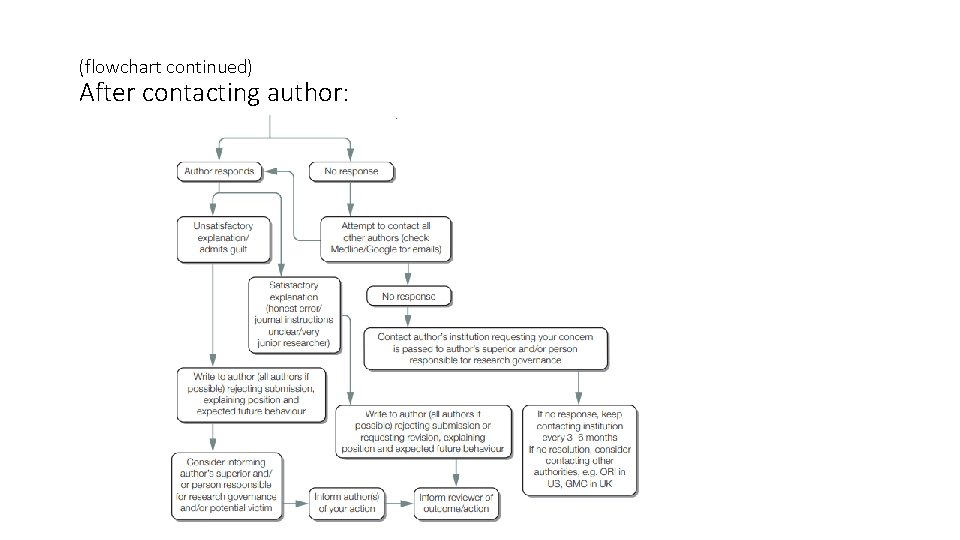
(flowchart continued) After contacting author:
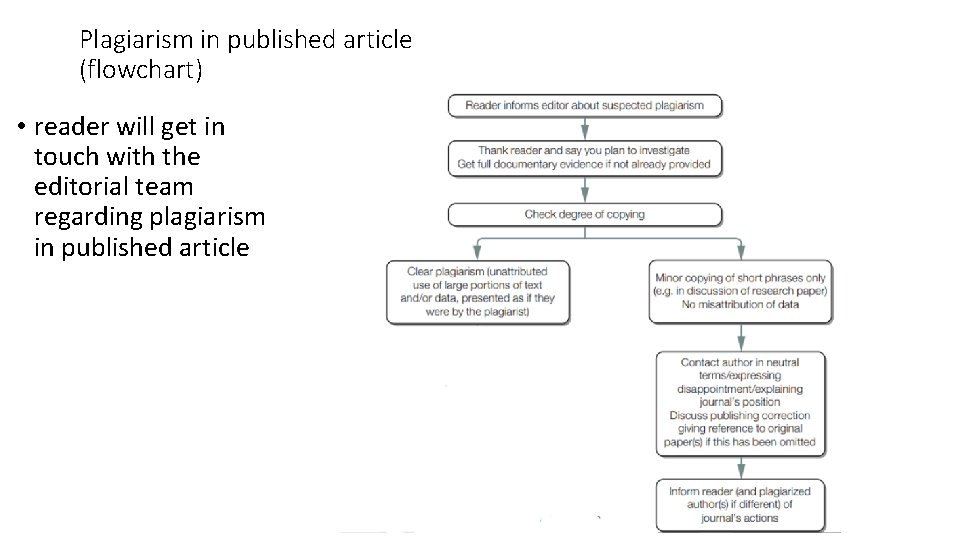
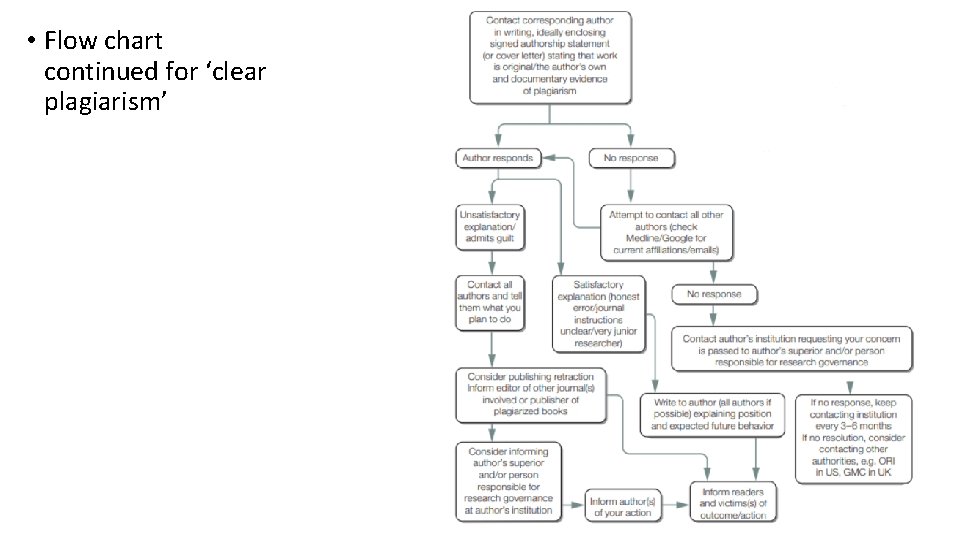
Plagiarism in published article (flowchart) • reader will get in touch with the editorial team regarding plagiarism in published article
• Flow chart continued for ‘clear plagiarism’
Text recycling - guidelines • Text recycling, or self-plagiarism occurs when sections of the same text appear (usually unattributed) in more than one of an authors own publications. • Not to be confused with REDUNDANT or DUPLICATE publication, a more serious problem of repeated publication of ideas or data, often with one common author • Text recycling can occur in • submitted manuscripts • published articles
How can editors deal with text recycling • Consider each case on an individual basis • Determine the ‘significance’ of overlap based on the following factors • • How much text is recycled? Where in the article the text recycling occurs? Whether the article is a research or non-research article Whether the source of the recycled text has been acknowledged
For research articles • Introduction/background • Some degree of recycling is unavoidable, especially if an article is one of several on a related topic • overlap in background ideas less significant than overlap in hypothesis • Editors should determine if the original source is cited • Methods • Use of similar phrases in methods may be unavoidable when using a technique that the author has described before. It may actually be of value when the technique in question is common to a number of papers • Editors should use their knowledge of the field when deciding how much text overlap is acceptable • An important factor to consider is whether the authors have been transparent, stating that the methods have already been described elsewhere
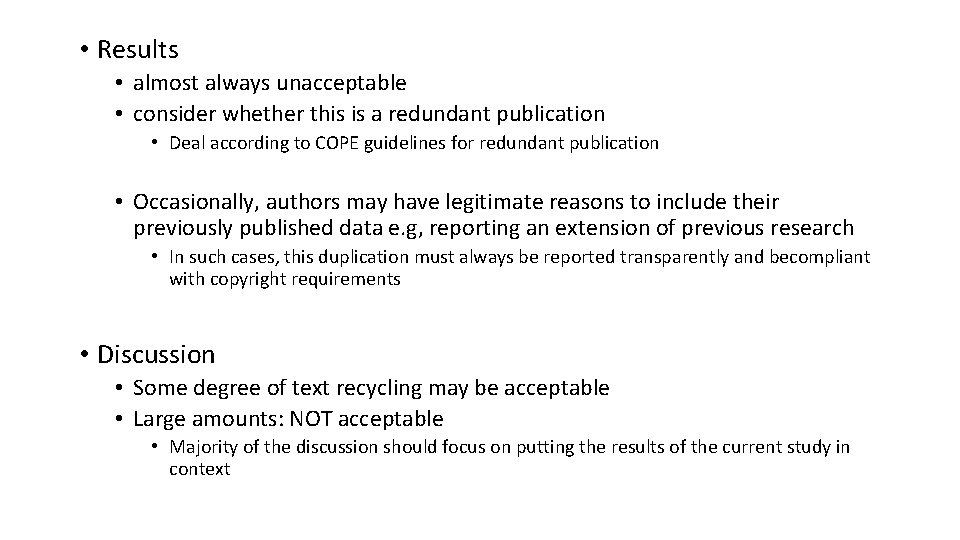
• Results • almost always unacceptable • consider whether this is a redundant publication • Deal according to COPE guidelines for redundant publication • Occasionally, authors may have legitimate reasons to include their previously published data e. g, reporting an extension of previous research • In such cases, this duplication must always be reported transparently and becompliant with copyright requirements • Discussion • Some degree of text recycling may be acceptable • Large amounts: NOT acceptable • Majority of the discussion should focus on putting the results of the current study in context
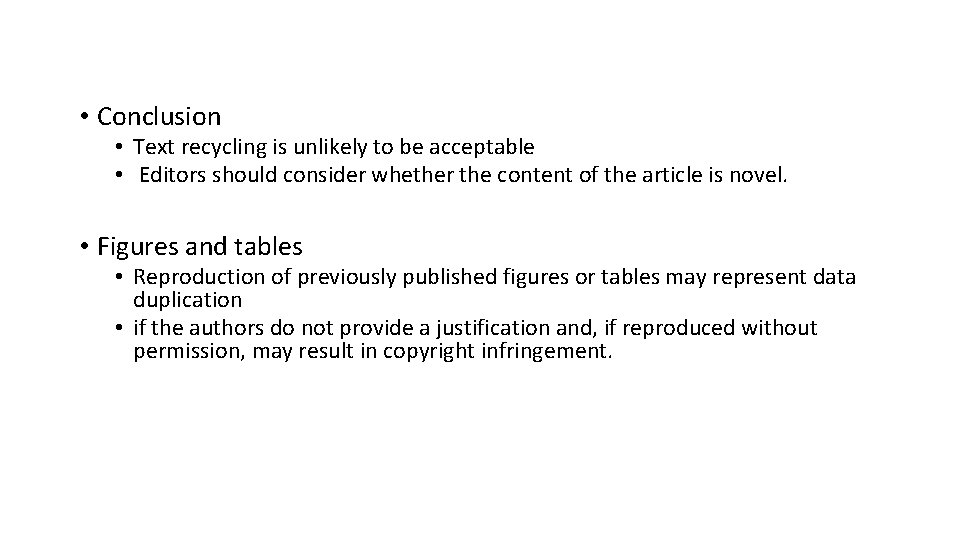
• Conclusion • Text recycling is unlikely to be acceptable • Editors should consider whether the content of the article is novel. • Figures and tables • Reproduction of previously published figures or tables may represent data duplication • if the authors do not provide a justification and, if reproduced without permission, may result in copyright infringement.
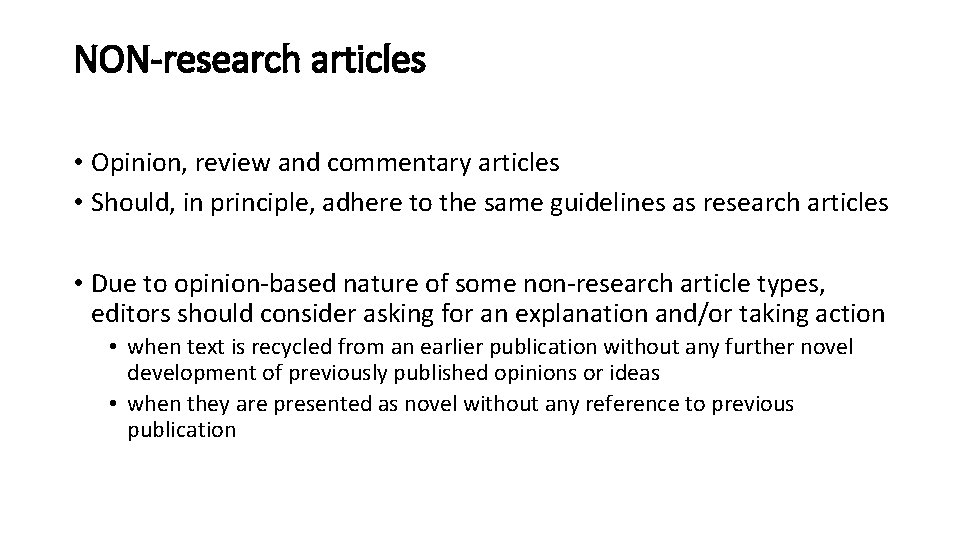
NON-research articles • Opinion, review and commentary articles • Should, in principle, adhere to the same guidelines as research articles • Due to opinion-based nature of some non-research article types, editors should consider asking for an explanation and/or taking action • when text is recycled from an earlier publication without any further novel development of previously published opinions or ideas • when they are presented as novel without any reference to previous publication
When should action be considered for TEXT-RECYCLING • When significant overlap is identified between two or more articles, editors should consider asking for clarification and/or taking action
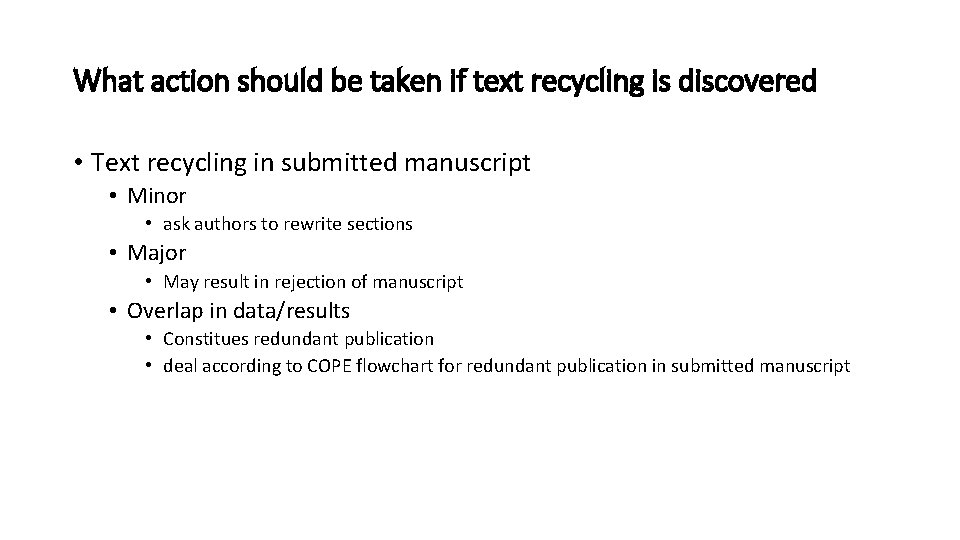
What action should be taken if text recycling is discovered • Text recycling in submitted manuscript • Minor • ask authors to rewrite sections • Major • May result in rejection of manuscript • Overlap in data/results • Constitues redundant publication • deal according to COPE flowchart for redundant publication in submitted manuscript
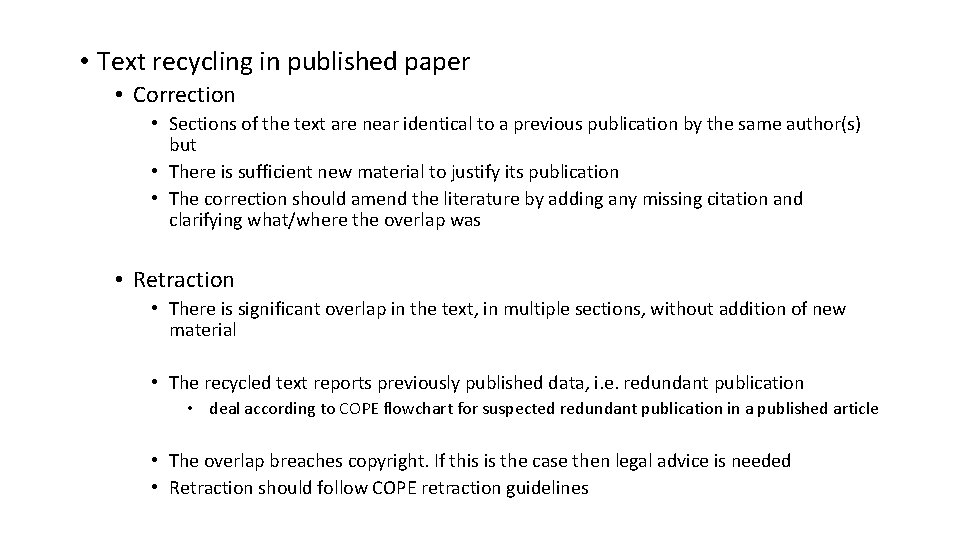
• Text recycling in published paper • Correction • Sections of the text are near identical to a previous publication by the same author(s) but • There is sufficient new material to justify its publication • The correction should amend the literature by adding any missing citation and clarifying what/where the overlap was • Retraction • There is significant overlap in the text, in multiple sections, without addition of new material • The recycled text reports previously published data, i. e. redundant publication • deal according to COPE flowchart for suspected redundant publication in a published article • The overlap breaches copyright. If this is the case then legal advice is needed • Retraction should follow COPE retraction guidelines
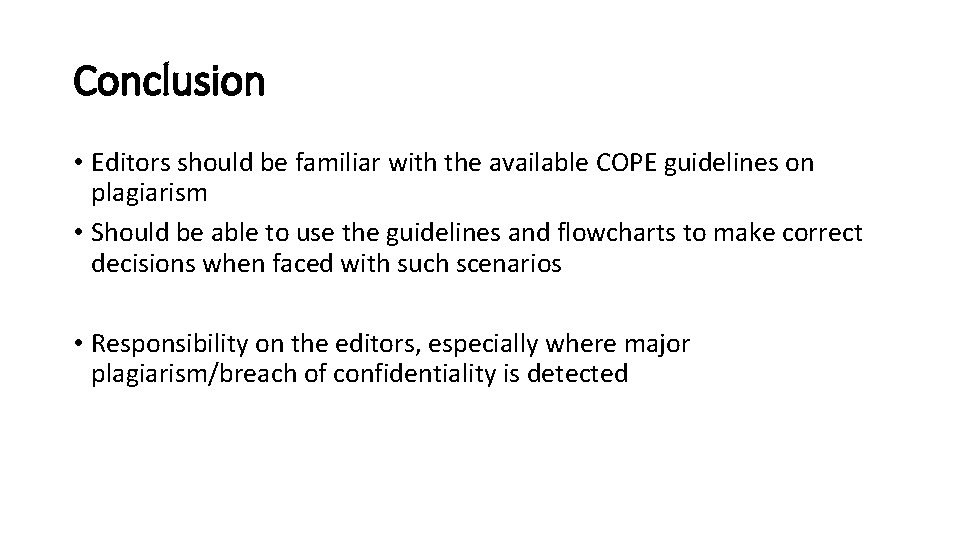
Conclusion • Editors should be familiar with the available COPE guidelines on plagiarism • Should be able to use the guidelines and flowcharts to make correct decisions when faced with such scenarios • Responsibility on the editors, especially where major plagiarism/breach of confidentiality is detected
references • Suspected plagiarism in a submitted manuscript | COPE: Committee on Publication Ethics • Plagiarism in a published article | COPE: Committee on Publication Ethics • Text recycling guidelines for editors | COPE: Committee on Publication Ethics