
COPD Update Dr Arthur ChunWing Lau Intensive Care









- Slides: 50
COPD Update 慢性阻塞性肺病 Dr Arthur Chun-Wing Lau 刘俊颖 Intensive Care Unit, PYNEH Dec 2005
Definition of COPD (GOLD guidelines) • A disease state characterized by airflow limitation that is not fully reversible • The airflow limitation is usually both progressive and associated with an abnormal inflammatory response of the lungs to noxious particles and gases
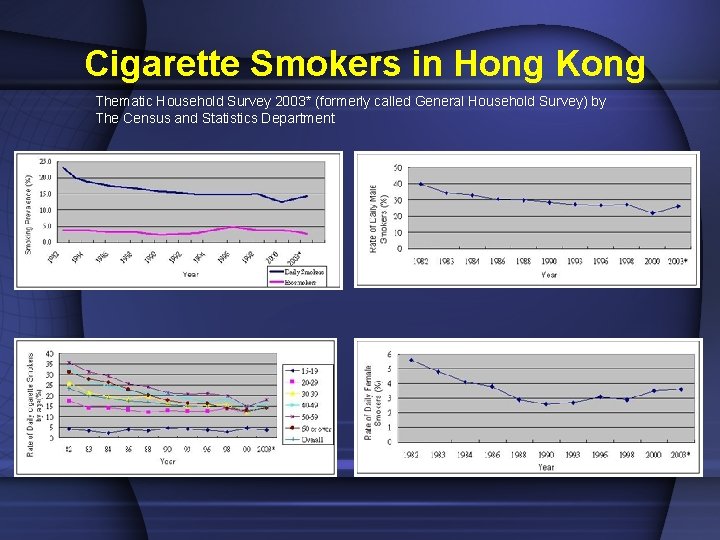
Cigarette Smokers in Hong Kong Thematic Household Survey 2003* (formerly called General Household Survey) by The Census and Statistics Department
Smoking accounts for most cases of COPD, but only …. . 15% of long-term heavy smokers will develop COPD
Individual susceptibility 1. Angiotensin-converting enzyme (ACE) gene 2. Transcription factors (myogenic basic helix-loop-helix gene D (Myo. D) and myocyte-enhacer factor (MEF)-2 3. Proteins related to histone acetylation/deacetylation
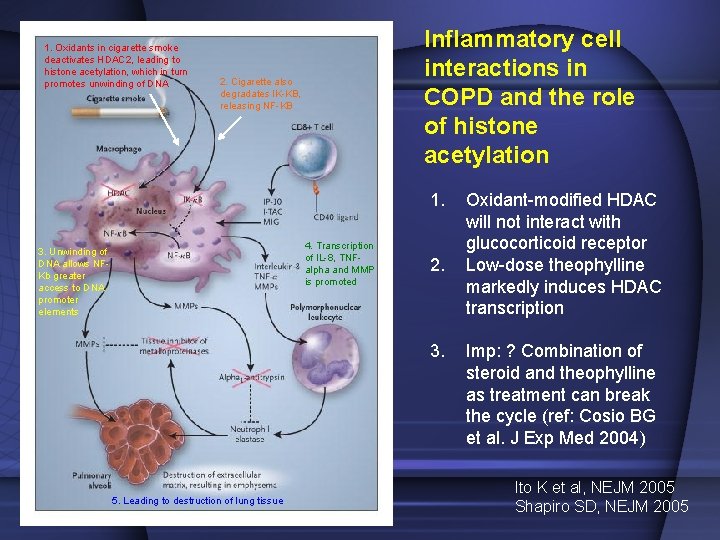
1. Oxidants in cigarette smoke deactivates HDAC 2, leading to histone acetylation, which in turn promotes unwinding of DNA Inflammatory cell interactions in COPD and the role of histone acetylation 2. Cigarette also degradates IK-KB, releasing NF-KB 1. 4. Transcription of IL-8, TNFalpha and MMP is promoted 3. Unwinding of DNA allows NFKb greater access to DNA promoter elements 2. 3. 5. Leading to destruction of lung tissue Oxidant-modified HDAC will not interact with glucocorticoid receptor Low-dose theophylline markedly induces HDAC transcription Imp: ? Combination of steroid and theophylline as treatment can break the cycle (ref: Cosio BG et al. J Exp Med 2004) Ito K et al, NEJM 2005 Shapiro SD, NEJM 2005
Anderson C et al, AJRCCM 2004
Decreased histone deacetylase activity in chronic obstructive pulmonary disease • • • HDAC is a key molecule in the repression of production of proinflammatory cytokines in alveolar macrophages. Whethere is a link between the severity of disease and the reduction in histone deacetylase (HDAC) activity in the peripheral lung tissue of patients with COPD of varying severity. Results: – – – • Specimens of lung tissue obtained from patients with increasing clinical stages of COPD had graded reductions in HDAC activity and increases in interleukin-8 messenger RNA (m. RNA) and histone-4 acetylation at the interleukin-8 promoter. The m. RNA expression of HDAC 2, HDAC 5, and HDAC 8 and expression of the HDAC 2 protein were also lower in patients with increasing severity of disease. HDAC activity was decreased in patients with COPD, as compared with normal subjects, in both the macrophages and biopsy specimens Conclusions: – Patients with COPD have a progressive reduction in total HDAC activity that reflects the severity of the disease. Ito K et al, NEJM 2005
International COPD Genetics Network • Sponsored by GSK • Has enrolled 3500 patients • Aims: – to identify susceptibility genes for COPD to better define the manifestations of COPD – to help characterise intermediate phenotypes (with HRCT +/- inhaled hyperpolarised gas to produce 3 -D images of the lung)
Respiratory system
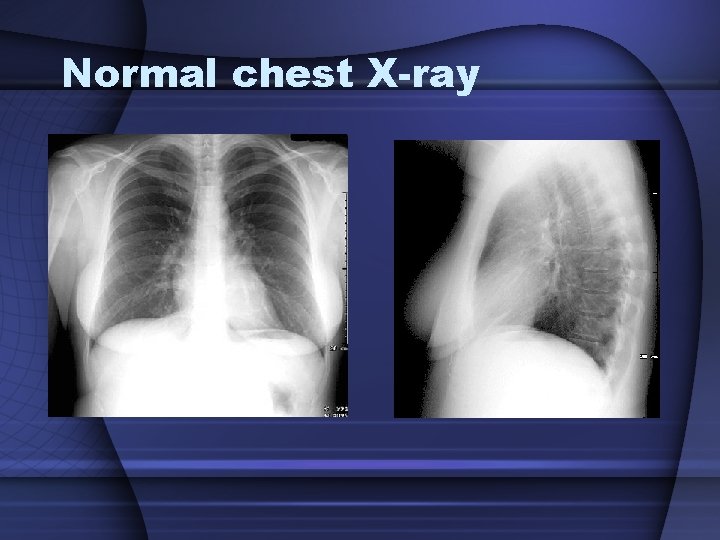
Normal chest X-ray
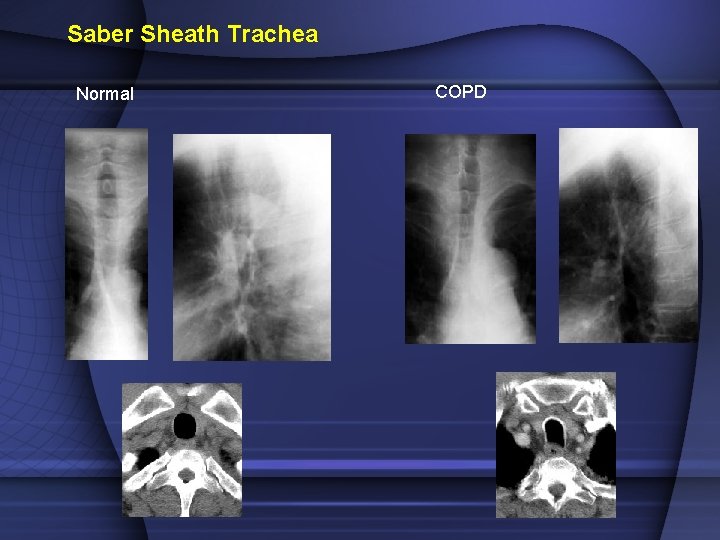
Saber Sheath Trachea Normal COPD
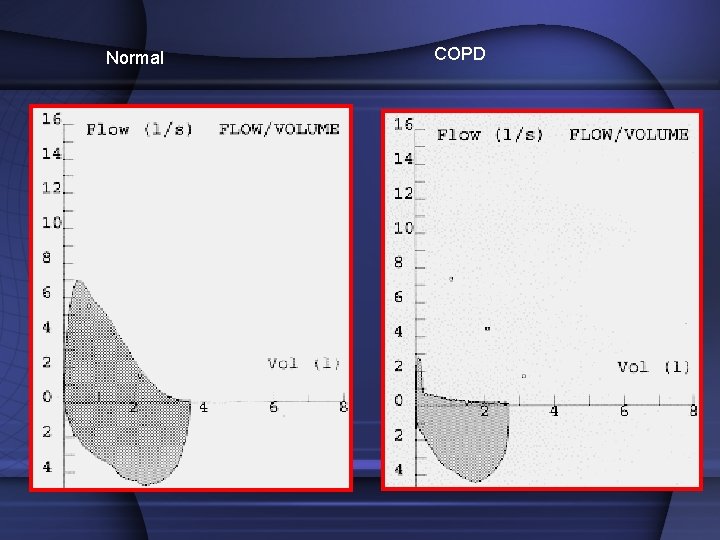
Normal COPD
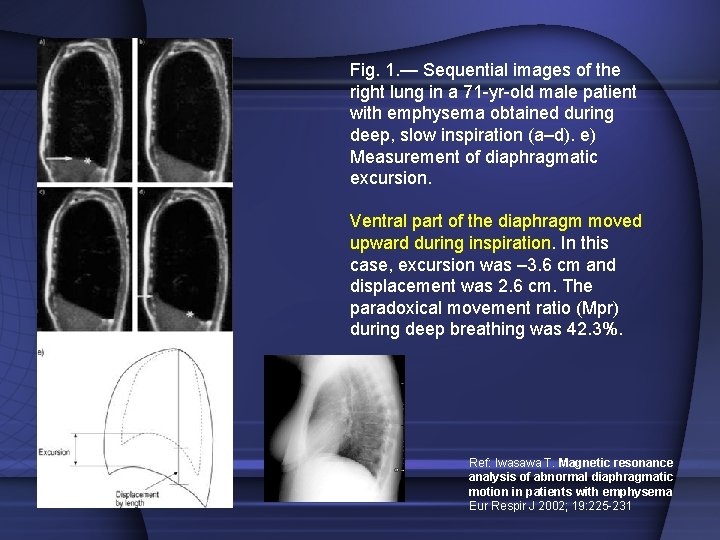
Fig. 1. — Sequential images of the right lung in a 71 -yr-old male patient with emphysema obtained during deep, slow inspiration (a–d). e) Measurement of diaphragmatic excursion. Ventral part of the diaphragm moved upward during inspiration. In this case, excursion was – 3. 6 cm and displacement was 2. 6 cm. The paradoxical movement ratio (Mpr) during deep breathing was 42. 3%. normal Ref: Iwasawa T. Magnetic resonance analysis of abnormal diaphragmatic motion in patients with emphysema Eur Respir J 2002; 19: 225 -231
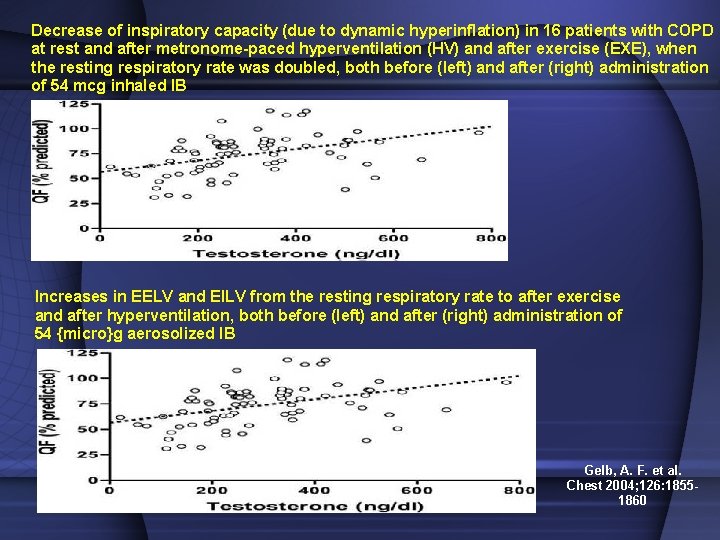
Decrease of inspiratory capacity (due to dynamic hyperinflation) in 16 patients with COPD at rest and after metronome-paced hyperventilation (HV) and after exercise (EXE), when the resting respiratory rate was doubled, both before (left) and after (right) administration of 54 mcg inhaled IB Increases in EELV and EILV from the resting respiratory rate to after exercise and after hyperventilation, both before (left) and after (right) administration of 54 {micro}g aerosolized IB Gelb, A. F. et al. Chest 2004; 126: 18551860
Rapid shallow breathing pattern • As an adaptive physiological responses which lessen the risk of respiratory muscle fatigue and minimise breathlessness • Leading to hypercapnia • Hypercapnia increases sense of dyspnoea Gorini M, Misuri G, Corrado A, et al. Breathing pattern and carbon dioxide retention in severe chronic obstructive pulmonary disease. Thorax 1996; 51: 677– 683. [Abstract]
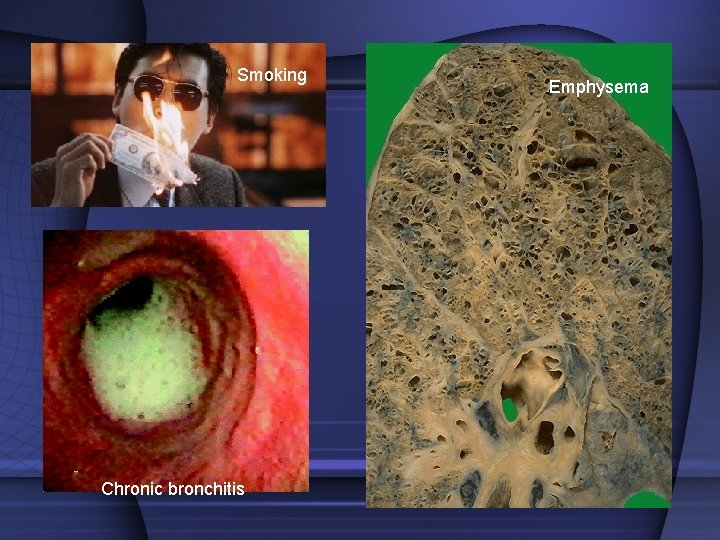
Smoking Chronic bronchitis Emphysema
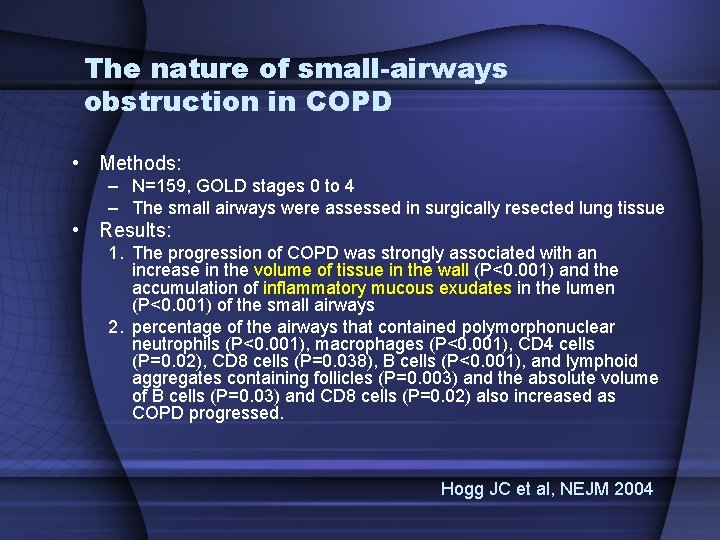
The nature of small-airways obstruction in COPD • Methods: – N=159, GOLD stages 0 to 4 – The small airways were assessed in surgically resected lung tissue • Results: 1. The progression of COPD was strongly associated with an increase in the volume of tissue in the wall (P<0. 001) and the accumulation of inflammatory mucous exudates in the lumen (P<0. 001) of the small airways 2. percentage of the airways that contained polymorphonuclear neutrophils (P<0. 001), macrophages (P<0. 001), CD 4 cells (P=0. 02), CD 8 cells (P=0. 038), B cells (P<0. 001), and lymphoid aggregates containing follicles (P=0. 003) and the absolute volume of B cells (P=0. 03) and CD 8 cells (P=0. 02) also increased as COPD progressed. Hogg JC et al, NEJM 2004
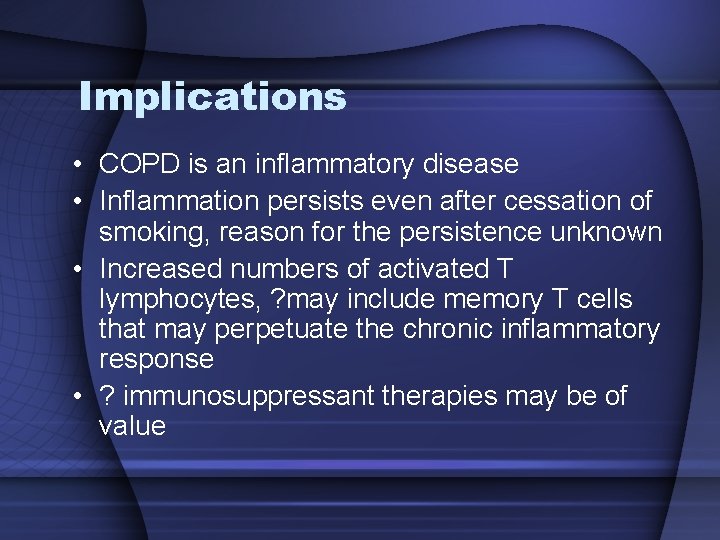
Implications • COPD is an inflammatory disease • Inflammation persists even after cessation of smoking, reason for the persistence unknown • Increased numbers of activated T lymphocytes, ? may include memory T cells that may perpetuate the chronic inflammatory response • ? immunosuppressant therapies may be of value
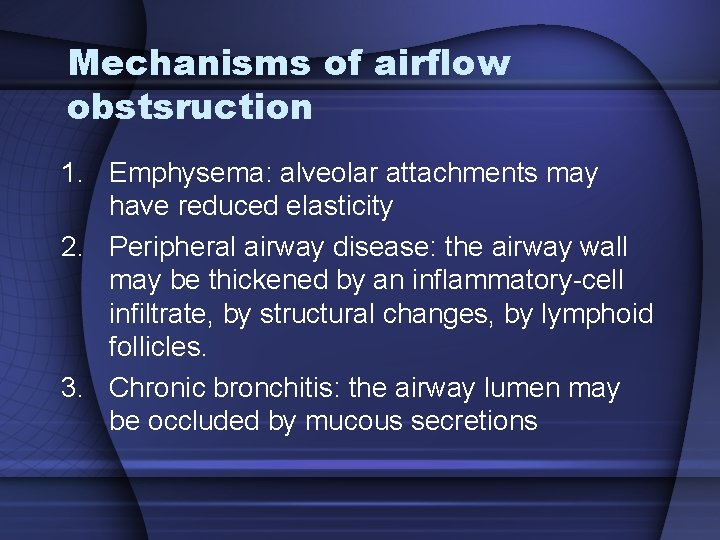
Mechanisms of airflow obstsruction 1. Emphysema: alveolar attachments may have reduced elasticity 2. Peripheral airway disease: the airway wall may be thickened by an inflammatory-cell infiltrate, by structural changes, by lymphoid follicles. 3. Chronic bronchitis: the airway lumen may be occluded by mucous secretions
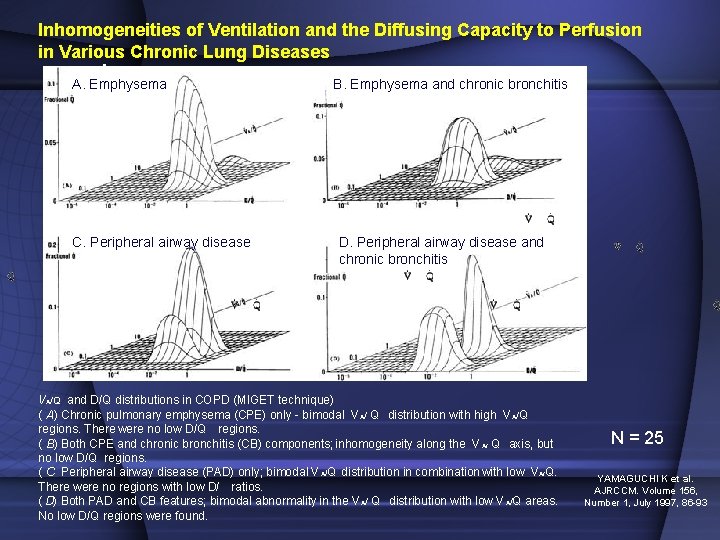
Inhomogeneities of Ventilation and the Diffusing Capacity to Perfusion in Various Chronic Lung Diseases A A. Emphysema C. Peripheral airway disease B. Emphysema and chronic bronchitis D. Peripheral airway disease and chronic bronchitis VA/Q and D/Q distributions in COPD (MIGET technique) ( A) Chronic pulmonary emphysema (CPE) only - bimodal V A/ Q distribution with high V A/Q regions. There were no low D/Q regions. ( B) Both CPE and chronic bronchitis (CB) components; inhomogeneity along the V A/ Q axis, but no low D/Q regions. ( C Peripheral airway disease (PAD) only; bimodal V A/Q distribution in combination with low VA/Q. There were no regions with low D/ ratios. ( D) Both PAD and CB features; bimodal abnormality in the V A/ Q distribution with low V A/Q areas. No low D/Q regions were found. N = 25 YAMAGUCHI K et al. AJRCCM. Volume 156, Number 1, July 1997, 86 -93
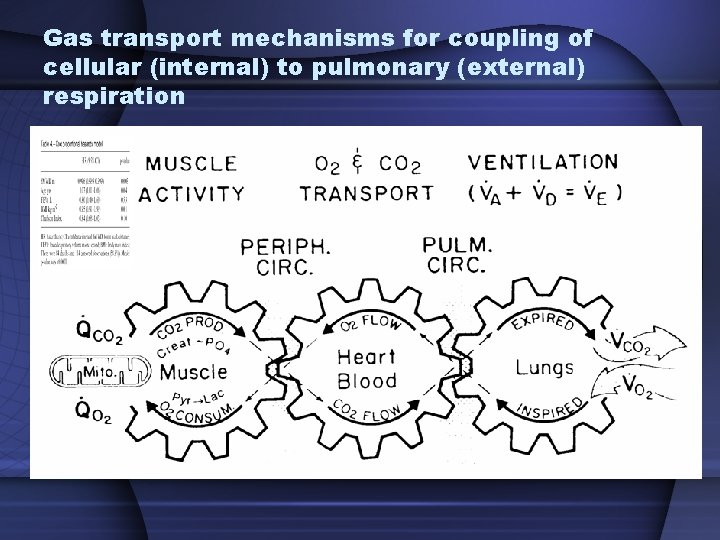
Gas transport mechanisms for coupling of cellular (internal) to pulmonary (external) respiration
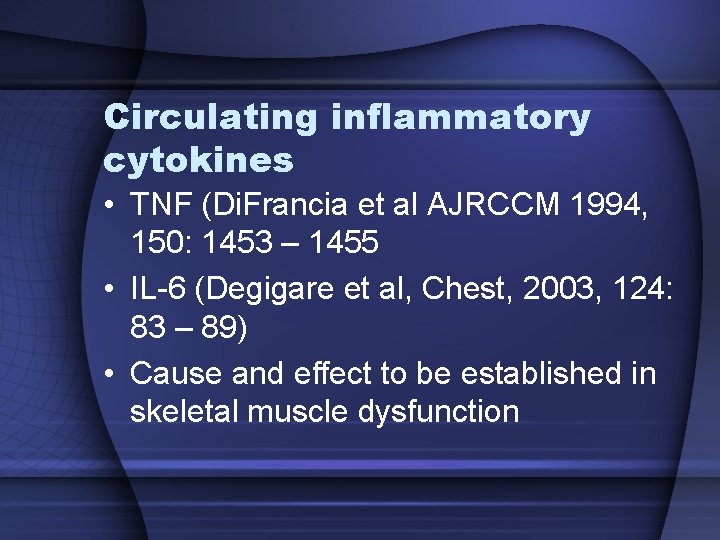
Circulating inflammatory cytokines • TNF (Di. Francia et al AJRCCM 1994, 150: 1453 – 1455 • IL-6 (Degigare et al, Chest, 2003, 124: 83 – 89) • Cause and effect to be established in skeletal muscle dysfunction
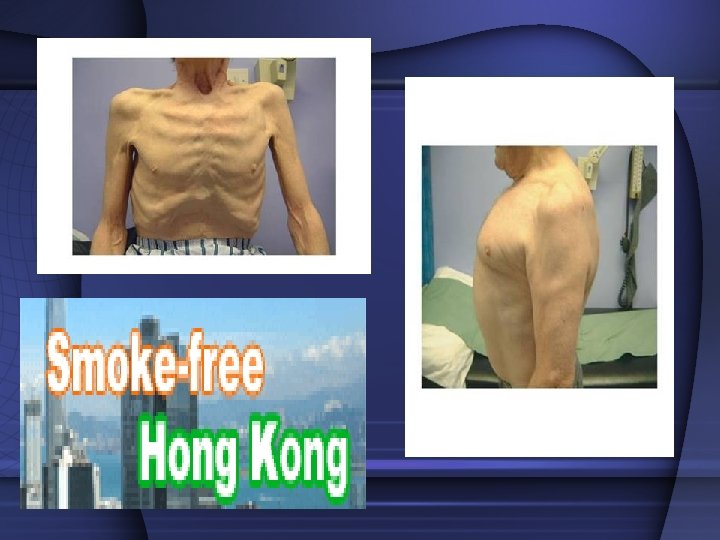
Pathogenesis of nutritional depletion in COPD: a multicomponent disease
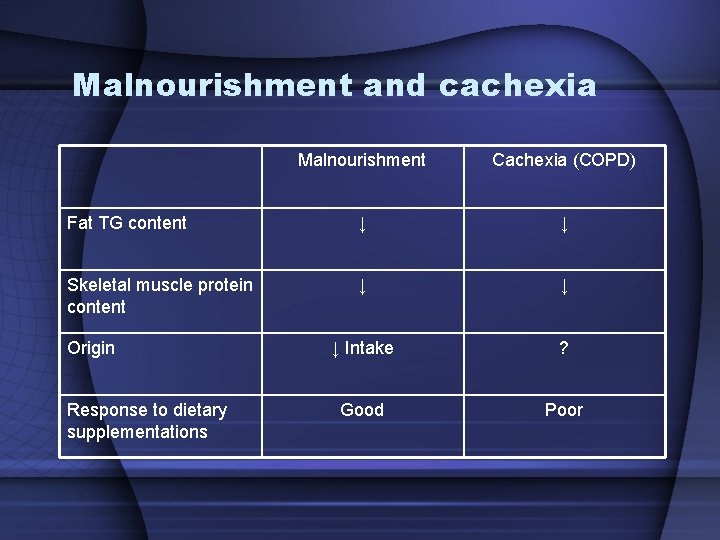
Malnourishment and cachexia Malnourishment Cachexia (COPD) Fat TG content ↓ ↓ Skeletal muscle protein content ↓ ↓ ↓ Intake ? Good Poor Origin Response to dietary supplementations
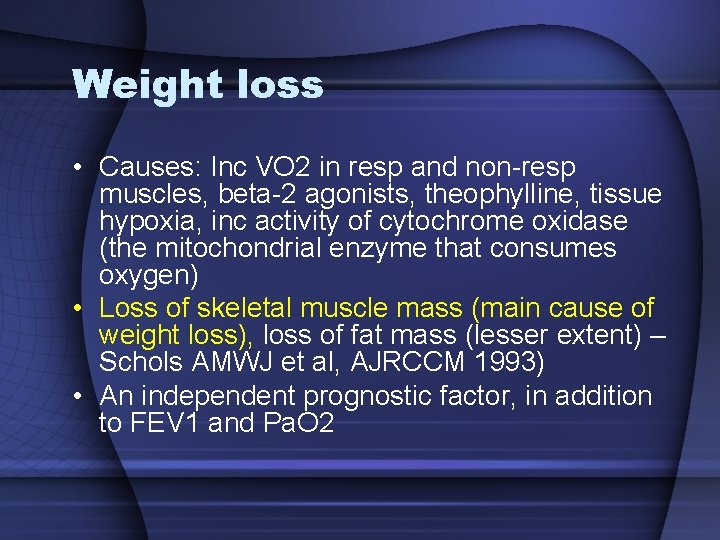
Weight loss • Causes: Inc VO 2 in resp and non-resp muscles, beta-2 agonists, theophylline, tissue hypoxia, inc activity of cytochrome oxidase (the mitochondrial enzyme that consumes oxygen) • Loss of skeletal muscle mass (main cause of weight loss), loss of fat mass (lesser extent) – Schols AMWJ et al, AJRCCM 1993) • An independent prognostic factor, in addition to FEV 1 and Pa. O 2
Poor relationship between exercise and FEV 1 • Correlation between normalised FEV 1 and normalized peak VO 2 is low, accounting for <25% of the variability (Bauerle et al. J Appl Physiol 1995)
Reduced peak power output and VO 2 • Contractile properties of the vastus lateralis are preserved (Debigare et al ERJ 2003, 21 273 – 278) • Strength/muscle X-section area was not different (Bernard et al AJRCCM 1998, 158: 629 – 634) • Small muscle mass peak VO 2 same as in controls (Richardson et al, AJRCCM 2004, 169: 89 – 96)
Early blood lactate accumulation • Of course (Maltais et al, JAP 1998, 84: 1573 – 1580) • But typical of deconditioning (and hypoxemia)
Reduced muscle oxidative enzyme capacity • Citrate synthase in the legs (Maltais et al, Thorax 2000, 55: 848 – 853) • But typical of deconditioning • Normal enzymes in deltoid muscles (GEA et al, ERJ, 2001, 17: 939 – 945)
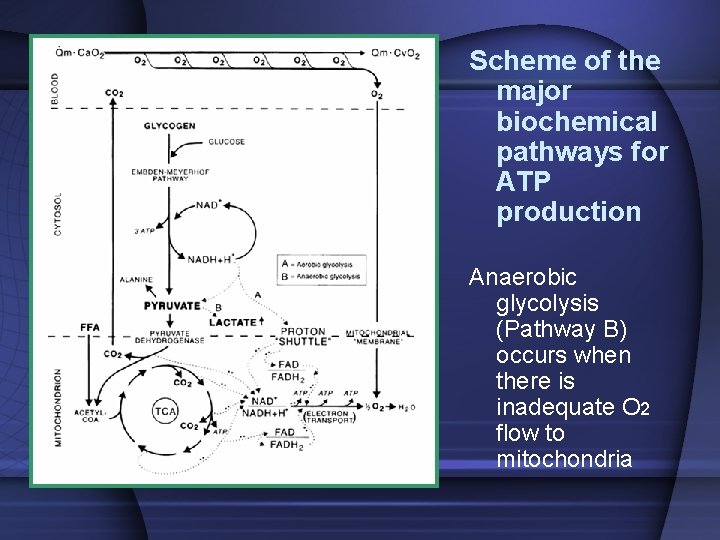
Scheme of the major biochemical pathways for ATP production Anaerobic glycolysis (Pathway B) occurs when there is inadequate O 2 flow to mitochondria
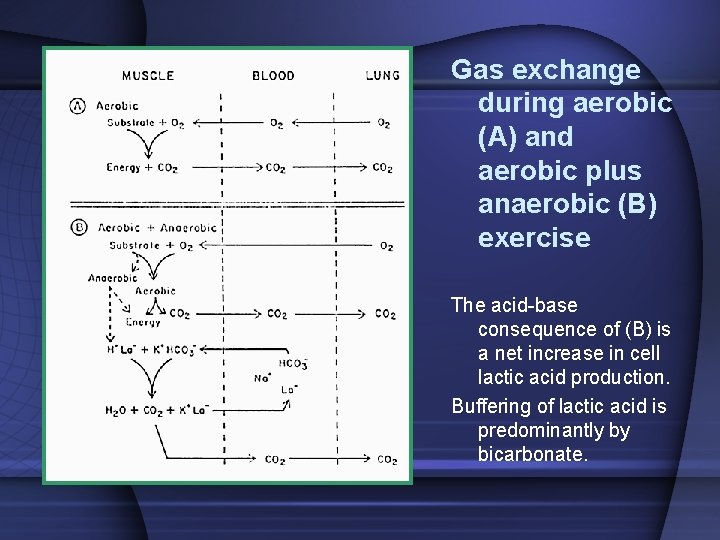
Gas exchange during aerobic (A) and aerobic plus anaerobic (B) exercise The acid-base consequence of (B) is a net increase in cell lactic acid production. Buffering of lactic acid is predominantly by bicarbonate.
Oxidative capacity of the skeletal muscle and lactic acid kinetics during exercise in normal subjects and in patients with COPD • • Methods: Nine COPD patients (age = 62 +/- 5 yr, mean +/- SD, FEV 1 40 +/- 9% of predicted) and in nine normal subjects of similar age (54 +/- 3 yr). Following a transcutaneous biopsy of the vastus laterialis, each subject performed a stepwise exercise test on an ergocycle up to his or her maximal capacity Aim to determination: 1. 2. 3. Glycolytic enzymes: lactate dehydrogenase, hexokinase, and phosphofructokinase Oxidative enzymes: citrate synthase (CS) and 3 -hydroxyacyl Co. A dehydrogenase (HADH) levels (at vastus lateralis) Serial lactate measurement during exercise Maltais F et al AJRCCM 1996
Results 1. No difference was found between the two groups for the glycolytic enzymes. 2. Activities of the oxidative enzymes was significantly lower in COPD than in control subjects for both citrase synthase (CS) and 3 -hydroxyacyl Co. A dehydrogenase (HADH) 3. Increase in lactic acid was steeper in COPD (b = 4. 3 +/- 2. 0 versus 2. 1 +/- 0. 2 for normal subjects, p = 0. 0005). • Conclusion: In COPD the increase in arterial La during exercise is excessive, the oxidative capacity of the skeletal muscle is reduced, and that these two results are interrelated.
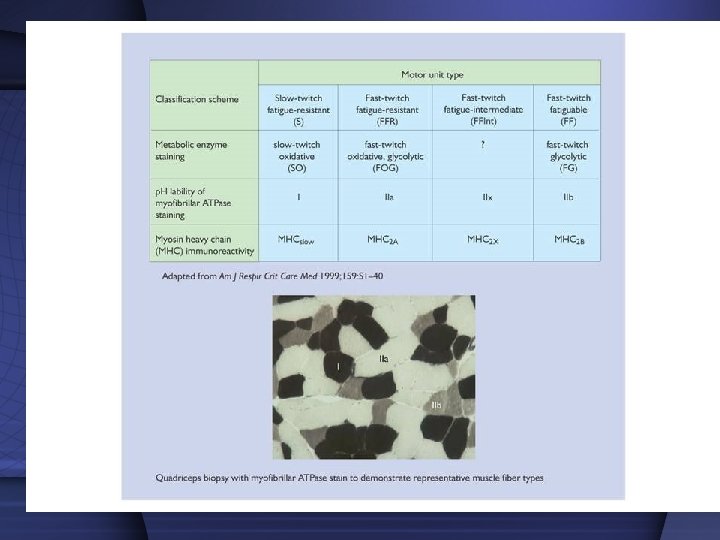
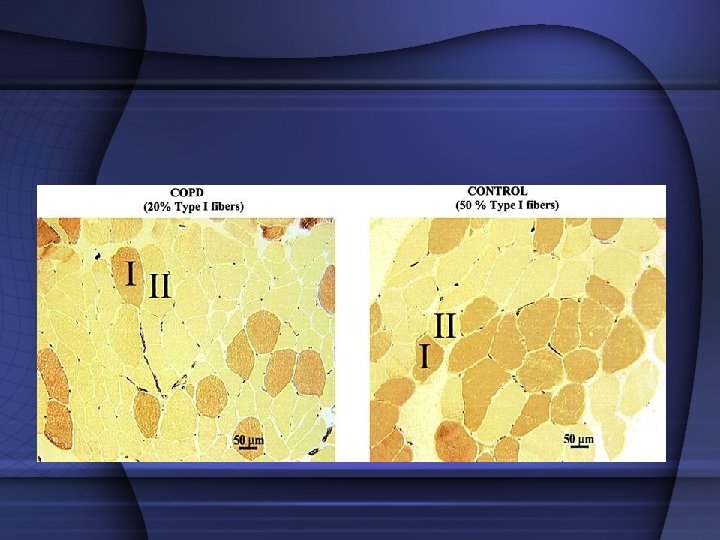
Muslce histological differences: type II vs I fibers • Probably explains high VO 2/power output • But may be due to long-term & extreme inactivity (Larsson et al, Muscle and Nerve, 1985, 8: 714 – 722) • • • Whittom, MSSE, 1998, 30: 1467 – 1474 Maltais ERJ 1999, 13, 850 – 854 Richardson et al, AJRCCM 2004, 169: 89 - 96
Reduced anabolic hormones • Testosterone • IGF-1 • Cause and effect in causing muscle dysfunction to be established Kamischke et al, ERJ 1998, 11: 41 -45 Debigare et al, Chest 2003, 124: 83 - 89
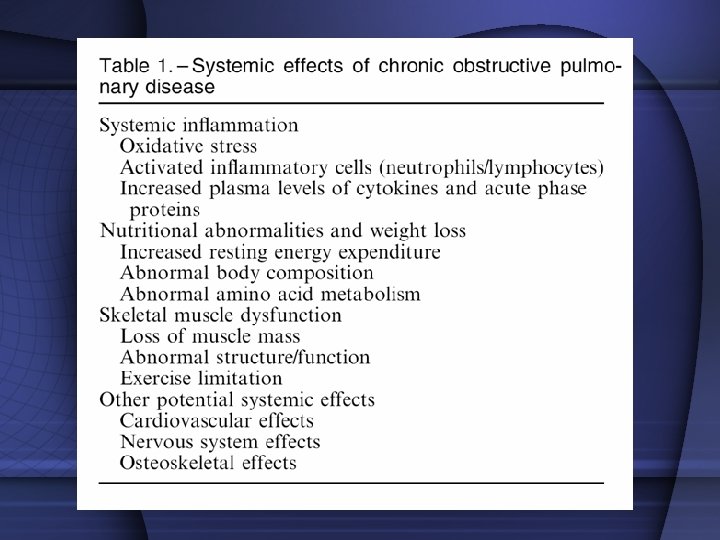
Other potential systemic effects 1. Cardiovascular system 2. Nervous system effects 3. Osteoskeletal effects