
COPD Exacerbation Rescue therapy Antibiotics Ysobel Gourlay Lead
COPD Exacerbation Rescue therapy (Antibiotics) Ysobel Gourlay Lead Antimicrobial Pharmacist GGC 8 Oct 2020
Summary � What is Rescue therapy ? � Who ? � Benefits � GGC resistance � Doxycycline � Amoxicillin
Antibiotics for COPD Exacerbation � (Steroids And or) � Doxycycline 200 mg as a single dose then 100 mg orally for 5 days or � Amoxicillin 500 mg 8 hourly for 5 days
COPD � 3 rd leading cause of death in the world (WHO) � Airflow obstruction in the lungs � Deterioration of lung function over time � Diagnosed – Pulmonary Function Tests � Smoking- major risk factor
NICE Definition of Acute Exacerbation of COPD �A sustained acute-onset worsening of the person’s symptoms from their usual stable state, which goes beyond their normal day-to -day variations. Commonly reported symptoms are worsening breathlessness, cough, increased sputum production and change in sputum colour. The change in these symptoms often necessitates a change in medication.
Rescue therapy � NICE COPD guidelines ◦ Improves quality of life ◦ Reduces hospital admission
Who � Patients will be identified by ◦ respiratory clinics or ◦ GP practices � As suitable for having home rescue � 5 day course of antibiotics and or oral steroids
Who �> 18 years � Has COPD management plan in place � Ability to self manage
Limit of supply � Maximum 2 orders from pharmacy in 3 months or � Maximum 3 orders in 12 months � If more required ◦ Patient must contact their own practice or NHS 24 OOH
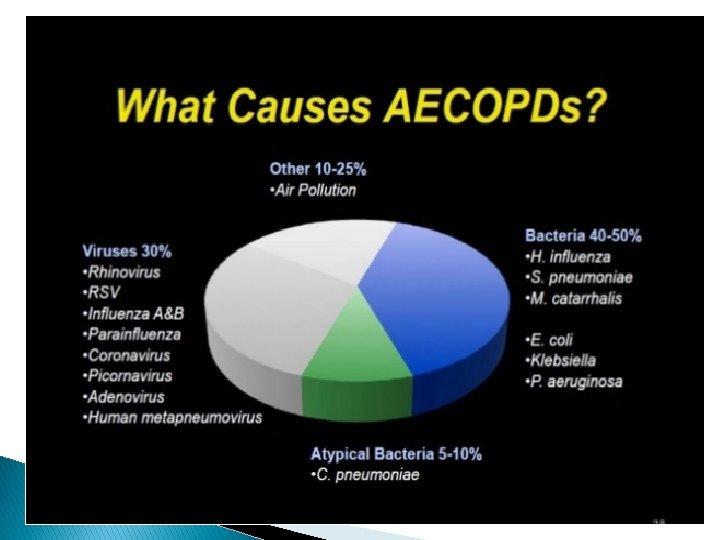
Antibiotics — guidance from NICE, GOLD and the Lung Foundation Australia � Antibiotic therapy considered � where an infective exacerbation of COPD is suspected ◦ change in clinical features such as �increased sputum volume �change in sputum colour �consistency of sputum
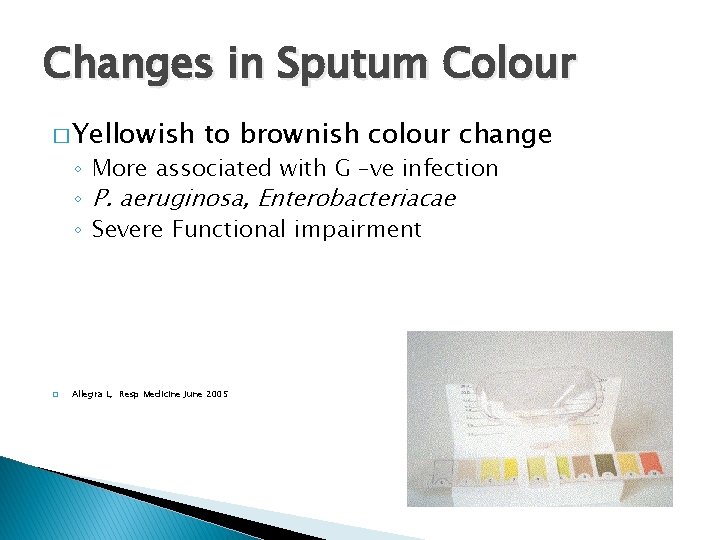
Changes in Sputum Colour � Yellowish to brownish colour change ◦ More associated with G –ve infection ◦ P. aeruginosa, Enterobacteriacae ◦ Severe Functional impairment � Allegra L, Resp Medicine June 2005
Advantages of Antibiotic Therapy � Reduces ◦ ◦ ◦ recovery time, risk of early relapse, treatment failure hospital admission hospital duration of stay
Disadvantages of Antibiotics � Side effects of specific antibiotics � Development of Antimicrobial resistance with repeated courses
Antibiotic Resistance � Antibiotic Prescribed in Primary Care � Respiratory tract Infection or Urinary tract infection ◦ Develop resistance to that antibiotic ◦ Effect greatest immediately after antibiotic prescribed ◦ Can persist for 12 months � BMJ 2010; 340: 2096
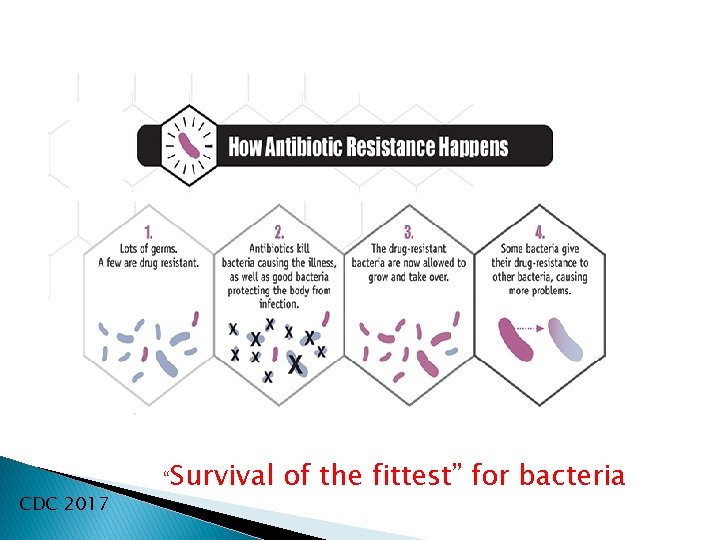
CDC 2017 “Survival of the fittest” for bacteria
Antibiotic Therapy � If an antibiotic is prescribed, give advice on: ◦ Potential adverse effects, including diarrhoea. ◦ When to seek medical help, for example if: �Symptoms worsen rapidly or significantly or �Symptoms do not start to improve within 2– 3 days (or other agreed time) or �They become systemically very unwell.
Amoxicillin � C/I true penicillin allergy ◦ Allergic reactions in 1 -10% ◦ Anaphylaxis 0. 05% � N+ V is not penicillin allergy � NB glandular fever, ALL, CMV – erythematous rash common � e. GFR
Drug interactions with Amoxicillin � Allopurinol — increased risk of rash � Warfarin — INR may be increased. Monitor the international normalized ratio (INR) closely during concomitant use. Dosage adjustments may be necessary. � Methotrexate — amoxicillin may reduce methotrexate clearance, causing an increased risk of toxicity. Consider measuring platelet and white cell counts twice weekly for 2 weeks initially, and measure methotrexate levels if toxicity is suspected.
Drug Interactions with Amoxicillin � Oral hormonal contraception — additional contraceptive precautions are not required during or after courses of amoxicillin. ◦ However, women should be advised about the importance of correct contraceptive practice if they experience vomiting or diarrhoea. � Vomiting within 3 hours of taking a combined oral contraceptive (COC), ◦ take another pill as soon as possible.
Doxycycline � Photosensitivity ◦ Even on a cloudy day � Swallowed whole with plenty of fluid while sitting/ standing (i. e. not lying in bed) � Common side effects ◦ Diarrhoea, headache, hypersensitivity reactions, photosensitivity, nausea, vomiting ◦ Oesophageal ulceration
Doxycycline � Do not take indigestion remedies or medicines containing zinc or iron 2 -3 hours before or after ◦ See Medicines Update re COPD antibiotic failure due to Fe + doxycycline interaction � Other drug interactions ◦ Doxycycline ↓ by phenytoin, carbamazepine, rifampicin
Oral corticosteroids � If there are no contraindications, consider oral corticosteroids for people with a significant increase in breathlessness that interferes with daily activities. ◦ Offer 30 mg oral prednisolone once daily for 5 days — discuss adverse effects of prolonged therapy. ◦ Consider the need for osteoporosis prophylaxis for people requiring frequent courses of oral corticosteroids (3– 4 courses per year).
Other � Inhaler technique � Stop smoking � Influenza vaccine annually � Pneumococcal vaccine
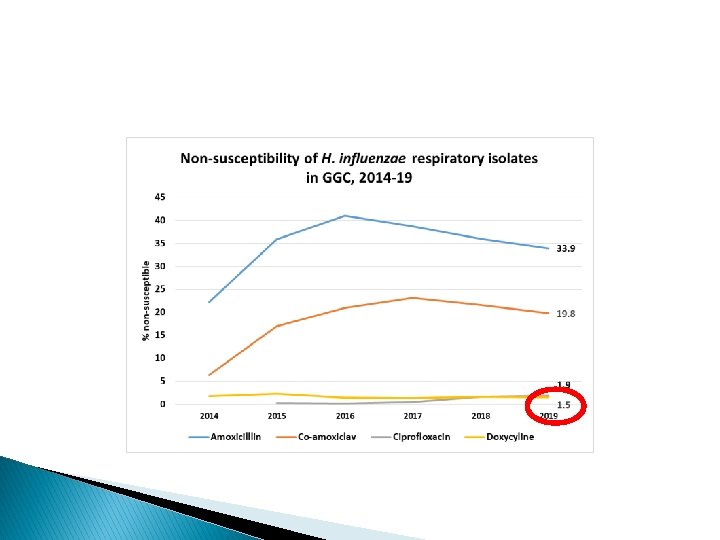
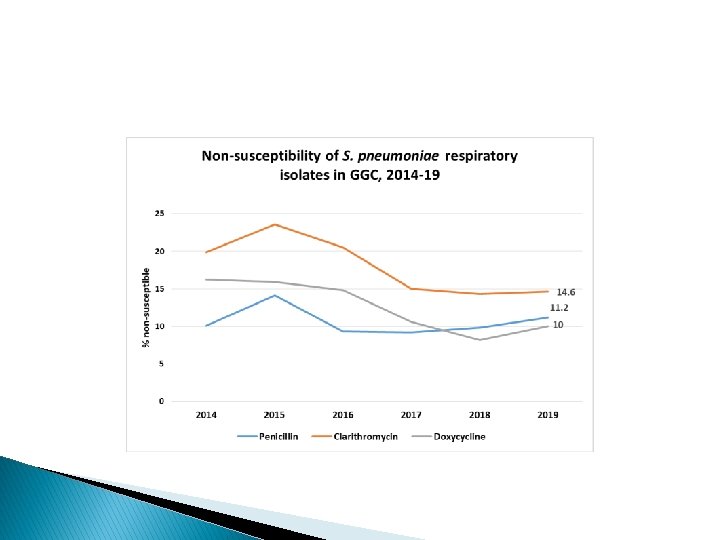
Summary � Amoxicillin or Doxycycline can be used for COPD exacerbation ◦ If change in sputum colour and volume or thickness � Amoxicillin ◦ GGC~30% resistance to H. influenzae ◦ Penicillin allergy � Doxycycline ◦ ◦ GGC Low resistance Drug interactions Photosensitivity Swallow with large glass of water
- Slides: 27