
Coordination of LIHEAP with State and Utility Payment

- Slides: 35
Coordination of LIHEAP with State and Utility Payment Assistance Programs NEUAC Conference June 28, 2011 Jackie Berger
Overview • • • Introduction Coordination Advantages and Disadvantages Coordination Models HHS Guidance Summary and Recommendations 2
COORDINATION ADVANTAGES AND DISADVANTAGES 3
Program Coordination General Advantages • • Efficiency Equity Simplicity Integrity 4
Program Coordination Efficiency • Efficiency: use existing infrastructure – Single application. – One set of intake agencies. – Joint eligibility determination. – Single database. – Reduced administrative burden. 5
Program Coordination Equity • Equity: account for different benefit receipt – Total benefit or burden does not vary by combination of benefits received. – Ensure that those with greatest need receive greatest benefit. 6
Program Coordination Simplicity • Simplicity: one set of standards and procedures – Reduced staff training needs. – Lower probability of errors in eligibility and benefit determination. – Increased likelihood of client understanding. – Reduced client burden. 7
Program Coordination Integrity • Integrity: use of fiscal assurances – LIHEAP office procedures and accountability systems. – May include systematic checks: • Validation of applicant and household member information with SSA. • Income database match (State Directory of New Hires). • SSA death master file match or state vital statistics database match. • Match with list of incarcerated individuals in state prisons. 8
Program Coordination General Disadvantages • Different goals – Focus on home heating and cooling. – Focus on electric usage. • State data access – Energy usage data. – Payment compliance data. 9
COORDINATION MODELS 10
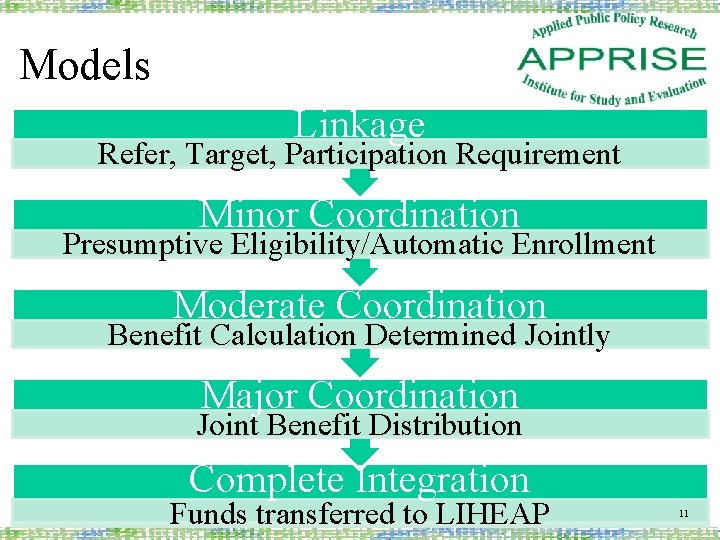
Models Linkage Refer, Target, Participation Requirement Minor Coordination Presumptive Eligibility/Automatic Enrollment Moderate Coordination Benefit Calculation Determined Jointly Major Coordination Joint Benefit Distribution Complete Integration Funds transferred to LIHEAP 11
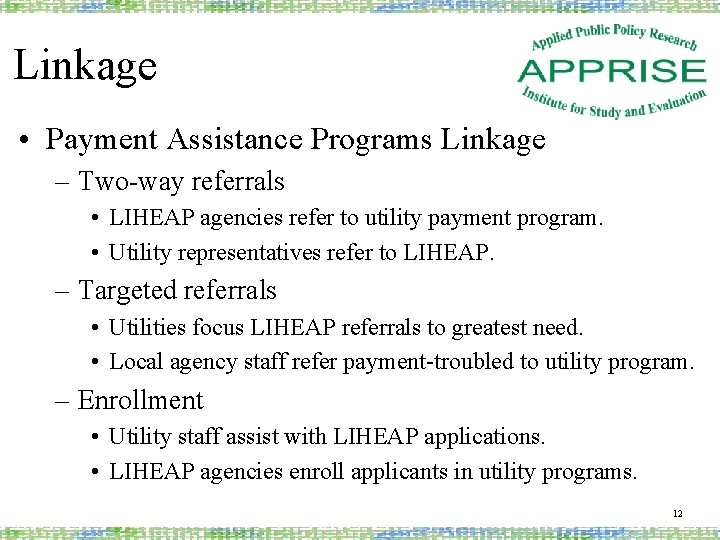
Linkage • Payment Assistance Programs Linkage – Two-way referrals • LIHEAP agencies refer to utility payment program. • Utility representatives refer to LIHEAP. – Targeted referrals • Utilities focus LIHEAP referrals to greatest need. • Local agency staff refer payment-troubled to utility program. – Enrollment • Utility staff assist with LIHEAP applications. • LIHEAP agencies enroll applicants in utility programs. 12
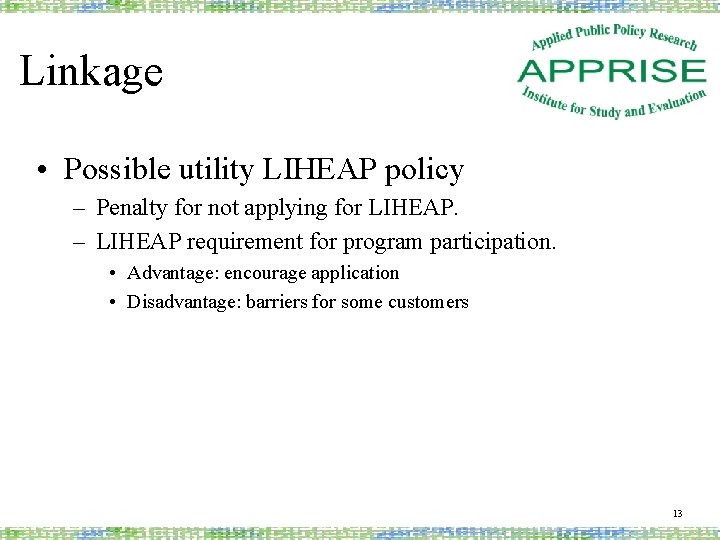
Linkage • Possible utility LIHEAP policy – Penalty for not applying for LIHEAP. – LIHEAP requirement for program participation. • Advantage: encourage application • Disadvantage: barriers for some customers 13
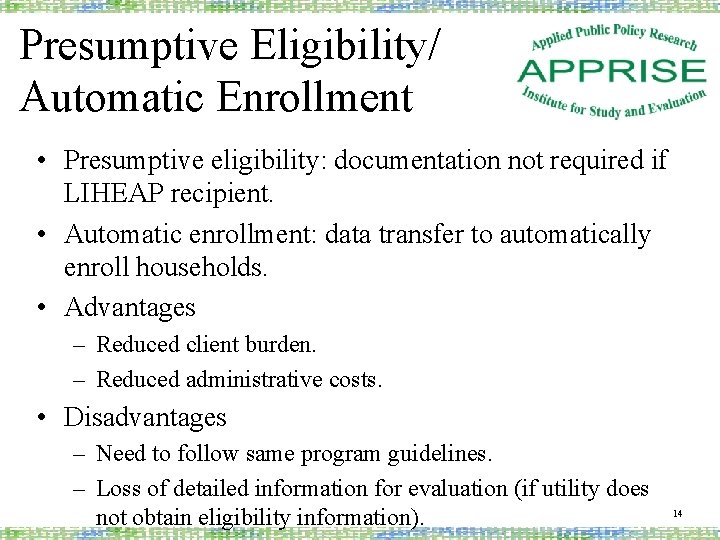
Presumptive Eligibility/ Automatic Enrollment • Presumptive eligibility: documentation not required if LIHEAP recipient. • Automatic enrollment: data transfer to automatically enroll households. • Advantages – Reduced client burden. – Reduced administrative costs. • Disadvantages – Need to follow same program guidelines. – Loss of detailed information for evaluation (if utility does not obtain eligibility information). 14
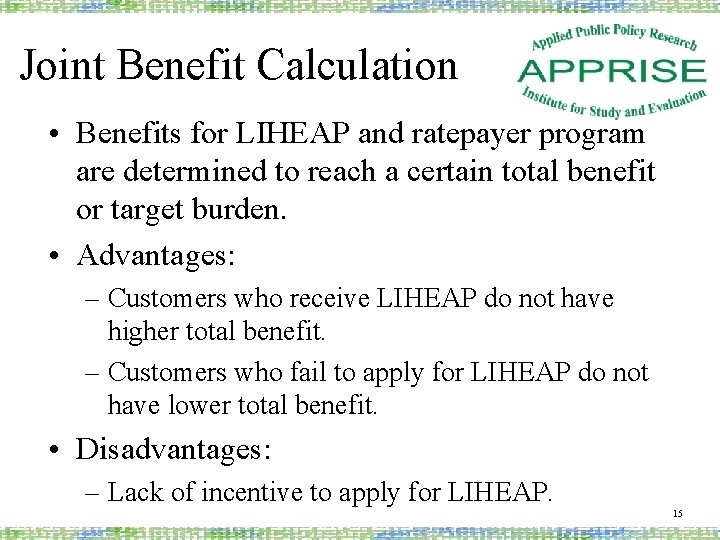
Joint Benefit Calculation • Benefits for LIHEAP and ratepayer program are determined to reach a certain total benefit or target burden. • Advantages: – Customers who receive LIHEAP do not have higher total benefit. – Customers who fail to apply for LIHEAP do not have lower total benefit. • Disadvantages: – Lack of incentive to apply for LIHEAP. 15
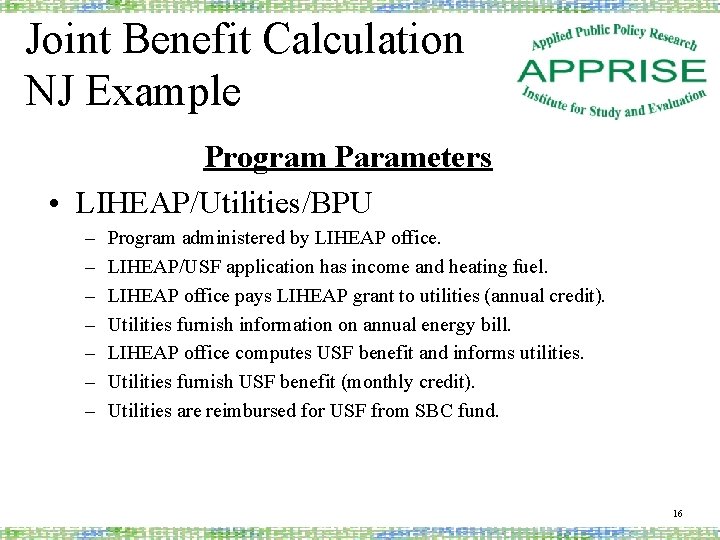
Joint Benefit Calculation NJ Example Program Parameters • LIHEAP/Utilities/BPU – – – – Program administered by LIHEAP office. LIHEAP/USF application has income and heating fuel. LIHEAP office pays LIHEAP grant to utilities (annual credit). Utilities furnish information on annual energy bill. LIHEAP office computes USF benefit and informs utilities. Utilities furnish USF benefit (monthly credit). Utilities are reimbursed for USF from SBC fund. 16
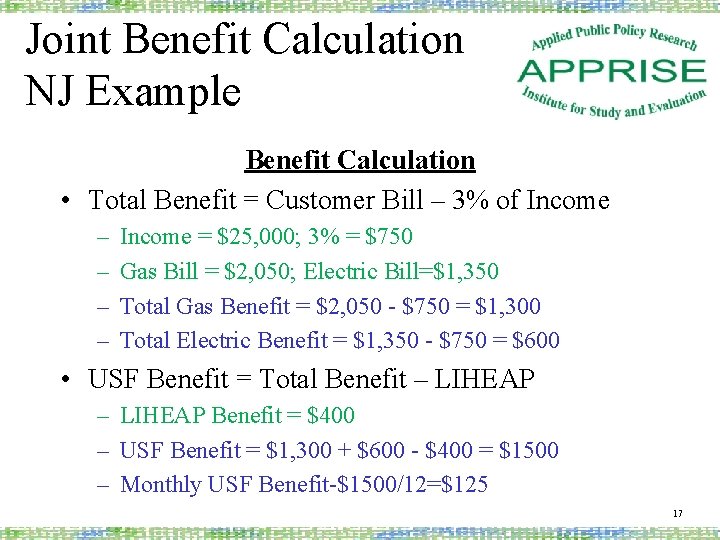
Joint Benefit Calculation NJ Example Benefit Calculation • Total Benefit = Customer Bill – 3% of Income – – Income = $25, 000; 3% = $750 Gas Bill = $2, 050; Electric Bill=$1, 350 Total Gas Benefit = $2, 050 - $750 = $1, 300 Total Electric Benefit = $1, 350 - $750 = $600 • USF Benefit = Total Benefit – LIHEAP Benefit = $400 – USF Benefit = $1, 300 + $600 - $400 = $1500 – Monthly USF Benefit-$1500/12=$125 17
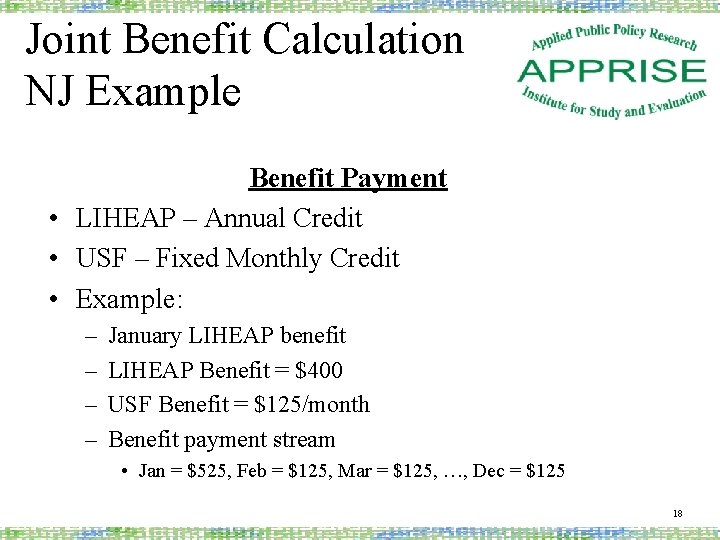
Joint Benefit Calculation NJ Example Benefit Payment • LIHEAP – Annual Credit • USF – Fixed Monthly Credit • Example: – – January LIHEAP benefit LIHEAP Benefit = $400 USF Benefit = $125/month Benefit payment stream • Jan = $525, Feb = $125, Mar = $125, …, Dec = $125 18
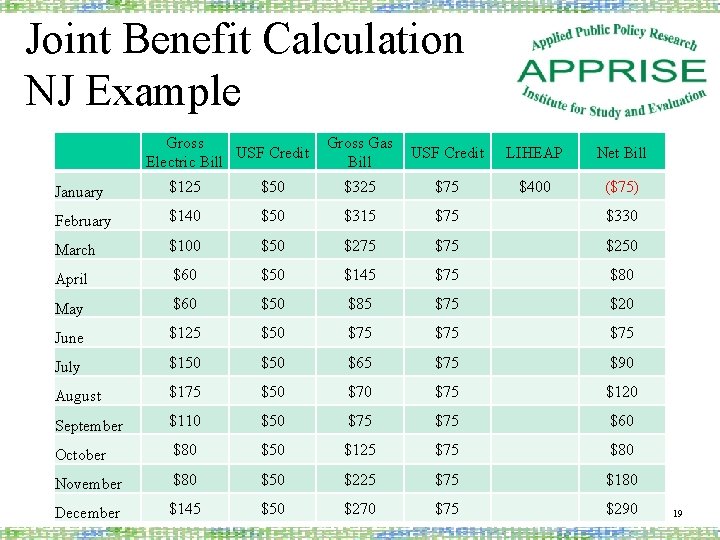
Joint Benefit Calculation NJ Example Gross USF Credit Electric Bill Gross Gas Bill USF Credit LIHEAP Net Bill $400 ($75) January $125 $50 $325 $75 February $140 $50 $315 $75 $330 March $100 $50 $275 $250 April $60 $50 $145 $75 $80 May $60 $50 $85 $75 $20 June $125 $50 $75 $75 July $150 $65 $75 $90 August $175 $50 $75 $120 September $110 $50 $75 $60 October $80 $50 $125 $75 $80 November $80 $50 $225 $75 $180 December $145 $50 $270 $75 $290 19
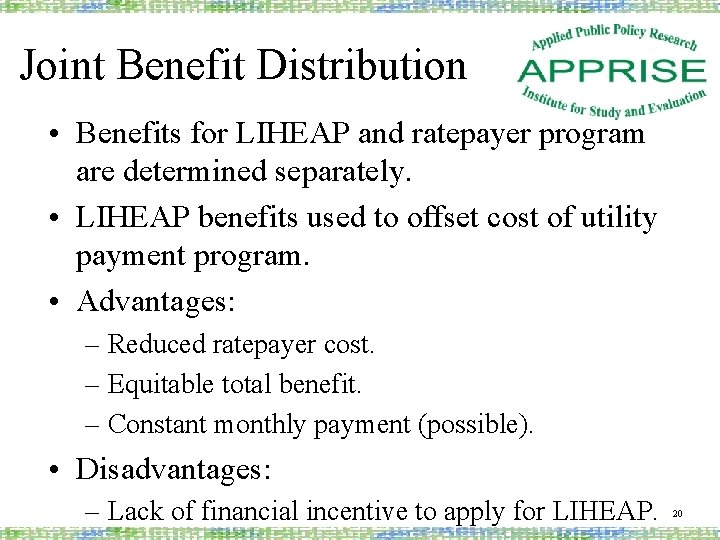
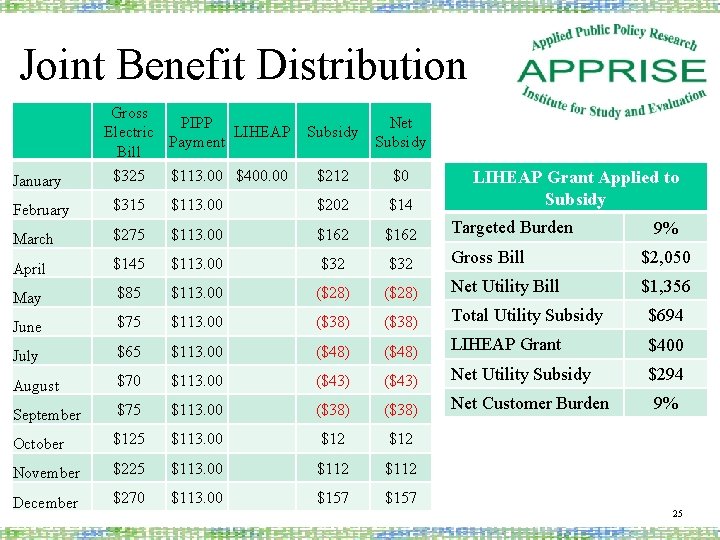
Joint Benefit Distribution • Benefits for LIHEAP and ratepayer program are determined separately. • LIHEAP benefits used to offset cost of utility payment program. • Advantages: – Reduced ratepayer cost. – Equitable total benefit. – Constant monthly payment (possible). • Disadvantages: – Lack of financial incentive to apply for LIHEAP. 20
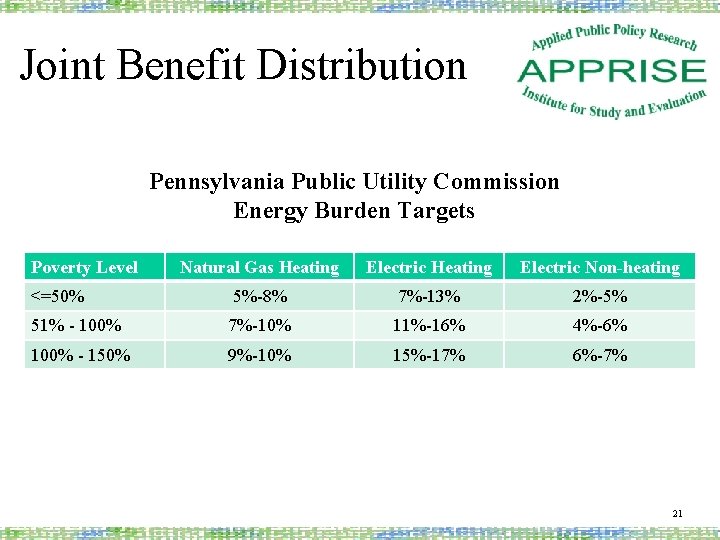
Joint Benefit Distribution Pennsylvania Public Utility Commission Energy Burden Targets Poverty Level Natural Gas Heating Electric Non-heating <=50% 5%-8% 7%-13% 2%-5% 51% - 100% 7%-10% 11%-16% 4%-6% 100% - 150% 9%-10% 15%-17% 6%-7% 21
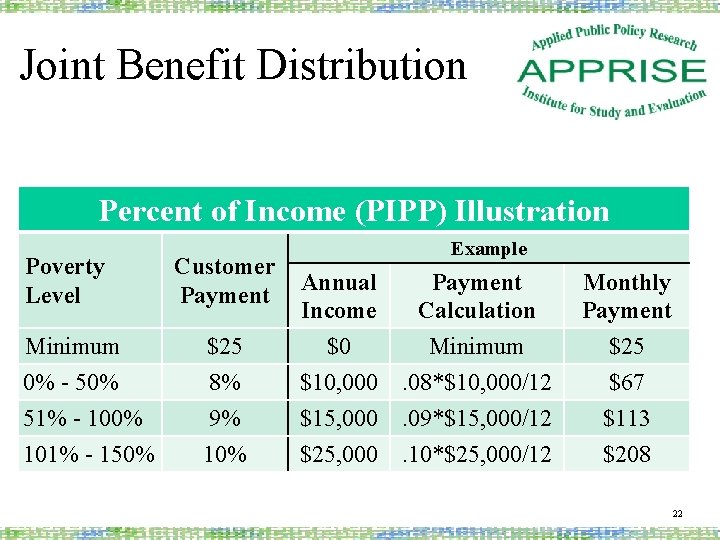
Joint Benefit Distribution Percent of Income (PIPP) Illustration Poverty Level Minimum 0% - 50% 51% - 100% 101% - 150% Customer Payment $25 8% 9% 10% Example Annual Income Payment Calculation $0 Minimum $10, 000. 08*$10, 000/12 $15, 000. 09*$15, 000/12 $25, 000. 10*$25, 000/12 Monthly Payment $25 $67 $113 $208 22
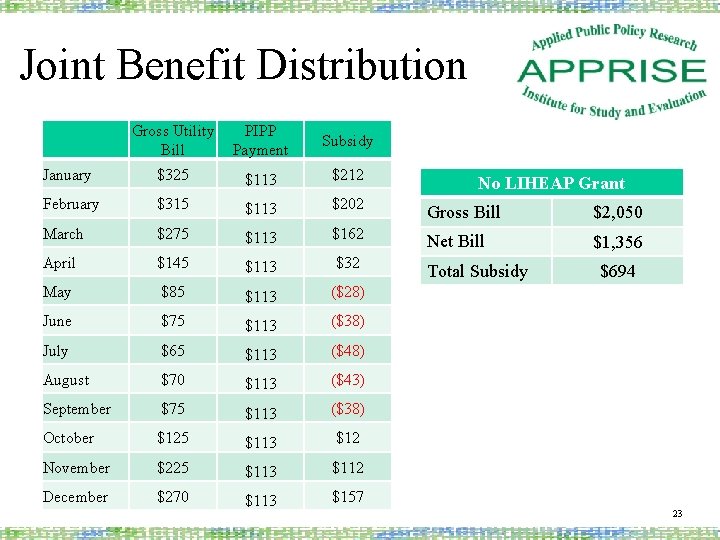
Joint Benefit Distribution Gross Utility Bill PIPP Payment Subsidy January $325 $113 $212 February $315 $113 $202 Gross Bill $2, 050 March $275 $113 $162 Net Bill $1, 356 April $145 $113 $32 Total Subsidy May $85 $113 ($28) June $75 $113 ($38) July $65 $113 ($48) August $70 $113 ($43) September $75 $113 ($38) October $125 $113 $12 November $225 $113 $112 December $270 $113 $157 No LIHEAP Grant $694 23
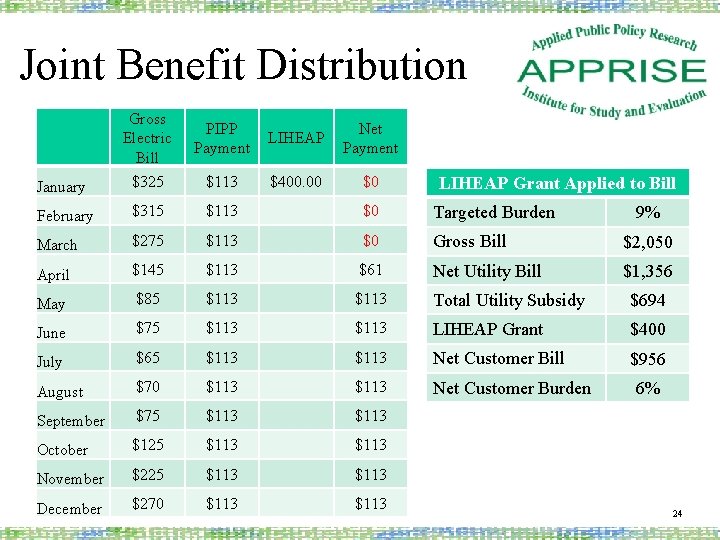
Joint Benefit Distribution Gross Electric Bill PIPP Payment LIHEAP Net Payment January $325 $113 $400. 00 $0 February $315 $113 $0 Targeted Burden March $275 $113 $0 Gross Bill $2, 050 April $145 $113 $61 Net Utility Bill $1, 356 May $85 $113 Total Utility Subsidy $694 June $75 $113 LIHEAP Grant $400 July $65 $113 Net Customer Bill $956 August $70 $113 Net Customer Burden September $75 $113 October $125 $113 November $225 $113 December $270 $113 LIHEAP Grant Applied to Bill 9% 6% 24
Joint Benefit Distribution Gross PIPP Electric LIHEAP Payment Bill Subsidy Net Subsidy LIHEAP Grant Applied to Subsidy January $325 $113. 00 $400. 00 $212 $0 February $315 $113. 00 $202 $14 March $275 $113. 00 $162 Targeted Burden April $145 $113. 00 $32 Gross Bill $2, 050 May $85 $113. 00 ($28) Net Utility Bill $1, 356 June $75 $113. 00 ($38) Total Utility Subsidy $694 July $65 $113. 00 ($48) LIHEAP Grant $400 August $70 $113. 00 ($43) Net Utility Subsidy $294 September $75 $113. 00 ($38) Net Customer Burden October $125 $113. 00 $12 November $225 $113. 00 $112 December $270 $113. 00 $157 9% 9% 25
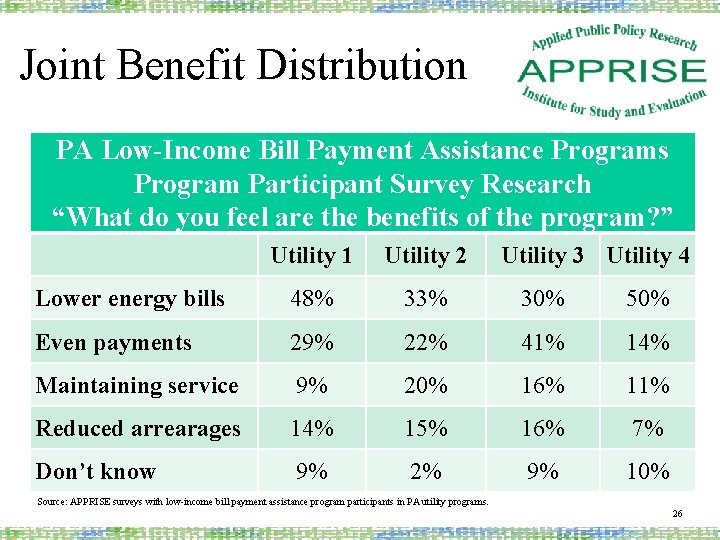
Joint Benefit Distribution PA Low-Income Bill Payment Assistance Programs Program Participant Survey Research “What do you feel are the benefits of the program? ” Utility 1 Utility 2 Utility 3 Utility 4 Lower energy bills 48% 33% 30% 50% Even payments 29% 22% 41% 14% Maintaining service 9% 20% 16% 11% Reduced arrearages 14% 15% 16% 7% Don’t know 9% 2% 9% 10% Source: APPRISE surveys with low-income bill payment assistance program participants in PA utility programs. 26
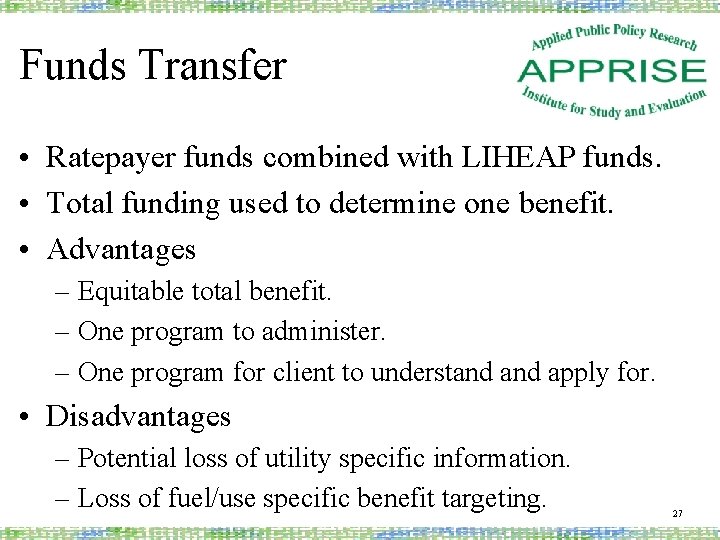
Funds Transfer • Ratepayer funds combined with LIHEAP funds. • Total funding used to determine one benefit. • Advantages – Equitable total benefit. – One program to administer. – One program for client to understand apply for. • Disadvantages – Potential loss of utility specific information. – Loss of fuel/use specific benefit targeting. 27
HHS GUIDANCE JULY 2010 INFORMATION MEMORANDUM 28
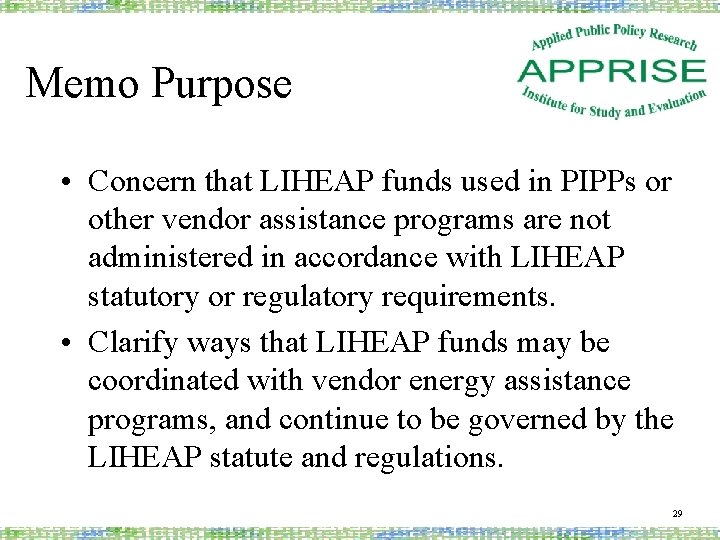
Memo Purpose • Concern that LIHEAP funds used in PIPPs or other vendor assistance programs are not administered in accordance with LIHEAP statutory or regulatory requirements. • Clarify ways that LIHEAP funds may be coordinated with vendor energy assistance programs, and continue to be governed by the LIHEAP statute and regulations. 29
Coordination Requirements • The State must ensure that LIHEAP funds continue to be governed by the LIHEAP statute, regulations and State plan. • The coordination must be described in the State’s LIHEAP plan. • The LIHEAP client should be informed of how his LIHEAP benefit will be applied to his bill under the PIPP program. 30
Coordination Requirements • Must be described in State Plan: – If LIHEAP is applied to the client’s bill incrementally, over a period of time, and represented to the client as the “PIPP” discount. – When LIHEAP funds are applied to a LIHEAP client’s utility arrearage amount under the PIPP program. 31
Coordination Requirements • The utility does not have independent authority to use LIHEAP for any other customer or purpose. • Subtracting LIHEAP from the client’s energy bill to calculate the PIPP discount appears to be using LIHEAP as a resource and creates an inequity or adverse treatment for PIPP participants. HHS will question the practice and ask for a grantee’s legal opinion supporting this practice and its compliance with the LIHEAP statute. 32
SUMMARY AND RECOMMENDATIONS 33
Summary • Coordination has implications for: – Equity – Monthly bill variation – LIHEAP application incentive – Administrative process – Information availability • All issues should be considered when determining whether and how to coordinate. 34
Contact Information Jackie Berger, Ph. D. President and Co-Founder APPRISE 32 Nassau Street, Suite 200 Princeton, NJ 08542 609 -252 -8009 jackie-berger@appriseinc. org www. appriseinc. org 35