
Coordination of Cardiac Cycle www assignmentpoint com 03
- Slides: 14
Co-ordination of Cardiac Cycle www. assignmentpoint. com
03 January 2022 Co-ordination of the Cardiac Cycle Aims • Describe how heart action is coordinated with reference to the sinoatrial node (SAN), the atrioventricular node (AVN) and the Purkyne tissue • Be able to interpret and explain electrocardiogram (ECG) traces, with reference to normal and abnormal heart activity www. assignmentpoint. com
• The heart is made of cardiac muscle. • When the cells receive an electrical impulse they contract - causing a heartbeat. • Cardiac muscle is myogenic - it can contract on its own, without needing nerve impulses. www. assignmentpoint. com
www. assignmentpoint. com
www. assignmentpoint. com
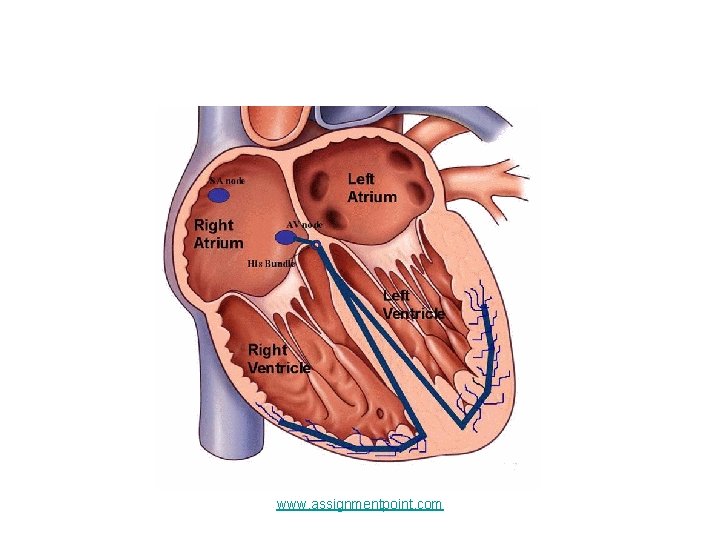
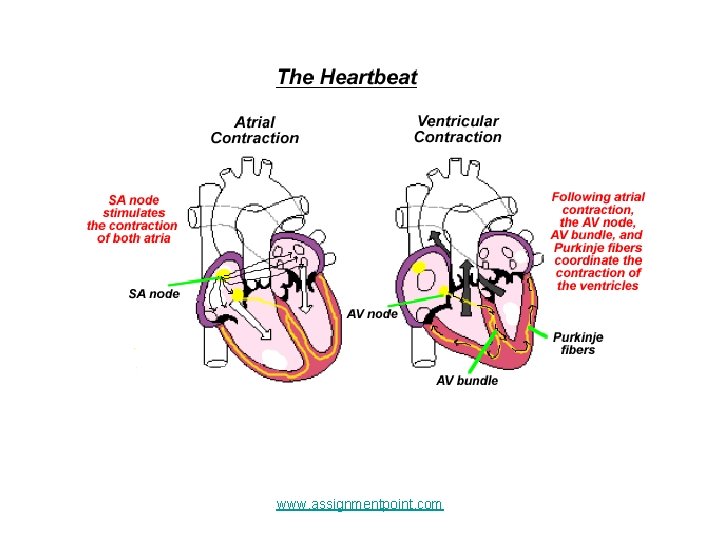
Sinoatrial node (SA node) • This specialized node is found on the upper inside wall of the right atrium. • The SA node is known as the pacemaker of the heart and initiates a heartbeat every 0. 85 seconds. • This signal travels across the atria causing them to contract and load the ventricles with blood. • Ventricles are electrically insulated from atria so they don’t contract yet. www. assignmentpoint. com
Atrio-ventricular node (AV node) • The AV node is located on the bottom surface of the right atria and is responsible for initiating the contraction of the ventricles. • Electrical impulse passes to ventricles via AV node and the Bundle of His. They pass the impulse to the base of the ventricles (~ 0. 1 s delay). • The bundle of His is a group of fibres that conduct impulses to Purkyne fibres which carry impulses to left & right ventricles. • Ventricles then contract from the bottom upwards. www. assignmentpoint. com
No impulse • Cardiac muscle relaxes = diastole www. assignmentpoint. com
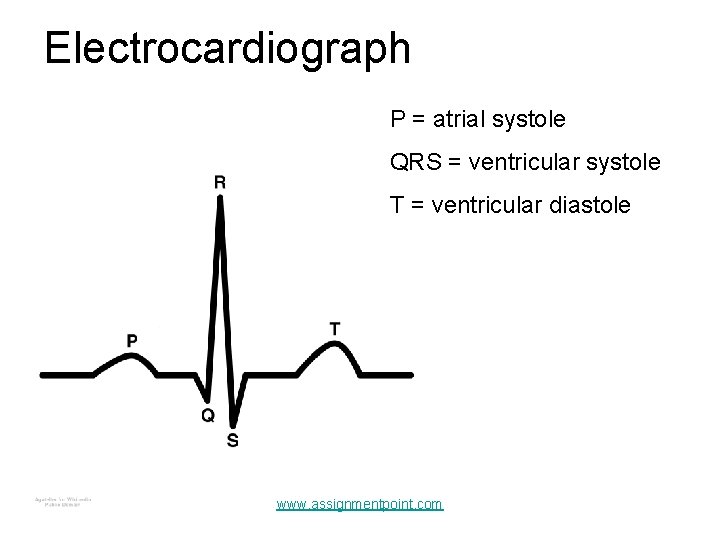
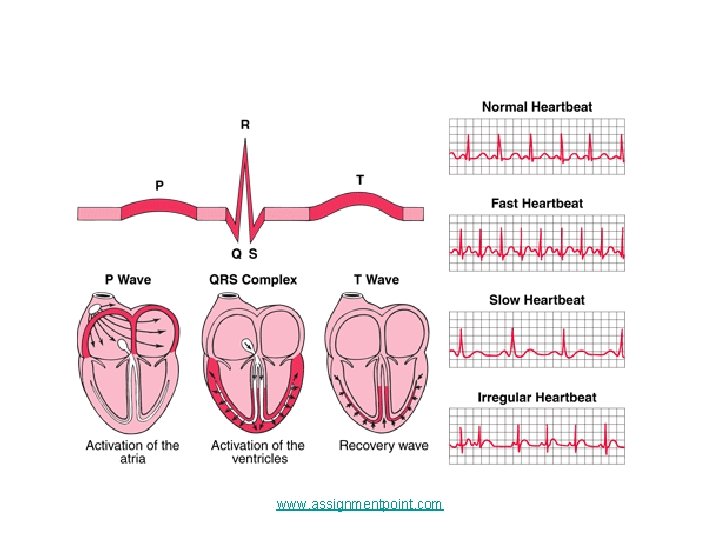
Electrocardiograph P = atrial systole QRS = ventricular systole T = ventricular diastole www. assignmentpoint. com
• Records electrical activity of heart to monitor heart function. • Pacemaker generates electrical currents in body fluids around the heart - detected by electrodes to produce ECG • Heart muscle: depolarises (loses electrical charge) when it contracts repolarises (regains charge) when it relaxes www. assignmentpoint. com
www. assignmentpoint. com
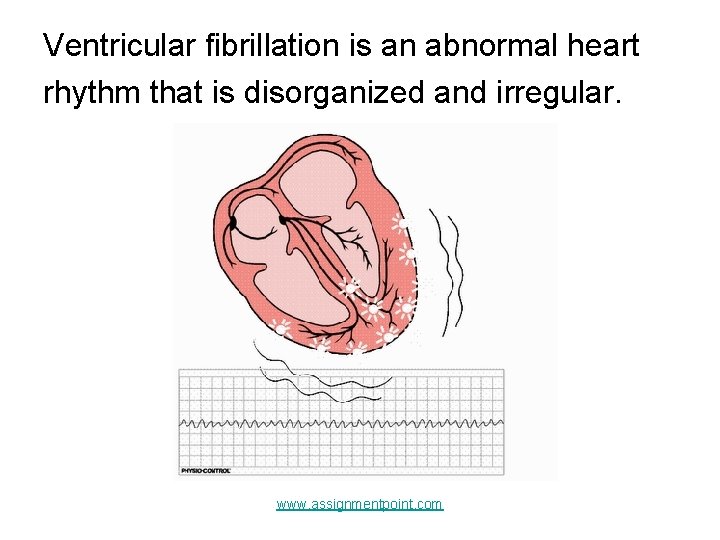
Ventricular fibrillation is an abnormal heart rhythm that is disorganized and irregular. www. assignmentpoint. com
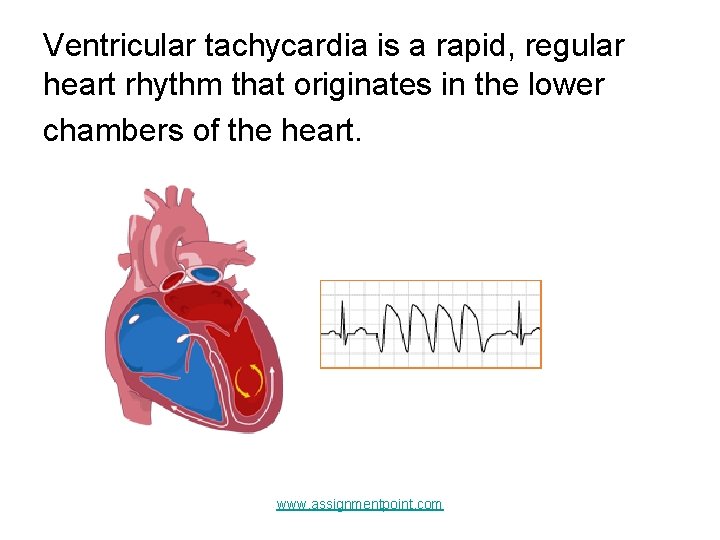
Ventricular tachycardia is a rapid, regular heart rhythm that originates in the lower chambers of the heart. www. assignmentpoint. com
Heart block refers to a delay in the normal flow of electrical impulses that cause the heart to beat. www. assignmentpoint. com