
Coordination of cardiac cycle ensures coordinated contractions of
- Slides: 12
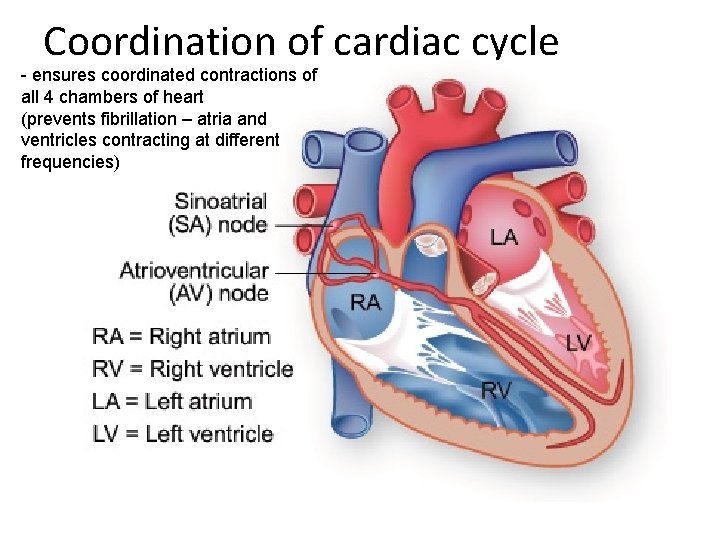
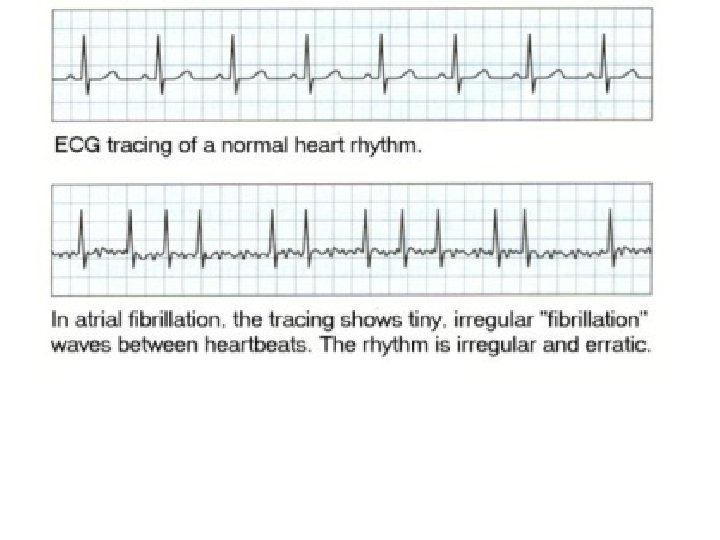
Coordination of cardiac cycle - ensures coordinated contractions of all 4 chambers of heart (prevents fibrillation – atria and ventricles contracting at different frequencies)
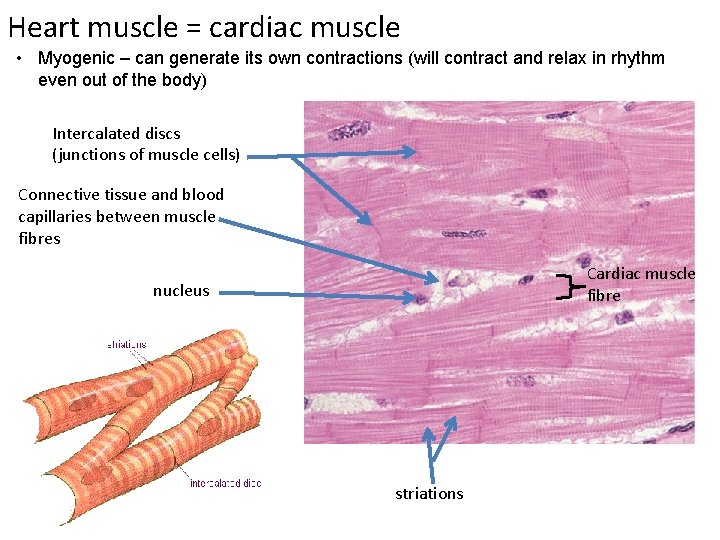
Heart muscle = cardiac muscle • Myogenic – can generate its own contractions (will contract and relax in rhythm even out of the body) Intercalated discs (junctions of muscle cells) Connective tissue and blood capillaries between muscle fibres Cardiac muscle fibre nucleus striations
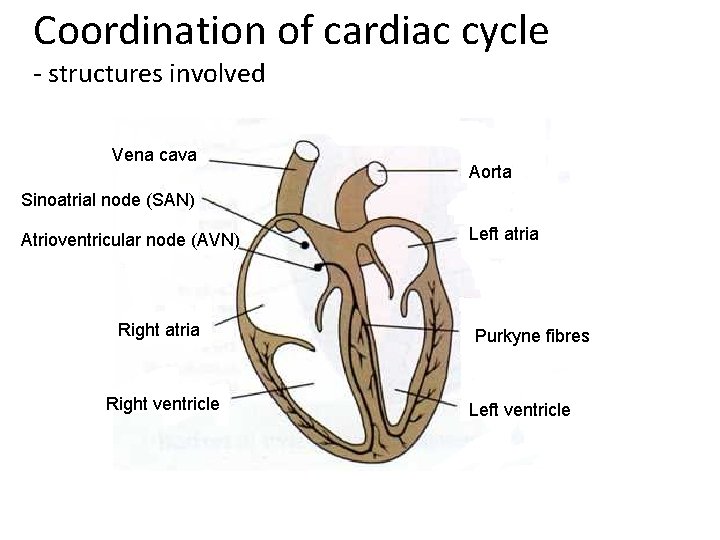
Coordination of cardiac cycle - structures involved Vena cava Aorta Sinoatrial node (SAN) Atrioventricular node (AVN) Right atria Right ventricle Left atria Purkyne fibres Left ventricle
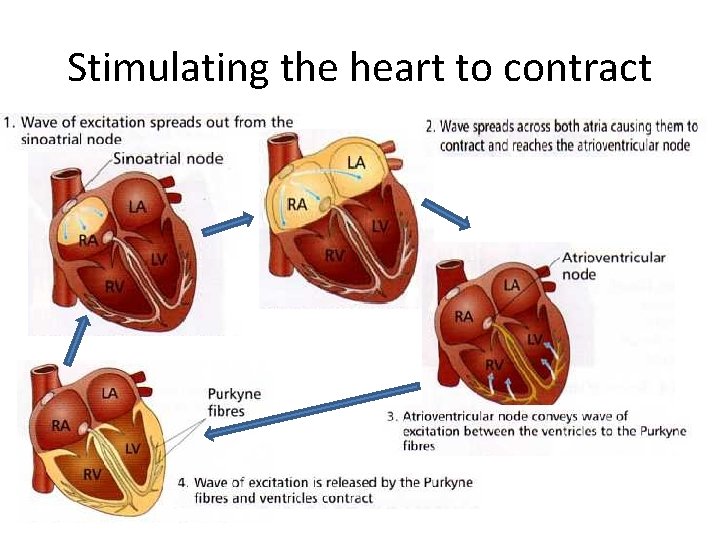
Stimulating the heart to contract
Identify each of the following • Patch of tissue that initiates heartbeat by sending waves of excitation over atria wall (pacemaker) • Patch of tissue at the base of atrium/top of septum of heart where wave of excitation is delayed and which conducts electrical excitation from atria to: • specialised muscle fibres in septum which conduct electrical excitation from AVN down septum to apex (base) of ventricles
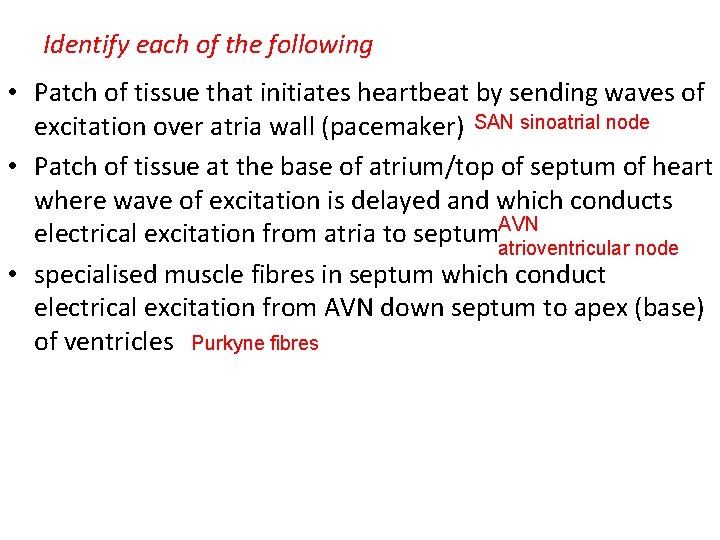
Identify each of the following • Patch of tissue that initiates heartbeat by sending waves of excitation over atria wall (pacemaker) SAN sinoatrial node • Patch of tissue at the base of atrium/top of septum of heart where wave of excitation is delayed and which conducts electrical excitation from atria to septum. AVN atrioventricular node • specialised muscle fibres in septum which conduct electrical excitation from AVN down septum to apex (base) of ventricles Purkyne fibres
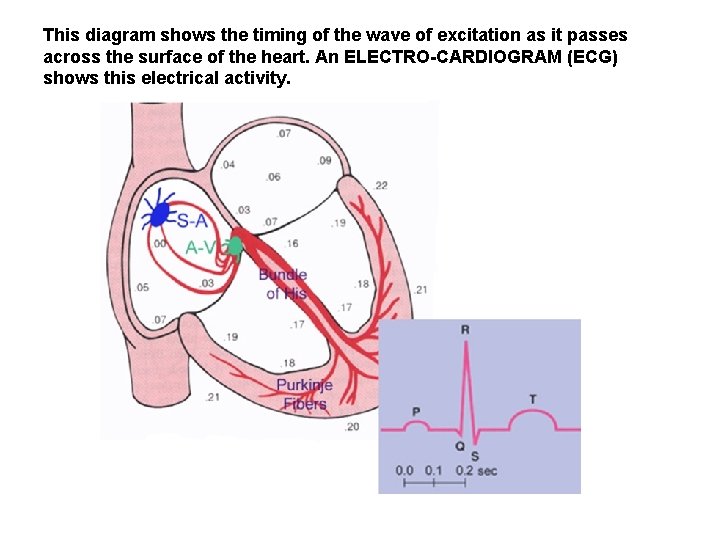
This diagram shows the timing of the wave of excitation as it passes across the surface of the heart. An ELECTRO-CARDIOGRAM (ECG) shows this electrical activity.
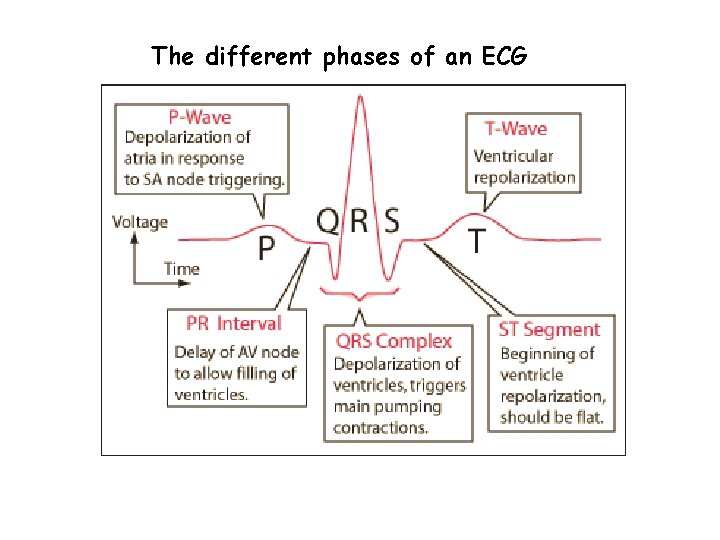
The different phases of an ECG
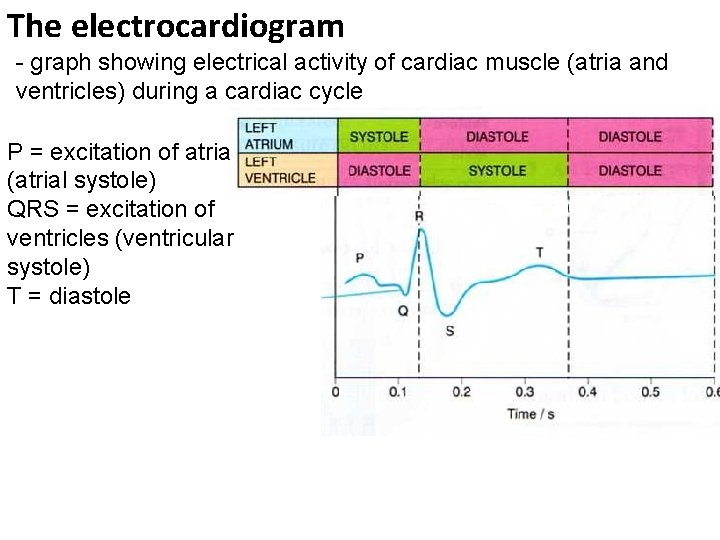
The electrocardiogram - graph showing electrical activity of cardiac muscle (atria and ventricles) during a cardiac cycle P = excitation of atria (atrial systole) QRS = excitation of ventricles (ventricular systole) T = diastole
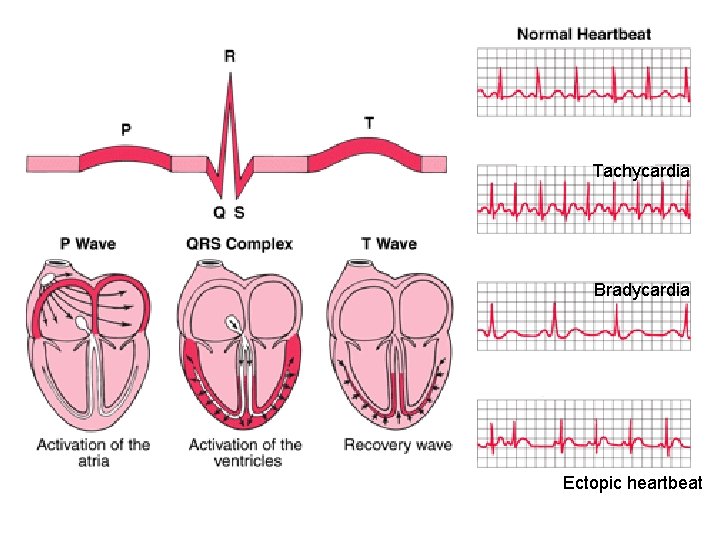
Tachycardia Bradycardia Ectopic heartbeat
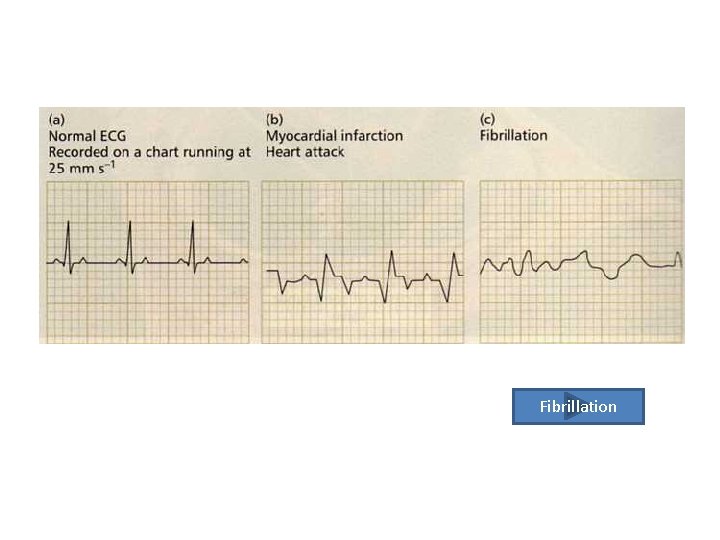
Fibrillation