
Coordination Chemistry Ligands bonding to metals DonorAcceptor Complexes
Coordination Chemistry Ligands bonding to metals
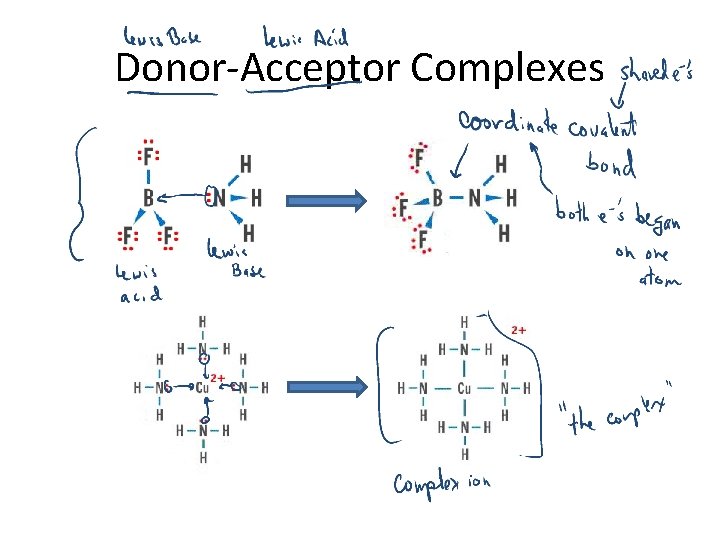
Donor-Acceptor Complexes
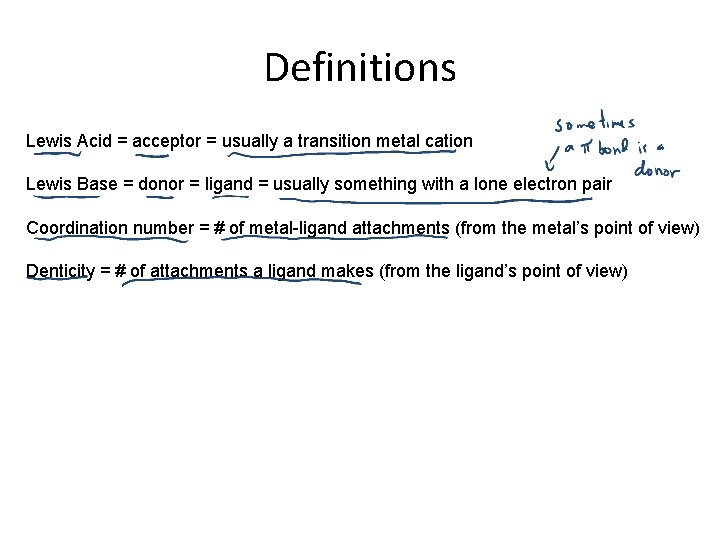
Definitions Lewis Acid = acceptor = usually a transition metal cation Lewis Base = donor = ligand = usually something with a lone electron pair Coordination number = # of metal-ligand attachments (from the metal’s point of view) Denticity = # of attachments a ligand makes (from the ligand’s point of view)

Common Ligands Monodentate Ligands: Bidentate Ligands: Polydentate Ligands: Halides: F-, Cl-, Br-, IO 2 -, S 2 -, OH-, CNNH 3, H 2 O, CO heme, salen
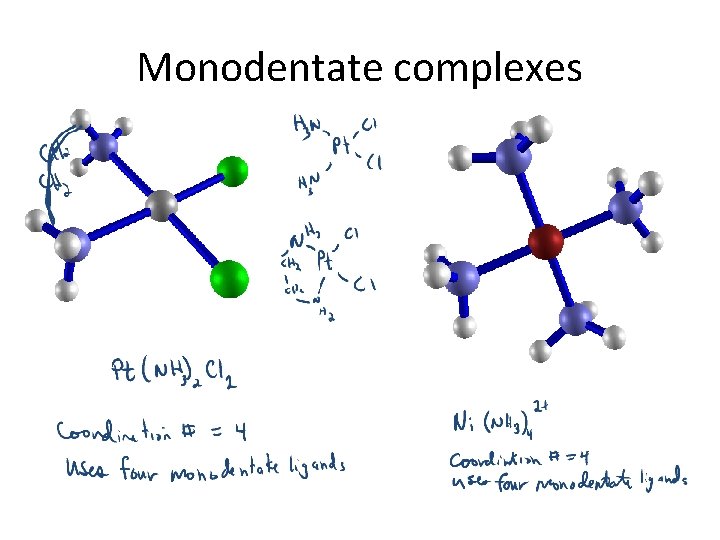
Monodentate complexes
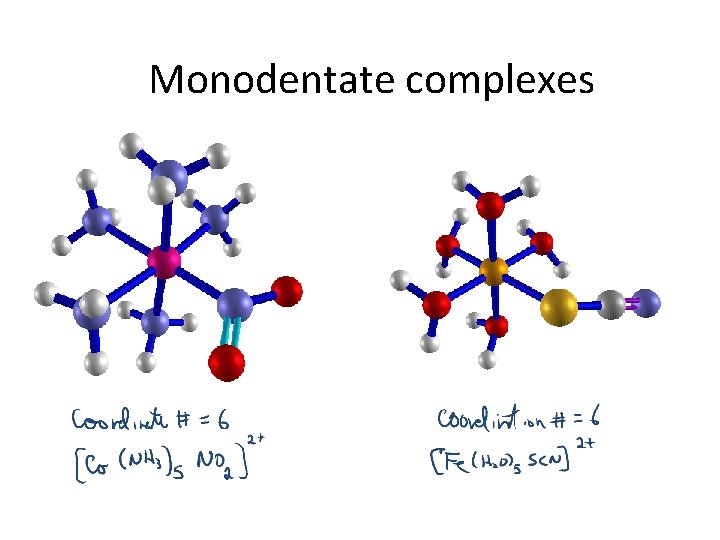
Monodentate complexes
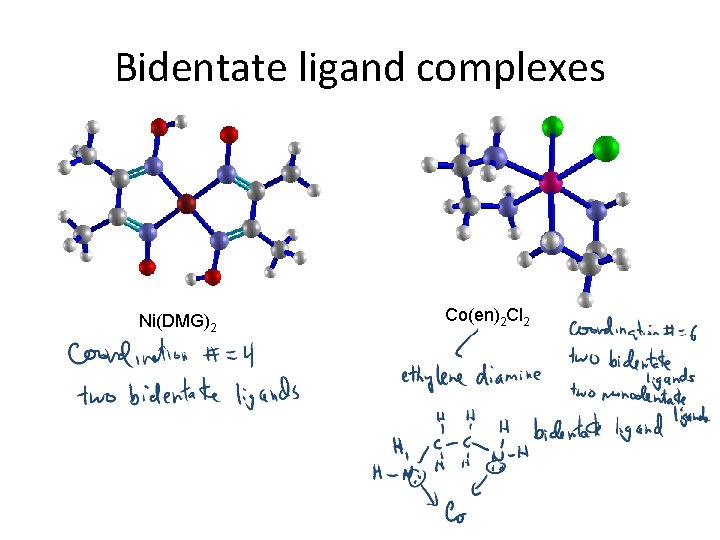
Bidentate ligand complexes Ni(DMG)2 Co(en)2 Cl 2
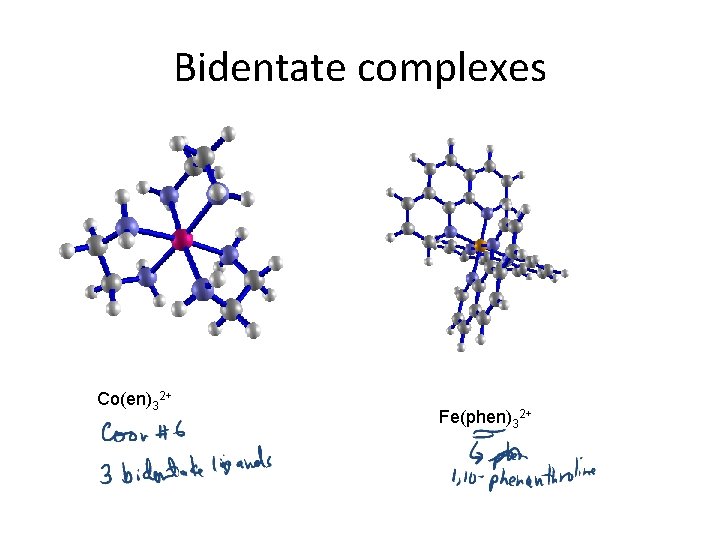
Bidentate complexes Co(en)32+ Fe(phen)32+
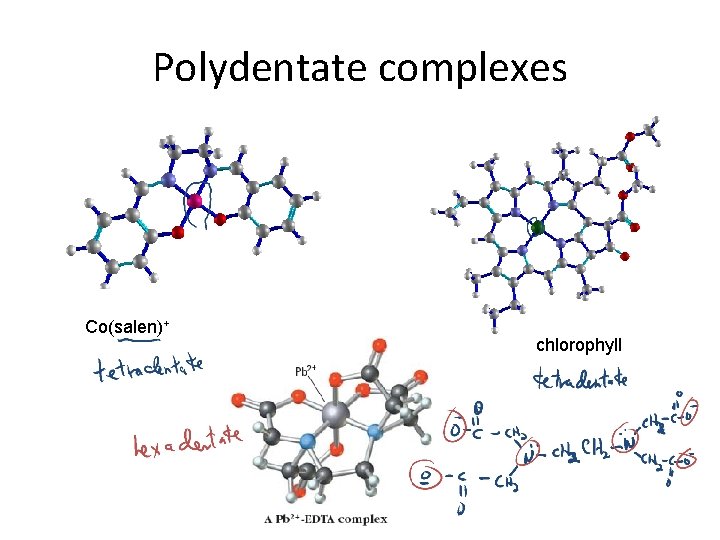
Polydentate complexes Co(salen)+ chlorophyll
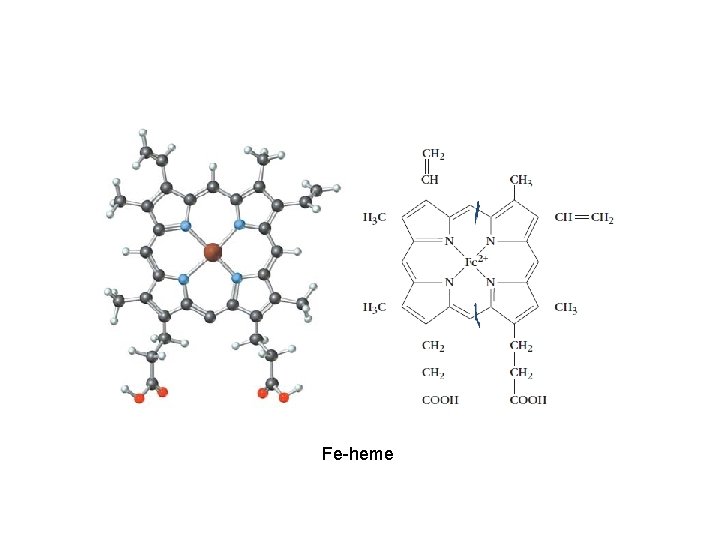
Fe-heme
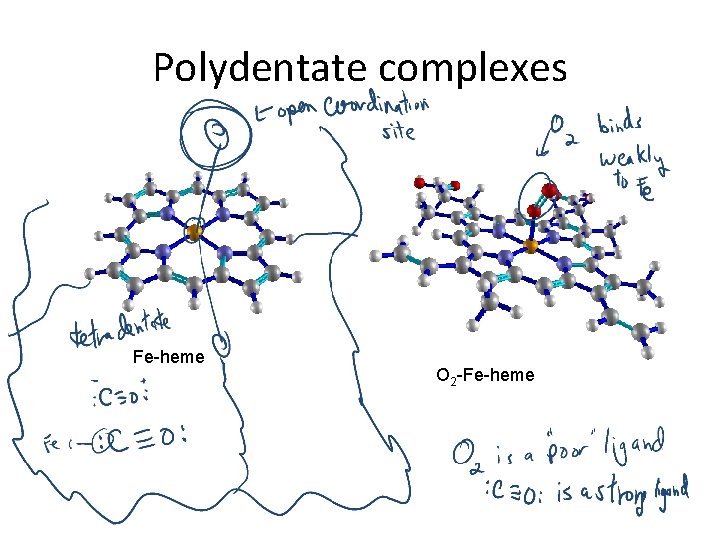
Polydentate complexes Fe-heme O 2 -Fe-heme
Free Times M 12: 30 – 3 T 10 – 1: 30 W 11 – 2 Th 12 – 2
![Determining Metal Oxidation States [Ag(NH 3)2]NO 3 K 2[Ni. Cl 4] [Co(en)2 Cl 2]Cl](http://slidetodoc.com/presentation_image_h2/fc1db336d384855d734a8f60856d9fae/image-13.jpg "Determining Metal Oxidation States [Ag(NH 3)2]NO 3 K 2[Ni. Cl 4] [Co(en)2 Cl 2]Cl")
Determining Metal Oxidation States [Ag(NH 3)2]NO 3 K 2[Ni. Cl 4] [Co(en)2 Cl 2]Cl [Cr(H 2 O)4 CO 3]Br
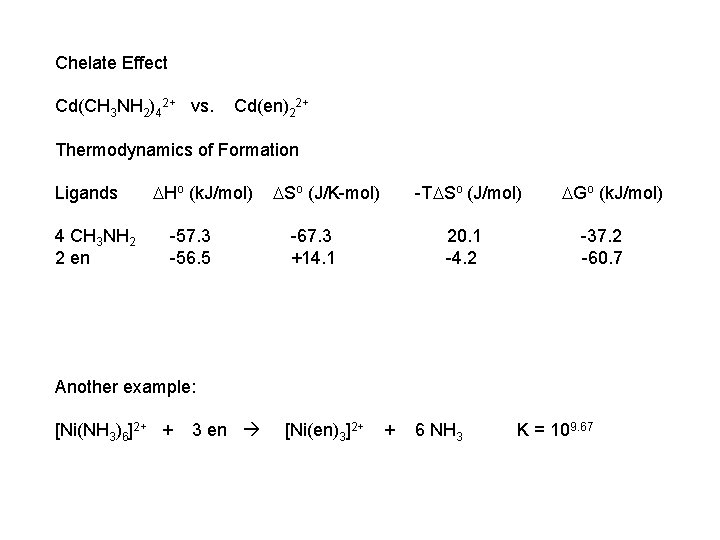
Chelate Effect Cd(CH 3 NH 2)42+ vs. Cd(en)22+ Thermodynamics of Formation Ligands 4 CH 3 NH 2 2 en Ho (k. J/mol) -57. 3 -56. 5 So (J/K-mol) -T So (J/mol) -67. 3 +14. 1 20. 1 -4. 2 Go (k. J/mol) -37. 2 -60. 7 Another example: [Ni(NH 3)6]2+ + 3 en [Ni(en)3]2+ + 6 NH 3 K = 109. 67
Isomerization in Coordination Compounds Do for octahedral Complexes
![Inner and Outer Spheres [Co(NH 3)4 Cl 2]Cl H 2 O [Co(NH 3)4(H 2](http://slidetodoc.com/presentation_image_h2/fc1db336d384855d734a8f60856d9fae/image-16.jpg "Inner and Outer Spheres [Co(NH 3)4 Cl 2]Cl H 2 O [Co(NH 3)4(H 2")
Inner and Outer Spheres [Co(NH 3)4 Cl 2]Cl H 2 O [Co(NH 3)4(H 2 O)Cl]Cl 2
![All compounds Structural (constitutional) linkage ionization [Co(NH 3)5 Cl]NO 2 [Co(NH 3)5 NO 2]Cl](http://slidetodoc.com/presentation_image_h2/fc1db336d384855d734a8f60856d9fae/image-17.jpg "All compounds Structural (constitutional) linkage ionization [Co(NH 3)5 Cl]NO 2 [Co(NH 3)5 NO 2]Cl")
All compounds Structural (constitutional) linkage ionization [Co(NH 3)5 Cl]NO 2 [Co(NH 3)5 NO 2]Cl [Co(NH 3)5 SCN]2+ [Co(NH 3)5 NCS]2+ hydration Stereo geometric [Co(NH 3)4 Cl(H 2 O)]Cl 2 [Co(NH 3)4 Cl 2]Cl H 2 O optical
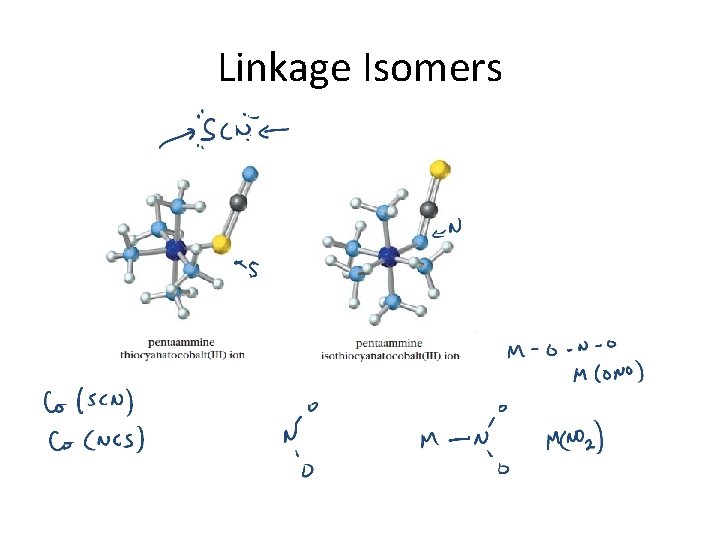
Linkage Isomers

Ionization Isomers
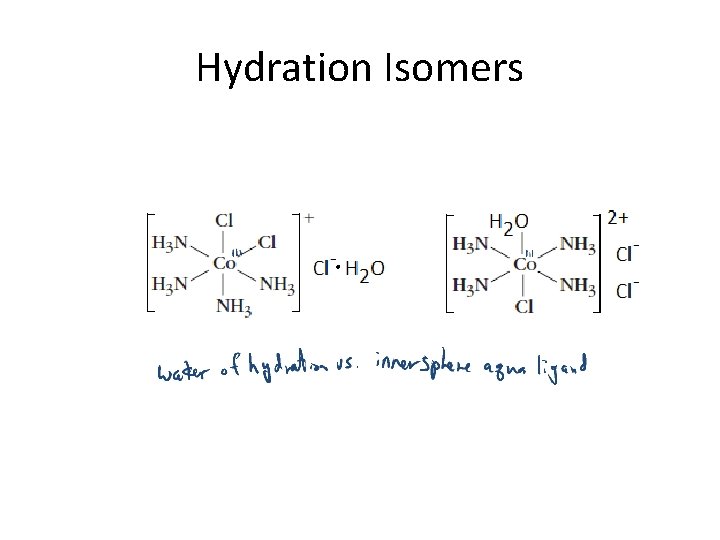
Hydration Isomers
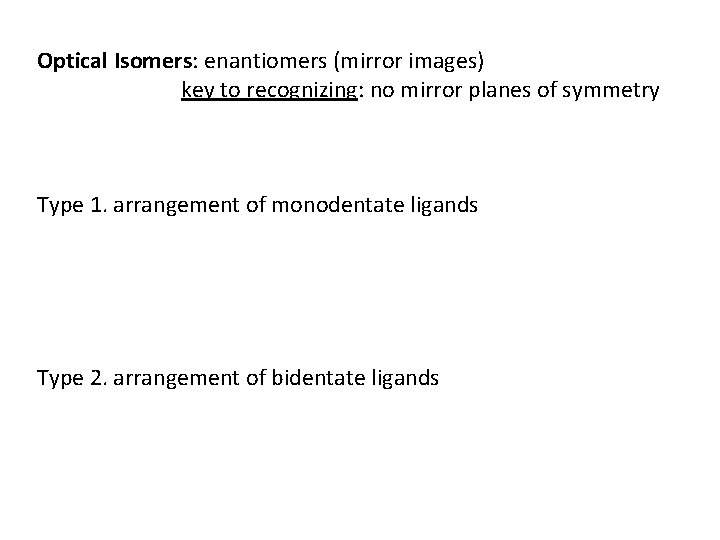
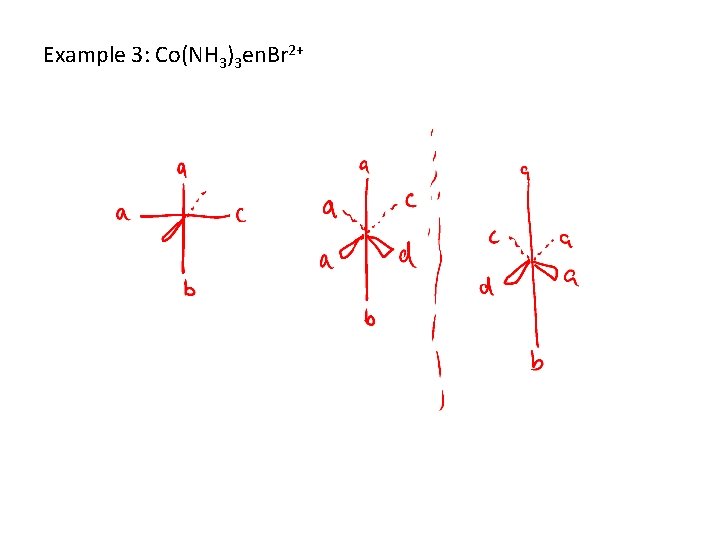
Optical Isomers: enantiomers (mirror images) key to recognizing: no mirror planes of symmetry Type 1. arrangement of monodentate ligands Type 2. arrangement of bidentate ligands
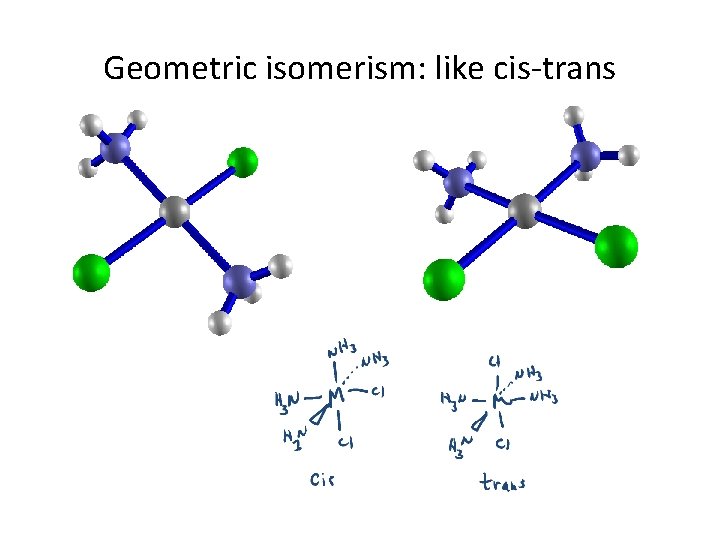
Geometric isomerism: like cis-trans
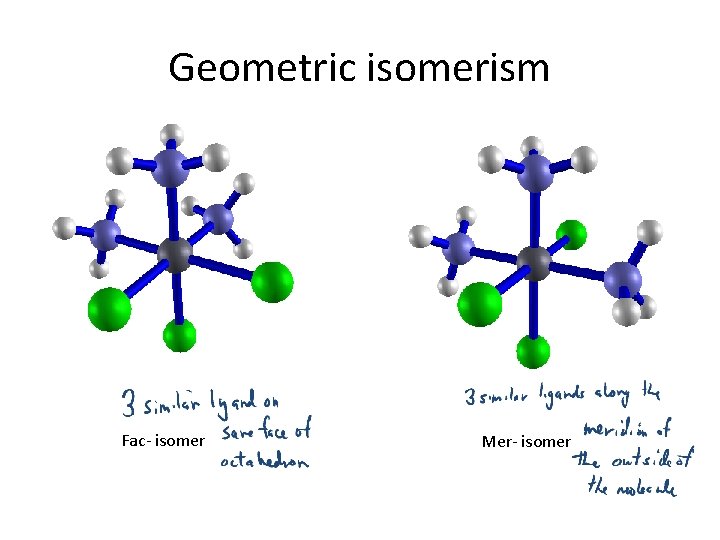
Geometric isomerism Fac- isomer Mer- isomer
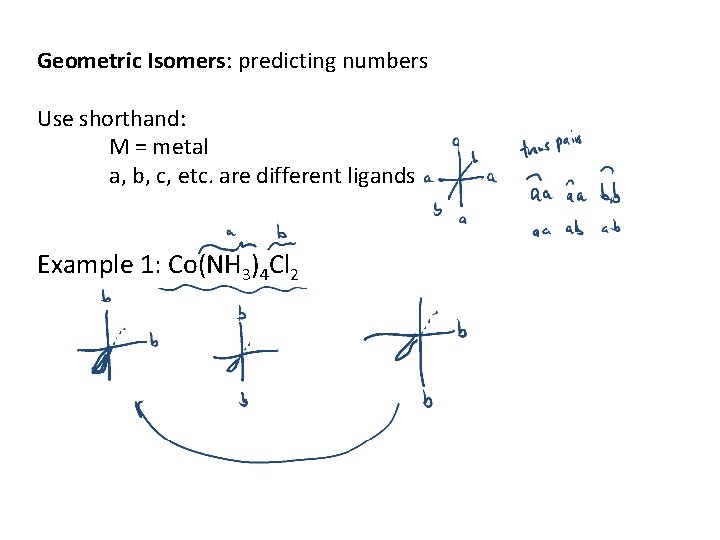
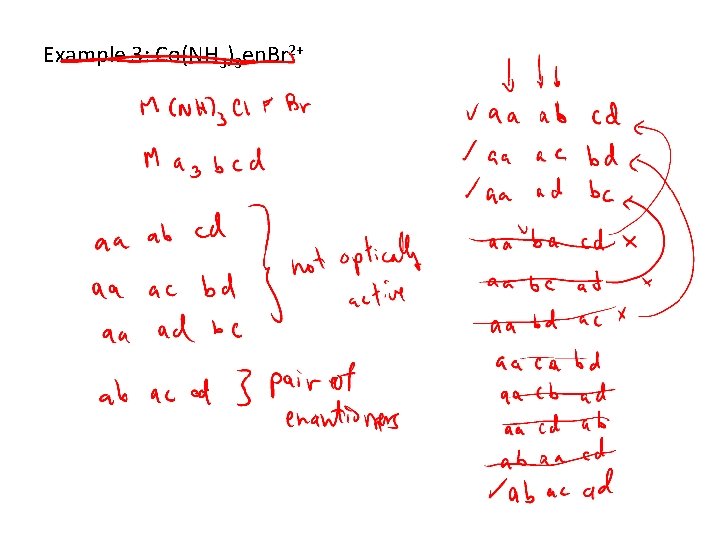
Geometric Isomers: predicting numbers Use shorthand: M = metal a, b, c, etc. are different ligands Example 1: Co(NH 3)4 Cl 2
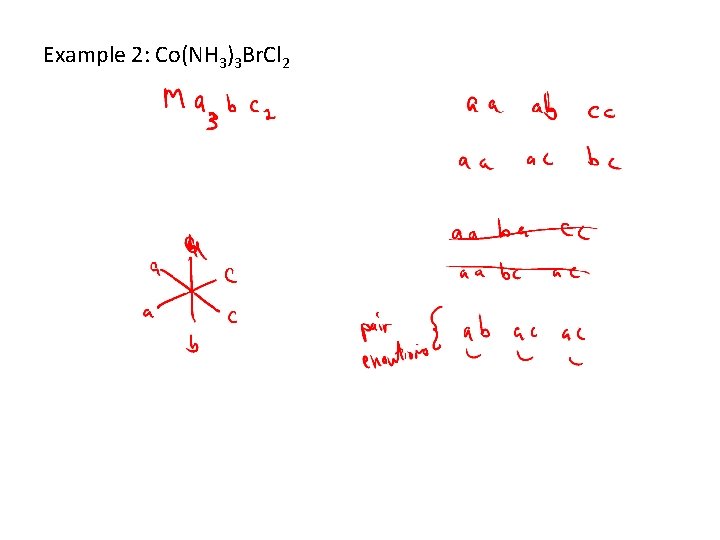
Example 2: Co(NH 3)3 Br. Cl 2
Example 3: Co(NH 3)3 en. Br 2+
Example 3: Co(NH 3)3 en. Br 2+
Example 3: Co(NH 3)3 en. Br 2+
Example 3: Co(NH 3)3 en. Br 2+
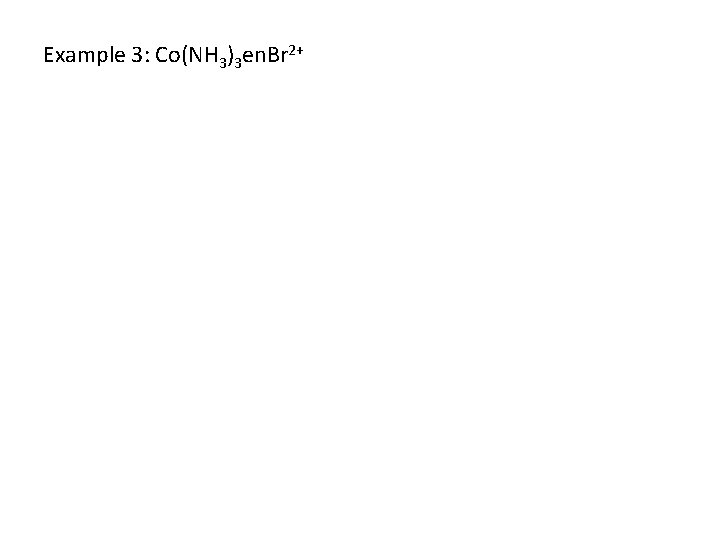
Example 3: Co(NH 3)3 en. Br 2+
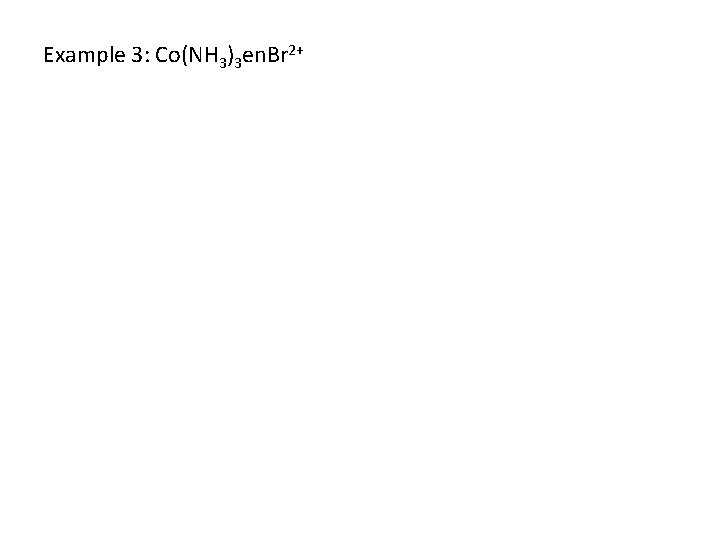
Example 3: Co(NH 3)3 en. Br 2+
- Slides: 31