
Coordinately Controlled Genes in Eukaryotes Unlike the genes


- Slides: 24
Coordinately Controlled Genes in Eukaryotes • Unlike the genes of a prokaryotic operon, each of the coordinately controlled eukaryotic genes has a promoter and control elements • These genes can be scattered over different chromosomes, but each has the same combination of control elements • Copies of the activators recognize specific control elements and promote simultaneous transcription of the genes Copyright © 2008 Pearson Education Inc. , publishing as Pearson Benjamin Cummings
Mechanisms of Post-Transcriptional Regulation • Transcription alone does not account for gene expression • Regulatory mechanisms can operate at various stages after transcription • Such mechanisms allow a cell to fine-tune gene expression rapidly in response to environmental changes Copyright © 2008 Pearson Education Inc. , publishing as Pearson Benjamin Cummings
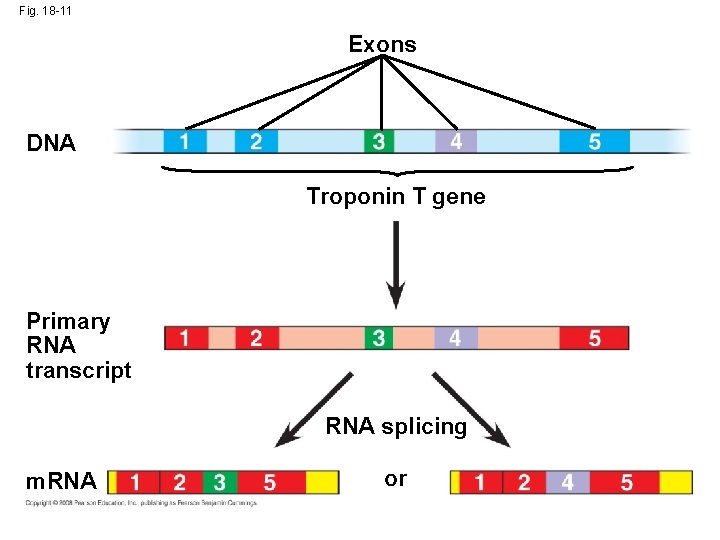
RNA Processing • In alternative RNA splicing, different m. RNA molecules are produced from the same primary transcript, depending on which RNA segments are treated as exons and which as introns Animation: RNA Processing Copyright © 2008 Pearson Education Inc. , publishing as Pearson Benjamin Cummings
Fig. 18 -11 Exons DNA Troponin T gene Primary RNA transcript RNA splicing m. RNA or
m. RNA Degradation • The life span of m. RNA molecules in the cytoplasm is a key to determining protein synthesis • Eukaryotic m. RNA is more long lived than prokaryotic m. RNA • The m. RNA life span is determined in part by sequences in the leader and trailer regions Animation: m. RNA Degradation Copyright © 2008 Pearson Education Inc. , publishing as Pearson Benjamin Cummings
Initiation of Translation • The initiation of translation of selected m. RNAs can be blocked by regulatory proteins that bind to sequences or structures of the m. RNA • Alternatively, translation of all m. RNAs in a cell may be regulated simultaneously • For example, translation initiation factors are simultaneously activated in an egg following fertilization Animation: Blocking Translation Copyright © 2008 Pearson Education Inc. , publishing as Pearson Benjamin Cummings
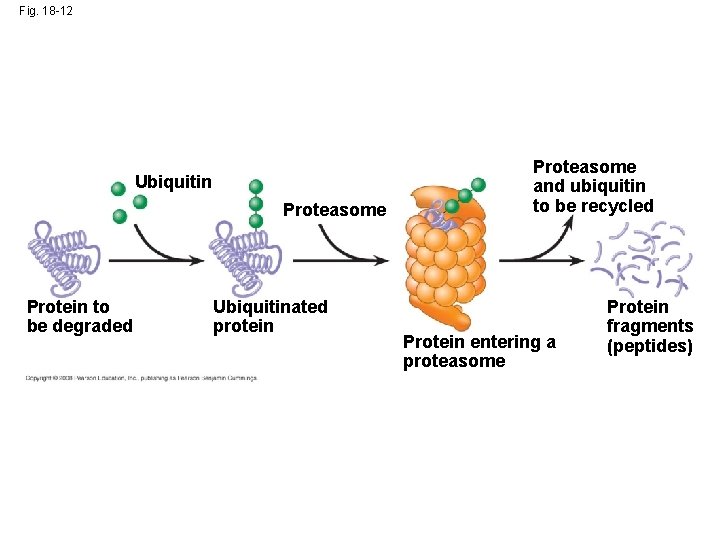
Protein Processing and Degradation • After translation, various types of protein processing, including cleavage and the addition of chemical groups, are subject to control • Proteasomes are giant protein complexes that bind protein molecules and degrade them Animation: Protein Processing Animation: Protein Degradation Copyright © 2008 Pearson Education Inc. , publishing as Pearson Benjamin Cummings
Fig. 18 -12 Ubiquitin Proteasome Protein to be degraded Ubiquitinated protein Proteasome and ubiquitin to be recycled Protein entering a proteasome Protein fragments (peptides)
Concept 18. 3: Noncoding RNAs play multiple roles in controlling gene expression • Only a small fraction of DNA codes for proteins, r. RNA, and t. RNA • A significant amount of the genome may be transcribed into noncoding RNAs • Noncoding RNAs regulate gene expression at two points: m. RNA translation and chromatin configuration Copyright © 2008 Pearson Education Inc. , publishing as Pearson Benjamin Cummings
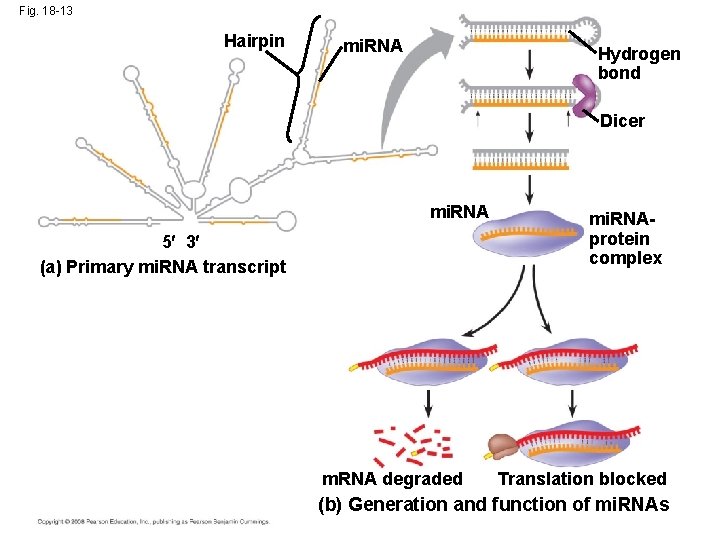
Effects on m. RNAs by Micro. RNAs and Small Interfering RNAs • Micro. RNAs (mi. RNAs) are small singlestranded RNA molecules that can bind to m. RNA • These can degrade m. RNA or block its translation Copyright © 2008 Pearson Education Inc. , publishing as Pearson Benjamin Cummings
Fig. 18 -13 Hairpin mi. RNA Hydrogen bond Dicer mi. RNA 5 3 (a) Primary mi. RNA transcript m. RNA degraded mi. RNAprotein complex Translation blocked (b) Generation and function of mi. RNAs
• The phenomenon of inhibition of gene expression by RNA molecules is called RNA interference (RNAi) • RNAi is caused by small interfering RNAs (si. RNAs) • si. RNAs and mi. RNAs are similar but form from different RNA precursors Copyright © 2008 Pearson Education Inc. , publishing as Pearson Benjamin Cummings
Chromatin Remodeling and Silencing of Transcription by Small RNAs • si. RNAs play a role in heterochromatin formation and can block large regions of the chromosome • Small RNAs may also block transcription of specific genes Copyright © 2008 Pearson Education Inc. , publishing as Pearson Benjamin Cummings
Concept 18. 4: A program of differential gene expression leads to the different cell types in a multicellular organism • During embryonic development, a fertilized egg gives rise to many different cell types • Cell types are organized successively into tissues, organ systems, and the whole organism • Gene expression orchestrates the developmental programs of animals Copyright © 2008 Pearson Education Inc. , publishing as Pearson Benjamin Cummings
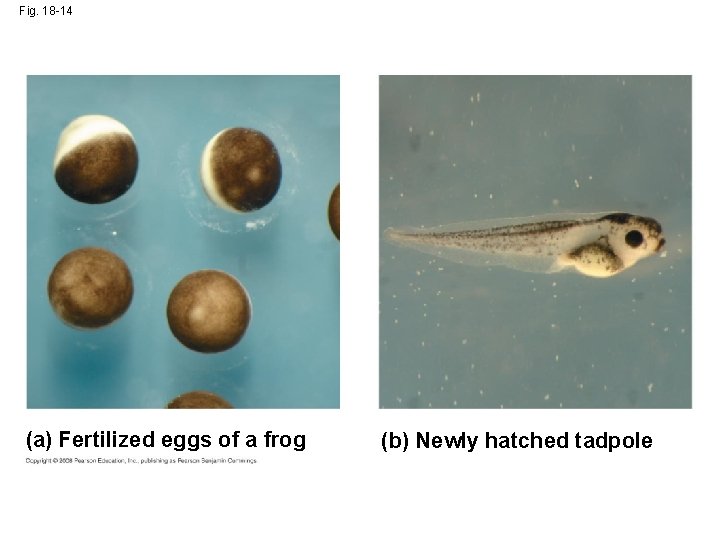
A Genetic Program for Embryonic Development • The transformation from zygote to adult results from cell division, cell differentiation, and morphogenesis Copyright © 2008 Pearson Education Inc. , publishing as Pearson Benjamin Cummings
Fig. 18 -14 (a) Fertilized eggs of a frog (b) Newly hatched tadpole
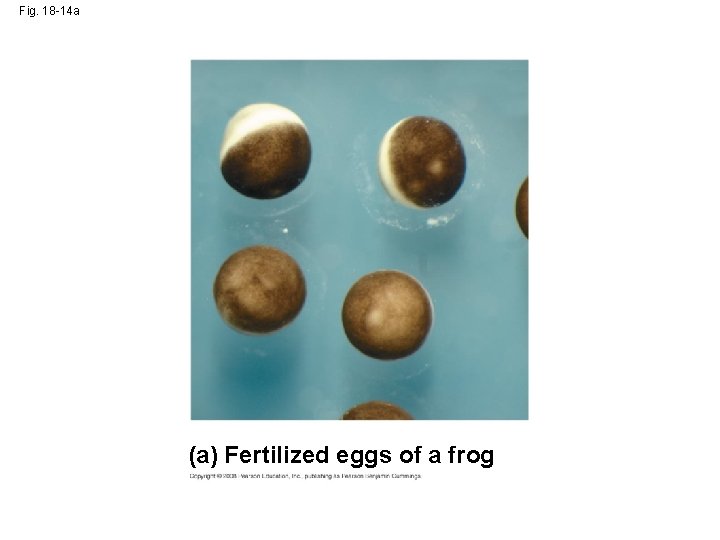
Fig. 18 -14 a (a) Fertilized eggs of a frog
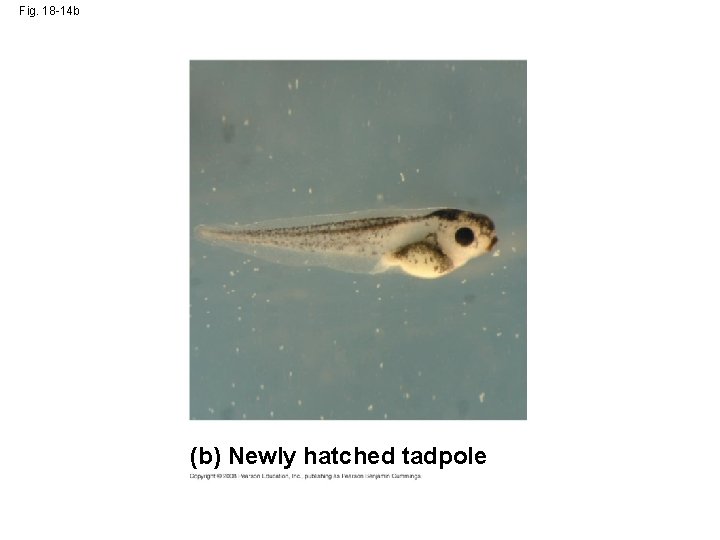
Fig. 18 -14 b (b) Newly hatched tadpole
• Cell differentiation is the process by which cells become specialized in structure and function • The physical processes that give an organism its shape constitute morphogenesis • Differential gene expression results from genes being regulated differently in each cell type • Materials in the egg can set up gene regulation that is carried out as cells divide Copyright © 2008 Pearson Education Inc. , publishing as Pearson Benjamin Cummings
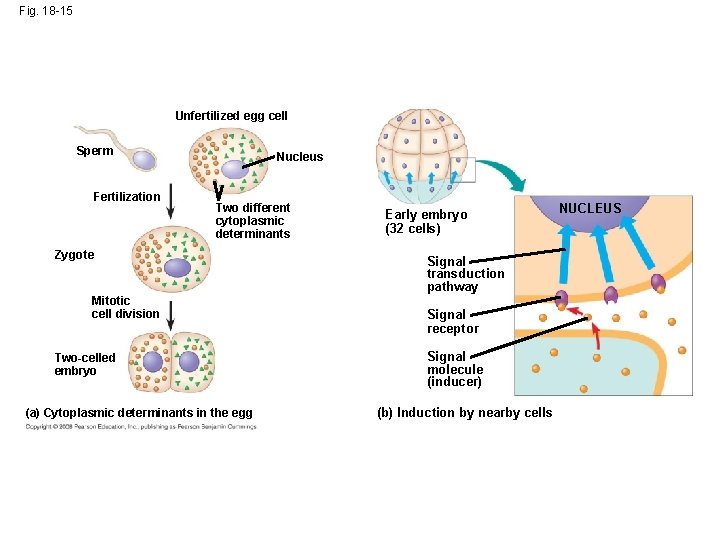
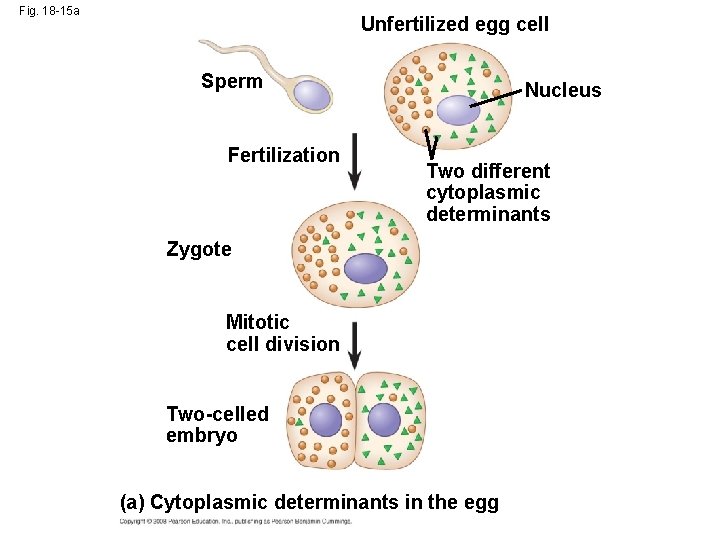
Cytoplasmic Determinants and Inductive Signals • An egg’s cytoplasm contains RNA, proteins, and other substances that are distributed unevenly in the unfertilized egg • Cytoplasmic determinants are maternal substances in the egg that influence early development • As the zygote divides by mitosis, cells contain different cytoplasmic determinants, which lead to different gene expression Copyright © 2008 Pearson Education Inc. , publishing as Pearson Benjamin Cummings
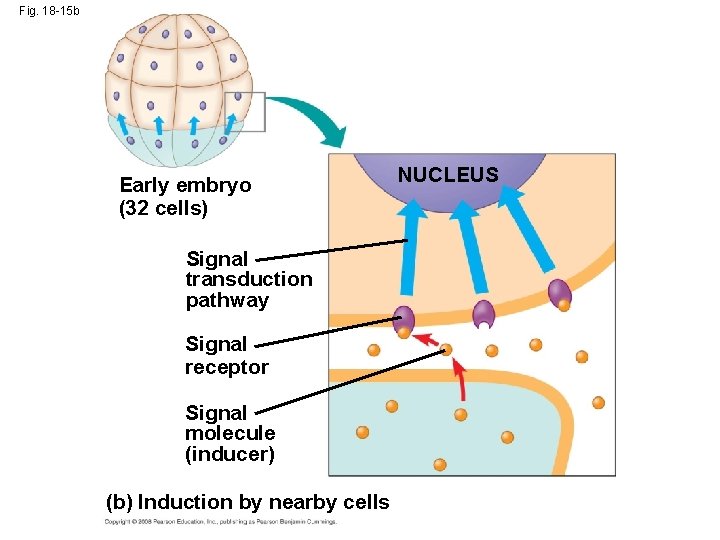
Fig. 18 -15 Unfertilized egg cell Sperm Fertilization Nucleus Two different cytoplasmic determinants Zygote Mitotic cell division Two-celled embryo (a) Cytoplasmic determinants in the egg Early embryo (32 cells) Signal transduction pathway Signal receptor Signal molecule (inducer) (b) Induction by nearby cells NUCLEUS
Fig. 18 -15 a Unfertilized egg cell Sperm Fertilization Nucleus Two different cytoplasmic determinants Zygote Mitotic cell division Two-celled embryo (a) Cytoplasmic determinants in the egg
Fig. 18 -15 b Early embryo (32 cells) Signal transduction pathway Signal receptor Signal molecule (inducer) (b) Induction by nearby cells NUCLEUS
• The other important source of developmental information is the environment around the cell, especially signals from nearby embryonic cells • In the process called induction, signal molecules from embryonic cells cause transcriptional changes in nearby target cells • Thus, interactions between cells induce differentiation of specialized cell types Animation: Cell Signaling Copyright © 2008 Pearson Education Inc. , publishing as Pearson Benjamin Cummings