
Coordinated Entry for Homeless Prevention Programs Ryan Graham
- Slides: 17
Coordinated Entry for Homeless Prevention Programs Ryan Graham Coordinated Entry System Specialist, WI Balance of State Co. C June 2020
Agenda Ø What is homeless prevention Ø Prevention requirements Ø The Coordinated Entry process Ø Ø Access Assessment Referral Follow up Ø Project eligibility and enrollment
The Homeless Prevention Program is a state program authorized under Wisconsin Statutes § 16. 303. Homeless Prevention programs help individuals and households who are at risk of homelessness retain housing. Homelessness prevention programs include housing relocation and stabilization services and short- and/or medium-term rental assistance as necessary to prevent the individual or family from moving to an emergency shelter, a place not meant for human habitation, or another place described in paragraph (1) of the homeless definition. https: //www. wiboscoc. org/uploads/3/7/2/4/37244219/wi_boscoc_coordinated_entry_system_policy_and_proced ure_manual_2. 0. pdf - Pages 33 -37.
Prevention Requirements NOTE: It is prohibited for any COC-funded or ESG-funded housing project to serve anyone without the household first going through the Coordinated Entry System and receiving a referral to the Prioritization List. Ø All ESG program funds (RRH, Shelter, Prevention, Outreach, etc) must use Coordinated Entry Ø All ESG program funds, either 19 -20 grant year, 20 -21 grant year, or Covid funds must use Coordinated Entry Ø If your organization receives HPP funding for Homeless Prevention or RRH and: 1. Your EHH lead does not require the use of Coordinated Entry; and 2. Your organization does not use HPP funding as match to ESG; then You are not required by DEHCR to use Coordinated Entry Ø HOWEVER, your organization will be noncompliant with the WI BOSCOC Coordinated Entry Policy and Procedures and therefore not in good standing with the WI BOSCOC
Prevention Requirements -Continued Ø Coordinated Entry Waiver https: //www. wiboscoc. org/ce 2020. html Ø All other prevention programs are encouraged, but not required Ø In cases of non-compliance
The Coordinated Entry process for homeless prevention Ø The Coordinated Entry process for Prevention is similar to the process for homeless assistance. Participation involves 4 steps: • Pre-screen • Assessment • Referral • Follow-up Ø In Prevention, the assessment tool and prioritization list are different.
Pre-screen & Consent Ø Complete a pre-screen form gathering sufficient information to determine if a referral to the Prevention Prioritization list is appropriate. NOTE: On the bottom of the second page, there is a short statement obtaining the person’s consent to share information for the purposes of referral. This can be done in person or over the phone. Ø https: //www. wiboscoc. org/uploads/3/7/2/4/37244219/bos_pre_scr een_v. 3. pdf
Pre-screen & Consent - Continued Ø If the household is appropriate for referral, the provider must review the CE Client Rights and Responsibilities with the person(s) AND obtain written or verbal confirmation of his/her understanding. Ø https: //www. wiboscoc. org/uploads/3/7/2/4/37244219/appendix_c_client_ri ghts_and_responsibilities. pdf Ø The provider must review the WI Service Point Release of Information AND obtains written or verbal consent to share data in HMIS. Ø These forms can be uploaded directly into HMIS.
Assessment Ø The approved standardized assessment tool is the “WI BOS Coordinated Entry Prevention Prioritization Assessment. ” Ø This tool must be used for all EHH funded prevention programs. Ø The Prevention Assessment is completed directly in HMIS and the report will auto-calculate the final score. https: //www. wiboscoc. org/uploads/3/7/2/4/37244219/appendix_l_pre vention_prioritization_assessment. pdf
Referral Ø Once the Prevention Assessment is complete, a referral to the Prevention Prioritization List can be completed in HMIS. https: //www. wiboscoc. org/uploads/3/7/2/4/37244219/appendix_e_co ordinated_entry_and_referral_process_for_prevention. pdf
Follow up Ø Agencies making referrals to the Prioritization List will be responsible for following up with the person they referred in order to determine whether the household is still in need of prevention services. Ø Follow up must occur every 90 days at minimum. Ø If the household no longer wishes to remain on the list, the agency can close the referral.
Disclaimer The Coordinated Entry System is not responsible for determining project eligibility or maintaining eligibility documentation after a referral to the Prevention Prioritization List is made. Individual projects have the ultimate responsibility for determining the eligibly of prospective participants, as well as collecting and maintaining eligibility documentation.
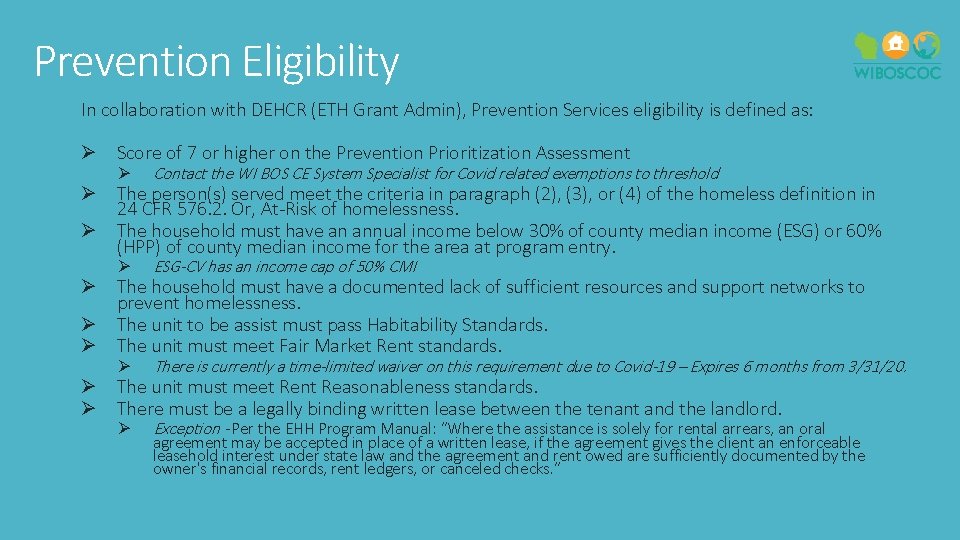
Prevention Eligibility In collaboration with DEHCR (ETH Grant Admin), Prevention Services eligibility is defined as: Ø Score of 7 or higher on the Prevention Prioritization Assessment Ø Contact the WI BOS CE System Specialist for Covid related exemptions to threshold Ø ESG-CV has an income cap of 50% CMI Ø There is currently a time-limited waiver on this requirement due to Covid-19 – Expires 6 months from 3/31/20. Ø Exception - Per the EHH Program Manual: “Where the assistance is solely for rental arrears, an oral Ø The person(s) served meet the criteria in paragraph (2), (3), or (4) of the homeless definition in 24 CFR 576. 2. Or, At-Risk of homelessness. Ø The household must have an annual income below 30% of county median income (ESG) or 60% (HPP) of county median income for the area at program entry. Ø The household must have a documented lack of sufficient resources and support networks to prevent homelessness. Ø The unit to be assist must pass Habitability Standards. Ø The unit must meet Fair Market Rent standards. Ø The unit must meet Rent Reasonableness standards. Ø There must be a legally binding written lease between the tenant and the landlord. agreement may be accepted in place of a written lease, if the agreement gives the client an enforceable leasehold interest under state law and the agreement and rent owed are sufficiently documented by the owner's financial records, rent ledgers, or canceled checks. ”
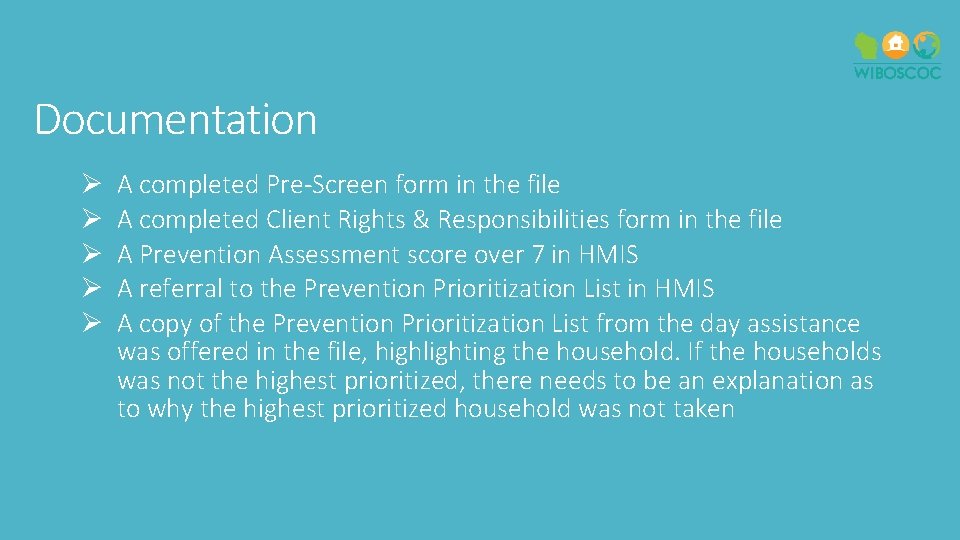
Documentation Ø Ø Ø A completed Pre-Screen form in the file A completed Client Rights & Responsibilities form in the file A Prevention Assessment score over 7 in HMIS A referral to the Prevention Prioritization List in HMIS A copy of the Prevention Prioritization List from the day assistance was offered in the file, highlighting the household. If the households was not the highest prioritized, there needs to be an explanation as to why the highest prioritized household was not taken
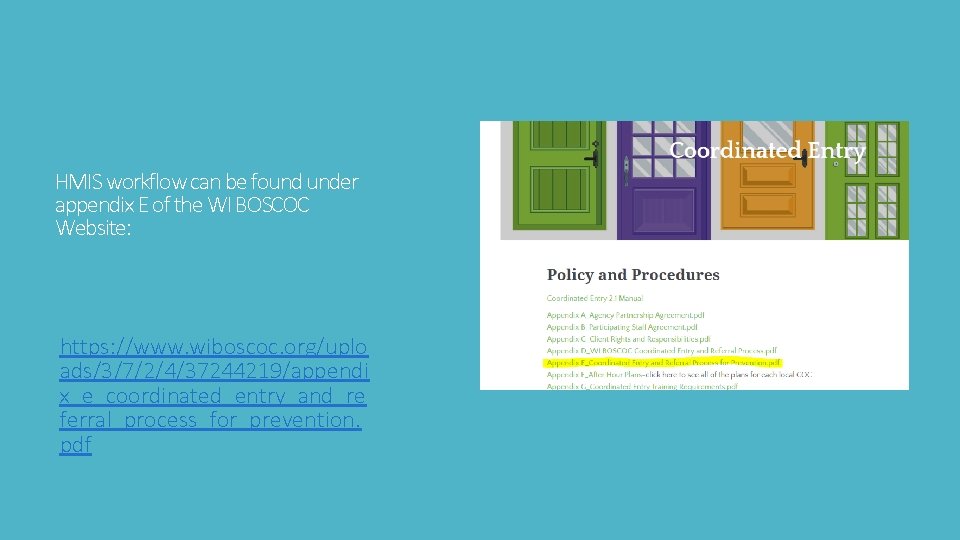
HMIS workflow can be found under appendix E of the WI BOSCOC Website: https: //www. wiboscoc. org/uplo ads/3/7/2/4/37244219/appendi x_e_coordinated_entry_and_re ferral_process_for_prevention. pdf
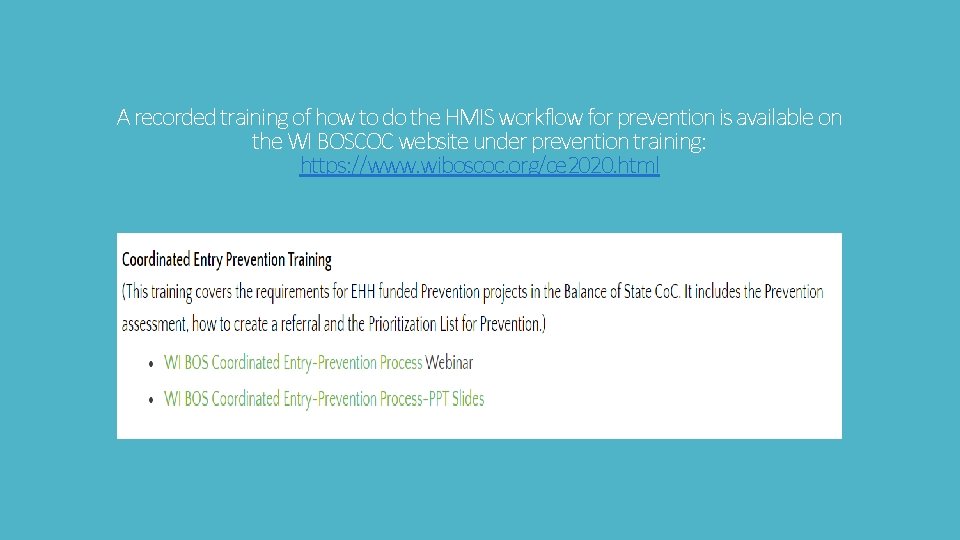
A recorded training of how to do the HMIS workflow for prevention is available on the WI BOSCOC website under prevention training: https: //www. wiboscoc. org/ce 2020. html
Contact: Ryan Graham Coordinated Entry System Specialist WI Balance of State COC ryan. graham@wibos. org 715. 225. 0164