
Cooperative Learning A Cisco College Writing Resource Presentation
- Slides: 13
Cooperative Learning A Cisco College Writing Resource Presentation by Debra Herrera
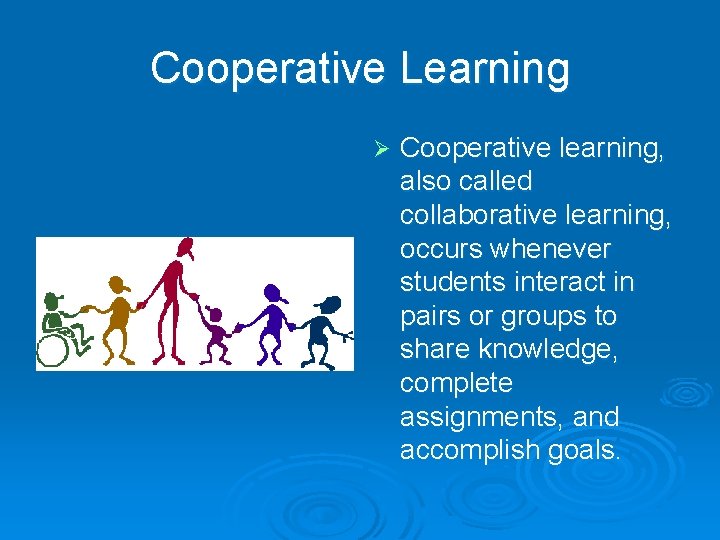
Cooperative Learning Ø Cooperative learning, also called collaborative learning, occurs whenever students interact in pairs or groups to share knowledge, complete assignments, and accomplish goals.
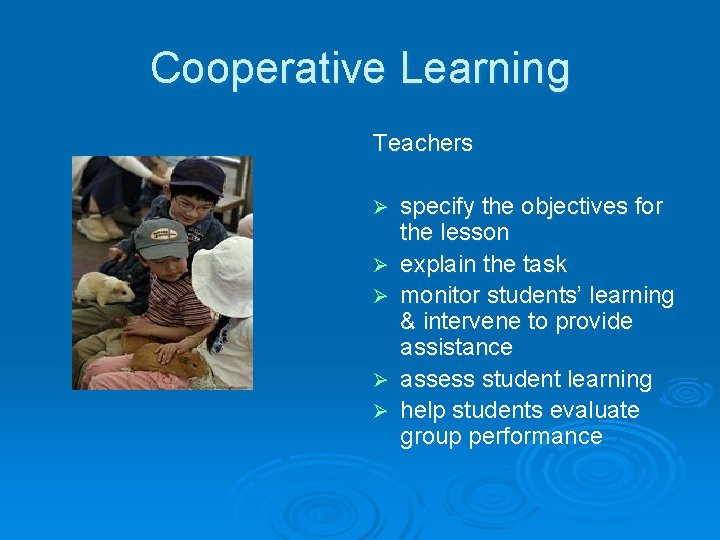
Cooperative Learning Teachers Ø Ø Ø specify the objectives for the lesson explain the task monitor students’ learning & intervene to provide assistance assess student learning help students evaluate group performance
Cooperative Learning Cooperative learning is NOT: Ø having students sit side by side as they do their work Ø having students who finish first help slower students Ø one student completing the work and others putting their name on it
Cooperative Learning Fosters: Ø positive interdependence Ø group & individual accountability Ø social skills Ø critical thinking and perspective taking
Cooperative Learning Jigsaw Ø Think-Pair-Share Ø Brainstorming Ø Three-Minute Review Ø Numbered Heads Together Ø Circle the Sage Ø Partner Share Ø
Cooperative Learning--Jigsaw Ø Groups of five students are assigned new material to learn and then teach to his group members. Students across the class working on the same sub-section work together to learn. Afterwards, students in the “expert” groups return to the original group to teach other.
Cooperative Learning—Think-Pair. Share Ø Individuals think silently about a question posed. Partners share thoughts, and then share with other pairs, or the class.
Cooperative Learning-Brainstorming Ø Class is divided into small groups, with one person appointed as the recorder. A question is posed. After think time, members share responses as recorder writes them down.
Cooperative Learning—Three Minute Review Ø During discussion, teacher stops and gives teams 3 minutes to review what has been said, ask questions, or answer questions.
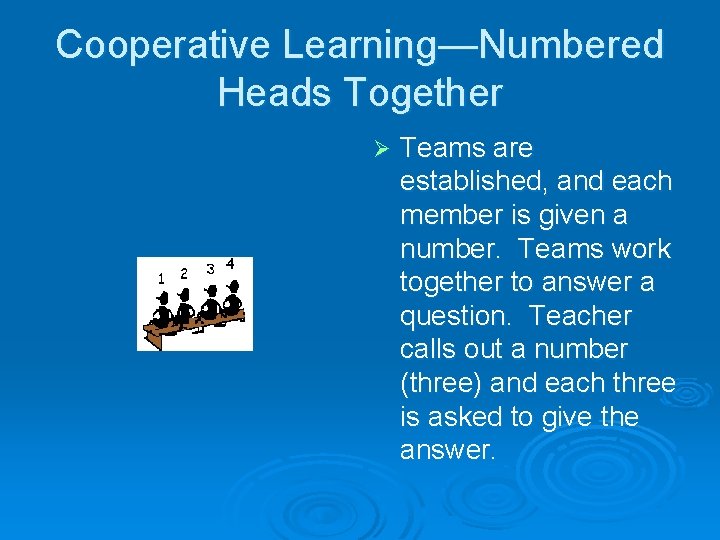
Cooperative Learning—Numbered Heads Together Ø Teams are established, and each member is given a number. Teams work together to answer a question. Teacher calls out a number (three) and each three is asked to give the answer.
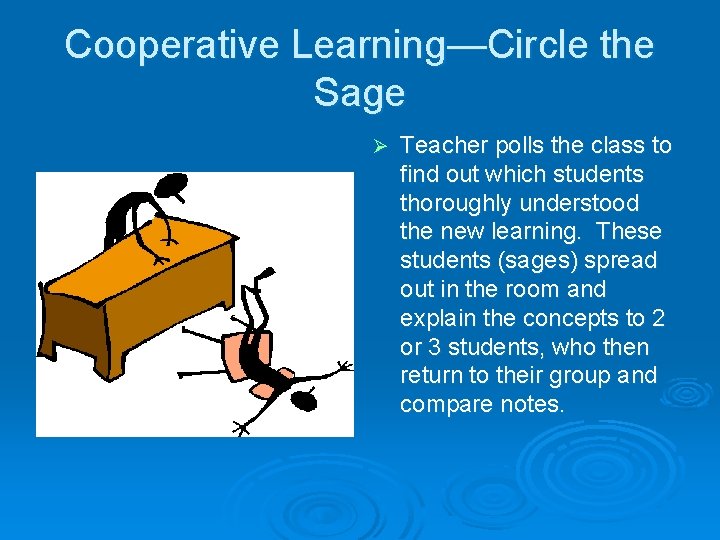
Cooperative Learning—Circle the Sage Ø Teacher polls the class to find out which students thoroughly understood the new learning. These students (sages) spread out in the room and explain the concepts to 2 or 3 students, who then return to their group and compare notes.
References Ø Johnson, D. W. , & Johnson, R. (1989). Cooperation and competition: Theory and research. Edina, MN: Interaction Book Company. Ø Spencer Kagan Material taken from the work of: