
Cooperative Aquaculture Agreements between Private Tideland Owners and
Cooperative Aquaculture Agreements between Private Tideland Owners and the Native Tribes in Puget Sound
Brief History of Private Tidelands u u 1855: Point no Point treaty signed; Tribes given fishing and hunting rights in “usual and accustomed areas” in exchange for land. 1889: Washington State begins selling tidelands to private owners. This continues until 1969, when between 60 and 80 percent of tidelands were privately owned.
u 1974: Boldt Decision (US v Washington): Tribes right to fish in their U&A is affirmed for salmon and groundfish. Did not address shellfish. u 1994: Rafeedie Decision: Extended the ruling of Judge Boldt to include NATURALLY OCCURRING shellfish both in public waterways and on private and public tidelands.
u Rafeedie decision brought up the issue of shellfish growers, and the missed opportunity of tribes in harvesting the original natural stock. u 2007: Shellfish Growers Settlement allowed growers who had evidence of cultivation prior to Rafeedie exclusive rights to pre-existing farmed tidelands. The tribes, in exchange, received funds for tideland purchase and enhancement.
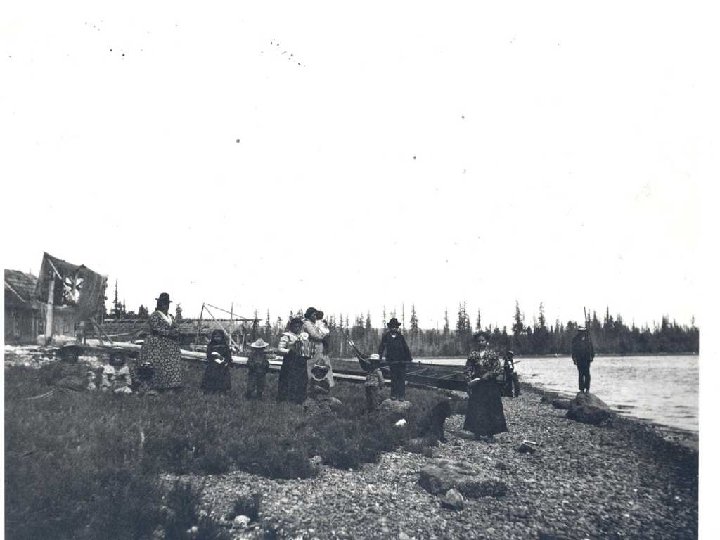
Reestablishing tribal clam harvests u Suquamish Tribe did a qualitative shellfish population study throughout its exclusive (non-overlapping) U&A in the late 1990’s. u Determined that the area that best combined shellfish density, historical significance was in Dyes Inlet.

Dyes Inlet
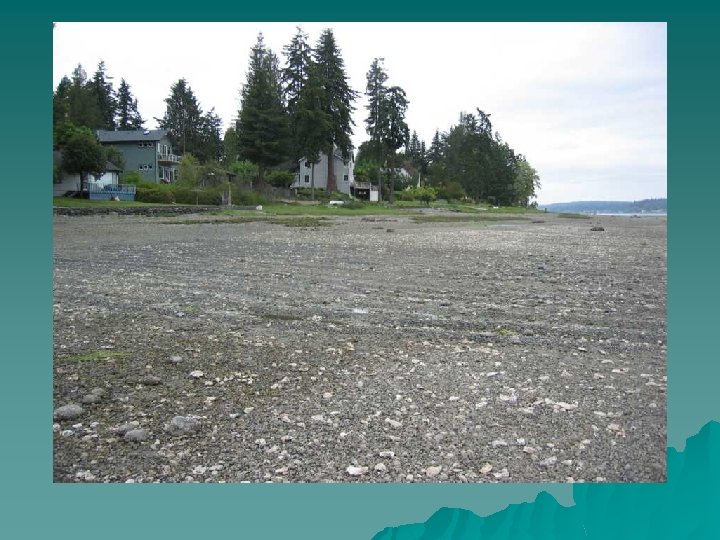
Dyes Inlet Study u Cooperated with County Health, State DOH, US Navy u Dye release and drogue studies done to model impacts of storm water and sewage spills to area u Study changed classification in North Dyes from unclassified to conditional.
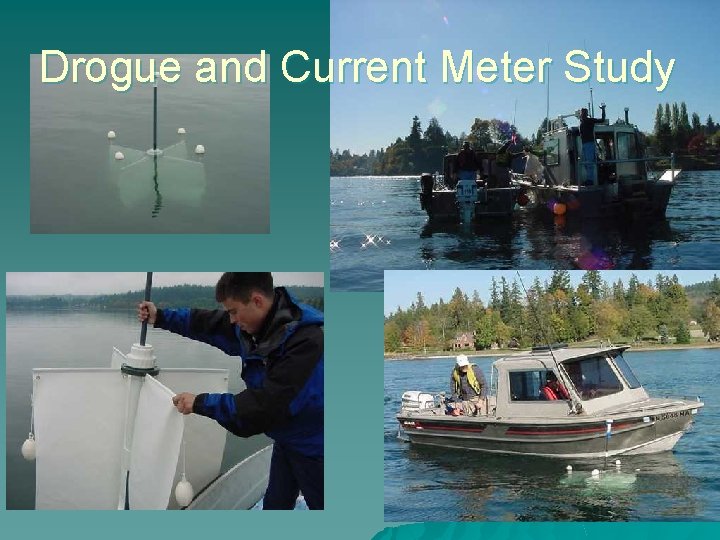
Drogue and Current Meter Study
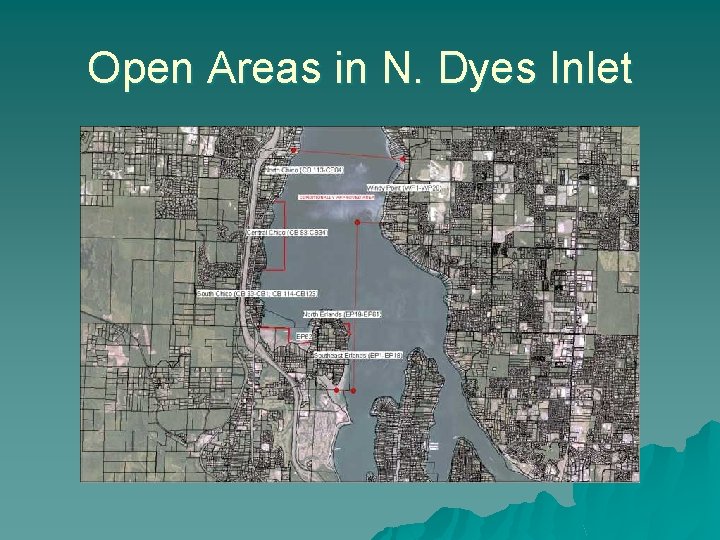
Open Areas in N. Dyes Inlet
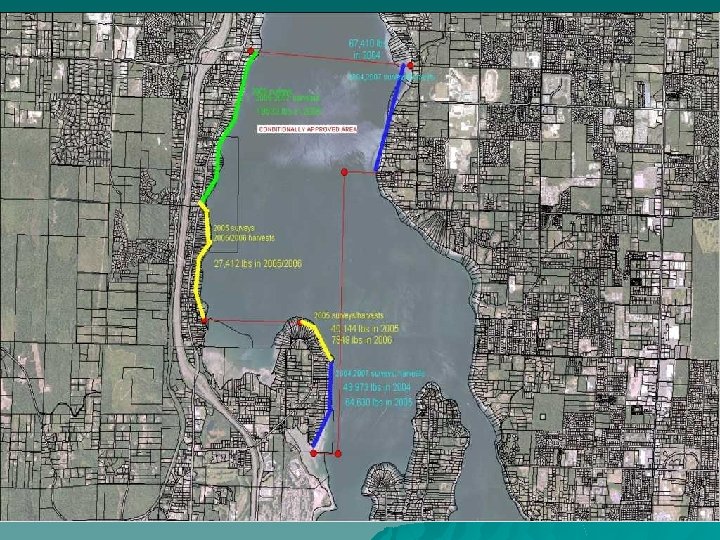
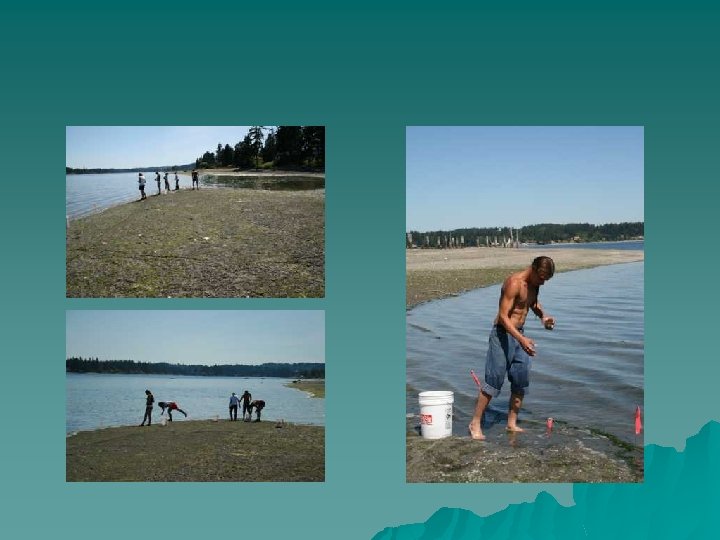
Dyes Inlet Manila Clam Harvest u Approx. 180 private properties u Three year rotational harvest of tribe’s 50% of shellfish. Average of 95% recovery in 3 years of manila clams. u Actively harvested since 2004 by individual tribal members u Hand forks only, individual quotas, 40 -70 tribal members per harvest. u Most often lower income tribal members participate.
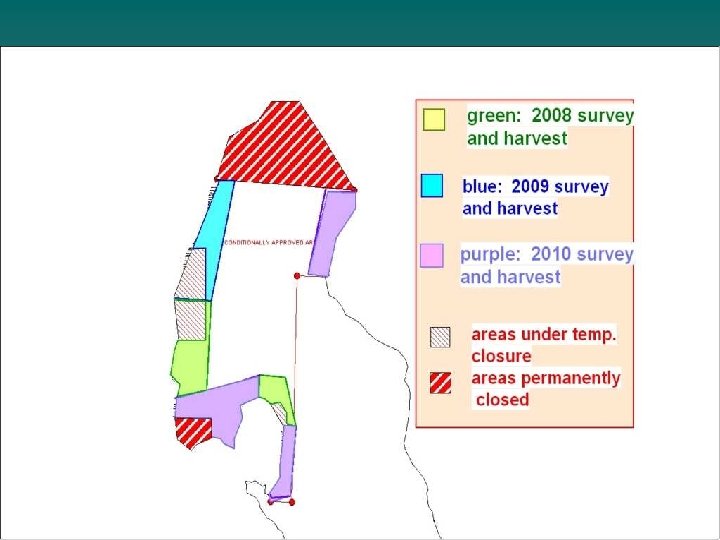
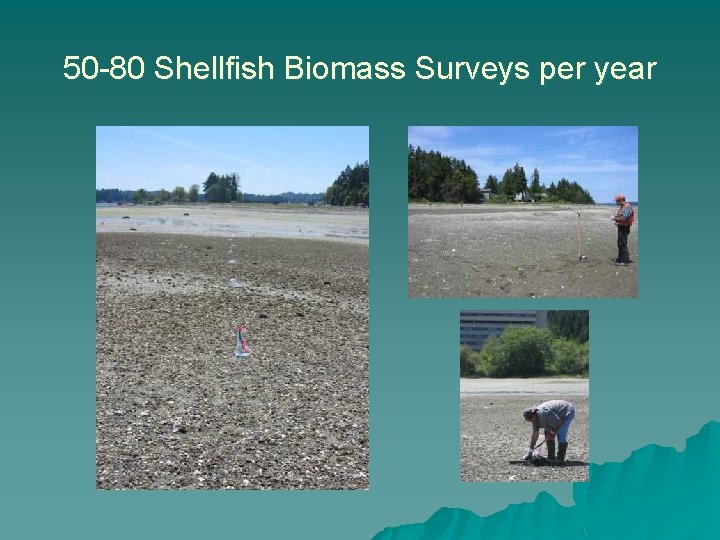
50 -80 Shellfish Biomass Surveys per year
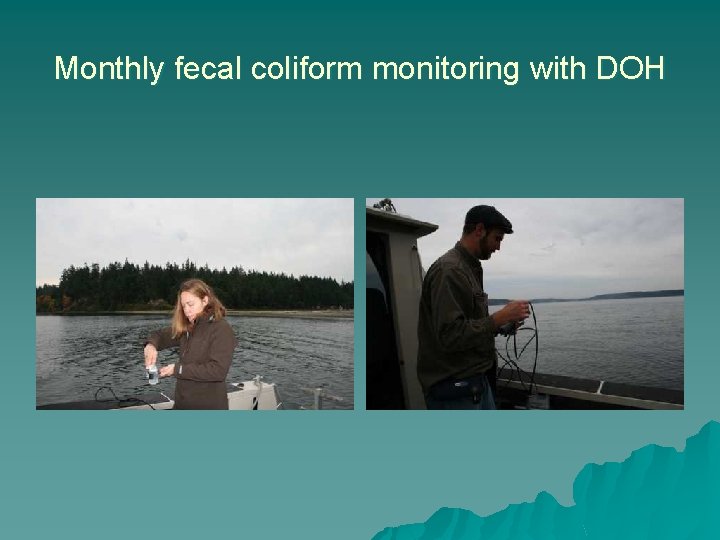
Monthly fecal coliform monitoring with DOH
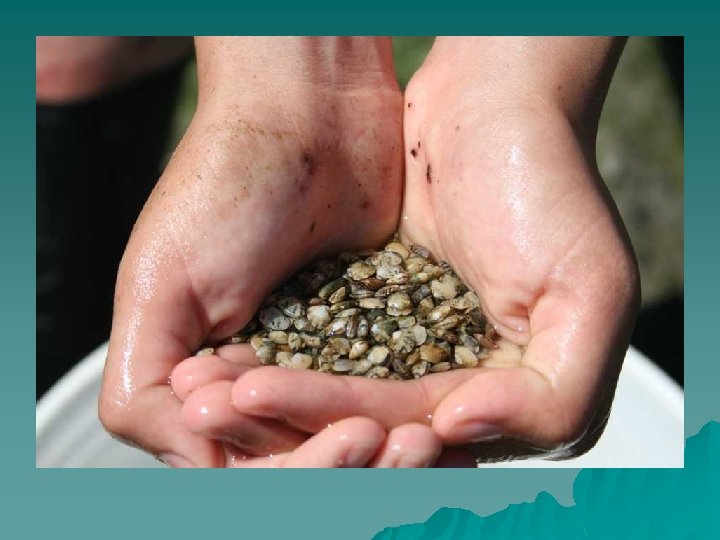
Lease Program u Began leasing properties for harvest and enhancement in 2005 u Property owner signs a 10 year, 3 harvest contract. Paid by stumpage fee after each harvest. u Grant Funded- tribal members still have full income opportunity. Mostly used by lowestincome individuals. u 1 -3 properties (0. 5 -1 acre) planted annually with plans for expansion.
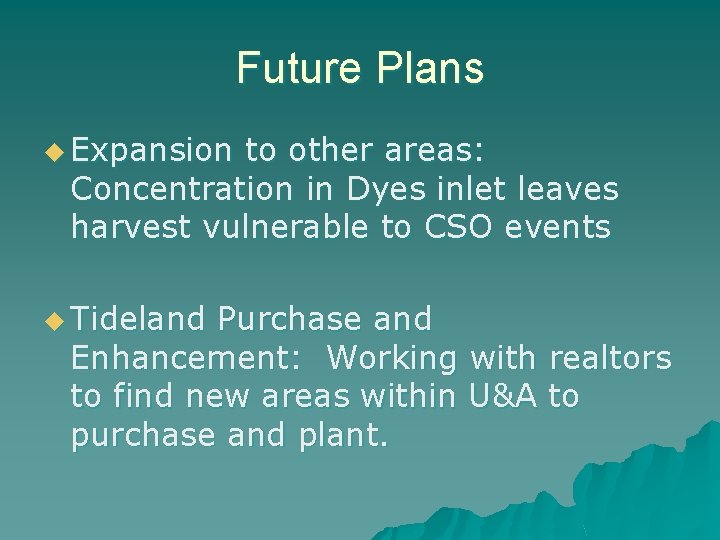
Future Plans u Expansion to other areas: Concentration in Dyes inlet leaves harvest vulnerable to CSO events u Tideland Purchase and Enhancement: Working with realtors to find new areas within U&A to purchase and plant.
Questions?
Thanks to: u Suquamish Tribal Fisheries u Suquamish Museum u US Navy, Washington DOH, Kitsap County Health District, WDFW, NWIFC u Kitsap County Assessor’s office u NOAA
- Slides: 22