
Cooling Tower Maintenance Training Training Overview Safety First
- Slides: 49
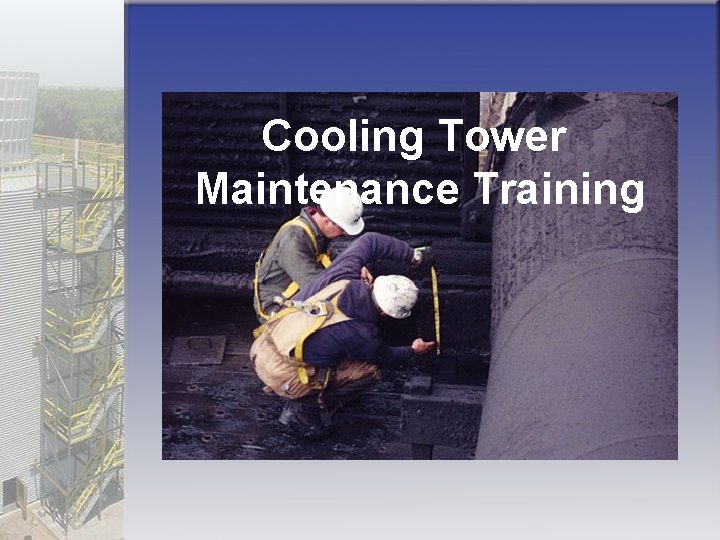
Cooling Tower Maintenance Training
Training Overview • • • Safety First What is a Cooling Towers Components Structure Inspection / Maintenance Summary • Questions / Discussion
Safety First • Identify potential hazards • Plan ahead • Follow safety and health regulations • Use personal protective equipment
What Is a Cooling Tower? A cooling tower is a piece of equipment that derives a primary cooling effect from the evaporation of water when brought into direct contact with air. Cooling towers are designed to expose the maximum transient water surface to the maximum air flow.
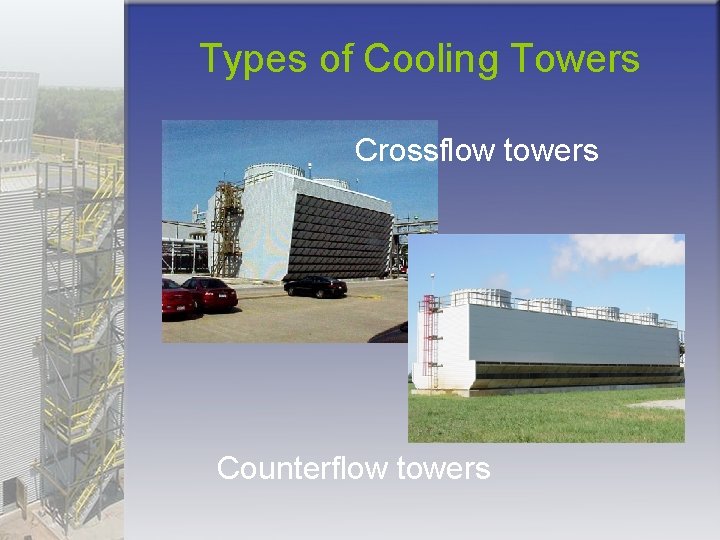
Types of Cooling Towers Crossflow towers Counterflow towers
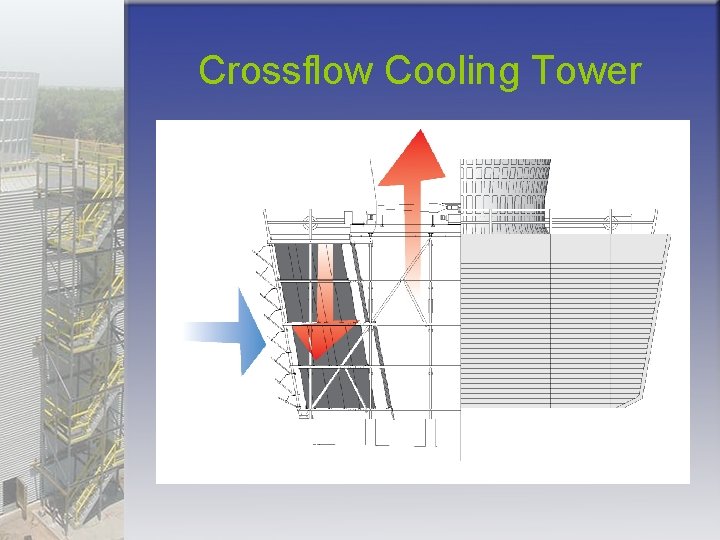
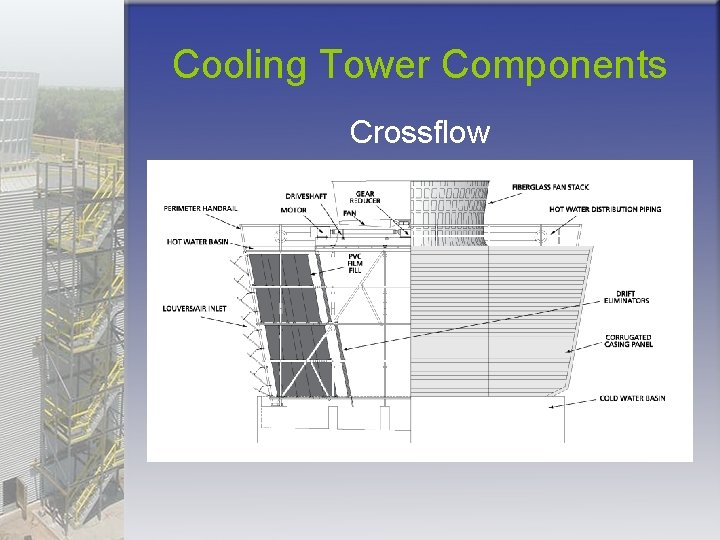
Crossflow Cooling Towers Crossflow cooling towers use splash fill media through which the incoming cool air flows horizontally ACROSS the downward flow of hot water from the top distribution basins. These types of towers were predominantly used from the 1950’s through the 1970’s.
Crossflow Cooling Tower
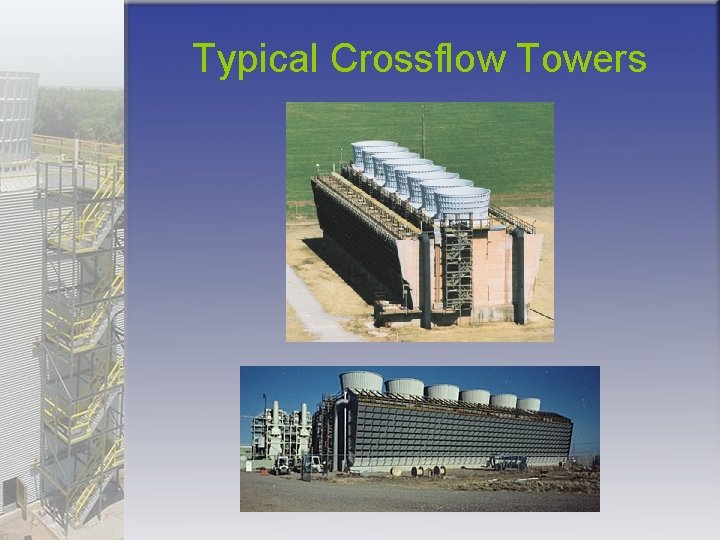
Typical Crossflow Towers
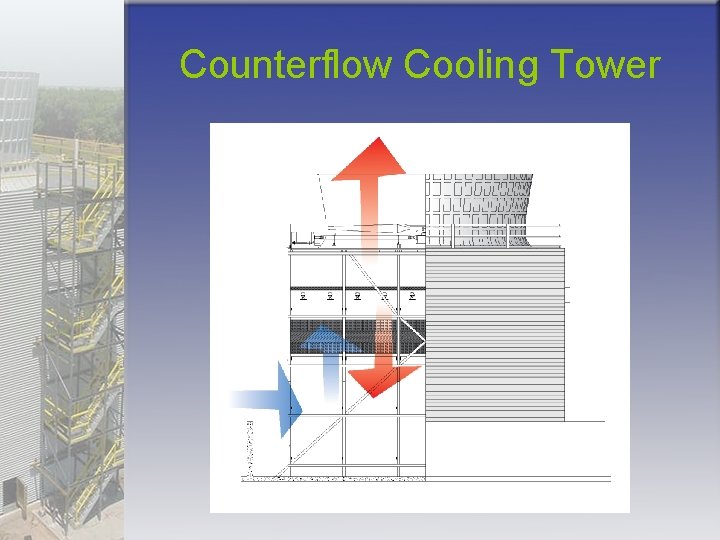
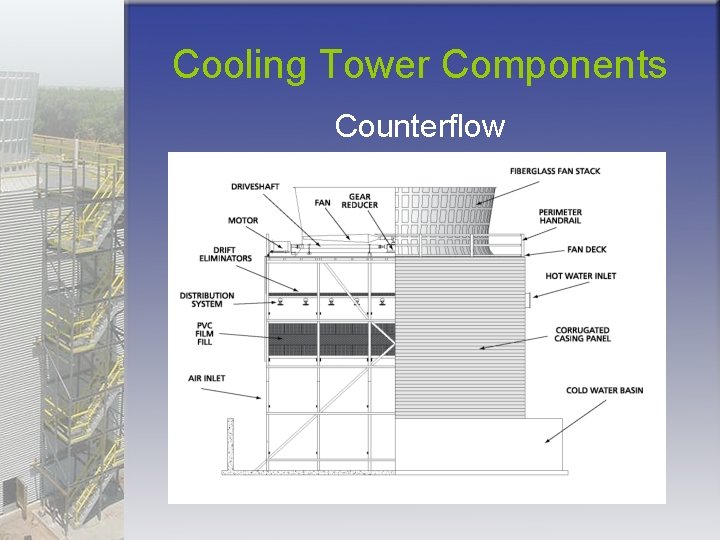
Counterflow Cooling Towers In counterflow cooling towers the incoming cool air moves vertically up through the fill media, COUNTER to the downward flow of hot water coming from the distribution laterals. These types of towers are commonly used in today’s applications.
Counterflow Cooling Tower
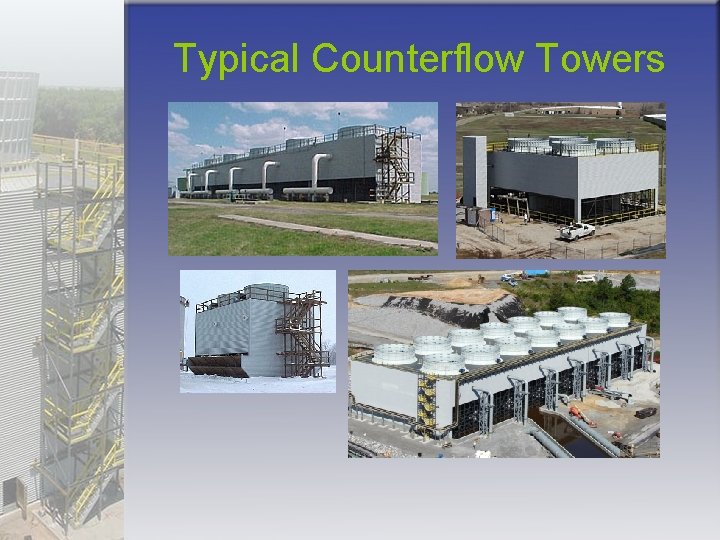
Typical Counterflow Towers
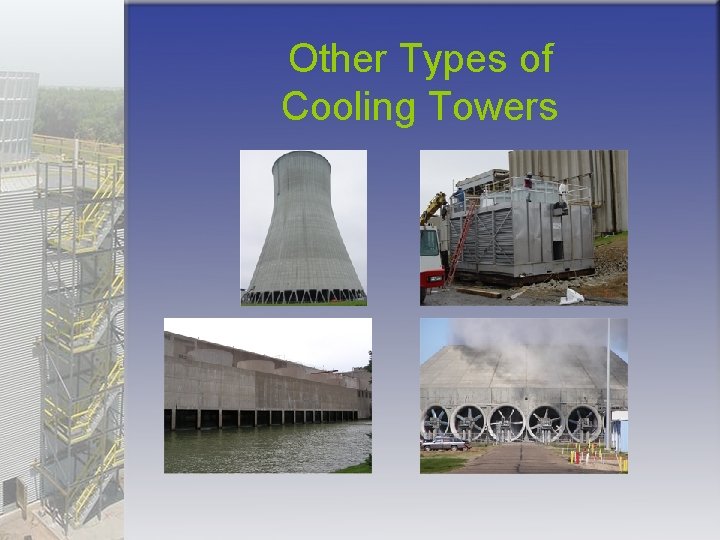
Other Types of Cooling Towers
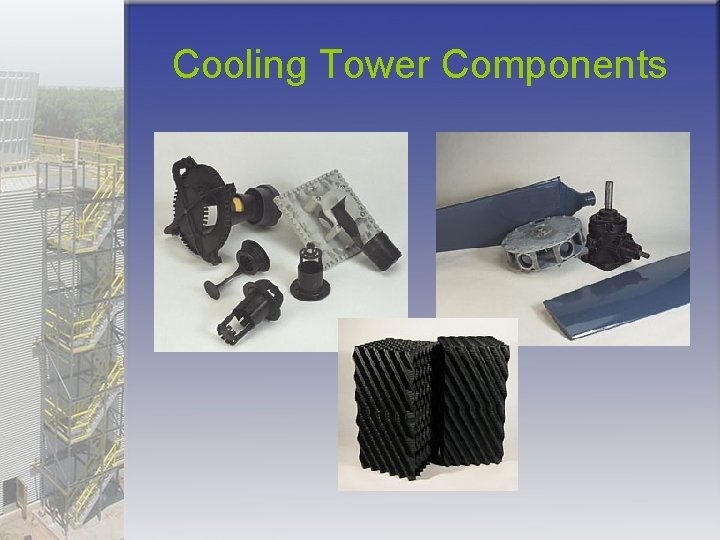
Cooling Tower Components
Cooling Tower Components Counterflow
Cooling Tower Components Crossflow
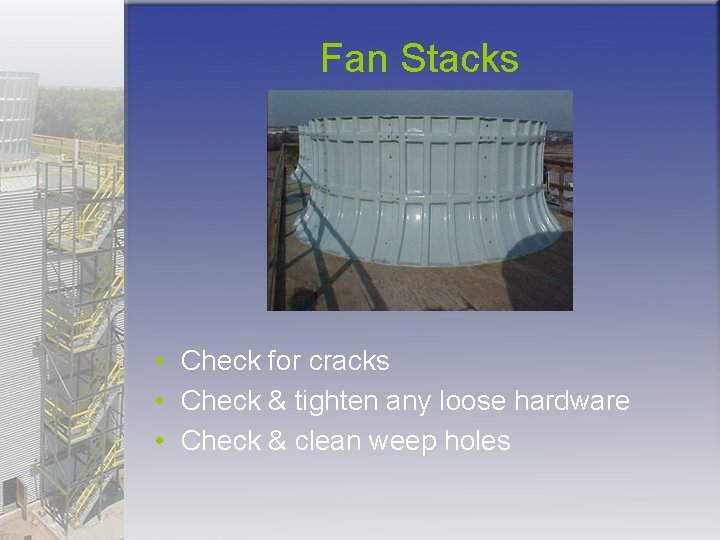
Fan Stacks • Check for cracks • Check & tighten any loose hardware • Check & clean weep holes
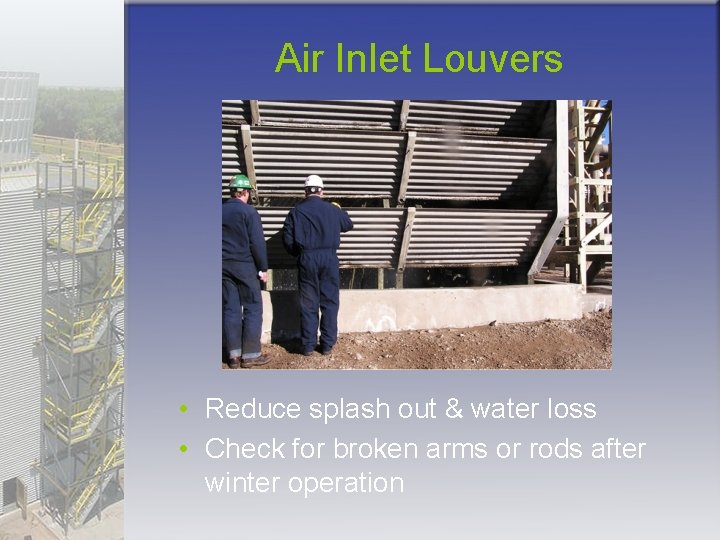
Air Inlet Louvers • Reduce splash out & water loss • Check for broken arms or rods after winter operation
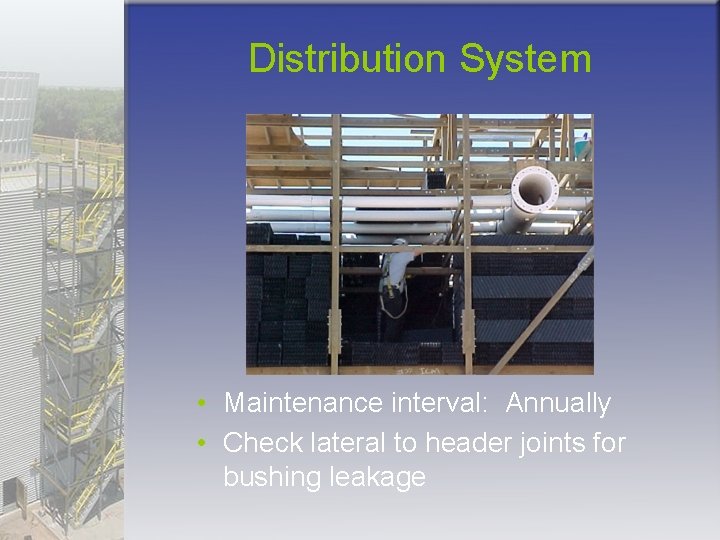
Distribution System • Maintenance interval: Annually • Check lateral to header joints for bushing leakage
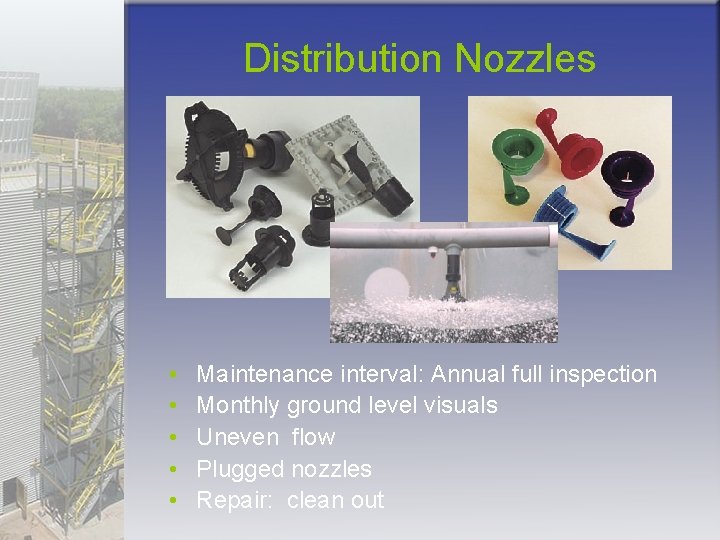
Distribution Nozzles • • • Maintenance interval: Annual full inspection Monthly ground level visuals Uneven flow Plugged nozzles Repair: clean out
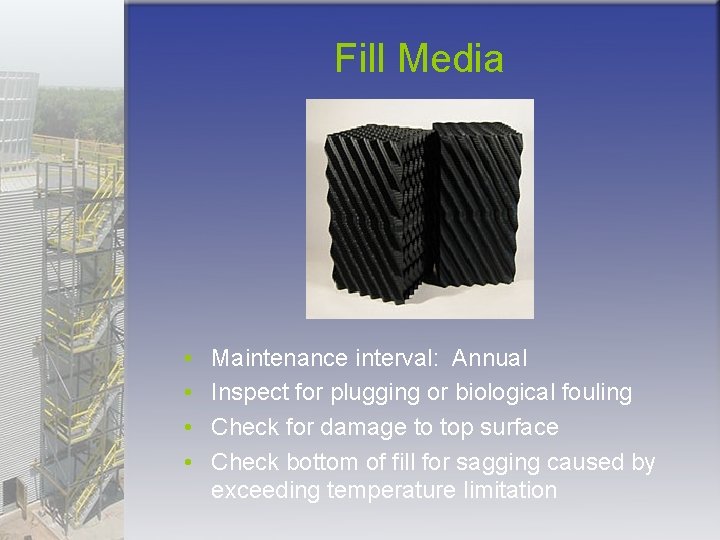
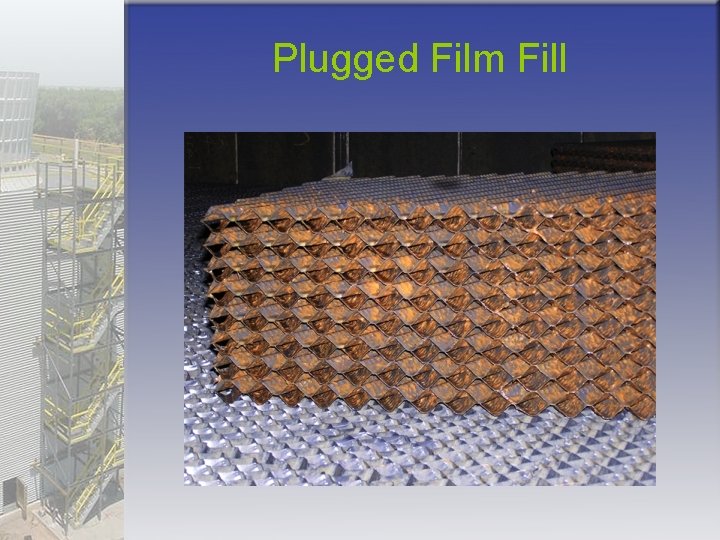
Fill Media • • Maintenance interval: Annual Inspect for plugging or biological fouling Check for damage to top surface Check bottom of fill for sagging caused by exceeding temperature limitation
Plugged Film Fill
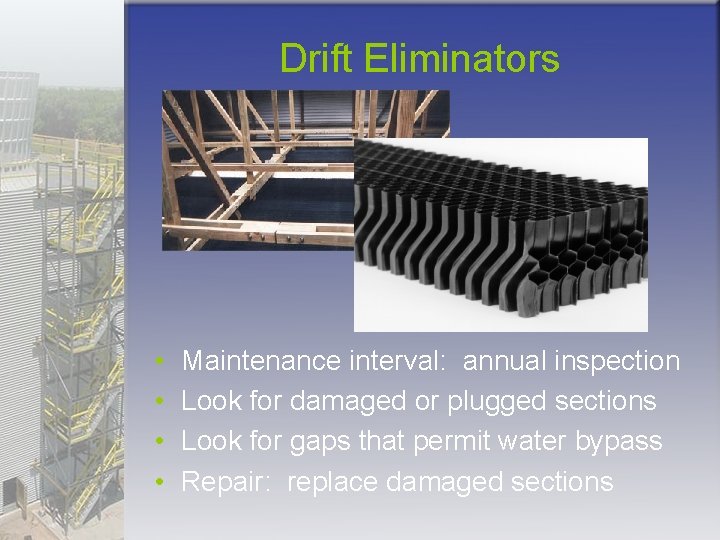
Drift Eliminators • • Maintenance interval: annual inspection Look for damaged or plugged sections Look for gaps that permit water bypass Repair: replace damaged sections
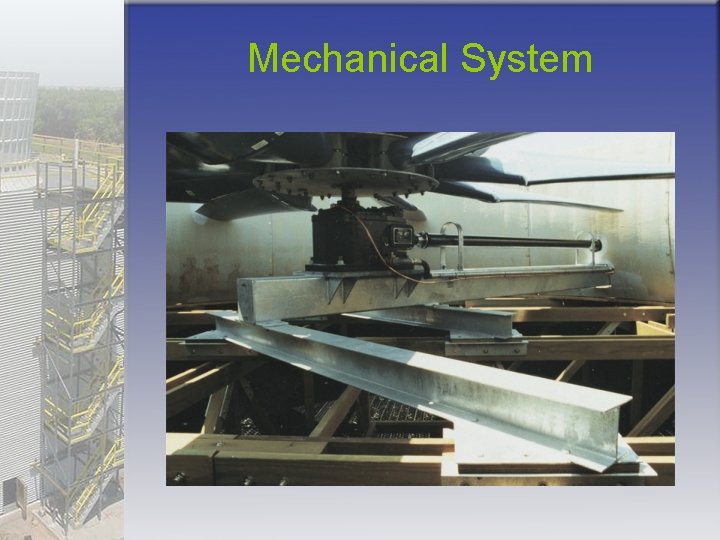
Mechanical System
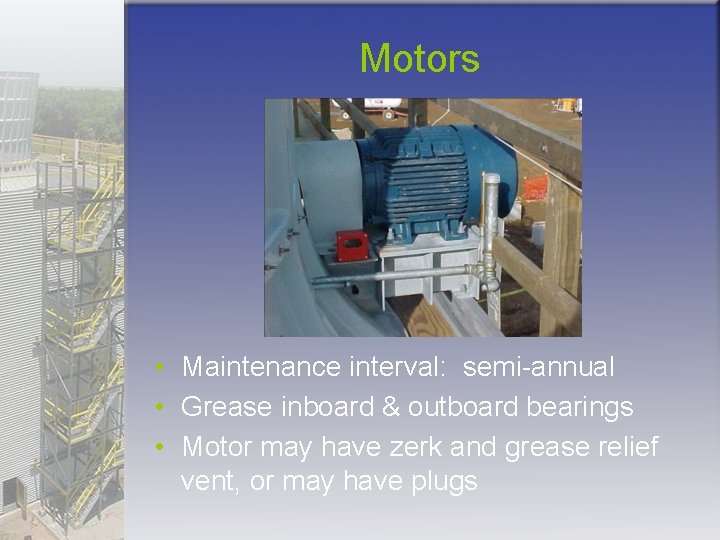
Motors • Maintenance interval: semi-annual • Grease inboard & outboard bearings • Motor may have zerk and grease relief vent, or may have plugs
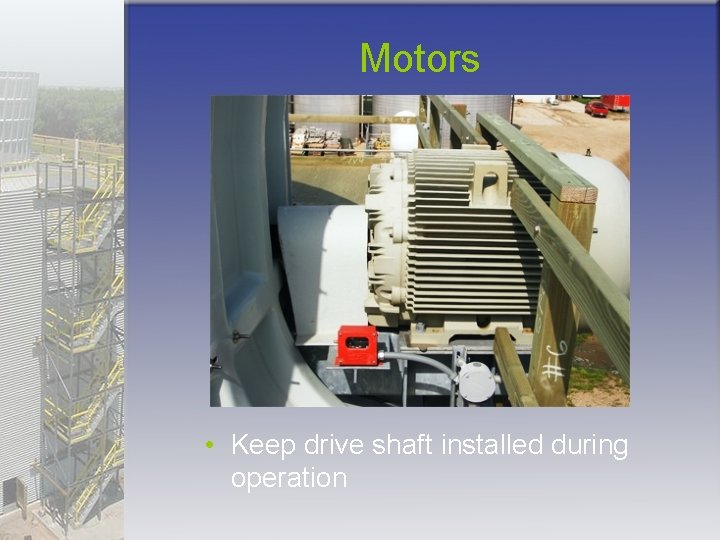
Motors • Keep drive shaft installed during operation
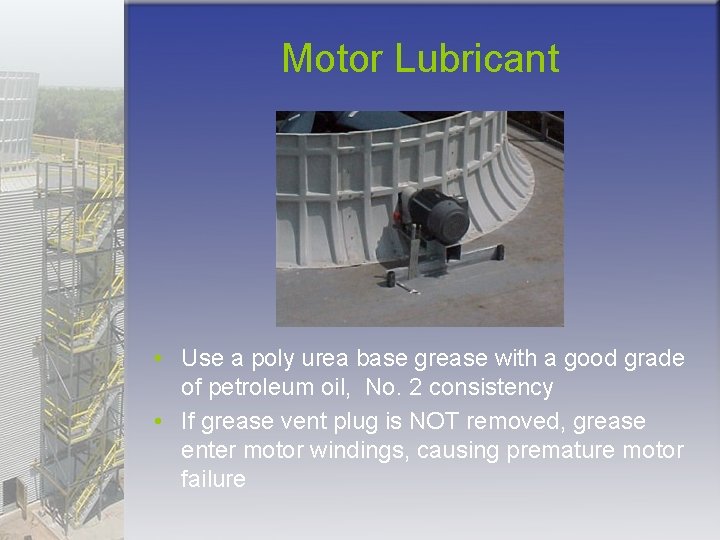
Motor Lubricant • Use a poly urea base grease with a good grade of petroleum oil, No. 2 consistency • If grease vent plug is NOT removed, grease enter motor windings, causing premature motor failure
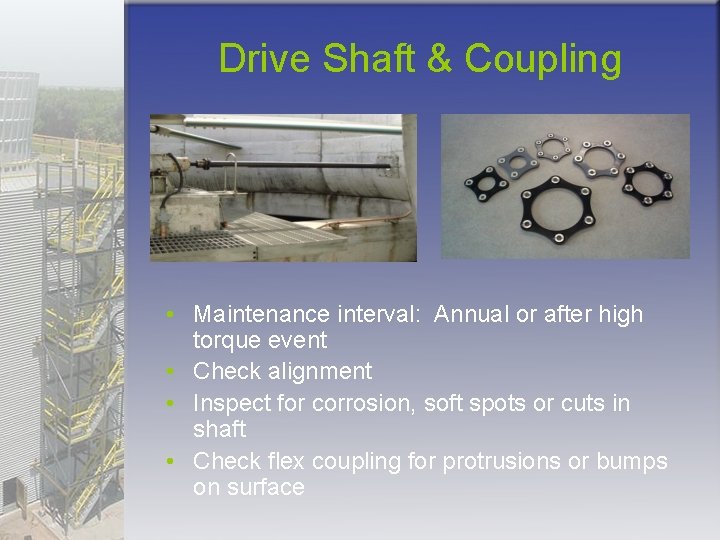
Drive Shaft & Coupling • Maintenance interval: Annual or after high torque event • Check alignment • Inspect for corrosion, soft spots or cuts in shaft • Check flex coupling for protrusions or bumps on surface
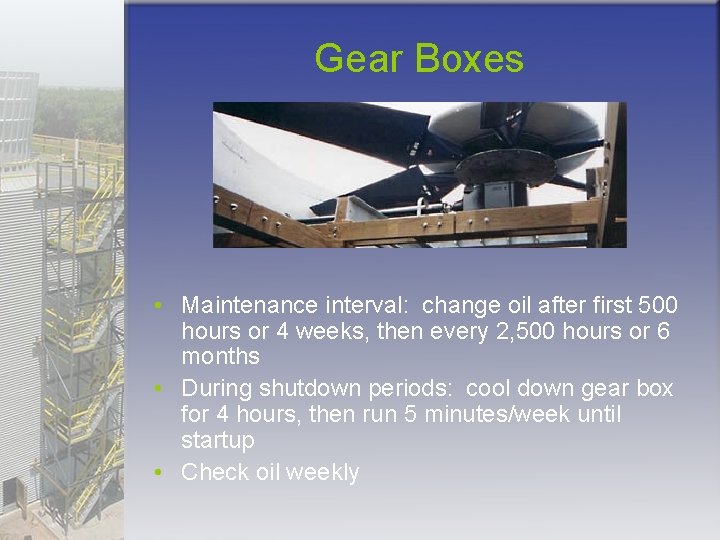
Gear Boxes • Maintenance interval: change oil after first 500 hours or 4 weeks, then every 2, 500 hours or 6 months • During shutdown periods: cool down gear box for 4 hours, then run 5 minutes/week until startup • Check oil weekly
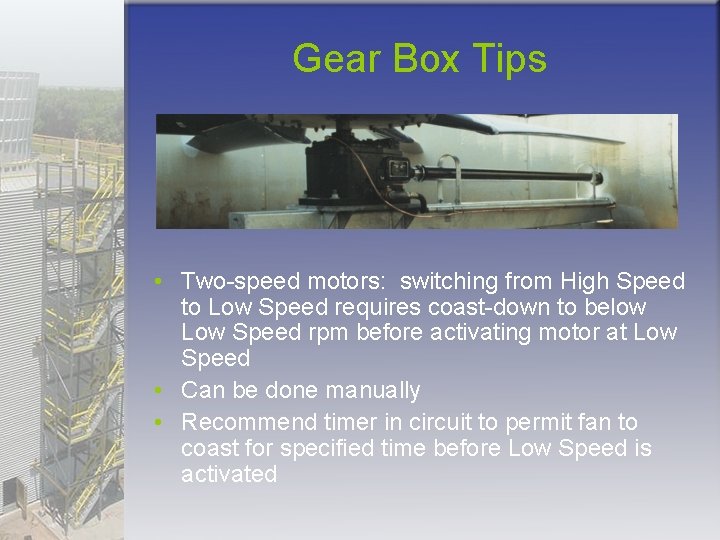
Gear Box Tips • Two-speed motors: switching from High Speed to Low Speed requires coast-down to below Low Speed rpm before activating motor at Low Speed • Can be done manually • Recommend timer in circuit to permit fan to coast for specified time before Low Speed is activated
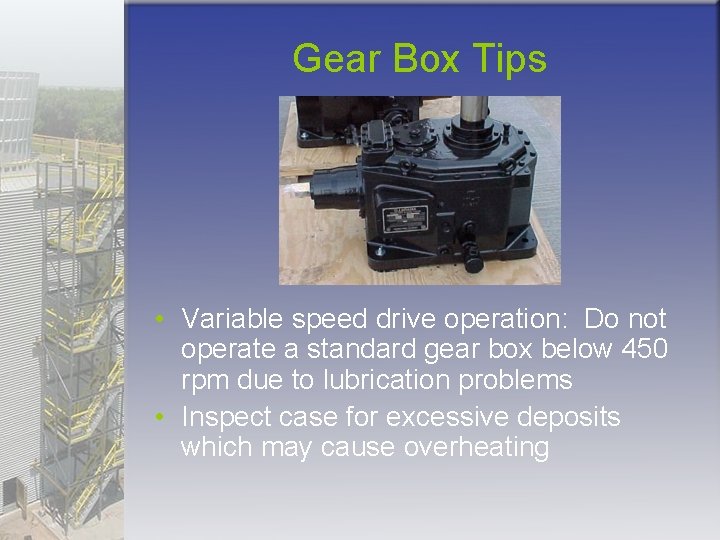
Gear Box Tips • Variable speed drive operation: Do not operate a standard gear box below 450 rpm due to lubrication problems • Inspect case for excessive deposits which may cause overheating
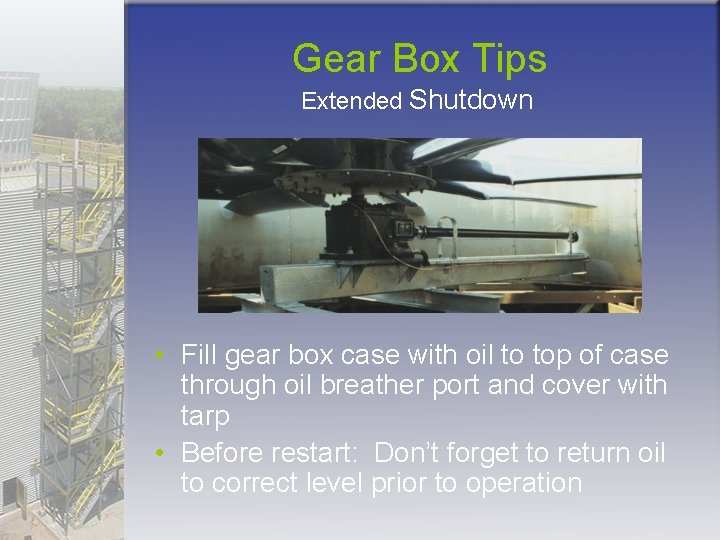
Gear Box Tips Extended Shutdown • Fill gear box case with oil to top of case through oil breather port and cover with tarp • Before restart: Don’t forget to return oil to correct level prior to operation
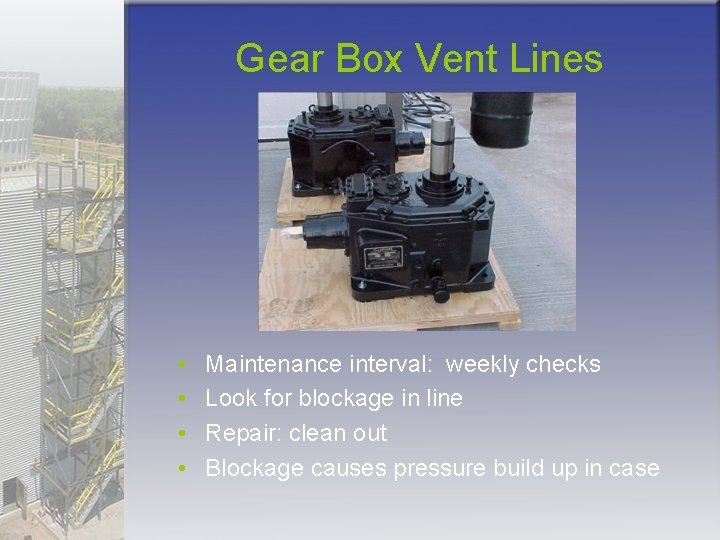
Gear Box Vent Lines • • Maintenance interval: weekly checks Look for blockage in line Repair: clean out Blockage causes pressure build up in case
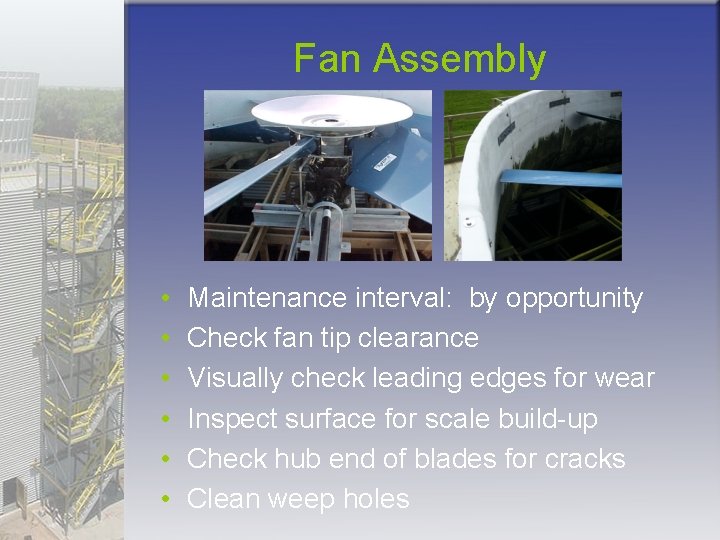
Fan Assembly • • • Maintenance interval: by opportunity Check fan tip clearance Visually check leading edges for wear Inspect surface for scale build-up Check hub end of blades for cracks Clean weep holes
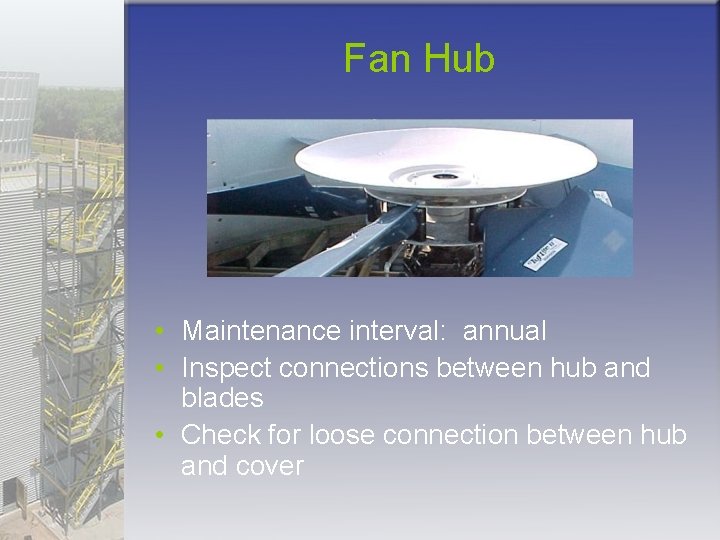
Fan Hub • Maintenance interval: annual • Inspect connections between hub and blades • Check for loose connection between hub and cover
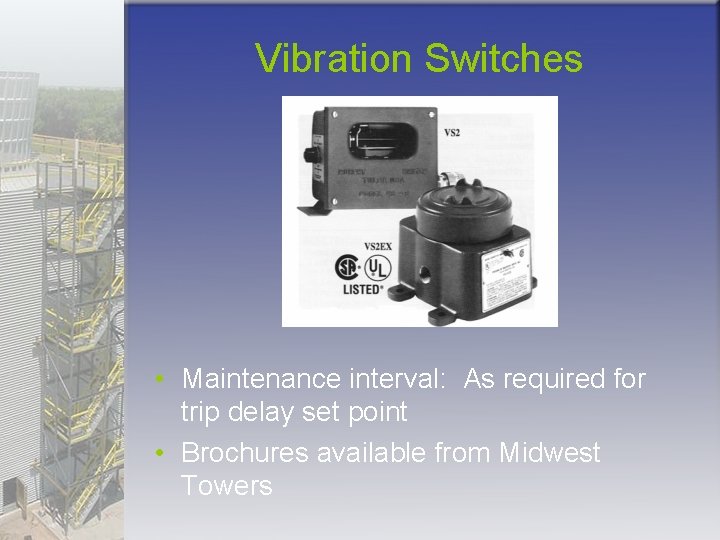
Vibration Switches • Maintenance interval: As required for trip delay set point • Brochures available from Midwest Towers
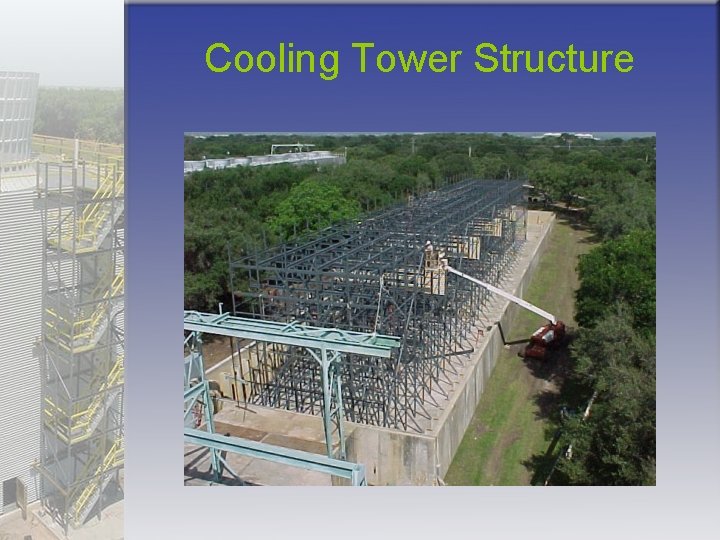
Cooling Tower Structure
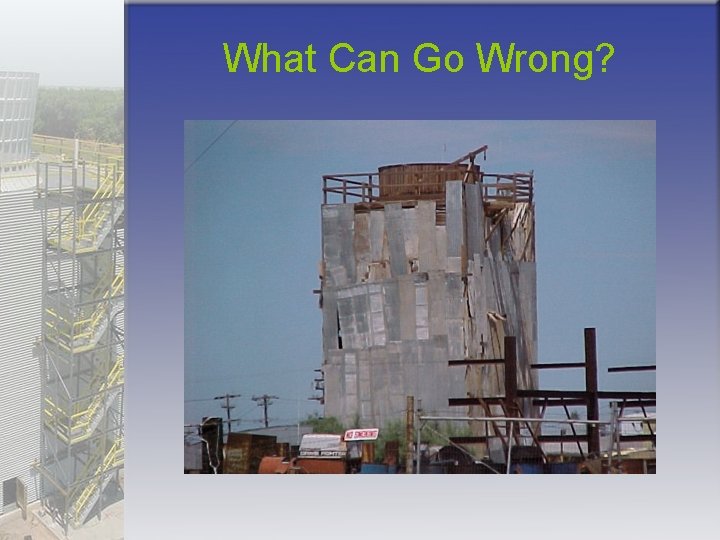
What Can Go Wrong?
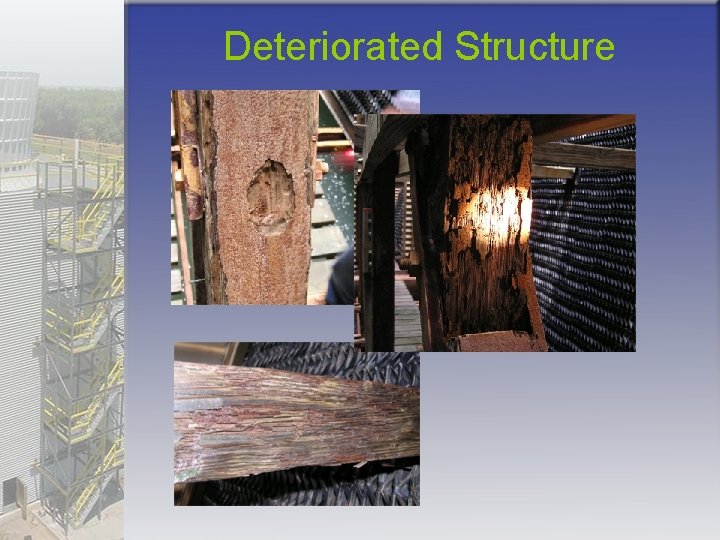
Deteriorated Structure
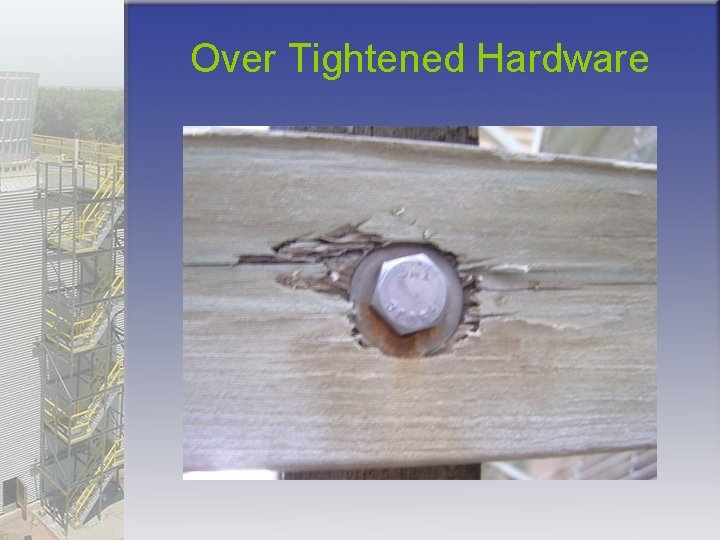
Over Tightened Hardware
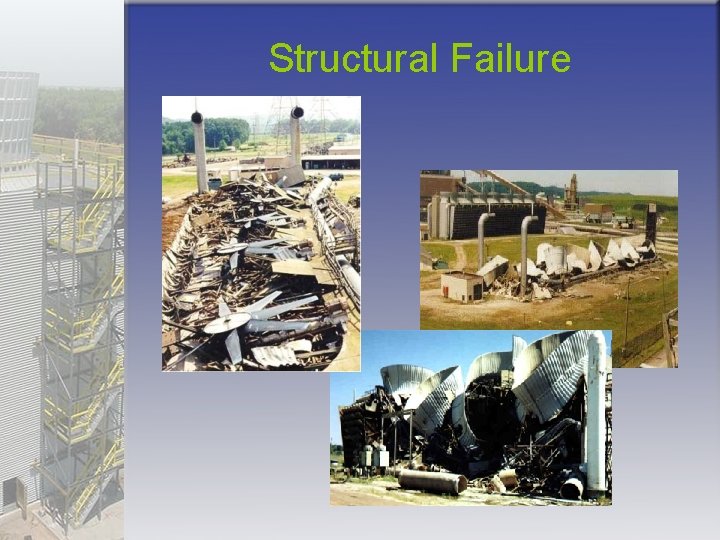
Structural Failure
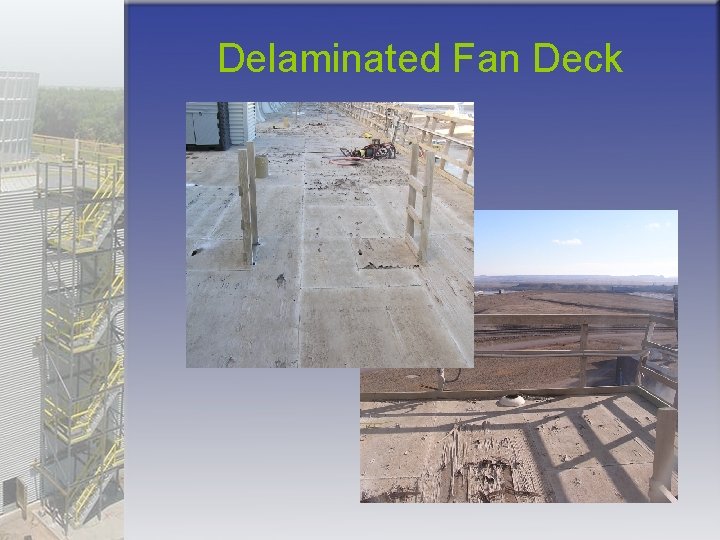
Delaminated Fan Deck
Structural Inspection Tips • Check for signs of biological or chemical attack annually • Check for cracks or deterioration annually • Check & tighten any loose hardware annually • Replace any damaged structure immediately
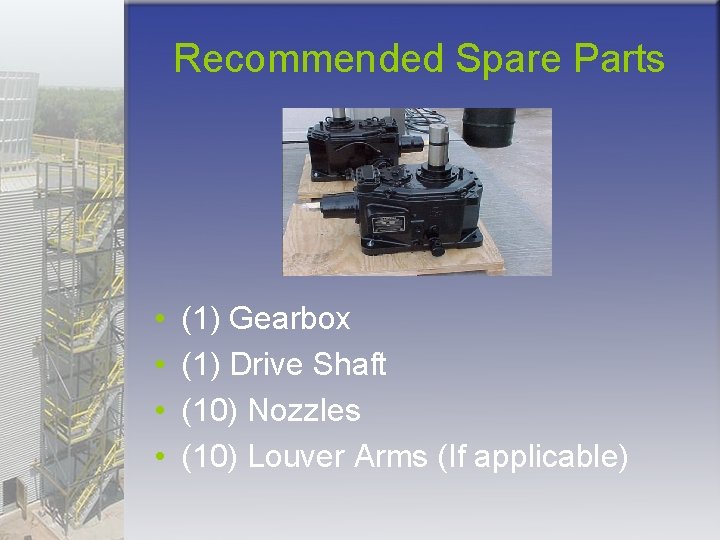
Recommended Spare Parts • • (1) Gearbox (1) Drive Shaft (10) Nozzles (10) Louver Arms (If applicable)
Inspection/Maintenance Summary Weekly • Check gear box oil level & drive vent tube Monthly • Check nozzles for uneven flow or plugging Semi-Annually • Replace motor bearing grease
Inspection/Maintenance Summary Annually • Inspect structure for cracks & deterioration • Check, clean & if necessary replace distribution nozzles • Check & clean fan blades & weep holes • Check fill for damage, plugging or biological growth
Inspection/Maintenance Summary Annually • Check drift eliminators for damaged sections or gaps • Inspect fan stacks for loose hardware • Check drive shaft & coupling (also after high torque event) • Check fan blades for wear, cracks, scale & tip clearance (also at any opportunity)
Inspection/Maintenance Summary • Change gear box lubricant after first 500 hours or 4 weeks, then every 2, 500 hours or 6 months of continuous operation
Questions If you are unsure about what to check or have any questions or concerns, please feel free to contact your Midwest Towers representative to schedule a cooling tower inspection.
Midwest COOLING TOWERS, INC Corporate Office: Chickasha, OK Tel 405. 224. 4622 Fax 405. 224. 4625 www. mwcooling. com sales@mwcooling. com