
Cooling Process Optimization Through A Threephases Thermohydraulic Model
- Slides: 14
Cooling Process Optimization Through A Three-phases Thermo-hydraulic Model with COMSOL 5. 5 J. -D. Wheeler 1, M. Pautard 2, T. Gilloux 2, P. Namy 1, C. Coulouarn 2, SIMTEC - (+33) 9 53 51 45 60 patrick. namy@simtecsolution. fr jean-david. wheeler@simtecsolution. fr christophe. coulouarn@thalesgroup. com 1. SIMTEC, 5 rue Félix Poulat, 38000 Grenoble, France 2. THALES
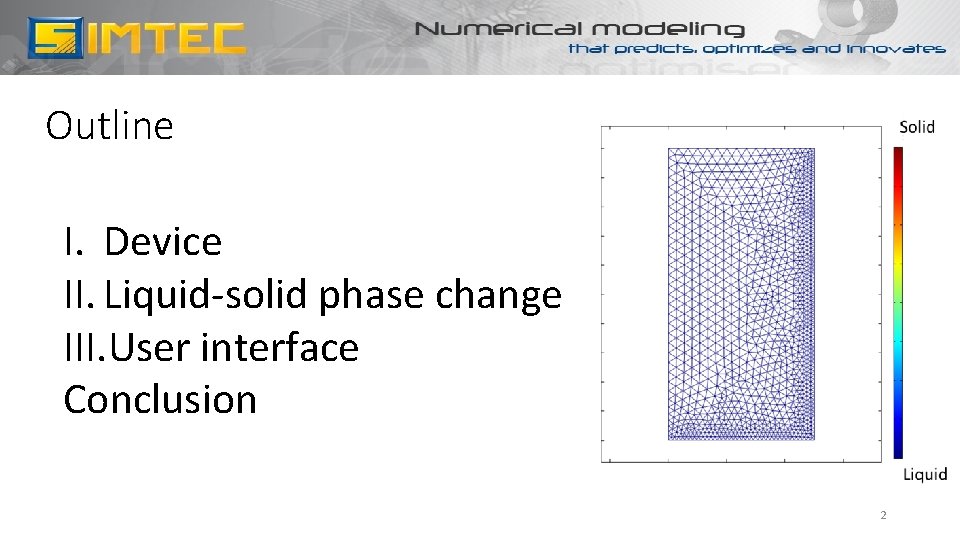
Outline I. Device II. Liquid-solid phase change III. User interface Conclusion 2
Our team & Our clients Numerical Modelling Consultants 8 Members all Eng. D + Ph. D • Extensive research background • Complex problems • Various fields of expertise Successful Track Record: • Big international compagnies • Government laboratories Involved in Research Consortia • EU funded projects (REEcover / SHARK) • Ph. D projects supervision. à Discover more about our successful modelling work with clients! www. simtecsolution. fr 3
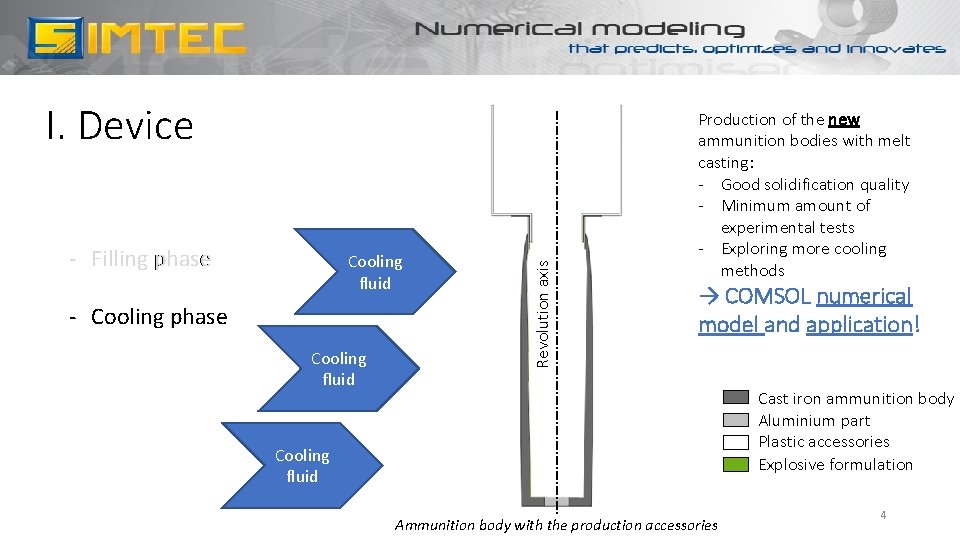
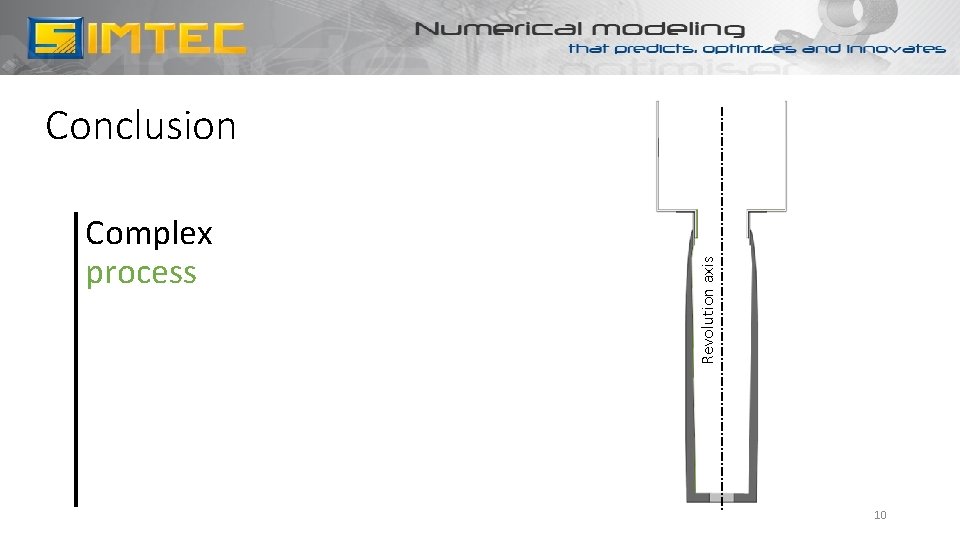
- Filling phase Cooling fluid - Cooling phase Cooling fluid Revolution axis I. Device Production of the new ammunition bodies with melt casting: - Good solidification quality - Minimum amount of experimental tests - Exploring more cooling methods → COMSOL numerical model and application! Cast iron ammunition body Aluminium part Plastic accessories Explosive formulation Cooling fluid Ammunition body with the production accessories 4
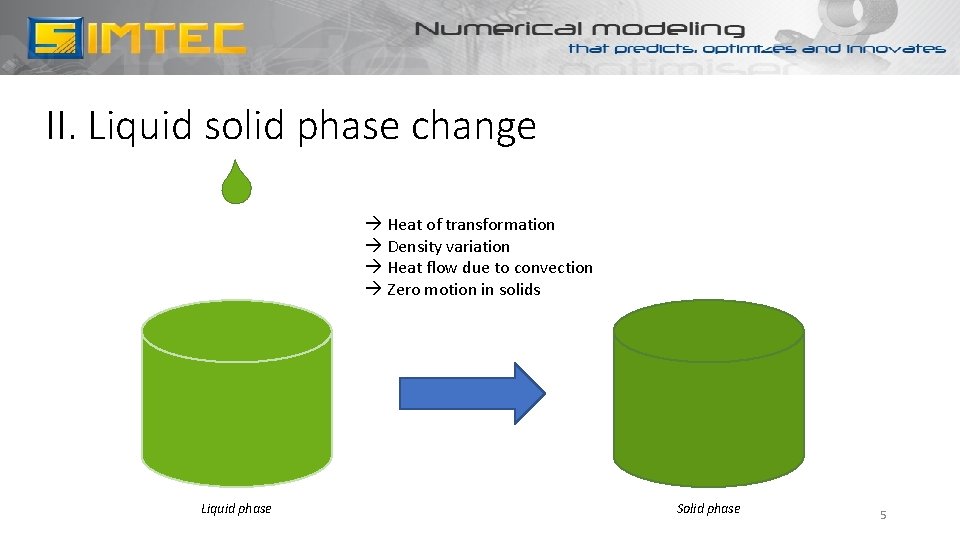
II. Liquid solid phase change à Heat of transformation à Density variation à Heat flow due to convection à Zero motion in solids Liquid phase Solid phase 5
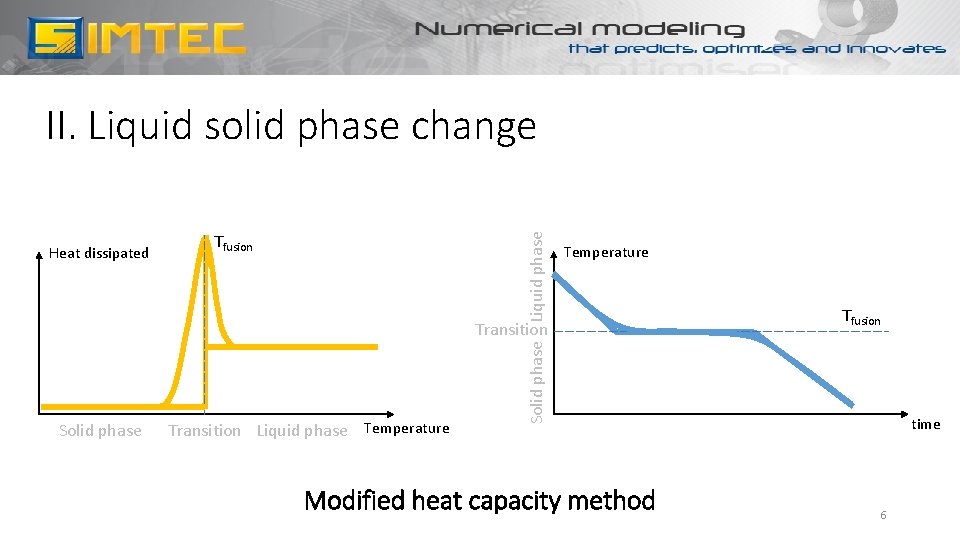
II. Liquid solid phase change Tfusion Liquid phase Heat dissipated Temperature Solid phase Transition Liquid phase Temperature Tfusion Solid phase Transition Modified heat capacity method time 6
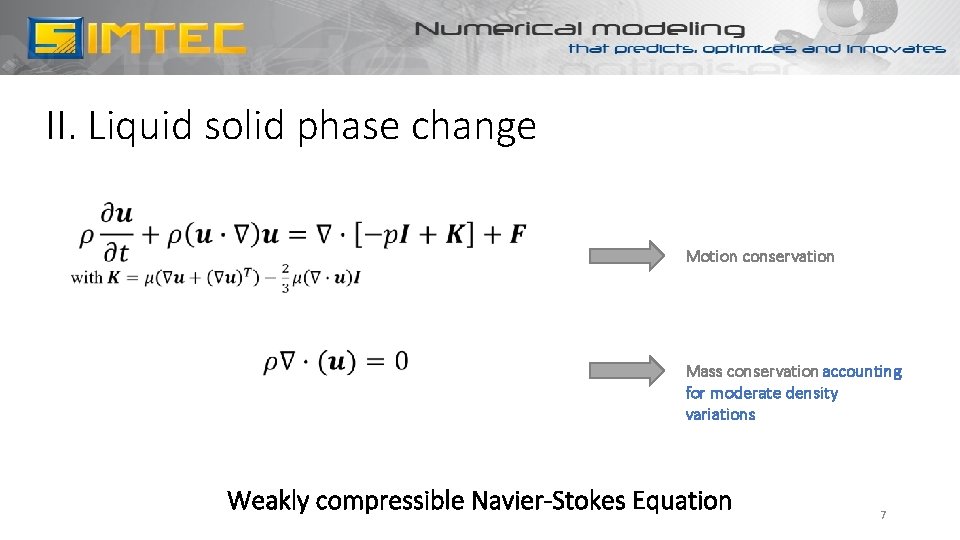
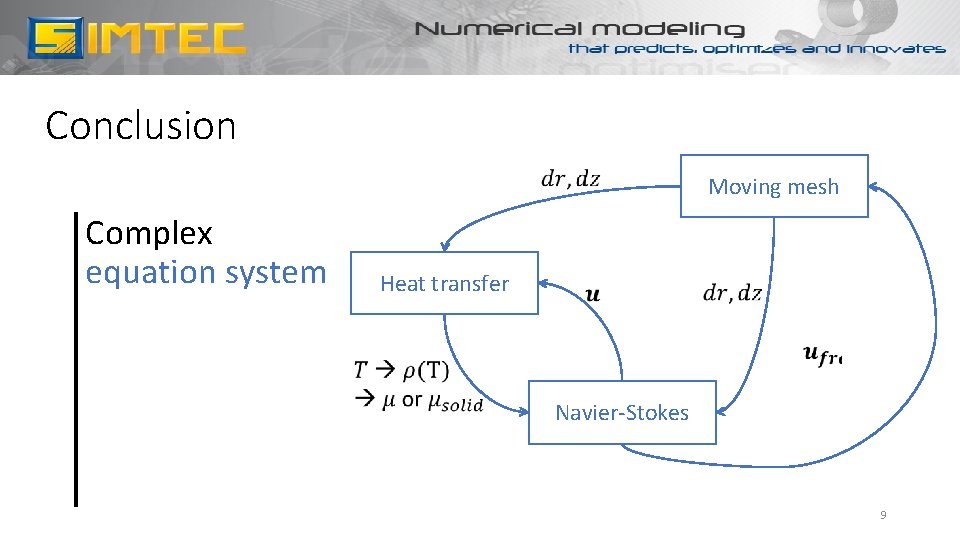
II. Liquid solid phase change Motion conservation Mass conservation accounting for moderate density variations Weakly compressible Navier-Stokes Equation 7
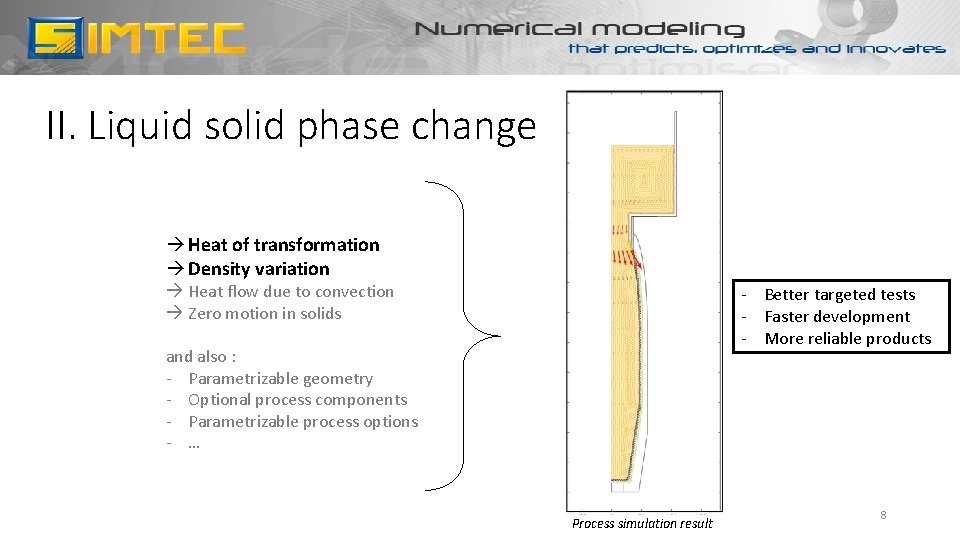
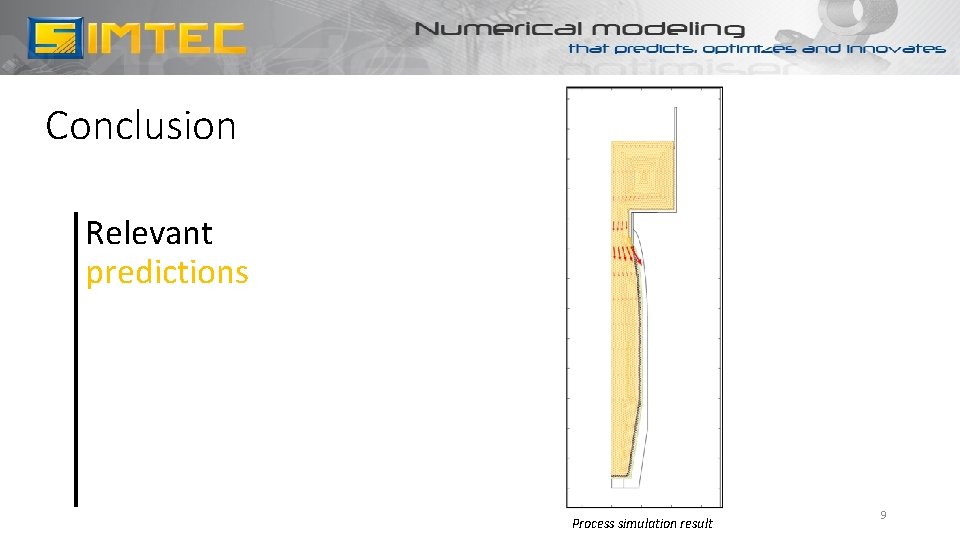
II. Liquid solid phase change à Heat of transformation à Density variation à Heat flow due to convection à Zero motion in solids - Better targeted tests - Faster development - More reliable products and also : - Parametrizable geometry - Optional process components - Parametrizable process options - … Process simulation result 8
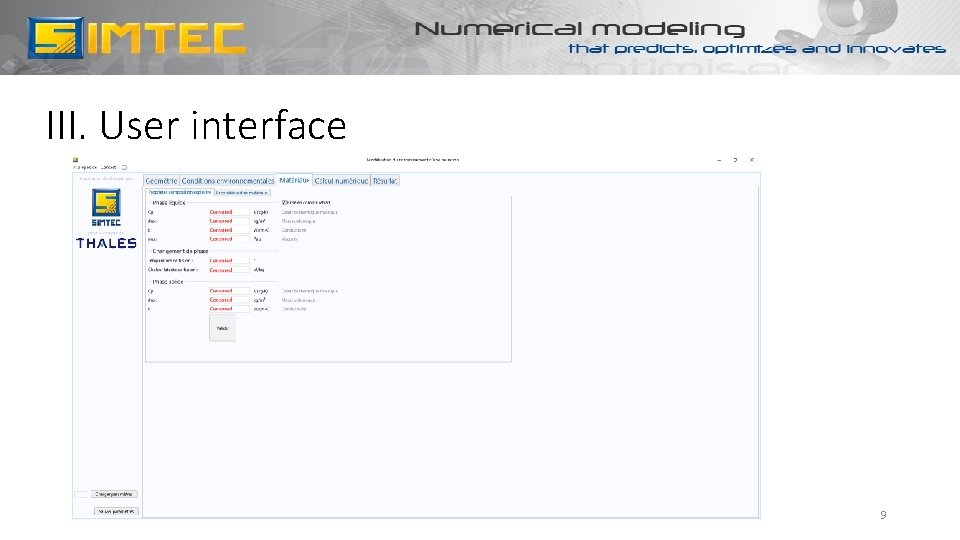
III. User interface 9
Complex process Revolution axis Conclusion 10
Conclusion Complex equation system Heat transfer Moving mesh Navier-Stokes 9
Conclusion Relevant predictions Process simulation result 9
Conclusion User friendly interface 9
Thank you for your attention Q&A? SIMTEC (+33) (0)9 53 51 45 60 Patrick. Namy@simtecsolution. fr 14