
COOLING OF ELECTRICALLYEXCITED He 2 IN A MICROCAVITY
- Slides: 11
COOLING OF ELECTRICALLY-EXCITED He 2 IN A MICROCAVITY PLASMA JET Rui Su, Thomas J. Houlahan, Jr. , and J. Gary Eden University of Illinois June 24, 2016 Laboratory for Optical Physics and Engineering
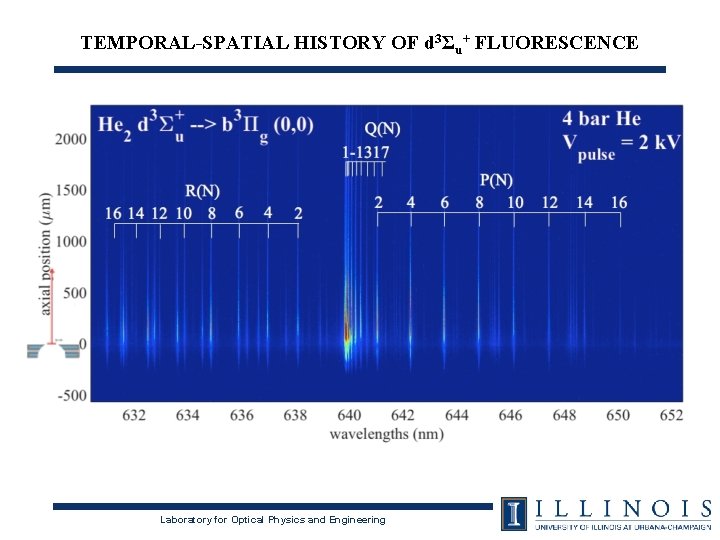
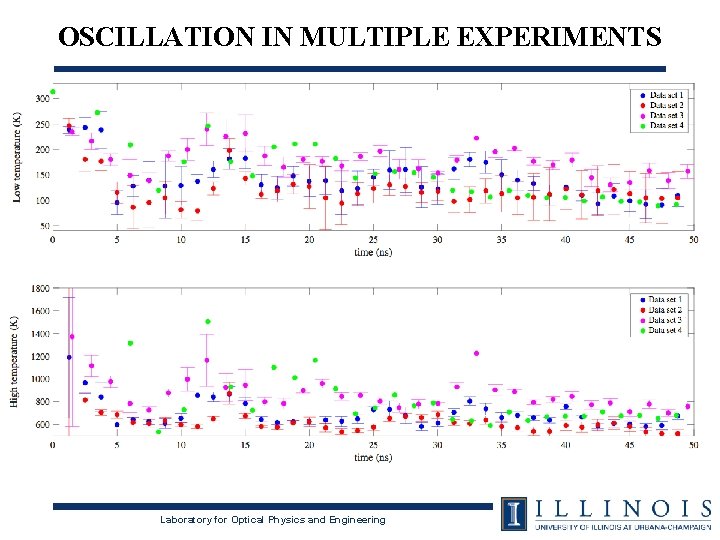
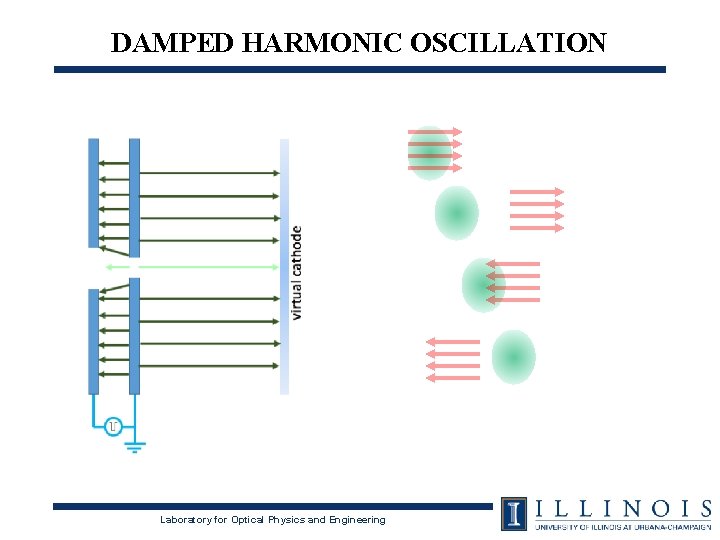
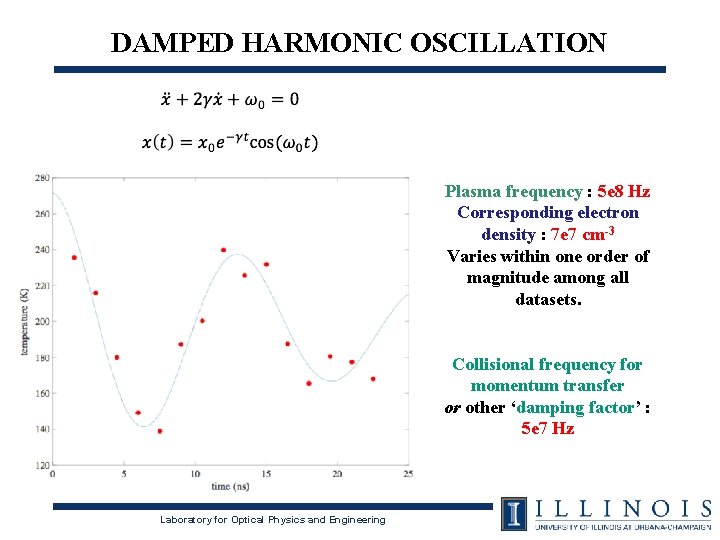
OVERVIEW • He 2 in d 3Σu+ state (>24 e. V, radiative lifetime ~25 ns) generated in microplasma discharge and rotationally cooled in supersonic expansion. • 2 D spatial-temporal evolutional spectra of dimer emission contain kinetical information during the expansion. • Damped harmonic oscillation of the rotational temperature repeatedly observed. Laboratory for Optical Physics and Engineering
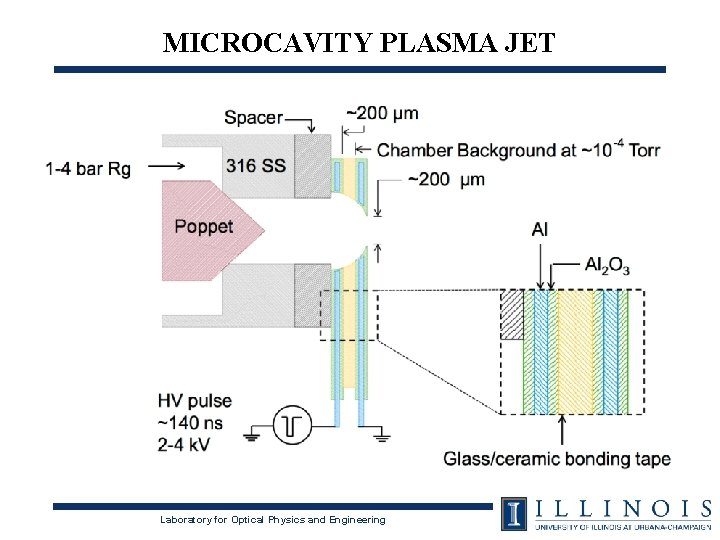
MICROCAVITY PLASMA JET Laboratory for Optical Physics and Engineering
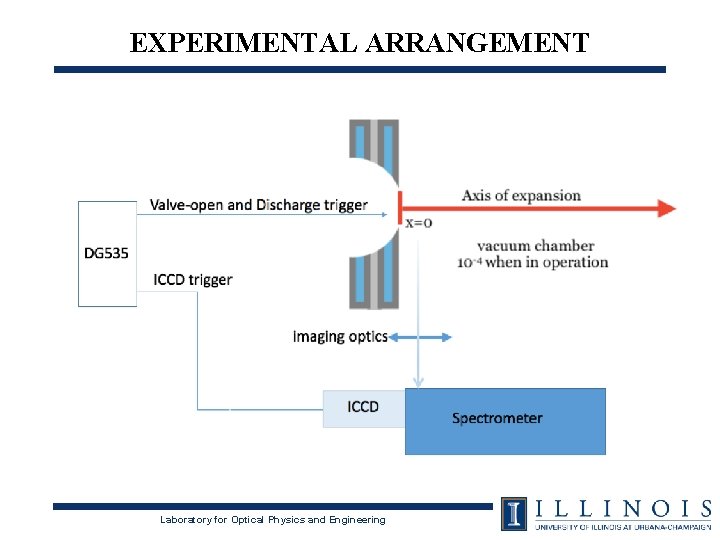
EXPERIMENTAL ARRANGEMENT Laboratory for Optical Physics and Engineering
TEMPORAL-SPATIAL HISTORY OF d 3Σu+ FLUORESCENCE Laboratory for Optical Physics and Engineering
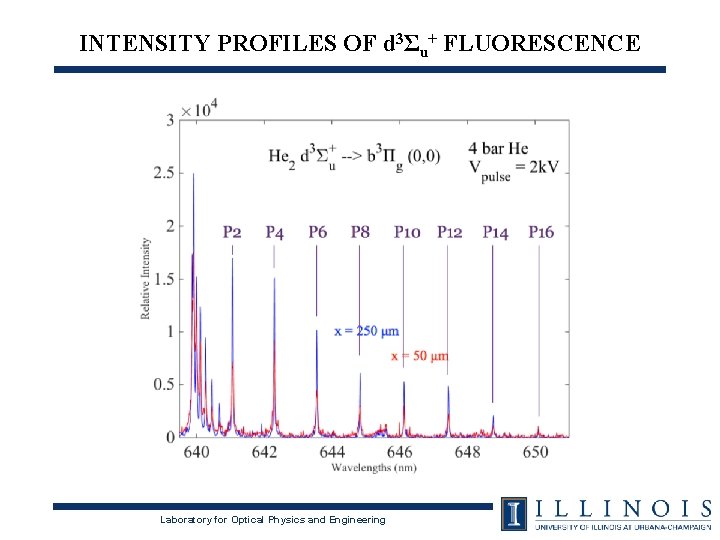
INTENSITY PROFILES OF d 3Σu+ FLUORESCENCE Laboratory for Optical Physics and Engineering
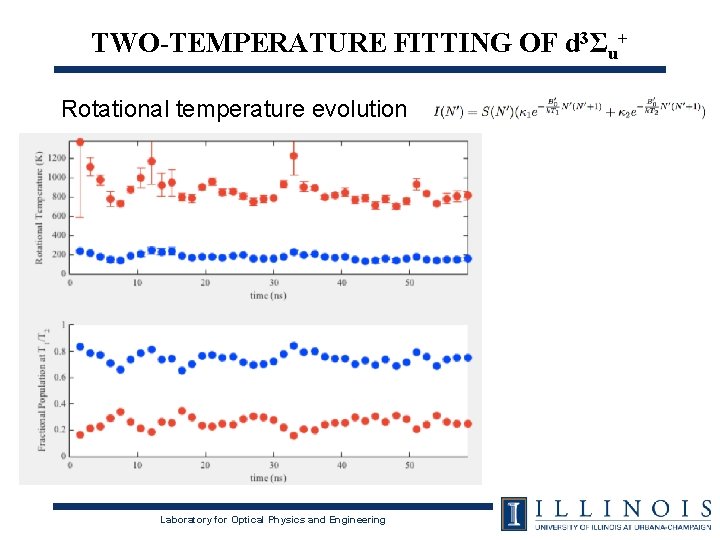
TWO-TEMPERATURE FITTING OF d 3Σu+ Rotational temperature evolution Laboratory for Optical Physics and Engineering
OSCILLATION IN MULTIPLE EXPERIMENTS Laboratory for Optical Physics and Engineering
DAMPED HARMONIC OSCILLATION Laboratory for Optical Physics and Engineering
DAMPED HARMONIC OSCILLATION Plasma frequency : 5 e 8 Hz Corresponding electron density : 7 e 7 cm-3 Varies within one order of magnitude among all datasets. Collisional frequency for momentum transfer or other ‘damping factor’ : 5 e 7 Hz Laboratory for Optical Physics and Engineering
CONCLUSIONS • For He 2 in d 3Σu+ state (>24 e. V, radiative lifetime ~25 ns), damped oscillation in rotational temperature observed on top of the cooling. • A combination of microplasma jet, supersonic expansion, and 2 D spectra map enables a tool to study collisional dynamics of highly-excited dimers in motion. Laboratory for Optical Physics and Engineering