
Cool New Technologies for Studying the Brain Anatomy
Cool New Technologies for Studying the Brain
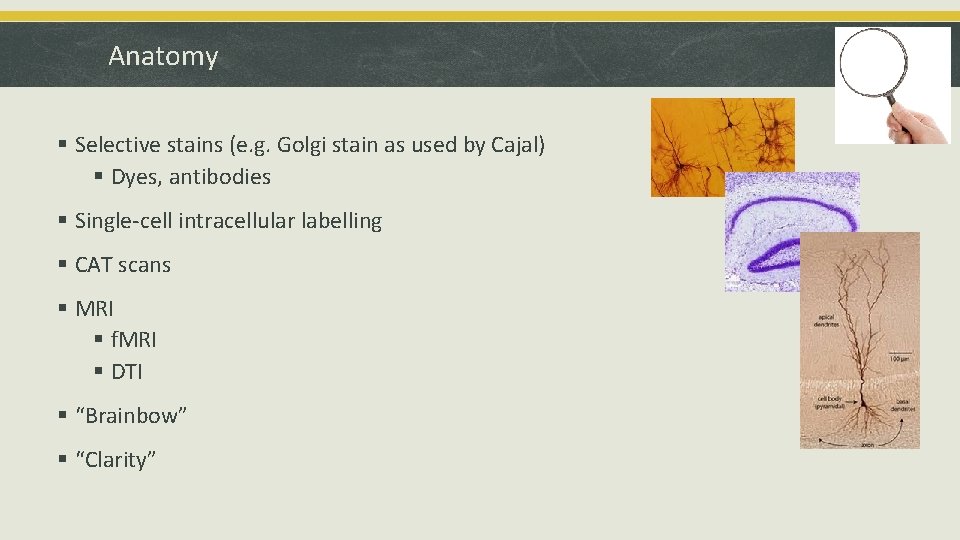
Anatomy § Selective stains (e. g. Golgi stain as used by Cajal) § Dyes, antibodies § Single-cell intracellular labelling § CAT scans § MRI § f. MRI § DTI § “Brainbow” § “Clarity”
MRI (Magnetic Resonance Imaging) Based on NMR (nuclear magnetic resonance) Looks at Hydrogen atoms – sensitive their environment f. MRI – “functional” MRI Sensitive to the amount of Oxygen bound to hemoglobin Assumed to reflect amount of neuronal activation DTI – Difusion tensor imaging Looks at how “free to move” are the Hydrogens on water (H 2 O) Appears to be useful for identifying “fiber tracts” (axons)
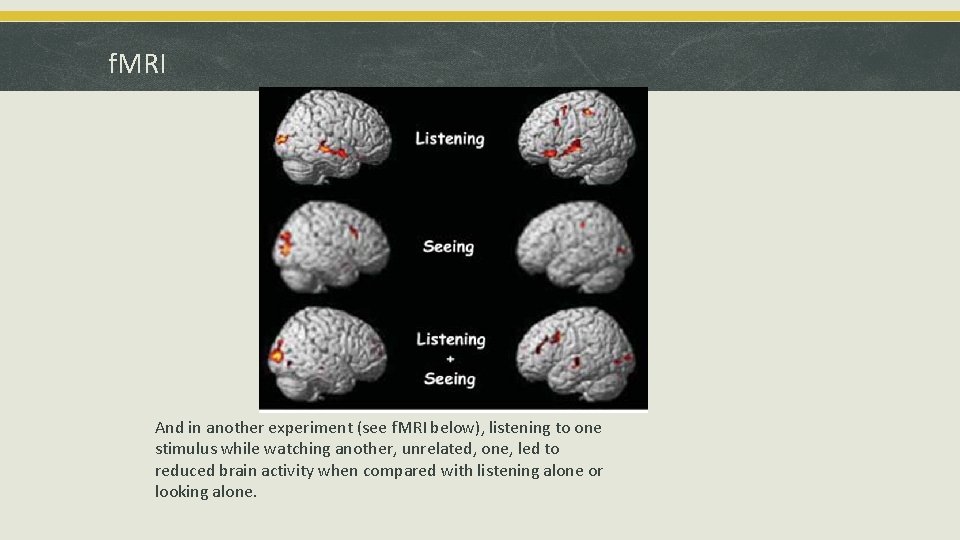
f. MRI And in another experiment (see f. MRI below), listening to one stimulus while watching another, unrelated, one, led to reduced brain activity when compared with listening alone or looking alone.
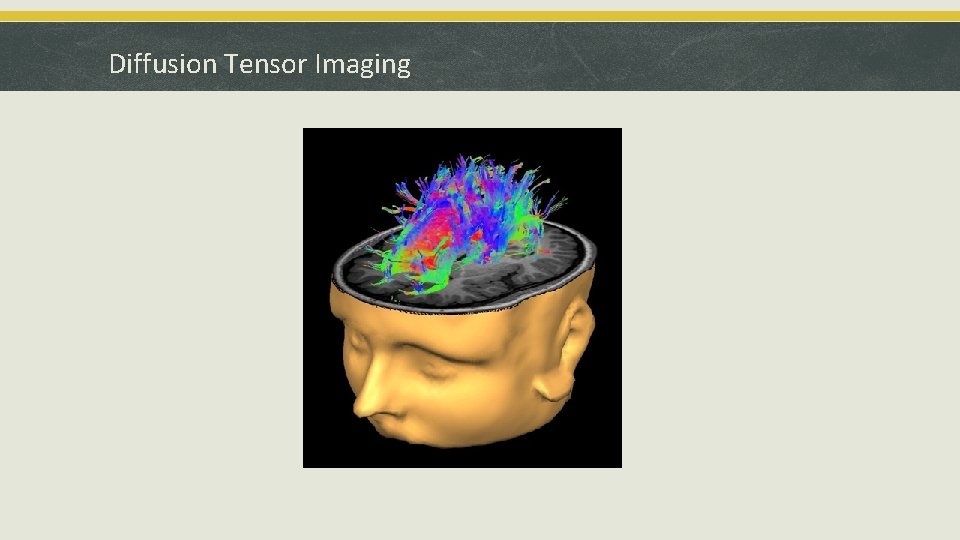
Diffusion Tensor Imaging

“Brainbow” Method B-B-B B-B-P B-B-R R-R-G R-G-G G-G-B G-B-B
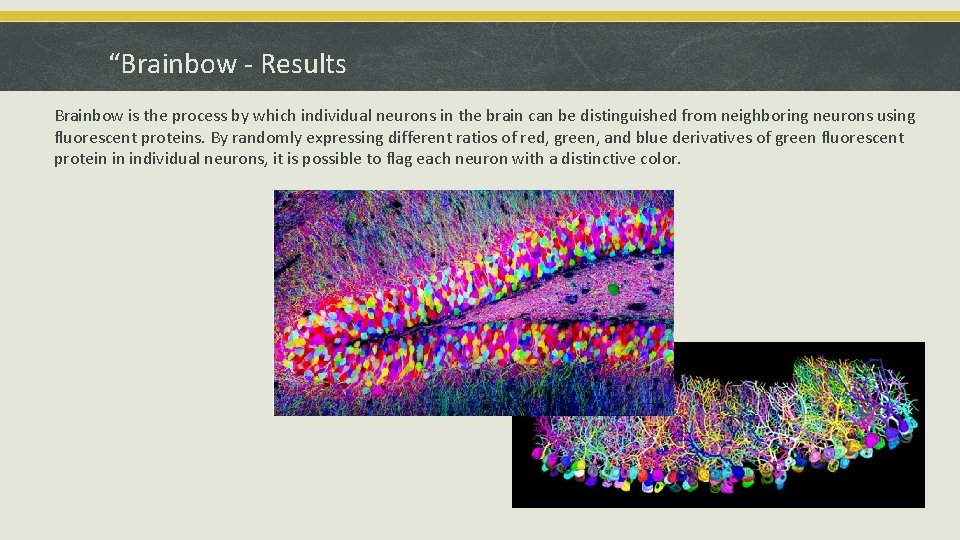
“Brainbow - Results Brainbow is the process by which individual neurons in the brain can be distinguished from neighboring neurons using fluorescent proteins. By randomly expressing different ratios of red, green, and blue derivatives of green fluorescent protein in individual neurons, it is possible to flag each neuron with a distinctive color.
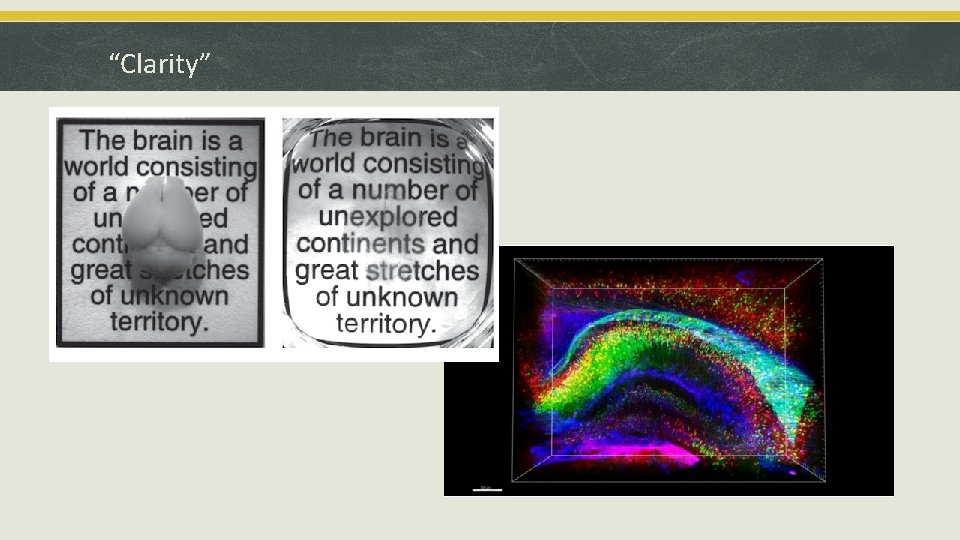
“Clarity”
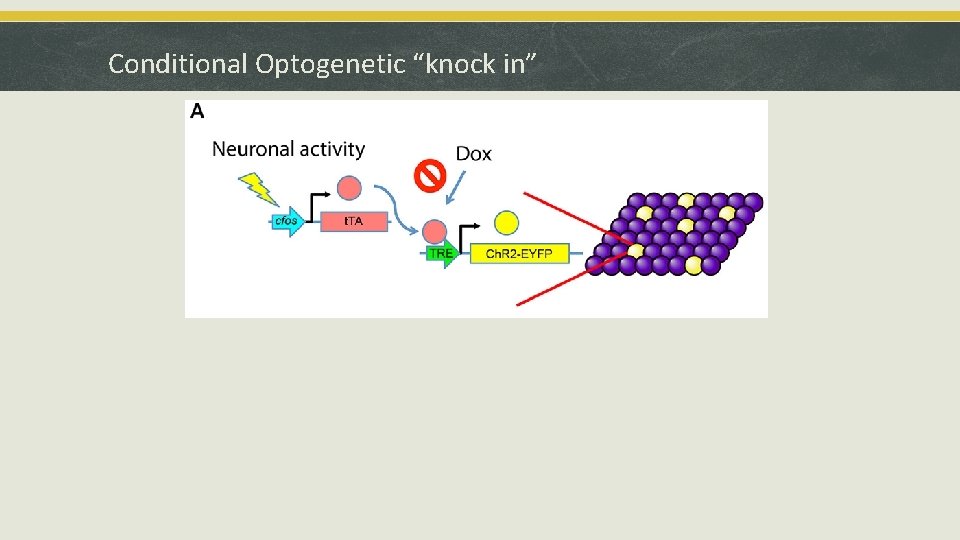
Conditional Optogenetic “knock in”
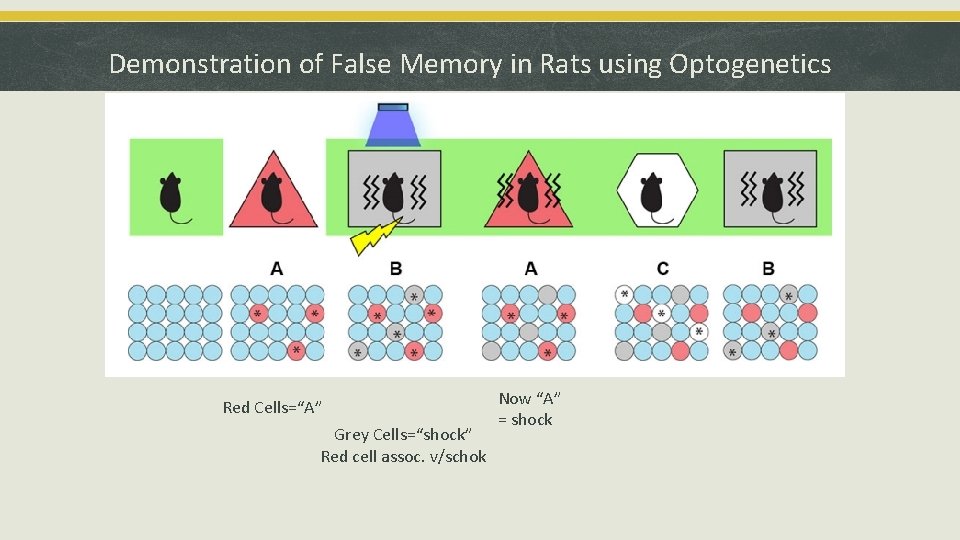
Demonstration of False Memory in Rats using Optogenetics Red Cells=“A” Grey Cells=“shock” Red cell assoc. v/schok Now “A” = shock
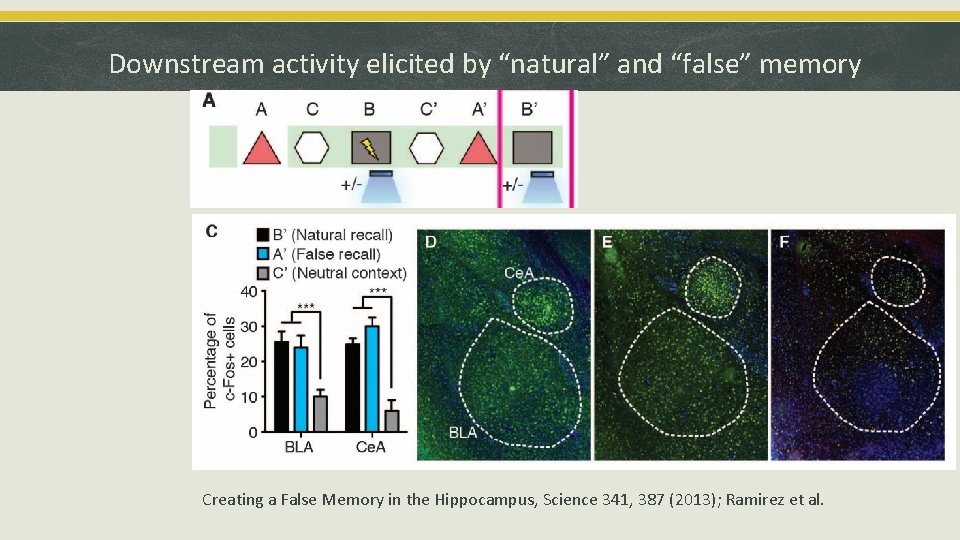
Downstream activity elicited by “natural” and “false” memory Creating a False Memory in the Hippocampus, Science 341, 387 (2013); Ramirez et al.
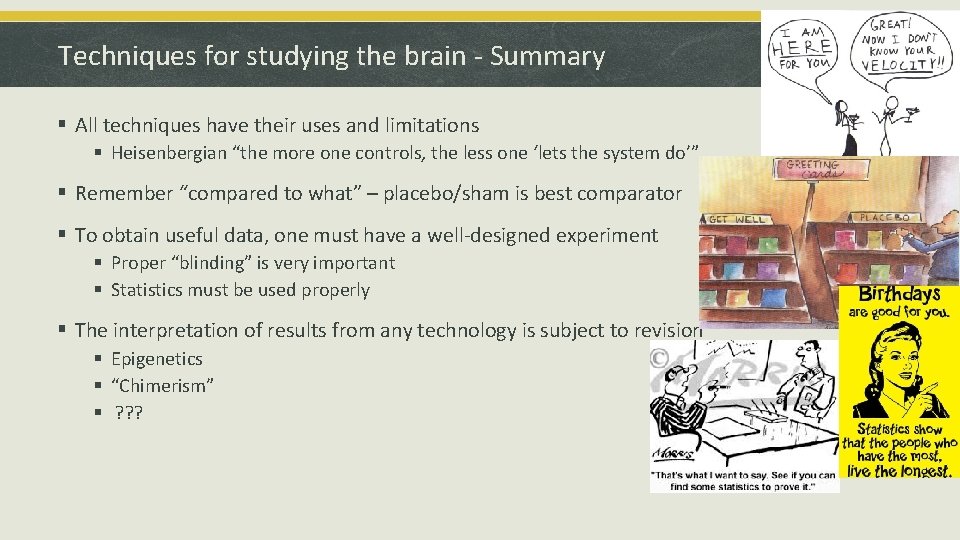
Techniques for studying the brain - Summary § All techniques have their uses and limitations § Heisenbergian “the more one controls, the less one ‘lets the system do’” § Remember “compared to what” – placebo/sham is best comparator § To obtain useful data, one must have a well-designed experiment § Proper “blinding” is very important § Statistics must be used properly § The interpretation of results from any technology is subject to revision § Epigenetics § “Chimerism” § ? ? ?
Some Parting Thoughts § Most human brains have the same basic structure, but all also unique § Brain function is dependent on (and limited by) the “modules” it contains § Much brain function occurs beyond the reach of “consciousness” § The brain is constantly changing (plasticity), but some plasticity is easier during “critical periods” § Reality is a construct of the brain; the brain is fallible and differently fallible in everyone. § “You can’t believe everything you think”; and, confidence is an unreliable predictor of accuracy. § Brain disorders are common and usually not a matter of “will power” or “character” § Good science (e. g. , double-blind) is the best way to make progress in understanding the brain.

Thank you for your attention Questions? Comments?
- Slides: 14