
COOKING METHODS REVIEW DRY HEAT METHODS LEARNING TARGETS





- Slides: 23
COOKING METHODS REVIEW DRY HEAT METHODS
LEARNING TARGETS: • Understand how dry heat affects food • Identify a variety of dry heat methods
PERFORMANCE TARGET • Use a variety of dry heat methods • Determine doneness in foods prepared by dry heat methods.
STANDARDS • PLC 5. 0 Food Safety • PLC 6. 0 Kitchen Safety • ACF 5 Food Preparation • Demonstrate how to read and follow a standard recipe • Demonstrate proper scaling and measurement techniques • Demonstrate a variety of cooking techniques
METHODS OF HEAT TRANSFER • Any cooking method changes: • The way a food looks • The way a food tastes • Nutritive value • In dry heat, heat is transferred by: • Radiant heat (rays coming from glowing/red hot heat source such as burning coals, flames or a hot electric element) – think baking/rotisserie • Metal that conducts heat from a burner to the food – griddle • By oil that is heated when a pan transfers heat from the burner to the oil
CHANGES TO FOOD • Visually: • Heat source causes the outside of food to dry as it cooks • Outside color changes: foods prepared by dry heat are golden or deep brown • Foods that contain sugars turn brown when they get hot enough (carmelization) • Also protein rich foods also brown when heated • Texturally: • Outer layer of food stiffens, sometimes see distinct crust • Eggs, meat, fish, poultry all become firm • Other foods become softer - onions
MAINTAINING MOISTURE • Dust food with flour • Grilled/broiled Meat/veg – soaked in oil, marinade, herbs/spices • Coat in batter/breading before frying • BEST WAY -don’t overcook
DRY HEAT METHODS • Eight basic methods: • Grilling and broiling • Roasting and baking • Sauteing and stir-frying • Pan frying and deep frying
GRILLING AND BROILING • Food placed on rack for cooking. • Radiant heat source is located below the rack holding the food
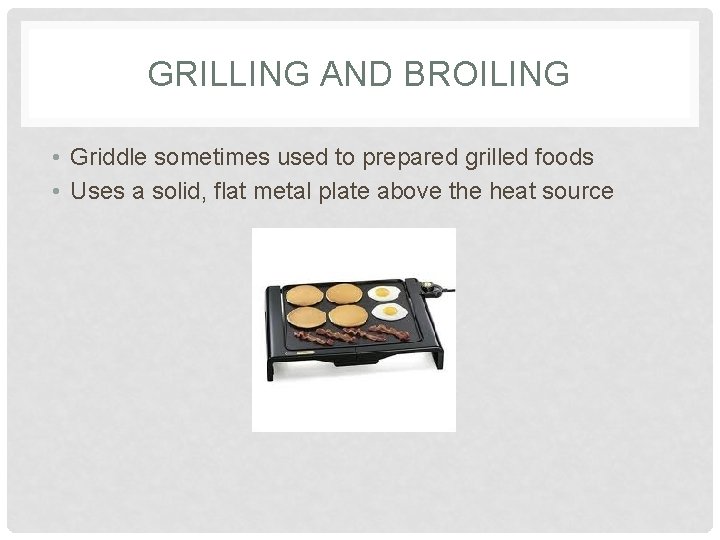
GRILLING AND BROILING • Griddle sometimes used to prepared grilled foods • Uses a solid, flat metal plate above the heat source
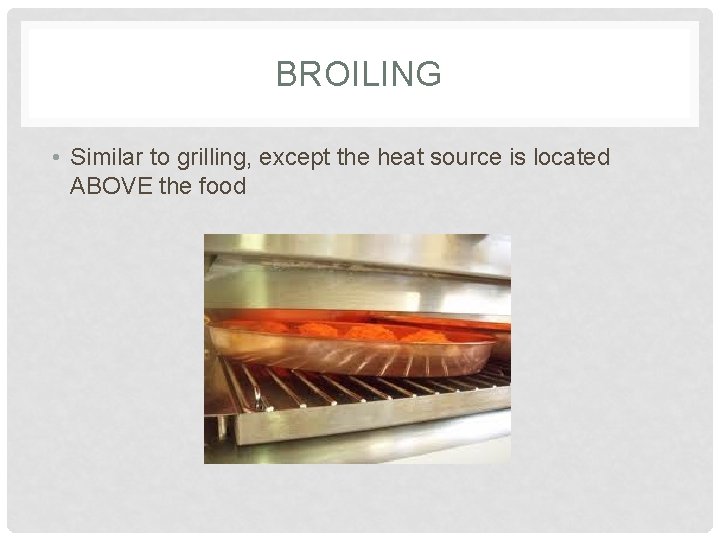
BROILING • Similar to grilling, except the heat source is located ABOVE the food
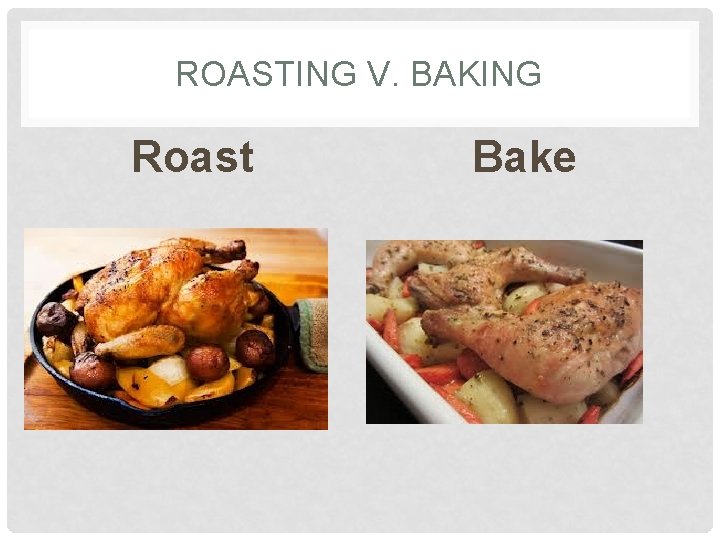
ROASTING AND BAKING • Dry heat techniques where food is cooked by hot air trapped inside an oven • No significant difference between roasting and baking • Difference is between SIZE of food • ROAST – indicates whole item or large piece of food • BAKE – indicates smaller pieces of a larger food
ROASTING V. BAKING Roast Bake
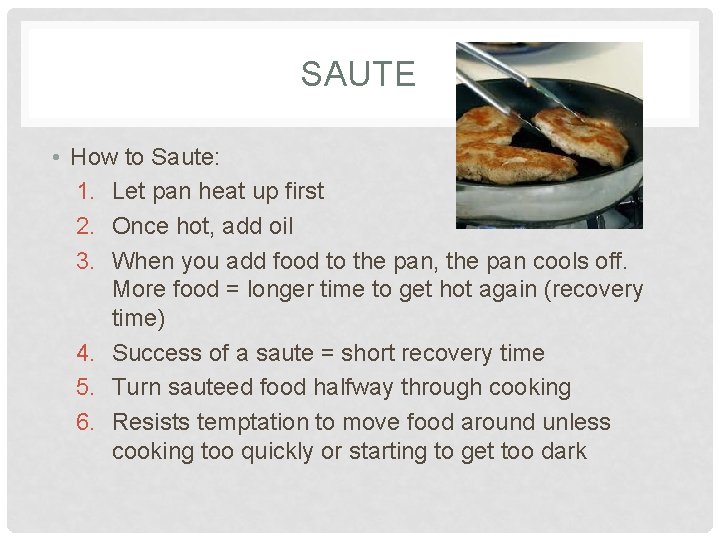
SAUTEING • Saute – cooking tech. that cooks food quickly, often uncovered, in a very small amount of fat in a pan over high heat • Foods suitable for sauteing – tender and thin enough to cook in a short time • Food often coated with flour before sauteing • Fat keeps food from sticking to pan
SAUTE • How to Saute: 1. Let pan heat up first 2. Once hot, add oil 3. When you add food to the pan, the pan cools off. More food = longer time to get hot again (recovery time) 4. Success of a saute = short recovery time 5. Turn sauteed food halfway through cooking 6. Resists temptation to move food around unless cooking too quickly or starting to get too dark
SAUTE VARIATIONS • Stir Frying • Made in wok (pan w/ round bottom and sloping sides) • Foods cut into small strips to cook quickly • CONSTANTLY STIR FOOD as it cooks • Searing • Cook food in small amt of fat just long enough to color the outside of food • Pan broiling • Like sauteing, except you use NO fat (cause foods already have high fat content – think bacon) • AKA dry sauteing • Sweating/smothering • Lower heat, food cooked uncovered in small amt of fat • Food softens, releasing moisture, not allowed to brown
VARIATIONS EXAMPLE Stir Fry Sear Sweat
PAN FRY V. DEEP FRY • Pan fry • Food cooked in hot oil in a pan • Oil should come halfway up the sides of the food • Turn foods only once
PAN FRY DO’S • DO - Heat oil • How do you know? 1. NEVER PUT WATER IN OIL!!!! 2. Use a thermometer 3. Stick a wooden spoon into oil. When you see bubbles form and rise to top – its hot enough 4. Put a little flour in oil – if it bubbles/sizzles, its hot enough • Do lower rather than drop food into oil • Do watch you oil – if you see smoke rising, lower your temp. Its an indication you’ve reached the “smoke point” – where oil quality begins to degrade
DON’T • Don’t add food before it’s hot, food will absorb oil = greasy food • Don’t crowd the pan – this reduces the temperature of the oil and increases recovery time
PAN FRIED FOODS USUALLY COATED • Seasoned Flour • Simply flour seasoned with salt and pepper • Standard Breading • Flour -> Egg -> Breading – Think chicken katsu • Batter • Blend of flour and liquid
DETERMINE DONENESS • How to tell if food is done? • Visually – outside is golden brown • Chicken/Pork – no blood/red juices, no red flesh • Texture – firm or crispy depending on food • Things to consider: • Carryover cooking – foods continue to cook even after coming out of heat • Should take foods out before totally done • Resting Food – • Allows food to carry over cook and reach its proper doneness • Food is moister, juices redistribute within food • Allows time for proper plating and presentation
CIRCLE MAP FOR THINKING • • A great way to visually see your information! In the center – write “Dry Cooking Methods” You have 8 Dry Cooking Methods and 8 outer sections Define each method and create an illustration to remind you of the method