
COOKING METHODS Moist Heat Methods includes methods in
- Slides: 17
COOKING METHODS Moist- Heat Methods includes methods in which food is cooked in hot liquid, steam or a combination of the two • Moist heat makes less-tender cuts more tender • Long, slow cooking of moist heat will help develop the meat’s flavour • • • Includes; Boiling Simmering Steaming Pressure cooking
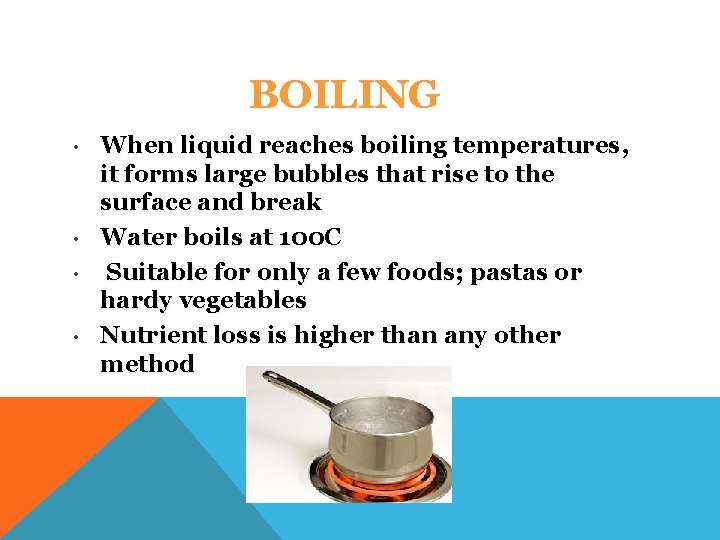
BOILING • • When liquid reaches boiling temperatures, it forms large bubbles that rise to the surface and break Water boils at 100 C Suitable for only a few foods; pastas or hardy vegetables Nutrient loss is higher than any other method
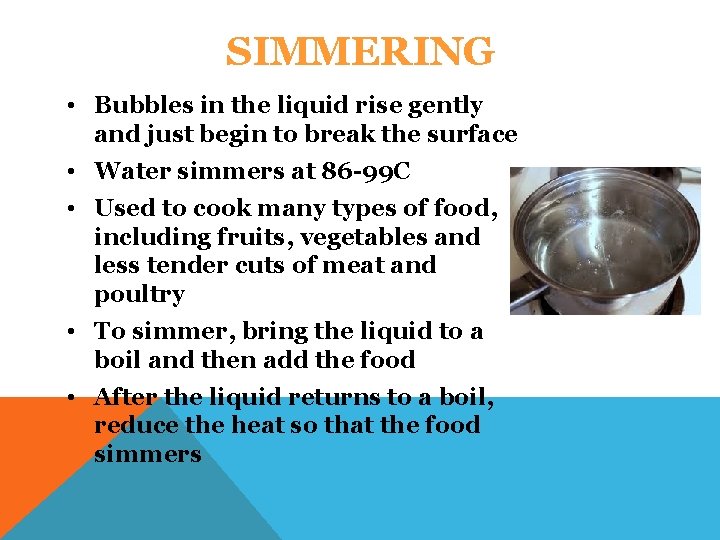
SIMMERING • Bubbles in the liquid rise gently and just begin to break the surface • Water simmers at 86 -99 C • Used to cook many types of food, including fruits, vegetables and less tender cuts of meat and poultry • To simmer, bring the liquid to a boil and then add the food • After the liquid returns to a boil, reduce the heat so that the food simmers
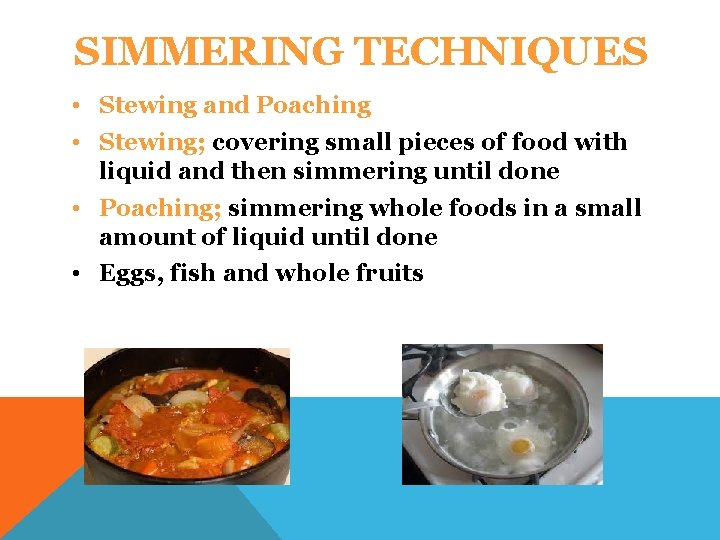
SIMMERING TECHNIQUES • Stewing and Poaching • Stewing; covering small pieces of food with liquid and then simmering until done • Poaching; simmering whole foods in a small amount of liquid until done • Eggs, fish and whole fruits
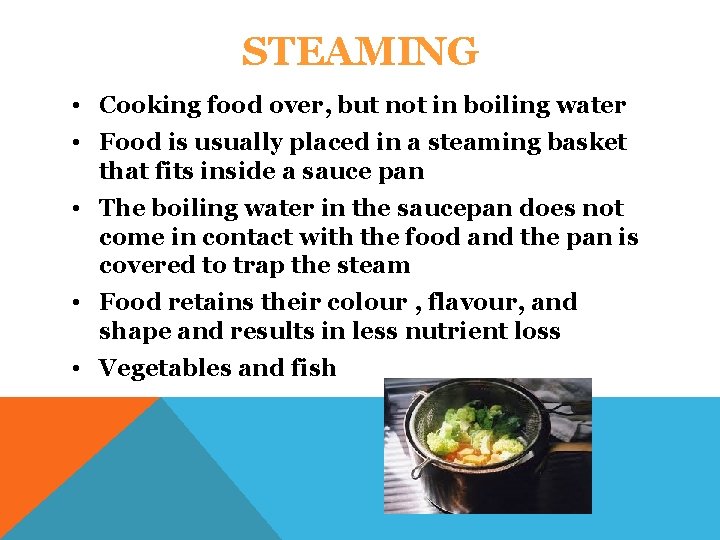
STEAMING • Cooking food over, but not in boiling water • Food is usually placed in a steaming basket that fits inside a sauce pan • The boiling water in the saucepan does not come in contact with the food and the pan is covered to trap the steam • Food retains their colour , flavour, and shape and results in less nutrient loss • Vegetables and fish
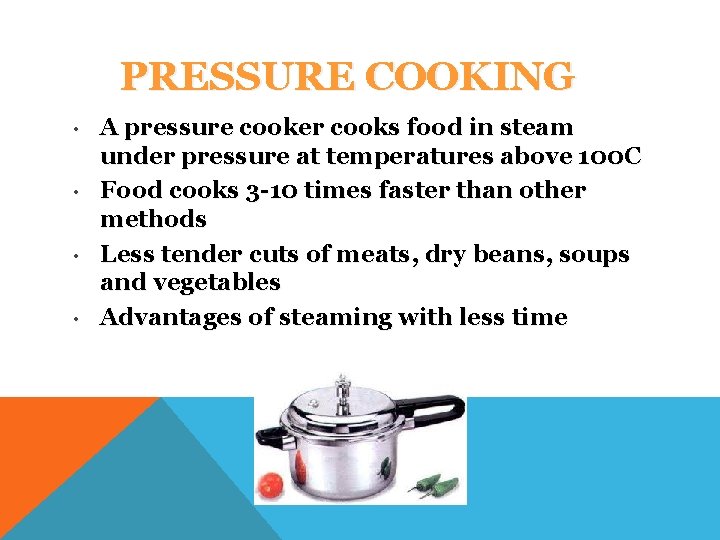
PRESSURE COOKING • • A pressure cooker cooks food in steam under pressure at temperatures above 100 C Food cooks 3 -10 times faster than other methods Less tender cuts of meats, dry beans, soups and vegetables Advantages of steaming with less time
DRY –HEAT METHODS Dry-Heat Methods: cook food uncovered without added liquid or fat Include: Ø Roasting/Baking Ø Broiling & Grilling Ø Pan-Broiling
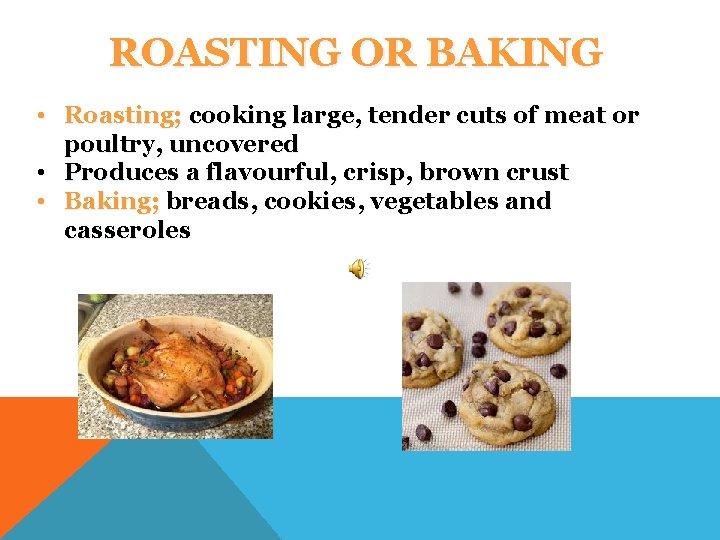
ROASTING OR BAKING • Roasting; cooking large, tender cuts of meat or poultry, uncovered • Produces a flavourful, crisp, brown crust • Baking; breads, cookies, vegetables and casseroles
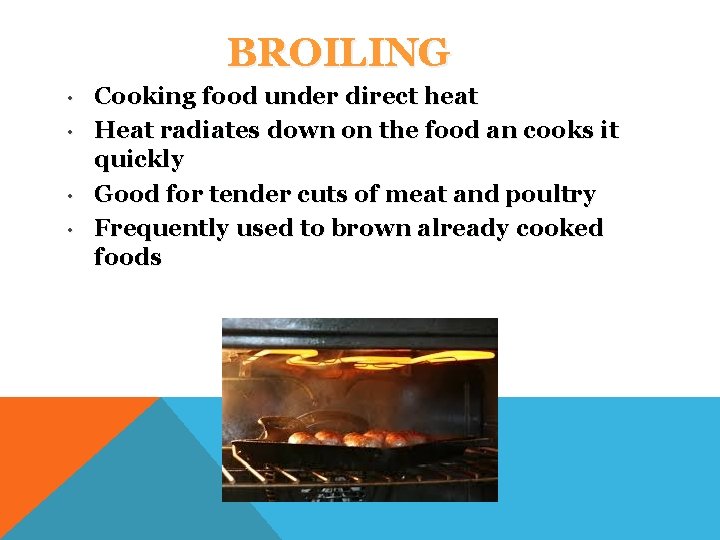
BROILING • • Cooking food under direct heat Heat radiates down on the food an cooks it quickly Good for tender cuts of meat and poultry Frequently used to brown already cooked foods
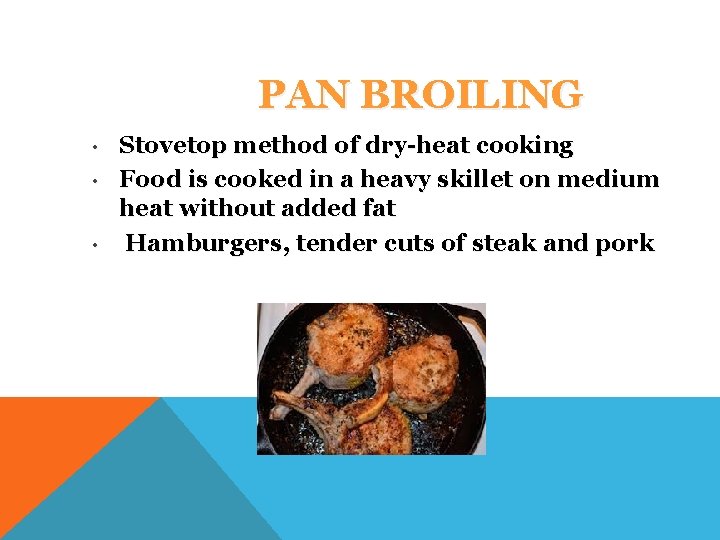
PAN BROILING • • • Stovetop method of dry-heat cooking Food is cooked in a heavy skillet on medium heat without added fat Hamburgers, tender cuts of steak and pork
FRYING • Frying involves cooking food in oil or melted fat Frying methods include: • Sautéing • Pan-frying • Deep-fat frying
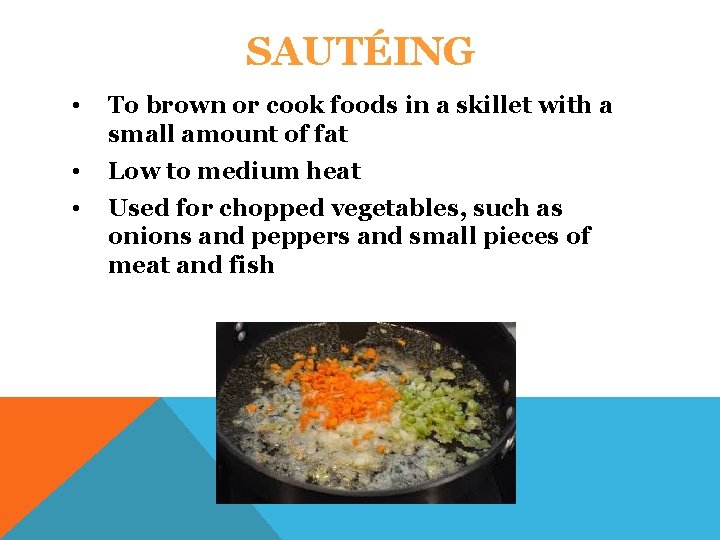
SAUTÉING • To brown or cook foods in a skillet with a small amount of fat • Low to medium heat • Used for chopped vegetables, such as onions and peppers and small pieces of meat and fish
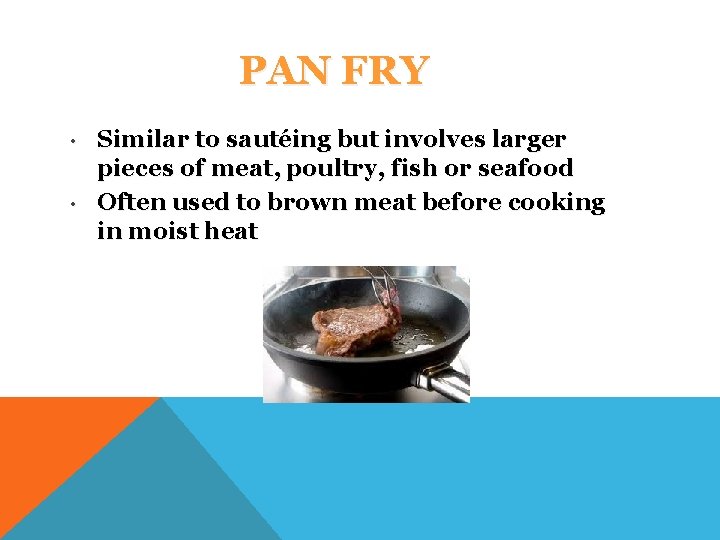
PAN FRY • • Similar to sautéing but involves larger pieces of meat, poultry, fish or seafood Often used to brown meat before cooking in moist heat
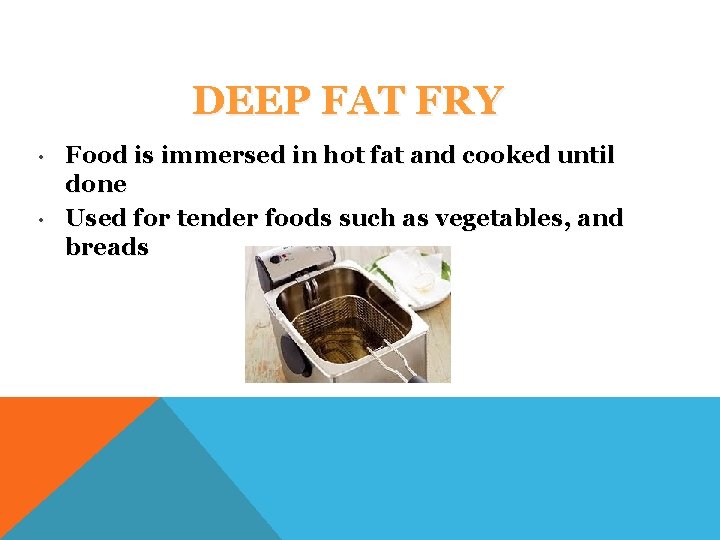
DEEP FAT FRY • • Food is immersed in hot fat and cooked until done Used for tender foods such as vegetables, and breads
COMBINATION METHODS • Sometimes the best way to cook a food is by a combination of methods • Braising and stir-frying are two popular methods that combine dry-heat and moistheat cooking
BRAISING • • • Combines browning food by pan frying with a long period of simmering to tenderize the food and enhance the flavour Often used for large, less tender cuts of meat and poultry Food is browned first on all sides, seasoned and simmered in an covered baking dish with a small amount of liquid
STIR FRY • Combines frying and moist heat cooking • Small pieces of food are fried quickly in a small amount of oil at high temperatures • Food is stirred constantly to keep it from sticking • A small amount of liquid is added near the end of cooking time and covered to allow the food to steam briefly