
Cooking Meats Carcass Whole animal minus head entrails
- Slides: 24
Cooking Meats
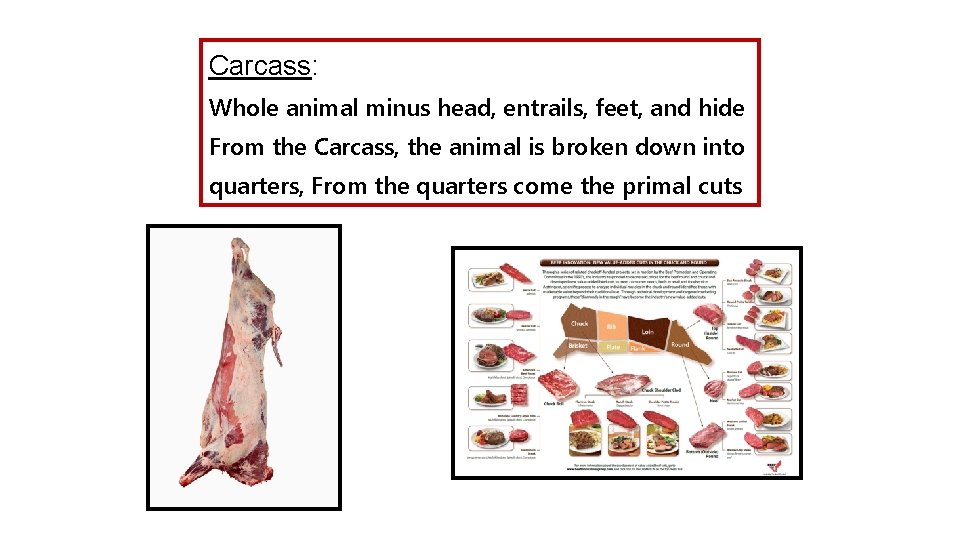
Carcass: Whole animal minus head, entrails, feet, and hide From the Carcass, the animal is broken down into quarters, From the quarters come the primal cuts
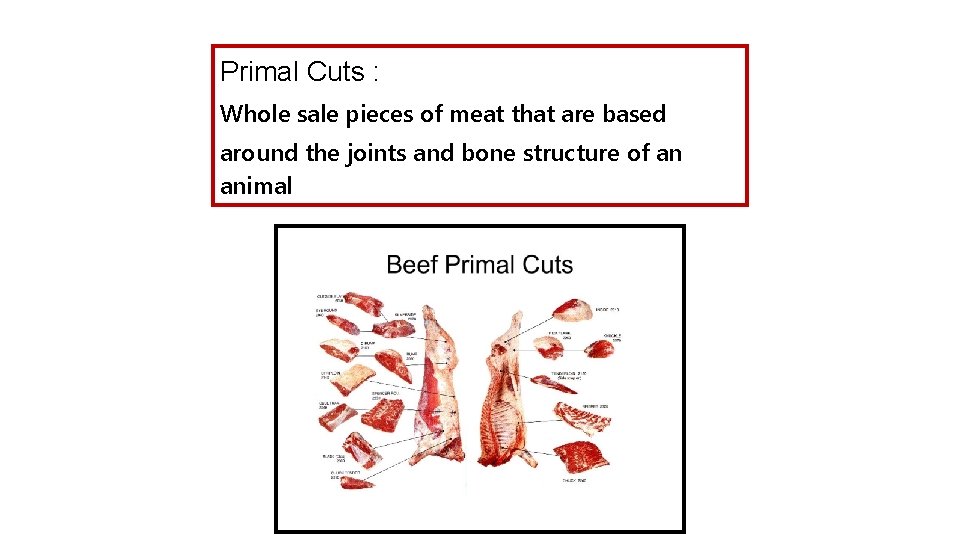
Primal Cuts : Whole sale pieces of meat that are based around the joints and bone structure of an animal
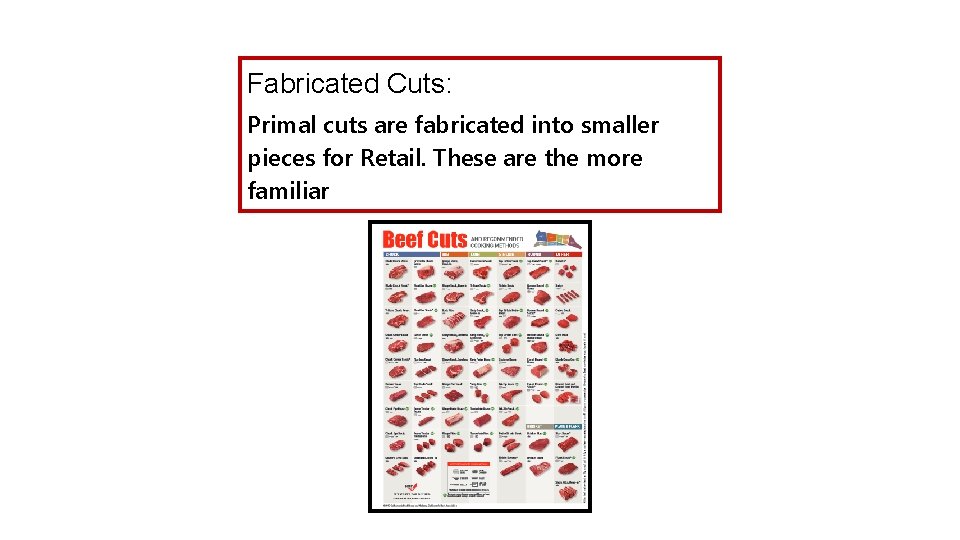
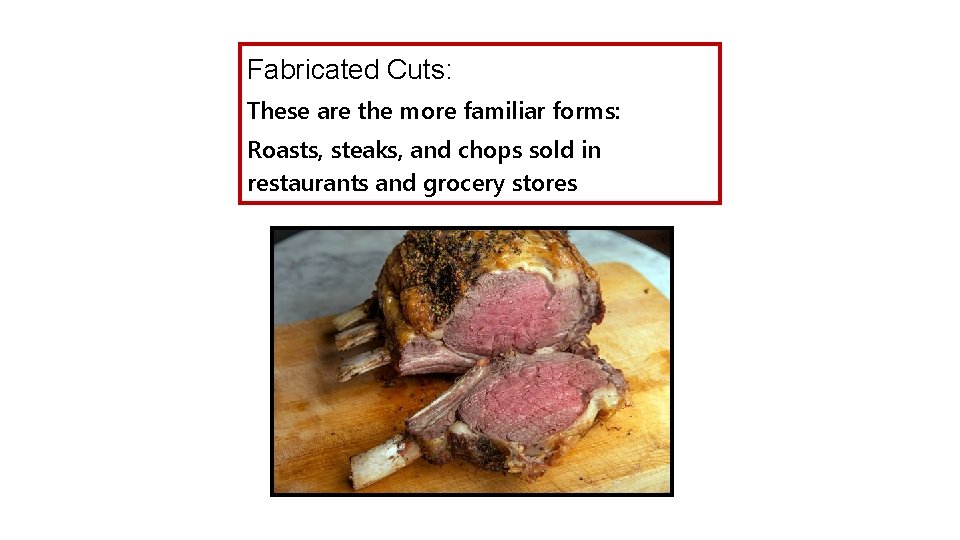
Fabricated Cuts: Primal cuts are fabricated into smaller pieces for Retail. These are the more familiar
Fabricated Cuts: These are the more familiar forms: Roasts, steaks, and chops sold in restaurants and grocery stores
II. Principle of Cooking 1. High heat toughens. Low heat should be the general rule Except 1. High Heat: High heat toughens. Low heat should be the general rule Except when there is a lack of connective tissue
2. Broiling/Grilling: Exposed for short term for cuts of meat which have some internal fat and little connective tissue. 3. Roast Cuts known as Roasts should be cooked at low temp ( low & slow) better yields.
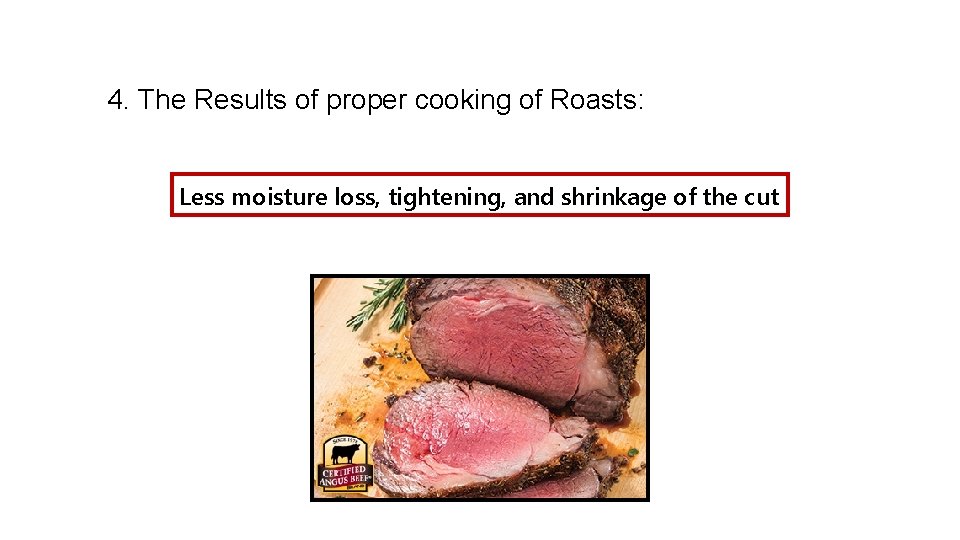
4. The Results of proper cooking of Roasts: Less moisture loss, tightening, and shrinkage of the cut
5. Liquid and Steam: Liquids and steam are better conductors of heat to avoid overcooking meat should be simmered, not boiled.
III. Breaking Down Connective Tissue The Two Indicators of High Connective Tissue 1. ________________ 2. ________________
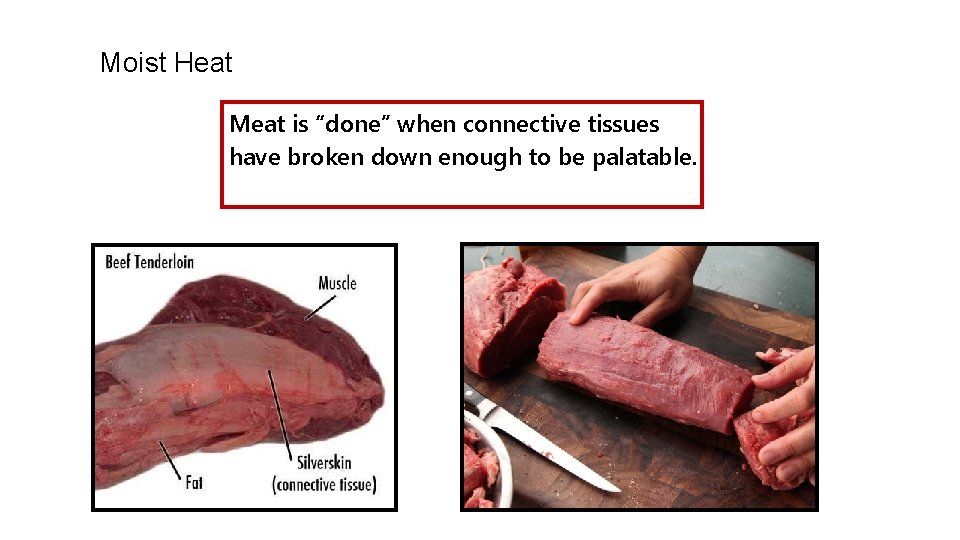
1. Collagen: Collagen, which makes up connective tissue, breaks down due to long, slow cooking Moist heat is more suitable for this ?
2. The Most Effective Cooking Method: _________________ Dry Heat Methods are used only for short quick cooking Suitable only for cuts which are tender, less connective tissue and have a degree of marbling
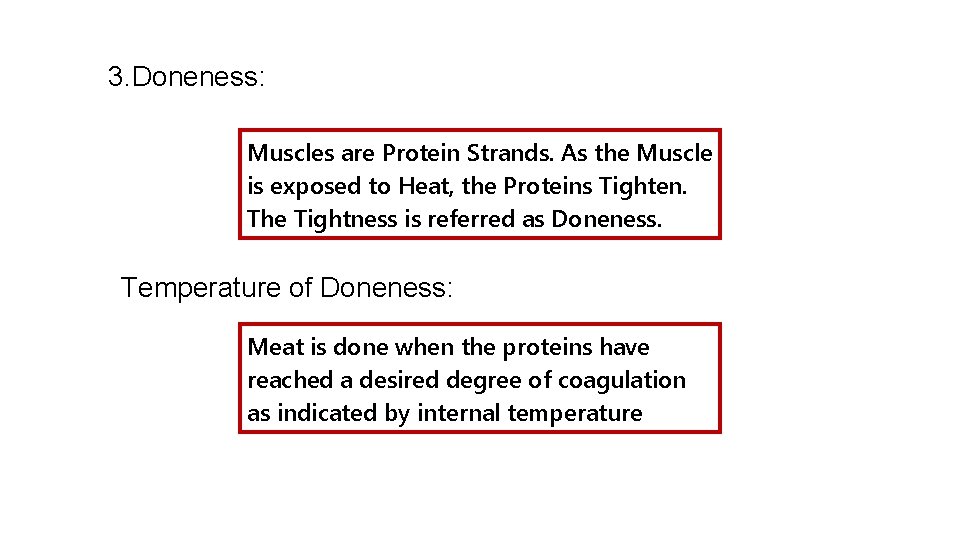
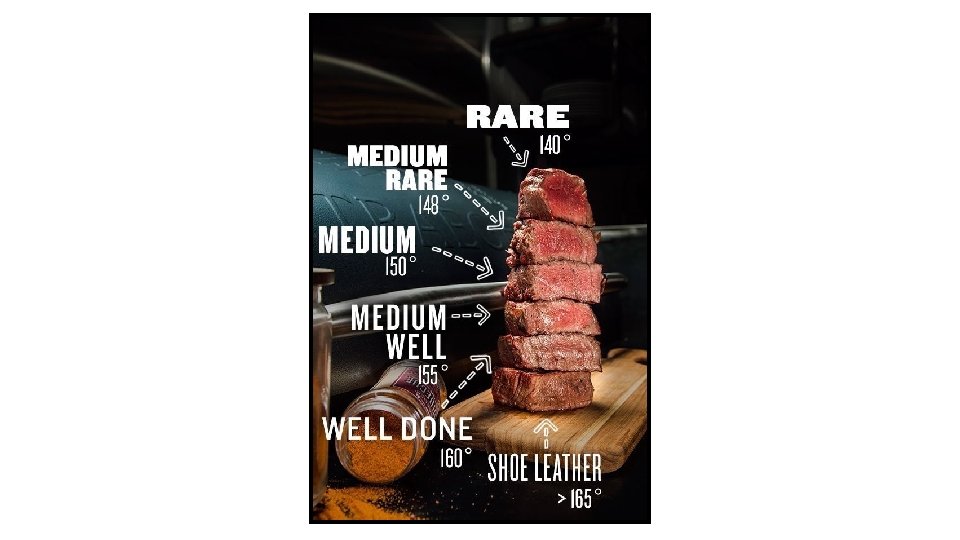
3. Doneness: Muscles are Protein Strands. As the Muscle is exposed to Heat, the Proteins Tighten. The Tightness is referred as Doneness. Temperature of Doneness: Meat is done when the proteins have reached a desired degree of coagulation as indicated by internal temperature
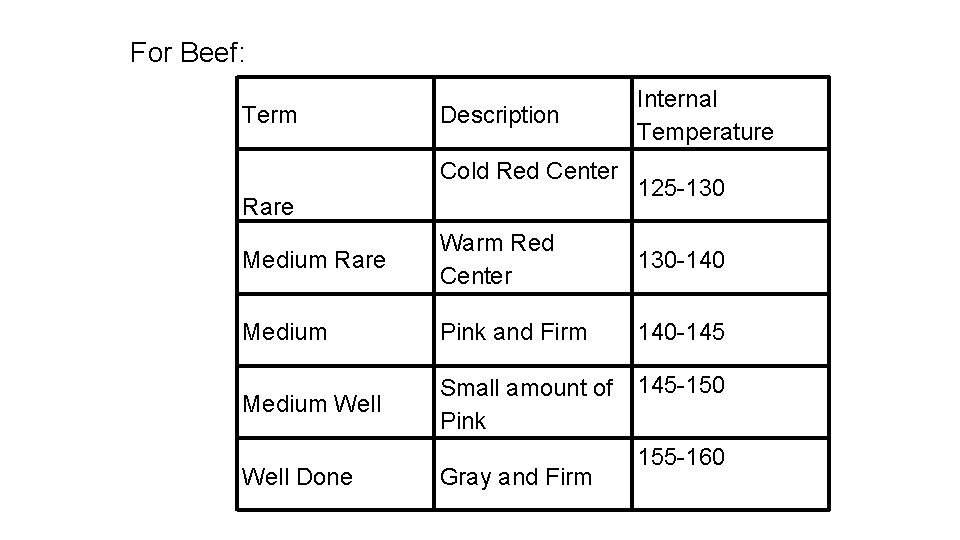
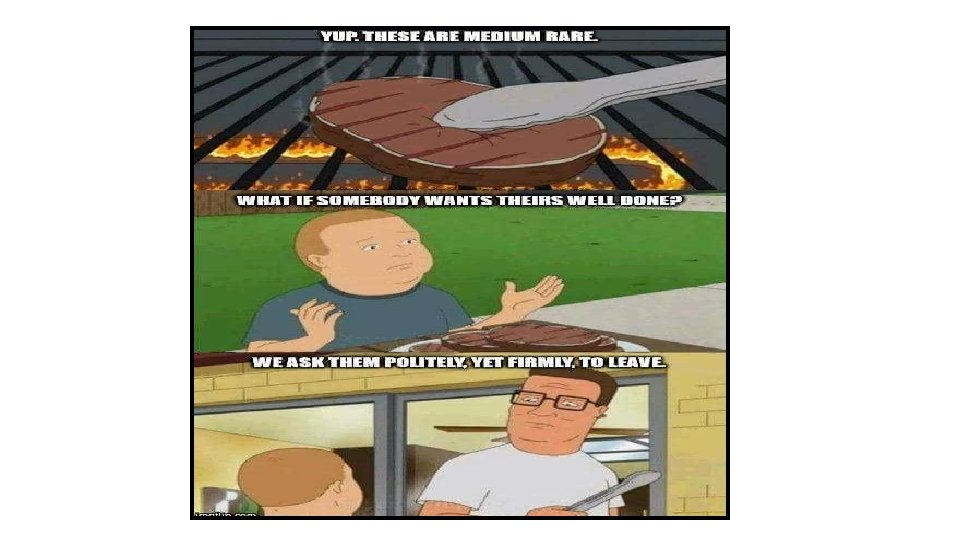
For Beef: Term Description Cold Red Center Rare Internal Temperature 125 -130 Medium Rare Warm Red Center 130 -140 Medium Pink and Firm 140 -145 Medium Well Small amount of Pink 145 -150 Well Done Gray and Firm 155 -160
USDA prefers all meats to be cooked to the upper bound What does the USDA require all Ground Beef to be Cooked To? _______________
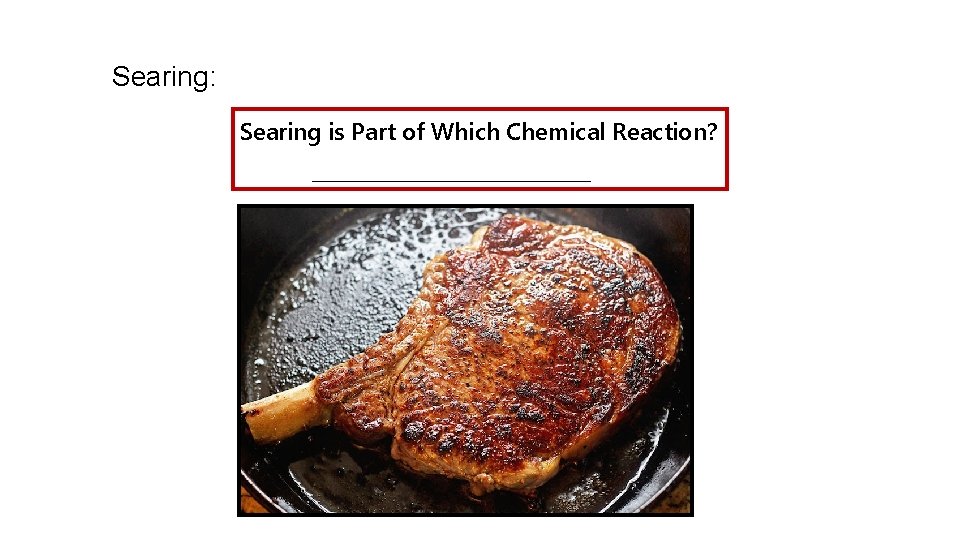
Searing: Searing is Part of Which Chemical Reaction? ______________
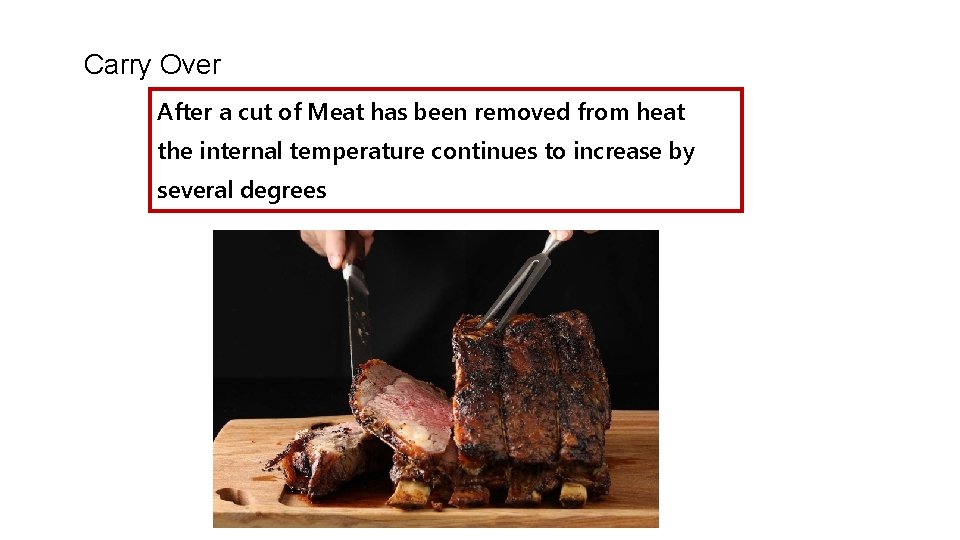
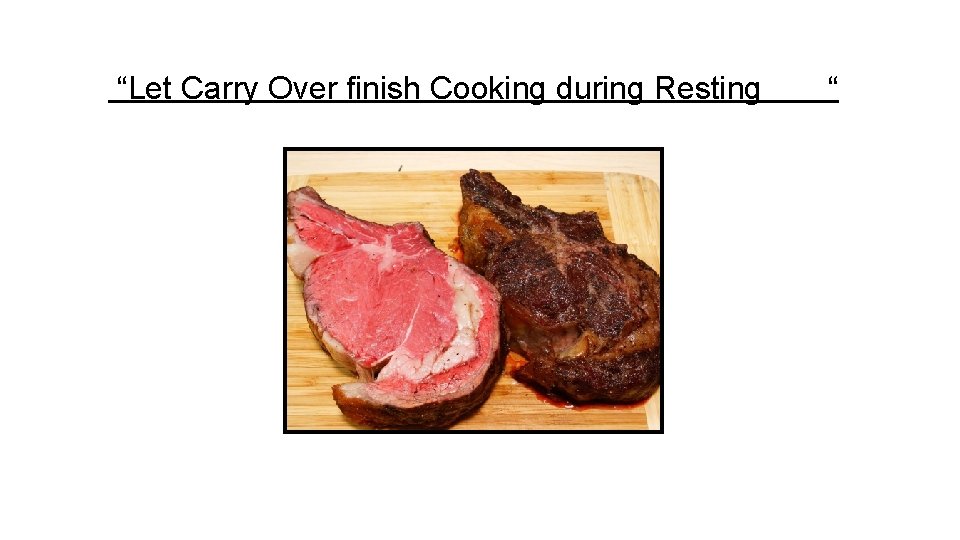
Carry Over After a cut of Meat has been removed from heat the internal temperature continues to increase by several degrees
Resting: Removing a cut of Meat from Heat 1. Lets Natural Juices redistribute. 2. Allows Proteins to relax for Easier Cutting and Chewing.
“Let Carry Over finish Cooking during Resting “
Moist Heat Meat is “done” when connective tissues have broken down enough to be palatable.
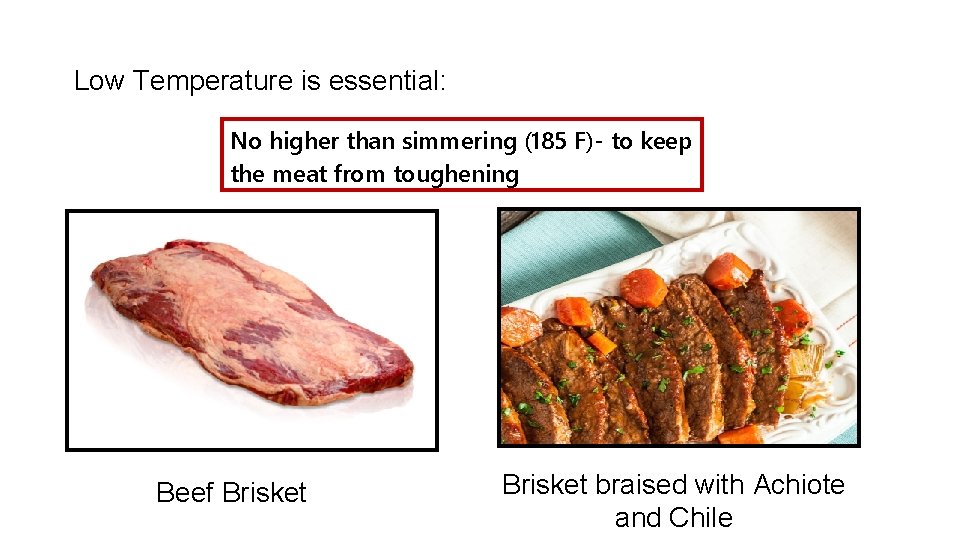
Low Temperature is essential: No higher than simmering (185 F)- to keep the meat from toughening Beef Brisket braised with Achiote and Chile
Juiciness in Moist Heat Cooking 1. Internal Fat: Well marbled cuts of meat taste juicier than lean cuts or lower quality 2. Gelatin Connective tissue breaks down into gelatin giving a better mouth feel. Cuts of Meat which have connective tissue which are properly Braised have more Umami